Brihat Varunadi Kadha: Uses and Benefits in Kidney and Urinary Health
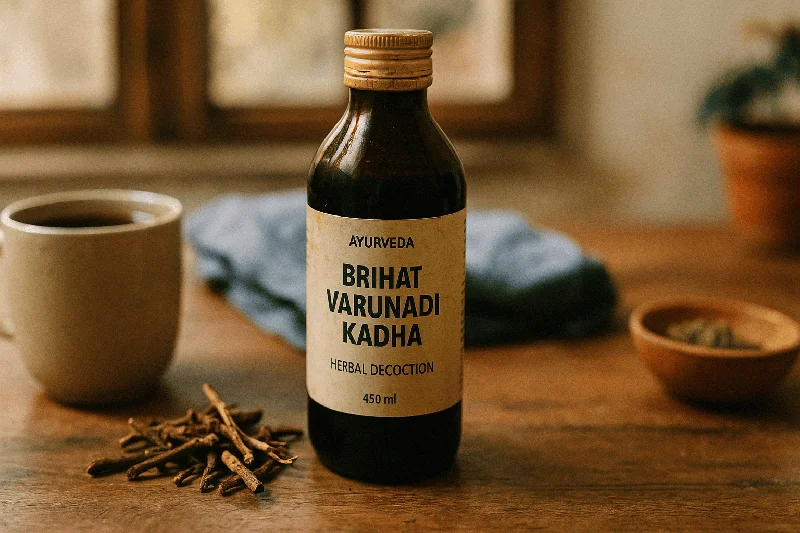
Brihat Varunadi Kadha is a classical Ayurvedic herbal decoction (kashaya) primarily used to support kidney health, dissolve urinary calculi, balance Kapha dosha, and promote healthy function of the urinary tract, liver, and respiratory system. Originating from the ancient text Sharangdhara Samhita (Madhyama Khanda, Chapter 2), this polyherbal formulation combines the lithotriptic power of Varuna bark with diuretic, anti-inflammatory, and digestive herbs to address a wide range of conditions — from kidney stones and cystitis to ascites and chronic respiratory congestion.
If you've been searching for a natural, time-tested remedy for urinary or renal problems, this guide covers everything you need: the full ingredient breakdown, how the formulation actually works, evidence-based benefits, precise dosage protocols for specific conditions, side effects, drug interactions, dietary guidelines, and how to choose between manufacturers. Let's get right into it.
What Is Brihat Varunadi Kadha?
Brihat Varunadi Kadha (also spelled Bruhat Varunadi Kadha or Brihat Varunadi Kwath) is a kashaya — a water-based herbal decoction — classified under the Mutrala (diuretic) and Ashmari-hara (lithotriptic/stone-dissolving) category of Ayurvedic medicines. The word "Brihat" means "greater" or "larger," distinguishing it from its simpler counterpart, Laghu Varunadi Kadha.
Classical Textual Reference (Sharangdhara Samhita)
The formulation is documented in Sharangdhara Samhita, Madhyama Khanda, Chapter 2 — the section dedicated to Kwatha Kalpana (decoction preparations). Some scholars also reference it in Bhaishajya Ratnavali, the 18th-century pharmacopoeia compiled by Govind Das Sen, under Mutraghata Chikitsa (treatment of urinary obstruction). The classical indication includes Ashmari (urinary calculi), Mutrakrichchhra (dysuria), Shotha (edema), and Udara Roga (abdominal disorders including ascites).
Brihat Varunadi Kadha vs. Laghu Varunadi Kadha
This is a question nobody in the top search results properly answers, but it matters clinically.
| Feature | Brihat Varunadi Kadha | Laghu Varunadi Kadha |
|---|---|---|
| Number of ingredients | 10–15+ herbs | 4–6 herbs |
| Primary action | Broad-spectrum: kidneys, liver, lungs, digestion | Focused: urinary tract diuresis |
| Potency | Stronger, deeper-acting | Milder, suitable for mild complaints |
| Key differentiating herbs | Includes Punarnava, Sunthi, Haritaki, Danti | Primarily Varuna, Gokshura, Pashanbheda |
| Duration of use | Typically 4–12 weeks | 2–6 weeks |
| Classical indication | Complex or chronic urinary/renal disorders, ascites | Simple dysuria, mild edema |
In simple terms: Brihat is the "full-strength" formula for chronic or complex conditions, while Laghu is a lighter version for straightforward urinary complaints.
Complete Ingredients of Brihat Varunadi Kadha
No competitor provides a detailed ingredient-by-ingredient breakdown. Here's the full composition based on the classical reference and major manufacturers like Dhootapapeshwar:
| Ingredient (Sanskrit) | Botanical Name | Part Used | Key Property |
|---|---|---|---|
| Varuna | Crataeva nurvala | Stem bark | Lithotriptic — dissolves and prevents urinary stones |
| Gokshura | Tribulus terrestris | Fruit | Diuretic, soothes urinary mucosa, reduces dysuria |
| Punarnava | Boerhavia diffusa | Whole plant | Anti-edema, nephroprotective, hepatoprotective |
| Sunthi (Ginger) | Zingiber officinale | Rhizome | Digestive, anti-inflammatory, bioavailability enhancer |
| Haritaki | Terminalia chebula | Fruit | Mild laxative, Rasayana (rejuvenative), balances Tridosha |
| Bibhitaki | Terminalia bellirica | Fruit | Kapha-hara, mucolytic, supports urinary function |
| Amalaki | Emblica officinalis | Fruit | Antioxidant, Rasayana, supports tissue repair |
| Danti | Baliospermum montanum | Root | Purgative, reduces abdominal distension and ascites |
| Chitrak | Plumbago zeylanica | Root | Deepana-Pachana (kindles digestive fire), anti-Kapha |
| Pashanbheda | Bergenia ligulata | Rhizome | Lithotriptic — literally "stone breaker" |
| Shigru | Moringa oleifera | Bark/root | Anti-inflammatory, diuretic, nutritive |
| Apamarga | Achyranthes aspera | Whole plant | Diuretic, expectorant, aids in stone expulsion |
| Yavakshara | Alkali of Barley | Ash | Alkalizer — raises urinary pH, prevents stone recurrence |
| Ela (Cardamom) | Elettaria cardamomum | Seed | Carminative, adds palatability, mild diuretic |
The synergy here is deliberate. Varuna and Pashanbheda target stones directly. Gokshura and Punarnava flush the urinary tract. Triphala (Haritaki + Bibhitaki + Amalaki) provides systemic detoxification. Sunthi and Chitrak ensure proper digestion and bioavailability of the formula. Danti addresses deeper Kapha and fluid accumulation.
How Brihat Varunadi Kadha Works: The Science Behind It
Understanding the mechanism helps you know why it works, not just that it works.
Anti-Lithiatic (Stone-Dissolving) Action
The cornerstone herb, Varuna (Crataeva nurvala), has been studied extensively for its anti-urolithiatic properties. A 2011 study published in the Journal of Ethnopharmacology demonstrated that lupeol, a triterpenoid found in Varuna bark, significantly reduced calcium oxalate crystal deposition in rat kidneys. Another study (Varalakshmi et al., 1990, Journal of Ethnopharmacology) confirmed that Varuna bark extract prevented the nucleation and growth of calcium oxalate monohydrate crystals in vitro.
Pashanbheda (Bergenia ligulata) complements this action. A 2014 study in Pharmacognosy Reviews noted its ability to reduce oxalate synthesis and promote diuresis — essentially, it makes stones smaller while flushing them out.
Diuretic & Detoxification Mechanism
Gokshura and Punarnava act as natural diuretics. Unlike pharmaceutical diuretics (e.g., furosemide) that can deplete potassium, these herbs promote urine output without significant electrolyte imbalance. Punarnava, in particular, was shown in a 2004 study (Indian Journal of Experimental Biology) to exhibit significant anti-inflammatory and diuretic effects without nephrotoxicity.
Yavakshara (barley alkali) serves a specific purpose: it alkalizes urine. Most calcium oxalate and uric acid stones form in acidic urine. By raising the pH, Yavakshara creates an unfavorable environment for stone formation — a mechanism validated in modern nephrology.
Anti-Inflammatory & Immunomodulatory Properties
Chronic kidney and urinary conditions involve inflammation. Sunthi (ginger) is well-documented for inhibiting COX-2 and 5-LOX pathways. Punarnava contains punarnavine, which has demonstrated immunomodulatory effects in multiple in-vivo studies. Together, they reduce mucosal inflammation in the urinary tract and kidneys.
Kapha Dosha Balancing
From the Ayurvedic perspective, conditions like edema, ascites, excessive mucus, urinary obstruction, and stone formation are manifestations of vitiated Kapha and impaired Agni (digestive fire). Almost every ingredient in Brihat Varunadi Kadha has Kapha-shamaka (Kapha-reducing) properties. Chitrak and Sunthi specifically rekindle Agni, which Ayurveda considers the root cause treatment — not merely symptomatic relief.
What Is Brihat Varunadi Kadha Used For?
Kidney Stones (Ashmari)
- This is the primary and most well-known indication. Brihat Varunadi Kadha is prescribed for calcium oxalate stones, phosphate stones, and uric acid calculi.
- It works on three levels: dissolving existing small stones (< 8mm typically respond better), preventing recurrence by modifying urinary biochemistry, and relieving the pain and spasm associated with stone passage.
Protocol for Kidney Stones
Dosage is typically 15–20 ml twice daily with equal quantity of lukewarm water, taken on an empty stomach, for 8–12 weeks. For active stone passage, some Ayurvedic practitioners combine it with Hajrul Yahood Bhasma (2–3 grains twice daily) for enhanced lithotriptic effect.
Urinary Tract Infections & Cystitis
The diuretic and anti-inflammatory properties help flush bacteria from the urinary tract while reducing mucosal irritation. It's particularly useful in recurrent UTIs where antibiotic resistance is a concern. Gokshura's soothing effect on the urinary mucosa provides symptomatic relief from burning micturition (Mutrakrichchhra).
Hydronephrosis & Urinary Obstruction
In cases of mild-to-moderate hydronephrosis (swelling of the kidney due to urine backup), Brihat Varunadi Kadha helps reduce obstruction — especially when caused by small stones or ureteric inflammation. This is not a replacement for surgical intervention in severe cases, but it supports conservative management.
Prostate Enlargement (Mutraghata)
Benign prostatic hyperplasia (BPH) causes urinary hesitancy and incomplete voiding. The combination of Varuna and Gokshura has shown promise in improving urine flow. A clinical study published in AYU Journal (2012) noted significant improvement in IPSS (International Prostate Symptom Score) in patients taking Varuna-based formulations over 3 months.
Ascites & Edema (Udara Roga / Shotha)
Danti and Punarnava in the formula specifically target fluid accumulation in the abdomen and extremities. Punarnava's hepatoprotective action also addresses the liver dysfunction that often underlies ascites.
Respiratory Congestion & Lung Health
While primarily a urinary formulation, Brihat Varunadi Kadha's strong Kapha-reducing action makes it effective for chronic bronchitis, excessive phlegm, and respiratory congestion. Bibhitaki and Sunthi are classically indicated for Kasa (cough) and Shwasa (breathlessness).
Liver Health & Digestive Support
Punarnava and the Triphala components support hepatic function, bile flow, and gentle bowel regulation. Patients on this kadha often report improved appetite and relief from constipation as secondary benefits.
Dosage & How to Take Brihat Varunadi Kadha
Standard Dosage
| Patient Category | Dose | Frequency | Anupana (Vehicle) |
|---|---|---|---|
| Adults (general) | 15–20 ml | Twice daily | Equal lukewarm water |
| Adults (acute stone) | 20 ml | Twice daily | Lukewarm water + honey (1 tsp) |
| Elderly (> 65 years) | 10–15 ml | Twice daily | Lukewarm water |
| Adolescents (12–18 yrs) | 10 ml | Twice daily | Lukewarm water |
| Children (6–12 years) | 5 ml | Once or twice daily | Lukewarm water (only under physician supervision) |
Which Is the Best Time to Drink Kadha?
Take it on an empty stomach — ideally 30 minutes before meals. Morning and evening doses are standard. For digestive complaints, some practitioners recommend post-meal administration, but this is the exception rather than the rule. The empty-stomach timing ensures maximum absorption of the active compounds.
Duration of Treatment by Condition
| Condition | Recommended Duration |
|---|---|
| Active kidney stones (< 8mm) | 8–12 weeks |
| Recurrent UTI prevention | 6–8 weeks |
| BPH / prostate support | 12–16 weeks |
| Mild edema / ascites support | 4–8 weeks |
| General Kapha balancing / prevention | 4–6 weeks |
| Chronic respiratory Kapha | 6–8 weeks |
Role of Anupana (Co-Administration Vehicle)
In Ayurveda, Anupana is not just a way to swallow medicine — it directs the medicine to specific tissues. Lukewarm water is the standard Anupana for Brihat Varunadi Kadha because it enhances Agni and promotes diuresis. Adding honey (in small quantity) is recommended for Kapha-dominant conditions as honey itself is Kapha-reducing. Avoid cold water, milk, or buttermilk as Anupana with this formulation — they can counteract the Kapha-reducing intent.
Side Effects of Brihat Varunadi Kadha
Most Ayurvedic sources gloss over this section with a generic "consult your doctor." Here's what you actually need to know.
Known Potential Side Effects
- Mild gastric irritation: Chitrak and Danti are potent herbs. In some individuals, especially those with Pitta-dominant constitution, they may cause mild stomach burning, loose stools, or nausea during the first few days.
- Excessive diuresis: Over-dosing can lead to dehydration and electrolyte imbalance.
- Watch for signs: excessive thirst, dizziness, muscle cramps.
- Purgative effect: Danti is a known virechana (purgative) drug. At higher doses, it can cause watery stools. This is actually considered therapeutic in Udara Roga (ascites) cases but undesirable in others.
- Allergic reactions: Rare, but possible — particularly in individuals sensitive to specific botanicals in the formula.
Specific Contraindications
This information is absent from all competitor pages but crucial:
- Pregnancy: Contraindicated. Danti and Chitrak have uterine-stimulant properties and could theoretically induce contractions.
- Lactation: Not recommended without physician supervision. Insufficient safety data.
- Severe dehydration or electrolyte imbalance: The diuretic action can worsen these.
- Pitta-aggravated conditions: Active gastric ulcers, acute gastritis, bleeding disorders — Chitrak can aggravate Pitta.
- Children under 6 years: No established safety profile. Avoid unless specifically prescribed.
- Chronic kidney disease (Stage 4-5): Ironically, while the kadha supports kidney health, severely compromised kidneys may not handle the herbal metabolite load. Medical supervision is essential.
Drug Interactions
Another critical gap no competitor addresses:
- Lithium: Diuretic herbs can alter lithium clearance, potentially causing toxicity. If you're on lithium, consult your psychiatrist before using this kadha.
- Antihypertensives / Diuretics (Furosemide, Hydrochlorothiazide): Additive diuretic effect may cause excessive fluid loss and hypotension.
- Anticoagulants (Warfarin, Aspirin): Some ingredients (particularly Sunthi) have mild blood-thinning properties. Combined use may increase bleeding risk.
- Antidiabetic medications: Gokshura and Shigru have hypoglycemic effects. Monitor blood sugar closely if combining.
- Immunosuppressants: The immunomodulatory herbs may theoretically interfere with immunosuppressive therapy (post-transplant patients should avoid this).
Always inform your physician about all Ayurvedic supplements you're taking, especially if you're on any chronic medication.
Diet & Lifestyle During Treatment (Pathya-Apathya)
No competitor covers this, yet in Ayurveda, medicine without proper diet is considered half-treatment.
Pathya (Recommended)
- Water intake: Increase to 2.5–3 liters daily (warm or room temperature water preferred)
- Foods: Barley (yava), old rice, moong dal, bottle gourd (lauki), ash gourd, cucumber, watermelon, pomegranate
- Spices: Cumin, coriander, fennel — they support digestion without aggravating Pitta
- Lifestyle: Light exercise (walking 30 min daily), avoid sitting for prolonged periods, empty bladder frequently — don't hold urine
Apathya (To Avoid)
- Foods: Heavy, oily, fried foods; excessive dairy (especially curd/yogurt at night); spinach, tomatoes, beet (high oxalate — promotes stone formation); excessive salt; non-vegetarian food (increases uric acid)
- Beverages: Cold drinks, excessive tea/coffee, alcohol
- Habits: Suppressing natural urges (especially urination), sedentary lifestyle, daytime sleep
This might seem strict. But following Pathya-Apathya can double the effectiveness of the kadha — this isn't opinion, it's a fundamental Ayurvedic principle called Nidana Parivarjana (removal of causative factors).
How to Choose the Right Product: Manufacturers Compared
| Feature | Dhootapapeshwar | Baidyanath | Other/Local Brands |
|---|---|---|---|
| Classical authenticity | Follows Sharangdhara Samhita closely | May have minor variations | Varies widely |
| GMP certification | Yes (AYUSH GMP) | Yes | Not always |
| Available forms | Ready-made liquid (200ml, 450ml) | Liquid, sometimes churna | Liquid, sometimes powder |
| Heavy metal testing | Documented | Documented | Often undocumented |
| Price range (approx.) | ₹180–350 | ₹120–280 | ₹80–200 |
| Shelf life | 3 years (sealed) | 2–3 years | Variable |
Dhootapapeshwar's Bruhat Varunadi Kadha is arguably the most widely trusted formulation — their manufacturing process includes standardized extraction ratios and quality control that aligns with the classical Kashaya-paka guidelines.
Fresh Decoction vs. Factory-Made Syrup
- Traditional kashaya preparation involves boiling raw herbs in water (1:16 ratio reduced to 1/4). This fresh preparation is pharmacologically most potent but impractical for most urban patients. Factory-made syrups add preservatives (often sodium benzoate) and sometimes sugar or jaggery for palatability.
- The trade-off: convenience vs. potency.
If you have access to a reliable Ayurvedic pharmacy that prepares fresh kwath, that's ideal. Otherwise, GMP-certified manufactured products are a perfectly acceptable and effective alternative.
How Long Does It Take for Brihat Varunadi Kadha to Show Benefits?
This depends entirely on the condition:
- Symptomatic relief (burning urination, mild edema): Often within 5–7 days
- Small kidney stones (< 5mm): 4–8 weeks for stone passage or dissolution
- Larger stones (5–8mm): 8–12 weeks; stones > 10mm are unlikely to respond to conservative treatment alone
- Chronic conditions (BPH, recurrent UTIs): Noticeable improvement in 3–4 weeks, full benefit at 12–16 weeks
- General Kapha balancing: 2–3 weeks for improved energy and reduced heaviness
Be patient. Ayurvedic decoctions work by correcting the underlying doshic imbalance, not just masking symptoms. If you see no improvement after 4 weeks, revisit your practitioner — the diagnosis or formulation may need adjustment.
Frequently Asked Questions (FAQ)
Can Brihat Varunadi Kadha help with kidney stones?
Yes — this is its primary classical indication. The combination of Varuna, Pashanbheda, and Gokshura provides lithotriptic (stone-dissolving), diuretic, and anti-spasmodic actions that help dissolve small stones and facilitate their passage. It also modifies urinary biochemistry to prevent recurrence. However, stones larger than 10mm typically require medical intervention (lithotripsy or surgery), and this kadha serves as adjuvant therapy in such cases.
Can Brihat Varunadi Kadha help with respiratory issues?
Yes, though it's a secondary benefit. The strong Kapha-reducing nature of ingredients like Bibhitaki, Sunthi, and Chitrak helps clear excessive mucus from the respiratory tract. It's useful in chronic bronchitis and productive cough, not in acute asthma or allergic rhinitis where Pitta/Vata involvement may be primary.
Is Brihat Varunadi Kadha safe for children?
Children aged 6–12 may take a reduced dose (5 ml once or twice daily) strictly under the supervision of a qualified Ayurvedic physician. It is not recommended for children under 6 due to the potency of ingredients like Danti and Chitrak. Always confirm with your child's healthcare provider.
Can Brihat Varunadi Kadha be taken with other supplements?
- Generally yes, but with caveats.
- It can be safely combined with most Ayurvedic formulations — for example, Chandraprabha Vati or Gokshuradi Guggulu for enhanced urinary support. However, avoid combining with other diuretics (herbal or pharmaceutical) without medical guidance. If you're taking Western pharmaceuticals, check the drug interactions section above carefully.
What are the primary uses of Brihat Varunadi Kadha?
The primary uses include: kidney stone management, urinary tract support (UTI, dysuria), edema and ascites reduction, Kapha dosha balancing, liver function support, respiratory congestion relief, and digestive improvement. It is essentially a multi-system Kapha-reducing and detoxifying formulation.
Want to share the information?
Feel free to share this guide with anyone dealing with kidney, urinary, or Kapha-related health concerns. Awareness about classical Ayurvedic formulations helps people make informed choices about their healthcare.
Final Thoughts & When to Seek Professional Help
Brihat Varunadi Kadha is one of Ayurveda's most versatile and effective Kashaya preparations — backed by centuries of clinical use and increasingly supported by modern pharmacological research. Its ability to address kidney stones, urinary disorders, liver dysfunction, respiratory congestion, and systemic Kapha imbalance makes it a genuinely multi-dimensional medicine.
That said, self-medication has limits. Consult a qualified Ayurvedic physician (BAMS or MD Ayurveda) if:
- Your symptoms persist beyond 4–6 weeks of treatment
- You have diagnosed CKD (Chronic Kidney Disease) Stage 3 or above
- You're pregnant, lactating, or planning conception
- You're on multiple pharmaceutical medications
- Your kidney stone is larger than 8mm on ultrasound
The best outcomes happen when traditional wisdom meets modern diagnostic precision. Get your ultrasound, know your stone size and type, and then work with your practitioner to design a complete protocol — kadha, diet, lifestyle, and follow-up imaging.
Disclaimer: This article is for informational purposes only and does not replace professional medical advice. Always consult a qualified healthcare practitioner before starting any new treatment.
Scientific Sources
- Paśu Ayurvĕda (veterinary medicine) in Garudapurăņa — Varanasi S et al., 2007, Bulletin of the Indian Institute of History of Medicine (Hyderabad)
- Concept of interactions between consumable substances in Ayurveda with special reference to foods and drugs — Sarkar PK et al., 2013, Drug metabolism and drug interactions
- Ayurveda and Panchakarma: measuring the effects of a holistic health intervention — Conboy L et al., 2009, TheScientificWorldJournal
- Why the "sugars" in traditional Unani formulations are a pivotal component: A viewpoint perspective — Fazil M et al., 2022, Journal of integrative medicine
- Traditional medicine-inspired approaches to drug discovery: can Ayurveda show the way forward? — Patwardhan B et al., 2009, Drug discovery today
- From coastal to global: The transnational flow of Ayurveda and its relevance for Indo-African linkages — Meier Zu Biesen C, 2018, Global public health
- Ayurveda.Caraca Samhita(https://pubmed.ncbi.nlm.nih.gov/781343/) — Yano M, 1976, Nihon rinsho. Japanese journal of clinical medicine
- Prameha in Ayurveda: correlation with obesity, metabolic syndrome, and diabetes mellitus.Part 2--management of Prameha — Sharma H et al., 2011, Journal of alternative and complementary medicine (New York, N.Y.)
- Integrated approaches towards drug development from Ayurveda and other Indian system of medicines — Mukherjee PK et al., 2006, Journal of ethnopharmacology
- Exploring the prevalence of Ayurveda use among Asian Indians — Satow YE et al., 2008, Journal of alternative and complementary medicine (New York, N.Y.)
- Give truth a chance — Krishna GL, 2023, Indian journal of medical ethics
- Exploring the Efficacy of Integrating Yoga and Ayurveda for Hypertension Treatment — Balkrishna A et al., 2025, Current hypertension reviews
- A Review of the Evolution of Ayurveda in the United States — Halpern M, 2018, Alternative therapies in health and medicine
- Ayurveda and Dietary Modification for T2DM Management — Rohit S et al., 2021, The Journal of the Association of Physicians of India
- Integrating modern dermatology and Ayurveda in the treatment of vitiligo and lymphedema in India — Narahari SR et al., 2011, International journal of dermatology
- Ayurveda and in silico Approach: A Challenging Proficient Confluence for Better Development of Effective Traditional Medicine Spotlighting Network Pharmacology — Sahu R et al., 2023, Chinese journal of integrative medicine
- Ayurveda--the people's medicine — 2002, Leprosy review
- Ayurveda for diabetes in India — Vasudevan R et al., 2016, The lancet. Diabetes & endocrinology
- Confused mystification of Ayurvedic concepts — Krishna GL, 2025, Indian journal of medical ethics
- Stress and Ayurveda: Selye--Mehta dialogue in context of the current findings — Dhuri KD et al., 2000, The Journal of the Association of Physicians of India
Ask Ayurvedic doctor a question and get a consultation online on the problem of your concern in a free or paid mode.
More than 2,000 experienced doctors work and wait for your questions on our site and help users to solve their health problems every day.
Related articles