Krimisodhini Gulika: Ayurvedic Medicine for Gut Health and Parasite Cleansing
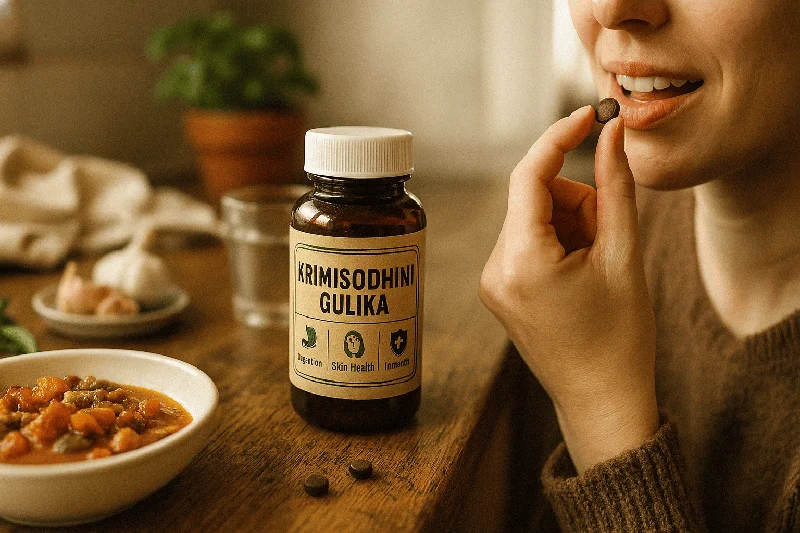
Krimisodhini Gulika is a classical Ayurvedic formulation specifically designed to eliminate intestinal parasites — including roundworms, pinworms, tapeworms, and threadworms — while restoring digestive health and strengthening immunity. The name itself translates literally to "worm-destroying pill" (Krimi = worms, Sodhini = purifying/destroying, Gulika = tablet/pill). Referenced in the ancient Ayurvedic text Yogagrantham, this time-tested medicine combines potent antiparasitic herbs to create an environment in the gut where parasites simply cannot survive.
If you're searching for a natural, holistic alternative to conventional dewormers — or wondering whether this formulation is safe for your child — you're in the right place. This guide covers everything from ingredients and mechanism of action to age-specific dosages, dietary guidelines, and how Krimisodhini Gulika compares to both modern antihelmintic drugs and other Ayurvedic antiparasitic medicines.
> Important Disclaimer: This article is for informational purposes only. Always consult a qualified Ayurvedic practitioner before starting any treatment, especially for children, pregnant women, or individuals on other medications.
What Is Krimisodhini Gulika and How Does It Work?
- Krimisodhini Gulika is a polyherbal tablet-form medicine (gulika) that belongs to the Krimighna (anti-parasitic) category of Ayurvedic therapeutics.
- It works through multiple mechanisms simultaneously — which is actually one of its key advantages over single-compound synthetic drugs.
Mechanism of Action: Why It's More Than Just a Dewormer
The formulation operates on several levels:
- 1.Direct Antiparasitic Action — Herbs like Vidanga (Embelia ribes) and Palasha (Butea monosperma) contain compounds that paralyze intestinal worms, preventing them from clinging to the intestinal wall. A 2012 study published in the Journal of Parasitology Research confirmed that Embelia ribes extracts showed significant anthelmintic activity comparable to piperazine citrate.
- 2.Digestive Fire (Agni) Enhancement — According to Ayurveda, parasitic infections thrive when Agni (digestive fire) is weakened. Ingredients like Chitraka (Plumbago zeylanica) and black pepper kindle Agni, making the gut environment inhospitable to parasites.
- 3.Ama (Toxin) Elimination — Parasites produce metabolic waste that Ayurveda classifies as Ama. The formulation's bitter and pungent herbs stimulate bile secretion and peristalsis, helping flush both dead parasites and their toxic byproducts.
- 4.Immune Modulation — Neem (Azadirachta indica) and other immunostimulant herbs in the formula help the body mount its own defense against reinfection. Kumar et al. (2010) demonstrated that neem extracts significantly upregulated immune cell activity in animal models.
- 5.Anti-inflammatory & Soothing Action — Parasitic infections cause considerable inflammation in the intestinal lining. The formulation includes herbs that reduce this inflammation and promote mucosal healing.
The Ayurvedic Philosophy Behind Parasitic Infections
In Ayurvedic theory, intestinal worms (Krimi) are associated primarily with aggravated Kapha dosha and disturbed Pitta. Excessive consumption of sweet, heavy, and mucus-forming foods creates a breeding ground for parasites. Krimisodhini Gulika balances both Kapha and Pitta while strengthening Vata's downward movement (Apana Vata) to expel worms naturally.
This is not merely philosophical — it has practical implications. It means the formulation doesn't just kill worms; it corrects the underlying imbalance that allowed the infestation in the first place.
Krimisodhini Gulika Ingredients: Complete Breakdown
One confusing aspect across available sources is that different manufacturers list slightly different ingredient compositions. This is becuase regional variations of the formulation exist. Below is the most comprehensive table combining ingredients from the Yogagrantham reference and major manufacturers (Kottakkal Arya Vaidya Sala, AVP):
| Sanskrit Name | Botanical / English Name | Key Role in the Formula |
|---|---|---|
| Vidanga | Embelia ribes (False Black Pepper) | Primary anthelmintic; paralyzes and expels worms |
| Palasha Beeja | Butea monosperma (Flame of the Forest seeds) | Antiparasitic, especially effective against tapeworms |
| Chitraka | Plumbago zeylanica (Leadwort) | Kindles Agni, improves digestion, creates hostile environment for parasites |
| Nimba (Neem) | Azadirachta indica | Broad-spectrum antimicrobial, immunomodulatory |
| Maricha | Piper nigrum (Black Pepper) | Bioavailability enhancer, digestive stimulant |
| Pippali | Piper longum (Long Pepper) | Carminative, enhances absorption of other herbs |
| Haritaki | Terminalia chebula (Chebulic Myrobalan) | Part of Triphala; mild laxative to expel dead worms |
| Vibhitaki | Terminalia bellirica (Belleric Myrobalan) | Part of Triphala; anti-inflammatory, gut cleansing |
| Amalaki | Emblica officinalis (Indian Gooseberry) | Part of Triphala; antioxidant, immune support |
| Jayapala (in some formulations) | Croton tiglium (Purging Croton) | Strong purgative action (used in very small, processed amounts) |
| Karanjwa / Krishna Jiraka | Nigella sativa (Black Cumin) | Antiparasitic, digestive, anti-inflammatory |
| Hingu | Ferula asafoetida (Asafoetida) | Carminative, reduces bloating and gas caused by worms |
Note on Triphala: Vyas et al. (2011) demonstrated that Triphala possesses significant anthelmintic properties on its own, with activity against Pheretima posthuma (Indian earthworm) comparable to the standard drug albendazole in vitro. Its inclusion in Krimisodhini Gulika serves the dual purpose of killing parasites and gently cleansing the bowel.
Krimisodhini Gulika vs Krimisodhini Vati — Are They the Same?
This is a question nobody has clearly addressed. Technically, Gulika and Vati both refer to tablet/pill forms in Ayurveda. However, Gulika traditionally implies a formulation prepared by grinding ingredients with specific liquid media (like herbal juices or decoctions) and then forming into pills — while Vati can sometimes refer to a simpler compressed tablet. In practice, most manufacturers use these terms interchangably for this particular formulation, and the composition remains identical. If you see both names, they are referring to the same medicine.
Krimisodhini Gulika Benefits: Beyond Just Killing Worms
Primary Benefits: Intestinal Parasite Elimination
The formulation is indicated for:
- Roundworm infections (Ascaris lumbricoides)
- Pinworm/threadworm infections (Enterobius vermicularis) — extremely common in children
- Tapeworm infections (Taenia species)
- Hookworm infections — when used as part of a comprehensive protocol
Associated symptoms that typically improve include abdominal pain, bloating, irregular bowel movements, nocturnal fever, teeth grinding during sleep, anal itching (especially at night), unexplained weight loss, and poor appetite.
Secondary Benefits Most People Don't Know About
Skin Health Improvement
- Parasitic infections are frequently linked to dermatological issues — persistent rashes, urticaria, unexplained itching, and even eczema-like patches. When the parasitic load is reduced, many patients report significant improvement in skin conditions.
- This makes sense: parasites trigger systemic immune responses that often manifest on the skin.
Digestive System Reset
By eliminating parasites and their metabolic waste, the formulation essentially allows the gut to reset. Patients often notice improved nutrient absorption, better energy levels, and normalized bowel movements within 2-3 weeks of completing a course.
Weight Management Support
Chronic parasitic infections disrupt metabolism and nutrient absorption in unpredictable ways — some patients lose weight excessively, while others gain weight due to inflammation-driven fluid retention and altered gut flora. Clearing the infection helps normalize metabolic function.
Detoxification (Ama Pachana)
The combination of bitter, pungent, and astringent herbs promotes thorough detoxification of the gastrointestinal tract. This Ama-clearing action benefits overall health well beyond just parasite removal.
How to Use Krimisodhini Gulika: Dosage Guide
Standard Adult Dosage
The typical adult dose is 1-2 tablets (each approximately 250 mg) once or twice daily, usually taken on an empty stomach or before meals with warm water or buttermilk. Some practitioners recommend taking it with honey or ginger juice for enhanced effect.
Duration: A standard course lasts 3 to 7 days, depending on the severity of infection. Your Ayurvedic doctor may advise a repeat course after 2-3 weeks to eliminate any newly hatched parasites from eggs that survived the initial treatment.
Krimisodhini Gulika Dose for Child
This is where extreme caution is needed. Children's dosages must be adjusted based on age and body weight:
| Age Group | Suggested Dose | Frequency | Notes |
|---|---|---|---|
| Under 3 years | Not recommended without direct physician supervision | — | Very young children require personalized assessment |
| 3–5 years | ¼ to ½ tablet | Once daily | Crush and mix with honey if child cannot swallow |
| 6–12 years | ½ to 1 tablet | Once daily | Take on empty stomach with warm water |
| 13–17 years | 1 tablet | Once or twice daily | Similar to adult dose for older teens |
| Adults (18+) | 1–2 tablets | Once or twice daily | Standard dosing |
| Elderly (65+) | ½ to 1 tablet | Once daily | Start low; monitor for digestive sensitivity |
Critical reminder: These are general guidelines gathered from multiple Ayurvedic sources. Individual dosing should always be determined by a qualified practitioner who can assess the patient's Prakriti (constitution), the type and severity of infection, and any coexisting conditions.
How Long Does It Take to See Results?
Most patients notice symptomatic improvement — reduced abdominal pain, less bloating, better appetite — within 3 to 5 days of starting the course. Visible evidence of worm expulsion in stool may occur as early as day 2-3. However, complete clearance of infection, including eggs and larval stages, can take 2-4 weeks when a repeat course is included.
Krimisodhini Gulika vs. Other Antiparasitic Medicines
No competitor has done this comparison — and it's exactly the kind of information people actually need when making treatment decisions.
Comparison with Other Ayurvedic Antiparasitic Formulations
| Parameter | Krimisodhini Gulika | Vidangasava | Krimikuthar Ras | Krimighna Vati |
|---|---|---|---|---|
| Form | Tablet (Gulika) | Liquid (Asava/Arishta) | Tablet (contains metals) | Tablet (herbal) |
| Primary Ingredient | Vidanga + multiple herbs | Vidanga in fermented base | Vidanga + Rasa (mercury/sulfur) | Vidanga + Kampillaka |
| Suitable for Children | Yes (with dose adjustment) | Yes (small doses) | Generally not recommended for young children | Yes (with dose adjustment) |
| Speed of Action | Moderate (3-5 days) | Gradual (1-2 weeks) | Fast (2-3 days) | Moderate (3-5 days) |
| Safety Profile | High (purely herbal) | High (fermented, well-tolerated) | Moderate (contains metallic compounds) | High (purely herbal) |
| Additional Benefits | Digestive reset, detox | Appetizer, digestive tonic | Broad-spectrum antimicrobial | Focused antiparasitic |
| Availability | Widely available | Widely available | Requires specific pharmacy | Moderately available |
Comparison with Modern Antihelmintic Drugs
| Parameter | Krimisodhini Gulika | Albendazole | Mebendazole |
|---|---|---|---|
| Mechanism | Multi-target (paralyze, expel, boost immunity) | Inhibits tubulin polymerization in worms | Similar to albendazole |
| Single-dose Efficacy | Requires multi-day course | Often single-dose effective | Usually 3-day course |
| Side Effects | Mild GI upset (rare) | Abdominal pain, nausea, headache, liver enzyme elevation | Abdominal pain, diarrhea |
| Addresses Root Cause | Yes (Agni, Ama, dosha balance) | No (kills worms only) | No (kills worms only) |
| Reinfection Prevention | Partial (through immune modulation) | No | No |
| Safe in Pregnancy | Not established — avoid | Category C (not in first trimester) | Category C |
| Drug Interactions | Not formally studied | Multiple known interactions | Some known interactions |
| Cost (approx.) | ₹22–25 for 10 tablets | ₹5–15 per dose | ₹10–20 per dose |
Patel et al. (2015) noted that combined Ayurvedic therapies showed promising results in managing intestinal parasites with fewer adverse effects, though they emphasized that more large-scale clinical trials are needed to establish equivalence with conventional treatments.
Side Effects, Safety & Contraindications
Krimisodhini Gulika is generally considered safe when taken as directed under professional guidance. However, some precautions are essential.
Possible Side Effects
- Mild stomach upset or loose stools (this is sometimes intentional — the formulation promotes expulsion of worms)
- Occasional nausea, particularly when taken on an empty stomach by sensitive individuals
- Temporary increase in abdominal cramping as worms are being expelled
- Rare allergic reactions to individual herbal components
Who Should Avoid Krimisodhini Gulika?
Pregnancy and Lactation
Pregnant women should avoid this formulation. Several ingredients — particularly Jayapala (Croton tiglium), Chitraka, and concentrated purgative herbs — can stimulate uterine contractions. For lactating mothers, safety data is insufficient; consult your doctor before using.
Other Contraindications
- Patients with active gastric or duodenal ulcers
- Individuals with inflammatory bowel disease (Crohn's, ulcerative colitis) in active flare
- People with known allergy to any listed ingredient
- Patients with severe liver or kidney impairment
Drug Interactions
While no formal interaction studies exist for Krimisodhini Gulika specifically, consider these precautions:
- Conventional antiparasitic drugs: Avoid taking simultaneously without medical advice. The combined purgative effect may cause excessive diarrhea and dehydration.
- Blood thinners (Warfarin, etc.): Some ingredients may have mild anticoagulant properties.
- Immunosuppressants: The immune-stimulating action of certain herbs may interfere with immunosuppressive therapy.
- Diabetes medications: Some ingredients may lower blood sugar; monitor levels closely.
As a general rule, maintain a 2-hour gap between Krimisodhini Gulika and any allopathic medication.
Dietary Recommendations During Treatment (Pathya-Apathya)
What you eat during the treatment course significantly impacts its effectiveness. Ayurveda places tremendous emphasis on this, and honestly, it's the part most patients neglect.
Foods to Favor (Pathya)
- Light, warm, easily digestible meals (khichdi, moong dal soup, steamed vegetables)
- Buttermilk with cumin and rock salt
- Pomegranate and papaya — both have mild antiparasitic properties of their own
- Fresh ginger tea
- Garlic (raw or lightly cooked) — has documented anthelmintic activity
- Bitter vegetables like bitter gourd (karela) and drumstick (moringa)
Foods to Avoid (Apathya)
- Excessive sugar, jaggery, and sweets — parasites literally feed on sugar
- Heavy, oily, and fried foods
- Dairy products (especially milk and cheese) during the active treatment phase
- Raw salads that could harbor parasite eggs (ensure all vegetables are thoroughly washed or cooked)
- Fermented foods in excess
- Stale or leftover food
Signs and Symptoms of Worm Infestation: Do You Need This Medicine?
Before reaching for any antiparasitic treatment, it helps to recognize whether a worm infection is actually present.
Here are the telltale signs:
In Children:
- Intense anal itching, especially at night
- Teeth grinding during sleep (bruxism)
- Restless sleep, bedwetting
- Visible worms in stool or around the anal area
- Recurrent abdominal pain around the navel
- Poor appetite alternating with excessive hunger
- Unexplained weight loss despite adequate eating
- Irritability and inability to concentrate
In Adults:
- Persistent bloating and gas that doesn't respond to usual remedies
- Alternating constipation and diarrhea
- Fatigue and low energy
- Unexplained skin rashes or hives
- Iron-deficiency anemia (especially with hookworm)
- Nocturnal low-grade fever
If you recognize multiple symptoms, consult an Ayurvedic practitioner or your doctor for a stool examination before beginning treatment.
How to Choose a Quality Krimisodhini Gulika Product
Not all Ayurvedic products are manufactured to the same standards.
Here's what to look for:
- Reputable manufacturer: Established pharmacies like Kottakkal Arya Vaidya Sala, AVP (Arya Vaidya Pharmacy), and similar GMP-certified manufacturers are generally reliable.
- GMP certification: Ensures manufacturing follows Good Manufacturing Practices.
- Clear labeling: Ingredient list, batch number, manufacturing date, and expiry date should all be visible.
- Price reference: Expect to pay approximately ₹22–25 for a strip of 10 tablets from established brands. If the price is dramatically lower, question the quality.
- Standardized extracts: Premium products use standardized herbal extracts for consistent potency.
Storage and Shelf Life
Store in a cool, dry place away from direct sunlight. Most manufacturers indicate a shelf life of 3 to 5 years from the date of manufacture when stored properly. Keep the container tightly closed to prevent moisture absorption, which can degrade the tablets.
Hygiene Measures: Essential Alongside Treatment
Taking Krimisodhini Gulika without addressing hygiene is like mopping the floor while the tap is still running. Reinfection is extremely common, particularly with pinworms in households with children.
- Wash hands thoroughly with soap before eating and after using the toilet
- Keep fingernails short and clean — pinworm eggs lodge under nails
- Change and wash undergarments and bed linens daily during the treatment period (wash in hot water)
- Discourage nail-biting and finger-sucking in children
- Clean bathroom surfaces regularly
- Treat all household members simultaneously if one person is infected — this is crucial and often overlooked
- Deworm pets if they share living spaces
Frequently Asked Questions (FAQ)
Can children under 3 years take Krimisodhini Gulika?
It is generally not recommended for children under 3 years without direct supervision by an experienced Ayurvedic physician. Very young children have delicate digestive systems, and the potent purgative herbs in the formulation may be too strong. Your doctor may prescribe a milder alternative or a highly reduced dose mixed with honey.
Can I take Krimisodhini Gulika with antibiotics or conventional antiparasitic medication?
- It is best to avoid combining without medical guidance.
- The overlapping mechanisms — particularly the purgative action — can lead to dehydration, electrolyte imbalance, or excessive GI disturbance. If you're on conventional medication, inform both your allopathic and Ayurvedic doctors.
How do I know the worms have been eliminated?
You may notice worms (dead or alive) in your stool during the treatment course — this is actually a positive sign. After completing the full course including the repeat cycle, the most reliable confirmation is a stool examination by a laboratory showing no ova or parasites.
Can Krimisodhini Gulika prevent future parasitic infections?
The formulation strengthens digestive fire and immunity, which does provide some protective effect. However, it is not designed for continuous prophylactic use. Maintaining hygiene, eating properly cooked food, and periodic deworming (once or twice a year as advised by your doctor) are the best preventive strategies.
Is there a syrup form of Krimisodhini?
Krimisodhini is traditionally available only in tablet (gulika) form. However, some manufacturers produce related antiparasitic syrups under different names. If you need a liquid form for young children, ask your Ayurvedic practitioner about alternatives like Vidangasava or Vidangarishta.
Which Ayurvedic tablet is best for gas and bloating caused by worms?
Krimisodhini Gulika addresses both the root cause (worms) and the symptom (gas/bloating) simultaneously. If bloating persists after deworming, your doctor may add Hingvashtaka Churna or Chitrakadi Vati for additional digestive support.
How effective is Krimisodhini Gulika compared to modern medicine?
While large-scale randomized controlled trials are limited, clinical experience spanning centuries and emerging research on individual ingredients (Singh et al., 2013 on Ashwagandha's immunomodulation; Kumar et al., 2010 on Neem) support its efficacy. It may work more gradually than single-dose albendazole but offers the advantage of addressing underlying digestive imbalances, not just the parasites themselves.
Can this medicine be taken on a full stomach?
It is most effective when taken on an empty stomach, as this allows direct contact with parasites in the intestinal lumen. However, if you experience nausea, taking it with a small amount of food or after a light meal is acceptable — just discuss this adjustment with your practitioner.
Conclusion: Is Krimisodhini Gulika Right for You?
- Krimisodhini Gulika represents one of Ayurveda's most targeted and effective approaches to intestinal parasitic infections.
- Its multi-herb formulation doesn't just kill worms — it corrects the digestive environment that allowed them to thrive, removes their toxic byproducts, and strengthens your body's own defences against reinfection.
- Whether you're dealing with a confirmed worm infection, suspect parasites based on persistent symptoms, or looking for a natural complement to conventional treatment, this classical formulation deserves serious consideration.
- Just remember: the best results come from combining proper medication with correct dosage, dietary discipline, strict hygiene, and — most importantly — guidance from a qualified Ayurvedic practitioner who understands your individual constitution.
Don't self-treat. Consult an experienced Ayurvedic doctor to determine the right formulation, dosage, and duration for your specific situation.
Scientific Sources
- Global hazards of herbal remedies: lessons from Aristolochia: The lesson from the health hazards of Aristolochia should lead to more research into the safety and efficacy of medicinal plants — Grollman AP et al., 2016, EMBO reports
- An exhaustive comprehension of the role of herbal medicines in Pre- and Post-COVID manifestations — Prajapati SK et al., 2022, Journal of ethnopharmacology
- Picrorhiza kurroa, Royle ex Benth:Traditional uses, phytopharmacology, and translational potential in therapy of fatty liver disease — Raut A et al., 2023, Journal of Ayurveda and integrative medicine
- Exploring the Therapeutic Potential of Traditional Antimalarial and Antidengue Plants: A Mechanistic Perspective — Kamaraj C et al., 2023, The Canadian journal of infectious diseases & medical microbiology = Journal canadien des maladies infectieuses et de la microbiologie medicale
- Integrative therapeutics for ocular surface disorders — Kourosh A et al., 2024, Current opinion in allergy and clinical immunology
- Cannabis: A Neurological Remedy or a Drug of Abuse in India — Biswas P et al., 2017, CNS & neurological disorders drug targets
- Single plant remedies from traditional Indian medical systems in focus — Spudich A, 2023, Journal of Ayurveda and integrative medicine
- Harnessing the Antibacterial, Anti-Diabetic and Anti-Carcinogenic Properties of Ocimum sanctum Linn (Tulsi) — Arya R et al., 2024, Plants (Basel, Switzerland)
- Multifunctional role of natural products for the treatment of Parkinson's disease: At a glance — Rahman MM et al., 2022, Frontiers in pharmacology
- History of the Growing Burden of Cancer in India: From Antiquity to the 21st Century — Smith RD et al., 2019, Journal of global oncology
- A review of the clinical and toxicological aspects of 'traditional' (herbal) medicines adulterated with heavy metals — Lynch E et al., 2005, Expert opinion on drug safety
- Ayurveda and gynecological disorders — Jadhav AN et al., 2005, Journal of ethnopharmacology
- Review of Holarrhena antidysenterica (L.) Wall. ex A.DC.: Pharmacognostic, Pharmacological, and Toxicological Perspective — Jamadagni PS et al., 2017, Pharmacognosy reviews
- Scientific basis for the use of Indian ayurvedic medicinal plants in the treatment of neurodegenerative disorders: ashwagandha — Ven Murthy MR et al., 2010, Central nervous system agents in medicinal chemistry
- Ayurvedic herbal medicine and lead poisoning — Gunturu KS et al., 2011, Journal of hematology & oncology
- Chlorophytum borivilianum: a white gold for biopharmaceuticals and neutraceuticals — Thakur GS et al., 2009, Current pharmaceutical biotechnology
- Contributions of Indian Council of Medical Research (ICMR) in the area of Medicinal plants/Traditional medicine — Tandon N et al., 2017, Journal of ethnopharmacology
- Complementary and alternative medicine in the (symptomatic) treatment of acute tonsillitis in children: A systematic review — Büttner R et al., 2023, Complementary therapies in medicine
- Medicinal and therapeutic properties of garlic, garlic essential oil, and garlic-based snack food: An updated review — Verma T et al., 2023, Frontiers in nutrition
- Phytochemicals in the treatment of patients with depression: a systemic review — Picheta N et al., 2024, Frontiers in psychiatry
Ask Ayurvedic doctor a question and get a consultation online on the problem of your concern in a free or paid mode.
More than 2,000 experienced doctors work and wait for your questions on our site and help users to solve their health problems every day.
Related articles