Ask Ayurvedic doctor a question and get a consultation online on the problem of your concern in a free or paid mode. More than 2,000 experienced doctors work and wait for your questions on our site and help users to solve their health problems every day.


Body DetoxEar, Nose, and Throat DisordersGeriatrics & RejuvenationImmunodeficiencyInfertility TreatmentNutritionOrthopedic DisordersPediatricsRespiratory DisordersSexually Transmitted Diseases (STDs)Surgery RecoveryUrological DisordersVascular DisordersDental DisordersEndocrinological DisordersGastrointestinal DisordersYoga TherapyGeneral MedicineAllergic DisordersCardio DisordersGynecology and ObstetricsCosmetologySkin and Hair DisordersEye DisordersInfectious DiseasesMental DisordersNeurological DisordersOncologyPanchakarmaSexual Health & DisordersSports Medicine
Published on 01/07/25
(Updated on 08/10/26)
3,137
Hamsapathyadi Kashayam: Traditional Ayurvedic Remedy for Holistic Health
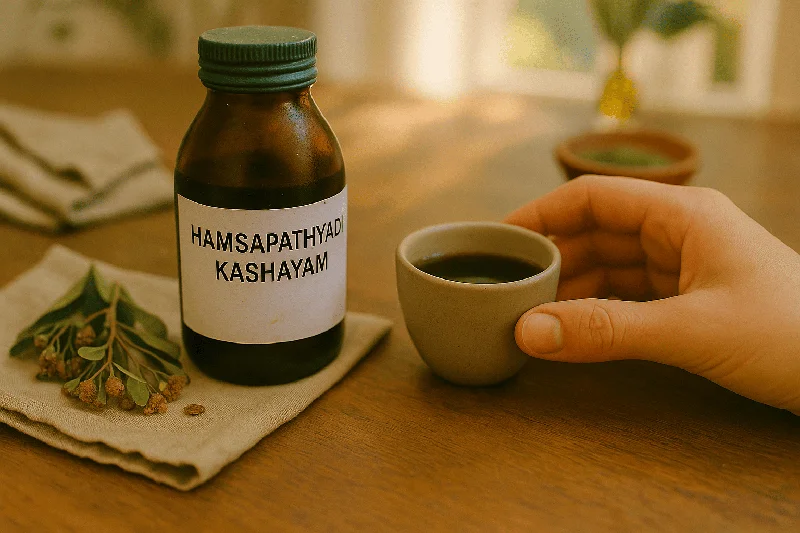
Hamsapathyadi Kashayam is a classical Ayurvedic herbal decoction (kashayam) primarily used for managing thyroid disorders, including hypothyroidism, hyperthyroidism, and goiter. Referenced in the ancient text Bhavaprakasha Samhita, this polyherbal formulation works by balancing all three doshas (Vata, Pitta, Kapha), optimizing thyroid hormone levels (TSH, T3, T4), and improving overall metabolic function. If you've been searching for a natural, time-tested Ayurvedic approach to thyroid health — this guide covers everything you need to know, from ingredients and mechanism of action to dosage, side effects, and how it compares with both conventional medicine and other Ayurvedic alternatives.
Unlike most resources online, we'll also dive into the pharmacology of each ingredient, drug interactions, evidence from published studies, and practical diet and lifestyle recommendations that can genuinely make a difference.
What Is Hamsapathyadi Kashayam and What Is It Used For?
Hamsapathyadi Kashayam (also spelled Hamsapadadi Kashayam or Hamsapadiadi Kashayam) is a kashayam — which literally means a water-based herbal decoction prepared by boiling coarsely powdered herbs in water and reducing the liquid. This particular formulation has its roots in Bhavaprakasha Samhita, one of the major classical Ayurvedic texts compiled in the 16th century.
The primary therapeutic focus of Hamsapathyadi Kashayam is the thyroid gland — a small, butterfly-shaped endocrine gland located in the front of the neck. The thyroid produces hormones (primarily T3 and T4) that regulate metabolism, energy production, body temperature, and even mood. When this gland malfunctions, the consequences ripple across nearly every body system.
Understanding Thyroid Disorders: Why This Kashayam Matters
Before diving deeper into the formulation, it helps to understand the conditions it addresses:
- Hypothyroidism — The thyroid produces insufficient hormones. Symptoms include fatigue, weight gain, cold intolerance, constipation, dry skin, hair loss, and depression. This is the most common thyroid disorder, affecting an estimated 11% of the Indian population according to a 2022 epidemiological review published in the Indian Journal of Endocrinology and Metabolism.
- Hyperthyroidism — The thyroid overproduces hormones, leading to weight loss, rapid heartbeat, anxiety, tremors, heat intolerance, and irritability.
- Goiter (Galaganda in Ayurveda) — An enlargement of the thyroid gland, which can occur in both hypo- and hyperthyroid states, or even with normal thyroid function in iodine-deficient areas.
In Ayurvedic pathology, thyroid disorders are closely linked to the concept of Galaganda and involve vitiation of all three doshas along with impaired Agni (digestive fire). Hamsapathyadi Kashayam addresses this through its Tridoshahara (balancing all three doshas) and Deepana (digestive fire-enhancing) properties.
Classical Reference (Shloka) and Textual Source
The formulation is referenced in Bhavaprakasha Samhita, specifically in the context of Galaganda Chikitsa (treatment of goiter/thyroid swellings). The classical shloka describes the combination of five key herbs and their method of preparation as a kashayam. Some practitioners also reference allied formulations from Sahasrayogam, a compendium of Ayurvedic formulations widely used in Kerala tradition.
Hamsapathyadi Kashayam Ingredients: Complete Composition
The formulation contains five principal herbs, each selected for its specific action on the thyroid gland, metabolism, and dosha balance.
Here is the complete breakdown:
| Ingredient | Sanskrit Name | Botanical Name | Part Used | Primary Action |
|---|---|---|---|---|
| Hamsapadi | Hamsapadi | Adiantum lunulatum (Maidenhair Fern) | Whole plant | Anti-inflammatory, diuretic, thyroid-stimulating |
| Pathya (Haritaki) | Pathya / Haritaki | Terminalia chebula | Fruit | Digestive, detoxifying, Tridoshahara |
| Nagara (Shunthi) | Nagara / Shunthi | Zingiber officinale (Ginger) | Rhizome | Deepana (digestive fire), anti-inflammatory, metabolic enhancer |
| Devadaru | Devadaru | Cedrus deodara | Heartwood | Anti-inflammatory, Kapha-Vata balancing, analgesic |
| Saireyaka | Saireyaka | Barleria prionitis | Whole plant / Root | Anti-inflammatory, thyroid modulatory, antimicrobial |
Detailed Pharmacology of Each Ingredient
This is where most online resources fall short — they list the herbs but don't explain how each one actually works on thyroid function. Let's fix that.
Hamsapadi (Adiantum lunulatum)
The lead herb in this formulation, Hamsapadi (maidenhair fern), has demonstrated anti-inflammatory and antioxidant properties in preclinical studies. A 2017 study published in the Journal of Ethnopharmacology showed that Adiantum species contain flavonoids and terpenoids with significant free-radical scavenging activity. This is relevant because oxidative stress plays a central role in both Hashimoto's thyroiditis and Graves' disease. The herb is also traditionally used as a diuretic, which helps reduce swelling — including goiter.
Pathya / Haritaki (Terminalia chebula)
Often called the "King of Medicines" in Ayurveda, Haritaki is a Tridoshahara herb — meaning it balances Vata, Pitta, and Kapha simultaneously. Research published in the International Journal of Molecular Sciences (2020) confirmed its potent antioxidant, hepatoprotective, and immunomodulatory properties. For thyroid patients, its ability to improve digestion and elimination is critical, especially in hypothyroidism where constipation and sluggish metabolism are primary complaints.
Nagara / Shunthi (Zingiber officinale)
- Ginger needs little introduction, but its role in thyroid support is underappreciated. A 2013 animal study in the European Review for Medical and Pharmacological Sciences demonstrated that zingerone (a bioactive compound in ginger) significantly influenced thyroid hormone levels and improved T3/T4 ratios in hypothyroid rats.
- Ginger also acts as a Deepana — enhancing Agni, which Ayurveda considers fundamental to correcting metabolic dysfunction.
Devadaru (Cedrus deodara)
Devadaru is primarily a Kapha-Vata pacifying herb. Its heartwood contains sesquiterpene compounds that have shown anti-inflammatory and analgesic properties in studies published in Phytotherapy Research. In the context of thyroid disorders, it helps reduce local inflammation and swelling associated with goiter while supporting lymphatic drainage.
Saireyaka (Barleria prionitis)
This is perhaps the least discussed ingredient, yet it's pharmacologically fascinating. Barleria prionitis has demonstrated anti-inflammatory, antimicrobial, and immunomodulatory activities in multiple preclinical studies. A 2018 review in Pharmacognosy Reviews highlighted its potential for managing glandular swellings. Its inclusion in the formulation directly targets the inflammatory component of thyroid enlargement.
How These Herbs Work Together on the HPT Axis
The hypothalamus–pituitary–thyroid (HPT) axis is the hormonal feedback loop that controls thyroid function. The hypothalamus releases TRH, which signals the pituitary to release TSH, which then stimulates the thyroid to produce T3 and T4.
Hamsapathyadi Kashayam appears to work on multiple points of this axis simultaneously:
- 1.Antioxidant protection — reduces oxidative damage to thyroid cells (Hamsapadi, Haritaki)
- 2.Anti-inflammatory action — decreases glandular inflammation (Devadaru, Saireyaka, Hamsapadi)
- 3.Metabolic enhancement — improves Agni and overall metabolic rate (Shunthi, Haritaki)
- 4.Dosha balance — corrects the underlying doshic imbalances that Ayurveda considers root causes (all five herbs collectively)
- No single herb does everything.
- It's the synergy that matters — and this is a principle Ayurvedic formulation science (Bhaishajya Kalpana) has understood for centuries.
Key Benefits of Hamsapathyadi Kashayam
The benefits extend beyond just thyroid management. Here's a comprehensive list based on classical indications and available evidence:
- TSH, T3, T4 optimization — Helps normalize thyroid hormone levels in both hypo- and hyperthyroid conditions
- Goiter reduction — Anti-inflammatory herbs reduce thyroid gland swelling
- Metabolic improvement — Enhances digestive fire (Agni), supports healthy weight management
- Fatigue reduction — Addresses the chronic tiredness that plagues thyroid patients
- Mood and irritability — Balances the anxiety and depression commonly seen in thyroid disorders
- Obesity management — Through metabolic correction, particularly in hypothyroid-related weight gain
- Adenitis — Reduces lymph node swelling and glandular inflammation
- Tumor-like swellings — Traditionally indicated for Granthi (abnormal tissue growths/benign tumors)
- Detoxification — Haritaki supports liver function and toxin elimination
How to Use Hamsapathyadi Kashayam: Dosage and Administration
Standard Dosage
| Parameter | Recommendation |
|---|---|
| Form | Liquid decoction (kashayam) |
| Dose | 5–15 mL per administration |
| Frequency | Twice daily |
| Timing | Before meals (empty stomach) |
| Dilution | Mix with equal quantity of lukewarm water |
| Duration | Typically 3–6 months, as directed by physician |
Practical steps:
- Shake the bottle well before use
- Measure 5–15 mL of kashayam (your physician will specify the exact dose)
- Add an equal amount of lukewarm water
- Drink on an empty stomach, ideally 30 minutes before breakfast and dinner
- Do not refrigerate unless specified by the manufacturer
Anupana (Adjuvant)
A critical detail most online sources miss: the classical texts recommend specific anupana (co-administered substances) to enhance the efficacy of this kashayam:
- Pippali Churna (Long Pepper powder) — enhances bioavailability and deepens the metabolic action
- Guggulu — provides additional thyroid-supportive action; Guggulu has been independently studied for its thyroid-stimulating properties (a study in Planta Medica demonstrated guggulsterones can enhance thyroid function by increasing iodine uptake)
Always consult your Ayurvedic physician before adding anupana, as the combination should be tailored to your specific condition and prakriti.
Differences in Dosage: Hypothyroidism vs. Hyperthyroidism
This is a gap every competitor has — they give one blanket dosage without differentiating.
In practice, Ayurvedic physicians often adjust:
- Hypothyroidism: Higher end of dosage range (12–15 mL), often combined with Kanchanara Guggulu and Pippali to strongly stimulate Agni and metabolic activity
- Hyperthyroidism: Lower end of dosage range (5–10 mL), with cooling adjuvants, and the focus shifts toward calming the overactive thyroid rather than stimulating metabolism
Important: These are general clinical tendencies. Self-dosing for thyroid conditions is not advisable. Work with a qualified Ayurvedic physician who can monitor your TSH, T3, and T4 levels.
Traditional Method of Preparation (From Raw Herbs)
For Ayurvedic practitioners and students, here is the classical preparation method:
- Take coarsely ground powder of all five herbs in equal proportions
- Add 8 parts water to 1 part herb powder
- Boil on a slow flame
- Reduce to ¼ of the original volume
- Filter through a clean cloth
- The resulting liquid is the kashayam — to be consumed fresh or within 24 hours
This method is described in standard Bhaishajya Kalpana texts. Most patients today use commercially prepared kashayam from established manufacturers, which is perfectly acceptable and standardized for consistency.
Side Effects, Contraindications, and Drug Interactions
Known Side Effects
Hamsapathyadi Kashayam is generally considered safe when taken under medical supervision. No significant adverse effects have been reported in classical literature or modern clinical observations.
However, some patients may experience:
- Mild gastric discomfort (especially if taken without adequate water dilution)
- Slight bitter taste causing nausea in sensitive individuals
- Loose stools in the initial days (due to Haritaki's mild laxative effect)
These are typically transient and resolve with dose adjustment.
Contraindications
| Condition | Recommendation |
|---|---|
| Pregnancy | Avoid — safety not established; some ingredients may stimulate uterine activity |
| Breastfeeding | Avoid — insufficient safety data |
| Children under 12 | Use only under strict medical supervision with adjusted dosage |
| Severe liver disease | Caution — hepatic metabolism may be impaired |
| Autoimmune thyroiditis | Requires careful differential approach — Hashimoto's and Graves' disease have fundamentally different pathologies |
| Diabetes (on medication) | Monitor closely — metabolic effects may alter blood glucose levels |
Drug Interactions — The Missing Piece
This is something no competitor has covered properly, and it's genuinely important:
- Levothyroxine (Synthroid, Eltroxin) — Hamsapathyadi Kashayam may alter thyroid hormone levels. Take the kashayam at least 2–3 hours apart from levothyroxine to avoid absorption interference. Haritaki's mild laxative effect could theoretically reduce absorption of oral medications.
- Methimazole / Carbimazole (anti-thyroid drugs) — Combined use could theoretically over-suppress thyroid function. Regular TSH monitoring is essential.
- Anticoagulants (Warfarin) — Ginger (Shunthi) has mild blood-thinning properties. While clinically significant interactions are unlikely at normal kashayam doses, patients on warfarin should inform their doctor.
- Anti-hyperlipidemic drugs (Statins) — Guggulu (if used as anupana) can interact with cholesterol-lowering medications. Inform your prescribing physician.
- Antidiabetic medications — The metabolic-enhancing properties of the formulation may alter insulin sensitivity. Blood sugar monitoring is recommended.
- Bottom line: If you are on any prescription medication, do not start Hamsapathyadi Kashayam without informing both your allopathic doctor and your Ayurvedic physician.
- This isn't about being overly cautious — it's about being smart.
Don't wait or self medicate. Start chat with Doctor NOW
Hamsapathyadi Kashayam vs. Other Ayurvedic Thyroid Remedies
Patients often wonder: how does this compare with other popular Ayurvedic formulations for thyroid?
Here's a detailed comparison:
| Feature | Hamsapathyadi Kashayam | Kanchanara Guggulu | Varunadi Kashayam | Thyrokalp Tablet |
|---|---|---|---|---|
| Form | Liquid decoction | Tablet/vati | Liquid decoction | Tablet (proprietary) |
| Primary Indication | Thyroid disorders, goiter, obesity | Goiter, lymphadenitis, PCOS, lipoma | Urinary disorders, abdominal tumors, mild thyroid support | Hypothyroidism, metabolic support |
| Dosha Action | Tridoshahara | Primarily Kapha-Vata | Primarily Kapha | Varies by formulation |
| Classical Reference | Bhavaprakasha Samhita | Sharangdhara Samhita | Ashtanga Hridaya | Proprietary (no classical ref) |
| Speed of Action | Moderate (1–3 months) | Moderate (2–3 months) | Moderate | Variable |
| Best For | Comprehensive thyroid balancing (both hypo & hyper) | Structural thyroid enlargement, tumors | Secondary thyroid support, urinary-related Kapha disorders | Mild hypothyroidism, daily supplement |
| Often Combined With | Kanchanara Guggulu, Pippali | Hamsapathyadi Kashayam, Punarnavadi Kashayam | Kanchanara Guggulu | Standalone |
When to choose what: For straightforward thyroid hormone imbalance, Hamsapathyadi Kashayam is the primary choice. For visible goiter or structural enlargement, many practitioners combine it with Kanchanara Guggulu. For thyroid issues co-existing with urinary or abdominal complaints, Varunadi Kashayam may be added.
Hamsapathyadi Kashayam vs. Conventional Allopathic Treatment
Let's be honest and transparent about this comparison — because patients deserve clarity, not marketing.
| Aspect | Hamsapathyadi Kashayam | Levothyroxine (for Hypothyroidism) | Methimazole (for Hyperthyroidism) |
|---|---|---|---|
| Mechanism | Polyherbal; multi-target; supports natural thyroid function | Direct T4 replacement | Inhibits thyroid peroxidase enzyme |
| Speed | Gradual — weeks to months | Relatively fast — days to weeks for symptom relief | Moderate — weeks |
| Side Effects | Minimal when used correctly | Weight changes, palpitations, bone loss (if overdosed) | Liver toxicity (rare), agranulocytosis (rare) |
| Root Cause | Aims to address underlying doshic imbalance | Does not address root cause — replaces the deficient hormone | Suppresses overproduction but doesn't cure |
| Long-term Use | Generally safe; periodic breaks recommended | Often lifelong for autoimmune hypothyroidism | Usually 12–18 months |
| Evidence Base | Classical textual evidence + limited clinical studies | Extensive RCTs and meta-analyses | Extensive clinical evidence |
Can Hamsapathyadi Kashayam replace conventional medication?
For subclinical hypothyroidism (mildly elevated TSH with normal T3/T4 and minimal symptoms), some Ayurvedic physicians use it as a primary treatment with careful monitoring. For established, moderate-to-severe hypothyroidism or hyperthyroidism — the kashayam is best used as a complementary therapy alongside conventional treatment, not a replacement. Stopping prescribed thyroid medication without medical supervision can have serious consequences.
A 2019 case report published in the Journal of Emerging Technologies and Innovative Research (JETIR) documented positive outcomes with Hamsapathyadi Kashayam in thyroid management, but larger randomized controlled trials are still needed.
Diet and Lifestyle Recommendations While Taking Hamsapathyadi Kashayam
Treatment doesn't stop at swallowing medicine. What you eat, how you move, and how you manage stress all directly impact thyroid function.
Foods to Include
- Iodine-rich foods: Eggs, yogurt, dairy (milk, cheese), potatoes with skin, iodized salt, seafood (if non-vegetarian)
- Selenium-rich foods: Brazil nuts, sunflower seeds, mushrooms — selenium is critical for T4-to-T3 conversion
- Zinc-rich foods: Pumpkin seeds, chickpeas, lentils — zinc supports thyroid hormone synthesis
- Antioxidant-rich fruits: Berries, amla (Indian gooseberry), pomegranate
- Whole grains: Brown rice, oats, millets
Foods to Limit or Avoid
- Goitrogenic foods (in excess): Cabbage, cauliflower, broccoli, kale, Brussels sprouts, radish — these contain compounds that can interfere with iodine uptake by the thyroid. Cooking reduces goitrogenic activity significantly, so cooked versions in moderation are generally fine.
- Highly processed foods: Refined sugar, processed meats, trans fats
- Excessive soy: Soy isoflavones may interfere with thyroid hormone production in large quantities
- Gluten (if Hashimoto's): There's growing evidence linking gluten sensitivity with autoimmune thyroiditis. Consider a trial elimination if you have Hashimoto's.
Yoga and Pranayama
Devote 15–20 minutes daily to the following:
- Sarvangasana (Shoulder Stand) — directly stimulates the thyroid gland through increased blood flow to the neck region
- Halasana (Plow Pose) — compresses the throat area, beneficial for thyroid
- Matsyasana (Fish Pose) — stretches the neck and stimulates the thyroid
- Ujjayi Pranayama — the "throat breath" creates gentle pressure on the thyroid gland
- Bhramari Pranayama — reduces stress hormones (cortisol) that negatively impact thyroid function
When to Expect Results
Based on clinical experience and classical guidelines, most patients notice improvements within 3 months of regular, disciplined use.
However:
- Mild cases (subclinical hypothyroidism) may respond in 4–6 weeks
- Moderate cases typically require 3 months
- Chronic, long-standing cases may need 6 months or longer
- Results depend on severity, individual prakriti, adherence to diet/lifestyle, and concurrent medications
Regular blood work (TSH, Free T3, Free T4) every 6–8 weeks during treatment is strongly recommended to track progress objectively.
Available Brands and Forms of Hamsapathyadi Kashayam
Several reputable manufacturers produce this formulation.
Here's a comparison of major brands:
| Brand | Form | Volume/Quantity | Approximate Price (INR) | Notable Features |
|---|---|---|---|---|
| Kottakkal Arya Vaidya Sala | Liquid Kashayam | 200 mL | ₹120–160 | Classical preparation, widely trusted, GMP certified |
| SNA Oushadhasala | Liquid Kashayam | 200 mL | ₹100–140 | Traditional Kerala manufacturing |
| Kerala Ayurveda (Hamsapadadi Kwath) | Liquid Kashayam | 200 mL | ₹130–170 | Available online, good accessibility |
| Vaidyaratnam | Liquid Kashayam | 200 mL | ₹110–150 | One of the oldest Ayurvedic pharmacies in Kerala |
| AVP (Arya Vaidya Pharmacy) | Liquid Kashayam | 200 mL | ₹120–160 | Strong quality control, research-oriented |
Tablet form: Some manufacturers now offer Hamsapathyadi in tablet (kashayam tablet or kwath tablet) form for convenience. These are concentrated extracts pressed into tablets. While they offer ease of use, traditional practitioners generally consider the liquid kashayam more potent and faster-acting due to better bioavailability.
When choosing a brand, look for GMP certification, AYUSH license number, and preferably manufacturers with a long track record in classical formulations. Avoid unbranded or unregistered products.
Treatment Course, Monitoring, and Long-Term Protocol
This is another area where most sources are frustratingly vague.
Here's a structured approach:
Suggested Treatment Protocol
| Phase | Duration | Action |
|---|---|---|
| Phase 1: Initiation | Weeks 1–2 | Start at lower dose (5 mL twice daily), assess tolerance |
| Phase 2: Therapeutic Dose | Weeks 3–12 | Increase to full prescribed dose (10–15 mL twice daily) |
| Phase 3: Assessment | Week 12 | Blood work (TSH, T3, T4), clinical symptom review |
| Phase 4: Continuation or Modification | Months 4–6 | Continue if improving; modify formulation if plateaued |
| Phase 5: Maintenance | Beyond 6 months | Reduced dose or periodic courses (e.g., 2 months on, 1 month off) |
Key point: Ayurvedic treatment for thyroid disorders is not a quick fix. It's a systematic, monitored process. Periodic breaks in medication (aushadha vishrama) are sometimes recommended to prevent the body from developing tolerance and to reassess the baseline state.
Frequently Asked Questions (FAQ)
What is Pathyakshadhatryadi Kwatham tablet used for?
Pathyakshadhatryadi Kwatham is a different formulation from Hamsapathyadi Kashayam. It is primarily used for eye disorders (Netra Roga), particularly conjunctivitis, eye inflammation, and vision-related complaints. The two should not be confused despite both being kashayam preparations.
Is Hamsapathyadi Kashayam available in tablet form?
Yes, several manufacturers including Kerala Ayurveda offer it in tablet or kwath tablet form. However, the traditional liquid kashayam is generally considered more effective due to faster absorption. Tablets are a good option for patients who find the taste of the liquid decoction difficult to tolerate, or for those who travel frequently.
Can I take Hamsapathyadi Kashayam with my Levothyroxine?
You can, but with precautions. Maintain a gap of at least 2–3 hours between the two. Take Levothyroxine on an empty stomach first thing in the morning (as usually prescribed), and take the kashayam 30 minutes before lunch and dinner. Always inform both your endocrinologist and Ayurvedic doctor about all medications you're taking.
What is the classical reference (shloka) for Hamsapathyadi Kashayam?
The formulation is primarily referenced in Bhavaprakasha Samhita under the chapter on Galaganda Chikitsa. Some compilations in Sahasrayogam (Kashaya Prakarana) also include related formulations.
How does Hamsapathyadi Kashayam taste? Is it hard to take?
Like most kashayams, it has a bitter and slightly astringent taste. Diluting with warm water and taking it quickly helps. Some practitioners allow a small amount of honey afterward to mitigate the taste — but confirm this with your doctor, as honey may not be appropriate for all conditions.
Is it safe for long-term use?
Under medical supervision, yes. Classical texts do not mention toxicity concerns with this formulation. However, periodic assessment and breaks are advisable for any long-term Ayurvedic medication. Continuous monitoring of thyroid function through blood tests ensures the treatment is working as intended.
Are there any real patient reviews or clinical outcomes documented?
Published clinical case reports (such as those in JETIR, 2019) have shown positive outcomes including normalization of TSH levels and reduction in goiter size. However, large-scale randomized controlled trials are still lacking. Anecdotally, many Ayurvedic clinics in Kerala report consistent improvements in thyroid parameters with this formulation when combined with proper diet and lifestyle modifications.
Final Thoughts and What to Do Next
Hamsapathyadi Kashayam represents centuries of Ayurvedic wisdom distilled into a focused, thyroid-supportive formulation. Its combination of five carefully selected herbs addresses inflammation, oxidative stress, metabolic sluggishness, and doshic imbalance — the very factors that underlie most thyroid disorders.
But here's what matters most: no medicine works in isolation. The best outcomes happen when you combine this kashayam with the right diet, targeted yoga practice, stress management, and regular medical monitoring. Whether you're dealing with subclinical hypothyroidism or managing a more complex thyroid condition alongside conventional treatment, Hamsapathyadi Kashayam can be a valuable part of your health strategy.
What to do now:
- Consult a qualified Ayurvedic physician (BAMS or MD Ayurveda) for proper diagnosis and personalized prescription
- Get baseline thyroid blood work (TSH, Free T3, Free T4, Anti-TPO antibodies if autoimmune thyroiditis is suspected)
- Purchase only from reputable, GMP-certified Ayurvedic manufacturers
- Commit to at least 3 months of consistent use along with dietary and lifestyle changes
- Retest thyroid levels at 6–8 week intervals to track progress objectively
Your thyroid health is too important for guesswork. Get the right guidance, stay consistent, and let this time-tested formulation do what it was designed to do.
Scientific Sources
- A systematic review and meta-analysis focusing on the use of ayurvedic medicine in cerebral palsy — Rocha AMO et al., 2024, Journal of Ayurveda and integrative medicine
- Origin and development of ayurveda: (a brief history) — Narayanaswamy V, 1981, Ancient science of life
- AYUSH for COVID-19: Science or Superstition? — Priya R et al., 2020, Indian journal of public health
- Bacopa monniera, a reputed nootropic plant: an overview — Russo A et al., 2005, Phytomedicine : international journal of phytotherapy and phytopharmacology
- Enhancing healthspan with Ashwagandha (Withania somnifera): a comprehensive review of its multifaceted geroprotective benefits — Vittal M et al., 2025, Biogerontology
- Use of Ayurveda in the Treatment of Type 2 Diabetes Mellitus — Gordon A et al., 2019, Global advances in health and medicine
- Ashwagandha as an Adaptogenic Herb: A Comprehensive Review of Immunological and Neurological Effects — Jamnekar PP et al., 2025, Cureus
- COMMENT: Ayurveda awaits a new dawn — Krishna GL, 2022, Indian journal of medical ethics
- Ayurvedic Phytochemicals in Oncology: ADP-Ribosylation as a Molecular Nexus — Reddy GSVSR et al., 2025, Cells
- A critical appraisal on Swarnaprashana in children — Jyothy KB et al., 2014, Ayu
- Ayurveda research: Emerging trends and mapping to sustainable development goals — Nedungadi P et al., 2023, Journal of Ayurveda and integrative medicine
- The Role of Ayurveda in Chronic Disease Management: A Review of Clinical Evidence — Karambhe AD et al., 2026, Cureus
- Curcumin in Depression: Potential Mechanisms of Action and Current Evidence-A Narrative Review — Ramaholimihaso T et al., 2020, Frontiers in psychiatry
- Knowledge, attitude, perception and satisfaction level of Ayurveda and allopathy in India: A systematic literature review — Hazra S et al., 2025, Explore (New York, N.Y.)
- Safety and toxicity issues associated with lead-based traditional herbo-metallic preparations — Nagarajan S et al., 2014, Journal of ethnopharmacology
- Insights on personalized medicine from Ayurveda — Sumantran VN et al., 2013, Journal of alternative and complementary medicine (New York, N.Y.)
- Ayurvedic research for direct public benefit — Chandra S, 2019, Journal of Ayurveda and integrative medicine
- Curcumin and colorectal cancer: An update and current perspective on this natural medicine — Weng W et al., 2022, Seminars in cancer biology
- Safety of Ashwagandha Root Extract: A Randomized, Placebo-Controlled, study in Healthy Volunteers — Verma N et al., 2021, Complementary therapies in medicine
- Do Ayurveda drugs induce liver injury? — Ruknuddin G, 2018, World journal of hepatology
Questions from users
How does Hamsapathyadi Kashayam compare to other Ayurvedic remedies?
Client_31a9da
12 hours ago
Hamsapathyadi Kashayam, compared to other Ayurvedic remedies, is specifically noted for its ability to manage glandular swellings, as highlighted by a 2018 review. Unlike some other Ayurvedic treatments, it may offer quicker relief through its liquid form, which is considered more potent due to greater bioavailability. However, blood sugar monitoring is essential when using this kashayam, and it should not replace any prescribed allopathic medicines. Always inform both your allopathic and Ayurvedic doctors before starting it, especially if you are on prescription medications. Look for products with GMP certification and an AYUSH license to ensure quality and safety.
What lifestyle factors contribute to thyroid disorders in India?
Client_6f8ff2
5 days ago
Poor iodine intake, stress, and dietary factors such as excessive soy consumption are common lifestyle contributors to thyroid disorders in India. Iodine deficiency is a well-documented cause of goiter, especially in regions where iodine-rich foods are scarce. Chronic stress can impact thyroid function by altering hormone levels. A diet high in processed foods and low in fresh fruits and vegetables may also affect thyroid health. It is advisable to consult a healthcare provider if symptoms like unexplained weight changes, mood swings, or fatigue occur, as prompt diagnosis and treatment are crucial.
What are the potential side effects of Hamsapathyadi Kashayam?
Client_6f4412
10 days ago
Hamsapathyadi Kashayam may cause mild gastrointestinal side effects such as nausea or mild stomach upset, especially in sensitive individuals. These side effects are typically mitigated by taking the kashayam after meals or with adequate water. Users should monitor for any adverse reactions, particularly if combining with other supplements or medications for thyroid conditions. While classical texts don't highlight toxicity concerns, it's crucial to use this herbal preparation under medical supervision, particularly for individuals managing thyroid disorders. Consult a healthcare provider if any significant side effects occur or if symptoms persist or worsen.
How does Hamsapathyadi Kashayam support eye health and vision?
Client_51844d
15 days ago
Hamsapathyadi Kashayam primarily supports eye health and vision in the context of eye disorders like conjunctivitis and eye inflammation by reducing inflammation and potentially soothing discomfort. While it is traditionally associated with managing eye-related issues, its main focus seems to be on addressing underlying conditions such as thyroid disorders, which can indirectly affect eye health if not properly managed. It is crucial to use treatments like this under the guidance of a healthcare professional, especially since symptoms like persistent eye inflammation could indicate underlying health problems needing medical attention.
What are the active ingredients in Hamsapathyadi Kashayam?
Client_de254e
20 days ago
Hamsapathyadi Kashayam is an Ayurvedic decoction primarily targeting thyroid disorders and eye conditions. Its active ingredients typically include specific herbal components known for anti-inflammatory and thyroid-regulating properties, though exact formulations can vary. Common ingredients may contain sesquiterpene-rich heartwood herbs. If you're considering using this kashayam, it's best to consult an Ayurvedic practitioner or healthcare provider to ensure its relevance and safety for your specific condition.
What are the recommended dosage guidelines for Hamsapathyadi Kashayam?
Client_984018
25 days ago
The typical dosage for Hamsapathyadi Kashayam is generally 10-20 ml, taken before meals, mixed with an equal amount of warm water, twice daily. However, specific dosage can vary depending on an individual’s health condition and should be prescribed by an Ayurvedic practitioner. This herbal medicine is often used to support thyroid function, but patients should monitor their thyroid levels, especially if combining it with conventional thyroid medications like levothyroxine. It's crucial to consult a healthcare provider for personalized advice, as herbs can interact with medications like anticoagulants.
How does Hamsapathyadi Kashayam affect metabolism and weight loss?
Client_a4ca8a
35 days ago
Hamsapathyadi Kashayam may aid metabolism and weight loss by supporting thyroid health and reducing glandular swellings, as indicated by traditional uses. However, evidence on its direct effect on weight loss is limited. This herbal formulation is believed to stabilize metabolic processes, but results can vary greatly among individuals. Typically, initial benefits may be observed within a few weeks to a couple of months of consistent use. Always consult with a healthcare provider, particularly if you have thyroid issues or are taking other medications, as interactions or contraindications may occur. Ayurveda suggests it can be beneficial, but it's important to integrate it into a broader, medically supervised health plan.
What are the long-term effects of using Hamsapathyadi Kashayam?
Client_b88bff
45 days ago
The long-term effects of using Hamsapathyadi Kashayam are not well-documented in scientific literature, so caution is advised. While classical Ayurvedic texts typically do not mention toxicity, variations in metabolism suggest potential interactions with medications such as antidiabetics. As this formulation may alter insulin sensitivity, close monitoring of blood sugar is essential. If you experience symptoms like fatigue, weight gain, or mood changes, consult your healthcare provider. Always inform both your allopathic and Ayurvedic doctors before starting this herbal remedy to avoid adverse interactions.
What dietary changes should accompany Hamsapathyadi Kashayam for thyroid health?
Client_c41d0e
54 days ago
When taking Hamsapathyadi Kashayam for thyroid health, focus on a balanced diet rich in nutrients that support thyroid function. Include foods high in iodine (like seaweed and fish), selenium (found in Brazil nuts and sunflower seeds), and zinc (such as in pumpkin seeds and lentils). Avoid excessive consumption of goitrogens like raw cruciferous vegetables, as they may interfere with thyroid function. Consistent dietary adjustments usually start to show effects in 6-8 weeks. Consult your doctor if you experience worsening symptoms.
Can Hamsapathyadi Kashayam be used to treat chronic eye conditions?
Client_3fb1a3
64 days ago
Hamsapathyadi Kashayam can be used to support the treatment of certain eye disorders, such as conjunctivitis and eye inflammation. However, its effectiveness in chronic eye conditions may vary, and it should not replace conventional medical treatment without first consulting a healthcare professional. This herbal formulation combines five key herbs known for their antioxidant properties, including free-radical scavenging terpenoids. It is best used alongside dietary changes, yoga, stress management, and regular medical monitoring. If symptoms persist or worsen, seek advice from an ophthalmologist.
Related articles

Neurological Disorders
How to Repair Damaged Nerves Naturally with Ayurveda
Learn how to repair damaged nerves naturally with Ayurvedic remedies, foods, and lifestyle tips. Discover ways to heal, strengthen, and support nerve recovery
6,170

Neurological Disorders
Ayurvedic Medicine for Peripheral Neuropathy – Natural Remedies for Nerve Health
Explore Ayurvedic medicine for peripheral neuropathy, including effective herbs, treatments, and lifestyle changes. Discover natural approaches to alleviate nerve pain and enhance nerve health.
5,368

Neurological Disorders
What Causes Vertigo: Ayurvedic Perspective on Imbalance and Healing
What causes vertigo? Discover Ayurvedic causes, symptoms, and treatments. Learn how to restore balance naturally with herbal remedies and lifestyle support
2,969

Neurological Disorders
Ayurvedic Evening Routine for Better Sleep
Sleep plays an important role when it comes to building a healthy life.
3,585

Neurological Disorders
Ayurvedic Medicine for Numbness in Feet: What Really Helps?
Let’s be honest—numb feet are annoying. Not in the “mildly inconvenient” way a cold shower is, but in the “is something seriously wrong with me?” kind of way. Whether it's that unsettling pins-and-needles buzz, or just dead, dull silence below your ankles
4,522

Neurological Disorders
Motor Neuron Disease Treatment in Ayurveda – Holistic Nerve Support
Explore Ayurvedic approaches for motor neuron disease treatment. Learn about holistic therapies, herbs, lifestyle changes, and scientific insights for managing MND.
4,041

Neurological Disorders
Sahacharadi Thailam for Varicose Veins: Benefits & Usage Guide
Discover the benefits, proper dosage, uses, and Ayurvedic insights of Sahacharadi Thailam for treating varicose veins, promoting circulation and vein health naturally.
3,967

Neurological Disorders
Patanjali Divya Medha Vati
Exploration of Patanjali Divya Medha Vati
7,229

Neurological Disorders
Brahmi Vati Benefits, Dosage, Ingredients, Side Effects
Exploration of Brahmi Vati Benefits, Dosage, Ingredients, Side Effects
6,297

Neurological Disorders
Saraswatarishta Uses, Dose, Side Effects, And Ingredients
Exploration of Saraswatarishta Uses, Dose, Side Effects, And Ingredients
4,184
Related consultations on the topic
Legal
Additional Documents
© 2024 Ask Ayurveda. All rights reserved.