Ask Ayurvedic doctor a question and get a consultation online on the problem of your concern in a free or paid mode. More than 2,000 experienced doctors work and wait for your questions on our site and help users to solve their health problems every day.


Body DetoxEar, Nose, and Throat DisordersGeriatrics & RejuvenationImmunodeficiencyInfertility TreatmentNutritionOrthopedic DisordersPediatricsRespiratory DisordersSexually Transmitted Diseases (STDs)Surgery RecoveryUrological DisordersVascular DisordersDental DisordersEndocrinological DisordersGastrointestinal DisordersYoga TherapyGeneral MedicineAllergic DisordersCardio DisordersGynecology and ObstetricsCosmetologySkin and Hair DisordersEye DisordersInfectious DiseasesMental DisordersNeurological DisordersOncologyPanchakarmaSexual Health & DisordersSports Medicine
Published on 01/08/25
(Updated on 08/11/26)
star_border 5
6,270
Rakta Pachak Vati Uses: Detoxify, Purify Blood & Boost Metabolism Holistically!
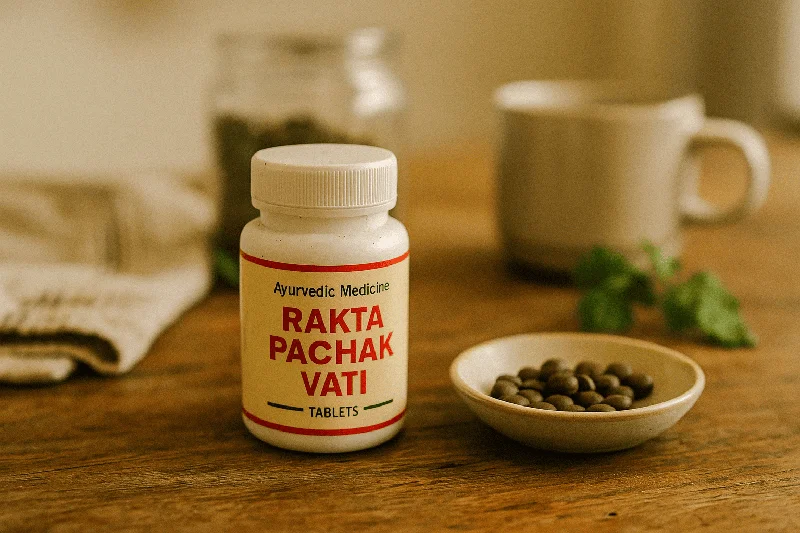
- Rakta Pachak Vati is a classical Ayurvedic formulation designed to purify the blood (Rakta Dhatu), support liver function, and address a wide range of skin and metabolic disorders. If you're dealing with persistent acne, eczema, or unexplained fatigue rooted in blood impurities, this herbal tablet works by correcting Pitta dosha imbalance and eliminating accumulated toxins (Aam) from the bloodstream.
- Below, we cover everything — from ingredients and mechanism of action to dosage, timelines for results, diet recommendations, and how Rakta Pachak Vati compares to other popular blood-purifying formulations.
What Is Rakta Pachak Vati?
- Rakta Pachak Vati is a polyherbal Ayurvedic tablet traditionally prescribed for blood purification, detoxification, and metabolic correction.
- The name itself reveals its purpose: "Rakta" means blood, and "Pachak" means one that digests or metabolizes. In essence, this formulation "digests" or processes impurities within the blood tissue, restoring it to a healthy, balanced state.
Unlike single-herb remedies, Rakta Pachak Vati combines multiple botanicals that work synergistically — some target the liver (the primary organ of blood purification in Ayurveda), while others act directly on the blood tissue or help regulate the digestive fire (Agni) that governs tissue metabolism.
Meaning and Etymology of "Rakta Pachak"
In Sanskrit, Rakta (रक्त) literally translates to "blood" or "that which is reddened." It refers specifically to Rakta Dhatu — the second of the seven fundamental tissues (Sapta Dhatu) in Ayurvedic physiology. Pachak (पाचक) derives from the root "pach," meaning to cook, digest, or transform. So Rakta Pachak Vati is literally "the tablet that digests/transforms the blood."
This naming convention isn't arbitrary. In Ayurvedic pharmacology (Dravyaguna Shastra), formulation names typically describe their primary therapeutic action — making them easier for practitioners to recall and prescribe.
Historical Origins in Classical Ayurvedic Texts
The concept of Rakta Shodhana (blood purification) is deeply rooted in classical texts like the Charaka Samhita, Sushruta Samhita, and Ashtanga Hridayam. Sushruta, often called the father of surgery, dedicated an entire chapter to Raktapitta (disorders of blood and Pitta) and emphasized that impure blood is the root cause of numerous diseases, particularly skin ailments and inflammatory conditions.
While the exact formulation "Rakta Pachak Vati" as a branded product is a more modern standardization, its ingredient combinations draw heavily from classical Rakta Shodhak (blood-purifying) formulations described in Sharangdhara Samhita and Bhavaprakasha Nighantu. Different manufacturers have adapted these classical principles into their own proprietary blends, which is why you'll notice varying ingredient lists across brands.
Role of Rakta Dhatu in Ayurveda and the Seven-Tissue Chain
Here's something most articles miss entirely: Rakta Dhatu doesn't exist in isolation.
Ayurveda describes a sequential chain of tissue nourishment called Dhatu Parampara: Rasa (plasma) → Rakta (blood) → Mamsa (muscle) → Meda (fat) → Asthi (bone) → Majja (marrow/nerve) → Shukra (reproductive tissue). Each tissue is nourished by, and nourishes, the next in sequence.
When Rakta Dhatu becomes vitiated — through excess Pitta, poor diet, or toxin accumulation — every downstream tissue suffers. This is why chronic blood impurities don't just cause skin problems; they can eventually lead to muscle weakness, abnormal fat metabolism, bone disorders, and even reproductive issues. Rakta Pachak Vati works at this foundational level, aiming to correct the Rakta Dhatu so that all subsequent tissues receive proper nourishment.
Key Ingredients of Rakta Pachak Vati
- One important thing to understand: different manufacturers use different ingredient formulations.
- This isn't a flaw — it reflects the Ayurvedic tradition of adapting classical principles to specific therapeutic goals. Below are the most commonly used ingredients across major brands.
Core Ingredients Found in Most Formulations
| Ingredient (Sanskrit) | Botanical Name | Primary Action |
|---|---|---|
| Kutaki | Picrorhiza kurroa | Hepatoprotective, Pitta-pacifying, cholagogue |
| Sariva | Hemidesmus indicus | Blood purifier, anti-inflammatory, cooling |
| Patol | Trichosanthes dioica | Anti-pyretic, Pitta-balancing, digestive |
| Musta | Cyperus rotundus | Digestive stimulant, detoxifier, anti-inflammatory |
| Patha | Cissampelos pareira | Anti-allergic, anti-inflammatory, blood detoxifier |
Other Ingredients in Alternative Formulations
Some manufacturers — notably Arya Vaidya Kalpashala and certain traditional pharmacies — use a distinctly different set of herbs:
| Ingredient | Botanical Name | Primary Action |
|---|---|---|
| Manjistha | Rubia cordifolia | Premier Rakta Shodhak, lymphatic cleanser |
| Neem | Azadirachta indica | Antimicrobial, skin purifier, bitter tonic |
| Haridra (Turmeric) | Curcuma longa | Anti-inflammatory, antioxidant, blood cleanser |
| Guduchi | Tinospora cordifolia | Immunomodulator, hepatoprotective, Rasayana |
| Triphala | Amalaki + Bibhitaki + Haritaki | Digestive regulator, mild detoxifier, antioxidant |
| Chirayata | Swertia chirayita | Bitter tonic, anti-pyretic, blood purifier |
Pharmacological Evidence for Key Ingredients
This isn't just traditional knowledge — modern research supports several of these herbs:
- Kutaki (Picrorhiza kurroa): A 2004 study published in the Indian Journal of Pharmacology demonstrated that its active compound picroside I exhibits significant hepatoprotective activity, protecting liver cells from oxidative damage. The liver is central to blood purification, making this ingredient foundational.
- Sariva (Hemidesmus indicus): Research has identified hemidescine as a key phytoconstituent with anti-inflammatory properties comparable to hydrocortisone in certain experimental models, without the steroidal side effects.
- Patha (Cissampelos pareira): Contains the alkaloid magnoflorine, which has demonstrated anti-allergic and anti-histaminic properties in pharmacological studies, explaining its traditional use in skin allergies and urticaria.
- Guduchi (Tinospora cordifolia): A 2017 review in the Journal of Ethnopharmacology confirmed its immunomodulatory and hepatoprotective effects, with multiple clinical trials supporting its role in improving liver enzyme profiles.
Rakta Pachak Vati Uses and Indications
Blood Purification and Detoxification
The primary indication for Rakta Pachak Vati is Rakta Shodhana — purification of the blood tissue. In Ayurvedic understanding, toxins (Aam) generated by poor digestion enter the bloodstream and lodge in various tissues.
Rakta Pachak Vati works by:
- Strengthening Ranjaka Pitta (the sub-dosha located in the liver and spleen responsible for blood formation)
- Enhancing the liver's detoxification capacity
- Promoting elimination of blood-borne toxins through proper channels
Skin Disorders — Acne, Eczema, Rashes, and Psoriasis
Ayurveda considers most chronic skin conditions to be manifestations of impure Rakta Dhatu.
Rakta Pachak Vati is commonly prescribed for:
- Acne and pimples — especially hormonal acne aggravated by excess Pitta
- Eczema (Vicharchika) — chronic, itchy, weeping skin lesions
- Psoriasis (Kitibha Kushtha) — though usually as part of a broader treatment protocol
- Urticaria and allergic rashes — particularly when triggered by blood impurities
How Does Rakta Pachak Vati Help With Acne Specifically?
Acne in Ayurveda is primarily a Pitta-Rakta disorder. When excess heat and toxins accumulate in the blood, they find expression through the skin as inflammatory lesions. Rakta Pachak Vati addresses the root cause rather than just the surface symptoms — it cools the blood, reduces Pitta, and eliminates the circulating toxins that drive breakouts. For best results with acne, practitioners typically recommend combining it with topical applications like Kumkumadi Tailam and dietary modifications (more on that below).
Liver Support and Jaundice (Kamala)
With hepatoprotective ingredients like Kutaki and Guduchi, Rakta Pachak Vati provides significant liver support. It's used in mild hepatic dysfunction, early-stage jaundice, and as a supportive therapy during recovery from hepatitis. The herb Kutaki, in particular, has been traditionally called "Yakrit-uttejak" — liver stimulant.
Anemia and Blood Formation
Though it might seem counterintuitive — a "blood digester" helping with anemia — the logic is sound. By correcting the quality of Rakta Dhatu and optimizing Ranjaka Pitta function, this formulation helps the body produce healthier, more functional blood cells. It's often prescribed alongside iron-rich Ayurvedic formulations like Loha Bhasma or Navayasa Churna.
Menstrual Health and Pitta-Related Gynecological Issues
Rakta Pachak Vati is sometimes recommended for women experiencing heavy, painful, or irregular menstruation linked to excess Pitta in the blood. By cooling and purifying Rakta Dhatu, it can help regulate menstrual flow, reduce menstrual pain associated with blood heat, and support overall reproductive health. However, it should be used under medical supervision during menstruation and is generally avoided during pregnancy.
Benefits of Rakta Pachak Vati
Beyond its specific clinical indications, Rakta Pachak Vati offers several broader health benefits:
- Pitta Dosha Balancing: Cools excess heat in the body, reducing inflammation, acidity, and irritability
- Improved Skin Complexion: Regular use over 4–8 weeks often leads to clearer, brighter skin as blood impurities diminish
- Enhanced Immunity: Ingredients like Guduchi and Neem (in certain formulations) are potent immunomodulators
- Better Digestion and Metabolism: By correcting Agni at the tissue level (Dhatvagni), it improves overall nutrient assimilation
- Reduced Body Odor and Bad Breath: These symptoms often originate from blood toxicity; as Rakta is purified, they typically resolve
Dosage and How to Take Rakta Pachak Vati
Standard Adult Dosage
| Parameter | Recommendation |
|---|---|
| Dose | 1–2 tablets twice daily |
| Timing | After meals (lunch and dinner) |
| Anupana (vehicle) | Warm water or as directed by physician |
| Duration | Typically 4–12 weeks depending on condition |
How Long Does It Take to Show Results?
This is one of the most commonly asked questions, and honestly, nobody gives a straight answer.
Here's a realistic timeline based on clinical practice:
- Mild acne/skin rashes: Noticeable improvement within 2–3 weeks
- Chronic eczema/psoriasis: Initial changes in 4–6 weeks, significant improvement in 8–12 weeks
- General detoxification and improved energy: Most people report feeling a difference within 10–14 days
- Anemia and liver-related issues: 6–8 weeks minimum with proper complementary treatment
These timelines assume consistent use, proper diet, and adequate lifestyle modifications. Skipping doses or continuing a Pitta-aggravating diet will significantly delay results.
Is Rakta Pachak Vati Suitable for Children?
Generally, Rakta Pachak Vati is not recommended for children under 12 years without explicit guidance from a qualified Ayurvedic practitioner. If prescribed, the dosage is typically halved (half tablet twice daily), and the duration is shortened. Children's formulations or liquid alternatives (like Sarivadyasava) are usually preferred.
Don't wait or self medicate. Start chat with Doctor NOW
Comparison: Rakta Pachak Vati vs. Other Ayurvedic Blood Purifiers
No one else seems to have done this comparison, but it's crucial for making an informed choice. Here's how Rakta Pachak Vati stacks up against other popular Rakta Shodhak formulations:
| Feature | Rakta Pachak Vati | Kaishore Guggulu | Mahamanjisthadi Kwath | Sarivadyasava |
|---|---|---|---|---|
| Form | Tablet | Tablet | Liquid decoction | Fermented liquid |
| Primary Focus | Blood purification + liver support | Blood purification + joint inflammation | Deep blood & lymph cleansing | Blood purification + cooling |
| Best For | Skin disorders, liver issues, general detox | Gout, arthritis, skin with joint issues | Chronic, deep-seated skin diseases | Mild blood impurities, burning sensation |
| Pitta Pacifying | Strong | Moderate | Strong | Very strong |
| Ease of Use | Very easy (tablet) | Easy (tablet) | Moderate (needs preparation) | Easy (liquid, pre-made) |
| Onset of Action | 2–6 weeks | 3–6 weeks | 2–4 weeks | 2–4 weeks |
| Suitable for Long-term Use | Yes, with breaks | Yes, with monitoring | Yes | Yes |
The key takeaway: Rakta Pachak Vati is the most convenient option for general blood purification with liver support. If your condition involves joints (like gout), Kaishore Guggulu might be better. For deeply chronic skin conditions, Mahamanjisthadi Kwath often provides deeper action, though its liquid form is less convenient.
Comparison of Rakta Pachak Vati Formulations Across Brands
This is something you won't find anywhere else. The ingredient lists vary dramatically between manufacturers, and understanding these differences helps you choose the right product:
| Brand / Manufacturer | Key Ingredients | Best Suited For |
|---|---|---|
| BVG Life Sciences | Patol, Sariva, Musta, Patha, Kutaki | Liver-focused blood purification, hepatic disorders |
| Arya Vaidya Kalpashala | Manjistha, Neem, Haridra, Guduchi, Triphala, Katuki, Chirayata | Skin-focused purification, immune support |
| Dhootapapeshwar | Classical formulation with Kutaki-dominant blend | Traditional, classical approach to Rakta Vikar |
| Generic/Traditional Pharmacy | Varies widely — often customized per patient | Personalized treatment |
Why the differences? Ayurveda has always been a living tradition. Different schools (Sampradaya) emphasize different aspects of blood purification. The BVG formulation leans heavily toward hepatoprotective herbs (liver-first approach), while the Arya Vaidya Kalpashala version includes broader-spectrum herbs like Neem and Haridra for direct antimicrobial and anti-inflammatory action on the skin.
Neither approach is wrong. Your Ayurvedic practitioner can guide you toward the formulation that best matches your specific Prakriti (constitution) and Vikriti (current imbalance).
Diet and Lifestyle Recommendations (Pathya-Apathya) for Best Results
Taking Rakta Pachak Vati without adjusting your diet is like mopping the floor while the tap is still running. Here's a detailed Pathya-Apathya guide that no other resource provides in full:
Foods to Favor (Pathya)
- Bitter vegetables: Bitter gourd (karela), pointed gourd (parwal), drumstick — these directly pacify Pitta and support blood purification
- Leafy greens: Spinach, fenugreek leaves, amaranth — rich in iron and chlorophyll, supporting healthy blood formation
- Cooling fruits: Pomegranate, amla (Indian gooseberry), watermelon, sweet grapes
- Whole grains: Old rice (purana shali), barley, wheat — easy to digest, Pitta-pacifying
- Ghee (clarified butter): 1–2 teaspoons daily — the best Pitta-pacifying fat in Ayurveda
- Cooling spices: Coriander, fennel, cumin, turmeric in moderate amounts
Foods to Avoid (Apathya)
- Spicy and pungent food: Excess chili, garlic, mustard — directly aggravate Pitta and Rakta
- Fried and oily food: Increases Aam (toxins) and overburdens the liver
- Fermented food in excess: Vinegar, excessive yogurt (especially at night), pickles
- Alcohol and caffeine: Both heat the blood and counteract the medicine's cooling effect
- Processed and junk food: High in preservatives and trans fats that toxify the blood
- Red meat: Considered Pitta-aggravating and difficult to digest
Seasonal Considerations (Ritucharya)
Rakta Pachak Vati is most beneficial during Grishma Ritu (summer) and Sharad Ritu (autumn) — these are the seasons when Pitta naturally accumulates and aggravates. In particular, Sharad Ritu (roughly September–November in India) is classically called "Pitta Prakopa Kala" — the time of Pitta aggravation. Starting Rakta Pachak Vati in late summer and continuing through autumn provides optimal preventive and therapeutic benefit.
During Hemanta and Shishira Ritu (winter), Pitta is naturally in a more controlled state, and blood purification may be less urgently needed. However, if you have an active condition, don't stop the medicine based on season alone — follow your physician's advice.
Supportive Panchakarma Procedures
For severe or chronic Rakta Dushti (blood vitiation), Rakta Pachak Vati works best when combined with specific Panchakarma procedures:
- Raktamokshana (therapeutic bloodletting): The most direct method of removing vitiated blood. Done through Jalaukavacharana (leech therapy) for Pitta-type disorders
- Virechana (therapeutic purgation): Cleanses Pitta from its primary seat in the liver and small intestine, providing a clean foundation for Rakta Pachak Vati to work on
- Nasya (nasal administration): Relevant when blood impurities manifest as facial acne, dark circles, or head-region symptoms
Precautions, Side Effects, and Contraindications
General Safety Profile
Rakta Pachak Vati is generally considered safe for most adults when taken in recommended doses. However, its cooling and Pitta-pacifying nature means it may not suit everyone equally.
Known Precautions
- Pregnancy and lactation: Avoid unless specifically prescribed by an Ayurvedic gynecologist. Several ingredients (particularly Kutaki) may have uterine-stimulant effects
- Individuals with Vata-dominant constitution: The cooling nature may aggravate Vata, leading to dryness, constipation, or gas. Consider combining with Vata-pacifying measures
- Low blood pressure: Some ingredients have hypotensive effects; monitor accordingly
- Pre-surgical patients: Discontinue at least 2 weeks before any scheduled surgery, as some herbs may affect bleeding time
Drug Interactions
This is a critical gap in existing literature. While comprehensive interaction studies are limited, be cautious when combining Rakta Pachak Vati with:
- Anticoagulants (Warfarin, Heparin): Herbs like Haridra and Guduchi may potentiate blood-thinning effects
- Anti-diabetic medications: Some ingredients may lower blood sugar, requiring dose adjustment of allopathic medicines
- Immunosuppressants: Guduchi's immunomodulatory action may theoretically interfere with immunosuppressive therapy
- Hepatotoxic drugs: While Rakta Pachak Vati is hepatoprotective, combining it with drugs that stress the liver creates a complex scenario requiring medical supervision
Always inform both your Ayurvedic and allopathic doctors about all medications you're taking.
Storage Guidelines
- Store in a cool, dry place below 30°C. Keep away from direct sunlight and moisture.
- Keep out of reach of children.
- Check the expiry date — most formulations have a 3–5 year shelf life when stored properly.
Frequently Asked Questions (FAQ)
Can Rakta Pachak Vati Be Used for Weight Loss?
Rakta Pachak Vati is not a weight-loss supplement, but it can indirectly support weight management. By improving metabolic fire (Dhatvagni) and eliminating Aam (metabolic toxins) from the blood, it helps optimize fat metabolism. However, if weight loss is your primary goal, formulations like Medohar Guggulu or Triphala Guggulu are more appropriate choices.
Can I Take Rakta Pachak Vati With Other Ayurvedic Supplements?
Yes, in most cases. It is commonly combined with Manjisthadi Kwath, Gandhak Rasayana (for skin disorders), or Arogyavardhini Vati (for liver conditions). However, avoid stacking multiple blood purifiers without professional guidance, as excessive cooling can aggravate Vata dosha.
What Is the Difference Between Rakta Pachak Vati and Ras Pachak Vati?
These are different formulations entirely. Ras Pachak Vati works primarily on Rasa Dhatu (plasma/lymph) and digestive system, while Rakta Pachak Vati targets Rakta Dhatu (blood). Ras Pachak Vati's main ingredients typically include Shunthi, Pippali, and Maricha (Trikatu) — warming, digestion-enhancing herbs — whereas Rakta Pachak Vati contains cooling, Pitta-pacifying herbs.
What Are the Main Contents of Rakta Pachak Vati?
The core contents typically include Kutaki (Picrorhiza kurroa), Sariva (Hemidesmus indicus), Patol (Trichosanthes dioica), Musta (Cyperus rotundus), and Patha (Cissampelos pareira). Some brands also include Manjistha, Neem, Guduchi, and Chirayata. Refer to the brand comparison table above for specific formulations.
Is There Any Clinical Evidence Supporting Rakta Pachak Vati?
While there are no large-scale randomized controlled trials on the complete formulation, individual ingredients have substantial research backing. A 2019 systematic review in Phytomedicine confirmed the hepatoprotective and anti-inflammatory effects of Picrorhiza kurroa. Multiple studies published in the Journal of Ethnopharmacology support the blood-purifying and immunomodulatory properties of Tinospora cordifolia and Hemidesmus indicus. The formulation as a whole follows well-established Ayurvedic pharmacological principles (Dravyaguna Siddhanta), even if modern clinical trials on the specific combination are still emerging.
Conclusion
- Rakta Pachak Vati remains one of Ayurveda's most effective and accessible formulations for blood purification, skin health, and liver support.
- Its strength lies in addressing root causes — not just symptoms — by working through the fundamental Ayurvedic framework of Dhatu nourishment and Pitta dosha balance.
- Whether you're dealing with stubborn acne, chronic skin conditions, early signs of liver dysfunction, or simply want a seasonal detox during Pitta-aggravating months, this formulation deserves serious consideration.
- But remember: it works best as part of a holistic approach that includes proper diet (Pathya), lifestyle modifications, and — for chronic conditions — supportive Panchakarma therapies.
Consult a qualified Ayurvedic practitioner before starting Rakta Pachak Vati, especially if you're on any existing medication, pregnant, or managing a chronic health condition. The right formulation, dosage, and complementary treatments can make a world of difference in your healing journey.
Scientific Sources
- Toward a roadmap for addressing today's health dilemma-The 101-statement consensus report — Wirnitzer KC et al., 2025, Frontiers in nutrition
- The practitioner's perspective: introduction to Ayurvedic herbalism — Khalsa KP, 2007, Journal of herbal pharmacotherapy
- Prakriti-based medicine: A step towards personalized medicine — Chatterjee B et al., 2011, Ayu
- A critical review of rhythmic recitation of Charakasamhita as per Chhanda Shastra — Panja A, 2013, Ayu
- Reflections on current Ayurveda research — Ramaswamy S, 2018, Journal of Ayurveda and integrative medicine
- Toxicological evaluation of LivLonga(®), a polyherbal combination, in rodents — Majeed A et al., 2025, Drug and chemical toxicology
- Group Health & Wellness Coaching: development and validation of the required competencies — Wolever RQ et al., 2024, BMC health services research
- Chrononutrition and Diabetes: Mapping the Scientific Landscape Through Bibliometric Insights — Kumar S et al., 2025, Cureus
- Illuminating Insomnia: A Scientometric Exploration of Complementary and Alternative Medicine in Treatment Research — Singh A et al., 2026, Journal of lifestyle medicine
- Ayurvedic versus conventional dietary and lifestyle counseling for mothers with burnout-syndrome: A randomized controlled pilot study including a qualitative evaluation — Kessler CS et al., 2017, Complementary therapies in medicine
- Oxidative Stress and Male Infertility: Role of Herbal Drugs — Malik J et al., 2022, Advances in experimental medicine and biology
- Holistic approach to preventive cardiology: Where tradition meets innovation (Fellow's Voice) — Wasir AS, 2024, American journal of preventive cardiology
- From ancient medicine to modern medicine: ayurvedic concepts of health and their role in inflammation and cancer — Garodia P et al., 2007, Journal of the Society for Integrative Oncology
- Desiring foods: Cultivating non-attachment to nourishment in Buddhist Sri Lanka — Van Daele W, 2016, Appetite
- Policy mandates for Ayush in National Health Policy-2017: Achievements, impediments, and future prospects — Kumar S et al., 2025, Journal of family medicine and primary care
- Swarna Prashana - faith in the embrace of research — Verma S et al., 2022, Journal of complementary & integrative medicine
- Updates in Parkinson's Disease Integrative Therapies: an Evidence-Based Review — Kola S et al., 2023, Current neurology and neuroscience reports
- Integrative oncology: Addressing the global challenges of cancer prevention and treatment — Mao JJ et al., 2022, CA: a cancer journal for clinicians
- Government policies and initiatives for development of Ayurveda — Katoch D et al., 2017, Journal of ethnopharmacology
- Diet and lifestyle-related factors associated with Apathyanimittaja Prameha (type 2 diabetes): A cross-sectional survey study — Shukla A et al., 2018, Ayu
Questions from users
Can Rakta Pachak Vati improve symptoms of early-stage jaundice?
Client_444c25
3 hours ago
Rakta Pachak Vati can potentially help improve symptoms of early-stage jaundice by supporting liver function and promoting detoxification due to its blood-purifying ingredients like Tinospora cordifolia and Hemidesmus indicus. Results may vary, and it is typically used as a complementary therapy rather than a standalone treatment. You should follow the prescribed dosage and maintain a diet that does not aggravate Pitta for better results. If symptoms persist or worsen, or if jaundice is accompanied by severe symptoms like intense fatigue or abdominal pain, consult a healthcare provider to rule out more serious conditions.
What are the key ingredients in Rakta Pachak Vati and their benefits?
Client_203b3a
5 days ago
Rakta Pachak Vati contains key ingredients like Kutaki and Guduchi, known for their liver-supporting and blood-purifying properties. Kutaki acts as a hepatoprotective agent, aiding liver function by detoxifying and promoting the regeneration of liver cells. Guduchi boosts the immune system and helps manage inflammation. These ingredients collectively purify the blood and support skin health by reducing toxins, which can be beneficial in treating conditions like acne. If symptoms persist or worsen, consult a healthcare provider.
Can Rakta Pachak Vati help with weight loss in obese patients?
Client_18f445
10 days ago
Rakta Pachak Vati is primarily known for its effects on blood purification rather than weight loss. For individuals focused on losing weight, Medohar Guggulu or Triphala Guggulu are generally more appropriate. Rakta Pachak Vati's cooling and Pitta-pacifying properties can be beneficial for detoxifying the blood, but these traits have limited direct impact on reducing body weight. If you're considering taking this supplement, consult with a healthcare professional to ensure it aligns with your specific health goals and doesn't interfere with any existing conditions.
How long should Rakta Pachak Vati be taken for best results?
Client_a8c37a
15 days ago
Rakta Pachak Vati should generally be taken from late summer through autumn for best results. This aligns with the time when Pitta-related impurities in the blood become more prevalent, and purification is beneficial. The duration of how long it should be taken depends on individual health conditions and goals, but it's not uncommon for courses to last several weeks to a few months. Always follow your healthcare provider's guidance on both dosage and duration. If you notice any side effects or if symptoms persist, consult your doctor. For joint-related issues, consider alternatives like Kaishore Guggulu as recommended.
How does Rakta Dhatu influence overall health in Ayurveda?
Client_663da9
20 days ago
Rakta Dhatu, in Ayurvedic terms, refers to blood, which is considered crucial for transporting nutrients and life force throughout the body. Its influence on overall health is profound as it directly affects oxygenation and nourishment of tissues, thereby impacting vitality, skin health, and immunity. To support Rakta Dhatu, maintaining a balanced diet rich in iron and leafy greens, alongside regular exercise, is recommended. Watch out for symptoms like fatigue, pale skin, or dizziness, which may indicate imbalances. If such symptoms persist, consulting a healthcare provider is advisable.
How do Ayurvedic herbs like Neem and Guduchi support skin health?
Client_d39b22
30 days ago
Neem and Guduchi can support skin health primarily through their antimicrobial and anti-inflammatory properties. Neem has natural antibacterial and antifungal effects, which may help reduce skin infections and irritation. Guduchi, known for its immunomodulatory role, can help strengthen the body's natural defenses against skin disorders. Improvements in skin conditions might be noticed within weeks, but results can vary. Watch for skin irritation or allergic reactions, and consult a doctor if issues persist, or if you experience significant side effects.
How does Rakta Pachak Vati affect cholesterol levels in the body?
Client_08beea
40 days ago
Rakta Pachak Vati is not primarily known for affecting cholesterol levels; it targets blood purification and balances Pitta. Its main ingredients, like Kutaki and Sariva, support liver function and blood detoxification, which are crucial for overall health but may not directly lower cholesterol. Typically, improvements in liver health can benefit metabolism, potentially influencing cholesterol levels over time. Results can vary, and significant cholesterol issues should be evaluated by a healthcare provider. Use Rakta Pachak Vati as directed by a qualified practitioner to complement, not replace, cholesterol management strategies.
What dietary habits can enhance the effectiveness of Rakta Pachak Vati?
Client_d4b414
49 days ago
To enhance the effectiveness of Rakta Pachak Vati, integrate a balanced diet rich in fiber, antioxidants, and hydration. Focus on fruits, vegetables, whole grains, and hydration, as these support liver function and detoxification, enhancing the herb's action. Avoid processed foods, alcohol, and excessive sugar, which can burden the liver. The cooling nature of Rakta Pachak Vati may aggravate Vata dosha, leading to issues like dryness or constipation, so maintaining a balanced diet is key. Consult a healthcare provider if you experience any adverse effects or if you're pregnant, as some ingredients may have uterine-stimulant properties.
What are the long-term effects of using Rakta Pachak Vati for liver health?
Client_e5360b
59 days ago
The long-term effects of using Rakta Pachak Vati for liver health have not been extensively studied in clinical trials, so concrete evidence on its long-term safety and efficacy is limited. It is known for its inclusion of hepatoprotective ingredients like Kutaki and Guduchi, which may support liver function by enhancing metabolic processes and detoxifying the blood. However, users should be cautious of potential side effects like gastrointestinal disturbances or interactions with other medications. If you experience persistent symptoms related to liver health or any adverse effects while using Rakta Pachak Vati, consult a healthcare professional.
What is the significance of Sharad Ritu in using Rakta Pachak Vati for blood disorders?
Client_9baa2c
68 days ago
During Sharad Ritu, which is known as "Pitta Prakopa Kala," Pitta dosha tends to get aggravated. Using Rakta Pachak Vati during this time can help balance the Pitta and purify the blood, tackling those disorders that spike due to this aggravation. Its ingredients, like Manjistha and Neem, aid in cooling down and balancing Pitta. So it's basically aligning treatment with the natural dosha cycles.
Related articles

General Medicine
Rajat Bhasma – Benefits, Dosage, Ingredients, Side Effects and Preparation
Exploration of Rajat Bhasma – Benefits, Dosage, Ingredients, Side Effects and Preparation
2,743
General Medicine
Rudraksha: The Mystical Bead with Spiritual and Medicinal Power
Rudraksha: The Mystical Bead with Spiritual and Medicinal Power
3,775

General Medicine
Dashamoola Katutraya Kashayam Benefits, Dose, Side Effects, And Ingredients
Exploration of Dashamoola Katutraya Kashayam Benefits, Dose, Side Effects, And Ingredients
3,200
General Medicine
Manibhadra Gulam: Benefits, Dosage & Scientific Insights
Explore the benefits, proper dosage, usage guidelines, and scientific research behind Manibhadra Gulam, a potent herb with diverse health advantages.
4,681

General Medicine
Dadimavaleha Benefits, Dose, Side Effects, How To Use, Ingredients
Exploration of Dadimavaleha Benefits, Dose, Side Effects, How To Use, Ingredients
3,525

General Medicine
How to Balance Hormones Naturally: Ayurvedic Guide for Women and Men
Explore how to balance hormones naturally with Ayurvedic foods, herbs that balance hormones in females, hormone-balancing drinks, and daily practices
3,125

General Medicine
Bilva Tail Benefits, How To Use, Ingredients, Side Effects
Exploration of Bilva Tail Benefits, How To Use, Ingredients, Side Effects
3,262

General Medicine
Aragwadhadi Kashayam – Benefits, Dose, Side Effects and Ingredients
Exploration of Aragwadhadi Kashayam – Benefits, Dose, Side Effects and Ingredients
2,244

General Medicine
Dhanwantharam Kashayam for Weight Loss: Natural Ayurvedic Tonic
Discover how Dhanwantharam Kashayam aids weight loss, its benefits, usage guidelines, and the Ayurvedic science behind this traditional herbal formulation.
3,750

General Medicine
Malla Tel
Exploration of Malla Tel
1,995
Related consultations on the topic
Legal
Additional Documents
© 2024 Ask Ayurveda. All rights reserved.