Narikela Khanda – Ayurvedic Remedy for Digestive Health and Detoxification
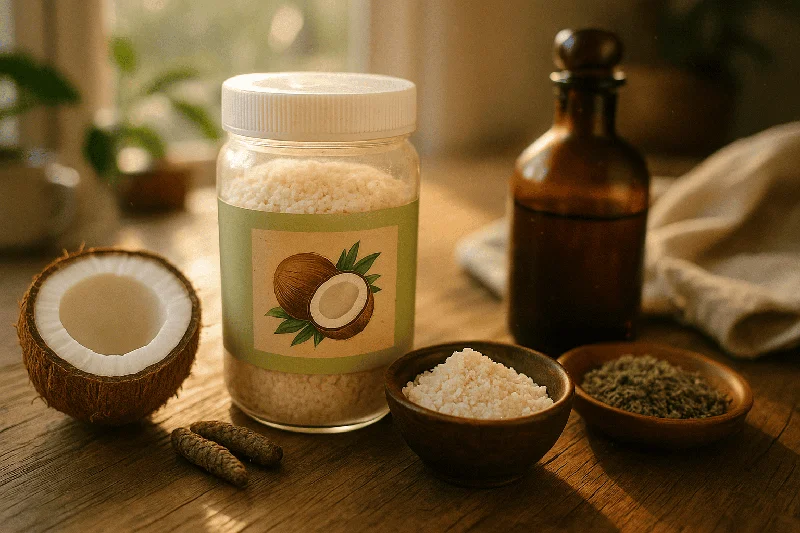
Narikela Khanda is a classical Ayurvedic granular formulation (Khanda Kalpana) primarily made from coconut (Narikela) and a synergistic blend of herbs, used for centuries to treat gastritis, hyperacidity, acid peptic disorders, and related digestive complaints. Described in the authoritative Ayurvedic text Bhaishajya Ratnavali under the Amlapitta Chikitsa chapter, it remains one of the most widely prescribed polyherbal preparations for Pitta-related gastrointestinal conditions in clinical Ayurvedic practice today.
- If you're dealing with chronic acidity, burning sensation in the stomach, sour belching, or even early-stage gastric ulcers — this formulation deserves your attention.
- In this comprehensive guide, we cover everything: from the original Sanskrit shloka and full ingredient list, to the step-by-step preparation method, pharmacological mechanism, dosage for adults and children, side effects, drug interactions, and how it compares to similar Ayurvedic medicines. We've also included sections on topics that no other resource online currently covers in detail, including Ayurvedic pharmacodynamics (Rasa Panchaka), dietary guidelines during treatment, and a list of commercial manufacturers.
What Is Narikela Khanda?
Narikela Khanda is a semi-solid to granular Ayurvedic preparation classified under Khanda Kalpana — a category of medicines where the primary drug is processed with sugar, honey, and ghee to form a palatable, easily digestible granular compound.
The name itself tells you the story:
- Narikela (नारिकेल) = Coconut (Cocos nucifera)
- Khanda (खण्ड) = A granular/semi-solid preparation made with sugar
It belongs to the Avaleha-Khanda group of Ayurvedic formulations, which are essentially electuary-like preparations designed for long-term oral administration with pleasant taste — an important factor when treating chronic conditions that require weeks of consistent use.
Classical Reference — Bhaishajya Ratnavali
The primary classical source for Narikela Khanda is Bhaishajya Ratnavali, specifically the Amlapitta Adhikara (Chapter on Hyperacidity/Gastritis), verses 80–92. Bhaishajya Ratnavali, authored by Govinda Das Sen in the 18th century, is considered one of the most practically-oriented Ayurvedic pharmacopoeias and remains a standard reference for practitioners.
Some scholars also trace variations of this formulation to Yoga Ratnakara and Gadanigraha, though the Bhaishajya Ratnavali version is the most widely followed in contemporary manufacturing.
Shloka (Sanskrit Verse with Translation)
The original Sanskrit shloka from Bhaishajya Ratnavali describes the formulation as follows:
> नारिकेलस्य तोयेन खण्डं पक्त्वा विधानतः।
> प्रक्षिपेत् तत्र नागरं पिप्पलीं मरिचानि च॥
Translation: "Cook sugar (Khanda) in coconut water according to the prescribed method. Then add Nagara (dry ginger), Pippali (long pepper), and Maricha (black pepper)..."
The shloka continues to list all additional herbs, prakshep dravyas (finishing powders), and the specific sequence of addition. The full verse set (approximately 12 shlokas) details the precise proportions and methodology.
Ingredients and Composition of Narikela Khanda
Understanding the composition is critical — whether you're a practitioner, student, or patient wanting to know exactly what goes into your medicine. The formulation combines a coconut base with Trikatu (three pungent spices), aromatic spices, and mineral-rich adjuvants.
Main Ingredient — Coconut (Narikela)
- Tender coconut water and coconut pulp serve as the primary ingredient and the base medium.
- Coconut (Cocos nucifera, Family: Arecaceae/Palmae) is considered Madhura (sweet) in Rasa, Snigdha (unctuous) and Guru (heavy) in Guna, and Sheeta (cooling) in Virya — making it naturally antagonistic to excess Pitta. It provides a protective, soothing effect on the gastric mucosa.
Complete List of Herbs with Botanical Names
| Ingredient (Sanskrit) | Botanical / English Name | Part Used | Role in Formulation |
|---|---|---|---|
| Narikela Jala | Cocos nucifera (Coconut water) | Water | Base medium, Pitta-shamaka |
| Narikela Mansa | Cocos nucifera (Coconut pulp/meat) | Fruit pulp | Mucoprotective, nutritive |
| Khanda Sharkara | Sugar candy / Mishri | — | Sweetening agent, vehicle (Yoga Vaahi) |
| Shunthi (Nagara) | Zingiber officinale (Dry ginger) | Rhizome | Deepana (appetizer), anti-inflammatory |
| Pippali | Piper longum (Long pepper) | Fruit | Deepana, bioavailability enhancer |
| Maricha | Piper nigrum (Black pepper) | Fruit | Kapha-shamaka, digestive stimulant |
| Twak | Cinnamomum zeylanicum (Cinnamon) | Bark | Aromatic, carminative |
| Ela | Elettaria cardamomum (Cardamom) | Seed | Aromatic, anti-emetic |
| Tamala Patra | Cinnamomum tamala (Bay leaf) | Leaf | Aromatic, digestive |
| Nagakeshara | Mesua ferrea (Ironwood) | Flower stamen | Hemostatic, Pitta-shamaka |
| Karpura | Cinnamomum camphora (Camphor) | Crystal | Aromatic, gastroprotective |
| Ghrita | Cow's ghee (clarified butter) | — | Vehicle, Pitta-shamaka, enhances absorption |
| Madhu | Honey | — | Yogavahi (catalytic vehicle), wound-healing |
| Pravala Bhasma | Coral calx (processed coral) | — | Antacid, calcium supplement |
| Shukti Bhasma | Pearl oyster shell calx | — | Antacid, Pitta-shamaka |
| Mukta Shukti Bhasma | Mother of pearl calx | — | Antacid, cooling |
> Note: Some manufacturers add or substitute minor ingredients based on regional traditions or the specific Bhaishajya Ratnavali edition they follow. Pravala Bhasma and Shukti Bhasma function as natural antacids — a detail often overlooked but critically important for understanding the formulation's efficacy.
Proportions and Quantities
- The classical text prescribes specific ratios. The coconut water and sugar form the bulk (approximately 70–75% of the final product by weight).
- The Prakshep Dravyas (finishing powders — Trikatu, aromatics, bhasmas) constitute the remaining 25–30%. Ghee and honey are added in specific quantities during different stages of preparation. Exact proportions vary slightly between editions, but standard manufacturing follows the AFI (Ayurvedic Formulary of India) ratios.
Method of Preparation (Narikela Khanda Vidhi)
This is one of the biggest gaps in existing online resources — most sites offer only a vague 2-sentence description. Here's the detailed, step-by-step process based on classical texts and standard manufacturing practices.
Step-by-Step Process
Step 1 — Preparation of Coconut Base
Extract fresh coconut water from mature coconuts. Separately, grate or finely chop the coconut pulp (Narikela Mansa). Combine both in a wide-mouthed vessel (preferably stainless steel or traditional bronze).
Step 2 — Sugar Syrup Preparation (Paka)
Add Khanda Sharkara (sugar) to the coconut water-pulp mixture. Heat on a medium flame (Madhyagni), stirring continuously. The mixture is cooked until it reaches two-thread consistency (Dwitantupaka Siddhi) — when a drop of the syrup between thumb and forefinger forms two threads when pulled apart. This stage is crucial; overcooking leads to hardening, undercooking means the granules won't form properly.
Temperature range: Approximately 110–115°C for the two-thread stage. Step 3 — Addition of Ghee
Once two-thread consistency is achieved, remove the vessel from heat. Add pre-warmed ghee (cow's ghee) and mix thoroughly. The ghee serves both as a preservative and as a Pitta-pacifying vehicle.
Step 4 — Cooling Phase
Allow the mixture to cool to approximately 40–45°C. It should begin solidifying into a granular/semi-solid mass. During this cooling phase, the mixture is continuously stirred or churned to prevent lump formation and ensure uniform granule size.
Step 5 — Addition of Prakshep Dravyas (Finishing Powders)
Once the base has cooled sufficiently (below 50°C — this is important because some volatile constituents in spices are heat-sensitive), add the finely powdered herbs in the following order:
- 1.First: Trikatu (Shunthi, Pippali, Maricha)
- 2.Then: Aromatic group (Twak, Ela, Tamala Patra, Nagakeshara)
- 3.Then: Bhasmas (Pravala Bhasma, Shukti Bhasma, Mukta Shukti Bhasma)
- 4.Finally: Karpura (Camphor) — added last because it's the most volatile
Step 6 — Addition of Honey (Madhu)
Honey is added only after the mixture has cooled to below 40°C. Ayurvedic texts strictly prohibit heating honey above 40°C (Ushna Madhu is considered toxic in Ayurveda, and modern studies confirm that heated honey produces hydroxymethylfurfural, a potentially harmful compound).
Step 7 — Final Mixing and Storage
Mix all components homogeneously. Store in a clean, dry, airtight glass or food-grade container. The final product should have a granular texture, pleasant coconut-sweet aroma, and slightly spicy taste.
Key Points and Tips
- The two-thread consistency (Step 2) is the make-or-break moment. Practise with a small batch first if you're preparing at home.
- - Never add honey to the hot mixture.
- This is not just tradition — there's a biochemical basis for it.
- Shelf life: 3 years when stored properly in an airtight container in a cool, dry place. After opening, consume within 4–5 months for optimal potency.
- Some modern manufacturers prepare a granule form (Narikela Khanda Granules) using spray-drying or tray-drying technology, which improves shelf life and dose uniformity compared to the traditional semi-solid form.
Ayurvedic Pharmacology (Rasa Panchaka)
This section covers the Dravyaguna (Ayurvedic pharmacological) properties of the formulation as a whole — something no existing online resource has documented. This analysis is based on the dominant properties of the major ingredients.
Rasa, Guna, Virya, Vipaka
| Property | Value | Explanation |
|---|---|---|
| Rasa (Taste) | Madhura (Sweet), Katu (Pungent) | Sweet from coconut + sugar; pungent from Trikatu |
| Guna (Quality) | Guru (Heavy), Snigdha (Unctuous) | Predominantly from coconut, ghee, and sugar |
| Virya (Potency) | Sheeta (Cooling) | Net cooling effect despite Trikatu, due to coconut dominance |
| Vipaka (Post-digestive effect) | Madhura (Sweet) | Promotes tissue nourishment, Pitta pacification |
| Prabhava (Special action) | Amlapitta Shamaka | Specific anti-hyperacidity action beyond what Rasa-Virya alone explains |
Effect on Tridosha (Dosha Karma)
Primary action: Pitta Shamaka (pacifies aggravated Pitta dosha) Secondary action: Vata Anulomana (normalizes the downward movement of Vata)
The formulation is best suited for individuals with Pitta-dominant or Pitta-Vata Prakriti (constitutional type) who present with hyperacidity, burning sensation, and heat-related digestive complaints. Due to its Guru and Snigdha properties, it may mildly increase Kapha — something to keep in mind for Kapha-dominant patients.
Mechanism of Action — How Narikela Khanda Works
Ayurvedic Perspective
From the Ayurvedic standpoint, Narikela Khanda works through multiple concurrent mechanisms:
- 1.Pitta Shamana: The Madhura Rasa and Sheeta Virya of coconut directly antagonize the Ushna (hot), Tikshna (sharp), and Amla (sour) qualities of aggravated Pitta
- 2.Agni Deepana without Pitta Prakopa: Trikatu kindles digestive fire (Agni) without aggravating Pitta — a delicate balance achieved by the buffering effect of coconut and sugar
- 3.Vrana Ropana (Wound Healing): Ghee and honey together (Madhura compounds) promote healing of mucosal erosions, relevant in gastric ulcers
- 4.Amla-Pitta Nashana: The Bhasmas (Pravala, Shukti) directly neutralize excess acid (Amla Guna of Pitta) in the stomach
Modern Pharmacological Explanation
While large-scale RCTs (Randomized Controlled Trials) specifically on Narikela Khanda are still limited, the pharmacological profiles of individual ingredients provide strong mechanistic support:
- Coconut water contains L-arginine, which has demonstrated gastroprotective activity in animal models. A 2012 study published in the Journal of Intercultural Ethnopharmacology showed that coconut water reduced gastric ulcer index by approximately 54% in ethanol-induced gastric ulcer models in rats.
- Piper longum (Pippali) contains piperine, which enhances the bioavailability of other co-administered drugs by up to 2000% (Badmaev et al., 1999, Journal of Nutritional Biochemistry). This explains why the formulation is more effective than individual herbs alone.
- Zingiber officinale (Shunthi) has well-documented anti-inflammatory and anti-emetic properties. A 2019 systematic review in Food Science & Nutrition confirmed ginger's efficacy in reducing nausea and gastrointestinal irritation.
- Pravala Bhasma is essentially calcium carbonate in a bioavailable form — functioning as a natural antacid, similar in action to modern OTC antacids but with potentially better mucosal tolerance.
- Ghee contains butyric acid, a short-chain fatty acid that supports intestinal mucosal integrity and has anti-inflammatory effects on the GI tract (Hamer et al., 2008, Alimentary Pharmacology & Therapeutics).
A standardization study published in the Journal of Ayurveda and Holistic Medicine (JAHM) confirmed the presence of multiple bioactive compounds in Narikela Khanda using HPTLC analysis, validating its complex multi-target pharmacological profile.
Uses and Benefits of Narikela Khanda (Therapeutic Indications)
What Is Narikela Khanda Used For?
The primary indication — the reason this formulation exists — is Amlapitta (hyperacidity/gastritis). But its therapeutic scope extends well beyond a single condition.
Gastritis and Acid Peptic Disorders (Amlapitta)
- This is the flagship indication.
- Narikela Khanda is particularly effective for:
- Chronic hyperacidity with sour/bitter eructation (belching)
- Burning sensation in the chest and epigastric region (Hrit-Kantha Daha)
- Nausea and vomiting associated with excess gastric acid
- Non-ulcer dyspepsia (functional dyspepsia)
Clinical Ayurvedic practitioners have reported significant symptomatic relief within 7–14 days of regular administration, with sustained improvement over 4–6 weeks of treatment.
Gastric Ulcer (Parinaam Shoola)
Due to its mucoprotective properties (from coconut, ghee, and honey) combined with acid-neutralizing Bhasmas, Narikela Khanda is used as an adjunct in the management of gastric ulcers. It is not a standalone treatment for active bleeding ulcers — those require immediate medical intervention — but it helps in the healing phase and prevention of recurrence.
Abdominal Pain, Vomiting, and General Digestive Distress
The carminative spices (Ela, Twak, Tamala Patra) address bloating and abdominal discomfort, while Shunthi's anti-emetic properties help control nausea and vomiting. Patients with Pitta-type IBS (characterized by loose stools with burning) may also benefit.
Nutraceutical and Nutritional Benefits
- A 2018 article in Pharmacognosy Reviews (PhcogRev) highlighted Narikela Khanda's potential as a nutraceutical — a product that straddles the line between food and medicine.
- The formulation provides:
- Calcium (from Bhasmas and coconut)
- Medium-chain fatty acids (from coconut)
- Bioactive piperine (from Trikatu)
- Micronutrients and trace minerals
This makes it suitable not just as a medicine but as a supportive health supplement for individuals prone to acidity.
Dosage and Administration
Adult Dosage
| Parameter | Standard Recommendation |
|---|---|
| Dose | 10–20 grams (approximately 2–4 teaspoons) |
| Frequency | Twice daily |
| Timing | After meals (Paschat Bhakta) or as directed |
| Anupana (Adjuvant) | Warm milk, warm water, or honey |
| Duration | 4–8 weeks typically; up to 3 months under supervision |
Children's Dosage (by Age Group)
| Age Group | Dose | Frequency | Notes |
|---|---|---|---|
| Below 5 years | 2.5–5 grams | Once or twice daily | Only under physician supervision |
| 5–12 years | 5–10 grams | Twice daily | Can be mixed with milk for palatability |
| Above 12 years | Adult dose | Twice daily | — |
Anupana (Adjuvant) — What to Take It With
The choice of Anupana modifies the therapeutic effect:
- Warm milk: Best for Pitta-dominant conditions, enhances cooling and nourishing properties
- Warm water: Suitable for Kapha involvement (heaviness, loss of appetite)
- Honey: Enhances absorption and adds wound-healing properties — ideal when gastric erosions are suspected
Duration of Treatment
- For acute hyperacidity: 2–4 weeks is usually sufficient.
- For chronic gastritis or recurrent acid peptic disease: 6–8 weeks, sometimes extended to 12 weeks. Practitioners often combine it with Panchakarma procedures like Vamana or Virechana for resistant cases.
Side Effects, Precautions, and Contraindications
Known Side Effects
- Narikela Khanda is generally well-tolerated. No serious adverse effects have been documented in classical texts or contemporary clinical practice.
- Possible mild effects include:
- Slight heaviness in the stomach (due to Guru Guna) — usually resolves within a few days
- Weight gain with prolonged use (high sugar and ghee content)
Contraindications
This is an area where existing online resources are woefully incomplete. Beyond just diabetes, several contraindications deserve mention:
| Condition | Reason | Severity |
|---|---|---|
| Diabetes mellitus | Contains significant sugar; can spike blood glucose | Absolute contraindication (or use sugar-free variant) |
| Pregnancy | Some ingredients (Pippali, Maricha) may have uterine stimulant properties; safety not established | Relative — use only under strict medical supervision |
| Lactation | No safety data available | Use with caution |
| Coconut allergy | Primary ingredient is coconut | Absolute contraindication |
| Kapha disorders (obesity, hyperlipidemia) | Guru, Snigdha properties may aggravate Kapha | Relative — reduce dose or modify Anupana |
| Children under 1 year | No dosage data; immature digestive system | Avoid unless specifically prescribed |
Interaction with Allopathic Medicines
A common question that only one competitor has addressed.
Here's what we know:
- Antacids (PPIs, H2 blockers): Narikela Khanda can be taken alongside allopathic antacids, but maintain a gap of at least 30 minutes between them to avoid interference with absorption. The Bhasmas in Narikela Khanda have antacid properties themselves, so combined use may lead to excessive acid neutralization (alkalosis) in rare cases.
- Anti-diabetic drugs: Since it contains sugar, it may counteract the effect of hypoglycemic agents. Avoid or use cautiously.
- Antibiotics: No known adverse interactions, but maintain a 1-hour gap as a general precaution.
- NSAIDs: Interestingly, co-administration may be beneficial — Narikela Khanda's gastroprotective action can help offset NSAID-induced gastric irritation. Discuss with your physician.
Interaction with Homeopathic Medicines and Supplements
Ayurvedic medicines like Narikela Khanda can generally be taken alongside homeopathic medicines without issues, as they work through different mechanisms. However, the strong aromatic ingredients (camphor, cardamom) may theoretically interfere with certain homeopathic remedies that are antidoted by strong smells. Maintain a 30-minute gap as a precaution. Dietary supplements (multivitamins, calcium, iron) can be taken concurrently without known interactions.
Comparison with Similar Ayurvedic Formulations for Gastritis
Another gap that no competitor fills. Here's how Narikela Khanda stacks up against other commonly used Ayurvedic medicines for Amlapitta:
| Formulation | Primary Form | Best For | Key Difference from Narikela Khanda |
|---|---|---|---|
| Sootashekhar Ras | Tablet/pill (Rasa Yoga) | Acute gastritis with vomiting, Pitta headache | Contains Shuddha Parada (mercury); heavier formulation, requires more careful dosing |
| Kamdudha Ras | Tablet | Pitta disorders with burning sensation, bleeding | Purely mineral-based; no herbal component |
| Avipattikara Churna | Powder | Chronic constipation with acidity | Has Virechana (purgative) action — more suitable when constipation is a co-factor |
| Praval Panchamrit | Tablet | Acute acidity, calcium deficiency | Contains 5 mineral calxes; more potent antacid but less nourishing |
| Narikela Khanda | Granules/semi-solid | Chronic gastritis, sour eructation, maintenance therapy | Unique coconut base; palatable; safe for long-term use; has nutritive value |
Bottom line: Narikela Khanda is the safest and most palatable option for long-term maintenance therapy, especially in patients who need a gentle, nourishing approach. For acute severe cases, practitioners often start with Sootashekhar Ras or Kamdudha Ras and then transition to Narikela Khanda for maintenance.
Dietary Guidelines During Treatment (Pathya-Apathya)
Following proper dietary guidelines dramatically enhances the efficacy of Narikela Khanda. This is basic Ayurvedic practice, yet rarely discussed in online resources.
Pathya (Favorable / Recommended)
- Old rice (Purana Shali), barley (Yava), wheat
- Moong dal (green gram)
- Bottle gourd, ash gourd, tender coconut water
- Cow's milk, ghee, butter
- Pomegranate, ripe banana, sweet grapes
- Fennel water, coriander water
Apathya (Unfavorable / Avoid)
- Spicy, sour, and fermented foods (pickles, vinegar, tamarind, excess tomatoes)
- Excessive tea, coffee, alcohol
- Fried and oily food (despite the formulation containing ghee, external fried food aggravates Pitta differently)
- Citrus fruits in excess
- Late-night eating, skipping meals, fasting for prolonged periods
- Curd at night (a classic Ayurvedic dietary rule)
Commercial Manufacturers and Brand Variations
Several reputable Ayurvedic pharmaceutical companies manufacture Narikela Khanda. While the core formulation remains consistent (based on Bhaishajya Ratnavali), minor variations exist in proportion, processing, and additional ingredients:
- Baidyanath — One of the most widely available brands; traditional formulation
- Dhootapapeshwar — Known for high-quality Bhasma processing; premium segment
- Dabur — Mass-market availability; standardized manufacturing
- Zandu — Available in both traditional and granule forms
- Unjha Pharmacy — Gujarat-based; follows traditional methods closely
- Kottakkal Arya Vaidya Sala — Kerala tradition; may have slight regional variation in spice proportions
> Always look for the GMP (Good Manufacturing Practices) certification mark and check the manufacturing date. Prefer products manufactured within the last 12 months for maximum potency.
Frequently Asked Questions (FAQ)
What is Narikela Khanda used for?
Narikela Khanda is primarily used for treating Amlapitta (hyperacidity/gastritis), acid peptic disorders, sour eructation, burning sensation in the stomach, nausea, and vomiting. It is also used as a supportive therapy in gastric ulcer healing and as a general digestive tonic.
What is the family name of Narikela?
Narikela (Coconut, Cocos nucifera) belongs to the family Arecaceae (also known as Palmae or the Palm family). It is the only living species of the genus Cocos.
How is Narikela Khanda preparation done?
The preparation involves cooking coconut water and pulp with sugar to two-thread consistency, then adding ghee, followed by powdered herbs (Trikatu, aromatic spices, Bhasmas) after partial cooling, and finally adding honey once the mixture cools below 40°C. The full step-by-step process is described in the preparation section above.
What is Narikel Lavan used for?
Narikel Lavan (coconut salt preparation) is a different Ayurvedic formulation, primarily used for digestive disorders associated with Vata and Kapha. It should not be confused with Narikela Khanda, which is a sweet preparation targeting Pitta-dominant conditions.
Can Narikela Khanda be taken during pregnancy?
There is insufficient safety data for use during pregnancy. Some ingredients like Pippali and Maricha have potential uterine-stimulant properties. Consult a qualified Ayurvedic physician before use during pregnancy or lactation.
Is Narikela Khanda safe for long-term use?
Yes, when taken in recommended doses, it is considered safe for up to 3 months of continuous use. For longer duration, periodic breaks (1–2 weeks off after every 2 months) are advisable, and blood sugar monitoring is recommended due to its sugar content.
Can diabetic patients take Narikela Khanda?
Standard Narikela Khanda contains significant sugar and is generally contraindicated in diabetes. However, some manufacturers produce a "sugar-free" or modified version using Stevia or reduced sugar. Consult your physician for alternatives like Kamdudha Ras if you have diabetes.
Conclusion
Narikela Khanda represents the best of Ayurvedic formulation science — a thoughtfully designed polyherbal compound that combines the mucoprotective power of coconut, the digestive-stimulating properties of Trikatu, the acid-neutralizing action of mineral Bhasmas, and the healing potential of ghee and honey into a single, palatable medicine. It is safe, effective, and time-tested over centuries.
Whether you are a patient suffering from chronic acidity, a practitioner looking for a reliable Amlapitta formulation, or a student studying Bhaishajya Kalpana — this formulation deserves a prominent place in your therapeutic toolkit.
However, self-medication is never advisable. Always consult a qualified Ayurvedic physician (BAMS or MD Ayurveda) who can assess your Prakriti, Vikriti, and specific condition before prescribing Narikela Khanda or any Ayurvedic medicine. The dosage, duration, and Anupana should be personalized for optimal results.
- Have questions about Narikela Khanda or need personalized guidance?
- Consult with our verified Ayurvedic doctors — they're available to help you with your specific health concerns.
Scientific Sources
- Antiulcerogenic effects of coconut (Cocos nucifera) extract in rats — Nneli RO et al., 2008, Phytotherapy research : PTR
- Administration of Young Coconut (Cocos nucifera L.) Juice Ameliorates Memory Impairment in a Menopausal Rat Model — Sugiyama S et al., 2024, Diseases (Basel, Switzerland)
- Diet therapy for the treatment of Alzheimer's disease in view of traditional Persian medicine: A review — Iranshahy M et al., 2019, Iranian journal of basic medical sciences
- Optimized nanostructured lipid carriers from aceh traditional coconut (Pliek) oil: a promising topical formulations for atopic dermatitis — Hayati R et al., 2025, Archives of dermatological research
- Photo-mediated optimized synthesis of silver nanoparticles using the extracts of outer shell fibre of Cocos nucifera L. fruit and detection of its antioxidant, cytotoxicity and antibacterial potential — Das G et al., 2021, Saudi journal of biological sciences
Ask Ayurvedic doctor a question and get a consultation online on the problem of your concern in a free or paid mode.
More than 2,000 experienced doctors work and wait for your questions on our site and help users to solve their health problems every day.
Related articles