Ask Ayurvedic doctor a question and get a consultation online on the problem of your concern in a free or paid mode. More than 2,000 experienced doctors work and wait for your questions on our site and help users to solve their health problems every day.


Body DetoxEar, Nose, and Throat DisordersGeriatrics & RejuvenationImmunodeficiencyInfertility TreatmentNutritionOrthopedic DisordersPediatricsRespiratory DisordersSexually Transmitted Diseases (STDs)Surgery RecoveryUrological DisordersVascular DisordersDental DisordersEndocrinological DisordersGastrointestinal DisordersYoga TherapyGeneral MedicineAllergic DisordersCardio DisordersGynecology and ObstetricsCosmetologySkin and Hair DisordersEye DisordersInfectious DiseasesMental DisordersNeurological DisordersOncologyPanchakarmaSexual Health & DisordersSports Medicine
Published on 12/19/24
(Updated on 08/09/26)
star_border 5
6,609
Panchavalkala Kwatha Churna: Benefits, Dosage & Ayurvedic Insights
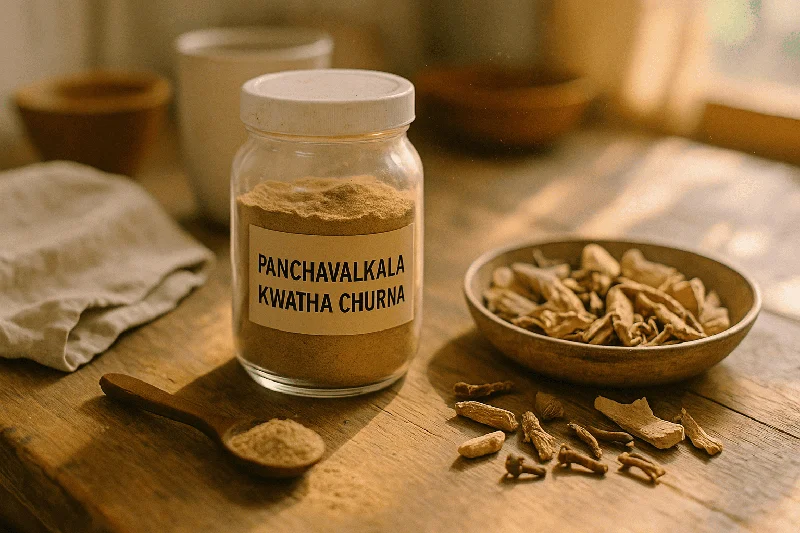
Panchavalkala Kwatha Churna is a classical Ayurvedic formulation made from the barks of five sacred fig trees — Vata (Ficus benghalensis), Udumbara (Ficus racemosa), Ashwattha (Ficus religiosa), Plaksha (Ficus lacor), and Parisha (Thespesia populnea). It is primarily used as an antiseptic, anti-inflammatory, and wound-healing remedy, both internally as a decoction (kwatha) and externally as a wash or sitz bath. Referenced in classical texts like the Sushruta Samhita and Sharangdhara Samhita, this churna remains one of the most trusted Ayurvedic preparations for skin disorders, post-surgical wound care, digestive issues, and urological complaints.
If you've been searching for a clear, evidence-backed guide on what Panchavalkala Kwatha Churna actually does, how to prepare and use it correctly, and whether it's safe for daily consumption — you're in the right place. This article covers everything the existing resources online leave out, including step-by-step preparation instructions, a full pharmacological breakdown of each ingredient, and a comparison of internal versus external applications.
What Is Panchavalkala Kwatha Churna and Why Does It Matter?
The name itself tells the story. "Pancha" means five. "Valkala" means bark. "Kwatha" means decoction. "Churna" means powder. So Panchavalkala Kwatha Churna is literally a powder made from five barks, intended to be boiled into a therapeutic decoction.
- This isn't some modern wellness invention.
- The formulation finds its roots in the Sushruta Samhita — one of the foundational texts of Ayurvedic surgery — where Acharya Sushruta classified Panchavalkala under the Nyagrodhadi Gana (a group of astringent and healing herbs). Chakrapani and Bhavamishra also referenced these five barks in their commentaries, specifically recommending them for Vrana Shodhana (wound cleansing) and Vrana Ropana (wound healing).
What makes this formulation unique in the Ayurvedic pharmacopoeia is its dual action: it works both as an internal detoxifying agent and as a powerful external antiseptic. Most Ayurvedic churnas are designed for one or the other. Panchavalkala bridges both.
The Ayurvedic Philosophy Behind Panchavalkala
From an Ayurvedic perspective, Panchavalkala Kwatha Churna works through three primary mechanisms:
- 1.Agni Deepana (Stimulating Digestive Fire): The astringent and bitter properties of the five barks stimulate Agni, improving digestion and nutrient absorption.
- 2.Ama Pachana (Detoxification): By strengthening Agni, the formulation helps burn Ama — the toxic metabolic residue that Ayurveda considers the root cause of most diseases.
- 3.Tridosha Shamana (Balancing All Three Doshas): While predominantly Kapha- and Pitta-pacifying due to its cooling and astringent nature, Panchavalkala also helps regulate Vata when used in warm decoction form.
This tridoshic balancing capability is what makes it applicable across such a wide range of conditions, from inflammatory skin diseases to digestive disorders to post-surgical wound management.
Key Ingredients in Panchavalkala Kwatha Churna: A Complete Pharmacological Breakdown
No other resource online gives you the full Ayurvedic pharmacological profile of all five ingredients. Here it is.
| Ingredient | Latin Name | Rasa (Taste) | Guna (Quality) | Virya (Potency) | Vipaka (Post-Digestive Effect) | Dosha Action | Key Bioactive Compounds |
|---|---|---|---|---|---|---|---|
| Vata (Nyagrodha) | Ficus benghalensis | Kashaya (Astringent) | Guru, Ruksha (Heavy, Dry) | Sheeta (Cooling) | Katu (Pungent) | Kapha-Pitta Shamaka | Tannins, flavonoids, β-sitosterol |
| Udumbara | Ficus racemosa | Kashaya, Madhura (Astringent, Sweet) | Guru, Ruksha | Sheeta | Katu | Pitta-Kapha Shamaka | Lupeol, stigmasterol, tannins |
| Ashwattha | Ficus religiosa | Kashaya, Madhura | Laghu, Ruksha (Light, Dry) | Sheeta | Katu | Pitta-Kapha Shamaka | Phytosterols, tannins, phenolic acids |
| Plaksha | Ficus lacor | Kashaya | Guru, Ruksha | Sheeta | Katu | Kapha-Pitta Shamaka | Flavonoids, leucoanthocyanins |
| Parisha | Thespesia populnea | Kashaya, Tikta (Astringent, Bitter) | Laghu, Ruksha | Sheeta | Katu | Pitta-Kapha Shamaka | Gossypol, kaempferol, herbacetin |
- A few things worth noting here. All five ingredients share Kashaya Rasa (astringent taste) and Sheeta Virya (cooling potency).
- This is not a coincidence — it's precisely this shared pharmacological profile that gives Panchavalkala its powerful anti-inflammatory and hemostatic properties. The tannin content across all five barks contributes to protein precipitation at wound surfaces, creating a natural protective layer that speeds healing.
The flavonoid and phenolic acid content in Ashwattha and Plaksha specifically has been studied for antioxidant activity. A 2017 study published in the Journal of Ethnopharmacology confirmed significant free-radical scavenging activity in Ficus religiosa bark extracts, with IC50 values comparable to standard ascorbic acid.
What Is Panchavalkala Kwatha Churna Used For? Benefits and Therapeutic Applications
Wound Healing and Post-Surgical Care
This is where Panchavalkala truly shines. A detailed clinical case published in the International Journal of Ayurveda Research documented the treatment of a post-fistulectomy wound using Panchavalkala-based ointment (prepared through the Snehapaka method in 1:4:16 proportions of paste, ghee, and decoction). The wound showed complete epithelialization within 2.5 months, with photographic documentation at regular intervals confirming progressive healing.
The Sushruta Samhita specifically recommends Panchavalkala Kwatha for Vrana Prakshalana (wound washing) — using the warm decoction to irrigate surgical wounds, chronic ulcers, and traumatic injuries. The combined astringent and antimicrobial action reduces exudate, controls infection, and promotes granulation tissue formation.
Skin Health: Acne, Eczema, and Infections
Panchavalkala Kwatha Churna is one of the most commonly prescribed Ayurvedic remedies for persistent skin conditions. The antimicrobial and anti-inflammatory properties make it effective for:
- Acne and boils — external wash with lukewarm decoction
- Eczema and contact dermatitis — both internal consumption and external application
- Fungal skin infections — a 2019 in-vitro study demonstrated antifungal activity of Ficus benghalensis bark extract against Candida albicans and Aspergillus niger
- Pruritus (itching) — the cooling potency provides symptomatic relief while the antimicrobials address the underlying cause
Digestive Health and Internal Detoxification
Internally, Panchavalkala Kwatha acts as a gentle detoxifier. The astringent properties help tone the intestinal mucosa, making it particularly useful in:
- Chronic diarrhea and dysentery
- Excessive intestinal mucus secretion
- Mild hemorrhoidal bleeding (the hemostatic action of tannins)
- General Ama accumulation manifesting as bloating, coated tongue, and sluggish digestion
Support for the Urinary System
This is a benefit most resources overlook entirely. Panchavalkala Kwatha Churna has been traditionally used for urinary tract complaints including burning micturition (Mutrakrichra), mild UTIs, and excessive urinary frequency. The cooling and anti-inflammatory properties of the five barks soothe the urinary tract epithelium, while the antimicrobial action helps manage low-grade infections.
Respiratory Support
- The Kapha-pacifying nature of Panchavalkala makes it applicable in certain respiratory conditions — particularly productive cough with excessive mucus, mild bronchial congestion, and allergic rhinitis.
- However, it's worth being honest here: respiratory support is not its primary indication, and it would typically be prescribed alongside more targeted respiratory formulations like Sitopaladi Churna or Talisadi Churna.
Panchavalkala Kwatha Sitz Bath (Avagahasvedana)
One of the most practical and effective applications is the Avagahasvedana — a warm sitz bath using Panchavalkala decoction.
This is specifically recommended for:
- Post-operative ano-rectal wound care (after fistulectomy, hemorrhoidectomy, or pilonidal sinus surgery)
- Perineal infections and inflammation
- Vaginal discharge and mild cervical infections
- Perianal itching and fissures
The clinical case mentioned earlier used this exact protocol: Panchavalkala Kwatha sitz bath twice daily for 15-20 minutes, followed by application of Panchavalkala-based ointment. The results were documented with standardized wound assessment scores.
Internal vs External Use: A Comparative Guide
- This is something no other resource has systematized.
- Here's a clear breakdown:
| Parameter | Internal Use (Decoction/Kwatha) | External Use (Wash/Sitz Bath/Ointment Base) |
|---|---|---|
| Primary Purpose | Digestive support, detoxification, urinary complaints, systemic inflammation | Wound healing, skin disorders, post-surgical care, perineal conditions |
| Preparation | Boiled and filtered decoction taken orally | Warm decoction for washing, soaking, or as a base for ointments |
| Typical Dosage | 40-60 ml decoction, twice daily | As needed for washing; 15-20 min for sitz bath |
| When to Use | Before meals for digestive issues; after meals for sensitive stomachs | After cleaning the wound area; morning and evening |
| Duration of Use | Typically 2-4 weeks as per physician guidance | Until wound healing is complete or skin condition resolves |
| Key Dosha Action | Pitta and Kapha Shamaka (systemic) | Pitta Shamaka (local anti-inflammatory) |
| Adjuvants (Anupana) | Warm water, honey (for Kapha), or ghee (for Pitta) | Plain warm water for dilution |
How to Prepare Panchavalkala Kwatha from Churna: Step-by-Step Instructions
This is perhaps the biggest gap in all existing online resources. Everyone mentions "prepare a decoction" but nobody tells you exactly how. The Sharangdhara Samhita provides the general methodology for Kwatha preparation, and here is its application to Panchavalkala Churna:
Standard Kwatha Preparation Method
Ingredients needed:
- Panchavalkala Kwatha Churna: 10-12 grams (approximately 1 tablespoon)
- Water: 192 ml (roughly 200 ml or one standard cup)
Step-by-step process:
- Measure 10-12 grams of Panchavalkala Kwatha Churna.
- The particle size should be coarse — this is important because fine powder passes through filtration and creates a gritty decoction.
- Soak the churna in 192 ml of water for 2-3 hours. Some practitioners recommend overnight soaking for maximum extraction, but 2 hours is sufficient for routine use.
- Heat the mixture on a low-to-medium flame. Bring it to a gentle boil, then reduce heat to maintain a slow simmer.
- Do not cover the vessel — evaporation is a critical part of the process.
- Reduce the liquid to one-quarter of its original volume. This means you're aiming for approximately 48 ml of final decoction from 192 ml of water. This ratio (reducing to 1/4th) is the standard Kwatha reduction prescribed by Sharangdhara.
- Filter through a clean cotton cloth or fine strainer while still warm. Press the residual churna gently to extract remaining liquid.
- Consume lukewarm.
- Do not reheat multiple times — prepare fresh for each dose when possible.
Preparation for External Use (Sitz Bath)
For external applications, the concentration can be different:
- Use 25-30 grams of churna in 1 liter of water
- Boil and reduce to approximately 500 ml
- Allow to cool until comfortably warm (not hot — test on your inner wrist)
- Pour into a sitz bath basin and soak for 15-20 minutes
- Pat dry gently afterward; do not rub the affected area
Panchavalkala Kwatha Churna Dosage: How Much, When, and For How Long
Standard Adult Dosage
| Form | Dosage | Frequency | Timing | Anupana (Vehicle) |
|---|---|---|---|---|
| Kwatha (decoction) | 40-60 ml | Twice daily | Before meals | Warm water or honey |
| Churna (direct powder) | 3-6 grams | Twice daily | Before meals | Warm water |
| External wash | As required | 1-2 times daily | After cleaning area | — |
| Sitz bath | 500 ml decoction | 1-2 times daily | Morning and evening | — |
Dosage for Children
Panchavalkala Kwatha Churna can be administered to children above 5 years of age, but only under the direct supervision of a qualified Ayurvedic practitioner. The general guideline is to reduce the adult dose proportionally — typically 1/4th dose for children aged 5-8, and 1/2 dose for children aged 8-14. External application as a wash is generally considered safer for younger children than internal consumption.
How Long Does It Take for Panchavalkala Kwatha Churna to Show Results?
This depends entirely on the condition being treated:
- Wound healing: Visible improvement within 1-2 weeks; complete healing may take 6-10 weeks for complex wounds (as documented in the clinical case study — 2.5 months for a post-fistulectomy wound)
- Skin conditions (acne, eczema): Initial improvement in 2-3 weeks with consistent use
- Digestive issues: Many patients report improvement within 5-7 days for acute complaints like diarrhea; chronic conditions may require 3-4 weeks
- Urinary complaints: Symptom relief typically begins within 1-2 weeks
Panchavalkala vs Other Ayurvedic Formulations: Understanding the Differences
Another area where existing resources fall short. People frequently confuse Panchavalkala Kwatha Churna with other related products and formulations:
| Formulation | Form | Primary Use | Key Difference from Kwatha Churna |
|---|---|---|---|
| Panchavalkala Kwatha Churna | Coarse powder for decoction | Versatile — internal and external | Raw material; you prepare the decoction yourself |
| Panchavalkala Kwatha (liquid) | Ready-made decoction | Same as churna but pre-prepared | Convenient but shorter shelf life; may contain preservatives |
| Panchavalkala Taila | Medicated oil | Primarily external — wound dressing, massage | Oil-based extraction captures lipophilic compounds differently |
| Panchavalkala Ghrita | Medicated ghee | Both internal and external; wound dressing | Fat-soluble bioactives; better for dry/Vata-type wounds |
| Panchavalkala Ointment/Lepa | Semi-solid paste | Direct wound application | Concentrated local action; prepared via Snehapaka vidhi |
The churna form gives you maximum versatility. You can prepare kwatha from it, use it as the base for creating taila or ghrita at home (with proper guidance), or even make a simple lepa by mixing with water or honey for topical application.
Don't wait or self medicate. Start chat with Doctor NOW
Safety, Side Effects, and Specific Contraindications
General Safety Profile
Panchavalkala Kwatha Churna is considered safe for most adults when used in recommended dosages for appropriate durations. The five barks have a long history of use in Ayurvedic practice with minimal reported adverse effects.
That said, here are specific precautions that go beyond the generic "consult your doctor" advice:
Specific Contraindications
- Pregnancy and breastfeeding: Avoid internal use. The uterotonic properties of certain Ficus species (particularly Ficus racemosa) make internal consumption potentially risky during pregnancy. External use for wound washing is generally considered acceptable, but confirm with your practitioner.
- Hypotension (low blood pressure): Panchavalkala's Sheeta Virya (cooling potency) may further lower blood pressure in individuals already prone to hypotension. Monitor symptoms like dizziness or lightheadedness.
- Ficus allergy: Though rare, some individuals may have allergic sensitivity to Ficus latex or bark compounds. If you develop rash, swelling, or breathing difficulty after use, discontinue immediately and seek medical attention.
- Concurrent use of anticoagulants: The tannin content may interact with blood-thinning medications by affecting platelet aggregation. If you're on warfarin, aspirin, or other anticoagulants, inform both your Ayurvedic practitioner and allopathic physician.
- Severe constipation: The astringent nature of Panchavalkala can worsen constipation in Vata-dominant individuals. If you have chronic constipation, your practitioner may prescribe a mild laxative alongside.
- Severe renal impairment: High tannin intake over prolonged periods may stress the kidneys. Patients with existing kidney disease should use this formulation only under strict medical supervision.
Compatibility with Other Ayurvedic Formulations (Pathya-Apathya)
Synergistic combinations (enhancers):
- Triphala Churna — enhances the detoxification and digestive benefits
- Jatyadi Taila — when combined externally, accelerates wound healing
- Manjishtadi Kwatha — for blood purification in chronic skin conditions
- Chandraprabha Vati — for urinary tract complaints
Combinations to avoid or use cautiously:
- Excessive heating formulations (like Trikatu in high doses) alongside Panchavalkala may counteract its cooling benefits
- Avoid combining with iron supplements — tannins can chelate iron and reduce absorption. Maintain at least a 2-hour gap
Can You Take Panchavalkala Kwatha Churna Daily?
For acute conditions, daily use for 2-4 weeks is standard practice. For chronic conditions, some practitioners prescribe it for longer durations but often in cycles — for example 4 weeks on, 1 week off. Long-term continuous use (beyond 8 weeks) without medical supervision is not recommended due to the cumulative effects of tannin intake on iron absorption and kidney function.
How to Choose a Quality Panchavalkala Kwatha Churna Product
Not all commercially available products are equal.
Here's what to look for:
- GMP certification: Ensure the manufacturer follows Good Manufacturing Practices as mandated by the AYUSH Ministry
- Coarse powder consistency: Authentic Kwatha Churna should be coarsely ground (Yavakuta — the size of broken barley grains), not fine powder. Fine powder indicates it may be mislabeled regular churna rather than kwatha churna
- Single-ingredient verification: Some products may add fillers or additional herbs. True Panchavalkala contains only the five specified barks in equal proportions
- Sourcing transparency: Ideally, the bark should be ethically and sustainably harvested. Brands that specify their sourcing regions or organic certification are preferable
- Expiry and manufacture date: Kwatha Churna retains potency for approximately 2 years from the date of manufacture when stored in a cool, dry place away from direct sunlight
Frequently Asked Questions
Is Panchavalkala Kwatha Churna safe for women?
Yes, Panchavalkala Kwatha Churna is generally safe for women for both internal and external use. It is, in fact, frequently prescribed in Ayurvedic gynecological practice — particularly as a vaginal wash (Yoni Prakshalana) for leucorrhea, mild cervical infections, and post-partum perineal care. However, internal consumption should be avoided during pregnancy due to the potential uterotonic effects of certain Ficus species. During breastfeeding, consult your practitioner before internal use.
Does Panchavalkala Kwatha Churna interact with other medications?
It can. The high tannin content may reduce the absorption of iron supplements, certain antibiotics (particularly tetracyclines and fluoroquinolones), and some cardiac medications. If you're on anticoagulant therapy (warfarin, heparin), the interaction with platelet function should be monitored. Always maintain a 2-hour gap between Panchavalkala Kwatha and any allopathic medication, and inform both your Ayurvedic and allopathic physicians about concurrent use.
Can Panchavalkala Kwatha Churna help with weight loss?
There is no direct classical reference or modern clinical evidence supporting Panchavalkala Kwatha Churna as a weight loss remedy. However, its ability to improve digestive fire (Agni) and clear metabolic toxins (Ama) may indirectly support healthy metabolism as part of a comprehensive weight management plan. It should not be used as a standalone weight loss supplement.
What should I do if I miss a dose?
Simply take the next scheduled dose at its regular time. Do not double up to compensate for a missed dose. If you're using it for wound healing or a chronic condition, consistency matters more than individual doses — missing one dose occasionally will not significantly impact outcomes.
What is the price range for Panchavalkala Kwatha Churna?
Prices in India typically range from ₹80 to ₹250 for a 100-gram pack, depending on the manufacturer and source. Premium organic or traditionally processed variants may cost more. The product is widely available through Ayurvedic pharmacies, online platforms like AyurCentral, and directly from manufacturers like Revinto, SN Herbals, and Ayurveda One.
Can Panchavalkala Kwatha Churna be used for dental problems?
Interestingly, yes. The astringent and antimicrobial properties make Panchavalkala Kwatha an effective mouthwash (Kavala Graha) for bleeding gums, gingivitis, mouth ulcers, and general oral hygiene. Prepare a standard decoction, allow it to cool to a comfortable temperature, and use it as a gargle or mouth rinse 2-3 times daily.
Conclusion: Making the Most of This Classical Formulation
- Panchavalkala Kwatha Churna represents one of Ayurveda's most versatile and time-tested formulations.
- Its strength lies in its simplicity — five barks with complementary pharmacological profiles that work synergistically for wound healing, skin health, digestive support, and beyond.
- The key to getting real results is proper preparation, correct dosage, and consistent use under qualified guidance.
- Don't just buy the powder and sprinkle it in water — take the time to prepare a proper kwatha using the reduction method described above. The therapeutic potency depends heavily on how you prepare it.
- If you're dealing with a specific health condition and wondering whether Panchavalkala Kwatha Churna is right for you, consult a qualified Ayurvedic practitioner who can assess your Prakriti (constitution), current Vikriti (imbalance), and prescribe the appropriate form, dosage, and duration.
- The formulation is powerful, but like any medicine — Ayurvedic or otherwise — it works best when tailored to your individual needs.
Scientific Sources
- Arsenic and Ayurveda — Prakash VB, 1994, Leukemia & lymphoma
- Ayurveda for the treatment of obesity(https://pubmed.ncbi.nlm.nih.gov/27546800/) — Korossy A et al., 2016, Orvosi hetilap
- Deluded confession: Response to Kishor Patwardhan — Karthik KP et al., 2023, Indian journal of medical ethics
- Therapeutic potential of Terminalia arjuna in cardiovascular disorders — Maulik SK et al., 2012, American journal of cardiovascular drugs : drugs, devices, and other interventions
- Ayurveda and yoga in cardiovascular diseases — Mamtani R et al., 2005, Cardiology in review
- Āyurveda's Contributions to Vegetarian Nutrition in Medicine — Manohar R et al., 2016, Forschende Komplementarmedizin (2006)
- Pueraria tuberosa: a review on its phytochemical and therapeutic potential — Maji AK et al., 2014, Natural product research
- Dermatoses secondary to Asian cultural practices — Lilly E et al., 2012, International journal of dermatology
- Overview of Ayurveda and Ashwagandha: Bioactive Phytochemicals and Potential Applications to Gliomas — Newton HB, 2025, Molecules (Basel, Switzerland)
- Ayurveda in changing scenario of diabetes management for developing safe and effective treatment choices for the future — Banerjee S et al., 2015, Journal of complementary & integrative medicine
- Management of Parkinson's disease in Ayurveda: Medicinal plants and adjuvant measures — Pathak-Gandhi N et al., 2017, Journal of ethnopharmacology
- Traditional medicine-inspired approaches to drug discovery: can Ayurveda show the way forward? — Patwardhan B et al., 2009, Drug discovery today
- Antioxidant approach to disease management and the role of 'Rasayana' herbs of Ayurveda — Govindarajan R et al., 2005, Journal of ethnopharmacology
- Earliest details of dermatology by Ayurveda — Tm R et al., 2021, Anais brasileiros de dermatologia
- Prameha in Ayurveda: correlation with obesity, metabolic syndrome, and diabetes mellitus.Part 2--management of Prameha — Sharma H et al., 2011, Journal of alternative and complementary medicine (New York, N.Y.)
- Upama - Analogies in Ayurveda — Rashmi TM et al., 2020, Breast (Edinburgh, Scotland)
- Diabetes mellitus, Ayurveda, and yoga — Manyam BV, 2004, Journal of alternative and complementary medicine (New York, N.Y.)
- Conquering the common cough with ayurveda — Ziment I, 1996, The National medical journal of India
- Role of selected Indian plants in management of type 2 diabetes: a review — Saxena A et al., 2004, Journal of alternative and complementary medicine (New York, N.Y.)
- Conducting literature searches on Ayurveda in PubMed, Indian, and other databases — Narahari SR et al., 2010, Journal of alternative and complementary medicine (New York, N.Y.)
Questions from users
Can Panchavalkala Kwatha Churna be used for digestive health?
Client_024239
3 days ago
Panchavalkala Kwatha Churna can be used for digestive health as it contains ingredients known for their anti-inflammatory and astringent properties, which may aid in gastrointestinal issues like diarrhea and inflammation. However, its primary function is not digestive health, so it should be used cautiously and under the supervision of a healthcare provider. If digestive issues persist beyond two weeks, it is advisable to consult a doctor. Always be cautious with Ayurveda if pregnant, nursing, or on medication like anticoagulants.
What skin conditions can Panchavalkala Kwatha Churna effectively treat?
Client_6442f1
8 days ago
Panchavalkala Kwatha Churna can be effective in treating various skin conditions, particularly acne, eczema, and skin infections. Its astringent and antimicrobial properties help reduce exudate, control infection, and promote the formation of granulation tissue, aiding the healing process. Typically, noticeable improvements may develop over weeks, but it's essential to monitor for any adverse reactions like rash or swelling. While Ayurveda offers this remedy, consult a healthcare provider for personalized advice, especially if you're pregnant, breastfeeding, or on anticoagulants, as these conditions require special caution.
What is the best time of day to consume Panchavalkala Kwatha Churna?
Client_3cb2d9
13 days ago
The best time to consume Panchavalkala Kwatha Churna is typically on an empty stomach in the morning or between meals to enhance absorption and efficacy. This herbal decoction is often used for its astringent and anti-inflammatory properties. Preparation involves soaking 10-12 grams of the churna in 192 ml of water for 2-3 hours. Daily intake for 2-4 weeks is common for acute conditions. If symptoms persist or side effects occur, consult a healthcare professional. Always follow the guidance of a qualified practitioner when using Ayurvedic remedies.
How to prepare a decoction using Panchavalkala Kwatha Churna?
Client_f07a28
18 days ago
To prepare a decoction using Panchavalkala Kwatha Churna, start by boiling 1 teaspoon of the churna in 2 cups of water. Allow it to simmer until the liquid reduces to half its volume, which typically takes about 15-20 minutes. Strain the liquid before use. This decoction can be used for wound healing and post-surgical care. Always consult with a healthcare professional before using, especially if you are pregnant or breastfeeding, as internal use is generally not recommended during these times. If any adverse effects occur, seek medical advice promptly.
What is the recommended dosage for Panchavalkala Kwatha Churna?
Client_1d5d9c
28 days ago
The recommended dosage for Panchavalkala Kwatha Churna is usually determined by the intended use and individual health conditions. Typically, 48 ml of the final decoction is prepared from 192 ml of water. It's used internally for detoxification and externally for wound cleansing and healing. For chronic conditions, some Ayurvedic practitioners might suggest using it in cycles, like taking it for 4 weeks followed by a break of 1 week. If you are pregnant, breastfeeding, or have specific health concerns, you should consult a healthcare practitioner before using Panchavalkala Kwatha Churna.
What are the potential side effects of using Panchavalkala Kwatha Churna?
Client_0460ca
38 days ago
Potential side effects of Panchavalkala Kwatha Churna can include gastrointestinal discomfort, such as nausea or constipation, due to its astringent properties. People with pre-existing conditions, like digestive or kidney issues, should be cautious. Monitoring for allergic reactions, such as skin rashes, is essential, especially if using it topically. If any severe symptoms occur, such as difficulty breathing or significant changes in bowel habits, it's crucial to consult a healthcare professional promptly. If there's uncertainty about its effects, seeking a medical opinion is advised.
What are the historical uses of Panchavalkala Kwatha Churna in traditional medicine?
Client_c7c2c4
48 days ago
Panchavalkala Kwatha Churna has been historically used in traditional medicine primarily to address urinary tract issues such as burning micturition, mild urinary tract infections, and frequent urination. It is a formulation consisting of five bark components, which are believed to have astringent and antimicrobial properties beneficial for these conditions. The decoction can be consumed as part of a treatment regimen, often necessitating preparation specific to traditional recipes. Users should monitor for any adverse reactions, and those with persistent symptoms should consult a healthcare provider to ensure proper diagnosis and treatment. While Ayurveda may support its use in certain contexts, always coordinate with medical advice particularly when combining with other treatments.
How long can I safely use Panchavalkala Kwatha Churna for skin treatment?
Client_fda927
57 days ago
It is safe to use Panchavalkala Kwatha Churna for skin treatment until you achieve the desired results or as advised by a healthcare professional. Typically, for skin conditions like acne or eczema, you may see initial improvement within 2-3 weeks with consistent application. Continued use should be monitored, and if side effects occur, such as irritation or no improvement after several weeks, consult a doctor. While Panchavalkala is often used topically, Ayurvedic formulations should be used cautiously and under guidance, as long-term usage is not well-studied.
Is it safe to use Panchavalkala Kwatha Churna for wound washing?
Client_d97caa
67 days ago
Yes, generally it's considered safe to use Panchavalkala Kwatha Churna for wound washing, but always good to check with your Ayurvedic practitioner. Make sure you're using legit products without fillers. Avoid it if you're prone to low blood pressure or pregnant. For some, the cooling nature might be too much, so just watch how your body feels and reacts.
Can Panchavalkala Kwatha Churna be used for treating fungal infections on the skin?
Client_1f96d9
76 days ago
Yes, Panchavalkala Kwatha Churna can be used for fungal skin infections! According to a 2019 study, the bark extract showed antifungal activity against Candida albicans and Aspergillus niger. However, it's good to consult a practitioner for personalized advice, especially if you have a unique condition or other treatments in mind. And remember, results can vary from person to person!
Related articles

Gastrointestinal Disorders
Is Banana Good for Loose Motion, Diarrhea, or Indigestion?
Learn if banana is good for loose motion, diarrhea, or indigestion. Discover how bananas help in stopping loose motion and soothe digestive issues naturally
7,323

Gastrointestinal Disorders
Khanjanikari Ras: Benefits, Uses & Ayurvedic Insights
Discover Khanjanikari Ras, an Ayurvedic remedy. Learn about its benefits, applications, ingredients, dosage, and how it supports overall health and wellness.
3,117
Gastrointestinal Disorders
Peptic Ulcer Ayurvedic Treatment: Natural Ways to Heal Stomach Ulcers
Discover effective Ayurvedic treatments for peptic ulcers, including herbal remedies, therapies, and lifestyle changes supported by scientific research to alleviate symptoms and promote healing.
3,682
Gastrointestinal Disorders
IBS Treatment in Ayurveda: What Actually Helps When Your Gut’s a Mess
Let’s be honest. If you’re googling "IBS treatment in Ayurveda," you’re probably desperate. Because Irritable Bowel Syndrome is one of those things that makes you feel like your body is sabotaging you from the inside out. And all the antispasmodics and lo
3,273

Gastrointestinal Disorders
How to Reduce Bile Naturally: Ayurvedic Remedies and Home Treatments
Exploration of Natural Remedies and Lifestyle Changes to Manage Bile Reflux
6,440
Gastrointestinal Disorders
Kapardika Bhasma Uses – Ayurvedic Remedy for Enhancing Health and Vitality
Explore the therapeutic benefits of Kapardika Bhasma, an Ayurvedic formulation used for various health conditions, including improving digestion, boosting immunity, and promoting overall wellness.
3,525

Gastrointestinal Disorders
Pothin Dravakam – Ayurvedic Elixir for Vitality and Healing
Discover Pothin Dravakam uses, benefits, dosage, and how this Ayurvedic formulation supports health. Learn ancient remedies and modern applications for wellness.
3,787

Gastrointestinal Disorders
Agasthya Rasayanam for Weight Loss: An Ayurvedic Approach to Shed Extra Pounds
Agasthya Rasayanam is a powerful Ayurvedic remedy that supports weight loss by enhancing metabolism, detoxifying the body, and promoting gut health.
4,265

Gastrointestinal Disorders
Is Lemon Tea Good for Loose Motion and Diarrhea?
Discover if lemon tea is good for loose motion and diarrhea. Learn how lemon water or black tea with lemon helps ease symptoms and when to use them
10,702

Gastrointestinal Disorders
Chopchinyadi Churna Uses – Ayurvedic Remedy for Digestive Health & Detoxification
Discover the uses of Chopchinyadi Churna, an Ayurvedic herbal powder known for its digestive health benefits, detoxifying properties, and ability to balance doshas.
2,893
Related consultations on the topic
Legal
Additional Documents
© 2024 Ask Ayurveda. All rights reserved.