Ask Ayurvedic doctor a question and get a consultation online on the problem of your concern in a free or paid mode. More than 2,000 experienced doctors work and wait for your questions on our site and help users to solve their health problems every day.


Body DetoxEar, Nose, and Throat DisordersGeriatrics & RejuvenationImmunodeficiencyInfertility TreatmentNutritionOrthopedic DisordersPediatricsRespiratory DisordersSexually Transmitted Diseases (STDs)Surgery RecoveryUrological DisordersVascular DisordersDental DisordersEndocrinological DisordersGastrointestinal DisordersYoga TherapyGeneral MedicineAllergic DisordersCardio DisordersGynecology and ObstetricsCosmetologySkin and Hair DisordersEye DisordersInfectious DiseasesMental DisordersNeurological DisordersOncologyPanchakarmaSexual Health & DisordersSports Medicine
Published on 12/27/24
(Updated on 08/09/26)
3,483
Rasnasaptakam Kashayam: Metabolic Health Booster
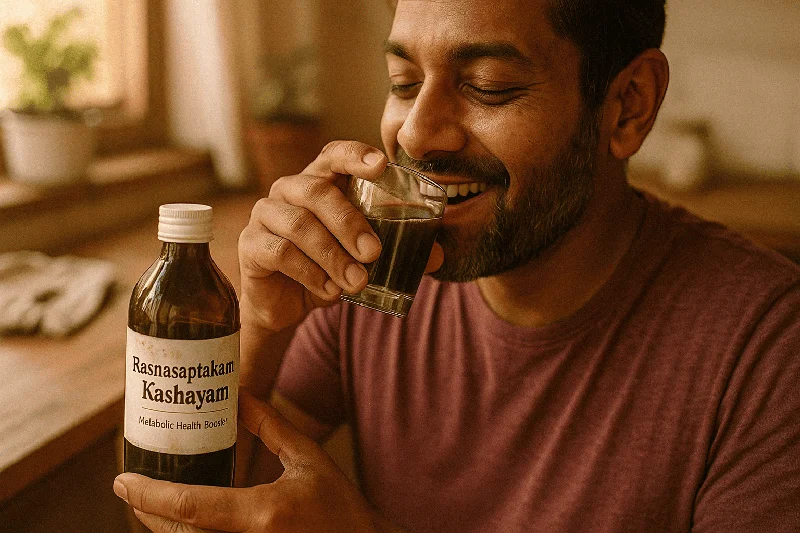
Rasnasaptakam Kashayam is a classical Ayurvedic decoction made from seven potent herbs — primarily used to relieve joint pain, back pain, sciatica, and inflammatory musculoskeletal conditions by balancing Vata and Kapha doshas. Referenced in the ancient text Sahasrayogam, this time-tested formulation works by improving cellular metabolism, clearing accumulated toxins (Ama) from joints and tissues, and reducing inflammation at the root level. Whether you're dealing with chronic stiffness, lumbar pain, or generalized body aches, Rasnasaptakam Kashayam offers a holistic approach that goes beyond symptom suppression.
In this comprehensive guide, we'll cover everything — from its exact ingredients and pharmacological mechanisms to dosage protocols, side effects, and how it compares to similar Ayurvedic formulations. This is the most detailed resource you'll find on this medicine, backed by classical references and modern pharmacological data.
What Is Rasnasaptakam Kashayam?
Rasnasaptakam Kashayam (also spelled Rasnasapthakam Kashayam or Rasna Saptak Kwath) is a polyherbal decoction belonging to the Kashayam category of Ayurvedic medicines. The word "Kashayam" refers to a water-based herbal decoction, traditionally prepared by boiling coarse powders of herbs in water until the liquid reduces to one-fourth or one-eighth of its original volume.
Classical Reference and Origin (Sahasrayogam)
The formulation originates from Sahasrayogam, one of the most comprehensive Ayurvedic formularies from the Kerala tradition. It appears in the Kashaya Prakarana (decoction chapter) and has been used for centuries by Vaidyas across South India. The text classifies it as a Vatahara (Vata-pacifying) and Shothahara (anti-inflammatory) preparation, primarily indicated for conditions involving pain, stiffness, and restricted mobility.
Meaning of the Name: 7 Key Herbs
The name breaks down simply: "Rasna" refers to the principal herb (Alpinia calcarata or Pluchea lanceolata), "Saptakam" means "group of seven," and "Kashayam" means decoction. So it literally translates to "a decoction of seven herbs led by Rasna." Each of the seven ingredients plays a specific synergistic role in the formula — we'll break these down in detail below.
Available Forms: Kashayam (Decoction) vs Tablet
Rasnasaptakam is available in two primary forms:
| Feature | Kashayam (Liquid) | Tablet Form |
|---|---|---|
| Bioavailability | Higher — direct absorption from GI tract | Slightly lower — needs disintegration first |
| Taste | Bitter and astringent (difficult for some) | Taste-masked, easier to consume |
| Shelf Life | Shorter (typically 2-3 years with preservatives) | Longer (3-5 years) |
| Traditional Preference | Preferred in classical practice | Modern convenience alternative |
| Dosage Precision | Measured in mL | Pre-measured tablets |
| Portability | Less convenient | Highly portable |
- From a purist Ayurvedic perspective, the liquid Kashayam form is considered more potent.
- The reason is straightforward: the decoction is already in a bioavailable liquid state, meaning the active phytochemicals are extracted and ready for absorption. However, the tablet form (Kashayam Gulika) is a practical alternative for people who cannot tolerate the bitter taste or need to travel. Both forms are manufactured by reputed companies like Kottakkal Arya Vaidya Sala, AVN Arogya, AVP (Arya Vaidya Pharmacy), and Sitaram Ayurveda.
Key Ingredients and Their Benefits
- What makes Rasnasaptakam Kashayam effective is the carefully balanced combination of seven herbs. Each ingredient addresses a specific aspect of Vata-Kapha pathology.
- Let's do a deep dive into each one — including their pharmacological actions supported by modern research.
Rasna (Alpinia calcarata / Pluchea lanceolata)
Rasna is the lead herb (Pradhana Dravya) in this formula. In Ayurveda, it's classified as one of the best Vatahara drugs. Its primary actions include anti-inflammatory, analgesic, and anti-rheumatic properties.
A 2013 study published in the Journal of Ethnopharmacology demonstrated that Alpinia calcarata rhizome extracts exhibited significant anti-inflammatory activity comparable to diclofenac sodium in animal models. The herb contains flavonoids and terpenoids that inhibit pro-inflammatory mediators like COX-2 and TNF-alpha.
Ayurvedic Properties: Tikta-Kashaya Rasa (bitter-astringent taste), Ushna Virya (hot potency), Vata-Kapha Shamaka.
Eranda (Ricinus communis)
Eranda — the castor plant — is arguably the most important Vatahara herb in the Ayurvedic pharmacopoeia. Specifically the root (Eranda Mula) is used in this formulation. It acts as a potent anti-inflammatory, mild laxative, and muscle relaxant.
Modern pharmacology confirms that ricinoleic acid from Ricinus communis activates prostanoid EP3 receptors, producing anti-inflammatory and analgesic effects. A 2011 study in Phytotherapy Research showed ricinoleic acid significantly reduced inflammation in both acute and chronic models.
Its Rechana (mild purgative) property is also strategically important — it helps eliminate Ama (metabolic toxins) through the GI tract, which Ayurveda considers a root cause of joint diseases.
Devadaru (Cedrus deodara)
Devadaru translates to "wood of the gods" and has been used for millennia in Ayurvedic anti-rheumatic formulations. The heartwood contains sesquiterpenes (particularly himachalol and β-himachalene) that demonstrate anti-inflammatory and anti-arthritic properties.
A 2015 study in the Indian Journal of Pharmaceutical Sciences found that Cedrus deodara wood extract reduced paw edema by 67% in carrageenan-induced inflammation models. Devadaru also has Medohara (fat-scraping) action, which helps in conditions where excess Kapha contributes to joint stiffness.
Punarnava (Boerhavia diffusa)
Punarnava literally means "that which renews the body." This herb is a powerful anti-inflammatory and diuretic, helping to reduce swelling in joints and tissues. Its key alkaloid punarnavine has shown anti-inflammatory activity by inhibiting histamine release and stabilizing mast cells.
A randomized clinical trial published in Ayu Journal (2014) demonstrated that Punarnava-containing formulations significantly reduced joint swelling and pain scores in osteoarthritis patients over 30 days. In Rasnasaptakam Kashayam, Punarnava addresses the Shotha (swelling) component of musculoskeletal disorders.
Aragwadha (Cassia fistula)
- Aragwadha, commonly known as the Golden Shower tree, might seem like an unusual inclusion in a joint pain formula.
- But its role is strategic: it acts as a Mridu Virechaka (mild purgative) and Kushtaghna (skin purifier) that supports elimination of Ama through the bowel.
- Its anti-inflammatory and antioxidant properties — documented in a 2017 review in Pharmacognosy Reviews — complement the other herbs.
In Ayurvedic pathology, many Vata disorders originate from Ama accumulation in the colon (Pakwashaya). Aragwadha ensures this root cause is addressed.
Gokshura (Tribulus terrestris)
Gokshura is included for its Balya (strengthening), Brimhana (nourishing), and Mutrala (diuretic) actions. It supports the Asthi Dhatu (bone tissue) and Mamsa Dhatu (muscle tissue) — both of which are affected in chronic musculoskeletal disorders.
Research published in Molecules (2020) identified steroidal saponins (protodioscin, terrestrosin) as the primary bioactive compounds, demonstrating anti-inflammatory, analgesic, and chondroprotective properties. Gokshura essentially helps rebuild the tissues that chronic Vata aggravation has degraded.
Guduchi / Amrutha (Tinospora cordifolia)
- Guduchi is called "Amrutha" (nectar) for good reason. It's one of the few herbs in Ayurveda classified as both Rasayana (rejuvenative) and Deepana (digestive fire enhancing).
- Its role in this formulation is multifold: immunomodulation, anti-inflammatory action, and enhancement of Agni (metabolic fire).
- A landmark 2016 systematic review in the Journal of Ayurveda and Integrative Medicine compiled data from 68 studies confirming Tinospora cordifolia's anti-inflammatory, antioxidant, and immunomodulatory properties.
- The active compounds — berberine, tinosporin, and columbin — modulate NF-κB and MAPK inflammatory pathways.
How Rasnasaptakam Kashayam Works
Understanding the mechanism of action requires looking at both the Ayurvedic and modern pharmacological perspectives.
Ayurvedic Pharmacodynamics: Agni, Ama, and Dhatu
According to Ayurveda, most musculoskeletal pain conditions follow a specific pathogenesis (Samprapti):
- Mandagni (weakened digestive fire) → improper digestion of food
- Ama Utpatti (toxin formation) → undigested metabolic waste accumulates
- Ama Sanchaya (toxin accumulation) → Ama circulates and deposits in joints, muscles, and channels
- Vata Prakopa (Vata aggravation) → pain, stiffness, restricted movement
- Kapha Anubandha (Kapha involvement) → swelling, heaviness, morning stiffness
Rasnasaptakam Kashayam addresses each stage: Guduchi and Aragwadha enhance Agni and eliminate Ama. Rasna, Devadaru, and Eranda pacify Vata. Punarnava and Gokshura reduce Kapha-related swelling and nourish depleted tissues.
Modern Pharmacological Mechanism
From a contemporary pharmacology standpoint, the formula works through multiple pathways:
- COX-2 inhibition — Rasna and Devadaru reduce prostaglandin synthesis
- TNF-alpha suppression — Guduchi modulates inflammatory cytokines
- Mast cell stabilization — Punarnava reduces histamine-mediated swelling
- Uric acid clearance — Gokshura's diuretic action aids renal excretion of inflammatory metabolites
- Smooth muscle relaxation — Eranda root's ricinoleic acid derivatives reduce muscular spasm
- Chondroprotection — Gokshura's saponins support cartilage integrity
This multi-target approach explains why the formula is effective for diverse conditions, from simple backache to complex inflammatory arthropathies.
Dosha Balancing: Vata and Kapha Shamana
The overall energetic profile of Rasnasaptakam Kashayam is Ushna Virya (hot potency) and predominantly Tikta-Kashaya Rasa (bitter-astringent taste). This combination specifically counteracts excess Vata (cold, dry, mobile qualities) and Kapha (cold, heavy, static qualities). It is not typically recommended for conditions driven by Pitta aggravation unless prescribed under supervision.
Uses and Health Benefits of Rasnasaptakam Kashayam
Joint Pain, Arthritis, and Inflammatory Conditions
The primary indication for Rasnasaptakam Kashayam is Sandhivata (osteoarthritis) and Amavata (rheumatoid arthritis). It reduces joint inflammation, improves synovial fluid quality, and restores mobility. Patients typically report significant pain reduction within 2–3 weeks of consistent use.
Back Pain, Sciatica, and Lumbar Disorders
This is where the formula truly excels. For Katigraha (lumbar stiffness), Gridhrasi (sciatica), and sacroiliac joint disorders, the combination of Rasna + Eranda + Devadaru provides targeted relief. Eranda root's muscle-relaxant action addresses paravertebral spasm, while Rasna and Devadaru reduce nerve inflammation.
Muscular Dystrophy and Degenerative Conditions
In progressive conditions like muscular dystrophy and degenerative disc disease, Rasnasaptakam Kashayam is used as part of a broader treatment protocol. The Balya (strengthening) actions of Gokshura and Guduchi support tissue nourishment, while the anti-inflammatory herbs manage pain.
Metabolic Health and Immune Function
Beyond musculoskeletal applications, the formula supports metabolic health through its action on Agni. Improved digestive fire means better nutrient assimilation and reduced Ama formation — creating a positive feedback loop that benefits overall immunity. Guduchi's immunomodulatory properties further enhance this effect.
Respiratory and Digestive Support
- The Vata-Kapha balancing nature of this Kashayam provides ancillary benefits for respiratory conditions (Kaphaja Kasa, mild asthma) and digestive sluggishness.
- However, these are secondary indications — not the primary use case.
Dosage, How to Use, and Duration of Treatment
Standard Adult Dosage
| Parameter | Kashayam (Liquid) | Tablet Form |
|---|---|---|
| Standard dose | 12–24 mL (about 15 mL typically) | 2 tablets |
| Frequency | Twice daily | Twice daily |
| Timing | Before food (empty stomach) | Before food |
| Adjuvant (Anupana) | Mix with equal quantity of lukewarm water | Lukewarm water |
| Optional Anupana | Dry ginger powder (Shunti Churna) added to the mix | — |
Important: Always shake the bottle well before use, as herbal sediment settles at the bottom.
Dosage for Children and Elderly
- Children (5–12 years): 5–10 mL, twice daily — strictly under physician supervision
- Elderly (65+ years): Start with 10 mL, twice daily, and increase to 15 mL based on tolerance
- Diabetic patients: Use the Kashayam form (sugar-free) rather than any Arishtam alternatives; monitor blood sugar regularly
How Long Should You Take It?
Duration varies by condition:
| Condition | Typical Course Duration | Notes |
|---|---|---|
| Acute back pain | 2–4 weeks | Often combined with external oil application |
| Chronic osteoarthritis | 6–12 weeks | May need periodic courses |
| Sciatica | 4–8 weeks | Best results with Panchakarma support |
| Lumbar spondylosis | 8–12 weeks | Long-term management, repeated courses |
| Muscular dystrophy | 12+ weeks | Part of comprehensive protocol |
| General Vata imbalance | 4–6 weeks | Seasonal use during Vata season (autumn/winter) |
How to Prepare Kashayam from Dry Powder (Churna) at Home
If you purchase the coarse powder (Kashaya Churna) form, here's the traditional preparation method:
- Take 10–15 grams of Rasnasaptakam Kashaya Churna
- Add 192 mL of water (approximately 12 times the powder volume)
- Soak overnight or for at least 2 hours
- Boil on low flame, stirring occasionally
- Reduce to one-fourth of the original volume (approximately 48 mL)
- Filter through a clean muslin cloth while still warm
- Divide into two doses; consume lukewarm, mixed with equal parts warm water
- Add a pinch of dry ginger powder (Shunti Churna) as Anupana for enhanced absorption
Pro tip: Freshly prepared Kashayam is considered more potent than bottled versions. However, manufactured Kashayam from reputable companies like Kottakkal or AVP uses standardized processes that ensure consistent quality and extended shelf life.
Don't wait or self medicate. Start chat with Doctor NOW
Side Effects, Contraindications, and Drug Interactions
Known Side Effects
Rasnasaptakam Kashayam is generally well-tolerated when used as directed.
Possible side effects include:
- Mild gastric irritation — especially if taken on a very empty stomach without the warm water dilution
- Loose stools — due to the Rechana (mild purgative) action of Eranda and Aragwadha; usually self-limiting
- Bitter aftertaste — common with the liquid form; rinsing mouth with warm water helps
Serious adverse effects are rare with standard doses. However, exceeding recommended dosage can cause excessive purgation or gastric discomfort.
Contraindications
- Pregnancy and lactation — not recommended unless specifically prescribed by an Ayurvedic physician
- Known allergy to any of the seven ingredients
- Severe Pitta conditions — active gastric ulcers, bleeding disorders, or acute hyperacidity (the Ushna Virya can aggravate Pitta)
- Severe dehydration or electrolyte imbalance — the diuretic action of Punarnava and Gokshura could worsen fluid status
- Children under 5 years — insufficient safety data
Interaction with Allopathic Medicines
This is a critical gap that no other resource addresses properly.
Here's what practitioners should know:
| Drug Class | Potential Interaction | Recommendation |
|---|---|---|
| NSAIDs (Ibuprofen, Diclofenac) | Additive anti-inflammatory effect; increased GI irritation risk | Maintain 2-hour gap; monitor for gastric symptoms |
| Corticosteroids | Theoretical additive immunosuppression with Guduchi's immunomodulation | Use under medical supervision only |
| Antihypertensives | Punarnava has mild diuretic effect; may potentiate BP-lowering drugs | Monitor blood pressure regularly |
| Antidiabetics | Guduchi may enhance insulin sensitivity | Monitor blood glucose; dose adjustment may be needed |
| Anticoagulants (Warfarin) | Some ingredients may have mild antiplatelet activity | Consult physician; monitor INR |
General rule: Maintain a minimum 2-hour gap between Rasnasaptakam Kashayam and any allopathic medication. Always inform both your Ayurvedic practitioner and allopathic doctor about concurrent medications.
Precautions for Special Groups
- Elderly with renal impairment: Use lower doses; Gokshura's diuretic action may alter renal hemodynamics
- Hepatic insufficiency: The herbal metabolites are processed by the liver; use reduced doses with monitoring
- Patients with GI disorders: Start with lower dose (10 mL) and increase gradually; always dilute with warm water
Rasnasaptakam Kashayam vs Similar Ayurvedic Formulations
One question practitioners and patients frequently ask: how does Rasnasaptakam compare to other anti-rheumatic Kashayams? Here's an honest comparison.
| Feature | Rasnasaptakam Kashayam | Dhanwantaram Kashayam | Sahacharadi Kashayam | Maharasnadi Kashayam |
|---|---|---|---|---|
| Primary Focus | Joint pain, back pain, sciatica | Vata disorders, neurological conditions, post-natal care | Lower limb Vata disorders, sciatica | Chronic rheumatic conditions, complex arthritis |
| Number of Herbs | 7 | 28+ | 10+ | 25+ |
| Dosha Action | Vata-Kapha | Primarily Vata | Primarily Vata | Vata-Kapha |
| Potency | Moderate | Moderate-High | Moderate | High |
| Best For | Acute-subacute musculoskeletal pain | Neurological + musculoskeletal | Sciatica, leg pain specifically | Chronic, resistant joint diseases |
| Complexity | Simple, targeted | Complex, broad-spectrum | Moderate | Highly complex |
| Side Effect Profile | Minimal | Low-moderate | Minimal | Moderate (more herbs = more variables) |
When to choose Rasnasaptakam: It's the ideal starting formulation for uncomplicated joint pain, fresh-onset back pain, and sciatica. Its simplicity (only 7 herbs) makes it predictable and well-tolerated. For chronic, resistant cases that don't respond after 4–6 weeks, your practitioner may escalate to Maharasnadi Kashayam.
Diet and Lifestyle During Treatment (Pathya-Apathya)
- The effectiveness of any Ayurvedic Kashayam is significantly influenced by diet and lifestyle.
- This is something most resources completely overlook — but it's arguably as important as the medicine itself.
Recommended (Pathya)
- Warm, freshly cooked foods — soups, khichdi, steamed vegetables
- Ginger-cumin-coriander tea — supports Agni and Ama digestion
- Sesame oil for external application (Abhyanga) on affected joints
- Mild exercise — walking, gentle stretching, basic yoga asanas (Trikonasana, Bhujangasana)
- Warm water throughout the day — aids toxin elimination
- Adequate sleep (7–8 hours) — Vata gets aggravated with sleep deprivation
To Avoid (Apathya)
- Cold foods and beverages — ice cream, cold water, refrigerated leftovers
- Excessive raw salads — difficult to digest, increases Vata
- Curd/yogurt at night — creates Ama; if needed, use buttermilk instead
- Stale or reheated food — depleted Prana, increases Ama
- Excessive physical strain — heavy lifting, intense exercise during acute pain
- Late nights and irregular schedules — directly aggravates Vata
Seasonal Considerations (Ritucharya)
Rasnasaptakam Kashayam is most beneficial during Vata-predominant seasons — Sharad Ritu (autumn, roughly September–November) and Shishira Ritu (late winter, January–February). Many Ayurvedic practitioners recommend seasonal preventive courses for patients with recurrent joint issues.
Role in Panchakarma Therapy
In clinical Ayurvedic practice, Rasnasaptakam Kashayam is frequently used as Shamana Aushadhi (palliative medicine) alongside Panchakarma procedures:
- Abhyanga + Swedana (oil massage + fomentation) — the Kashayam is taken internally while external oleation is performed
- Kati Basti (warm medicated oil pooling on the lower back) — for lumbar conditions
- Virechana (therapeutic purgation) — Rasnasaptakam may be used in the post-Virechana protocol for Vata management
- Basti (medicated enema) — the most important Panchakarma for Vata disorders; Rasnasaptakam supports the oral medication arm of this treatment
Frequently Asked Questions
Is Rasnasaptakam Kashayam effective for weight loss?
While not primarily a weight-loss medicine, Rasnasaptakam Kashayam's action on Agni (digestive fire) and Ama (metabolic toxins) can support metabolic efficiency. The Medohara (fat-scraping) property of Devadaru and the diuretic action of Punarnava may contribute to mild fluid reduction. However for dedicated weight management, formulations like Varanadi Kashayam or Guggulutiktam Kashayam are more appropriate. Don't rely on Rasnasaptakam alone for weight loss.
Can Rasnasaptakam Kashayam help with depression or anxiety?
This is a common question appearing in Google searches, but the answer is nuanced. Rasnasaptakam Kashayam is not a primary treatment for depression or anxiety. However, chronic pain itself is a major contributor to depressive symptoms. By effectively managing pain, this Kashayam can indirectly improve mood and quality of life. For direct management of mental health conditions, formulations like Manasamitra Vatakam or Brahmi preparations are more suitable.
How does Rasnasaptak Kadha work in the body?
- "Kadha" is simply the Hindi term for Kashayam (decoction).
- The medicine works through a multi-target mechanism: anti-inflammatory action reduces joint swelling, analgesic compounds manage pain signaling, mild purgative herbs eliminate toxins from the gut, diuretic herbs clear inflammatory metabolites via the kidneys, and immunomodulatory herbs (Guduchi) regulate the overactive immune response seen in conditions like rheumatoid arthritis. The warm potency (Ushna Virya) of the formulation enhances circulation to affected areas, improving nutrient delivery and waste removal.
Can I take Rasnasaptakam Kashayam with other Ayurvedic medicines?
Yes, it is commonly prescribed alongside other medicines. Common combinations include Yogaraja Guggulu tablets, Kottamchukkadi Thailam (for external application), and Dhanwantaram Thailam. However, self-combining multiple Kashayams without professional guidance is not advisable, as it may overload the liver or create antagonistic herbal interactions. Always consult a qualified Ayurvedic physician for combination protocols.
What is the shelf life of Rasnasaptakam Kashayam?
Bottled Kashayam from manufacturers like Kottakkal or AVP typically has a shelf life of 3 years from the date of manufacture. Store in a cool, dry place away from direct sunlight. Once opened, consume within 2–3 months and keep refrigerated. Freshly prepared Kashayam from Churna should be consumed the same day.
Is it safe to take Rasnasaptakam Kashayam long-term?
For chronic conditions, the medicine can be taken for 8–12 weeks per course. Most practitioners recommend breaks of 2–4 weeks between courses rather than continuous long-term use. This cycling approach prevents habituation and allows the body's natural healing mechanisms to consolidate. Continuous use beyond 12 weeks should only be under medical supervision with periodic assessment.
Conclusion: Is Rasnasaptakam Kashayam Right for You?
Rasnasaptakam Kashayam stands out as one of the most effective yet simple Ayurvedic formulations for Vata-Kapha musculoskeletal disorders. Its seven carefully selected herbs work synergistically to reduce inflammation, eliminate toxins, relieve pain, and nourish depleted tissues — addressing not just symptoms but the root cause of disease.
If you're experiencing joint pain, back pain, sciatica, or general body stiffness, this Kashayam deserves serious consideration — especially as a first-line Ayurvedic intervention before escalating to more complex formulations.
However, remember: Ayurvedic medicine works best under professional guidance. Consult a qualified Ayurvedic physician (BAMS or MD Ayurveda) who can assess your Prakriti, current Vikriti, and overall health status before starting treatment. Self-medication, while common, may not give you optimal results and could mask underlying conditions that need attention. Disclaimer: This article is for educational purposes only and does not constitute medical advice. Always consult a qualified healthcare practitioner before starting any new medication or supplement.
Scientific Sources
- A comparison of the antioxidant property of five Ayurvedic formulations commonly used in the management of vata vyadhis — Sruthi CV et al., 2012, Journal of Ayurveda and integrative medicine
- Downregulation of TLR4/MyD88/p38MAPK and JAK/STAT pathway in RAW 264.7 cells by Alpinia galanga reveals its beneficial effects in inflammation — George G et al., 2021, Journal of ethnopharmacology
- [Pharmacognostical evaluation of leaf of Bada Rasna [Nelsonia canescens (Lam.) Spreng.; Acanthaceae]](https://pubmed.ncbi.nlm.nih.gov/23661868/) — Acharya R et al., 2012, Ancient science of life
- Experimental evaluation of the analgesic property of eclipta alba (L) hassk — Pandey PS et al., 1997, Ancient science of life
- Hypolipidemic effect ofAlpinia galanga (Rasna) andKaempferia galanga (Kachoori) — Achuthan CR et al., 1997, Indian journal of clinical biochemistry : IJCB
- Can Guduchi (Tinospora cordifolia), a well-known ayurvedic hepato-protectant cause liver damage? — Panneer Selvam K et al., 2023, Journal of Ayurveda and integrative medicine
- Medicinal and Beneficial Health Applications of Tinospora cordifolia (Guduchi): A Miraculous Herb Countering Various Diseases/Disorders and its Immunomodulatory Effects — Dhama K et al., 2017, Recent patents on endocrine, metabolic & immune drug discovery
- Humoral immune and adjuvant responses of mucosally-administered Tinospora cordifolia immunomodulatory protein in BALB/c mice — Aranha I et al., 2020, Journal of Ayurveda and integrative medicine
- Indian Ayurvedic medicine: Overview and application to brain cancer — Newton HB, 2024, Journal of Ayurveda and integrative medicine
- Using Guduchi (Tinospora cordifolia) as an eco-friendly feed supplement in human and poultry nutrition — Saeed M et al., 2020, Poultry science
- Ayurvedic management in cervical spondylotic myelopathy — Singh SK et al., 2017, Journal of Ayurveda and integrative medicine
- A critical review on two types of Laghupanchamula — Ghildiyal S et al., 2012, Ayu
- Evaluation of the role of Nithyavirechana and Nayopayam kashaya in Tamaka Shwasa — Shyam PM et al., 2010, Ayu
- Anti-inflammatory activity of two classical formulations of Laghupanchamula in rats — Ghildiyal S et al., 2013, Journal of Ayurveda and integrative medicine
- Ayurveda management of post TURP urethral stricture: A case report — Sushendra T et al., 2025, Journal of Ayurveda and integrative medicine
- An experimental and clinical evaluation of anti-asthmatic potentialities of Devadaru compound (DC) — Sekhar AV et al., 2003, Indian journal of physiology and pharmacology
- Comparative study of herbal agents used for fumigtation in relations to formulation(*) — Bisht LS et al., 1988, Ancient science of life
- Role of Aragvadhadi Sutra in the Management of Fistula -in-Ano — Kumar PH et al., 2000, Ancient science of life
- Clinical effect of Virechana and Shamana Chikitsa in Tamaka Shwasa (Bronchial Asthma) — Ghosh KA et al., 2012, Ayu
- Clinical evaluation of Trivṛta powder (Operculina turpethum Linn.) and Aragvadha Patra Lepa (paste of leaves of Cassia fistula Linn.) in the management of Vicharchika (eczema) — Talekar MT et al., 2018, Ayu
- Efficacy of Virechana and Basti Karma with Shamana therapy in the management of essential hypertension: A comparative study — Shukla G et al., 2013, Ayu
- Role of Virechana Karma in cure and prevention of recurrence of Vicharchika (Eczema) — Kaur M et al., 2012, Ayu
Questions from users
How can Rasnasaptakam Kashayam help with digestive issues?
Client_ef9315
3 days ago
Rasnasaptakam Kashayam is primarily formulated for joint pain, stiffness, and inflammation, rather than digestive issues. Its main herbs, including Rasna, Devadaru, and Eranda, focus on pacifying Vata dosha, often related to pain relief and anti-inflammatory effects. While it might indirectly support digestion by reducing bodily inflammation, it is not primarily indicated for digestive disorders. If you have digestive concerns, consulting an Ayurvedic practitioner or healthcare provider is recommended to find a more targeted remedy.
How does Rasnasaptakam Kashayam aid in treating sciatica pain?
Client_6f9a00
8 days ago
Rasnasaptakam Kashayam is an Ayurvedic herbal decoction that may help in alleviating sciatica pain by reducing inflammation and improving mobility. It is specifically formulated with herbs like Eranda Mula, which are believed to target back pain, sciatica, and lumbar disorders. Typically, patients might notice a reduction in pain within 2–3 weeks of consistent use, but results can vary. It's important to use this decoction under the guidance of a healthcare provider to avoid potential interactions or adverse effects. If sciatica pain persists or worsens, consulting a doctor for further evaluation and treatment is recommended.
What are the primary ingredients in Rasnasaptakam Kashayam?
Client_26ba2a
13 days ago
The primary ingredients in Rasnasaptakam Kashayam are Rasna (Pluchea lanceolata), Devadaru (Cedrus deodara), Eranda (Ricinus communis), Aragwadha (Cassia fistula), Gokshura (Tribulus terrestris), Guduchi (Tinospora cordifolia), and Punarnava (Boerhavia diffusa). These herbs are traditionally used in Ayurveda for their potential to help manage Vata-Kapha musculoskeletal disorders like arthritis. If you're considering using this formulation, it's crucial to consult a qualified Ayurvedic practitioner for personalized advice, especially if the use extends beyond 12 weeks, as it should be done under medical supervision with periodic assessments.
What conditions should be avoided when using Rasnasaptakam Kashayam?
Client_d6e95d
18 days ago
Rasnasaptakam Kashayam should be avoided in conditions that involve Pitta aggravation unless used under professional guidance. This Ayurvedic formulation is primarily used for treating osteoarthritis and rheumatoid arthritis due to its anti-inflammatory properties. It's crucial to avoid using it as a standalone treatment for weight loss. If you have conditions related to heat, such as gastritis or ulcers, or notice any unusual symptoms after starting the kashayam, it's vital to consult a healthcare provider. Always discuss with an Ayurvedic practitioner or a doctor before starting any new herbal remedy.
How does Rasnasaptakam Kashayam improve circulation and recovery?
Client_bfb00e
28 days ago
Rasnasaptakam Kashayam may improve circulation and recovery by enhancing blood flow to affected areas, which helps with nutrient delivery and waste removal. This is particularly beneficial in conditions like back pain, sciatica, and lumbar disorders. Though some users report pain reduction in as little as 2–3 weeks of regular use, results can vary. It's crucial to consult a healthcare provider for a personalized assessment, especially if combining it with other medications. Watch for any side effects and discontinue use if they occur.
What are the potential side effects of using Rasnasaptakam Kashayam Tablets?
Client_cee47b
37 days ago
Rasnasaptakam Kashayam Tablets, like any medicinal product, may have side effects, although they are not always documented in detail. Potential side effects can include mild digestive disturbances, allergic reactions, or headaches. The exact side effects are not precisely established, so watch for any unusual symptoms. If you're taking Rasnasaptakam Kashayam for conditions like muscular dystrophy or degenerative disc disease, it's crucial to do so under medical supervision, especially beyond 12 weeks. If you experience any adverse reactions, consult a healthcare professional promptly.
How does Rasnasaptakam Kashayam support kidney health and function?
Client_d76db6
47 days ago
Rasnasaptakam Kashayam may support kidney health due to its potential anti-inflammatory and diuretic properties, largely attributed to ingredients like Punarnava. These properties can aid in reducing fluid retention and promoting urine production, potentially easing the kidneys' workload. However, there currently isn't extensive scientific evidence directly linking Rasnasaptakam Kashayam to improved kidney function. Always consult with a healthcare provider for kidney concerns, especially if experiencing symptoms like swelling or changes in urination.
How does Rasnasaptakam Kashayam affect blood sugar levels in patients with diabetes?
Client_5c0c92
57 days ago
Rasnasaptakam Kashayam is primarily used for its anti-inflammatory and analgesic properties to treat conditions like arthritis and not specifically targeted for managing blood sugar levels in diabetes. While there is limited evidence supporting its effect on blood glucose, it does not replace conventional diabetes treatments like insulin or oral hypoglycemic agents. Patients with diabetes considering Rasnasaptakam Kashayam should consult their healthcare provider, as certain herbs can interact with diabetes medications. Regular monitoring of blood sugar levels and medical supervision are crucial when incorporating any new treatment.
Can Rasnasaptakam Kashayam Tablets be used to support recovery after surgery?
Client_83b5cc
66 days ago
Rasnasaptakam Kashayam could be helpful after surgery, mainly if you're dealing with pain or inflammation due to its Vata and Kapha balancing properties. But, make sure to consult an Ayurvedic practitioner first since herbs can mess with some post-surgery meds. So better safe than sorry, right? You might need to adjust based on your body's current state. 😊
Can I use Rasnasaptakam Kashayam Tablets for sore muscles after exercise?
Client_668b80
76 days ago
Yes, Rasnasaptakam Kashayam Tablets can help with sore muscles due to their ability to balance Vata and Kapha doshas, and reduce inflammation. But, if soreness is mild or due to just regular exercise, it might be better to try simpler remedies first, like warm baths or stretching. For persistent pain, though, these tablets could be helpful.
Related articles

Gastrointestinal Disorders
Mustharishtam Uses, Dose, Ingredients, And Side Effects
Exploration of Mustharishtam Uses, Dose, Ingredients, And Side Effects
1,772
Gastrointestinal Disorders
Arshoghni Vati Uses – Ayurvedic Remedy for Piles and Hemorrhoids
Discover the benefits and uses of Arshoghni Vati, a powerful Ayurvedic remedy for piles (hemorrhoids). Learn how it helps alleviate symptoms and promotes rectal health.
4,059
Gastrointestinal Disorders
Pittashamak Vati: Balance Your Pitta with Effective Ayurvedic Remedies
Discover Pittashamak Vati, an Ayurvedic remedy to balance Pitta dosha. Learn its benefits, usage guidelines, dosage, and scientific insights for optimal health.
4,932

Gastrointestinal Disorders
Ponnaavaarai Chooranam
Exploration of Ponnaavaarai Chooranam
2,289
Gastrointestinal Disorders
Kapardika Bhasma: Seashell-Based Ayurvedic Remedy for Digestive Health
Discover Kapardika Bhasma, an Ayurvedic mineral preparation made from conch shell. Learn about its benefits, traditional uses, dosage guidelines, and safety precautions for holistic health.
3,394

Gastrointestinal Disorders
Ulset Syrup: Ayurvedic Relief for Gastric Issues
Learn about Ulset Syrup, an Ayurvedic solution for acidity, ulcers, and indigestion. Find its benefits, dosage, and usage instructions for better gut health.
4,022

Gastrointestinal Disorders
Is Lemon Good for Gastric Problems? Ayurvedic Guide and Insights
Exploration of Exploring the Benefits and Precautions of Lemon for Gastric Health
7,877
Gastrointestinal Disorders
Sudha Varga in Ayurveda – Health Benefits and Scientific Insight
Explore the Ayurvedic concept of Sudha Varga, its therapeutic uses, and the latest scientific findings supporting its role in holistic health.
3,292

Gastrointestinal Disorders
Patolamooladi Kashayam Benefits, Dose, Side Effects, Ingredients
Exploration of Patolamooladi Kashayam Benefits, Dose, Side Effects, Ingredients
1,986
Gastrointestinal Disorders
Shadangodak: An In-Depth Exploration of an Ayurvedic Six-Herb Infusion
Discover Shadangodak, an Ayurvedic six-herb water infusion. Learn its benefits, scientific basis, and practical tips for safe use in daily wellness.
3,207
Related consultations on the topic
Legal
Additional Documents
© 2024 Ask Ayurveda. All rights reserved.