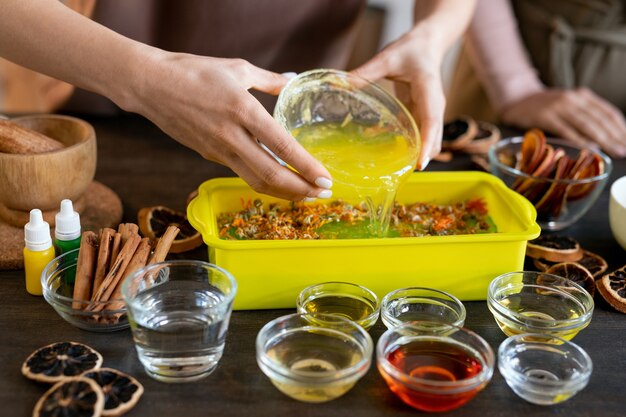

Ask Ayurvedic doctor a question and get a consultation online on the problem of your concern in a free or paid mode. More than 2,000 experienced doctors work and wait for your questions on our site and help users to solve their health problems every day.


Body DetoxEar, Nose, and Throat DisordersGeriatrics & RejuvenationImmunodeficiencyInfertility TreatmentNutritionOrthopedic DisordersPediatricsRespiratory DisordersSexually Transmitted Diseases (STDs)Surgery RecoveryUrological DisordersVascular DisordersDental DisordersEndocrinological DisordersGastrointestinal DisordersYoga TherapyGeneral MedicineAllergic DisordersCardio DisordersGynecology and ObstetricsCosmetologySkin and Hair DisordersEye DisordersInfectious DiseasesMental DisordersNeurological DisordersOncologyPanchakarmaSexual Health & DisordersSports Medicine
Published on 02/20/25
(Updated on 08/13/26)
3,476
Guggulu Shodhana – Ayurvedic Detoxification & Purification Therapy

- Guggulu Shodhana is the classical Ayurvedic process of purifying raw guggulu resin (Commiphora wightii) to remove physical and chemical impurities, reduce toxicity, and enhance its therapeutic potency before use in any medicinal formulation.
- Without proper Shodhana, raw guggulu — known as Ashudddha Guggulu — can cause skin rashes, gastrointestinal irritation, and unpredictable pharmacological effects. This guide covers everything from classical references and step-by-step methods to modern physico-chemical analysis, making it the most comprehensive resource on Guggulu Shodhana available online.
Whether you are an Ayurvedic practitioner (Vaidya), a BAMS student preparing for exams, or a researcher exploring Rasashastra, this article consolidates knowledge from Charaka Samhita, Sushruta Samhita, Sharangdhara Samhita, Rasatarangini, Ayurveda Prakasha, and Bhaishajya Ratnavali — along with contemporary HPLC and HPTLC analytical data — into a single, actionable reference.
What Is Guggulu?
Botanical Identity and Sourcing (Commiphora wightii)
Guggulu is the oleo-gum resin exuded from the bark of Commiphora wightii (syn. Commiphora mukul), a small thorny tree belonging to the family Burseraceae. The tree is native to the arid and semi-arid regions of Rajasthan, Gujarat, Madhya Pradesh, and parts of Pakistan. Resin is collected by making incisions in the bark during winter months (November–January), when the gum flow is optimal.
The word "Guggulu" is derived from the Sanskrit root meaning "that which protects against diseases" (guggulu rogaat trāyate iti guggulu). In classical Ayurvedic taxonomy, it is classified as a Dravya (substance) under the category of Niryasa (exudates/resins).
Fresh guggulu resin is soft, aromatic, and golden-brown. Over time it darkens, hardens, and loses volatile components. This distinction between fresh and old resin is therapeutically significant.
Types of Guggulu: Mahishaksha, Kumuda, Padma, and Kanaka
Classical texts describe five principal varieties of Guggulu based on colour, texture, and taste:
| Variety | Colour/Appearance | Taste | Therapeutic Quality |
|---|---|---|---|
| Mahishaksha | Dark brown, large granules | Bitter-astringent | Used in Medoroga (obesity), Vataroga |
| Kumuda | Pale white, translucent | Sweet-astringent | Considered cooling, used in Pittaja conditions |
| Padma | Reddish-brown, lotus-hue | Bitter-sweet | Used in Raktadosha, skin disorders |
| Kanaka | Golden yellow | Pungent-bitter | Best for Kapha disorders, high potency |
| Nila | Bluish tint | Astringent | Rare, described in some Nighantu texts |
Among these, Kanaka and Mahishaksha are considered most suitable for medicinal preparations. Classical authorities like Dhanvantari Nighantu further distinguish between Nava Guggulu (fresh, less than 1 year old) and Purana Guggulu (old, more than 1 year). Nava Guggulu is preferred for Shodhana and subsequent formulation because it retains higher levels of volatile oils and active guggulsterones.
Therapeutic Significance in Ayurveda
Guggulu holds a unique position in Ayurvedic pharmacology — it is one of the few substances that pacifies all three doshas (Tridoshahara) when properly processed.
Its primary actions include:
- Medohara — anti-obesity, lipid-lowering
- Vedanasthapana — analgesic
- Shothhara — anti-inflammatory
- Rasayana — rejuvenative
- Lekhana — scraping action on accumulated tissues
Guggulu serves as the base ingredient in over 80 classical formulations including Yogaraja Guggulu, Kaishore Guggulu, Triphala Guggulu, Simhanada Guggulu, and Punarnavadi Guggulu. None of these formulations should use unpurified resin.
Why Is Guggulu Shodhana Necessary?
The Concept of Shodhana in Rasashastra
Shodhana literally means "purification" or "correction." In Rasashastra (Ayurvedic pharmaceutics), Shodhana is a mandatory pre-processing step applied to minerals (Dhatu), metals (Loha), gems (Ratna), poisonous substances (Visha), and certain resins and herbal drugs before they enter any formulation.
Shodhana is not merely physical cleaning.
It operates on three levels:
- 1.Physical purification — removal of sand, bark particles, stones, and other macro-impurities
- 2.Chemical modification — alteration of molecular composition through interaction with acidic, alkaline, or lipid media
- 3.Therapeutic potentiation — enhancement of bioavailability and reduction of unwanted side effects
A 2015 review published in the Journal of Ayurveda and Integrative Medicine (PMC4535066) confirmed that Shodhana processes produce measurable changes in phytochemical profiles, supporting the classical claim that purification is not symbolic but pharmacologically meaningful.
Impurities in Raw (Ashudddha) Guggulu
Crude guggulu typically contains:
- Physical contaminants: sand, soil, bark fragments, insect debris, stones
- Chemical impurities: excess essential oils (which can irritate mucosa), oxidized resinous compounds, mycotoxins from improper storage
- Moisture variability: LOD (Loss on Drying) values in raw guggulu can range from 7% to 15%, leading to inconsistent dosing
Toxicological Risks of Using Unpurified Guggulu
- This is something most online sources completely overlook.
- Ashudddha Guggulu is not just "less effective" — it can be actively harmful.
Classical texts warn that unpurified guggulu causes:
- Kushtha (skin diseases, contact dermatitis)
- Raktapitta (bleeding disorders)
- Agnimandya (digestive weakness, nausea, diarrhea)
- Daurbalya (generalized weakness)
The Rasatarangini (Chapter 12, Verse 100-102) explicitly states: "Ashudddha Guggulu sevitam pumsam kustham raktapittam ca karoti" — consumption of impure guggulu causes skin disease and bleeding disorders in humans.
Modern pharmacological studies corroborate this. A 2017 comparative study in the World Journal of Pharmaceutical Research found that crude guggulu samples showed higher acid-insoluble ash (indicating inorganic contaminants) and lower alcohol-soluble extractive values (indicating reduced bioactive content) compared to properly processed samples.
How to Do Guggulu Shodhana: Classical Methods Explained
Two principal methods of Guggulu Shodhana are described across classical texts: Dolayantra Shodhana (pouch method) and Dissolving-and-Straining Shodhana. Each has specific indications, advantages, and procedural nuances.
Method 1: Dolayantra Shodhana (Pouch/Swing Method)
This is the most widely referenced method, described in Sharangdhara Samhita (Madhyama Khanda 9/1-3) and Ayurveda Prakasha (Chapter 2).
The Shloka (Sharangdhara Samhita):
> "Guggulum pottali-bandham krtva kwathita-drava-madhye dolayantreṇa svedayet yāvat pottali-śeṣam tyajet"
Translation: Guggulu should be tied in a cloth pouch and suspended in boiling decoction using a Dolayantra apparatus, heated until the resin dissolves through the cloth, and the residue (insoluble impurities) should be discarded.
Step-by-Step Procedure
- 1.Preparation of Guggulu: Break raw guggulu into small pieces (roughly 1-2 cm). Remove any visible stones or bark fragments manually.
- 2.Preparation of Dolayantra: Take a wide-mouthed stainless steel or earthen vessel. Place a wooden rod or stick across the mouth of the vessel. Tie the guggulu pieces in a clean, double-layered cotton cloth (pottali/pouch). Suspend the pouch from the rod so it hangs in the middle of the vessel without touching the bottom.
- 3.Add Shodhana medium: Pour the chosen liquid medium (typically Triphala Kwatha) into the vessel until the pouch is fully submerged. The ratio is generally 1 part guggulu : 6 parts liquid.
- 4.Heating: Place the vessel on mild to moderate heat (Mandagni to Madhyamagni). Maintain gentle boiling for 3-4 hours. The resin gradually softens and dissolves through the cloth, passing into the liquid. Impurities remain trapped in the pouch.
- 5.Squeezing: Once maximum dissolution has occurred, remove the pouch while still warm. Squeeze it firmly to extract remaining dissolved resin. Discard the residue inside.
- 6.Collection: The liquid now contains dissolved guggulu along with the Shodhana medium. Allow it to cool slightly.
- 7.Separation: Spread the resin-laden liquid on a smooth surface (traditionally a stone slab smeared with ghee). As it cools, the purified guggulu solidifies and can be peeled off. Alternatively, evaporate the excess liquid on gentle heat until a semi-solid mass remains.
- 8.Drying: Dry the collected Shuddha Guggulu in shade (not direct sunlight) to the desired consistency.
Method 2: Dissolving and Straining Method (Vilayana Shodhana)
Described primarily in Rasatarangini (Taranga 12) and some editions of Bhaishajya Ratnavali, this method involves directly dissolving guggulu in a warm liquid medium and filtering.
Step-by-Step Procedure
- Crush raw guggulu into coarse powder
- Dissolve in warm Shodhana medium (water, Triphala Kwatha, or Gomutra) with continuous stirring for 2-3 hours
- Filter through a clean muslin cloth to remove all insoluble impurities
- Evaporate the filtrate on gentle heat until a thick, semi-solid consistency is obtained
- Collect and store the purified product
This method is faster but may result in slightly lower yield compared to Dolayantra Shodhana because some resinous fractions don't dissolve fully in aqueous media.
Dolayantra Apparatus: Understanding the Setup
The Dolayantra is essentially a simple but ingenious device.
Here's how it looks conceptually:
The pouch must hang freely — not touch the vessel walls or bottom. This prevents scorching and ensures even extraction.
Which Shodhana Medium (Drava) Is Best?
The choice of Shodhana medium profoundly influences the final product's chemical profile and therapeutic action. Different classical texts recommend different media depending on the intended use.
Common Shodhana Media and Their Effects
| Shodhana Medium | Classical Source | Key Effect on Guggulu | Best Suited For |
|---|---|---|---|
| Triphala Kwatha (decoction of Haritaki, Bibhitaki, Amalaki) | Sharangdhara Samhita, AFI | Enhances antioxidant profile, increases alcohol-soluble extractives | General purpose — most widely recommended |
| Gomutra (cow's urine) | Rasatarangini, Rasa Prakasha Sudhakara | Strong detoxification, increases bioavailability of guggulsterones | Medoroga (obesity), Kushtha (skin diseases) |
| Godugdha (cow's milk) | Ayurveda Prakasha | Mild processing, reduces pungency, adds Snigdha (unctuous) quality | Vataja disorders, pediatric formulations |
| Vasapatra Swarasa (Adhatoda vasica leaf juice) | Bhaishajya Ratnavali | Adds bronchodilatory synergy | Kasa-Shwasa (cough, asthma) formulations |
| Nirgundi Kwatha (Vitex negundo decoction) | Regional traditions | Anti-inflammatory potentiation | Sandhivata (osteoarthritis) |
| Plain water | Used as control in studies | Minimal chemical modification; mainly physical cleaning | Research purposes, baseline comparison |
What Research Says About Media Comparison
A pharmaceutical standardization study published in Ayushdhara (2018, Vol. 5, Issue 2) conducted HPTLC analysis of guggulu processed in different media.
Key findings:
- Guggulu processed in Triphala Kwatha showed the highest alcohol-soluble extractive value (52.3%) compared to Gomutra-processed (48.1%) and water-processed (41.7%)
- Loss on Drying decreased most significantly with Triphala Kwatha processing (from 11.2% crude to 4.8% processed)
- Guggulsterone E and Z content — both isomers were retained at higher concentrations in Triphala Kwatha and Gomutra processed samples versus plain water
This data scientifically validates the classical preference for Triphala Kwatha as the standard Shodhana medium.
Physico-Chemical Analysis: Before and After Shodhana
Key Parameters and What They Mean
| Parameter | Ashudddha Guggulu (Raw) | Shuddha Guggulu (Triphala Kwatha processed) | Significance |
|---|---|---|---|
| Loss on Drying (LOD) | 9.5–14.8% | 3.2–5.1% | Lower = less moisture, better shelf stability |
| Total Ash | 4.2–8.7% | 1.8–3.5% | Lower = fewer inorganic contaminants |
| Acid Insoluble Ash | 1.5–3.9% | 0.3–0.9% | Lower = less siliceous/earthy matter |
| Water Soluble Extractive | 28.4–35.2% | 38.6–44.1% | Higher = more polar bioactives accessible |
| Alcohol Soluble Extractive | 32.1–38.5% | 48.2–55.3% | Higher = greater resinous active content |
| pH (1% aqueous solution) | 4.8–5.4 | 5.2–5.8 | Slight shift towards neutral after processing |
Data compiled from multiple studies including Ayushdhara (2018) and World Journal of Pharmaceutical Research (2017).
Guggulsterone Analysis: E and Z Isomers
Guggulsterones (E and Z isomers) are the primary bioactive compounds responsible for guggulu's anti-inflammatory and hypolipidemic actions.
HPLC analysis consistently shows:
- Z-Guggulsterone is present in higher concentrations than E-Guggulsterone in both raw and processed samples
- Shodhana with Triphala Kwatha preserves or slightly increases the concentration of both isomers per unit dry weight (because impurities are removed, effectively concentrating the active fraction)
- Gomutra-processed samples show comparable guggulsterone levels but with additional urinary metabolite markers
- Water-only processing results in some loss of guggulsterones due to partial aqueous dissolution without protective buffering
A 2017 ResearchGate study on pharmaceutical standardization of Guggulu Shodhana measured guggulsterone Z content at 1.82% in Triphala-processed samples versus 1.24% in crude resin — a roughly 47% increase in concentration per gram of processed material.
Don't wait or self medicate. Start chat with Doctor NOW
Recognizing Quality: Signs of Properly Purified Guggulu
This is practical knowledge that you won't find in academic PDFs but every practicing Vaidya needs to know.
Organoleptic Parameters of Shuddha Guggulu
- Colour: Dark brown to blackish-brown (depending on medium used). Triphala-processed tends to be darker; milk-processed is lighter.
- Odour: Pleasant, balsamic-aromatic. Should NOT smell musty, moldy, or acrid.
- - Texture: Soft, pliable, sticky when fresh. Can be rolled into pills (vati) without crumbling.
- Should not be gritty — grittiness indicates incomplete purification.
- Taste: Bitter (tikta), slightly pungent (katu), with an astringent aftertaste. Should not taste sour (sourness suggests fermentation/spoilage).
- - Solubility: Shuddha Guggulu dissolves more readily in warm water and alcohol compared to crude.
- A quick test — drop a small piece in warm water. It should soften and begin dispersing within minutes.
- Pull test: When pulled between fingers, properly purified guggulu stretches like soft toffee. Crude guggulu tends to snap or crumble.
Common Mistakes and Precautions During Shodhana
| Mistake | Consequence | How to Avoid |
|---|---|---|
| Overheating / using high flame | Degrades guggulsterones, causes charring, produces acrid taste | Maintain Mandagni (gentle heat) throughout |
| Pouch touching vessel bottom | Resin burns and sticks, impurities mix back | Ensure proper suspension via Dolayantra rod |
| Using insufficient liquid medium | Incomplete extraction, concentrated impurities | Maintain 1:6 ratio (guggulu:liquid) |
| Skipping the squeezing step | Up to 20-30% product loss in the pouch residue | Squeeze while still warm for maximum yield |
| Drying in direct sunlight | Volatile oil loss, surface cracking, reduced aroma | Always shade-dry |
| Using Purana (old) Guggulu without extra processing time | Old, hardened resin needs longer heating; insufficient processing leaves impurities | Extend Dolayantra time to 5-6 hours for old guggulu |
| Wrong cloth for pouch | Too fine = slow dissolution; too coarse = impurities pass through | Use medium-weave, double-layered cotton |
The Role of Guggulu Shodhana in Modern Pharmacology
Bridging Traditional Shodhana and GMP Standards
Modern Ayurvedic manufacturing under GMP (Good Manufacturing Practices) guidelines issued by the Government of India mandates that all guggulu used in licensed formulations must undergo Shodhana as per the Ayurvedic Formulary of India (AFI) or relevant classical text references. The AFI specifically prescribes the Dolayantra method with Triphala Kwatha as the standard procedure.
This means Shodhana is not just a traditional recommendation — it is a regulatory requirement for commercial Ayurvedic products.
Parallels with Modern Pharmaceutical Processing
The Shodhana process shows interesting parallels with modern drug processing techniques:
- Dolayantra is functionally similar to Soxhlet extraction — a hot solvent continuously extracts soluble components while trapping insoluble residue
- Shodhana media selection mirrors the concept of solvent optimization in pharmaceutical extraction
- The reduction of ash values and increase in extractives parallels the goals of pharmaceutical purification and enrichment
Comparison with Shodhana of Other Substances
Guggulu is not the only Ayurvedic substance requiring Shodhana. Understanding parallels helps appreciate the broader framework:
| Substance | Shodhana Method | Medium Typically Used | Purpose |
|---|---|---|---|
| Guggulu | Dolayantra/Dissolving | Triphala Kwatha, Gomutra | Remove physical impurities, enhance potency |
| Shilajit | Dissolving and filtering | Triphala Kwatha, hot water | Remove soil, stones; concentrate humic acids |
| Loha (Iron) | Heating and quenching | Triphala Kwatha, Gomutra, Takra | Convert to bioavailable oxide form |
| Vatsanabha (Aconite) | Soaking/boiling | Gomutra, cow's milk | Detoxify aconitine alkaloids |
| Hingu (Asafoetida) | Frying in ghee | Ghee | Reduce volatile irritants, improve digestibility |
The common thread? Shodhana always involves a specific medium that chemically interacts with the substance to achieve purification and potentiation simultaneously.
Classical Shlokas and Textual References for Guggulu Shodhana
For BAMS students and scholars, here's a compilation of key references:
Sharangdhara Samhita (Madhyama Khanda 9/1-3):
> "Triphalā-kvāthena guggulum dolayantre viśodhayet"
> "Guggulu should be purified by processing in Dolayantra with Triphala decoction."
Rasatarangini (Taranga 12/100-103):
> "Aśuddhaṃ guggulum sevitaṃ puṃsāṃ kuṣṭhaṃ raktapittaṃ ca kāraye..."
> "Consumption of unpurified guggulu produces skin diseases and bleeding disorders... therefore it should always be purified before use."
Ayurveda Prakasha (2/12-15):
Describes both Dolayantra and dissolving methods; specifies that Nava Guggulu requires less processing time than Purana Guggulu.
Bhaishajya Ratnavali (Amavata Chikitsa):
Mentions Guggulu Shodhana as a mandatory preliminary step before preparing any Guggulu Vati (tablet formulation).
Frequently Asked Questions (FAQ)
Can you use Guggulu without Shodhana?
No. All classical Ayurvedic texts explicitly prohibit the internal use of Ashudddha (unpurified) Guggulu. It can cause skin diseases, digestive disorders, and bleeding complications. Even for external application, purified guggulu is strongly preferred. The AFI (Ayurvedic Formulary of India) also mandates Shodhana for all licensed formulations.
How long does the Guggulu Shodhana process take?
The Dolayantra method typically requires 3-6 hours of gentle boiling, depending on the quantity and age of the guggulu. Fresh (Nava) guggulu dissolves faster (3-4 hours), while old (Purana) guggulu may need 5-6 hours. The dissolving-and-straining method is faster at about 2-3 hours but may yield less product.
What is the best Shodhana medium for Guggulu?
Triphala Kwatha (Triphala decoction) is the most universally recommended medium across classical texts and the AFI. It offers the best balance of impurity removal, guggulsterone preservation, and enhanced extractive values. Gomutra is preferred when the guggulu is intended for Medoroga (obesity) or Kushtha (skin disease) formulations.
What is Shuddha Guggul used for?
Shuddha (purified) Guggulu is used as the base ingredient in numerous Ayurvedic formulations for joint disorders (Yogaraja Guggulu), gout and arthritis (Kaishore Guggulu), obesity and hyperlipidemia (Medohar Guggulu), urinary tract conditions (Gokshuradi Guggulu), and general detoxification (Triphala Guggulu). It is also used directly in some Vati and Kwatha preparations.
What are the benefits of Shodhana?
Shodhana provides five key benefits: (1) removal of physical contaminants, (2) reduction of chemical impurities as measured by decreased ash values, (3) enhancement of bioactive compound concentration (higher extractive values), (4) elimination of toxic or irritant fractions, and (5) improved consistency and shelf-life of the final product. Research shows that alcohol-soluble extractive values increase by up to 45% after Triphala Kwatha Shodhana.
What is the difference between Guggulu Shodhana and Guggulu Kalpana?
Guggulu Shodhana refers specifically to the purification of raw guggulu resin. Guggulu Kalpana is the broader pharmaceutical science of preparing guggulu-based formulations — it includes Shodhana as the first step, followed by mixing with other ingredients, pill-making (Vati Kalpana), and storage. Think of Shodhana as step one of the larger Kalpana process.
Where can I find a Guggulu Shodhana PPT or reference for academic use?
Key academic references include: Sharangdhara Samhita (Madhyama Khanda Chapter 9), Rasatarangini (Taranga 12), the Ayurvedic Formulary of India (Part I & II), and research articles in Ayushdhara, IJAM (International Journal of Ayurveda & Medicine), and WJPR. For presentations, the step-by-step method and physico-chemical data tables in this article can serve as reliable source material.
Conclusion
Guggulu Shodhana is far more than a ritualistic washing of resin. It is a scientifically validated pharmaceutical process that transforms crude, potentially harmful guggulu into a safe, potent, and standardized medicinal ingredient. From the elegant simplicity of the Dolayantra apparatus to the sophisticated HPLC confirmation of guggulsterone preservation, this process beautifully demonstrates how Ayurvedic wisdom and modern analytical science converge.
- For practitioners: always insist on properly purified guggulu in your formulations.
- For students: understanding Shodhana deeply — with shlokas, rationale, and analytical parameters — will serve you in both exams and clinical practice.
- And for researchers: the comparative study of different Shodhana media remains a fertile ground for investigation, particularly regarding bioavailability enhancement mechanisms that modern pharmacology is only begining to unravel.
If you found this guide useful, share it with fellow Ayurveda students and practitioners. For personalized guidance on Guggulu-based formulations for specific health conditions, consult a qualified Ayurvedic physician who understands both the classical texts and modern standardization requirements.
Scientific Sources
- Neuroprotective Herbs for the Management of Alzheimer's Disease — Gregory J et al., 2021, Biomolecules
- The antitumor effects of herbal medicine Triphala on oral cancer by inactivating PI3K/Akt signaling pathway: based on the network pharmacology, molecular docking, in vitro and in vivo experimental validation — Hu S et al., 2024, Phytomedicine : international journal of phytotherapy and phytopharmacology
- Role of Triphala in dentistry — Prakash S et al., 2014, Journal of Indian Society of Periodontology
- Indian Ayurvedic medicine: Overview and application to brain cancer — Newton HB, 2024, Journal of Ayurveda and integrative medicine
- Comparison of medicinal preparations of Ayurveda in India and five traditional medicines in China — Li X et al., 2022, Journal of ethnopharmacology
- Ulcerative colitis: molecular insights and intervention therapy — Liang Y et al., 2024, Molecular biomedicine
- Turmeric and Curcumin: From Traditional to Modern Medicine — Akaberi M et al., 2021, Advances in experimental medicine and biology
- Curcumin (Turmeric) and cancer — Unlu A et al., 2016, Journal of B.U.ON. : official journal of the Balkan Union of Oncology
- The Essential Medicinal Chemistry of Curcumin — Nelson KM et al., 2017, Journal of medicinal chemistry
Questions from users
What precautions should I take when using guggulu shodhana?
Client_5e63c3
10 days ago
When using guggulu shodhana, it's crucial to start with proper purification of the raw guggulu resin to minimize the risk of skin rashes, gastrointestinal irritation, or other adverse effects. Ensure that the shodhana process is done to completion, which may take 3-6 hours depending on the freshness of the resin. Avoid using raw, unpurified guggulu known as Ashuddha Guggulu. If you experience unexpected side effects like persistent stomach upset or skin reactions, consult a healthcare provider promptly. For those unfamiliar with the process, seek guidance from a qualified professional rather than attempting it alone.
Is guggulu shodhana effective for improving digestion and metabolism?
Client_e79ac3
20 days ago
Guggulu shodhana, or purification, may help improve digestion and metabolism by enhancing the bioavailability of its active compounds and removing impurities that could irritate the digestive system. This process is believed to enhance guggulu's effectiveness in supporting metabolic health. Keep in mind that individual responses can vary. If you're considering using guggulu for digestive concerns, typical effects, if any, might be noticed in a few weeks. Always consult with a healthcare professional, especially if you have underlying health conditions or are on medication.
What are the best Ayurvedic recipes that include guggulu?
Client_35ba92
29 days ago
For those interested in Ayurvedic recipes using guggulu, a commonly recommended choice is Triphala Guggulu. This formulation combines Triphala with guggulu and may help in managing weight, reducing inflammation, and improving digestion due to guggulu's anti-obesity and anti-inflammatory properties. Another popular recipe is Yogaraja Guggulu, which can be supportive for joint health and is often used for arthritis relief. Typically, benefits from these formulations may be observed in a few weeks but it's crucial to consult a healthcare provider before starting, especially if you have existing health conditions or are on other medications.
What is the best time of day to take guggulu shodhana for maximum effectiveness?
Client_3bc6a8
39 days ago
The best time to take guggulu shodhana for maximum effectiveness is typically in the morning on an empty stomach. Taking it at this time may enhance absorption and efficacy. Guggulu, often used to support joint health and cholesterol management, should be taken consistently to notice benefits, which may be seen over a few weeks. Always follow dosing instructions from a reliable source or healthcare provider. If you experience any side effects or have pre-existing health conditions, consult a doctor before using guggulu. Ayurveda endorses its purification, but modern medical advice should guide overall health decisions.
What is the role of Triphala in the guggulu shodhana process?
Client_5bbce3
49 days ago
Triphala plays a big role in guggulu shodhana, as it's used to make a decoction for purifying guggulu. The chemical properties of Triphala help remove impurities, making guggulu safer and more effective. It's like using a cleansing agent to enhance the herb's potency. Hope that helps! 😊
How to perform guggulu shodhana correctly for the best results?
Client_096540
58 days ago
Performing guggulu shodhana correctly is crucial! You need to boil it in Triphala kwatha. Use about 8 times the quantity of Triphala decoction to guggulu. Let guggulu dissolve and soften, then strain it. Check for stickiness - it should stretch like soft toffee. If you're unsure, best to consult a practitioner to get it right!
Can guggulu shodhana help with skin conditions like acne or eczema?
Client_289af2
73 days ago
Yes, guggulu shodhana might help with skin conditions like acne or eczema! Its purifying nature helps elimnate toxins, reduce inflammation and balance your doshas, which can help clear the skin. But individual prakriti and dosha balance matter, so maybe it's best to consult an Ayurvedic practitioner before starting anything new!
Can I use guggulu shodhana if I'm pregnant or breastfeeding?
Client_0816bb
83 days ago
Guggulu shodhana might not be the best choice during pregnancy or breastfeeding, since its effects can vary and may not be safe for you and the baby. It's super important to chat with your healthcare provider or a certified ayurvedic practitioner to get advice tailored just for you before using it. Better safe than sorry! 😊
What is the historical significance of guggulu shodhana in Ayurvedic detox practices?
Client_5d69b5
92 days ago
Guggulu shodhana has been historically significant in Ayurveda as it's used to detoxify guggulu resin, which is super important for balancing Kapha and Vata doshas. Its detox properties help reduce inflammation and boost metabolism. It’s like tuning your body’s engine for optimal wellness! For deep insights, checking out ancient texts or Ayurvedic guides can be helpful!
Can guggulu shodhana help improve energy levels during detoxification?
Client_7228b1
102 days ago
Yes, guggulu shodhana can help improve energy during detox. By purifying the system and balancing Kapha and Vata doshas, it helps remove metabolic toxins (ama) which can make you feel sluggish. Just keep an eye out for signs like mild discomfort, they may suggest adjusting the dosage for best results!
Related articles

General Medicine
Mediterranean Diet for Inflammation: Food List & Plan
Mediterranean diet for inflammation: the full food list, a meal plan, what is not allowed, how long it takes, and the Ayurvedic changes that matter.
83

General Medicine
7 Simple Recipes to Balance Vata Imbalance
The tridosha system is a fundamental theory of Ayurveda, the traditional Indian system of medicine.
4,075
General Medicine
Unveiling Gomutra Ghan Vati: Experience Natural Remedies!
Discover the benefits, dosage, side effects, and Ayurvedic uses of Gomutra Ghan Vati, a powerful remedy for detoxification, immunity, and overall well-being.
3,784

General Medicine
Men Fertility Supplements: Root Causes Come First
Sperm takes 74 days to make. The heat, sleep, alcohol and blood-sugar causes to fix first, a 90-day protocol, and where supplements genuinely fit.
102

General Medicine
Chandan Bala Lakshadi Tel
Exploration of Chandan Bala Lakshadi Tel
1,685

General Medicine
Nimbadi Churna Benefits, Dosage, Ingredients, Side Effects, Reference
Exploration of Nimbadi Churna Benefits, Dosage, Ingredients, Side Effects, Reference
3,151
General Medicine
Best Ayurvedic Medicines to Boost Hemoglobin Naturally
Discover the best Ayurvedic medicines to increase hemoglobin levels, including herbal remedies, iron-rich formulations, and dietary guidelines for anemia.
4,989

General Medicine
Asanadi Kashayam Benefits, Dosage, Ingredients, Side Effects
Exploration of Asanadi Kashayam Benefits, Dosage, Ingredients, Side Effects
1,644

General Medicine
Hair Growth Supplements: What Works and What Doesn't
Which hair growth supplements actually work, why biotin usually fails, and the Ayurvedic herbs and tests that fix the real cause of thinning hair.
82

General Medicine
Sadhaka Pitta: Understanding its Role in Mind-Body Balance
Explore the science behind Sadhaka Pitta, its health implications, and evidence-based insights. Learn how it influences emotional well-being and cognition.
3,328
Related consultations on the topic
Legal
Additional Documents
© 2024 Ask Ayurveda. All rights reserved.