FREE! Ask Ayurvedic Doctors 24/7

 Fast responses
 1000+ verified doctors
Understanding Pakshaghata Samprapti: The Ayurvedic Pathogenesis of Hemiplegia
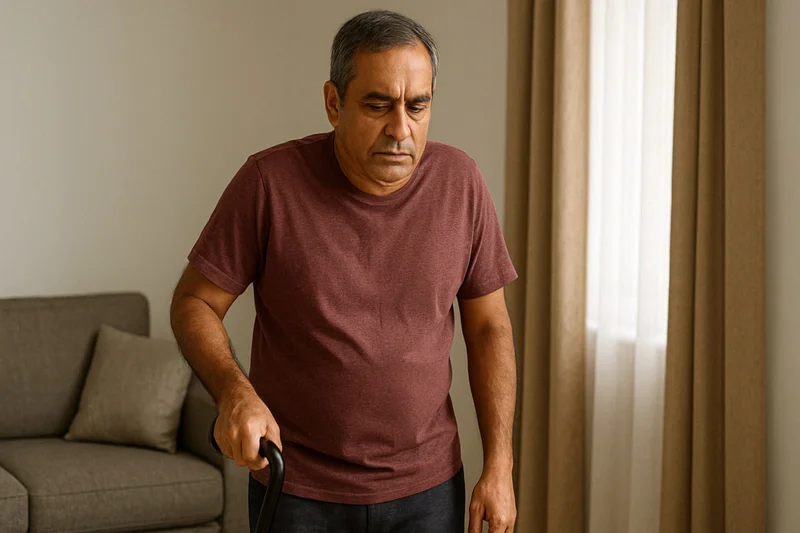
Pakshaghata Samprapti describes the step-by-step disease mechanism through which aggravated Vata dosha disrupts the motor, sensory, and mental functions of one side (Paksha) of the body, leading to paralysis — what modern medicine calls hemiplegia or stroke. The word "Samprapti" literally means "the complete understanding of how a disease originates, progresses, and manifests." In Ayurveda, without grasping Samprapti, rational treatment (Chikitsa) is impossible. This article provides the most detailed, textually referenced, and clinically correlated analysis of Pakshaghata Samprapti available — covering Samprapti Ghataka, Samprapti Chakra, Shat Kriyakala, classical Shlokas, the role of Ama, Manovaha Srotas involvement, and a comparative analysis across Charaka Samhita, Sushruta Samhita, Ashtanga Hridaya, and Madhava Nidana.
What Is Pakshaghata? Definition and Correlation with Hemiplegia
Pakshaghata is classified as a Nanatmaja Vata Vyadhi — a disease caused exclusively by Vata dosha vitiation.
The term breaks down as:
- Paksha = one lateral half of the body (left or right)
- Aghata (Ghata) = destruction, impairment, or loss of function
Acharya Charaka lists Pakshaghata among the 80 Nanatmaja Vata Vikaras (Charaka Samhita, Sutra Sthana 20/11). Sushruta and Vagbhata further elaborate on its clinical features and prognosis.
How Does Pakshaghata Correlate with Modern Stroke and Hemiplegia?
In contemporary neurology, hemiplegia results from a cerebrovascular accident (CVA) — either ischemic (blocked blood supply) or hemorrhagic (bleeding in the brain).
Pakshaghata mirrors this presentation almost exactly:
| Feature | Pakshaghata (Ayurveda) | Hemiplegia / Stroke (Modern) |
|---|---|---|
| Affected area | One side of body (Paksha) | Contralateral hemiplegia |
| Motor loss | Cheshta nivritti (loss of voluntary movement) | Upper motor neuron paralysis |
| Sensory loss | Gyanendriya nasha | Hemianesthesia |
| Speech impairment | Vak graha | Dysarthria / Aphasia |
| Cognitive/mental changes | Manovikara | Post-stroke depression, cognitive decline |
| Onset | Sudden (Ashukari) | Acute onset |
This parallelism allows Ayurvedic practitioners to apply Samprapti-based reasoning to a condition that affects approximately 1.8 million Indians every year (Indian Stroke Association, 2019 estimates), with stroke now recognized as the fourth leading cause of death and the fifth leading cause of disability in India.
Pakshaghata Types: Ekanga Vata, Sarvanga Vata, and Ardita
It is critical to differentiate Pakshaghata from related Vata Vyadhis:
- Pakshaghata — paralysis of one lateral half → Hemiplegia
- Ekanga Vata — paralysis of one limb → Monoplegia
- Sarvanga Vata — paralysis of all four limbs → Quadriplegia / Paraplegia
- Ardita — paralysis affecting the face (especially one side) → Bell's Palsy / Facial palsy
Acharya Charaka explains through the principle "Va gati gandhanayoh Vata" — Vata governs both Gati (motor function / movement) and Gandhana (sensory perception / knowledge acquisition). When Vata is vitiated, both domains are impaired. This philosophical foundation is what makes Pakshaghata a disorder of both Karmendriyas (motor organs) and Gyanendriyas (sensory organs), along with Manas (mind).
Nidana (Etiology): What Causes Pakshaghata?
Samprapti cannot be understood without first understanding Nidana — the causative factors. Ayurveda identifies two fundamental mechanisms through which Pakshaghata develops:
Dhatu Kshaya Janya Pakshaghata (Depletion-Induced)
When Dhatus (body tissues) are depleted due to:
- Ati Vyayama — excessive physical exertion
- Ati Upavasa — prolonged fasting
- Ati Maithuna — excessive sexual activity
- Ati Chinta / Shoka — chronic worry and grief
- Ruksha, Laghu, Kashaya Ahara — excessively dry, light, and astringent diet
- Vegadharana — suppression of natural urges
- Raktamokshana Atiyoga — excessive bloodletting
The depleted Dhatus leave empty Srotas (channels), and Vata — which naturally fills empty spaces — rushes in and occupies these channels, causing loss of function. This is the Riktasrotogami principle (Charaka Samhita, Chikitsa Sthana 28/59).
Avarana Janya Pakshaghata (Obstruction-Induced)
When Kapha or Pitta (or even vitiated sub-tissues) obstruct the normal pathway of Vata:
- Santarpanajanya Nidana — over-nourishing diet (excessive Madhura, Snigdha, Guru ahara)
- Medovriddhi — obesity
- Ama accumulation — metabolic toxins blocking channels
- Raktadushti — vitiation of blood tissue
Here, Vata is not increased in quantity but its normal movement is blocked (Avarana = covering/obstruction). This obstructed Vata then manifests pathologically. The concept of Avarana is described extensively in Charaka Chikitsa Sthana 28 and Madhava Nidana 22.
The Clinical Significance of Differentiating These Two Types
This is not merely an academic exercise.
The treatment protocol differs dramatically:
| Parameter | Dhatu Kshaya Janya | Avarana Janya |
|---|---|---|
| Primary mechanism | Depletion → Vata fills empty space | Obstruction → Vata pathway blocked |
| Body constitution | Typically Krisha (emaciated) | Typically Sthula (obese) or Madhyama |
| Bala (strength) | Reduced | May be preserved initially |
| Ama status | Usually Nirama (without Ama) | Often Sama (with Ama) |
| Treatment first line | Brimhana (nourishing therapy) | Samshodhana (purification) first |
| Snehapana | Early, aggressive | Cautious, after Ama pachana |
Misidentifying the type can worsen the condition. Applying Brimhana therapy in an Avarana condition, for instance, can further block channels and aggravate the disease.
Pakshaghata Samprapti: The Complete Pathogenesis Explained
Samprapti as Described in Classical Texts (Key Shlokas)
Charaka Samhita, Chikitsa Sthana 28/53-54:
> "Pakshaghatam tatha hanustambham ardita eva cha |
> Vatavyadhir bahuvidhah shodhyah snehana poorvakam ||"
Transliteration: Pakshaghata, Hanustambha, and Ardita are among the many types of Vata Vyadhi that should be treated with Shodhana preceded by Snehana. Charaka Samhita, Chikitsa Sthana 28/53:
> "Ekam pakvashayastham tu shariram ardhakam param |
> Sirasnayukandaragatah pakshaghataya Kurute ||"
Translation: Vata, seated in the Pakvashaya (colon), spreads through the Sira (blood vessels), Snayu (ligaments/tendons), and Kandara (tendons) of one half of the body, causing Pakshaghata. Madhava Nidana 22/18:
> "Nihantyekam pakvashayat prakupitah padam vayu |
> Sirasnayukandaragah tatra pakshaghata smritah ||"
The Madhava Nidana account is nearly identical to Charaka's, confirming the consistency of the pathogenic model across texts.
Pakshaghata Samprapti Chakra (Flowchart of Pathogenesis)
Here is the step-by-step disease pathway — a Samprapti Chakra that no competing resource has presented in complete form:
Step 1: Nidana Sevana (Exposure to causative factors)
↓
Step 2: Vata Prakopa in Pakvashaya (Vata aggravation in its primary seat — the colon)
↓
Step 3: Prakupita Vata enters Sira (vessels), Snayu (ligaments/muscles), and Kandara (tendons)
↓
Step 4: Dosha-Dushya Sammurchhana — Vitiated Vata interacts with susceptible Dhatus (Rasa, Rakta, Mamsa, Meda, Asthi, Majja)
↓
Step 5: Srotas Dushti — Channel impairment occurs (Sanga type in Avarana, or Atiriktata/emptiness in Dhatu Kshaya)
↓
Step 6: Sthanasamshraya — Vata localizes in one Paksha (half of body)
↓
Step 7: Vyakti — Clinical manifestation: loss of movement (Cheshta nivritti), loss of sensation (Sparsha nasha), speech impairment (Vak graha), mental disturbance
↓
Step 8: Bheda — If untreated, disease becomes Yapya (manageable but incurable) or Asadhya (incurable) with tissue destruction
Shat Kriyakala Applied to Pakshaghata
The six stages of disease progression (Shat Kriyakala) from Sushruta Samhita provide a therapeutic window framework:
| Stage | Name | What Happens in Pakshaghata | Therapeutic Window |
|---|---|---|---|
| 1 | Sanchaya | Vata accumulates in Pakvashaya; subtle symptoms — mild stiffness, fatigue, constipation | Best time for prevention — Nidana Parivarjana |
| 2 | Prakopa | Vata becomes actively aggravated; restlessness, body ache, anxiety, insomnia | Langhana, Dipana, Pachana |
| 3 | Prasara | Vata overflows from Pakvashaya and spreads into Sira, Snayu, other Srotas | Shodhana (if Balavaan patient) |
| 4 | Sthanasamshraya | Vata lodges in one Paksha — prodromal symptoms (Purvarupa): numbness, tingling, heaviness in one side | Critical intervention point — Snehana, Swedana |
| 5 | Vyakti | Full clinical manifestation of Pakshaghata — paralysis, speech loss, sensory deficit | Comprehensive Chikitsa required |
| 6 | Bheda | Complications — muscle wasting (Mamsa Kshaya), contractures, joint stiffness, depression | Difficult to reverse; Yapya/Asadhya |
This framework is extremley important because it emphasizes that Pakshaghata doesn't occur overnight. There are pre-clinical stages where intervention can prevent full-blown paralysis.
Samprapti Ghataka: Complete Elemental Analysis of Pakshaghata
This is perhaps the most critical section for Ayurvedic scholars and PG students. The Samprapti Ghataka is a systematic dissection of every pathological element involved in the disease. No competing resource online provides this in tabular, comprehensive form.
| Samprapti Ghataka | Details in Pakshaghata |
|---|
- | Dosha | Pradhana: Vata (Vyana Vayu — primary; Prana Vayu, Udana Vayu — associated).
- Anubandha Dosha: Pitta and/or Kapha (in Avarana type) |
| Dushya | Rasa, Rakta, Mamsa, Meda, Asthi, Majja, Snayu, Sira, Kandara |
|---|---|
| Srotas | Rasavaha, Raktavaha, Mamsavaha, Medovaha, Asthivaha, Majjavaha, Manovaha |
| Srotodushtiprakara | Sanga (obstruction) in Avarana type; Vimarga Gamana (misdirected flow) in hemorrhagic correlation; Atipravritti in Dhatu Kshaya type |
| Agni | Jatharagni Mandya (reduced digestive fire) → Ama Utpatti; Dhatvagni Mandya (impaired tissue metabolism) |
| Ama | Present in Sama Vata type; contributes to Srotorodha (channel blockage); worsens prognosis |
| Udbhavasthana | Pakvashaya (colon — the primary seat of Vata) |
| Sancharasthana | Sira, Snayu, Kandara — throughout the body via Raktavaha and Mamsavaha Srotas |
| Adhisthana | Sira (vessels), Snayu (ligaments/musculature), Mastishka (brain — from a Sharira perspective) |
| Vyaktasthana | Eka Paksha — one lateral half of the body (left or right) |
| Rogamarga | Madhyama Rogamarga (middle disease pathway — involves Marma, Asthi, Sandhi) |
| Swabhava | Ashukari (acute onset) in most presentations |
| Sadhya-Asadhyata | Kevala Vataja — Yapya (manageable); with Pitta/Kapha — Sadhya (curable); with Dhatu Kshaya — Asadhya (incurable) |
The Role of Ama and Manovaha Srotas in Pakshaghata Samprapti
Sama Vata vs Nirama Vata: Why It Matters
This distinction is one of the most overlooked aspects of Pakshaghata Samprapti. And honestly, it should not be.
Sama Vata (Vata with Ama): Ama — the toxic byproduct of incomplete digestion — coats the Srotas and creates Srotorodha (channel blockage).
When Vata is accompanied by Ama:
- The patient shows signs of Gaurava (heaviness), Aruchi (loss of taste), Mandagni (weak appetite)
- The pulse (Nadi) has a Sama quality — heavy, sluggish
- Treatment must begin with Ama Pachana (digesting Ama) before Snehana or Shodhana. Applying oleation therapy directly in Sama condition is like trying to wash greasy clothes with more oil — it worsens the blockage.
Nirama Vata (Vata without Ama): The channels are depleted rather than blocked. Classic signs include Laghuta (lightness), Raukshya (dryness), and Karshya (emaciation). Here, Snehana and Brimhana can be applied directly. Clinical pearl: Assess Ama status through Jihva Pariksha (tongue examination), Mala Pariksha (stool examination), and Nadi Pariksha before deciding on any Panchakarma protocol for Pakshaghata.
Manovaha Srotas: The Psychological Dimension of Pakshaghata
Modern stroke research consistently shows that 30-50% of stroke survivors develop post-stroke depression (Hackett et al., Stroke, 2005). Ayurveda anticipated this through the concept of Manovaha Srotas Dushti in Pakshaghata.
When Prana Vayu (which governs Manas — the mind) is vitiated alongside Vyana Vayu (which governs motor functions), the result is not merely physical paralysis but also:
- Chittodvega — anxiety
- Vishada — depression
- Smriti Nasha — memory impairment
- Buddhi Vibhramsha — impaired judgment
Acharya Charaka states that Manas is the seat of both Iccha (desire/will) and Dwesha (aversion). In Pakshaghata, the loss of bodily function directly affects Manas, creating a vicious cycle: physical disability → mental disturbance → poor compliance with treatment → worsening physical state.
This is why comprehensive Pakshaghata Chikitsa must include Satvavajaya Chikitsa (psycho-behavioral therapy) and Medhya Rasayana (brain tonics like Brahmi, Shankhapushpi, Jyotishmati) alongside physical rehabilitation.
Comparative Samprapti Analysis Across Classical Texts
Different Acharyas have emphasized different aspects of Pakshaghata Samprapti. Understanding these variations is essential for scholarly work and for PG dissertations:
| Text | Author | Key Emphasis | Unique Contribution |
|---|---|---|---|
| Charaka Samhita (Chi. 28) | Acharya Charaka | Vata in Pakvashaya → Sira, Snayu, Kandara | Detailed Dhatu Kshaya and Avarana classification; most comprehensive Chikitsa |
| Sushruta Samhita (Ni. 1) | Acharya Sushruta | Emphasis on Dhamani (arteries) and Marma involvement | Surgical perspective; Shat Kriyakala framework applicable |
| Ashtanga Hridaya (Ni. 15) | Acharya Vagbhata | Concise Samprapti; emphasis on Vyana Vayu specifically | Practical treatment approach; integrates both Charaka and Sushruta views |
| Madhava Nidana (22) | Acharya Madhavakara | Focuses primarily on Nidana and Samprapti, not Chikitsa | Most referenced text for diagnosis; Samprapti description closely follows Charaka |
Key divergence: Sushruta gives greater importance to Dhamani (arterial channels) and Marma Vaigunya (vulnerability of vital points), which directly correlates with the modern understanding of cerebrovascular pathology. Charaka focuses more on the Sira-Snayu-Kandara triad, emphasizing the musculoskeletal manifestation of paralysis.
Correlation of Ayurvedic Samprapti with Modern Stroke Pathophysiology
Ischemic Stroke Through the Lens of Avarana
Ischemic stroke — caused by thrombus or embolus blocking cerebral blood supply — correlates remarkably well with Avarana Janya Samprapti:
- Sanga type Srotodusti = thrombotic occlusion
- Kaphavarana / Medovarana on Vyana Vayu = atherosclerotic plaque narrowing arteries
- Ama = inflammatory mediators, oxidized LDL contributing to plaque formation
- Risk factors: Sthaulya (obesity), Prameha (diabetes), Medoroga — all Santarpanajanya conditions
Hemorrhagic Stroke Through the Lens of Vimarga Gamana
Hemorrhagic stroke — caused by rupture of cerebral blood vessels — aligns with:
- Vimarga Gamana type Srotodusti = blood flowing outside its normal channel
- Raktapitta connection — Pitta vitiating Rakta → vessel wall weakening
- Pittavarana on Vyana Vayu = hypertension-induced vessel damage
- Risk factors: Ati Krodha (excessive anger), Ati Tikshna Ahara (excessive spicy/hot food), Madya Sevana (alcohol)
A 2017 study published in the Journal of Ayurveda and Integrative Medicine noted that the Avarana model of Ayurveda provides a surprisingly accurate pre-modern description of vascular obstruction mechanisms, while the Dhatu Kshaya model corresponds to hypoperfusion states.
Upashaya and Anupashaya: Diagnostic Probes for Pakshaghata Samprapti
Upashaya (what provides relief) and Anupashaya (what aggravates) serve as diagnostic tools to confirm the specific type of Samprapti:
| Probe | Dhatu Kshaya Janya | Avarana Janya |
|---|---|---|
| Snehana (oleation) | Provides relief (Upashaya) | May worsen initially (Anupashaya) |
| Ruksha Swedana (dry sudation) | Worsens symptoms | Provides some relief |
| Langhana (fasting/lightening) | Worsens (Anupashaya) | Helps in early stage (Upashaya) |
| Brimhana (nourishing therapy) | Beneficial (Upashaya) | May aggravate if Ama present |
| Virechana | Not indicated primarily | Indicated — especially in Pittavarana |
These probes guide the clinician when the Samprapti type is ambiguous on initial examination.
Pakshaghata Chikitsa: Treatment Principles Based on Samprapti
Understanding Samprapti directly dictates treatment — this is the essence of "Samprapti Vighatana" (breaking the chain of pathogenesis).
Panchakarma Protocols
- Snehana (oleation): Abhyanga with Bala Taila, Ksheerabala Taila, Mahamasha Taila — applied to the affected Paksha
- Swedana (sudation): Nadi Swedana, Patra Pinda Sweda, Shashtika Shali Pinda Sweda (Navarakizhi)
- Basti (medicated enema): Considered the supreme treatment for Vata — Anuvasana Basti with Sahacharadi Taila; Niruha Basti with Dashamula Kwatha. Acharya Charaka calls Basti "Ardha Chikitsa" (half of all treatment)
- Nasya (nasal medication): Anu Taila, Ksheerabala Taila Nasya — accesses the brain via the nasal route (Nasa hi shiraso dwaram)
Shamana Aushadhi (Internal Medicines)
Commonly used formulations include:
- Ekangaveera Rasa
- Ashwagandha Churna
- Bala, Atibala preparations
- Maharasnadi Kashayam
- Dhanwantaram Kashayam
- Sahacharadi Kashayam
- Medhya Rasayanas — Brahmi, Mandukaparni, Shankhapushpi, Jyotishmati
Yoga and Rehabilitation
Gentle Yoga postures — adapted for hemiplegic patients — support rehabilitation:
- Passive range-of-motion exercises in early stages
- Supported Tadasana, Vrkshasana variations for balance retraining
- Pranayama (especially Anuloma Viloma) for Prana Vayu regulation
- Meditation and Yoga Nidra for Manovaha Srotas pacification
Prognosis (Sadhyasadhyata) of Pakshaghata
| Condition | Prognosis | Explanation |
|---|---|---|
| Kevala Vataja Pakshaghata | Yapya (manageable, not fully curable) | Can be controlled with continuous treatment |
| Pakshaghata with Pitta/Kapha Anubandha | Krichra Sadhya (curable with difficulty) | Responds to Shodhana + Shamana |
| Pakshaghata with extensive Dhatu Kshaya | Asadhya (incurable) | Tissue destruction is irreversible |
| Pakshaghata in young, strong patient, early stage | Sadhya (curable) | Best prognosis; early intervention critical |
Prevention (Nidana Parivarjana) remains the most effective strategy — avoiding Vata-aggravating lifestyle, managing stress, maintaining Agni, regular Panchakarma as Swastha Rakshana (preventive health maintenance).
Frequently Asked Questions (FAQ)
What is Pakshaghata Samprapti in simple terms?
Pakshaghata Samprapti is the Ayurvedic explanation of how paralysis of one side of the body develops. It describes the chain of events starting from causative factors (Nidana) → Vata aggravation → spread through body channels → localization in one half of the body → clinical paralysis.
What are the important Pakshaghata Shlokas related to Samprapti?
The primary Shlokas are found in Charaka Samhita Chikitsa Sthana 28/53-54 and Madhava Nidana 22/18. Both describe Vata originating from Pakvashaya and entering Sira, Snayu, and Kandara to cause paralysis of one Paksha.
How is Pakshaghata Samprapti presented in a PPT or SlideShare format?
The most effective PPT format for Pakshaghata Samprapti includes: a Samprapti Chakra (flowchart), a Samprapti Ghataka table, Shat Kriyakala application, key Shlokas with translations, and a comparison across classical texts. The tables and flowcharts in this article can serve as a direct reference for academic presentations.
What is the difference between Pakshaghata and other types of Vata Vyadhi?
Pakshaghata specifically affects one lateral half of the body (hemiplegia). Ekanga Vata affects a single limb (monoplegia), Sarvanga Vata affects the entire body (quadriplegia), and Ardita affects the facial muscles (facial palsy). All are Vata Vyadhis but differ in Vyaktasthana (site of manifestation).
Are there any modern case studies validating Pakshaghata Samprapti?
Yes. Several case studies published in the Journal of Ayurveda and Integrated Medical Sciences (JAIMS) and the International Journal of Ayurveda Research have documented clinical improvement in hemiplegic patients treated based on Samprapti Vighatana principles, using Panchakarma and Shamana therapy. A notable 2020 case study from Gujarat Ayurved University showed significant improvement in motor function using Basti and Nasya protocols grounded in the Avarana Samprapti model.
What is the role of Pakshaghata Chikitsa in Samprapti Vighatana?
Every treatment modality in Pakshaghata targets a specific link in the Samprapti chain. Snehana breaks Ruksha Guna of Vata, Swedana opens blocked Srotas, Basti directly addresses Vata at its Moola Sthana (Pakvashaya), and Nasya accesses Urdhvajatrugata pathology. This systematic approach of "breaking the disease chain" is what Ayurveda calls Samprapti Vighatana.
Conclusion
Pakshaghata Samprapti is not just a theoretical construct — it is a clinically actionable framework that guides every step of diagnosis, prognosis, and treatment. From the initial Vata accumulation in Pakvashaya to its devastating manifestation as one-sided paralysis, each stage offers a window for intervention. The distinction between Dhatu Kshaya Janya and Avarana Janya pathogenesis, the assessment of Ama, the involvement of Manovaha Srotas, and the application of Shat Kriyakala all contribute to a nuanced, personalized treatment approach that modern stroke rehabilitation is only beginning to appreciate.
For Ayurvedic practitioners and students preparing dissertations, clinical rotations, or academic presentations — this complete Samprapti Ghataka analysis, Samprapti Chakra, and cross-textual comparison provides a foundation that goes beyond what any single classical commentary offers in isolation.
If you are a practitioner managing a Pakshaghata patient or a student seeking clarity on Samprapti for your academic work, consult experienced Ayurvedic physicians who can guide you through case-specific Samprapti analysis and personalized treatment protocols.
Scientific Sources
- A review of Nigella sativa plant-based therapy in dermatology — Hwang JR et al., 2021, International journal of dermatology
- An update on Ayurvedic herb Convolvulus pluricaulis Choisy — Agarwa P et al., 2014, Asian Pacific journal of tropical biomedicine
- Intersection of inflammation and herbal medicine in the treatment of osteoarthritis — Mobasheri A, 2012, Current rheumatology reports
- Pharmacological Attributes of Fenugreek with Special Reference to Alzheimer's Disease — Varshney H et al., 2023, Current Alzheimer research
- Utilization of Ayurveda in health care: an approach for prevention, health promotion, and treatment of disease.Part 2--Ayurveda in primary health care — Sharma H et al., 2007, Journal of alternative and complementary medicine (New York, N.Y.)
- Do Ayurveda drugs induce liver injury? — Ruknuddin G, 2018, World journal of hepatology
- Effectiveness and Safety of Ayurvedic Medicines in Type 2 Diabetes Mellitus Management: A Systematic Review and Meta-Analysis — Chattopadhyay K et al., 2022, Frontiers in pharmacology
- Specific Dimensions of Treatment Satisfaction with Yoga and Allied Therapies Predict Health Outcomes — Telles S et al., 2026, International journal of yoga therapy
- Curculigo orchioides: the black gold with numerous health benefits — Chauhan NS et al., 2010, Zhong xi yi jie he xue bao = Journal of Chinese integrative medicine
- Ayurvedic medicine for rheumatoid arthritis: a systematic review — Park J et al., 2005, Seminars in arthritis and rheumatism
- Exploring the Chemical and Biological Potential of Jamun (Syzygium cumini (L.) Skeels) Leaves: A Comprehensive Review — Kumari N et al., 2023, Chemistry & biodiversity
- A Systematic and Ethnobotanical Review of Ashwagandha's (Withania Somnifera) Teratogenic and Abortifacient Potentials — Tallon MJ et al., 2025, Phytotherapy research : PTR
- Ashwagandha Root Extract Mitigates Fibromyalgia-like Symptoms via Neurochemical and Histological Modulation in Mice — Hasanyn RF et al., 2025, Cells
- Health and therapeutic benefits of Shatkarma: A narrative review of scientific studies — Swathi PS et al., 2021, Journal of Ayurveda and integrative medicine
- A critical appraisal on Swarnaprashana in children — Jyothy KB et al., 2014, Ayu
- Approaches in fostering quality parameters for medicinal botanicals in the Indian context — Gupta PD et al., 2014, Indian journal of pharmacology
- Nonpharmacological treatment of epilepsy — Saxena VS et al., 2011, Annals of Indian Academy of Neurology
- Interlinking diabetes and Alzheimer's disease: A pathway through medicinal plant-based treatments — Pattanaik SK et al., 2025, Journal of ethnopharmacology
- Boldine: a narrative review of the bioactive compound with versatile biological and pharmacological potential — Lamba D et al., 2024, Journal of complementary & integrative medicine
- Ayurvedic Ingredients in Dermatology: A Call for Research — Singh N et al., 2025, Journal of cosmetic dermatology
Ask Ayurvedic doctor a question and get a consultation online on the problem of your concern in a free or paid mode.
More than 2,000 experienced doctors work and wait for your questions on our site and help users to solve their health problems every day.
Related articles