
Ask Ayurvedic doctor a question and get a consultation online on the problem of your concern in a free or paid mode. More than 2,000 experienced doctors work and wait for your questions on our site and help users to solve their health problems every day.
FREE! Ask Ayurvedic Doctors 24/7

 Fast responses
 1000+ verified doctors
Body DetoxEar, Nose, and Throat DisordersGeriatrics & RejuvenationImmunodeficiencyInfertility TreatmentNutritionOrthopedic DisordersPediatricsRespiratory DisordersSexually Transmitted Diseases (STDs)Surgery RecoveryUrological DisordersVascular DisordersDental DisordersEndocrinological DisordersGastrointestinal DisordersYoga TherapyGeneral MedicineAllergic DisordersCardio DisordersGynecology and ObstetricsCosmetologySkin and Hair DisordersEye DisordersInfectious DiseasesMental DisordersNeurological DisordersOncologyPanchakarmaSexual Health & DisordersSports Medicine
Published on 10/10/24
(Updated on 07/09/26)
star_border 4
6,086
Ayurvedic Herbs With Their Great Benefits
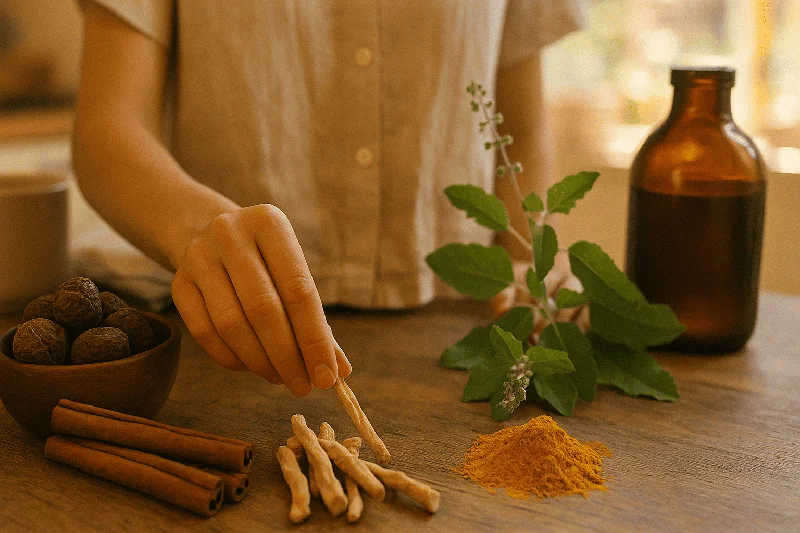
Ayurvedic herbs are natural plant-based remedies used in Ayurveda — the 5,000-year-old Indian system of medicine — to prevent disease, restore balance among the three doshas (Vata, Pitta, Kapha), and promote long-term vitality. From Ashwagandha for stress relief to Triphala for digestion, these herbs have been validated by both ancient texts like the Charaka Samhita and modern clinical research. This guide covers the most powerful Ayurvedic herbs, their proven benefits, exact dosages, safety concerns, dosha compatibility, and practical buying advice — everything you need to use them confidently and effectively.
Ayurveda isn't just about popping herbal pills. It's a complete system where food, lifestyle, seasonal routines, and mental well-being all play a role. Herbs are considered the second most powerful tool (after diet) for influencing the doshas, and they've been used in polyherbal formulations for centuries precisely because combinations often work better than single herbs alone. A 2017 review published in the Journal of Ethnopharmacology confirmed that polyherbal Ayurvedic formulations frequently show synergistic effects — meaning the combined action exceeds the sum of individual herbs.
Let's break down what makes these herbs so powerful, and more importantly, how you can actually use them.
What Are Ayurvedic Herbs and How Do They Work?
Ayurvedic herbs are medicinal plants classified according to their taste (rasa), energy (virya), post-digestive effect (vipaka), and specific therapeutic action (prabhava). Unlike Western pharmacology, which typically isolates a single active compound, Ayurveda views the whole plant as the medicine — with multiple constituents working together.
The fundamental principle is simple: health exists when your doshas are balanced. Disease begins when they're not. Each herb has specific properties that either increase or decrease particular doshas, making personalized selection essential.
The Three Doshas and Why They Matter for Herb Selection
Every person has a unique constitutional makeup (prakriti) dominated by one or two doshas:
- - Vata (air + space) — governs movement, nervous system, creativity.
- When imbalanced: anxiety, insomnia, dry skin, constipation.
- - Pitta (fire + water) — governs digestion, metabolism, intellect.
- When imbalanced: inflammation, acid reflux, skin rashes, irritability.
- - Kapha (earth + water) — governs structure, immunity, stability.
- When imbalanced: weight gain, congestion, lethargy, depression.
Choosing herbs that pacify your aggravated dosha is the core principle. Taking a heating herb like dry ginger when you already have excess Pitta, for example, can actually make things worse.
Methods of Preparation and Administration
Ayurvedic herbs aren't just powders and capsules. Traditional methods of preparation significantly affect how the herb works:
- Churna (powder) — mixed with warm water, honey, or ghee
- Kashaya (decoction) — herbs boiled and reduced to concentrated liquid
- Ghrita (ghee-based preparations) — fat-soluble compounds extracted into clarified butter for enhanced brain and nerve penetration
- Lehyam (herbal jams) — like Chyawanprash, combining multiple herbs with honey and ghee
- Arishta/Asava (fermented preparations) — self-generated alcohol acts as a preservative and enhances absorption
- Taila (medicated oils) — for external application, nasal administration (nasya), or enema (basti)
The form matters. Brahmi in ghee (Brahmi Ghritam) crosses the blood-brain barrier more effectively than Brahmi powder in water, according to traditional Ayurvedic pharmacology.
Best Ayurvedic Herbs for Daily Use: A Complete List With Benefits
Here are the most researched and widely used Ayurvedic herbs, each with documented benefits and practical usage information.
Ashwagandha (Withania somnifera)
Often called "Indian Ginseng," Ashwagandha is the most popular adaptogen in Ayurveda. It helps the body resist physical and mental stress.
Key benefits:
- A 2012 study in the Indian Journal of Psychological Medicine showed that 300 mg of full-spectrum extract twice daily reduced serum cortisol levels by 27.9% over 60 days.
- Improved sperm count and motility in men — a 2013 study in Evidence-Based Complementary and Alternative Medicine reported 167% increase in sperm count.
- Enhanced sleep quality: a 2019 randomized controlled trial in Cureus found 600 mg daily significantly improved sleep onset latency and quality.
- Reduced anxiety scores by 56.5% on the Hamilton Anxiety Rating Scale in clinical trials.
Dosha action: Balances Vata and Kapha. May aggravate Pitta in high doses due to its heating energy.
Turmeric (Curcuma longa)
The golden spice of Ayurveda, turmeric contains curcumin — one of the most studied natural anti-inflammatory compounds in existence.
Key benefits:
- A 2017 meta-analysis in Journal of Medicinal Food found curcumin significantly reduced markers of inflammation (CRP, IL-6).
- Supports cardiovascular health by improving endothelial function.
- Shows promise in neurodegenerative conditions — a 2018 UCLA study found that curcumin improved memory and mood in adults with mild age-related memory complaints.
- Powerful antioxidant that neutralizes free radicals and stimulates the body's own antioxidant enzymes.
Important note: Curcumin's bioavailability is naturally poor (about 1–2% absorption). Combining it with piperine (black pepper) increases absorption by 2,000%, according to research published in Planta Medica. Traditional Ayurvedic preparations with ghee also enhance absorption through fat-soluble delivery. Dosha action: Balances all three doshas, particularly effective for Kapha conditions.
Brahmi (Bacopa monnieri)
The premier brain herb in Ayurveda. Brahmi has been used for centuries to enhance memory, learning, and concentration.
Key benefits:
- A 2014 meta-analysis in the Journal of Ethnopharmacology confirmed Brahmi improves attention, cognitive processing, and working memory.
- A 12-week trial showed significant improvement in ADHD symptoms in children aged 6-12.
- Anti-anxiety effects comparable to lorazepam in animal studies, but without sedative side effects.
- Neuroprotective — shown to reduce beta-amyloid accumulation in preclinical Alzheimer's studies.
Dosha action: Balances Vata and Pitta. Particularly cooling, making it ideal for Pitta-type mental agitation.
Triphala
Not a single herb but a classical formula of three fruits — Amalaki (Emblica officinalis), Bibhitaki (Terminalia bellirica), and Haritaki (Terminalia chebula) — in equal parts.
Key benefits:
- Gentle bowel regulation without habit-forming laxative effect.
- Rich in vitamin C (particularly from Amalaki) with strong antioxidant properties.
- A 2017 study in Journal of Alternative and Complementary Medicine showed Triphala mouthwash was as effective as chlorhexidine in reducing dental plaque.
- Supports healthy microbiome — preclinical research shows it promotes beneficial gut bacteria growth.
- Dosha action: Balances all three doshas.
- Each fruit corresponds to one dosha — Amalaki (Pitta), Bibhitaki (Kapha), Haritaki (Vata).
Boswellia (Boswellia serrata)
Known as Indian Frankincense or Shallaki, this resin extract is Ayurveda's answer to joint inflammation.
Key benefits:
- Boswellic acids inhibit 5-lipoxygenase (5-LOX), a key enzyme in inflammation.
- A 2020 systematic review in BMC Complementary Medicine and Therapies found significant improvement in osteoarthritis pain and physical function.
- A 2019 study showed 100 mg of enriched Boswellia extract improved knee joint function within 7 days.
- Also studied for inflammatory bowel disease (IBD) — a clinical trial showed remission rates comparable to mesalazine for ulcerative colitis.
Dosha action: Balances Vata and Kapha.
Shatavari (Asparagus racemosus)
Called the "Queen of Herbs" in Ayurveda, Shatavari is the primary herb for female reproductive health.
Key benefits:
- Supports hormonal balance through all stages of a woman's life — from menstruation to menopause.
- Galactagogue — traditionally used to promote breast milk production.
- Adaptogenic properties that help manage stress and fatigue.
- Contains saponins (shatavarins) with immunomodulatory effects.
Dosha action: Primarily balances Pitta and Vata. Its cool, moist qualities soothe inflammation and dryness.
Gotu Kola (Centella asiatica)
Known as the "herb of longevity," Gotu Kola supports both brain health and skin healing.
Key benefits:
- Enhances collagen synthesis — a 2013 study confirmed triterpenoids in Gotu Kola accelerate wound healing.
- Reduces anxiety — a 2016 review in Scientific Reports found significant anxiolytic effects.
- Improves venous insufficiency and reduces leg swelling.
- Traditionally used alongside Brahmi for comprehensive cognitive support.
Dosha action: Balances all three doshas. Especially cooling for Pitta.
Shilajit
- Technically not an herb but a mineral-rich resinous substance found in Himalayan rocks.
- Its role in Ayurveda is unique — it's classified as a yogavahi, meaning it enhances the action of other herbs taken alongside it.
Key benefits:
- Contains fulvic acid, which improves nutrient absorption at the cellular level.
- A 2012 study in Andrologia showed 200 mg daily for 90 days increased total testosterone by 23.5% in men aged 45-55.
- Supports mitochondrial energy production — preclinical studies show improved CoQ10 activity.
- Traditional use for general vitality, anti-aging, and recovery from chronic illness.
Dosha action: Balances Kapha and Vata when processed correctly.
Other Notable Ayurvedic Herbs
- Guduchi / Giloy (Tinospora cordifolia) — potent immunomodulator, used for fevers and autoimmune support. Balances all doshas.
- Neem (Azadirachta indica) — powerful antibacterial, antifungal, and blood purifier. Best for Pitta and Kapha skin disorders.
- Arjuna (Terminalia arjuna) — cardiovascular tonic, shown to improve left ventricular ejection fraction in a 2001 study in the International Journal of Cardiology.
- Mucuna (Mucuna pruriens) — natural source of L-DOPA, supports dopamine production. Used for Parkinson's and male reproductive health.
- Bhringaraj (Eclipta alba) — "King of Hair" in Ayurveda. Used for hair growth, liver health, and as a calming herb for Vata.
- Moringa (Moringa oleifera) — nutrient-dense superfood with over 90 nutrients, 46 antioxidants.
- Bitter Melon / Karela (Momordica charantia) — traditionally used for blood sugar regulation; a 2011 study in Journal of Ethnopharmacology showed modest hypoglycemic effects.
- Cardamom / Elaichi — digestive stimulant, freshens breath, and balances Kapha and Vata.
Ayurvedic Herbs by Dosha: Which Herb Is Right for You?
- This is something no competitor covers properly.
- Here's a clear dosha-herb compatibility table:
| Herb | Vata | Pitta | Kapha | Primary Use |
|---|---|---|---|---|
| Ashwagandha | ✅ Balances | ⚠️ Caution (high doses) | ✅ Balances | Stress, sleep, vitality |
| Turmeric | ✅ Balances | ✅ Balances | ✅ Balances | Inflammation, immunity |
| Brahmi | ✅ Balances | ✅ Balances | Neutral | Memory, focus, anxiety |
| Triphala | ✅ Balances | ✅ Balances | ✅ Balances | Digestion, detox |
| Boswellia | ✅ Balances | Neutral | ✅ Balances | Joint health |
| Shatavari | ✅ Balances | ✅ Balances | ⚠️ May increase | Hormonal balance |
| Gotu Kola | ✅ Balances | ✅ Balances | ✅ Balances | Brain, skin healing |
| Shilajit | ✅ Balances | ⚠️ Caution | ✅ Balances | Energy, nutrient absorption |
| Neem | ⚠️ May increase | ✅ Balances | ✅ Balances | Skin, blood purification |
| Guduchi | ✅ Balances | ✅ Balances | ✅ Balances | Immunity, fever |
✅ = Recommended | ⚠️ = Use with caution or under guidance | Neutral = Neither aggravates nor strongly benefits
Dosages and How to Take Ayurvedic Herbs Safely
This is where most guides fail you. They list benefits but never tell you how much to actually take. Below are general adult dosages based on traditional Ayurvedic texts and modern clinical trials. Always start with lower doses and increase gradually.
| Herb | Common Form | Typical Daily Dose | Best Time | Duration |
|---|---|---|---|---|
| Ashwagandha | Root extract (standardized) | 300–600 mg | Before bed or morning | 8–12 weeks, then reassess |
| Turmeric | Curcumin extract (with piperine) | 500–1,000 mg curcumin | With meals (fat-containing) | Ongoing with periodic breaks |
| Brahmi | Standardized extract | 300–450 mg | Morning | 8–12 weeks |
| Triphala | Churna (powder) | 1–3 grams | Before bed with warm water | Can be used long-term |
| Boswellia | Standardized extract (65% boswellic acids) | 300–500 mg, 2-3x/day | With meals | 8–12 weeks |
| Shatavari | Root powder or extract | 500–1,000 mg | With milk or warm water | 12 weeks |
| Gotu Kola | Standardized extract | 500–1,000 mg | Morning | 6–8 weeks, 2-week break |
| Shilajit | Purified resin | 200–500 mg | Morning with warm milk | 8 weeks on, 2 weeks off |
- Critical note: These are general guidelines. Ayurveda strongly emphasizes individualized dosing based on your prakriti (constitution), vikriti (current imbalance), digestive strength (agni), age, and season.
- Consulting a qualified Ayurvedic practitioner — particularly for polyherbal formulations — is always advisable.
Bioavailability: Which Form Should You Choose?
The form you take matters enormously:
- - Powder (Churna): Most traditional, full-spectrum. Lower bioavailability for some compounds but retains synergy of all plant constituents.
- Best for: Triphala, Ashwagandha root powder.
- - Standardized Extract (Capsules/Tablets): Higher concentration of active compounds.
- Better for targeted therapeutic use.
- Best for: Curcumin, Boswellia, Brahmi.
- - Ghrita (Ghee-based): Superior for fat-soluble compounds and brain-targeted herbs. The fat carrier enhances absorption across the blood-brain barrier.
- Best for: Brahmi Ghritam, medicated ghee preparations.
- - Kashaya (Decoction): Fast-acting, good bioavailability for water-soluble compounds.
- Best for: acute conditions, digestive herbs.
- - Fermented (Arishta/Asava): Self-generated alcohol (5–10%) acts as both preservative and extraction medium.
- Long shelf life and good absorption.
- Best for: chronic conditions, tonics.
Ayurvedic Herbs for Specific Modern Health Concerns
Ayurvedic Herbs for Hair Growth
Hair health is one of the top searches related to Ayurvedic herbs — and for good reason. These herbs address hair loss from the root (literally and figuratively):
- Bhringaraj — called "King of Hair," promotes hair growth and natural darkening. Apply as oil or take internally.
- Brahmi — strengthens hair follicles, reduces hair fall related to stress.
- Amla — rich in vitamin C, prevents premature greying and strengthens hair shafts.
- Ashwagandha — addresses stress-related hair loss by lowering cortisol.
- Neem — treats dandruff and scalp infections that contribute to hair fall.
Practical Hair Oil Recipe
Warm 100ml coconut oil with 1 tsp each of Bhringaraj powder, Brahmi powder, and Amla powder on low heat for 15 minutes. Strain and cool. Massage into scalp 30 minutes before washing, 2-3 times per week.
Ayurvedic Herbs for Skin
- Turmeric — anti-inflammatory, reduces acne, evens skin tone.
- Neem — antibacterial, treats acne, eczema, and fungal infections.
- Manjistha (Rubia cordifolia) — blood purifier, helps with hyperpigmentation and rosacea.
- Gotu Kola — stimulates collagen, heals scars and wounds.
- Aloe Vera / Kumari — soothes burns, hydrates, and reduces Pitta-type inflammation.
Ayurvedic Herbs for Diabetes Management
- Bitter Melon / Karela — contains charantin and polypeptide-p, which mimic insulin action.
- Guduchi / Giloy — a 2015 study showed significant reduction in fasting blood sugar.
- Fenugreek / Methi — 4-hydroxyisoleucine improves insulin secretion; a 2009 study in International Journal for Vitamin and Nutrition Research showed 25g daily fenugreek powder reduced fasting glucose.
- Turmeric — curcumin has been shown to improve insulin sensitivity.
⚠️ Important: If you are on metformin, glipizide, or insulin, these herbs can cause additive hypoglycemic effects. Monitor blood sugar closely and inform your doctor.
Don't wait or self medicate. Start chat with Doctor NOW
Drug Interactions and Safety Warnings
- This is the section most Ayurvedic herb guides completely ignore.
- Here's what you need to know:
| Herb | Interacts With | Risk |
|---|---|---|
| Ashwagandha | Thyroid medications, immunosuppressants, sedatives, benzodiazepines | May potentiate effects; adjust doses |
| Turmeric/Curcumin | Anticoagulants (warfarin, aspirin), antidiabetics | Increased bleeding risk; additive blood sugar lowering |
| Brahmi | Anticholinergic drugs, thyroid medication | May alter thyroid hormone levels |
| Triphala | Antidiabetics, anticoagulants | Mild blood sugar and blood-thinning effects |
| Boswellia | NSAIDs, anticoagulants | Additive anti-inflammatory effects; possible GI issues |
| Shatavari | Diuretics, estrogen-sensitive medications | Estrogenic activity; may interfere with diuretic balance |
| Shilajit | Iron supplements, antihypertensives | High mineral content may cause overload; may lower BP further |
| Guduchi | Immunosuppressants, antidiabetics | Stimulates immune system; lowers blood sugar |
Pregnancy and Breastfeeding Contraindications
This is critically important and rarely discussed properly:
- Generally considered safe during pregnancy: Shatavari (under practitioner guidance)
- Avoid during pregnancy: Ashwagandha (may have abortifacient properties at high doses), Turmeric in supplement doses (culinary amounts are fine), Triphala (stimulates uterine contractions), Shilajit, Boswellia, Aloe Vera internally, Bitter Melon
- - Breastfeeding: Shatavari is traditionally used to promote lactation.
- Most other herbs lack sufficient safety data — consult your Ayurvedic doctor and obstetrician before use.
Special Populations
- Children under 12: Reduce doses to 1/4 to 1/2 of adult dose depending on age and weight. Brahmi and Ashwagandha have been studied in pediatric populations, but always under medical supervision.
- Elderly (65+): Start with 1/2 adult dose. Monitor for interactions with existing medications, which are often multiple in this age group.
How to Buy Quality Ayurvedic Herbs: A Consumer Guide
- The market is flooded with adulterated and substandard Ayurvedic products. A 2008 study published in JAMA found that 20.7% of Ayurvedic products purchased online contained detectable lead, mercury, or arsenic.
- Here's how to protect yourself:
Certifications to Look For
- FSSAI License (mandatory for products sold in India)
- GMP Certification (Good Manufacturing Practices — ensures quality control)
- USDA Organic / India Organic (for organic claims)
- AYUSH Premium Mark (Government of India certification for Ayurvedic products)
- ISO 9001:2015 (quality management systems)
- Heavy metal testing certificates — reputable brands will provide these on request or on their website
Red Flags to Avoid
- No manufacturer address or batch number on the label.
- Unrealistic claims like "cures cancer" or "guaranteed results."
- Unusually low prices — quality raw material and testing costs money.
- Products containing undisclosed pharmaceutical ingredients (this is unfortunately common with some "Ayurvedic" products claiming to treat erectile dysfunction or diabetes).
- No expiry date or manufacturing date listed.
Sustainable and Ethical Sourcing
Look for brands that practice sustainable wildcrafting or organic cultivation. Over-harvesting of herbs like Ashwagandha, Shatavari, and Guduchi from wild sources is a growing ecological concern. Fair-trade and organically farmed sources ensure both quality and environmental responsibility.
Classical Ayurvedic Formulations Worth Knowing
- Beyond single herbs, Ayurveda's real genius lies in its classical polyherbal formulations.
- Here are a few that are commonly prescribed:
- Triphala Guggulu — Triphala + Guggulu resin. Used for joint disorders, obesity, and detoxification.
- Kanchanar Guggulu — for thyroid disorders, cysts, and lipomas.
- Kaishore Guggulu — for gout, skin diseases, and inflammatory conditions.
- Brahmi Ghritam — Brahmi in ghee base. Superior preparation for memory, epilepsy, and speech disorders.
- Chyawanprash — the original Ayurvedic multivitamin. Contains 40+ herbs with Amla as the base.
- Dashamoola — formula of 10 roots for Vata disorders, post-partum care, and inflammation.
These formulations work on the principle of synergy — the carrier herbs, catalysts (yogavahi), and primary herbs each play distinct roles. This is why self-formulating from individual herbs is discouraged in traditional Ayurveda.
Frequently Asked Questions About Ayurvedic Herbs
What are Ayurvedic herbs?
Ayurvedic herbs are medicinal plants used within the traditional Indian system of medicine (Ayurveda) to prevent and treat disease, balance the doshas, and promote overall well-being. They include roots (Ashwagandha), leaves (Brahmi), fruits (Triphala), resins (Boswellia), bark (Arjuna), and mineral substances (Shilajit).
What is the best Ayurvedic herb?
There is no single "best" herb — it depends on your constitution and health concern. However, Ashwagandha is the most widely researched and versatile, with strong evidence for stress, sleep, and vitality. For digestion, Triphala is considered the gold standard. For brain health, Brahmi leads.
What are the 7 essential herbs everyone should know?
The seven most foundational Ayurvedic herbs are: Ashwagandha (stress/vitality), Turmeric (inflammation), Triphala (digestion), Brahmi (brain), Shatavari (hormones), Guduchi (immunity), and Gotu Kola (longevity). These cover the majority of common health concerns.
Which Ayurvedic herbs are best for diabetes?
- Bitter Melon (Karela), Guduchi, Fenugreek (Methi), and Turmeric all have clinical evidence for supporting blood sugar management.
- However, they should complement — not replace — prescribed medications. Always monitor blood glucose and consult your doctor.
Can I take multiple Ayurvedic herbs together?
Yes, in fact Ayurveda traditionally encourages polyherbal combinations for synergistic effects. But combinations should be designed by a qualified practitioner who understands herb-herb interactions and your specific doshic profile. Random stacking of herbs can cause adverse effects.
Where can I buy authentic Ayurvedic herbs near me?
Look for AYUSH-certified pharmacies, licensed Ayurvedic clinics, or verified online retailers with GMP certification and heavy-metal testing documentation. In India, government-affiliated pharmacies attached to Ayurvedic hospitals are generally the most reliable source.
Conclusion: Making Ayurvedic Herbs Work for You
Ayurvedic herbs offer a time-tested, increasingly research-validated approach to health — but they work best when used intelligently. Know your dosha. Start with one or two herbs rather than a dozen. Choose quality products from certified sources. Pay attention to dosages and duration. And most importantly, understand that in Ayurveda, herbs are just one piece of the puzzle alongside diet, sleep, movement and mental well-being.
If you're new to Ayurvedic herbs, Ashwagandha and Triphala are the two safest starting points for most people. Begin with the lower end of the dosage range for 4 weeks, observe how your body responds, and adjust from there.
And if you have existing medical conditions or take prescription medications — please consult both your doctor and a qualified Ayurvedic practitioner before starting any herbal regimen. The intersection of traditional and modern medicine is where the real magic happens, but it requires informed guidance.
Scientific Sources
- A Systematic Review and Meta-Analysis of Ayurvedic Herbal Preparations for Hypercholesterolemia — Gyawali D et al., 2021, Medicina (Kaunas, Lithuania)
- Ayurvedic and Chinese Herbs against Coronaviruses — Gasmi A et al., 2024, Current pharmaceutical design
- Integrating ayurvedic medicine into cancer research programs part 2: Ayurvedic herbs and research opportunities — Arnold JT, 2023, Journal of Ayurveda and integrative medicine
- Indian Ayurvedic medicine: Overview and application to brain cancer — Newton HB, 2024, Journal of Ayurveda and integrative medicine
- Mechanistic role and potential of Ayurvedic herbs as anti-aging therapies — Raina K et al., 2023, Drug metabolism and personalized therapy
- Mechanistic role and potential of Ayurvedic herbs as anti-aging therapies — Raina K et al., 2023, Drug metabolism and personalized therapy
- Nano-ayurvedic medicine and its potential in cancer treatment — Lopus M, 2023, Journal of integrative medicine
- Ayurvedic medicine for schizophrenia — Agarwal V et al., 2007, The Cochrane database of systematic reviews
- Ayurvedic Therapies to Target the Microbiome: Evidence and Possibilities — Vijayanna ST et al., 2024, Alternative therapies in health and medicine
- Development of Ayurveda - Tradition to trend — Mukherjee PK et al., 2017, Journal of ethnopharmacology
- Ayurveda and in silico Approach: A Challenging Proficient Confluence for Better Development of Effective Traditional Medicine Spotlighting Network Pharmacology — Sahu R et al., 2023, Chinese journal of integrative medicine
- Comprehensive review of hepatotoxicity associated with traditional Indian Ayurvedic herbs — Philips CA et al., 2020, World journal of hepatology
- Traditional Formulations for Managing COVID-19: A Systematic Review — Bhandari RB et al., 2024, Journal of integrative and complementary medicine
- Mechanism of action of certain medicinal plants for the treatment of asthma — Usmani K et al., 2023, Journal of ethnopharmacology
- Ayurvedic drug discovery — Balachandran P et al., 2007, Expert opinion on drug discovery
- Modulation of neutrophil (dys)function by Ayurvedic herbs and its potential influence on SARS-CoV-2 infection — Joshi MB et al., 2022, Journal of Ayurveda and integrative medicine
- Are Ayurvedic herbs for diabetes effective? — Shekelle PG et al., 2005, The Journal of family practice
- Herbal Treatment for Dermatologic Disorders — Benzie IFF et al., 2011
- Ayurvedic Stress Management: Balancing Mind Body in Men Women — Swaroop A, 2025, Advances in mind-body medicine
- Ayurpharmacoepidemiology en Route to Safeguarding Safety and Efficacy of Ayurvedic Drugs in Global Outlook — Debnath P et al., 2017, Journal of evidence-based complementary & alternative medicine
Questions from users
What are the best Ayurvedic herbs for boosting immunity and overall health?
Raven
3 days ago
To boost immunity and overall health, Guduchi (Tinospora cordifolia) is a key Ayurvedic herb known for its immune-supporting properties. It's typically taken in powder form, with common dosages ranging from 500 mg to 1 gram daily, but it's crucial to follow advice from a healthcare provider for personalized recommendations. Other supportive herbs include Ashwagandha for stress relief and general vitality, and Turmeric for its anti-inflammatory effects. Watch out for allergies or adverse reactions, and consult a doctor if symptoms persist or worsen.
What is Gotu Kola good for and how can it improve my skin health?
Christopher
13 days ago
Gotu Kola is great for improving skin health due to its ability to enhance collagen synthesis, which helps with skin elasticity and healing. It’s soothing for inflammation and dryness too. You get benefits by including it in your diet or using creams containing it, but with any herb, keep an eye on quality and dosage!
Can I use piperine with Ayurvedic herbs to enhance their effectiveness?
Sydney
22 days ago
Yes, definitely! Piperine from black pepper can enhance the absorption of many Ayurvedic herbs, making them more effective. Just be mindful of dosages and your body's response. Everyone's dosha is different, so what works for one might not work for another. It's a good idea to consult with an Ayurvedic practitioner specifically about your constitution and any imbalances first, just to be safe.
Can I use Brahmi oil on my scalp to improve hair health?
Aaliyah
31 days ago
Yes, Brahmi oil can be great for your scalp! It helps strengthen hair follicles and reduce stress-related hair fall. Just gently massage it onto your scalp and let it sit for a while before rinsing. Be sure to pay attention to how your scalp feels and adjust if you notice any sensitivity. Enjoy the relaxation too!
What is the best way to start using Ayurvedic herbs if I'm new to herbal remedies?
Makayla
40 days ago
If you're new to Ayurvedic herbs, start by understanding your dosha (body type) to choose herbs that balance it. Begin with a small dose, like 1/4 teaspoon, and observe how your body responds for a few weeks. Keep it simple, maybe try just one herb like Ashwagandha. Also, if you have any medical conditions, it's a good idea to consult a doctor beforehand!
Is it safe to combine different Ayurvedic herbs for enhanced health benefits?
Nevaah
58 days ago
Yeah, combining Ayurvedic herbs can be beneficial, but it's important to be cautious. Some herbs can interact with each other, affecting how they work. Make sure your unique dosha balance and health conditions are taken into account. It might be helpful to consult an Ayurvedic practitioner who can guide you based on your specific needs. 🧘♂️
What is Triphala and how does it benefit overall health and wellness?
Meredith
68 days ago
Triphala, made of Amalaki, Bibhitaki, and Haritaki, is great for digestion and detoxification. It helps cleanse the digestive tract, balances all three doshas (Vata, Pitta, and Kapha) and promotes regularity. Plus, it's packed with antioxidants, strengthens the immune system, and helps in weight loss. Super handy for overall health! 😊
Can I use Ginger for digestion and stress relief at the same time?
Hailey
77 days ago
Absolutely, ginger is pretty amazing for both digestion and stress. Its warming qualities can boost agni, helping digestion, while its calming effects can ease stress. Try some ginger tea after meals, it might work wonders for both! Just be sure to listen to your body and adjust if it feels too heating for you.
What is the role of adaptogenic herbs like Ashwagandha in stress management?
Vada
87 days ago
Adaptogenic herbs like Ashwagandha helps the body adapt to stress by calming the nervous system and promoting emotional well-being. It supports mental performance too. By balancing the body's response to stress, Ashwagandha can be a great ally in managing daily life's pressures. Keep an eye on how your body reacts, each person is different!
What is curcumin and how does it benefit joint health?
Natalie
96 days ago
Curcumin is a compound found in turmeric that's great for joint health, It has anti-inflammatory properties that can help reduce joint pain and swelling. It's like a natural way to keep your joints moving smoothly! It’s also helping with digestion and detoxification. But, if issues persist, consulting an Ayurveda practitioner might offer some personalized guidance.
Related articles

Neurological Disorders
Brahmi Ghrita Benefits, Dosage, How To Use, Side Effects, Ingredients, Reference
Exploration of Brahmi Ghrita Benefits, Dosage, How To Use, Side Effects, Ingredients, Reference
4,062

Neurological Disorders
How to Control Headache: Natural and Effective Ways
Discover natural ways to control headache at home. Learn fast, medicine-free techniques and effective Ayurvedic tips for headache relief and pain control
2,789

Neurological Disorders
Ayurvedic Medicine for Peripheral Neuropathy – Natural Remedies for Nerve Health
Explore Ayurvedic medicine for peripheral neuropathy, including effective herbs, treatments, and lifestyle changes. Discover natural approaches to alleviate nerve pain and enhance nerve health.
4,868

Neurological Disorders
Neuron Capsule
Exploration of Neuron Capsule
2,614

Neurological Disorders
Ayurvedic Remedies for Migraine Relief
Productivity plays an important role in modern society.
3,299

Neurological Disorders
Kakshadhara Marma – Ayurvedic Understanding of Shoulder Marma Point and Its Benefits
Explore Kakshadhara Marma, an important Ayurvedic marma point located in the shoulder area. Learn about its significance, therapeutic benefits, and how it can promote overall health and healing.
3,126

Neurological Disorders
Ayurvedic Remedies for Sleep Disorder
Sleep is one of the most basic yet essential commodities for leading a holistic and healthy life.
3,267

Neurological Disorders
Ayurveda for Peripheral Neuropathy – Holistic Healing for Nerve Health
Discover natural Ayurvedic remedies for peripheral neuropathy to reduce nerve pain, promote nerve regeneration, and restore balance through holistic healing.
3,394

Neurological Disorders
Brahmi Vati Benefits, Dosage, Ingredients, Side Effects
Exploration of Brahmi Vati Benefits, Dosage, Ingredients, Side Effects
5,089

Neurological Disorders
Syphilis Treatment in Ayurveda: Herbal Remedies and Healing Practices
Discover effective Ayurvedic treatments for syphilis, including herbal remedies, lifestyle practices, dosage guidelines, and scientific evidence supporting natural healing.
4,790
Related consultations on the topic
Legal
Additional Documents
© 2024 Ask Ayurveda. All rights reserved.