Ask Ayurvedic doctor a question and get a consultation online on the problem of your concern in a free or paid mode. More than 2,000 experienced doctors work and wait for your questions on our site and help users to solve their health problems every day.
FREE! Ask Ayurvedic Doctors 24/7

 Fast responses
 1000+ verified doctors
Body DetoxEar, Nose, and Throat DisordersGeriatrics & RejuvenationImmunodeficiencyInfertility TreatmentNutritionOrthopedic DisordersPediatricsRespiratory DisordersSexually Transmitted Diseases (STDs)Surgery RecoveryUrological DisordersVascular DisordersDental DisordersEndocrinological DisordersGastrointestinal DisordersYoga TherapyGeneral MedicineAllergic DisordersCardio DisordersGynecology and ObstetricsCosmetologySkin and Hair DisordersEye DisordersInfectious DiseasesMental DisordersNeurological DisordersOncologyPanchakarmaSexual Health & DisordersSports Medicine
Published on 10/10/24
(Updated on 07/09/26)
3,116
Dietetics and Its Solutions in Ayurveda
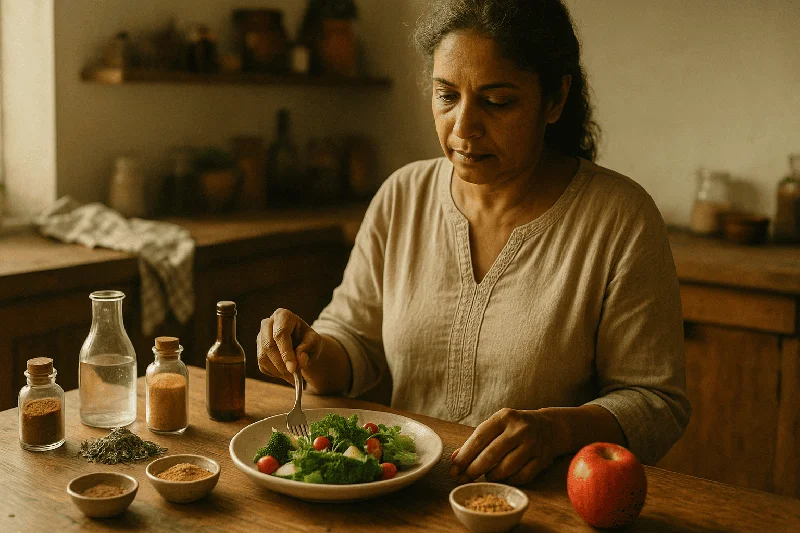
Ayurvedic dietetics is a personalized system of nutrition rooted in Ayurveda — the 5,000-year-old "Science of Life" — that prescribes what, when, and how you should eat based on your unique body constitution (Prakriti), the season, your digestive capacity, and even the way food is prepared. Unlike modern calorie-centric approaches, Ayurvedic dietetics treats food as medicine: every meal either strengthens your health or quietly undermines it. This guide covers the foundational philosophy, practical principles, dosha-specific meal plans, scientific evidence, and step-by-step instructions to help you start an Ayurvedic diet today.
Ayurveda's twin aim is captured in a classical verse: "Swasthasya Swasthya Rakshanam, Aturasya Vikara Prashamanam" — preserve the health of the healthy, and cure the disease of the diseased. Prevention through diet is the first line of defense, and detailed dietary regimens found in texts like Charaka Samhita and Sushruta Samhita remain remarkably relevant even in the age of nutrigenomics.
What Is Ayurvedic Dietetics?
Definition and Origins
Ayurvedic dietetics (Ahara Vidhi or Anna Vidhi) is the branch of Ayurveda dedicated to understanding food — its qualities, effects on the body-mind complex, and the rules governing its consumption. The earliest systematic references appear in Charaka Samhita (circa 1500 BCE), where food (Ahara) is called one of the three pillars (Trayopastambha) of life, alongside sleep (Nidra) and regulated sexual conduct (Brahmacharya).
In this system, food is not just a source of macro- and micro-nutrients. It is a complex interplay of taste (Rasa), post-digestive effect (Vipaka), potency (Virya), and a special pharmacological action (Prabhava). Every item you place on your plate carries these four dimensions, and understanding them is central to Ayurvedic nutritional planning.
Ayurvedic Dietetics vs. Modern Western Nutrition
| Parameter | Ayurvedic Dietetics | Modern Western Nutrition |
|---|---|---|
| Classification basis | Taste (6 Rasas), quality (Gunas), potency | Calories, macronutrients, micronutrients |
| Personalization | Based on Prakriti (constitution), Vikriti (imbalance), season | Based on age, sex, activity level, BMI |
| Digestive model | Agni (digestive fire) – qualitative | Enzyme kinetics, gut microbiome – quantitative |
| Food combining | Viruddha Ahara (incompatible combinations) strongly emphasized | Limited emphasis; mainly allergen-based |
| Mental effects of food | Sattvic, Rajasic, Tamasic classification | Emerging research on gut-brain axis |
| Goal | Bio-balanced diet (Dosha equilibrium) | Materially balanced diet (RDA-based) |
| Evidence tradition | Classical empirical texts + emerging clinical research | RCTs, meta-analyses, epidemiological studies |
A 2014 review published in the Journal of Traditional and Complementary Medicine noted that Ayurvedic dietary principles share substantial overlap with modern concepts like chrono-nutrition and personalized medicine, suggesting that ancient Ayurveda intuitively captured truths modern science is only now validating.
Philosophical Foundations: Panchamahabhuta, Doshas, and Prakriti
Panchamahabhuta — The Five Elements
- Everything in Ayurvedic dietetics rests on Panchamahabhuta — the five great elements: Earth (Prithvi), Water (Jala), Fire (Agni/Tejas), Air (Vayu), and Ether (Akasha). Food, the human body, seasons, and even emotions are all combinations of these elements.
- A banana, for example, is predominantly Earth and Water — heavy, sweet, and cooling.
- Black pepper is Fire and Air — light, hot, and pungent.
The Three Doshas: Vata, Pitta, Kapha
The five elements combine to form three bio-energetic forces called doshas:
- - Vata (Air + Ether): Governs movement, nerve impulses, circulation.
- When imbalanced — anxiety, dry skin, constipation, irregular digestion.
- - Pitta (Fire + Water): Governs metabolism, digestion, intellect.
- When imbalanced — acidity, inflammation, skin rashes, irritability.
- - Kapha (Earth + Water): Governs structure, lubrication, immunity.
- When imbalanced — weight gain, congestion, lethargy, fluid retention.
Every individual has a unique ratio of these three doshas determined at conception — this is your Prakriti (constitution). Diet in Ayurveda is fundamentally about keeping your specific doshic ratio in equilibrium.
How to Determine Your Prakriti: A Self-Assessment Guide
- No competitor offers a practical method to identify your dosha.
- Here's a simplified framework (note: a full assessment by a qualified Ayurvedic practitioner is always recommended for accuracy):
Body frame: Thin, hard to gain weight → Vata | Medium, muscular → Pitta | Large, gains weight easily → Kapha Skin: Dry, rough, cool → Vata | Warm, oily, prone to rashes → Pitta | Thick, smooth, cool → Kapha Digestion: Irregular, bloating → Vata | Strong, prone to acidity → Pitta | Slow, heavy feeling after meals → Kapha Temperament: Creative, anxious under stress → Vata | Focused, irritable under stress → Pitta | Calm, resistant to change → Kapha Sleep: Light, easily disturbed → Vata | Moderate, vivid dreams → Pitta | Deep, heavy, hard to wake → Kapha
Most people are dual-dosha (e.g., Vata-Pitta or Pitta-Kapha). Score yourself honestly across 15–20 such parameters, and the dominant pattern reveals your primary Prakriti. Several universities, including the Trans-Disciplinary University (TDU) Bangalore, offer validated Prakriti assessment tools online.
The Six Tastes (Shad Rasa) and Food Classification
- Ayurveda classifies all food through six tastes, and a balanced meal should ideally include all six.
- This is one of the most distinctive — and practical — contributions of Ayurvedic dietetics.
| Taste (Rasa) | Elements | Examples | Effect on Doshas |
|---|---|---|---|
| Sweet (Madhura) | Earth + Water | Rice, wheat, milk, ghee, dates | ↓ Vata, ↓ Pitta, ↑ Kapha |
| Sour (Amla) | Earth + Fire | Lemon, tamarind, yogurt, fermented foods | ↓ Vata, ↑ Pitta, ↑ Kapha |
| Salty (Lavana) | Water + Fire | Sea salt, rock salt, seaweed | ↓ Vata, ↑ Pitta, ↑ Kapha |
| Pungent (Katu) | Fire + Air | Black pepper, ginger, chili, mustard | ↑ Vata, ↑ Pitta, ↓ Kapha |
| Bitter (Tikta) | Air + Ether | Turmeric, bitter gourd, neem, fenugreek | ↑ Vata, ↓ Pitta, ↓ Kapha |
| Astringent (Kashaya) | Air + Earth | Pomegranate, green tea, unripe banana, honey | ↑ Vata, ↓ Pitta, ↓ Kapha |
Why All Six Tastes Matter
When any taste is chronically missing from the diet, the associated dosha goes out of balance. Modern Indian urban diets, for instance, tend to be heavy in sweet, salty, and sour — and deficient in bitter, pungent, and astringent. This skew, Ayurveda argues, contributes to the epidemic of Kapha-Pitta disorders: obesity, Type 2 diabetes, and metabolic syndrome.
A 2017 cross-sectional study in the International Journal of Ayurveda Research found that participants who regularly consumed all six tastes had significantly lower BMI and better self-reported digestive health than those with a limited taste palette.
Agni, Ama, and Ojas — The Metabolic Triad
Agni: Your Digestive Fire
Agni is the Ayurvedic concept closest to digestive enzymes and metabolic fire. Charaka identifies 13 types of Agni, but for dietary purposes, the most critical is Jatharagni — the primary digestive fire in the stomach and small intestine.
Four states of Agni:
- 1.Sama Agni (balanced) — digests meals efficiently, regular appetite. The ideal state.
- 2.Vishama Agni (irregular) — linked to Vata; alternating between strong and weak digestion. Gas, bloating.
- 3.Tikshna Agni (hyperactive) — linked to Pitta; intense hunger, acidity, loose stools.
- 4.Manda Agni (sluggish) — linked to Kapha; slow digestion, heaviness, weight gain.
The entire purpose of dietary recommendations in Ayurveda is to maintain or restore Sama Agni.
Ama: The Toxic Byproduct
When Agni is weak, food is not fully digested, creating Ama — a sticky, toxic metabolic residue. Ama clogs the body's channels (Srotamsi), disrupts nutrient transport, and is considered the root cause of most chronic diseases in Ayurveda. Signs of Ama include a coated tongue, sluggish mornings, foul-smelling stools, and joint stiffness.
Detoxification begins with diet: light, warm, spiced foods kindle Agni and burn Ama. Fasting or eating kitchari (rice + mung dal) for 2–3 days is a classic Ama-clearing protocol.
Ojas: The Essence of Vitality
When digestion is perfect, the final and most refined tissue essence produced is Ojas — the substance of immunity, radiance, and vitality. Foods that build Ojas include almonds (soaked and peeled), ghee, dates, saffron, and fresh cow's milk. Foods that destroy Ojas include alcohol, processed food, stale leftovers, and excessive fasting.
Dosha-Specific Diet Plans: What to Eat and What to Avoid
This is where most guides fall short — they explain theory but never give you an actionable meal plan. Below are specific guidelines and a sample one-day menu for each dosha.
Vata-Balancing Diet
Favor: Warm, moist, grounding foods. Cooked grains (rice, oats), root vegetables, warm soups, ghee, sesame oil, sweet fruits (bananas, mangoes, grapes), nuts, warm spices (cinnamon, cardamom, cumin). Avoid: Raw salads, cold drinks, dried fruits in excess, beans (except mung), crackers, popcorn, caffeine.
Sample Vata Day Menu
- Morning (7:00 AM): Warm water with ginger + soaked almonds (6–8). Oatmeal cooked with milk, cinnamon, and a teaspoon of ghee.
- Lunch (12:30 PM): Basmati rice + mung dal tadka + sautéed zucchini with cumin and turmeric + a small piece of jaggery.
- Snack (4:00 PM): Warm spiced milk with dates (2–3).
- Dinner (7:00 PM): Vegetable soup (carrots, sweet potato, beets) with a chapati and a drizzle of sesame oil.
Pitta-Balancing Diet
Favor: Cool, slightly dry, sweet and bitter foods. Basmati rice, wheat, bitter gourd, leafy greens, coconut, coriander, fennel, sweet fruits (melon, pear, pomegranate), milk, ghee. Avoid: Spicy food, fermented items, sour fruits, tomatoes in excess, red meat, alcohol, vinegar, and fried food.
Sample Pitta Day Menu
- Morning (6:30 AM): Room-temperature water with a teaspoon of fennel seeds (steeped). Coconut-milk smoothie with ripe pear and a handful of mint leaves.
- Lunch (12:00 PM): Basmati rice + lauki (bottle gourd) sabzi + cucumber raita with roasted cumin + a small salad with coriander dressing.
- Snack (3:30 PM): Pomegranate + coconut water.
- Dinner (6:30 PM): Khichdi made with rice and mung dal + steamed broccoli + a teaspoon of ghee.
Kapha-Balancing Diet
Favor: Light, warm, dry, spicy foods. Barley, millet, corn, honey (unheated), leafy greens, legumes, ginger, black pepper, mustard, light fruits (apples, cranberries, pears). Avoid: Heavy, oily, sweet, cold foods. Cheese, ice cream, fried food, white sugar, excess wheat, bananas, melons, excess nuts.
Sample Kapha Day Menu
- Morning (6:00 AM): Warm water with honey and lemon (never heat honey above 40°C per Ayurvedic caution). A small bowl of puffed rice or millet porridge with a pinch of dry ginger.
- Lunch (12:00 PM): Barley roti + spiced moong sprouts + bitter gourd stir-fry with mustard seeds + a small apple.
- Snack (3:00 PM): Herbal tea (ginger-tulsi-black pepper).
- Dinner (6:00 PM): Light vegetable soup (spinach, drumstick, green beans) — no grains at dinner if trying to reduce Kapha.
Don't wait or self medicate. Start chat with Doctor NOW
Principles of Proper Food Intake (Ahara Vidhi Visheshayatana)
Charaka describes eight specific factors (Ashta Ahara Vidhi Visheshayatana) that determine whether food nourishes or harms you:
- 1.Prakriti — Natural quality of food (heavy vs. light)
- 2.Karana (Samskara) — Processing/preparation method. Puffing rice makes it lighter; frying makes it heavier.
- Even the choice of cookware matters — Ayurveda prefers clay pots and iron vessels over aluminum.
- 3.Samyoga — Combination.
- Certain combinations are prohibited (Viruddha Ahara) — e.g., milk with fish, honey heated above 40°C, fruit with milk (except mango, according to some texts).
- 4.Rashi — Quantity. Ayurveda recommends filling the stomach one-third with solid food, one-third with liquid, and leaving one-third empty.
- 5.Desha — Habitat/geography. A person living in a cold, dry climate needs different food than someone in tropical Kerala.
- 6.Kala — Time.
- Seasonal diet (Ritucharya) and daily timing (Dinacharya) — lunch should be the largest meal when Pitta (and therefore Agni) peaks between 10 AM and 2 PM.
- 7.Upayoga Samstha — Rules of use. Eat only when the previous meal is digested. Never eat when emotionally disturbed.
- 8.Upayokta — The user. Individual tolerance, habitual diet, and mental state.
Ritucharya: Seasonal Eating
Ayurveda divides the year into six seasons (Ritus), each demanding dietary adjustments:
- Shishira (Late Winter): Sweet, sour, salty tastes. Heavy, nourishing foods. Ghee, til (sesame), jaggery.
- Vasanta (Spring): Light, dry, bitter, pungent. Barley, honey, ginger. Reduce heavy and sweet foods.
- Grishma (Summer): Sweet, cold, liquid. Buttermilk, watermelon, rice, mint. Avoid pungent and sour.
- Varsha (Monsoon): Sour, salty, unctuous. Ginger, lemon, light soups. Avoid raw salads (contamination risk + Vata aggravation).
- Sharad (Autumn): Sweet, bitter, astringent. Amla, ghee, rice. Detox from monsoon accumulation.
- Hemanta (Early Winter): Similar to Shishira but Agni is naturally strongest — eat liberally, include all six tastes.
The Role of Water and Hydration
Ayurveda gives surprisingly detailed water guidelines that no competitor covers:
- Warm water is preferred over cold in most constitutions — it kindles Agni and helps clear Ama.
- Drink water sip by sip during meals — not large quantities. Large volumes dilute digestive juices.
- Ushapana (drinking water first thing in morning) is a classical recommendation, particularly for Kapha types.
- Copper-vessel water (Tamra Jala) — stored overnight — is recommended for its antimicrobial properties. A 2012 study in the Journal of Health, Population, and Nutrition confirmed that copper surfaces killed diarrhea-causing bacteria within hours.
- Avoid ice-cold water immediately after meals; it "extinguishes" Agni.
Ayurvedic Dietetics and Mental Health: Sattvic, Rajasic, and Tamasic Food
Ayurveda uniquely classifies food by its effect on the mind through the Triguna framework:
- Sattvic food promotes clarity, compassion, and calm. Fresh fruits, vegetables, whole grains, milk, ghee, honey, nuts. This is the ideal diet for anyone pursuing mental well-being or spiritual practice.
- Rajasic food stimulates ambition, restlessness, and desire. Spicy food, onion, garlic, caffeine, very salty or sour items.
- Tamasic food induces inertia, confusion, and lethargy. Stale food, processed meat, alcohol, deep-fried items, leftovers older than a few hours, food reheated in a microwave.
A 2019 pilot study published in PLOS ONE demonstrated that participants following a Sattvic diet for 3 months reported significantly improved scores on anxiety and depression scales compared to a control group consuming their habitual diet. While the study had limitations (small sample, self-reporting), the direction is consistent with Ayurvedic predictions.
Rasayana, Therapeutic Spices, and Recipes
Rasayana: Ayurvedic Superfoods for Longevity
- Rasayana are substances that rejuvenate tissues and build Ojas.
- Key Rasayana foods include:
- Amalaki (Indian Gooseberry): Richest natural source of vitamin C; balances all three doshas. 1–2 teaspoons of Amla powder daily.
- Ashwagandha: Adaptogenic; supports stress resilience. A 2012 Indian Journal of Psychological Medicine RCT showed significant cortisol reduction.
- Chyawanprash: A polyherbal jam traditionally taken 1–2 teaspoons daily in winter with warm milk.
- Ghee: Enhances Agni without aggravating Pitta; a vehicle for nutrient absorption. 1–2 teaspoons daily is generally safe.
- Turmeric milk (Haldi Doodh): Anti-inflammatory, immune-supporting.
Therapeutic Kitchen Spices
| Spice | Ayurvedic Action | Modern Evidence |
|---|---|---|
| Turmeric (Haridra) | Anti-inflammatory, blood purifier | Curcumin shown to reduce CRP in a 2016 meta-analysis (J Med Food) |
| Ginger (Shunthi) | Kindles Agni, anti-nausea | Effective for nausea/vomiting per a 2019 Cochrane review |
| Cumin (Jeeraka) | Carminative, aids iron absorption | Improved lipid profiles in a 2014 RCT (Complementary Therapies in Clinical Practice) |
| Fennel (Shatapushpa) | Cooling, anti-spasmodic for gut | Reduces colic in infants — 2003 Altern Ther Health Med trial |
| Black pepper (Maricha) | Bio-enhancer, clears Ama | Piperine increases curcumin bioavailability by 2,000% (Planta Medica, 1998) |
| Cinnamon (Twak) | Regulates blood sugar, warming | Meta-analysis in J Med Food (2011) showed fasting glucose reduction |
Recipe: Digestive Reset Kitchari
This is a staple Ayurvedic cleansing meal, suitable for all doshas.
Ingredients: ½ cup basmati rice, ½ cup split mung dal (washed), 1 tbsp ghee, ½ tsp turmeric, ½ tsp cumin seeds, ½ tsp coriander powder, ¼ tsp fresh grated ginger, salt to taste, 4 cups water, fresh cilantro. Method: Rinse rice and dal. Heat ghee in a pot, add cumin seeds until they sputter, add turmeric, coriander, and ginger. Stir for 30 seconds. Add rice, dal, water, and salt. Bring to a boil, reduce heat, cover, cook for 25–30 minutes until soft and porridge-like. Garnish with cilantro. Nutritional note: Approximately 320 kcal per serving; complete protein from rice-dal combination; easy to digest; suitable during illness, detox, or seasonal transition.
Viruddha Ahara: Incompatible Food Combinations
Viruddha Ahara is one of Ayurveda's most distinctive and underexplored concepts — foods that are individually wholesome but harmful when combined:
- Milk + Fish: Both are nutritive but of opposite potencies; said to cause skin diseases (Kushtha).
- Milk + Sour Fruits: Causes curdling in the stomach; may produce Ama. (Exception: mango with milk is traditionally considered compatible.)
- Honey + Hot Water/Cooking: Heated honey is considered toxic in Ayurveda. A 2010 Ayu journal study showed heated honey produced HMF (hydroxymethylfurfural), a potentially harmful compound.
- Ghee + Honey in Equal Quantities: Considered Vishavat (poison-like) when mixed in equal proportions by weight.
- Curd at Night: Increases Kapha and obstructs Srotamsi; linked to respiratory and skin issues.
Special Populations: Pregnancy, Children, Elderly, and Athletes
Pregnancy (Garbhini Paricharya)
- Ayurveda prescribes month-by-month dietary guidelines. First trimester emphasizes sweet, cold, liquid foods (milk, coconut water) to prevent nausea and nourish the fetus. Third trimester includes ghee-based preparations and medicated milk.
- Always consult a qualified practitioner — herbal supplements during pregnancy require expert supervision.
Children (Bala Ahara)
Children are predominantly Kapha in constitution. Light, warm, easily digestible food is ideal. Avoid excessive sugar and cold beverages. Honey (after age 1) with warm water is traditional. Chyawanprash is often introduced after age 3.
Elderly (Vridhavastha)
- Vata increases with age.
- Warm, unctuous, easy-to-digest foods — soups, khichdi, warm milk with turmeric — are prioritized. Smaller, more frequent meals. Rasayana foods like Ashwagandha and Brahmi become especially important.
Athletes and Active Individuals
Higher Agni can tolerate heavier, more nourishing foods. Emphasis on protein-rich dals, ghee, almonds, dates, and ashwagandha for recovery. Hydration with electrolyte-rich drinks like buttermilk with rock salt and cumin.
How to Become an Ayurvedic Dietitian
What Is an Ayurvedic Dietitian?
An Ayurvedic dietitian (or Ahara Visheshagya) combines knowledge of classical Ayurvedic nutrition with modern dietary science. They assess Prakriti, evaluate Agni, and design personalized meal plans that integrate Ayurvedic principles.
Courses and Qualifications
- BAMS (Bachelor of Ayurvedic Medicine and Surgery): The foundational degree; 5.5 years including internship. Dietetics is a core subject.
- Post-BAMS Dietician Courses: MD (Swasthavritta), PG Diploma in Ayurveda Dietetics (offered by institutions like TDU Bangalore).
- Certificate/Diploma Courses: Organizations like the National Council of Training Academy (NCTA) offer diploma programs. TDU offers an "Introduction to Ayurveda Dietetics" online course.
- Online Courses: Several AYUSH-accredited institutions offer online Ayurvedic nutrition certifications, ranging from free introductions to comprehensive paid programs (₹15,000–₹50,000).
- Consultation Costs: A typical Ayurvedic diet consultation lasts 45–60 minutes and costs $50–$100 internationally or ₹500–₹2,000 in India, including Prakriti assessment, dietary plan, and follow-up recommendations.
Risks and Side Effects of Incorrect Ayurvedic Dieting
This is a critical topic that nearly every competitor ignores.
- Self-misdiagnosis of dosha can lead to following the wrong diet — e.g., a Vata person following a Kapha-reducing (dry, light) diet may worsen anxiety, insomnia, and weight loss.
- Excessive fasting or restriction without proper guidance can deplete Ojas and weaken immunity.
- Herbal supplements sold as "Ayurvedic" are not always quality-controlled. A 2008 JAMA study found that 20.7% of Ayurvedic products purchased online contained detectable lead, mercury, or arsenic. Always source from GMP-certified manufacturers.
- Pregnant women, children, and people on pharmaceutical medications should never modify their diet drastically without consulting both an Ayurvedic and allopathic practitioner.
- Delayed medical treatment: Using Ayurvedic diet as a sole treatment for serious conditions (cancer, cardiac emergencies) without integrating modern medicine is dangerous.
Frequently Asked Questions
What foods should I avoid in Pitta dosha?
Avoid excessively spicy food (chili, raw garlic), sour and fermented items (vinegar, alcohol, aged cheese), fried food, tomatoes in large quantities, and red meat. Pitta thrives on cooling, sweet, and bitter foods like cucumber, coconut, leafy greens, and coriander.
What is a 7-day Ayurvedic meal plan?
- A full 7-day plan rotates through the sample dosha menus above, ensuring variety across all six tastes.
- Day 1–2: Kitchari-based reset.
- Day 3–7: Dosha-specific meals with seasonal vegetables, whole grains, appropriate spices, and Rasayana foods. Include all six tastes in lunch, keep dinner light, and eat the largest meal between 12:00–1:00 PM.
Can I follow Ayurvedic dietetics if I live outside India?
- Absolutely.
- The principles are universal — adapt them to locally available foods. In colder climates, increase warming spices and cooked foods. In tropical regions, favor cooling foods. The key is understanding your dosha and Agni, not having access to exclusively Indian ingredients.
Is Ayurvedic dietetics scientifically validated?
Partially. Core concepts like personalized nutrition, chrono-nutrition, and anti-inflammatory diets are increasingly supported by modern research. A 2015 study in Journal of Ayurveda and Integrative Medicine demonstrated that Prakriti-based dietary interventions improved metabolic markers. However, large-scale RCTs are still limited, and more rigorous research is needed.
What is the difference between an Ayurvedic dietitian and a regular dietitian?
A regular (clinical) dietitian works primarily with RDA values, caloric needs, and disease-specific nutrition protocols. An Ayurvedic dietitian layers Prakriti assessment, Agni evaluation, seasonal considerations, and taste-based food classification onto this framework. Ideally, integrating both approaches offers the most comprehensive nutritional care.
Conclusion: Start Your Ayurvedic Dietetics Journey Today
- Ayurvedic dietetics is not a fad or a restrictive "diet plan." It's a deeply personalized, time-tested system that treats every meal as an opportunity to heal.
- Start simple — identify your dominant dosha, include all six tastes in your lunch, eat your biggest meal at midday, favor warm water, and begin observing how your body responds. You don't need to overhaul everything overnight.
If you're ready for a deeper, personalized approach, consult a qualified Ayurvedic practitioner who can assess your Prakriti and Vikriti, evaluate your Agni, and design a meal plan tailored specifically to your constitution, season, and health goals. The journey to balanced health begins with your next meal.
This article was written by Dr. Narendrakumar V. Mishra (BAMS) and reviewed by Dr. Prasad Pentakota (BAMS). It is intended for informational purposes and does not replace professional medical advice. Always consult a qualified healthcare provider before making significant dietary changes.
Scientific Sources
- Green gram soup and barley porridge as dietary interventions for management of premenstrual syndrome in adolescent girl: A case report — Abhijeet Shirkande A et al., 2024, Journal of Ayurveda and integrative medicine
- Enhancement of iron, zinc, and calcium bioaccessibility and bioavailability in green gram (Vigna radiata L.) supplemented with buttermilk through phytate reduction: an in vitro dietary evaluation — Varshanath B et al., 2026, Frontiers in nutrition
- Enhancement of Purified Human Colon Cancer-Specific Parasporal Toxin from Bacillus thuringiensis-LDC-501 — Grace JJ et al., 2020, Current microbiology
- Efficacy of traditional Indian diet (Ayush ahara) on muscle strength and Sarcopenia: A scoping review — Katkar R et al., 2026, Journal of Ayurveda and integrative medicine
- Eco-friendly nano colloids for enhanced black gram (Vigna mungo) seed viability: experimental and computational analysis — Madhan K et al., 2025, BMC plant biology
- Comparative effect of horse gram and black gram on inflammatory mediators and antioxidant status — Rajagopal V et al., 2017, Journal of food and drug analysis
- Activation of Nrf2/HO-1 signaling: An important molecular mechanism of herbal medicine in the treatment of atherosclerosis via the protection of vascular endothelial cells from oxidative stress — Zhang Q et al., 2021, Journal of advanced research
- Research Progress in Treatment Principles of Acute Closed Soft Tissue Injuries — Zhang BY et al., 2024, Zhongguo yi xue ke xue yuan xue bao. Acta Academiae Medicinae Sinicae
- Herbal Remedies for Hair Loss: A Review of Efficacy and Safety — Ahmed A et al., 2025, Skin appendage disorders
- Impact of red yeast rice supplementation on lipid profile: a systematic review and meta-analysis of randomized-controlled trials — Rahmani P et al., 2023, Expert review of clinical pharmacology
- Cardiovascular disease — Gavagan T, 2002, Primary care
- Dietary supplements and bleeding — Hatfield J et al., 2022, Proceedings (Baylor University. Medical Center)
- Nonpharmacologic Treatment for Children with Functional Constipation: A Systematic Review and Meta-analysis — Wegh CAM et al., 2022, The Journal of pediatrics
- Withania — 2006
- Chasteberry — 2006
- Health benefits of ghee: Review of Ayurveda and modern science perspectives — Kataria D et al., 2024, Journal of Ayurveda and integrative medicine
- Herbal Medicines for Diabetes Management and its Secondary Complications — Kumar S et al., 2021, Current diabetes reviews
- Efficacy and safety of cinnamon in type 2 diabetes mellitus and pre-diabetes patients: A meta-analysis and meta-regression — Deyno S et al., 2019, Diabetes research and clinical practice
- Study on the mechanism of modified Gegen Qinlian decoction in regulating the intestinal flora-bile acid-TGR5 axis for the treatment of type 2 diabetes mellitus based on macro genome sequencing and targeted metabonomics integration — Liu R et al., 2024, Phytomedicine : international journal of phytotherapy and phytopharmacology
- Integrated UPLC-ESI-MS/MS, network pharmacology, and transcriptomics to reveal the material basis and mechanism of Schisandra chinensis Fruit Mixture against diabetic nephropathy — Deng YY et al., 2024, Frontiers in immunology
- Knowledge, attitude, and beliefs toward traditional herbal medicine use among diabetics in Jeddah Saudi Arabia — Kamel FO et al., 2017, Complementary therapies in clinical practice
Questions from users
How long should I take Chyawanprash for optimal health benefits?
Raven
3 days ago
To experience optimal health benefits, Chyawanprash is typically taken for several months, depending on individual needs. A common practice is to consume 1–2 teaspoons daily, especially during the colder months with warm milk, which aids absorption. Benefits like improved immunity and energy levels may start to appear in a few weeks, but a sustained intake of at least 3–6 months is often recommended. Watch for any digestive discomfort, and consult a healthcare professional if you have underlying health conditions or are on medication.
What is the difference between an Ayurvedic diet and a standard weight loss diet?
Wesley
13 days ago
The difference is mainly in the approach. An Ayurvedic diet focuses on balancing your doshas (Vata, Pitta, Kapha) and boosting your agni (digestive fire), while a standard weight loss diet often emphasizes calorie counting and nutrients. Ayurvedic diets are more holistic, aiming to improve overall well-being, not just weight loss. Try identifying your dosha to get started!
What is the role of Ojas in Ayurveda and how can I improve it through diet?
Aaliyah
22 days ago
Ojas is like your life juice in Ayurveda, crucial for vitality and immunity. To boost it through diet, go for ghee, almonds, nuts like almonds, fresh fruits like berries, and dairy products like milk. Avoid processed stuff, alcohol and heavy foods. Eating mindfully plays a big role too - how & when you eat matters as much as what.
What is Chyawanprash and how can it benefit my health during winter?
Vance
31 days ago
Chyawanprash is a polyherbal jam, a sweet, dense blend of around 50 herbs and spices, including amla (Indian gooseberry), known for its vitamin C. During winter, it boosts immunity, supports respiratory health, and can warm the body. Just have 1-2 teaspoons daily in the morning with warm milk. It might not suit everyone, like if you have a Pitta imbalance, so consider your body’s needs too!
Can I eat raw vegetables if I’m trying to build Ojas according to Ayurveda?
Rae
40 days ago
While raw vegetables can be healthy, Ayurveda suggests favoring cooked foods, especially for building Ojas. Cooked vegetables are easier to digest and can enhance your digestive fire (agni). This is key for strong Ojas. If you love raw veggies, try lightly steaming or sautéing them to find a nice balance!
What is the best way to include all six tastes in my meals for balance according to Ayurveda?
Wyatt
58 days ago
Including all six tastes (sweet, sour, salty, bitter, pungent, astringent) in your meals can be fun! Think about adding a mix of flavors to each dish. For sweet, use grains or dairy; sour from lemon or yogurt; salty from sea salt; bitter with leafy greens; pungent via spices like ginger; and astringent from lentils or green tea. It's about a little bit of everything with a focus on your dosha and how each taste affects it. If you’re Vata, favor sweet, salty, & sour; Pitta benefits from sweet, bitter, astringent; and Kapha needs more pungent, bitter, astringent tastes. Tailor it to your unique balance!
Can I eat heavy foods like black gram if I have a weak digestive system?
Charles
67 days ago
If your digestion is weak, it's best to be cautious with heavy foods like black gram. It's pretty hard to digest and could upset your stomach. Maybe try lighter options like mung beans (green gram) instead. They’re easier on the system. Pay attention to how your body reacts and adjust from there!
Is it safe to combine sweet fruits with other food groups during meals?
Patrick
77 days ago
Combining sweet fruits with other food groups might lead to digestive discomfort in Ayurveda. It's best to eat sweet fruits solo, especially during pitta kala (afternoon/evening). They may not mix well with other foods due to different digestion times, potentially hampering your agni. Try keeping fruits and meals separate and see how your body reacts.
Is it safe to eat cold foods in an Ayurvedic diet?
Henry
86 days ago
Eating cold foods isn't usually recommended in Ayurveda, as it can weaken agni (digestive fire). This might lead to indigestion or sluggish digestion, especially for individuals with vata or kapha imbalances, whose digestion is already cold or slow. Better to stick with warm, cooked meals. If you do consume cold foods, try to balance them with warm spices or ingredients to aid digestion.
Can I drink herbal teas with meals according to Ayurvedic diet principles?
Matthew
96 days ago
Yes, you can drink herbal teas with meals in Ayurveda, but it's best to choose teas that suit your dosha and support digestion. Warm teas with ginger or fennel can help agni (digestive fire). Just don't drink too much, as excessive liquids might dilute digestive juices. Try to sip slowly and mindfully to aid digestion!
Related articles

Nutrition
Vidaryadi Ghritam – Traditional Ayurvedic Medicated Ghee for Holistic Wellness
Discover Vidaryadi Ghritam, a time-honored Ayurvedic medicated ghee formulation designed to rejuvenate tissues, balance doshas, and support nerve and digestive health naturally.
4,008

Nutrition
Is Ghee and Honey Combination Poisonous?
Is mixing ghee and honey really poisonous? Learn the Ayurvedic perspective, potential side effects, and how to safely consume ghee and honey together for health
17,859

Nutrition
How to Eat Chia Seeds with Water: Benefits, Timing, and Ayurvedic Methods
How to eat chia seeds with water? Discover when to drink chia water, how to use it for weight loss, benefits of soaking overnight, and Ayurvedic tips
15,236

Nutrition
Is Kokum Good for Health? Ayurvedic Benefits and Uses
Exploration of Exploring the Health and Beauty Benefits of Kokum
3,370

Nutrition
Shilapravang Special Benefits, Dosage, Side Effects, Ingredients
Exploration of Shilapravang Special Benefits, Dosage, Side Effects, Ingredients
2,640

Nutrition
How to Make Cinnamon Tea for Weight Loss: Recipes & Benefits
Exploration of Harness the Power of Cinnamon Tea for Natural Weight Loss and Metabolism Boost
7,475

Nutrition
Ikshu Rasa: Health and Science of Sugarcane Juice
Explore the health benefits, modern research, and Ayurvedic views on Ikshu Rasa (sugarcane juice), backed by scientific studies and credible medical sources.
6,729

Nutrition
Neo Tablet
Exploration of Neo Tablet
3,304

Nutrition
How to Use Chironji Seeds: Ayurvedic Guide, Benefits and Nutrition
Exploration of Unlocking the Nutritional and Health Benefits of Chironji Seeds
3,405

Nutrition
Triphala: The Complete Guide to Ayurveda's Most Powerful Herbal Formula
Triphala is a traditional Ayurvedic remedy made from three fruits, known for its cleansing and rejuvenating properties.
7,438
Related consultations on the topic
Legal
Additional Documents
© 2024 Ask Ayurveda. All rights reserved.