
Ask Ayurvedic doctor a question and get a consultation online on the problem of your concern in a free or paid mode. More than 2,000 experienced doctors work and wait for your questions on our site and help users to solve their health problems every day.
FREE! Ask Ayurvedic Doctors 24/7

 Fast responses
 1000+ verified doctors
Body DetoxEar, Nose, and Throat DisordersGeriatrics & RejuvenationImmunodeficiencyInfertility TreatmentNutritionOrthopedic DisordersPediatricsRespiratory DisordersSexually Transmitted Diseases (STDs)Surgery RecoveryUrological DisordersVascular DisordersDental DisordersEndocrinological DisordersGastrointestinal DisordersYoga TherapyGeneral MedicineAllergic DisordersCardio DisordersGynecology and ObstetricsCosmetologySkin and Hair DisordersEye DisordersInfectious DiseasesMental DisordersNeurological DisordersOncologyPanchakarmaSexual Health & DisordersSports Medicine
Published on 03/13/25
(Updated on 07/08/26)
6,267
Manasamitra Vati Ingredients: A Comprehensive, Evidence-Based Overview
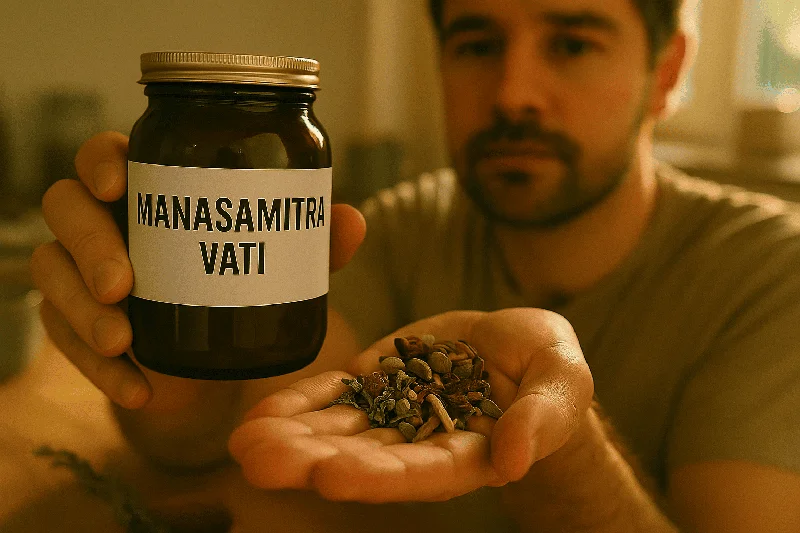
Manasamitra Vati (also known as Manasamitra Vatakam or Manasamitra Gulika) is a classical Ayurvedic formulation prescribed primarily for anxiety, insomnia, cognitive decline, and various neuropsychiatric conditions. Rooted in centuries-old Sanskrit texts and now supported by modern clinical research, this herbo-mineral medicine acts on the nervous system by pacifying aggravated Vata and Pitta doshas. It contains a sophisticated blend of neuroprotective herbs like Vacha, Jatamansi, and Ashwagandha along with purified mineral Bhasmas — including Swarna Bhasma (gold calx) — that work synergistically to calm the mind, sharpen memory, and restore emotional balance.
Whether you're dealing with generalized anxiety disorder, struggling with sleepless nights, or simply looking for a natural cognitive enhancer before a stressful period, this guide covers everything you need to know: how Manasamitra Vati works, what's inside it, what the clinical evidence says, how to take it safely, and how it compares to other Ayurvedic brain tonics.
What Is Manasamitra Vati?
- Manasamitra Vati is a polyherbal-mineral tablet classified as a Medhya Rasayana (intellect-promoting rejuvenative) in Ayurveda.
- The name itself reveals its purpose: Manas means "mind," Amitra (often interpreted through sandhi as Mitra) relates to "friend" — essentially, a "friend of the mind."
Historical Origin & Classical References
The formulation is described in the classical Ayurvedic text Sahasrayogam, a comprehensive compilation of formulations widely used in the Kerala tradition of Ayurveda. Some practitioners also trace references to Bhaishajya Ratnavali. The original Sanskrit shloka lists the ingredients in verse form, a common method in ancient texts to preserve precise formulations across generations.
The verse begins:
> "Vachaadi choornam madhunaa subhaavitam..."
This indicates the base powder (Vacha and other herbs) is processed with honey and other media, following strict pharmaceutical protocols known as Bhavana (wet-grinding with specific liquids).
Forms of the Medicine: Vatakam, Gulika & Tablet
You'll encounter Manasamitra Vati under slightly different names depending on the manufacturer:
- Vatakam — traditional pill form, often hand-rolled
- Gulika — tablet/pill form, essentially the same formulation
- Modern pressed tablets — standardized dosage forms by companies like Kottakkal Arya Vaidya Sala, AVN, Nagarjuna, and Vaidyaratnam
All three are the same medicine. The difference is primarily in manufacturing technique and regional naming conventions.
Key Ingredients & Their Roles
Manasamitra Vati stands out for its complexity — the classical formulation contains over 60 ingredients spanning herbs, minerals, and processing media. Below is a detailed breakdown of the most pharmacologically significant components.
Complete Ingredient List (Key Components Table)
| Category | Ingredient | Sanskrit/Common Name | Primary Action |
|---|---|---|---|
| Herbs | Acorus calamus | Vacha | Neuroprotective, memory enhancer |
| Nardostachys jatamansi | Jatamansi | Anxiolytic, sedative | |
| Withania somnifera | Ashwagandha | Adaptogen, anti-stress | |
| Bacopa monnieri | Brahmi | Cognitive enhancer | |
| Convolvulus pluricaulis | Shankhapushpi | Calms the mind, anti-anxiety | |
| Glycyrrhiza glabra | Yashtimadhu | Anti-inflammatory, neuroprotective | |
| Tinospora cordifolia | Guduchi | Immunomodulator, Rasayana | |
| Elettaria cardamomum | Ela (Cardamom) | Digestive, aromatic enhancer | |
| Saussurea costus | Kushtha | Nervine tonic | |
| Aquilaria agallocha | Agaru | Calming, aromatic | |
| Minerals (Bhasma) | Gold calx | Swarna Bhasma | Neurotrophic, rejuvenative |
| Silver calx | Rajata Bhasma | Nervine, cooling | |
| Pearl | Mukta Bhasma | Calming, Pitta-pacifying | |
| Iron calx | Loha Bhasma | Hematinic, strengthening | |
| Processing Media | Honey, Ghee, various herbal juices | — | Bioavailability enhancement |
Note: The full classical recipe contains additional herbs. The above table highlights the most therapeutically significant ones.
Role of Swarna Bhasma (Gold Calx)
Swarna Bhasma is perhaps the most distinctive — and expensive — ingredient. In Ayurvedic pharmacology, gold calx acts as a Yogavahi (catalytic agent) that enhances the bioavailability of other ingredients while exerting its own neurotrophic effects. Modern research suggests that gold nanoparticles (which Swarna Bhasma essentially contains after proper incineration) can cross the blood-brain barrier and exhibit antioxidant properties.
- A key point: not all manufacturers include the same proportion of Swarna Bhasma due to its cost.
- This is one reason why the efficacy — and price — can vary significantly between brands.
Role of Key Herbs
- Vacha (Acorus calamus): The lead herb in the formulation. Known in Ayurveda as the supreme Medhya (intellect-promoting) herb. Modern studies indicate its β-asarone content has neuroprotective and anticonvulsant activity.
- Jatamansi (Nardostachys jatamansi): Clinically demonstrated anxiolytic effects. Acts on GABAergic pathways, producing a calming effect similar to benzodiazepines but without the dependence risk.
- Ashwagandha (Withania somnifera): Arguably the most researched Ayurvedic herb globally. A 2019 systematic review in the Journal of Clinical Medicine confirmed its significant anxiolytic and stress-reducing effects across multiple RCTs.
- Brahmi (Bacopa monnieri): Enhances synaptic communication and supports long-term memory consolidation. A 12-week RCT published in Psychopharmacology (2001) showed significant improvement in speed of information processing, learning rate, and memory.
Bhasma Safety: The Heavy Metals Concern Explained
This is where things get serious, and where most online resources fall short.
Australia's Therapeutic Goods Administration (TGA) has issued safety alerts about certain Ayurvedic products — including some Manasamitra Vatakam batches — containing concerning levels of lead and mercury. This is a legitimate concern that deserves honest discussion.
However, context matters. Traditional Bhasma preparation involves a process called Shodhana (purification) followed by Marana (incineration) — repeated calcination cycles that, when done correctly, convert toxic heavy metals into biologically inert nanoparticle forms.
The problem arises when:
- Manufacturers cut corners on purification cycles
- Quality control is inadequate
- Non-classical methods are used
How to choose a safe product:
- Buy only from GMP-certified manufacturers
- Look for batch-tested products with heavy metal analysis certificates
- Established brands like Kottakkal Arya Vaidya Sala, AVN Arogya, and Vaidyaratnam have longer track records of quality control
- When in doubt, ask the manufacturer for a Certificate of Analysis (CoA)
How Does Manasamitra Vati Work? (Mechanism of Action)
Ayurvedic Pharmacology
In Ayurvedic terms, Manasamitra Vati works through the following pharmacological properties:
| Property | Value | Significance |
|---|---|---|
| Rasa (Taste) | Tikta (Bitter), Katu (Pungent), Madhura (Sweet) | Multi-targeted action |
| Guna (Quality) | Laghu (Light), Snigdha (Unctuous) | Easy absorption, nourishing |
| Veerya (Potency) | Sheeta (Cooling) | Calms Pitta-aggravated mental states |
| Vipaka (Post-digestive effect) | Madhura (Sweet) | Nourishing to tissues |
| Dosha Effect | Vata-Pitta shamaka | Pacifies the two doshas most responsible for neuropsychiatric disturbance |
The formulation primarily targets Majja Dhatu (nervous tissue) and Manovaha Srotas (channels of the mind). By pacifying aggravated Vata (responsible for anxiety, racing thoughts, insomnia) and Pitta (responsible for irritability, anger, inflammation), it restores Sattva — the quality of mental clarity and balance.
Modern Pharmacological Perspective
From a contemporary neuroscience lens, the combined ingredients in Manasamitra Vati likely produce their effects through multiple pathways:
- GABAergic modulation — Jatamansi and Ashwagandha enhance GABA activity, producing anxiolytic and sedative effects
- Cholinergic enhancement — Brahmi and Vacha support acetylcholine function, improving memory and learning
- Antioxidant neuroprotection — Multiple ingredients (Guduchi, Swarna Bhasma, Brahmi) reduce oxidative stress in neural tissue
- HPA axis regulation — Ashwagandha directly modulates cortisol levels, reducing the physiological stress response
- Anti-inflammatory action — Chronic neuroinflammation underlies many psychiatric conditions; herbs like Yashtimadhu and Guduchi address this
- No single ingredient accounts for the effect.
- It's the synergistic action — what Ayurveda calls Prabhava (unique combinatorial effect) — that makes the formulation greater than the sum of its parts.
Benefits & Indications
Anxiety & Generalized Anxiety Disorder (GAD)
- This is the most well-studied indication. A landmark randomized controlled trial published in AYU (An International Quarterly Journal of Research in Ayurveda) compared Manasamitra Vati with clonazepam (a standard benzodiazepine) in 72 patients with GAD.
- The trial used validated scales — Hamilton Anxiety Rating Scale (HAM-A), Beck Anxiety Inventory (BAI), and WHO Quality of Life scale (WHO QoL).
Key findings from the 30-day trial:
- Manasamitra Vati showed statistically significant reduction in anxiety scores comparable to clonazepam
- Importantly, the Manasamitra Vati group showed better improvement in quality of life scores compared to the drug group
- No significant adverse effects were reported in the Ayurvedic group
- The study also included a group receiving Manasamitra Vati combined with Shirodhara therapy, which showed the best overall outcomes, including reduced daytime sleepiness (measured by Epworth Sleepiness Scale)
- This is not a small detail.
- Having a head-to-head comparison with a pharmaceutical drug — and showing comparable efficacy with fewer side effects — is a strong evidence point.
Does Manasamitra Vatakam Make You Sleepy?
Yes and no. It is not a sedative in the conventional sense. It does not knock you out the way sleeping pills do. What it does is calm an overactive mind, which indirectly promotes better sleep onset and quality. Patients with anxiety-driven insomnia often report significant improvement.
The clinical data supports this: the GAD trial showed that combining Manasamitra Vati with Shirodhara actually reduced daytime sleepiness — suggesting it normalizes the sleep-wake cycle rather than just sedating you.
Memory Enhancement & Cognitive Function
The Medhya herbs in the formula — particularly Brahmi, Vacha, and Shankhapushpi — have well-documented nootropic effects.
Manasamitra Vati is traditionally indicated for:
- Smriti Bhramsha (memory loss)
- Buddhi Mandya (reduced intellect)
- Age-related cognitive decline
- Poor concentration and mental fatigue
Can You Use Manasamitra Vatakam Before Exams?
- This is a frequently asked question and the honest answer is: it can help, but don't expect overnight miracles.
- The herbs need time to build their effect — typically 2-4 weeks of regular use. Starting a course 3–4 weeks before an exam period, under physician guidance, could support focus and reduce exam anxiety. Taking it the night before a test and expecting dramatic results is unrealistic.
Insomnia & Sleep Disorders
The cooling, Vata-Pitta pacifying nature of Manasamitra Vati makes it particularly effective for insomnia that's driven by an overactive mind — the type where you lie in bed with thoughts racing. It is less effective for insomnia caused by physical pain, sleep apnea, or other structural issues.
Seizure Disorders & Epilepsy
Classical texts mention Apasmara (epilepsy) as an indication. While modern clinical trials specifically on epilepsy are limited, the anticonvulsant properties of Vacha (β-asarone) and the neuroprotective effects of the mineral Bhasmas provide a plausible mechanistic basis. This should absolutely be used only under specialist supervision and not as a replacement for anticonvulsant medication.
Psychomotor Retardation & Dementia
Traditional indications include Unmada (psychosis) and conditions involving cognitive and psychomotor slowing. Early-stage dementia and age-related cognitive decline are areas where Manasamitra Vati is commonly prescribed in clinical Ayurvedic practice.
Dosage & How to Use Manasamitra Vati
Standard Dosage
| Patient Group | Typical Dosage | Frequency | Anupana (Vehicle) |
|---|---|---|---|
| Adults | 1-2 tablets (125-250 mg each) | 1-2 times daily | Warm milk or warm water |
| Elderly | 1 tablet | 1-2 times daily | Warm milk with ghee |
| Children (above 5) | ½ - 1 tablet | Once daily | Honey and warm water |
Important: These are general guidelines. The actual dosage depends on the specific manufacturer's formulation strength, the patient's Prakriti (constitution), the severity of the condition, and concurrent medications. Always follow your physician's prescription.
When to Take It
- For anxiety and cognitive support — typically morning and evening, before meals
- For insomnia — one dose in the evening, about 30-60 minutes before bedtime
- For best absorption — take with warm milk, or with ghee and honey (in unequal proportions, as Ayurveda advises against equal quantities of ghee and honey)
How Long Until You See Results?
This varies considerably.
Based on clinical experience and the available trial data:
- Anxiety reduction: Noticeable effects within 1-2 weeks, significant improvement by 4 weeks
- Sleep improvement: Often within the first week
- Cognitive enhancement: Typically requires 4-8 weeks of consistent use
- Chronic conditions (dementia, epilepsy): 3-6 months minimum, with ongoing physician assessment
Is Manasamitra Vati Habit-Forming?
No. Unlike benzodiazepines (clonazepam, alprazolam) or Z-drugs (zolpidem), Manasamitra Vati does not create physical dependence. The GAD trial specifically noted the absence of withdrawal effects in the Ayurvedic group. That said, long-term use of any Bhasma-containing preparation should be monitored by a qualified practitioner.
Don't wait or self medicate. Start chat with Doctor NOW
Manasamitra Vati vs Other Ayurvedic Brain Tonics
This is a comparison many people search for but nobody provides in a clear format.
| Feature | Manasamitra Vati | Brahmi Vati | Saraswatarishta | Smriti Sagar Ras |
|---|---|---|---|---|
| Primary Action | Anxiolytic + Nootropic | Nootropic (mainly) | Nootropic + Nervine tonic | Nootropic + Memory |
| Contains Bhasma | Yes (Swarna, Rajata, Mukta) | Gold Bhasma (some versions) | No (liquid herbal) | Yes (Parada, Swarna) |
| Best For | Anxiety, insomnia, cognitive decline | Memory, focus, epilepsy | General brain tonic, speech disorders | Severe memory loss, neurodegeneration |
| Form | Tablet | Tablet | Liquid (Arishta) | Tablet |
| Safety Profile | Requires physician supervision | Requires supervision | Generally safer (no metals) | Requires strict supervision |
| Suitable for Long-term | With monitoring | With monitoring | Yes, relatively | Short courses only |
| Price Range | ₹₹₹ (higher due to gold) | ₹₹ | ₹ | ₹₹₹ |
Bottom line: If anxiety is the dominant symptom, Manasamitra Vati is generally the best choice. For pure cognitive enhancement without significant anxiety, Saraswatarishta or Brahmi Vati may be more appropriate — and they carry less concern about heavy metal content.
Side Effects & Contraindications
Potential Side Effects
When taken in prescribed doses under physician guidance, Manasamitra Vati is generally well-tolerated. The 72-patient GAD trial reported no significant adverse effects.
However, potential side effects include:
- Mild gastric discomfort (especially if taken on an empty stomach without proper Anupana)
- Drowsiness in some individuals (typically mild and transient)
- Metallic taste — rarely reported
Contraindications
This section is conspicuously absent from most competitor articles, so let's be thorough:
- Pregnancy and lactation — Bhasma-containing formulations should be avoided unless specifically prescribed by an expert
- Children under 5 — insufficient safety data
- Severe hepatic or renal impairment — the mineral content may pose additional burden on compromised detoxification pathways
- Known allergy to any ingredient
Drug Interactions
If you're taking any of these medications, consult your doctor before starting Manasamitra Vati:
- Benzodiazepines or sedatives — potential additive sedation
- Antidepressants (SSRIs, SNRIs) — theoretical serotonergic interactions via Jatamansi
- Antiepileptic drugs — may alter seizure threshold (positively or negatively)
- Antihypertensives — some ingredients may have mild hypotensive effects
Can Patients with High Blood Pressure Take It?
This comes up frequently. Manasamitra Vati is not contraindicated in hypertension, and some practitioners use it precisely because anxiety is driving the elevated BP. However, if you're on antihypertensive medications, coordinating with your doctor is non-negotiable, as additive blood pressure-lowering effects are possible.
Diet & Lifestyle Recommendations During the Course
For optimal results, Ayurvedic practitioners recommend the following during Manasamitra Vati treatment:
- Favour: Warm, freshly cooked meals; milk, ghee, almonds, and dates (Sattvic foods); adequate hydration
- Avoid: Excessive caffeine, alcohol, spicy or fermented foods, stale food, processed meals
- Lifestyle: Regular sleep schedule (aim for 10pm–6am), daily meditation or Pranayama, gentle exercise like walking or yoga
- Digital hygiene: Reduce screen time before bed — this is surprisingly important and rarely mentioned in Ayurvedic articles, but it directly impacts Vata aggravation
Comparing Manufacturers: Kottakkal vs AVN vs Nagarjuna vs Vaidyaratnam
| Feature | Kottakkal (AVS) | AVN Arogya | Nagarjuna | Vaidyaratnam |
|---|---|---|---|---|
| Heritage | Est. 1902, most iconic | Long-standing tradition | Well-known in Kerala | Traditional Vaidya family |
| GMP Certified | Yes | Yes | Yes | Yes |
| Classical Formula Adherence | Very strict | Strict | Standard | Strict |
| Swarna Bhasma Inclusion | Yes (full proportion) | Yes | Varies by batch | Yes |
| Availability | Wide (online + offline) | Moderate | Wide | Moderate |
| Price (approx. for 30 tabs) | ₹350-500 | ₹300-450 | ₹200-350 | ₹250-400 |
| Heavy Metal Testing Transparency | Good | Moderate | Moderate | Moderate |
Kottakkal Arya Vaidya Sala is generally considered the gold standard for this particular formulation, largely because of their rigorous adherence to classical processing methods and consistent inclusion of Swarna Bhasma at the specified proportion.
Storage & Shelf Life
- Store in a cool, dry place away from direct sunlight
- Temperature: Below 30°C; avoid humid environments
- Shelf life: Typically 3-5 years from date of manufacture (Bhasma-containing formulations generally have a longer shelf life than purely herbal products)
- Keep out of reach of children
- Once the container is opened, ensure the lid is tightly closed after each use
Frequently Asked Questions (FAQ)
Which is the best Ayurvedic medicine for anxiety?
Manasamitra Vati is among the most effective classical formulations for anxiety, particularly generalized anxiety disorder. The 72-patient RCT comparing it with clonazepam demonstrated comparable efficacy. However, the "best" medicine depends on the individual's constitution, symptoms, and co-existing conditions. Ashwagandha capsules and Saraswatarishta are also effective, but for moderate-to-severe anxiety with cognitive symptoms, Manasamitra Vati has the strongest traditional backing.
How does Manasamitra Vatakam affect the mind?
It works by calming Vata (which governs movement, including racing thoughts) and Pitta (which governs intensity and irritability) in the nervous system. Pharmacologically, its ingredients modulate GABA receptors, support acetylcholine function, reduce cortisol, and protect neurons from oxidative damage. The net effect is a calmer, clearer, more focused mind.
Can I take Manasamitra Vati without a doctor's prescription?
Technically it is available over the counter in India. But this is not advisable. The formulation contains mineral Bhasmas (including gold and silver calx) that require proper dosing and monitoring. Self-medication with Bhasma-containing products is not recommended by any responsible Ayurvedic authority.
Is there any modern research beyond anxiety?
- Currently, the strongest clinical evidence is for GAD. However, preliminary research and traditional usage support potential benefits in ADHD, mild depression, age-related neurodegeneration, and epilepsy.
- More rigorous clinical trials are needed in these areas — and several are reportedly underway at various Ayurvedic research institutions.
Can it be taken with allopathic anti-anxiety medications?
Potentially, yes — but only under dual supervision of both your psychiatrist and Ayurvedic physician. Some practitioners use Manasamitra Vati as an adjunct to facilitate gradual tapering of benzodiazepines. Never stop prescribed psychiatric medication abruptly to switch to an Ayurvedic alternative.
What about Manasamitra Vati from Patanjali or Baidyanath?
While these are well-known Ayurvedic brands, Manasamitra Vati is traditionally a Kerala-origin formulation. The most established manufacturers for this specific product are from the Kerala Ayurvedic tradition (Kottakkal, AVN, Nagarjuna, Vaidyaratnam). Always verify that any brand you choose follows the classical formulation and provides batch-wise quality testing.
Final Thoughts
- Manasamitra Vati represents one of Ayurveda's most sophisticated answers to the modern epidemic of anxiety, insomnia, and cognitive decline.
- Its complex formulation — blending time-tested herbs with carefully processed minerals — offers a multi-target approach that single-molecule pharmaceuticals simply cannot replicate.
But sophistication demands respect. This is not a casual supplement you pick up on a whim. The presence of Bhasmas means quality matters enormously, physician guidance is essential, and honest conversation about safety (including heavy metal concerns) is necessary.
The clinical evidence, while still growing, is genuinely encouraging. A head-to-head trial showing comparable efficacy to clonazepam — without the side effects and dependence risks — is not something to dismiss lightly.
If you're considering Manasamitra Vati, here's the practical path forward: consult a qualified Ayurvedic physician, choose a reputable GMP-certified manufacturer, follow the prescribed dosage and dietary guidelines, and give it adequate time to work. Your mind deserves a genuine friend.
Disclaimer: This article is for informational purposes only and does not constitute medical advice. Always consult a qualified healthcare professional before starting any new medication or supplement, especially one containing mineral Bhasmas. The clinical studies referenced are cited for educational context and do not imply guaranteed outcomes for all individuals.
Scientific Sources
- The benefits of ashwagandha (Withania somnifera) supplements on brain function and sports performance — Guo S et al., 2024, Frontiers in nutrition
- Ashwagandha (Withania somnifera)-Current Research on the Health-Promoting Activities: A Narrative Review — Mikulska P et al., 2023, Pharmaceutics
- Ayurvedic Herbal Medicines: A Literature Review of Their Applications in Female Reproductive Health — Patibandla S et al., 2024, Cureus
- Ashwagandha (Withania somnifera) and Its Effects on Well-Being-A Review — Wiciński M et al., 2025, Nutrients
- Efficacy and Safety of Ashwagandha Root Extract in Subclinical Hypothyroid Patients: A Double-Blind, Randomized Placebo-Controlled Trial — Sharma AK et al., 2018, Journal of alternative and complementary medicine (New York, N.Y.)
Questions from users
How does Brahmi contribute to reducing cortisol levels in the body?
Sofia
4 days ago
Brahmi, or Bacopa monnieri, may contribute to reducing cortisol levels by modulating the GABA receptors in the brain. This action aids in promoting a calming effect, potentially lowering stress-induced cortisol production. While specific timelines may vary, improvements in stress markers might be observed in a few weeks with consistent use. Look for standardized extracts with verified bacoside content for efficacy. If you're experiencing chronic stress or related symptoms, consult a healthcare professional to explore comprehensive strategies beyond herbal remedies.
What are the antioxidant properties of gold nanoparticles in Ayurveda?
Waylon
14 days ago
Gold nanoparticles, like those in Swarna Bhasma, are explored for antioxidant properties in Ayurveda. They might help balance doshas and boost agni by crossing the blood-brain barrier. However, effects can vary by brand and dosage, so always check with a knowledgeable practitioner to ensure quality and safety.
Is Manasamitra Vati effective for reducing anxiety in children or young adults?
Skylar
30 days ago
Hey! Manasamitra Vati can indeed be helpful for anxiety in young folks, thanks to its calming herbs like Shankhapushpi and Jatamansi. But you wanna be cautious with dosages and age-appropriate usage, especially with kids. Chat with a healthcare expert or ayurvedic doc to make sure it's right for ya!
What is the recommended dosage of Manasamitra Vati for adults experiencing anxiety?
Reese
39 days ago
For adults experiencing anxiety, it's generally safe to start with 1-2 tablets of Manasamitra Vati, taken twice a day after meals. But it's a good idea to consult an Ayurvedic practitioner first, so they can consider your unique constitution and any other health conditions you have. They can help tailor the dosage for you specifically. 😊
Can I take Manasamitra Vati if I have a sensitive stomach or digestive issues?
Nora
48 days ago
Taking Manasamitra Vati could be tricky if you have a sensitive stomach or digestive issues. Some of its ingredients might not sit well with you, depending on your dosha and digestion (agni) strength. It's best to consult with an Ayurvedic practitioner who can assess your prakriti and ensure it's a good fit!
What is Vacha and how does it support cognitive function in Ayurveda?
Hudson
58 days ago
Vacha, also known as Sweet Flag, is an herb in Ayurveda used to boost intellect, aid speech, and enhance cognitive abilities. It might help protect the brain thanks to its antioxidant properties. Great for balancing vata dosha! If you're thinkin' about using it, might be good to consult an Ayurvedic practitioner.
Can I take Manasamitra Vati for mood enhancement without any side effects?
Patrick
68 days ago
Manasamitra Vati can be helpful for mood enhancement, but how it works can differ from person to person. While many people don't experience side effects, that doesn't mean they're not possible. It's always a good idea to check with an Ayurvedic practitioner first to make sure it's right for your individual constitution or dosha balance.
Is it safe to take Manasamitra Vati while on medication for anxiety or depression?
Harper
77 days ago
It's super important to talk with an Ayurvedic doc or healthcare provider before mixing Manasamitra Vati with your current meds for anxiety or depression. Some versions contain metallic bhasmas, which could interact with pharmaceuticals. Better safe than sorry when mixing treatments!
Is it safe to use Manasamitra Vati if I have a history of heavy metal exposure?
Sofia
87 days ago
It's best to be cautious if you have a history of heavy metal exposure. Some Manasamitra Vati formulations might contain processed metals, though they're meant to be safe, but sensitivities can vary. It might be good to chat with a trusted Ayurvedic practitioner who knows your health history just to be safe!
Can I use Manasamitra Vati for enhancing focus and concentration during exams?
Abigail
97 days ago
Yes, Manasamitra Vati can be used to enhance focus and concentration, especially during exams. It supports mental calmness and balance, which can improve focus. Just keep in mind everybody's body is different, so it's good to consult with an Ayurvedic practitioner to see if it's the right fit for you. 😊
Related articles

Mental Disorders
ADHD Treatment in Ayurveda – Natural Ayurvedic Approaches for Managing ADHD Symptoms
Discover the Ayurvedic treatments for ADHD, focusing on natural remedies, herbal solutions, and lifestyle changes to help manage symptoms and enhance focus, behavior, and emotional balance.
4,767

Mental Disorders
Sumenta Tablet
Exploration of Sumenta Tablet
3,628
Mental Disorders
Naladadi Ghritam – Ayurvedic Remedy for ADHD, Aphasia, and Cognitive Health
Learn about Naladadi Ghritam, an Ayurvedic remedy for ADHD and aphasia. Discover how it improves cognitive skills, enhances mental functions, and promotes overall brain health.
4,339
Mental Disorders
Narayan Kalp Vati – Ayurvedic Tonic for Comprehensive Health & Rejuvenation
Discover the benefits and uses of Narayan Kalp Vati, a traditional Ayurvedic tonic known for its rejuvenating properties, immune support, and overall health enhancement.
5,184

Mental Disorders
Kalyanaka Ghrita for Sleep: Ayurvedic Insights for Restful Nights
Explore how Kalyanaka Ghrita aids sleep, backed by research and Ayurvedic wisdom. Learn evidence-based tips, usage, and safety considerations.
4,724

Mental Disorders
How Ayurveda Helps in Improving Mental Health?
Our mental health plays an important role in how well we can lead our lives. It plays an important role in building a successful and fulfilling life.
226,329

Mental Disorders
Adhipati Marma: A Comprehensive Guide to the Science and Practice
Uncover the origins, scientific insights, and practical healthcare applications of Adhipati Marma for a holistic approach to mind-body wellness.
5,286

Mental Disorders
OCD Treatment in Ayurveda: Holistic Solutions for Mental Wellness
Discover how Ayurveda addresses OCD with holistic therapies, herbal remedies, lifestyle changes, and mind-body practices. Learn about natural treatments for OCD rooted in ancient Ayurvedic wisdom.
3,564

Mental Disorders
Achieve Body & Mind Balance through Ayurveda
Body and mind balance plays an important role in one’s life. It helps a person to achieve their utmost potential and lead life in an efficient manner.
2,771

Mental Disorders
Depression and Ayurveda: A Natural Path
Ayurveda views depression as an imbalance in the body's natural energies, influenced by the doshas, rather than just a mental health issue.
2,420
Related consultations on the topic
Legal
Additional Documents
© 2024 Ask Ayurveda. All rights reserved.