Ask Ayurvedic doctor a question and get a consultation online on the problem of your concern in a free or paid mode. More than 2,000 experienced doctors work and wait for your questions on our site and help users to solve their health problems every day.
FREE! Ask Ayurvedic Doctors 24/7

 Fast responses
 1000+ verified doctors
Body DetoxEar, Nose, and Throat DisordersGeriatrics & RejuvenationImmunodeficiencyInfertility TreatmentNutritionOrthopedic DisordersPediatricsRespiratory DisordersSexually Transmitted Diseases (STDs)Surgery RecoveryUrological DisordersVascular DisordersDental DisordersEndocrinological DisordersGastrointestinal DisordersYoga TherapyGeneral MedicineAllergic DisordersCardio DisordersGynecology and ObstetricsCosmetologySkin and Hair DisordersEye DisordersInfectious DiseasesMental DisordersNeurological DisordersOncologyPanchakarmaSexual Health & DisordersSports Medicine
Published on 03/18/25
(Updated on 07/08/26)
4,745
Tikta Ksheera Basti: A Comprehensive Guide to Ayurvedic Cleansing
Tikta Ksheera Basti is a specialized Ayurvedic medicated enema therapy that combines bitter herbs (Tikta Dravyas) with milk (Ksheera) to treat disorders rooted in bone tissue (Asthi Dhatu) and the nervous system. It is one of the most clinically significant Basti procedures within Panchakarma, specifically indicated for conditions like Lumbar Spondylosis, Osteoporosis, Osteoarthritis, and chronic skin diseases. Unlike standard Niruha Basti, Tikta Ksheera Basti leverages the unique pharmacological relationship between bitter taste (Tikta Rasa) and bone tissue nourishment — a principle documented in Charaka Samhita and Ashtanga Hridaya over 2,000 years ago.
If you've been searching for a comprehensive, evidence-based resource on this procedure — covering everything from classical references and exact ingredient proportions to step-by-step administration, clinical outcomes, and dietary guidelines — you're in the right place.
What Is Tikta Ksheera Basti?
Tikta Ksheera Basti is a type of Niruha (decoction-based) Basti where the primary liquid medium is milk (Ksheera) processed with bitter drugs (Tikta Dravyas), combined with medicated ghee, honey, rock salt, and herbal paste. It belongs to the broader category of Ksheera Basti but is distinguished by the dominant use of bitter herbs, which gives it a unique therapeutic profile targeting Asthi (bone) and Majja (marrow/nervous) Dhatus.
Etymology and Definition
Breaking down the term:
- Tikta = Bitter (refers to the Tikta Rasa or bitter taste of the herbs used)
- Ksheera = Milk (the primary liquid vehicle)
- Basti = Medicated enema (literally "bladder," as animal bladders were historically used to administer the enema)
So, Tikta Ksheera Basti literally translates to "a medicated enema prepared with bitter herbs and milk." The term sometimes appears as "Tikta Ksheer Basti" or "Panchatikta Ksheera Basti" (when five specific bitter herbs are used) in various classical and contemporary texts.
Classical References (Charaka Samhita, Ashtanga Hridaya)
The procedure finds its strongest classical grounding in the following texts:
| Classical Text | Reference | Key Context |
|---|---|---|
| Charaka Samhita | Siddhi Sthana, Chapter 12 (Basti Siddhi) | Describes Ksheera Basti formulations and their role in Vata-dominant disorders |
| Charaka Samhita | Sutra Sthana, Chapter 28 (Vividhashitapitiya Adhyaya) | Explains Ashraya-Ashrayi Bhava — the relationship between Vata and Asthi Dhatu |
| Ashtanga Hridaya | Sutra Sthana, Chapter 19 | Details of Basti types including Ksheera Basti and indications for Tikta Dravya usage |
| Chakrapani Commentary | On Charaka Sutra 28 | Clarifies why Tikta Rasa nourishes Asthi Dhatu indirectly |
| Sushruta Samhita | Chikitsa Sthana, Chapter 35 | General Basti Chikitsa methodology and Asthi-Majja Vikara management |
Acharya Charaka specifically states: "Asthnam Vayuhu Ashrayah" — Vata Dosha resides in Asthi Dhatu. When Vata becomes vitiated, it depletes the bone tissue. The treatment, therefore, requires substances that pacify Vata while simultaneously nourishing Asthi — and this is precisely what Tikta Ksheera Basti accomplishes.
Place of Tikta Ksheera Basti in Panchakarma
Within the Panchakarma framework, Basti is considered "Ardha Chikitsa" — half of all treatment — by Acharya Charaka. Among the many Basti types, Tikta Ksheera Basti occupies a unique niche:
- It is primarily a Niruha Basti (eliminative/decoction enema) but with Ksheera as the main vehicle
- It can be administered as part of Yoga Basti (8-day course), Kala Basti (16-day course), or Karma Basti (30-day course), alternating with Anuvasana Basti (oil enema)
- It is classified under Shodhana (purification) category but also has strong Brimhana (nourishing) properties due to the milk base
This dual action — cleansing and nourishing simultaneously — is what makes it so particularly valuable for degenerative bone and joint conditions.
Mechanism of Action: How Tikta Ksheera Basti Works
Understanding why this specific combination works requires knowledge of both Ayurvedic pharmacology and modern absorption science. Let's break it down.
Ayurvedic Principle: Ashraya-Ashrayi Bhava (Vata-Asthi Relationship)
The foundational principle is Ashraya-Ashrayi Bhava — the inseparable relationship between a Dosha and its residing Dhatu. Vata Dosha has its primary seat in Asthi Dhatu (bone tissue). When Vata aggravates, it directly depletes Asthi, leading to conditions like:
- Asthi Kshaya (bone degeneration/osteoporosis)
- Sandhigatavata (osteoarthritis)
- Katigatavata (lumbar spondylosis)
- Bhagna (fractures with poor healing)
According to Charaka's treatment principle, when a Dosha vitiates its Ashraya Dhatu, the treatment should use substances of opposite qualities to the Dosha and similar qualities to the Dhatu. Basti, being the supreme treatment for Vata, delivers Tikta Rasa directly to the colon — the primary seat of Vata — ensuring maximum therapeutic impact.
Role of Tikta Rasa in Asthi Dhatu Poshana
This is where many students and practitioners get confused. Tikta Rasa (bitter taste) is composed of Vayu and Akasha Mahabhutas — the same elements that constitute Vata. So logically, shouldn't bitter taste increase Vata rather than help?
Here's the nuanced mechanism:
- Tikta Rasa has Vata-Shamana properties when combined with Snigdha (unctuous) substances like milk and ghee. The bitterness provides the Ruksha and Laghu qualities needed to scrape ama (toxins) from channels, while milk and ghee counterbalance excessive dryness.
- Asthi Dhatu is nourished by Tikta Rasa through the principle of Bhautika similarity — both Asthi and Tikta share Vayu-Akasha predominance. Charaka explains that Tikta Rasa, when administered in the right Anupana (vehicle), acts as a Dhatu Vardhaka (tissue enhancer) for bone.
- Tikta Rasa is Deepana (appetizer) and Pachana (digestive) — it corrects Dhatvagni Mandya (metabolic impairment at tissue level), thereby improving the sequential nourishment of Dhatus up to Asthi.
Why Ksheera (Milk) as a Base?
Milk is not randomly chosen.
It serves multiple critical roles:
- Vata Shamana: Milk is Madhura (sweet), Snigdha (unctuous), Sheeta (cool), and Guru (heavy) — all qualities opposite to Vata
- Brimhana: It nourishes all seven Dhatus, especially Rasa, Rakta, Mamsa, and Asthi
- Vehicle for bitter herbs: Milk's fat content enhances the bioavailability of fat-soluble active compounds in Tikta Dravyas
- Soothing to rectal mucosa: Reduces irritation that purely bitter decoctions might cause
- Calcium and protein source: From a modern perspective, milk provides bio-available calcium that directly supports bone health
Modern Pharmacological Perspective
From a contemporary science standpoint, rectal administration of medication (the basic principle behind Basti) is a well-recognized route of drug delivery.
Here's what happens:
- 1.Absorption through rectal mucosa: The inferior and middle rectal veins drain directly into the systemic circulation, bypassing first-pass hepatic metabolism. This means active compounds in Tikta Dravyas achieve higher bioavailability than oral administration.
- 2.Anti-inflammatory action: Key Tikta Dravyas like Guduchi (Tinospora cordifolia) and Nimba (Azadirachta indica) have documented anti-inflammatory and immunomodulatory properties. A 2017 study published in the Journal of Ethnopharmacology confirmed Tinospora's significant anti-arthritic activity in animal models.
- 3.Neuroprotective effects: Bitter herbs like Katuka (Picrorhiza kurroa) demonstrate neuroprotective and hepatoprotective activity, supporting the Majja Dhatu connection.
- 4.Milk proteins enhance absorption: Casein and whey proteins in milk can form complexes with phytochemicals, potentially improving their stability and absorption through the rectal mucosa.
Ingredients and Composition of Tikta Ksheera Basti
Tikta Dravyas (Bitter Herbs) Used
The core bitter herbs typically used in Tikta Ksheera Basti include:
| Sanskrit Name | Botanical Name | Key Properties |
|---|---|---|
| Patola | Trichosanthes dioica | Tikta-Katu Rasa, Deepana, Krimighna |
| Nimba | Azadirachta indica | Tikta-Kashaya Rasa, anti-inflammatory, Kushthahara |
| Guduchi | Tinospora cordifolia | Tikta-Kashaya Rasa, Rasayana, immunomodulatory |
| Katuka (Kutki) | Picrorhiza kurroa | Tikta Rasa, hepatoprotective, Pitta-Kapha Shamana |
| Chandana | Santalum album | Tikta-Madhura Rasa, Sheeta Veerya, Raktaprasadana |
| Parpataka | Fumaria indica | Tikta Rasa, Raktashodhaka |
| Draksha (in some formulations) | Vitis vinifera | Madhura-Kashaya Rasa, Brimhana |
When five specific Tikta Dravyas are used, the preparation is called Panchatikta Ksheera Basti. The exact selection may vary based on the treating physician's assessment of the patient's Prakriti and Vikruti.
Other Key Ingredients
Beyond the bitter herbs, Tikta Ksheera Basti requires:
- Ksheera (Milk): Cow's milk is preferred — typically 400-500 ml, cooked with the Tikta Dravyas
- Tikta Ghrita (Bitter Medicated Ghee): 60-80 ml — often Panchatikta Ghrita or Mahatikta Ghrita
- Madhu (Honey): 80-120 ml — acts as Yogavahi (catalyst), helps in proper mixing, and adds Lekhana (scraping) quality
- Saindhava Lavana (Rock Salt): 5-6 grams — aids in breaking down Dosha accumulations and enhances absorption
- Kalka (Herbal Paste): 20-30 grams of the same Tikta Dravyas in paste form — provides bulk and sustained release of active compounds
- Shatapushpa (Anethum sowa) or other specific Kalka herbs as indicated
Exact Proportions and Dosages (Classical References)
According to Charaka Samhita's guidelines for Niruha Basti preparation, the classical matra (dosage) follows this order of mixing:
| Ingredient | Quantity | Order of Addition |
|---|---|---|
| Madhu (Honey) | 80-120 ml | 1st |
| Saindhava Lavana (Rock Salt) | 5-6 g | 2nd (mixed with honey) |
| Sneha — Tikta Ghrita (Medicated Ghee) | 60-80 ml | 3rd |
| Kalka (Herbal Paste) | 20-30 g | 4th |
| Tikta Ksheera Kwatha (Bitter Milk Decoction) | 400-480 ml | 5th (added gradually) |
Total volume: Approximately 600-700 ml for an adult Niruha Basti
The order of mixing is not arbitrary — it follows specific pharmaceutical logic. Honey creates an emulsifying base. Salt dissolved in honey breaks evenly. Ghee then forms a stable emulsion with the honey-salt mixture. Kalka provides bulk and sustained action. The decoction is added last to achieve the desired consistency.
> Important: These dosages are for a standard adult. Pediatric, geriatric, and debilitated patients require modified dosing under expert supervision.
Step-by-Step Procedure of Tikta Ksheera Basti
Purvakarma (Pre-Procedure Preparation)
Before administering Tikta Ksheera Basti, the patient undergoes:
- 1.Deepana-Pachana (digestive preparation): 3-5 days of digestive herbs to optimize Agni
- 2.Snehana (oleation): Internal administration of medicated ghee (like Panchatikta Ghrita) for 3-7 days in graded doses
- 3.Swedana (sudation): Steam therapy or Nadi Swedana to the affected area (e.g., lumbar region for Katigatavata) immediately before Basti
- 4.Abhyanga (oil massage): Full body or local massage with Bala Taila or Dhanvantaram Taila — this relaxes muscles and opens Srotas (channels)
On the day of Basti administration, the patient should have had a light meal the previous evening and come with an empty bowel.
Pradhana Karma (Main Procedure)
The actual administration follows a precise sequence:
- 1.Basti Dravya Preparation: The ingredients are mixed in the exact order described above. The final mixture should be lukewarm — approximately 37-40°C (body temperature). It's tested by putting a drop on the back of the wrist.
- 2.Patient Positioning: The patient lies on the left lateral position on a Basti table (Droni), with the left leg extended and right leg flexed at the hip and knee. The head rests on the left arm.
- 3.Lubrication: The anal region is lubricated with sesame oil or medicated oil.
- 4.Catheter Insertion: A sterile rubber catheter (traditionally, a Basti Netra made of metal) is lubricated and gently inserted into the rectum — approximately 4-6 inches for adults.
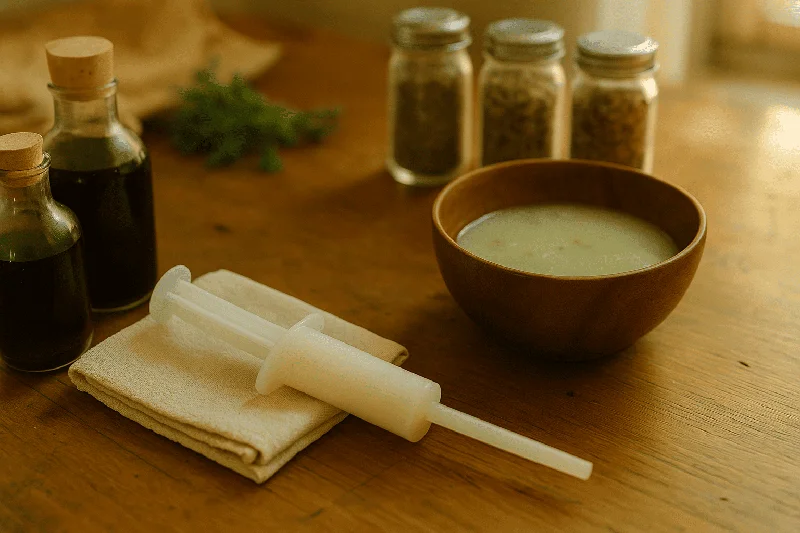
- 5.Administration: The prepared Basti Dravya is pushed slowly and steadily through the enema apparatus (Basti Putaka/enema can). The traditional method uses a leather bag; modern practice often uses an enema can or syringe. A newer drip method has also been described in pilot studies (Interscience, 2020) where the decoction is administered via gravity drip for slower, more controlled delivery.
- 6.Post-insertion care: After the complete dose is administered, the catheter is gently withdrawn. The patient is asked to lie supine and elevate the pelvis slightly (buttocks raised on a pillow) to facilitate retention.
Paschatkarma (Post-Procedure Care)
After administration:
- The patient should retain the Basti Dravya for a minimum of 15-20 minutes (Niruha Basti is not meant for prolonged retention unlike Anuvasana)
- Natural urge for evacuation will arise — the patient should not suppress it
- Pratyagamana Kala (expected return time): The Basti contents should return within 48 minutes (1 Muhurta). If it returns too early (under 5 minutes), it indicates Alpa Yoga (insufficient action); if not returned after 1-2 hours, it may indicate complications
- After evacuation, the patient takes a warm water bath and eats a light, warm, liquid diet (Peya — rice gruel)
- Rest for the remainder of the day is recommended
Indications: Diseases Treated by Tikta Ksheera Basti
Asthi-Ashrita Vikara (Bone and Joint Disorders)
This is the primary domain of Tikta Ksheera Basti:
Lumbar Spondylosis (Katigatavata / Katigraha)
Multiple clinical studies have evaluated Tikta Ksheera Basti in lumbar spondylosis. A case study published in the World Journal of Pharmaceutical and Medical Research (2020) documented a 24-year-old female patient who had been taking allopathic medications for 4 months with only temporary pain relief. After a course of Tikta Ksheera Basti, she showed significant improvement in pain, stiffness, and functional capacity. Another clinical trial published in IJISRT (2020) demonstrated statistically significant results in reducing Katishula (low back pain) and Katisthambha (stiffness) across multiple patients.
Osteoporosis (Asthi Kshaya)
Since Tikta Ksheera Basti directly targets Asthi Dhatu nourishment, it is one of the primary treatments for Asthi Kshaya — the Ayurvedic correlate of osteoporosis. The combination of calcium-rich milk and bone-nourishing bitter herbs addresses both the Doshic imbalance and the nutritional deficit.
Osteoarthritis (Sandhigatavata)
A clinical study published in the Journal of Ayurveda and Integrated Medical Sciences (JAIMS) evaluated Panchatikta Ksheera Basti in Sandhigatavata and reported marked improvement in joint pain, swelling, and crepitus scores.
Avascular Necrosis (AVN)
Increasingly, Ayurvedic practitioners are using Tikta Ksheera Basti as part of the management protocol for early-stage Avascular Necrosis of the femoral head — a condition with limited conventional treatment options short of joint replacement.
Majja-Ashrita Vikara (Neurological Conditions)
Since Majja Dhatu (marrow/nervous tissue) is the next Dhatu after Asthi in the sequence of tissue nourishment, Tikta Ksheera Basti benefits conditions like:
- Gridhrasi (Sciatica)
- Peripheral neuropathy
- Numbness and tingling in extremities
- Certain types of Vataja Shiroroga (neurological headaches)
Skin Diseases (Kushtha)
Classical texts strongly indicate Tikta Dravyas for skin diseases.
Tikta Ksheera Basti is used in:
- Chronic psoriasis (Ekakushtha)
- Eczema (Vicharchika)
- Chronic urticaria
- Acne and Pitta-related skin conditions
The bitter herbs purify Rakta Dhatu (blood tissue) and the milk provides the nourishing, soothing base needed for Pitta pacification.
Other Indications
- Vatarakta (Gout)
- Daha (Burning sensation syndromes)
- Raktapitta (Bleeding disorders)
- Non-healing wounds and ulcers
- As a Rasayana (rejuvenative) in elderly patients with general debility
Don't wait or self medicate. Start chat with Doctor NOW
Tikta Ksheera Basti vs. Other Types of Basti
Understanding how Tikta Ksheera Basti compares with other Basti types helps practitioners select the right treatment:
| Feature | Tikta Ksheera Basti | Yapana Basti | Madhutailika Basti | Erandamooladi Niruha |
|---|---|---|---|---|
| Primary Base | Milk + Bitter herbs | Meat soup + Milk + Herbs | Honey + Oil + Decoction | Castor root decoction |
| Main Indication | Asthi-Majja Vikara | General debility, safe for long use | Vata disorders (general) | Vata-dominant joint pain |
| Nourishing vs. Cleansing | Both (dual action) | Primarily nourishing | Balanced | Primarily cleansing |
| Duration of course | 8-30 days | Can be used indefinitely | 8-16 days | 8-16 days |
| Contraindication strictness | Moderate | Minimal (very safe) | Moderate | Higher (strong action) |
| Best for | Bone degeneration, osteoporosis, skin diseases | Weak, emaciated patients | General Vatavyadhi | Acute Vata conditions |
Course of Treatment: Duration and Scheduling
Tikta Ksheera Basti is administered as part of a structured Basti schedule, alternating with Anuvasana Basti (oil enema):
Yoga Basti (8-Day Course)
| Day | Type of Basti |
|---|---|
| Day 1 | Anuvasana (Oil enema with Tikta Ghrita) |
| Day 2 | Niruha (Tikta Ksheera Basti) |
| Day 3 | Anuvasana |
| Day 4 | Niruha (Tikta Ksheera Basti) |
| Day 5 | Anuvasana |
| Day 6 | Niruha (Tikta Ksheera Basti) |
| Day 7 | Anuvasana |
| Day 8 | Anuvasana |
The pattern is: A-N-A-N-A-N-A-A (3 Niruha + 5 Anuvasana). The course always begins and ends with Anuvasana to ensure Sneha (unctuousness) protects the colon.
For chronic conditions like Osteoporosis or advanced Spondylosis, Kala Basti (16 days) or Karma Basti (30 days) may be prescribed, following a similar alternating pattern with more Niruha sessions.
Diet and Lifestyle During Tikta Ksheera Basti (Pathya-Apathya)
This is a critical — and largely overlooked — aspect of the treatment. The effectiveness of Basti depends significantly on dietary compliance.
Pathya (Recommended)
- Warm, freshly cooked food — Peya (rice gruel), Yusha (lentil soup), Khichdi
- Light, easily digestible meals — avoid heavy, oily food
- Warm water throughout the day
- Medicated buttermilk (Takra) between meals
- Green gram (Mudga), rice, wheat in moderate quantities
- Adequate rest — avoid physical exertion, travel, and excessive walking during the course
Apathya (Avoid)
- Cold food and drinks — cold water, ice cream, refrigerated items
- Heavy, fried, and processed food
- Excessive spicy or sour food (aggravates Pitta and can irritate rectal mucosa)
- Day sleep (Divaswapna) — increases Kapha and may impair Basti action
- Sexual activity during the Basti course
- Suppressing natural urges (especially flatus and defecation)
- Exposure to wind, cold weather, or excessive sun
- Emotional stress, anger, anxiety
Safety, Side Effects, and Contraindications
Contraindications
Tikta Ksheera Basti should not be administered in:
- Patients with active diarrhea or dysentery
- Rectal bleeding or hemorrhoids (acute phase)
- Intestinal obstruction or perforation
- Severe debility or dehydration
- Immediately after meals (should be on empty stomach for Niruha)
- Children under 7 years and very elderly (above 80) without modification
- Pregnancy
- Patients with milk allergy or severe lactose intolerance
Vyapat (Complications of Basti)
Charaka describes 12 Basti Vyapat (complications) that can occur due to improper administration.
Common ones include:
- Ayoga (insufficient action): Basti returns immediately without therapeutic effect — usually due to inadequate retention
- Atiyoga (excessive action): Leads to weakness, dryness, and excessive evacuation
- Hridaya Upaghata: Cardiac disturbance from improperly formulated Basti
- Adhmana (distension): Abdominal bloating if the Basti Dravya is not properly expelled
These complications are rare when the procedure is performed by a trained Panchakarma physician. Self-administration is strongly discouraged.
General Safety Profile
When administered correctly by a qualified practitioner, Tikta Ksheera Basti has an excellent safety profile. A pilot study on the drip method of Tikta Ksheera Basti (published in International Journal of Ayurveda and Herbal Medicine, 2020) reported no significant adverse effects in any of the participants. The most common transient effects are mild abdominal cramping during administration and loose stools for a few hours post-procedure.
Tikta Ksheera Basti Preparation: A Practical Reference
For practitioners looking for a quick-reference preparation guide, here is the standard method:
- 1.Prepare Tikta Ksheera Kwatha: Take coarse powder of Tikta Dravyas (Patola, Nimba, Guduchi, Katuka, Chandana — approximately 40-50 g total). Add to 800 ml milk mixed with 800 ml water. Boil on low flame until reduced to approximately 400-480 ml. Filter.
- 2.Prepare Kalka: Take fine powder of the same Tikta Dravyas — 20-30 g. Add small quantity of water to make a smooth paste.
- 3.Mixing sequence: In a mortar (Khalva Yantra), add Madhu first. Add Saindhava and mix well. Add Tikta Ghrita and emulsify thoroughly. Add Kalka and mix. Slowly add the Tikta Ksheera Kwatha in small quantities, mixing continuously until homogeneous.
- 4.Temperature check: The final mixture should be lukewarm — comfortable on the back of the wrist.
- 5.Administration: Load into Basti Yantra (enema apparatus) and administer as described in the procedure section above.
Frequently Asked Questions About Tikta Ksheera Basti
What is the classical reference for Panchatikta Ksheera Basti?
The most commonly cited reference is Charaka Samhita, Siddhi Sthana Chapter 12 for general Ksheera Basti methodology. For the specific Panchatikta combination, Ashtanga Hridaya Sutra Sthana Chapter 19 and Chakrapani's commentary on Charaka Sutra Sthana 28 provide the theoretical framework. The formulation with five specific bitter drugs is elaborated in later texts like Sharangdhara Samhita and various Keraleeya (Kerala school) Panchakarma traditions.
How long does one course of Tikta Ksheera Basti take?
A standard Yoga Basti course takes 8 days. For chronic or degenerative conditions, a Kala Basti (16 days) or Karma Basti (30 days) may be recommended. Many practitioners advise repeating the course after 1-2 months for conditions like osteoporosis or chronic spondylosis.
Can Tikta Ksheera Basti be taken alongside allopathic medication?
In clinical practice, many patients continue their conventional medications (analgesics, calcium supplements, etc.) during the initial Basti course, with gradual tapering under medical supervision as symptoms improve. The 2020 WJPMR case study specifically noted a patient who had been on allopathic drugs for 4 months switched to Tikta Ksheera Basti with significantly better outcomes.
Is Tikta Ksheera Basti suitable for young patients?
Yes. While traditionally associated with degenerative conditions in older adults, clinical evidence shows its efficacy in younger patients too. The case study of a 24-year-old female with lumbar spondylosis demonstrates that lifestyle-related Vata aggravation can affect younger demographics — and Tikta Ksheera Basti responds well in these cases.
What is the difference between Tikta Ksheera Basti and regular Ksheera Basti?
Regular Ksheera Basti uses milk-based decoctions with various herbs (not necessarily bitter). Tikta Ksheera Basti specifically uses Tikta Rasa dominant herbs, targeting Asthi and Majja Dhatus. Regular Ksheera Basti may be used for general Vata pacification, while Tikta Ksheera Basti is specifically chosen for bone, joint, neurological, and skin conditions.
Conclusion: Why Tikta Ksheera Basti Deserves More Attention
Tikta Ksheera Basti represents one of Ayurveda's most elegant therapeutic designs — a procedure that simultaneously purifies and nourishes, addressing the root cause of disease rather than merely suppressing symptoms. With growing clinical evidence supporting its efficacy in conditions like lumbar spondylosis, osteoporosis, and chronic skin diseases, it bridges the gap between traditional wisdom and modern therapeutic needs.
Whether you are a practitioner looking to expand your Panchakarma repertoire, a student seeking a thorough understanding of this procedure, or a patient exploring Ayurvedic options for bone and joint health — Tikta Ksheera Basti offers a time-tested, clinically supported approach worth serious consideration.
Always consult a qualified Ayurvedic physician (BAMS/MD Ayurveda) before undergoing Tikta Ksheera Basti. The procedure requires proper assessment of your Prakriti, Vikruti, Bala (strength), and Agni before administration. When done right, under expert guidance, it can be truly transformative.
Scientific Sources
- Bitter herbs: mainstream, magic, and menace — Delbanco TL, 1994, Annals of internal medicine
- Shegan-Mahuang decoction ameliorates cold-induced asthma via regulating the proliferation and apoptosis of airway smooth muscle cells through TAS2R10: An in vivo and in vitro study — Li Q et al., 2024, Journal of ethnopharmacology
- Cultural Beliefs and Practices in Self-Management of Diabetes Among Pnar Women in Meghalaya, India — Muksor A et al., 2023, The science of diabetes self-management and care
- Bitter substances from plants used in traditional Chinese medicine exert biased activation of human bitter taste receptors — Behrens M et al., 2018, Chemical biology & drug design
- On the Core Prescriptions and Their Mechanisms of Traditional Chinese Medicine in Hepatitis B, Liver Cirrhosis, and Liver Cancer Treatment — Wang Z et al., 2022, Journal of oncology
- Nonpharmacologic Treatment for Children with Functional Constipation: A Systematic Review and Meta-analysis — Wegh CAM et al., 2022, The Journal of pediatrics
- Withania — 2006
- Chasteberry — 2006
- Fennel — 2006
- Cinnamon — 2006
Questions from users
How does tikta ksheera basti specifically benefit bone health and strength?
Audrey
4 days ago
Tikta Ksheera Basti benefits bone health and strength by using specific bitter herbs that target the bone and marrow tissues, known in Ayurveda as Asthi and Majja Dhatus. This therapeutic procedure aims to balance the Vata Dosha potentially affecting bone density and pain. While there are anecdotal reports of improvements in pain and stiffness, clinical evidence is limited. Building bone strength typically requires consistent care, including calcium and vitamin D intake, weight-bearing exercise, and addressing any underlying health conditions. Consult a healthcare provider to address bone health comprehensively and evaluate if Ayurvedic treatments, alongside conventional care, might be beneficial for your specific needs.
What is the proper diet to follow before starting tikta ksheera basti treatment?
Tiffany
13 days ago
Before starting tikta ksheera basti, focus on a light, easily digestible diet. Things like warm soups, light grains and steamed veggies can be helpful. Try to avoid heavy, oily, or spicy foods as they can disturb your digestive fire (agni). Remember, Ayurveda tailors to individual needs so you might need some specific guidance from a practitioner based on your dosha.
What is the historical significance of tikta ksheera basti in traditional Ayurvedic medicine?
Serenity
30 days ago
Tikta ksheera basti has deep roots in Ayurveda, often used for detoxifying and balancing the body's doshas. Its historical significance lies in its use for treating chronic conditions and rejuvenating tissues or dhatus. It's believed to enhance digestive fire (agni), but more modern research is needed for concrete evidence. Fascinating practice!
What should I do after a tikta ksheera basti session to maximize its benefits?
Emily
39 days ago
After tikta ksheera basti, drink warm water stay hydrated. Avoid heavy, spicy food, and focus on easily digestible meals. Resting briefly can help you absorb the benefits. Gentle yoga or breathing exercises support the treatment too. If you have a practitioner, check in with them for tailored tips. ☺️
Is tikta ksheera basti effective for managing chronic constipation?
Logan
48 days ago
Tikta ksheera basti could potentially help with chronic constipation, especially if the issue is linked to inflammation or imbalance in the body's doshas. But its effectiveness can vary from person to person. It's crucial to talk to a qualified Ayurved practitioner who can assess your specific situation and recommend what's best for you.
Can tikta ksheera basti be used for general detoxification and well-being?
Yara
58 days ago
Yes, tikta ksheera basti can be used for general detoxification and promoting well-being. It combines bitter herbs with milk, which helps cleanse the system and support gut health. Good for balancing doshas and aiding digestive fire too! Just remember—it's best done under guidance of a qualified Ayurvedic therapist.
What are the contraindications for using tikta ksheera basti therapy?
Elijah
68 days ago
Tikta Ksheera Basti isn't for everyone. It's generally not recommended for people with very weak digestion (agni), dehydration, severe weakness, fever, or after a heavy meal. Always consult with an Ayurvedic doc who can tailor it to your specific dosha and condition. It's a nuanced thing so each case can vary a bit!
Is it safe to do tikta ksheera basti if I am pregnant or breastfeeding?
Olivia
77 days ago
I'd recommend avoiding tikta ksheera basti during pregnancy or while breastfeeding. It's best to consult with an Ayurvedic practitioner who understands your unique body constitution and current health state. Better safe than sorry, right? So, always get a professional opinion tailored to your situation.
Can tikta ksheera basti help with bloating and digestive discomfort?
Warren
87 days ago
Yep, tikta ksheera basti can help with bloating and digestive discomfort. The combo of bitter herbs with milk is meant to detox and rebalance your digestive fire (agni). But remember, it’s more about managing symptoms and not a cure for serious conditions like Crohn's. Consult a proper practitioner for the best fit to your ayurvedic constitution!
Is it safe to use tikta ksheera basti for someone with a sensitive stomach?
Owen
96 days ago
Tikta ksheera basti can be gentle due to the cooling and nourishing properties of milk, but if you’ve got a sensitive stomach, it's good to be cautious. Some might experience mild bloating or cramps. Start small, and maybe check with an Ayurveda expert or doc who knows your constitution and specifics!
Related articles
Panchakarma
Ayurveda: The Science of Life
Ayurveda, known as the science of life, is an ancient Indian healing system emphasizing the balance of body, mind, and spirit through natural remedies.
2,567

Panchakarma
Discover the Benefits of Karma Kala Yoga Basti Detox Therapy
Discover the profound interconnection of karma, kala, and yoga basti in Ayurveda. Learn how ancient wisdom and therapeutic practices unite to enhance wellbeing and spiritual growth.
3,398

Panchakarma
Mrityunjaya Rasa Uses – Traditional Ayurvedic Formula for Detoxification & Rejuvenation
Discover the uses of Mrityunjaya Rasa, a potent Ayurvedic formulation known for detoxification, rejuvenation, and overall healing. Learn how this traditional remedy supports holistic wellness.
2,559
Panchakarma
Griva Basti – Ayurvedic Therapy for Neck Health & Relief
Discover Griva Basti, an Ayurvedic therapy focusing on neck pain relief, improved mobility, and holistic healing through traditional herbal treatments and specialized techniques.
3,063
Panchakarma
Vasti Kriya: Evidence, Techniques, and Health Insights
Discover the science behind Vasti Kriya, its potential health benefits, current research, and safe practice guidelines for optimal well-being.
2,765
Panchakarma
Shastika Shali Pinda Sweda: Ayurvedic Therapeutic Insight
Explore Shastika Shali Pinda Sweda, an Ayurvedic warm compress therapy with evidence-based benefits, guidelines, and practical tips for holistic well-being.
3,819

Panchakarma
Avarta Marma – Harnessing Vital Energy for Balance & Healing
Explore Avarta Marma, a key vital energy point in Ayurveda. Learn about its significance, therapeutic benefits, and how it contributes to holistic healing and energy balance.
2,954
Panchakarma
Piccha Basti Ingredients – Ayurvedic Enema Formulation for Vata Balance
Explore the key piccha basti ingredients used in Ayurvedic enema therapy. Discover the herbal decoctions, oils, and natural compounds that balance Vata and promote detoxification.
2,671

Panchakarma
Matra Basti in Ayurveda – Therapeutic Enema for Health & Detoxification
Explore Matra Basti in Ayurveda, a therapeutic enema used for detoxification, rejuvenation, and treating various diseases by restoring doshic balance.
5,143

Panchakarma
Panchamrit Parpati Benefits, Dosage, Ingredients, Side Effects
Exploration of Panchamrit Parpati Benefits, Dosage, Ingredients, Side Effects
2,105
Related consultations on the topic
Can I resume oil treatments after my period ends if I started virechana and got my period after 3 days of oiling?
26 days ago
How much can Panchakarma treatment improve quality of life for a 92-year-old with atypical Parkinson's and diabetes?
27 days ago
Can I undergo Panchakarma therapy with silent gallbladder stones and diverticulum in the large intestine?
29 days ago
Legal
Additional Documents
© 2024 Ask Ayurveda. All rights reserved.