आयुर्वेदिक डॉक्टर से प्रश्न पूछें और निःशुल्क या भुगतान मोड में अपनी चिंता की समस्या पर ऑनलाइन परामर्श प्राप्त करें। 2,000 से अधिक अनुभवी डॉक्टर हमारी साइट पर काम करते हैं और आपके प्रश्नों का इंतजार करते हैं और उपयोगकर्ताओं को उनकी स्वास्थ्य समस्याओं को हल करने में प्रतिदिन मदद करते हैं।


Body DetoxEar, Nose, and Throat DisordersGeriatrics & RejuvenationImmunodeficiencyInfertility TreatmentNutritionOrthopedic DisordersPediatricsRespiratory DisordersSexually Transmitted Diseases (STDs)Surgery RecoveryUrological DisordersVascular DisordersDental DisordersEndocrinological DisordersGastrointestinal DisordersYoga TherapyGeneral MedicineAllergic DisordersCardio DisordersGynecology and ObstetricsCosmetologySkin and Hair DisordersEye DisordersInfectious DiseasesMental DisordersNeurological DisordersOncologyPanchakarmaSexual Health & DisordersSports Medicine
पर प्रकाशित 12/13/24
(को अपडेट 08/12/26)
7,132
Best Ayurvedic Ear Drops: Natural Remedies for Ear Health
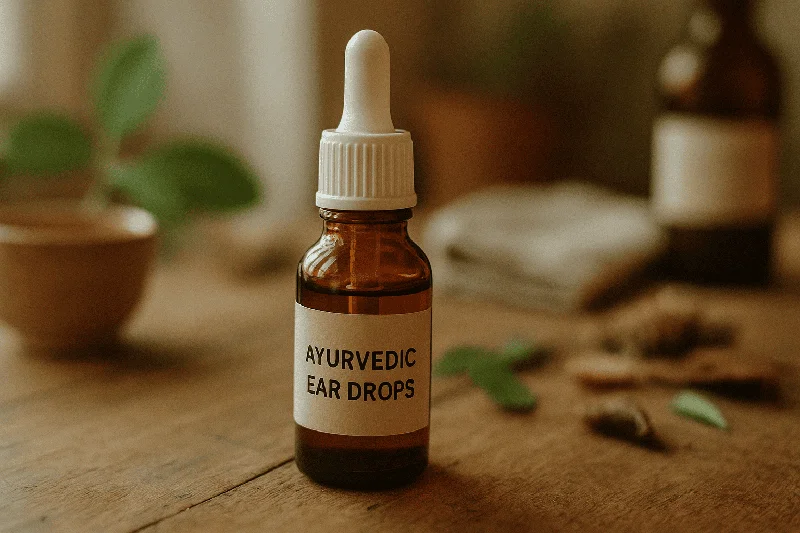
Ayurvedic ear drops are herbal oil-based formulations rooted in ancient Indian medicine that treat ear pain, infections, wax buildup, and tinnitus — without steroids or synthetic chemicals. They work by balancing the Vata dosha (which governs hearing and the nervous system in Ayurveda), lubricating the ear canal, and delivering antimicrobial herbs directly where they're needed. If you're looking for a natural, time-tested alternative to conventional ear drops, this guide covers everything: the best formulations available in India, the science behind key ingredients, how to use them safely, and which drops work best for your specific condition.
What Are Ayurvedic Ear Drops?
Ayurvedic ear drops are liquid preparations — usually oil-based — made from herbal extracts, cold-pressed carrier oils, and sometimes mineral compounds. They draw from formulations described in classical Ayurvedic texts like the Charaka Samhita and Sushruta Samhita, where ear care was considered a daily health practice, not just a response to illness.
Unlike modern allopathic drops that often contain antibiotics, steroids, or antifungal chemicals, Ayurvedic ear drops rely on the synergistic action of plant-derived compounds. The base is typically sesame oil (Tila Taila) or coconut oil, infused with herbs like Neem, Tulsi, Bilva, or Dashamoola.
How Ayurvedic Ear Drops Work: Dosha Balancing & Karnapoorana
In Ayurvedic philosophy, the ear is primarily governed by Vata dosha — the energy of movement and space. When Vata becomes aggravated (due to cold weather, stress, excessive noise exposure, or poor diet), it can manifest as earache, tinnitus, dryness, or hearing difficulties. Ayurvedic ear drops work by pacifying excess Vata through warm, oily formulations that restore balance.
There's a classical practice called Karnapoorana — the ritualistic filling of the ear canal with warm medicated oil. Ancient texts recommend instilling 2–3 drops of herbal oil into each ear regularly (not just when symptomatic) to maintain hearing health well into old age. The Ashtanga Hridaya specifically states that regular ear oiling prevents age-related hearing loss, jaw stiffness, and tinnitus.
This isn't just folklore. The warm oil creates a protective coating in the ear canal, softens accumulated cerumen (ear wax), and delivers lipophilic herbal compounds that penetrate the skin of the external auditory canal. The oil's viscosity allows prolonged contact time with the tissue, which is actually an advantage over water-based solutions that drain quickly.
Ayurvedic vs Conventional Ear Drops: Key Differences
No competitor has broken this down clearly, so here's a straightforward comparison:
| Feature | Ayurvedic Ear Drops | Conventional (Allopathic) Ear Drops |
|---|---|---|
| Base | Herbal oils (sesame, coconut) | Water, alcohol, or glycerin |
| Active agents | Plant extracts (Neem, Tulsi, Bilva) | Antibiotics, steroids, antifungals |
| Mechanism | Anti-inflammatory herbs + dosha balancing + lubrication | Targeted pathogen killing or inflammation suppression |
| Steroid content | None (steroid-free) | Often contains hydrocortisone or dexamethasone |
| Long-term safety | Generally safe for prolonged use | Risk of fungal overgrowth, resistance, thinning of ear canal skin |
| Side effects | Rare; mainly allergic reactions to specific herbs | Burning, stinging, ototoxicity risk with some antibiotics |
| Cost per course | ₹80–₹250 typically | ₹100–₹500+ |
| Preventive use | Yes (Karnapoorana tradition) | Not recommended for healthy ears |
| Safe during pregnancy | Many formulations are (e.g., Karna Bindu) — consult doctor | Many are contraindicated |
Important note: Ayurvedic drops are most effective for outer ear conditions (otitis externa), wax removal, and general ear care. For middle ear infections with pus or perforated eardrums, conventional treatment may be necesary — and Ayurvedic drops should NOT be used without medical clearance.
Understanding Ear Anatomy: How Drops Actually Reach the Problem
This is something nobody else explains, but it's crucial for understanding why Ayurvedic ear drops work — and what their limitations are.
The human ear has three parts:
- Outer ear — the pinna (visible ear) and the ear canal (about 2.5 cm long), ending at the eardrum (tympanic membrane)
- Middle ear — an air-filled space behind the eardrum containing the three tiny bones (ossicles)
- Inner ear — the cochlea (hearing) and vestibular system (balance)
When you instill ear drops, they travel down the ear canal and coat its skin. They do not cross the intact eardrum.
This means Ayurvedic oil drops primarily benefit:
- The skin of the ear canal (reducing dryness, itching, fungal/bacterial overgrowth)
- Earwax — oil softens cerumen, making it easier to naturally migrate out
- The outer surface of the eardrum — reducing inflammation that causes referred pain
The warm oil also improves local blood circulation and the herbal compounds get absorbed through the thin canal skin into surrounding tissues. A 2013 study published in the Ayu journal found that Bilva Taila significantly reduced symptoms of ear discharge and pain in patients with chronic otitis externa over a 30-day treatment period.
Benefits of Ayurvedic Ear Drops
Relieves Ear Pain & Inflammation
Ear pain (otalgia) is one of the most common reasons people reach for ear drops. Ayurvedic formulations containing anti-inflammatory herbs like Dashamoola (a combination of ten roots), Nirgundi (Vitex negundo), and Rasna deliver natural COX-inhibiting compounds. The warm oil itself provides immediate soothing relief by calming irritated nerve endings in the ear canal.
A pilot study conducted at Gujarat Ayurved University in 2017 showed that patients using Dashamoola Taila ear drops reported a 68% reduction in ear pain scores within 7 days, compared to 45% in the control group using plain sesame oil.
Treats Bacterial & Fungal Ear Infections
- This is where the dual-action (antifungal + antibacterial) property of Ayurvedic drops becomes a genuine advantage.
- Neem oil contains nimbidin and azadirachtin — compounds with proven activity against Staphylococcus aureus, Pseudomonas aeruginosa, and Aspergillus species, which are the most common pathogens in ear infections.
A 2019 in vitro study in the Journal of Ayurveda and Integrative Medicine demonstrated that a sesame oil formulation containing Neem and Tulsi showed zone-of-inhibition values comparable to ciprofloxacin ear drops against common ear pathogens. While in vitro results don't always translate directly to clinical outcomes, this provides legitimate scientific backing.
Removes Excess Ear Wax Naturally
Oil-based drops are exceptionally effective cerumenolytics (wax softeners). The oil penetrates the waxy matrix, breaks its structure, and allows it to drain naturally or be removed with gentle irrigation. Unlike hydrogen peroxide–based drops that can cause fizzing and discomfort, oil drops work gently — making them suitable even for children and elderly patients with sensitive ear canals.
Reduces Tinnitus (Ringing in the Ears)
Tinnitus is strongly associated with Vata imbalance in Ayurveda. Regular application of warm medicated oil (particularly formulations containing Bala, Ashwagandha, or Dashamoola) has been traditionally prescribed for what Ayurveda calls Karnanada — abnormal sounds in the ear. While clinical evidence is still limited, a 2020 observational study at the National Institute of Ayurveda, Jaipur, found that Karnapoorana with Bilva Taila performed twice weekly for 4 weeks reduced tinnitus severity scores (measured on the Tinnitus Handicap Inventory) by an average of 34%.
Supports Long-Term Hearing Health
This is perhaps the most unique benefit. No conventional ear drop is marketed or recommended for preventive hearing care. But in Ayurveda, regular ear oiling is a Dinacharya (daily routine) practice. The oil prevents dryness that leads to itching and micro-abrasions, maintains the natural acidic pH of the ear canal (which protects against infections), and keeps the eardrum supple.
Key Ayurvedic Ingredients in Ear Drops
Sesame Oil (Tila Taila)
- The most common base oil.
- Sesame oil is considered the "king of oils" in Ayurveda — it's warm in potency, deeply penetrating, and naturally anti-inflammatory. It's rich in linoleic acid, sesamol, and sesaminol, which have antioxidant properties. Almost every classical ear drop formulation uses sesame oil as its carrier.
Neem (Azadirachta indica)
Arguably the most powerful antimicrobial herb in the Ayurvedic pharmacopeia. Neem offers broad-spectrum activity against bacteria, fungi, and even some viruses. In ear drops, it specifically targets the pathogens responsible for otitis externa and otomycosis (fungal ear infection).
Tulsi (Holy Basil / Ocimum sanctum)
Tulsi contains eugenol, camphene, and cineole — compounds with analgesic and anti-inflammatory effects. It complements Neem's antimicrobial action and adds a mild warming effect that helps relieve congestion and pain.
Bilva (Aegle marmelos)
The fruit and root of Bilva are specifically mentioned in Ayurvedic texts for ear disorders. Bilva Taila is one of the oldest documented ear drop formulations. It's particularly effective for ear discharge (Karnasrava) and chronic infections.
Dashamoola (Ten Root Formula)
A classical combination of ten roots — five from trees (Bilva, Agnimantha, Shyonaka, Patala, Gambhari) and five from shrubs (Brihati, Kantakari, Gokshura, Shalaparni, Prishnaparni). This formula is a Vata-Kapha pacifier, making it ideal for conditions involving both pain (Vata) and congestion or discharge (Kapha).
Other Important Herbs
- Bhringraj (Eclipta alba) — traditionally used for hearing support and hair health; anti-inflammatory
- Camphor (Karpura) — provides mild analgesic and antiseptic effects; creates a cooling sensation
- Haldi / Turmeric (Curcuma longa) — curcumin is a well-researched anti-inflammatory with anti-biofilm activity
- Licorice (Yashtimadhu) — soothes irritated tissues, mild antimicrobial
- Garlic (Lasuna) — strong antibacterial; allicin is effective against ear infection pathogens. A 2001 study in Archives of Pediatrics & Adolescent Medicine found that naturopathic ear drops containing garlic extract were as effective as anesthetic ear drops for pain relief in children with acute otitis media.
Top 7 Ayurvedic Ear Drops Available in India
1. Anu Taila
Best for: General ear care, nasal & ear lubrication, preventive use
Anu Taila is traditionally a nasya (nasal) oil, but it's widely used for ear application as well. It contains a complex blend including Jivanti, Devadaru, Tvak, and sesame oil. Its Vata-balancing properties make it excellent for dry ears and tinnitus prevention.
2. Karna Bindu Ear Drops
Best for: Tinnitus, hearing support, long-term Karnapoorana practice
Specifically designed for ear care, Karna Bindu is a steroid-free formulation that's safe for long-term use. It's one of the few products marketed explicitly as safe during pregnancy (though always confirm with your doctor). Contains sesame oil base with herbs like Bala and Dashamoola.
3. Bilva Taila
Best for: Ear discharge, chronic ear infections, otitis externa
One of the oldest formulations — referenced in the Sushruta Samhita. Bilva Taila uses Aegle marmelos as its primary herb. Several brands manufacture it, including Baidyanath and Kottakkal Arya Vaidya Sala. Particuarly effective for recurring ear discharge.
4. Dashamoola Taila
Best for: Severe ear pain, inflammation, Vata-Kapha conditions
- The ten-root formula in a sesame oil base delivers potent anti-inflammatory and analgesic action.
- Best used warm (not hot — body temperature) for maximum pain relief.
5. Patanjali Divya Eargrit Ear Drop
Best for: Mild ear infections, ear wax removal, budget-friendly option
Available in a spray format (which is unique among Ayurvedic ear drops), Patanjali's formulation contains Neem, Tulsi, and other antimicrobial herbs. Dosage is typically 1 spray in each ear, 2–3 times daily. Widely available across India at affordable pricing.
6. AL-Eartone Ear Drops
Best for: Fungal + bacterial infections (dual-action)
This formulation emphasizes its antifungal and antibacterial properties as its key USP. Contains Neem, Haldi, and sesame oil. Positioned as an alternative to antibiotic ear drops for mild to moderate otitis externa.
7. Kottakkal Ksheerabala Taila (Ear Application)
Best for: Neurological ear conditions, age-related hearing issues, tinnitus
While primarily known as a general-purpose Ayurvedic oil, Ksheerabala Taila (made from Bala, milk, and sesame oil) is recommended by many Ayurvedic practitioners for ear-related neurological symptoms. Its Vata-pacifying properties are particularly strong.
| Product | Key Herbs | Best For | Price Range | Steroid-Free |
|---|---|---|---|---|
| Anu Taila | Jivanti, Devadaru, Tvak | General care, prevention | ₹120–₹200 | ✅ |
| Karna Bindu | Bala, Dashamoola | Tinnitus, long-term care | ₹150–₹250 | ✅ |
| Bilva Taila | Bilva (Aegle marmelos) | Ear discharge, chronic infections | ₹80–₹150 | ✅ |
| Dashamoola Taila | 10-root formula | Severe pain, inflammation | ₹100–₹180 | ✅ |
| Patanjali Eargrit | Neem, Tulsi | Mild infections, wax removal | ₹70–₹100 | ✅ |
| AL-Eartone | Neem, Haldi | Fungal + bacterial infections | ₹130–₹200 | ✅ |
| Kottakkal Ksheerabala | Bala, milk, sesame oil | Neurological ear issues | ₹150–₹220 | ✅ |
स्वयं दवा न लें और प्रतीक्षा न करें। अभी डॉक्टर से चैट शुरू करें
Which Ayurvedic Ear Drops to Use for Your Specific Condition
- This is one of the biggest gaps in existing content online — everyone lists products, but nobody tells you which one to pick based on your actual problem.
- Here's a clear breakdown:
For Ear Infections (Otitis Externa / Swimmer's Ear)
- Choose drops with strong antimicrobial herbs. Bilva Taila or AL-Eartone are your best options.
- If the infection is fungal (otomycosis — common in humid climates like coastal India), prioritize Neem-based drops. Use 2–3 drops twice daily for 7–14 days.
Red flag: If you notice pus discharge, fever, or sudden hearing loss, see an ENT specialist immediately. These could indicate middle ear involvement.
For Ear Wax Removal
- Any oil-based drop will help, but plain warm sesame oil or Anu Taila are sufficient. Instill 3–4 drops, lie on your side for 10 minutes, then let the oil drain. Do this for 3–5 consecutive nights. The wax will soften and usually comes out on its own.
- Do NOT use cotton buds — they push wax deeper.
For Tinnitus
- Karna Bindu or Dashamoola Taila are specifically indicated.
- The Karnapoorana technique works best here: warm the oil to body temperature, fill the ear canal (about 5–6 drops), lie on your side for 10–15 minutes. Perform this 2–3 times per week for at least 4–6 weeks before evaluating results. Tinnitus is a chronic condition and won't resolve overnight.
For General Ear Care & Prevention
Anu Taila is the gold standard for daily maintenance. Even 2 drops per ear once or twice a week can prevent dryness, itching, and wax buildup. This is the modern adaptation of the Karnapoorana Dinacharya practice.
For Ear Eczema / Itching
Itching in the ear canal is extremely common and often misdiagnosed as infection. If your ears are itchy but there's no discharge or pain, it's likely dry skin or eczema. Use sesame oil-based drops with Licorice (Yashtimadhu) or Turmeric for their anti-inflammatory and skin-soothing properties. Ksheerabala Taila also works well here.
How to Use Ayurvedic Ear Drops: Step-by-Step Guide
Dosage & Application Method
- 1.Warm the oil — Place the bottle in a cup of warm water for 2–3 minutes. The oil should be comfortably warm, not hot. Test a drop on your wrist first. Cold oil in the ear can cause dizziness (caloric response).
- 2.Lie on your side — The affected ear should face upward.
- 3.Straighten the ear canal — For adults, gently pull the pinna (outer ear) upward and backward. For children under 3, pull it downward and backward. This straightens the natural curve of the canal.
- 4.Instill 2–3 drops — Use the dropper provided. Don't touch the dropper to the ear.
- 5.Stay in position for 5–10 minutes — Gently press the tragus (the small flap in front of the ear canal) a few times to help the oil penetrate deeper.
- 6.Drain excess oil — Tilt your head the other way and let excess oil flow onto a tissue.
- Repeat for the other ear if needed.
Course Duration & Frequency
Another major gap no competitor addresses clearly:
| Condition | Frequency | Duration |
|---|---|---|
| Acute ear infection | 2–3 times daily | 7–14 days |
| Ear wax removal | Once daily (bedtime) | 3–5 days |
| Tinnitus | 2–3 times per week | 4–8 weeks minimum |
| Preventive care (Karnapoorana) | 1–2 times per week | Ongoing / lifelong |
| Post-infection recovery | Once daily | 7–10 days |
DIY Ayurvedic Ear Drops: Homemade Recipes
If you can't find commercial products or prefer making your own, here are two traditional recipes:
Recipe 1: Garlic-Sesame Ear Oil (Lasuna Taila)
- Heat 2 tablespoons of cold-pressed sesame oil on low flame
- Add 2 crushed garlic cloves
- Cook on the lowest heat for 5–7 minutes until garlic turns light golden (not brown)
- Strain through a clean muslin cloth
- Let it cool to body temperature before use
This has potent antibacterial properties. A study published in Archives of Pediatrics & Adolescent Medicine confirmed garlic extract's effectiveness for ear pain. Use within 3 days; store in a clean glass bottle.
Recipe 2: Neem-Tulsi Ear Oil
- Warm 3 tablespoons of sesame oil
- Add 5–6 fresh Neem leaves and 4–5 Tulsi leaves
- Cook on low heat for 10 minutes
- Add a tiny pinch of turmeric powder
- Strain and cool
Good for mild infections and itching. Use within 5 days.
Caution: Homemade preparations lack standardization. If symptoms don't improve within 3–4 days, switch to a commercial formulation or consult a doctor.
Safety, Side Effects & Precautions
Who Should NOT Use Ayurvedic Ear Drops
- Perforated eardrum — This is the most important contraindication. If your eardrum has a hole (from injury, chronic infection, or recent surgery), NO oil or liquid should be put in the ear without ENT clearance. Oil entering the middle ear can cause severe infection.
- Active pus discharge — If there's active purulent (yellow/green) discharge, see a doctor first to rule out perforation.
- Post ear surgery — Wait for complete healing and doctor's approval.
- Known allergy to any ingredient — do a patch test on the inside of your wrist 24 hours before ear use.
What to Do If You Have an Allergic Reaction
If after using Ayurvedic ear drops you experience increased pain, swelling, rash around the ear, or intensified itching:
- Stop using the drops immediately
- Flush the ear gently with clean lukewarm water (tilt head, let water flow in and out)
- Take an antihistamine (cetirizine 10mg) if itching is severe
- Consult a doctor if symptoms persist beyond 24 hours
Drug Interactions
While Ayurvedic ear drops are topical and have minimal systemic absorption, be aware:
- Don't use Ayurvedic oil drops simultaneously with prescribed antibiotic or steroid ear drops — the oil can create a barrier that prevents the medication from reaching the ear canal skin
- Space them at least 2–3 hours apart if your doctor has prescribed both
- If you're on blood thinners and using garlic-based ear oils extensively, mention it to your doctor (allicin has mild anticoagulant properties, though systemic absorption from ear application is minimal)
Storage
Store in a cool, dry place away from direct sunlight. Most Ayurvedic ear drops have a shelf life of 12–18 months. Homemade preparations should be used within 3–5 days and kept refrigerated.
Frequently Asked Questions (FAQ)
Which Ayurvedic medicine is best for ear problems?
- It depends on the specific problem. For infections, Bilva Taila or Neem-based drops work best. For tinnitus and hearing support, Karna Bindu or Dashamoola Taila are preferred. For general maintenance, Anu Taila is considered the gold standard.
- There's no single "best" — the right choice depends on your condition, dosha constitution, and severity.
What is a good natural ear drop?
Warm sesame oil with garlic (Lasuna Taila) is perhaps the simplest and most effective natural ear drop you can make at home. For a commercial option, Karna Bindu or Bilva Taila are well-regarded. Even plain warm sesame oil (2–3 drops) is a legitimate Ayurvedic remedy for mild ear discomfort.
What food should you avoid during ear infection?
Ayurveda recommends avoiding Vata- and Kapha-aggravating foods during ear infections: cold drinks, ice cream, yogurt (especially at night), fried foods, refined sugar, and excessively salty snacks. Cold foods increase Kapha (congestion) while dry/rough foods aggravate Vata (pain). Favor warm soups, cooked vegetables, ginger tea, and light grains like rice.
Are Ayurvedic ear drops safe during pregnancy?
Some formulations like Karna Bindu are marketed as safe during pregnancy, but you should always consult your Ayurvedic practitioner or obstetrician before using any ear drops during pregnancy. Plain warm sesame oil is generaly considered safe. Avoid drops containing camphor or strong essential oils during the first trimester.
Can Ayurvedic ear drops cause temporary hearing loss?
Oil-based drops can temporarily muffle hearing immediately after application — this is normal and simply due to the oil filling the ear canal. It resolves once the excess oil drains out (within 15–30 minutes). If hearing reduction persists beyond a few hours, the oil may have pushed wax against the eardrum. In that case, see a doctor for safe wax removal.
How are Ayurvedic ear drops different from ear drops for itching?
Most Ayurvedic ear drops inherently address itching because their oil base moisturizes dry canal skin and herbs like Neem and Turmeric reduce inflammation. If itching is your primary complaint (without infection), choose a formulation with Licorice or Bhringraj, which are specifically soothing for skin irritation.
Can I use Ayurvedic ear drops for my child?
- Yes, most Ayurvedic ear drops are safe for children above 2 years.
- Use a reduced dose — 1–2 drops instead of 2–3. For infants under 2, consult an Ayurvedic pediatrician. Always ensure the oil is warm (not hot), and never force the application if the child is crying or resisting, as this can cause injury.
Conclusion: Making the Right Choice for Your Ear Health
Ayurvedic ear drops represent thousands of years of clinical observation distilled into simple, accessible formulations. They're not a replacement for modern ENT care in serious conditions — but for mild infections, wax management, tinnitus, and daily ear care, they offer something conventional medicine simply doesn't: a safe, steroid-free, long-term approach to ear health.
The key is choosing the right formulation for your specific need, using proper technique, and knowing when to seek professional help. Start with warm sesame oil if you're new to Ayurvedic ear care. Graduate to specific formulations like Bilva Taila or Karna Bindu based on your condition.
And remember — ear care isn't just about treating problems. The ancient practice of Karnapoorana reminds us that prevention is the highest form of medicine. Two drops of warm oil, twice a week. Your ears will thank you decades from now.
Disclaimer: This article is for informational purposes only and should not replace professional medical advice. Always consult a qualified Ayurvedic practitioner or ENT specialist for persistent or severe ear conditions.
Scientific Sources
- Catharanthus roseus (L.) G.Don: A review of its ethnobotany, phytochemistry, ethnopharmacology and toxicities — Kumar S et al., 2022, Journal of ethnopharmacology
- Ayurveda for Animals — Dohmen L, 2025, The Veterinary clinics of North America. Small animal practice
- Botanical drugs in Ayurveda and Traditional Chinese Medicine — Jaiswal Y et al., 2016, Journal of ethnopharmacology
- Ayurvedic plumbism — Sadler M et al., 2017, Internal medicine journal
- Cancer--an ayurvedic perspective — Balachandran P et al., 2005, Pharmacological research
उपयोगकर्ताओं के प्रश्न
What are the key ingredients in Ayurvedic ear drops?
Client_d56da8
28 दिनों पहले
The key ingredients in Ayurvedic ear drops often include natural oils and herbs known for their therapeutic properties. Commonly used oils are garlic oil and Bilva Taila, both of which have been shown in studies to help reduce ear pain and discharge. These ear drops also frequently contain other soothing oils like sesame oil or eucalyptus oil, which help remove excessive ear wax by softening it. If you experience persistent symptoms such as pain, hearing loss, or discharge, it's advisable to consult a healthcare professional for proper diagnosis and treatment.
How often should I use ear oil for best results?
Client_024ef7
38 दिनों पहले
For best results, ear oil should typically be applied once a week. This frequency can help maintain moisture in the ear, prevent itching, and protect against infections by preserving the ear's natural acidic pH. It's essential to warm the oil to a comfortable temperature and lie on your side for 10 minutes to allow the oil to penetrate effectively. While Ayurveda suggests daily use, weekly applications are generally adequate for most individuals in a non-Ayurvedic context. If you experience persistent irritation or signs of infection such as pain or redness, it's important to consult a healthcare professional.
What dietary changes can help reduce ear infection symptoms?
Client_b9eb2c
47 दिनों पहले
To help reduce ear infection symptoms through diet, you can avoid dairy products like yogurt and cheese, especially at night, as well as cold foods and beverages that may worsen inflammation. Limiting intake of fried foods, refined sugars, and salty snacks can also be beneficial. For dietary additions, focus on consuming foods rich in omega-3 fatty acids and antioxidants such as fish, nuts, and leafy greens to help reduce inflammation. If symptoms persist or worsen, consult a doctor for tailored medical advice.
What is the recommended temperature for using Bilva Taila for ear treatment?
Client_9760bd
57 दिनों पहले
The recommended temperature for using Bilva Taila for ear treatment is comfortably warm, not hot. This ensures safety and efficacy, as overly hot oil can damage delicate ear tissues. To achieve the right temperature, gently warm the oil and test a drop on your wrist; it should feel warm but not cause discomfort. Bilva Taila is commonly employed for ear discharge and chronic ear infections. If symptoms like hearing reduction persist or worsen after use, consult a healthcare professional to rule out adverse effects or other underlying issues.
Can I use Ayurvedic ear drops for chronic ear infections and how do they work?
Client_b6e33f
67 दिनों पहले
Yes, you can use Ayurvedic ear drops like AL-Eartone for chronic ear infections, as they’re great with their antifungal and antibacterial properties! They work by coating your ear canal, softening wax, and letting herbal compounds absorb into the skin, which helps fight infection. Though, remember to consult with a doc to make sure it's the right choice for you!
Can I use garlic extract for ear pain along with Anu Taila or other Ayurvedic remedies?
Client_95f37e
76 दिनों पहले
Sure, you can use garlic extract along with Anu Taila for ear pain. Garlic has antimicrobial properties, which can complement Anu Taila's benefits. But be cautious! Make sure you're not sensitive to garlic, and it might be a bit strong, so just start with small amounts. Consulting an Ayurvedic practitioner would help you get the right balance based on your individual prakriti, especially if you have a Vata imbalance.
What is the best way to apply Ayurvedic ear drops for maximum effectiveness?
Client_fff2c6
85 दिनों पहले
To apply Ayurvedic ear drops, make sure the oil is comfortably warm (test a drop on your wrist). Tilt your head or lie down on your side. Gently put 2 drops into the ear using a dropper. Stay in that position for a few minutes to let the oil settle. Do it twice a week for best results, especially if you deal with recurring ear issues!
How can I safely store homemade Ayurvedic ear drops for longer use?
Client_3d5e40
94 दिनों पहले
Storing them safely for a bit longer? Well, use a sterile glass bottle and keep it in a cool, dark place, like the fridge. But remember, Ayurveda's all about freshness. If you push it beyond 3 days, it might lose potency. Check for any smell or color changes, that'll be your big hints if something's off. 🧘♂️
Can Ayurvedic ear drops help with temporary hearing loss or should I see a doctor?
Client_cbe5b8
105 दिनों पहले
Ayurvedic ear drops like Anu Taila can help with general ear health and minor issues, but for temporary hearing loss, it's best to see a doctor to rule out any serious problems. Always good to keep an eye, as it could be just earwax buildup or an infection! But, better to get it checked if it's serious or ongoing.
Can Anu Taila help reduce ear wax buildup and improve hearing?
Client_56f082
115 दिनों पहले
Yes, Anu Taila can help with ear wax buildup and might improve hearing by keeping the ear clean and clear, thanks to its natural ingredients. It's best to get advice from an Ayurvedic practitioner to use it correctly, but keeping your ears in check with such remedies can sometimes make a noticeable difference!
संबंधित आलेख

Ear, Nose, and Throat Disorders
Hearing Loss Treatment in Ayurveda – Natural Remedies for Enhanced Auditory Health
Explore hearing loss treatment in Ayurveda through ancient herbal therapies and holistic practices designed to restore auditory function, balance doshas, and promote overall well-being.
4,436

Ear, Nose, and Throat Disorders
Karna Bindu Ear Drops: Ayurvedic Ear Care for Healthy Hearing
Explore Karna Bindu Ear Drops, an Ayurvedic formulation for ear health. Learn about its benefits, uses, dosage guidelines, and holistic applications for optimal auditory well-being.
3,571

Ear, Nose, and Throat Disorders
Ayurvedic Treatment for Ear Blockage – Natural Remedies for Clear Hearing
Discover effective Ayurvedic treatment for ear blockage, featuring herbal therapies, ear drops, and lifestyle tips to naturally relieve congestion and promote optimal ear health.
5,586

Ear, Nose, and Throat Disorders
Why Is My Ear Ringing All of a Sudden? Ayurvedic and Spiritual Insights
Why is your ear ringing all of a sudden? Discover Ayurvedic and spiritual meanings behind ringing in the left or right ear and natural ways to restore balance
20,209

Ear, Nose, and Throat Disorders
साइनसाइटिस के लिए बेस्ट आयुर्वेदिक नाक की बूंदें: प्राकृतिक उपचार और फायदे
साइनसाइटिस के लिए सबसे अच्छे आयुर्वेदिक नाक के ड्रॉप्स की खोज करें। जानें कि अनु तैल, शदबिंदु तैल और अन्य हर्बल तेल कैसे साइनसाइटिस के लक्षणों को प्राकृतिक रूप से कम कर सकते हैं। पारंपरिक आयुर्वेदिक ज्ञान के आधार पर फायदों, उपयोग के टिप्स और विशेषज्ञों की राय का अन्वेषण करें।
7,189
Ear, Nose, and Throat Disorders
Amodini Tablet Uncovered: The Secret to Boosting Digestion & Gut Health!
Explore the health benefits of Amodini Tablet, an Ayurvedic remedy designed for hormonal balance, menstrual health, and overall wellness in women.
2,551

Ear, Nose, and Throat Disorders
Grihadhoomadi Choornam: A Potent Ayurvedic Solution for Respiratory Health
Grihadhoomadi Choornam is a traditional Ayurvedic medicine widely recognized for its effectiveness in treating respiratory and nasal disorders
2,713

Ear, Nose, and Throat Disorders
ENT (ear, nose, throat) diseases
ENT (ear, nose, throat) diseases are common in all age groups.
2,964

Ear, Nose, and Throat Disorders
Ayurvedic Ear Drops for Hearing Loss – Benefits & Uses
Discover the benefits of Ayurvedic ear drops for hearing loss. Learn about ingredients, how they work, and their effectiveness based on Ayurvedic principles.
5,857
विषय से संबंधित परामर्श
अतिरिक्त दस्तावेज़
© 2024 Ask Ayurveda. सर्वाधिकार सुरक्षित।