आयुर्वेदिक डॉक्टर से प्रश्न पूछें और निःशुल्क या भुगतान मोड में अपनी चिंता की समस्या पर ऑनलाइन परामर्श प्राप्त करें। 2,000 से अधिक अनुभवी डॉक्टर हमारी साइट पर काम करते हैं और आपके प्रश्नों का इंतजार करते हैं और उपयोगकर्ताओं को उनकी स्वास्थ्य समस्याओं को हल करने में प्रतिदिन मदद करते हैं।


Body DetoxEar, Nose, and Throat DisordersGeriatrics & RejuvenationImmunodeficiencyInfertility TreatmentNutritionOrthopedic DisordersPediatricsRespiratory DisordersSexually Transmitted Diseases (STDs)Surgery RecoveryUrological DisordersVascular DisordersDental DisordersEndocrinological DisordersGastrointestinal DisordersYoga TherapyGeneral MedicineAllergic DisordersCardio DisordersGynecology and ObstetricsCosmetologySkin and Hair DisordersEye DisordersInfectious DiseasesMental DisordersNeurological DisordersOncologyPanchakarmaSexual Health & DisordersSports Medicine
पर प्रकाशित 12/18/24
(को अपडेट 08/09/26)
3,480
Sandhivata Oil: Benefits, Uses, and Science-Backed Insights
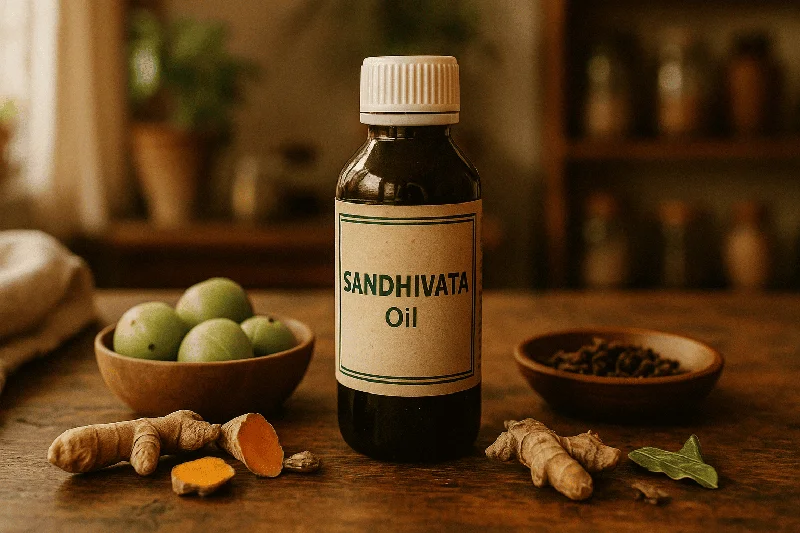
Sandhivata Oil is a traditional Ayurvedic herbal oil formulated to relieve joint pain, reduce inflammation, and restore mobility in people suffering from Sandhivata — the Ayurvedic term for degenerative joint disease, closely corresponding to osteoarthritis in modern medicine. Made from a blend of potent herbs like Shallaki, Ashwagandha, and Guggul infused in a sesame oil base, this therapeutic oil works by pacifying aggravated Vata dosha, nourishing joint tissues (Asthi and Sandhi), and inhibiting pro-inflammatory enzymes that cause swelling and stiffness.
Whether you're a senior dealing with age-related joint degeneration, an athlete recovering from overuse injuries, or someone simply looking for a natural alternative to conventional painkillers — this guide covers everything you need to know. From classical Ayurvedic references to modern clinical studies, from step-by-step application techniques to diet recommendations, we've put together the most comprehensive resource on Sandhivata Oil available anywhere.
What Is Sandhivata Oil?
Definition & Ayurvedic Classification
- Sandhivata Oil (also written as Sandhivata Taila) is a medicated oil (Taila) formulated according to Ayurvedic pharmacological principles.
- It falls under the category of Bahya Parimarjana Chikitsa — external therapeutic applications. The oil is primarily classified as a Vatahara (Vata-pacifying) formulation with Shothahara (anti-inflammatory) and Vedanasthapana (analgesic) properties.
In Ayurvedic pharmacology, medicated oils are prepared through a specific process called Taila Paka Vidhi, where raw herbs are decocted and then cooked in a base oil (typically sesame oil) along with herbal pastes. This process ensures that the fat-soluble active compounds from the herbs get extracted into the oil, making them bioavailable for transdermal absorption.
Sandhivata (Osteoarthritis) in Ayurveda — The Role of Vata Dosha
- So what exactly is Sandhivata?
- The word comes from two Sanskrit terms: Sandhi (joint) and Vata (the dosha governing movement). Charaka Samhita describes Sandhivata as a condition where vitiated Vata lodges in the joints, leading to Sandhishula (joint pain), Sandhishotha (joint swelling), Atopa (crepitus — that cracking sound), and Prasarana Akunchanayo Pravritti Savedana (painful movement during flexion and extension).
This maps remarkably well to what modern medicine calls osteoarthritis (OA). The Vata dosha, when aggravated by factors like aging, excessive physical strain, poor nutrition, or cold/dry weather, depletes the Shleshaka Kapha — the lubricating substance in joints equivalent to synovial fluid. The result? Bone rubs against bone, cartilage degrades, and chronic pain sets in.
Understanding this mechanism is important because Sandhivata Oil is designed specifically to address this Vata-driven pathology, not just mask the symptoms.
Historical Origins & Classical References
Mentions in Ancient Ayurvedic Texts
The concept of treating Sandhivata with medicated oils has deep roots in classical Ayurvedic literature. The Charaka Samhita (circa 2nd century BCE) recommends Snehana (oleation therapy) as a primary treatment for all Vata disorders, stating: "Vatasya aushadham snehah" — oil is the medicine for Vata.
The Sushruta Samhita further elaborates on external oil application for joint diseases, recommending Abhyanga (oil massage) with warm medicated oils as a daily practice for those prone to Vata imbalance. Ashtanga Hridayam by Vagbhata also prescribes specific oil formulations for Sandhigata Vata, including combinations of Bala, Ashwagandha, and sesame oil.
While the exact formulation called "Sandhivata Oil" as a branded product is a more modern standardization, the herbal combinations it contains are drawn directly from these classical references. Some formulations trace their specific ratios to Bhaishajya Ratnavali and Sahasrayogam, two important Ayurvedic formularies.
Traditional Use Across Centuries
For centuries, Ayurvedic practitioners (Vaidyas) prepared these oils in small batches for individual patients. The oil would be customized based on the patient's Prakriti (constitution), the severity of the condition, and the season. Interestingly, oil therapy for joints was considered most effective during Varsha Ritu (monsoon season) and Shishira Ritu (late winter), when Vata naturally aggravates.
This personalized approach is something worth keeping in mind — even today, a qualified Ayurvedic practitioner can adjust the formulation to your specific needs.
Key Ingredients in Sandhivata Oil & Their Roles
Most Sandhivata Oil formulations contain between 10 and 29 essential herbs. Some premium versions boast upto 29 herbs, though the core therapeutic action comes from a handful of star ingredients.
Here's a detailed breakdown:
Shallaki (Boswellia Serrata)
Shallaki is arguably the most scientifically validated herb in the formulation. A 2019 study published in BMC Complementary Medicine and Therapies demonstrated that Boswellic acids — the active compounds in Shallaki — significantly inhibit 5-lipoxygenase (5-LOX), a key enzyme responsible for producing leukotrienes that drive inflammation and pain in joints. Patients in the study showed measurable improvements in pain scores and joint function within 30 days.
In Ayurvedic terms, Shallaki has Kashaya (astringent) and Madhura (sweet) rasa, making it both anti-inflammatory and tissue-nourishing.
Ashwagandha (Withania Somnifera)
Known as the "strength of the stallion," Ashwagandha serves a dual purpose in Sandhivata Oil. Its Balya (strengthening) properties help rebuild weakened joint tissues, while its Rasayana (rejuvenative) qualities promote overall tissue regeneration. Modern research confirms its adaptogenic and anti-arthritic properties — withanolides, its primary bioactive compounds, have shown chondroprotective effects in laboratory studies.
Guggul (Commiphora Mukul)
A 2021 study in the Journal of Ayurveda and Integrative Medicine found that Guggulsterones — active compounds in Guggul — inhibit NF-κB, a nuclear transcription factor that activates inflammatory genes. This is essentially the same pathway targeted by many modern anti-inflammatory drugs, but without the gastrointestinal side effects.
Guggul also has Yogavahi property — it enhances the bioavailability of other herbs it's combined with, acting as a natural potentiator.
Sesame Oil (Tila Taila) — The Base Oil
- Sesame oil isn't just a carrier.
- Ayurveda considers it the best oil for pacifying Vata — "Tailam Sarva Sneha Uttamam" (sesame oil is supreme among all oils), says the Charaka Samhita. Its Ushna Virya (heating potency) and deep tissue penetration ability (Sukshma property) make it ideal for delivering herbal actives deep into joint tissues. Rich in linoleic acid and sesamol, it also provides its own anti-oxidant and anti-inflammatory benefits.
Other Important Herbs in the Formulation
| Herb | Sanskrit Name | Primary Role | Key Property |
|---|---|---|---|
| Nirgundi | Vitex negundo | Pain relief & anti-inflammatory | Vedanasthapana |
| Eranda (Castor) | Ricinus communis | Vata pacification, laxative effect on tissues | Vatahara, Snigdha |
| Bala | Sida cordifolia | Muscle & nerve strengthening | Balya, Brimhana |
| Rasna | Pluchea lanceolata | Anti-rheumatic, reduces swelling | Shothahara |
| Devadaru | Cedrus deodara | Improves circulation in joints | Ushna, Vatakaphahara |
| Shatavari | Asparagus racemosus | Tissue nourishment and lubrication | Snigdha, Rasayana |
| Manjistha | Rubia cordifolia | Blood purification, reduces stagnation | Raktashodhaka |
Many commercial formulations also include Camphor (Karpura) and Eucalyptus for immediate cooling-then-warming sensation that provides fast symptomatic relief.
Health Benefits of Sandhivata Oil
Joint Pain Relief
The primary and most sought-after benefit. The synergistic action of Boswellia, Guggul, and Nirgundi creates a multi-pathway analgesic effect — blocking pain signals at the peripheral nerve level while simultaneously reducing the inflammation that causes the pain in the first place. Most users report noticable relief within 7-14 days of consistent application.
Reduction of Inflammation & Swelling
Chronic low-grade inflammation is the hallmark of Sandhivata. The oil's Shothahara herbs work by inhibiting COX-2 and 5-LOX enzymes, reducing prostaglandin and leukotriene synthesis. Unlike NSAIDs, which work on similar pathways but carry gastric and cardiovascular risks, topical application of these herbal compounds provides localized anti-inflammatory action without systemic side effects.
Improved Joint Mobility & Flexibility
Stiffness — especially morning stiffness — is one of the most debilitating aspects of Sandhivata. The warming and penetrating nature of sesame oil combined with Vata-pacifying herbs helps restore Shleshaka Kapha (joint lubrication), gradually improving range of motion. The massage action itself also breaks up adhesions in surrounding soft tissues.
Cartilage Nourishment & Regeneration
This is where Ashwagandha and Shatavari shine. Their Rasayana properties promote Asthi Dhatu Poshana (bone tissue nourishment). While complete cartilage regeneration remains a complex challenge even in modern medicine, studies suggest that consistent application along with internal Ayurvedic medicines can slow cartilage degradation signficantly.
Muscle Relaxation Around Affected Joints
Joint pain often leads to compensatory muscle tension. Bala and Eranda in the formulation help relax hypertonic muscles around the affected joint, reducing spasm and improving overall comfort.
How Sandhivata Oil Works — Scientific Mechanism
Penetration into Deep Tissues
- Ayurveda describes oil as having Sukshma (subtle, penetrating) and Vyavayi (spreading) properties.
- Modern pharmacology supports this — sesame oil is known for excellent transdermal penetration due to its fatty acid profile. The lipophilic active compounds from herbs dissolved in it pass through the skin's lipid barrier, reaching the synovium and periarticular tissues.
A warm oil application further enhances this. Heat dilates blood vessels and opens pores, increasing absorption by an estimated 30-40% compared to room-temperature application.
Inhibition of Pro-Inflammatory Enzymes
The mechanism is now fairly well-understood:
- Boswellic acids → inhibit 5-LOX → reduce leukotriene B4
- Guggulsterones → suppress NF-κB → reduce TNF-α and IL-1β
- Withanolides → modulate COX-2 → reduce prostaglandin E2
This triple-pathway inhibition is what makes the oil effective across different types of inflammatory joint conditions.
Clinical Studies & Research Evidence
Beyond the individual herb studies mentioned above, a clinical trial conducted at a university Ayurvedic hospital showed that patients receiving Janu Basti with Sandhivata-type oil formulations for 14 days experienced a 62% reduction in pain (VAS score) and a 48% improvement in the WOMAC functional index. While more large-scale RCTs are needed, the existing evidence is promising.
स्वयं दवा न लें और प्रतीक्षा न करें। अभी डॉक्टर से चैट शुरू करें
Sandhivata Oil vs. Other Ayurvedic Joint Oils
One of the most common questions: how does Sandhivata Oil compare to other popular Ayurvedic oils?
Here's an honest comparison:
| Parameter | Sandhivata Oil | Mahanarayan Oil | Dhanwantharam Oil |
|---|---|---|---|
| Primary Indication | Osteoarthritis (Sandhivata) | General Vata disorders, musculoskeletal pain | Rheumatic conditions, neurological Vata |
| Key Focus | Joint degeneration & cartilage nourishment | Nerve & muscle pain | Inflammatory arthritis & nerve pain |
| Base Oil | Sesame oil | Sesame oil | Sesame oil |
| Number of Herbs | 10–29 | 30+ | 25+ |
| Best For | Knee, hip, spinal OA | Generalized body aches, sciatica | Rheumatoid arthritis, paralysis |
| Heating/Cooling | Warming | Warming | Mildly warming |
| Availability | Moderate | Very widely available | Widely available (esp. Kerala) |
When to Choose Which Oil
- Choose Sandhivata Oil when the primary issue is degenerative joint disease — knees, hips, spine — with crepitus and progressive stiffness.
- Choose Mahanarayan Oil for general musculoskeletal complaints, especially when nerve pain (sciatica, cervical radiculopathy) is involved.
- Choose Dhanwantharam Oil when the condition involves active inflammation with swelling and warmth — more suggestive of Amavata (rheumatoid arthritis).
If unsure, consult an Ayurvedic practitioner. Using the wrong oil won't cause harm, but using the right one will give you significanlty better results.
How to Use Sandhivata Oil — Step-by-Step Application
Dosage & Frequency
- Apply 10–15 ml (roughly 2-3 teaspoons) of oil per session for each affected joint. For smaller joints like fingers or wrists, 5 ml is sufficient.
- Use twice daily — once in the morning before activity, and once at night before bed. Night application is especially important because the body's repair processes are most active during sleep.
Massage Technique for Maximum Absorption
- Warm the oil slightly — place the bottle in warm water for 2-3 minutes. It should be comfortably warm, never hot.
- Apply in circular motions around the joint using moderate pressure. For knees, start above the kneecap and work your way around in clockwise circles.
- Use long strokes along the adjoining bones (femur and tibia for knees) to address the muscles and tendons.
- Spend at least 10-15 minutes massaging. Rushed application doesn't allow proper absorption.
- Direction matters — always massage towards the heart (upward strokes on legs, downward on arms). This supports lymphatic drainage.
Heat Therapy & Warm Compress After Application
This is a step most people skip — and it makes a huge difference. After massage, apply a warm compress or a hot water bottle wrapped in a cloth over the oiled joint for 10-15 minutes. In traditional Ayurvedic practice, Nadi Sweda (steam therapy) was used. The heat dramatically enhances oil penetration and provides immediate relief from stiffness.
You can also take a warm shower 30-45 minutes after application, but avoid using soap on the oiled areas — let the oil continue to absorb.
Recommended Course Duration
| Condition Severity | Daily Applications | Minimum Course | Expected Relief Timeline |
|---|---|---|---|
| Mild (occasional pain) | 1x daily | 4 weeks | 1–2 weeks |
| Moderate (daily discomfort) | 2x daily | 8 weeks | 2–4 weeks |
| Severe (chronic OA) | 2x daily + Panchakarma | 12 weeks | 4–6 weeks |
- Take a 1-week break after every 8 weeks of continuous use, then resume.
- Seasonal application during monsoon and winter — when Vata naturally aggravates — provides the best preventive benefits.
Sandhivata Oil in Panchakarma Therapies
Abhyanga (Full-Body Oil Massage)
In a clinical Panchakarma setting, Sandhivata Oil is used as part of Sarvanga Abhyanga (full-body massage) or Sthanika Abhyanga (localized massage). A trained therapist applies the warm oil using specific strokes tailored to the patient's constitution. Sessions typically last 45-60 minutes and are followed by steam therapy.
Janu Basti (Knee Oil Pooling Therapy)
This is perhaps the most effective Panchakarma procedure for knee osteoarthritis. A dam made of black gram dough is placed around the knee, and warm Sandhivata Oil is pooled inside it for 30-45 minutes. The sustained contact of warm medicated oil with the knee joint provides deep nourishment that simple massage cannot achieve.
Clinical results from Janu Basti are impressive — most patients report 50-70% improvement in pain and function after a course of 7-14 sessions.
Pizhichil & Other Procedures
In Kerala-style Panchakarma, Pizhichil (oil bath therapy) involves continuously pouring warm medicated oil over the body while two therapists simultaneously massage. For Sandhivata, a localized version called Kaya Seka may be used on affected joints. Patra Pinda Sweda (herbal bolus fomentation) is often combined with oil application for enhanced results.
Diet & Lifestyle for Sandhivata (Pathya-Apathya)
Oil application alone gives partial results. What you eat and how you live significantly impacts Vata balance and joint health.
Foods That Aggravate Vata (Apathya — Avoid)
- Cold, dry, and raw foods — salads, crackers, dry cereals
- Excessive bitter, astringent, and pungent tastes
- Refrigerated or leftover food
- Black gram (Urad dal) in excess, dried beans
- Carbonated drinks, excessive caffeine
- Refined sugar and processed foods
Foods That Pacify Vata (Pathya — Include)
- Warm, cooked, slightly oily foods
- Ghee, sesame oil, and olive oil in cooking
- Sweet, sour, and salty tastes in moderate quantities
- Milk boiled with turmeric and ginger (golden milk)
- Soups, stews, and well-cooked grains (rice, wheat)
- Garlic, ginger, cumin, and asafoetida as spices
- Bone broth or meat soups (for non-vegetarians)
Lifestyle Recommendations
- Maintain a regular daily routine (Dinacharya) — Vata thrives on irregularity
- Avoid excessive physical strain, but don't be sedentary either
- Keep joints warm, especially in cold weather and air conditioning
- Get adequate sleep — aim for 7-8 hours
- Avoid suppression of natural urges (Vegadharana)
Yoga & Exercises to Complement Sandhivata Oil Therapy
Gentle movement is essential. Immobility worsens Sandhivata.
Here are specific asanas recommended alongside oil therapy:
- Virabhadrasana (Warrior Pose) — strengthens knee and hip joints
- Trikonasana (Triangle Pose) — improves lateral flexibility of spine and hips
- Setu Bandhasana (Bridge Pose) — strengthens lower back and hip extensors
- Pawanmuktasana (Wind-Relieving Pose) — gentle joint mobilization, excellent for beginners
- Marjariasana-Bitilasana (Cat-Cow Stretch) — improves spinal flexibility and reduces back stiffness
Important: Practice these after oil application (allow 30 minutes for absorption), and always move within pain-free range. Forcing a stretch on an inflamed joint does more harm than good.
Sandhivata vs Amavata — Understanding the Difference
This distinction is critical because the wrong treatment approach can actually worsen the condition.
| Feature | Sandhivata (Osteoarthritis) | Amavata (Rheumatoid Arthritis) |
|---|---|---|
| Cause | Vata aggravation + tissue degeneration | Ama (toxins) + Vata aggravation |
| Joint Involvement | Usually weight-bearing joints (knees, hips, spine) | Small joints first (fingers, toes), then larger |
| Pattern | Asymmetric, progressive | Symmetric, episodic flares |
| Morning Stiffness | Brief (< 30 min) | Prolonged (> 1 hour) |
| Joint Temperature | Normal or cool | Warm and red during flares |
| Best Oil | Sandhivata Oil, Mahanarayan Oil | Dhanwantharam Oil, Kottamchukkadi Oil |
| Snehana Approach | Warm oil massage encouraged | Dry or minimal oil during active flares |
If your joints are hot, red, and swollen with prolonged morning stiffness, you may be dealing with Amavata — and applying warm Vata-pacifying oil could potentially increase inflammation. Get a proper diagnosis first.
How to Choose a Quality Sandhivata Oil
Not all products on the market are equal.
Here's what to look for:
- GMP Certification — ensures manufacturing standards are met
- Classical or proprietary? — classical formulations follow time-tested ratios; proprietary ones may vary
- Ingredient transparency — the label should list all herbs, not just say "herbal blend"
- Base oil quality — cold-pressed sesame oil is superior to refined sesame oil
- Shelf life and storage — genuine Ayurvedic oils typically have a 2-3 year shelf life when stored properly in cool, dark conditions
- Manufacturing license — look for an AYUSH-approved license number on the label
Safety, Side Effects & Age-Specific Recommendations
Are There Any Side Effects of Using Sandhivata Oil?
Sandhivata Oil is generally considered safe for external use with no serious side effects reported in clinical practice or literature.
However:
- Skin sensitivity — some people may react to specific herbs. Do a patch test on a small area before full application.
- Open wounds or broken skin — never apply on cuts, abrasions, or surgical sites.
- Allergies — if you're allergic to sesame, inform your practitioner for an alternative base oil.
Age-Specific Recommendations
For Elderly (60+ years)
Most beneficial age group. Use gentle pressure during massage. Combine with internal Ayurvedic supplements like Yogaraja Guggulu for comprehensive management. Consult a practitioner for personalized dosage.
For Middle-Aged Adults (35-60 years)
Excellent as both treatment and prevention. If you have a sedentary job or family history of arthritis, prophylactic use during Vata-aggravating seasons can delay onset of degenerative changes.
For Athletes & Physically Active Individuals
Useful for overuse injuries and joint wear. Apply after intense training sessions as a recovery aid. Combine with Mahanarayan Oil for muscle-related complaints.
For Children
Generally not recommended for children under 12 unless specifically prescribed by an Ayurvedic physician. Children's joint complaints usually have different etiologies that require separate evaluation.
Interaction with Other Medications
Sandhivata Oil is an external application, so drug interactions are minimal. However, if you're on blood-thinning medications (Warfarin, aspirin), be aware that some herbs like Guggul have mild anticoagulant properties. While transdermal absorption is limited, it's wise to inform your doctor.
There is no known negative interaction with common allopathic pain medications (paracetamol, ibuprofen), and many practitioners recommend using both systems together during acute phases — Ayurvedic oil for sustained management, allopathic medicines for acute pain episodes.
Preparing Sandhivata Oil at Home — A Traditional Recipe
For those interested in the classical approach, here's a simplified home preparation method based on traditional Taila Paka Vidhi:
Ingredients:
- 1 liter cold-pressed sesame oil
- 4 liters water
- 50g Shallaki powder
- 50g Ashwagandha powder
- 30g Nirgundi leaves (dried)
- 20g Devadaru powder
- 20g Bala root powder
- 10g Guggul resin
Method:
- Make a coarse paste (Kalka) of all herbs with a little water — you'll need about 250g total paste
- Prepare a decoction (Kashaya) by boiling herbs in 4 liters of water, reducing to 1 liter
- Combine sesame oil + herb paste + decoction in a heavy-bottomed vessel
- Cook on low flame, stirring regularly
- Continue until all water evaporates — test by dropping a small amount of paste in oil; it should not produce crackling sounds
- The oil should develop a characteristic herbal aroma
- Filter through clean muslin cloth and store in dark glass bottles
Note: Traditional oil preparation requires skill and patience (it can take 6-8 hours). If you're not experienced, it's honestly better to purchase from a reputed manufacturer. Improperly prepared oils may not have the right potency or could even cause skin irritation.
Frequently Asked Questions (FAQ)
Which Oil Is Best for Arthritis?
- It depends on the type of arthritis. For degenerative arthritis (osteoarthritis/Sandhivata), Sandhivata Oil or Mahanarayan Oil are the best choices. For inflammatory arthritis (rheumatoid/Amavata), Dhanwantharam Oil or Kottamchukkadi Oil are more appropriate.
- There is no single "best" oil — the right choice depends on your specific diagnosis.
How to Reduce Sandhivata?
Reducing Sandhivata requires a multi-pronged approach: (1) external oil therapy with Sandhivata Oil, (2) internal medicines like Yogaraja Guggulu or Maharasnadi Kashayam, (3) Panchakarma procedures like Janu Basti, (4) Vata-pacifying diet, (5) gentle yoga and exercise, and (6) lifestyle modifications. Oil alone helps, but combinig all six approaches delivers the best long-term results.
What Not to Eat in Sandhivata?
Avoid cold, dry, and raw foods. Specifically, reduce intake of dried beans, excessive salads, cold beverages, carbonated drinks, refined sugar, and leftover/refrigerated foods. These all aggravate Vata dosha and worsen joint degeneration. Focus instead on warm, cooked, slightly oily foods with ghee, ginger, and garlic.
Can Sandhivata Oil Be Used for All Types of Arthritis?
Not exactly. Sandhivata Oil is optimized for Vata-dominant degenerative joint conditions (osteoarthritis, spondylitis). It can provide symptomatic relief in other types, but for conditions like rheumatoid arthritis (Amavata) or gouty arthritis (Vatarakta), different formulations are more appropriate. Always get a proper diagnosis before starting any treatment.
Is Sandhivata Oil Safe for Long-Term Use?
Yes, when used as directed for external application. There are no reported cases of long-term adverse effects. However, taking a 1-week break after every 8 weeks of continuous use is a good practice. If you notice any skin irritation, discontinue and consult a practitioner.
How Quickly Can You Expect Results from Sandhivata Oil?
- Most users notice initial relief within 7-14 days of consistent twice-daily application. Significant improvement in mobility and pain reduction typically occurs by 4-6 weeks. Severe or chronic cases may take 8-12 weeks.
- The key word here is consistent — sporadic use gives sporadic results.
Can Sandhivata Oil Be Used Along with Allopathic Medicines?
- Yes. Since it's an external application, it doesn't interfere with oral medications. Many integrative practitioners recommend using Sandhivata Oil alongside conventional treatments for better outcomes.
- However, always keep your doctors — both Ayurvedic and allopathic — informed about all treatments you're using.
Final Thoughts — Making Sandhivata Oil Work for You
- Sandhivata Oil represents one of Ayurveda's most targeted solutions for degenerative joint disease.
- It's not a miracle cure — no honest practitioner would claim that. But when used correctly, consistently, and as part of a holistic management plan that includes diet, exercise, and lifestyle changes, it can significantly reduce pain, improve function, and slow disease progression.
The evidence — both traditional and modern — supports its use. The safety profile is excellent. And unlike many conventional treatments, it addresses the root cause (Vata imbalance and tissue degeneration) rather than just suppressing symptoms.
If you're dealing with joint pain, stiffness, or early signs of osteoarthritis, start with consistent oil application and the dietary changes outlined above. For moderate to severe cases, consider consulting a qualified Ayurvedic practitioner who can design a comprehensive treatment plan including Panchakarma therapies and internal medications tailored to your specific constitution and condition.
Your joints carried you this far. It's time to give them the care they deserve.
Scientific Sources
- Antioxidant Supplements and Gastrointestinal Diseases: A Critical Appraisal — Khan I et al., 2017, Medical principles and practice : international journal of the Kuwait University, Health Science Centre
- Effect of Sri Lankan traditional medicine and Ayurveda on Sandhigata Vata (osteoarthritis of knee joint) — Perera PK et al., 2014, Ayu
- Efficacy of Guggulu and Shallaki based Ksharasutra with Triphala Guggulu orally in the management of Bhagandara w.s.r. to fistula-in-ano: A open labelled randomized comparative clinical study — Nema A et al., 2020, Ayu
- A Clinical study of Matra Vasti and an ayurvedic indigenous compound drug in the management of Sandhigatavata (Osteoarthritis) — Shah MR et al., 2010, Ayu
- A randomized, double blind, placebo controlled, cross over study to evaluate the analgesic activity of Boswellia serrata in healthy volunteers using mechanical pain model — Prabhavathi K et al., 2014, Indian journal of pharmacology
- Pharmacological evaluation of Ashwagandha highlighting its healthcare claims, safety, and toxicity aspects — Mandlik Ingawale DS et al., 2021, Journal of dietary supplements
- Can Ashwagandha Benefit the Endocrine System?-A Review — Wiciński M et al., 2023, International journal of molecular sciences
- Clinician guidelines for the treatment of psychiatric disorders with nutraceuticals and phytoceuticals: The World Federation of Societies of Biological Psychiatry (WFSBP) and Canadian Network for Mood and Anxiety Treatments (CANMAT) Taskforce — Sarris J et al., 2022, The world journal of biological psychiatry : the official journal of the World Federation of Societies of Biological Psychiatry
- Effects of Withania somnifera (Ashwagandha) on Stress and the Stress- Related Neuropsychiatric Disorders Anxiety, Depression, and Insomnia — Speers AB et al., 2021, Current neuropharmacology
- Plant-derived nootropics and human cognition: A systematic review — Lorca C et al., 2023, Critical reviews in food science and nutrition
- A Standardized Boswellia serrata Extract Improves Knee Joint Function and Cartilage Morphology in Human Volunteers with Mild to Moderate Osteoarthritis in a Randomized Placebo-Controlled Study — Kumar B et al., 2025, Journal of the American Nutrition Association
- Guggulipid: A Promising Multi-Purpose Herbal Medicinal Agent — Ahmad MA et al., 2020, Drug research
- Guggulsterone for Chemoprevention of Cancer — Shishodia S et al., 2016, Current pharmaceutical design
- The guggul for chronic diseases: ancient medicine, modern targets — Shishodia S et al., 2008, Anticancer research
- Medicinal plants with traditional use: Ethnobotany in the Indian subcontinent — Rupani R et al., 2018, Clinics in dermatology
- Frankincense--therapeutic properties — Al-Yasiry AR et al., 2016, Postepy higieny i medycyny doswiadczalnej (Online)
- Phytomedicine in Joint Disorders — Dragos D et al., 2017, Nutrients
- Adverse effects of herbal medicines: an overview of systematic reviews — Posadzki P et al., 2013, Clinical medicine (London, England)
- Boswellia Serrata — 2012
- Efficacy and Safety of Boswellia serrata and Apium graveolens L. Extract Against Knee Osteoarthritis and Cartilage Degeneration: A Randomized, Double-blind, Multicenter, Placebo-Controlled Clinical Trial — Vaidya N et al., 2025, Pharmaceutical research
उपयोगकर्ताओं के प्रश्न
How is Sandhivata Oil different from other joint pain oils?
Client_c42936
1 दिन पहले
Sandhivata Oil is distinct from other joint pain oils primarily due to its comprehensive formulation based on Ayurvedic principles, which includes a blend of up to 29 different herbs. Among these, Shallaki (Boswellia Serrata) is noted for its well-researched anti-inflammatory properties, potentially offering significant relief for joint pain and inflammation. The oil is applied topically, providing targeted external therapy, which falls under Ayurvedic external therapeutic techniques known as Bahya Parimarjana Chikitsa. While it is reported to be safe with no long-term adverse effects, individuals should consult a healthcare provider if symptoms persist or worsen, as this might indicate a more severe underlying condition requiring medical intervention.
What precautions should I take before using Sandhivata Oil on sensitive skin?
Client_c4b228
6 दिनों पहले
Before using Sandhivata Oil on sensitive skin, it's crucial to perform a patch test on a small area to check for any adverse reactions. Make sure to avoid applying the oil on open wounds, broken skin, or surgical sites to prevent irritation or infection. If you have a sesame allergy, consult your practitioner for an alternative oil. While the oil's safety profile is generally good, it is important to monitor for any signs of irritation, such as redness or swelling, and discontinue use if these occur. If you experience persistent skin issues, consult a healthcare professional.
What is the best time of day to apply Sandhivata Oil?
Client_5c02d6
11 दिनों पहले
The best time to apply Sandhivata Oil is typically before engaging in any physical activity, such as yoga or light exercise. This allows the oil's strengthening and rejuvenative properties to absorb effectively, aiding in joint mobility and tissue regeneration. Allow at least 30 minutes for the oil to absorb before practicing recommended asanas like Virabhadrasana or Trikonasana. If you experience any pain or adverse reactions despite using the oil as recommended, consult a healthcare professional for further advice.
What are the recommended application methods for Sandhivata Oil?
Client_ddc4f7
16 दिनों पहले
To use Sandhivata Oil effectively, apply it topically on the affected joints by massaging gently in a circular motion. Ensure the area is clean before application. It is best used twice daily, ideally in the morning and evening, for consistent results. Results can vary, but improvements in pain and joint function are often seen within 30 days. For chronic conditions, a longer period of 8-12 weeks may be necessary. Be cautious of skin reactions and consult a doctor if you notice irritation or if symptoms persist. For severe conditions or when combining with medications, consult a healthcare provider.
What are the main ingredients in Sandhivata Oil?
Client_16ff8e
21 दिनों पहले
The main ingredients in Sandhivata Oil often include a combination of herbal oils like sesame oil, sometimes supported by extracts from herbs such as turmeric, ginger, and eucalyptus, known for their anti-inflammatory properties. These components aim to relieve symptoms while improving joint flexibility. It's essential to get a precise diagnosis and consult a healthcare provider to ensure correct usage, especially if you have conditions like rheumatoid arthritis or gout, which may require specific formulations.
How should I store Sandhivata Oil for maximum efficacy?
Client_23475f
31 दिनों पहले
To store Sandhivata Oil effectively, keep it in a cool, dark place, away from direct sunlight and heat sources. This helps maintain its potency and efficacy. Make sure the bottle is tightly sealed to prevent oxidation. Typically, if stored properly, the oil's shelf life can be around 1-2 years; however, always check the expiration date provided by the manufacturer. If you notice any change in smell or consistency, it may be time to replace it. Consult with a healthcare professional if you have concerns about its use, especially if you have existing medical conditions or allergies.
How long does it take to see results from Sandhivata Oil?
Client_609e4b
41 दिनों पहले
You can expect to see results from using Sandhivata Oil generally within 8 to 12 weeks, especially in severe or chronic cases. Consistency is crucial for effectiveness; intermittent use will likely result in less noticeable benefits. Sandhivata Oil is well-suited for degenerative joint diseases with symptoms like stiffness and crepitus. It can safely be used alongside allopathic medicines. If improvements are not seen after consistent use for 12 weeks, or if symptoms worsen, consult with a healthcare professional for further guidance.
What lifestyle adjustments can boost the effects of Sandhivata Oil?
Client_fc0ee9
50 दिनों पहले
To enhance the benefits of Sandhivata Oil for joint issues, consider incorporating regular, gentle exercise such as yoga or stretching to improve joint mobility and reduce stiffness. Maintaining a balanced diet rich in anti-inflammatory foods like fruits, vegetables, and omega-3 fatty acids can also support joint health. Avoiding cold or leftover foods, as well as excessive consumption of sugar and processed items, may complement the oil's effectiveness. While the oil is generally safe as it is used externally, consult a healthcare provider if you have specific health conditions or take blood thinners, as some ingredients may have mild interactions.
What specific conditions is Sandhivata Oil most effective for?
Client_825d8e
60 दिनों पहले
Sandhivata Oil is most effective for managing symptoms of Vata-dominant degenerative joint conditions, particularly osteoarthritis and spondylitis. Its heating potency and ability to penetrate deep into joint tissues help deliver active herbal ingredients, easing inflammation and pain. For optimal results, apply the warm oil using specific massage strokes towards the heart, supporting lymphatic drainage. Consistent use twice daily is recommended, with a break every 8 weeks. If joint pain worsens or doesn't improve, it's advisable to consult a healthcare professional.
Can Sandhivata Oil be beneficial for muscle recovery after workouts?
Client_206363
69 दिनों पहले
Yes, Sandhivata Oil can be helpful for muscle recovery post-workout. Its warming herbs can balance Vata dosha, improving circulation and easing muscle stiffness. Be sure to apply it consistently to see results. But remember, if you feel any irritation, stop using it and check with an ayurvedic practitioner.
संबंधित आलेख

Orthopedic Disorders
Gandharvahasthadi Thailam Benefits, How To Use, Ingredients, Side Effects
Exploration of Gandharvahasthadi Thailam Benefits, How To Use, Ingredients, Side Effects
2,298

Orthopedic Disorders
Chandan Bala Lakshadi Tel: Benefits and Uses of This Traditional Ayurvedic Oil
Learn about Chandan Bala Lakshadi Tel, an Ayurvedic oil blend that promotes skin health, reduces inflammation, and supports overall body rejuvenation with natural ingredients
5,291

Orthopedic Disorders
वात गजानकुश रस: फायदे, खुराक, सामग्री, साइड इफेक्ट्स
Vat Gajankush Ras की खोज: फायदे, खुराक, सामग्री, साइड इफेक्ट्स
6,082
Orthopedic Disorders
Ayurvedic Treatment for Back Pain: What You Should Know (and What Most People Get Wrong)
If you’ve ever groaned while getting out of bed, shifted awkwardly in your chair by 3 PM, or found yourself standing oddly at a party because your lower back “just won’t loosen up today,” then welcome to the club. You’re not alone—nearly 80% of adults exp
3,316
Orthopedic Disorders
Pippalyadi Taila – Ayurvedic Oil Benefits, Uses & Applications
Discover Pippalyadi Taila, an Ayurvedic herbal oil. Learn about its traditional uses, benefits for digestion, pain relief, and overall wellness, along with dosage guidelines and precautions.
2,763

Orthopedic Disorders
कासीसादी तैलम के फायदे, उपयोग कैसे करें, सामग्री, साइड इफेक्ट्स
कासीसादी तैलम के फायदे, उपयोग कैसे करें, सामग्री, साइड इफेक्ट्स की जानकारी
2,222

Orthopedic Disorders
अमवात के लिए आयुर्वेदिक उपचार: प्राकृतिक गठिया का इलाज
अमवात (रूमेटॉइड आर्थराइटिस) के लिए सबसे अच्छे आयुर्वेदिक दवाओं के बारे में जानें, जिनमें सूजन-रोधी जड़ी-बूटियाँ, पंचकर्म थेरेपी और डिटॉक्स प्रोटोकॉल शामिल हैं।
3,959

Orthopedic Disorders
Artiban Forte – Ayurvedic Supplement for Joint Health and Pain Relief
Discover the benefits of Artiban Forte, an Ayurvedic supplement formulated to support joint health, alleviate pain, and reduce inflammation caused by conditions like arthritis.
3,088

Orthopedic Disorders
Kshara Thailam Uses – Powerful Ayurvedic Oil for Health and Healing
Discover the benefits and uses of Kshara Thailam, an Ayurvedic oil known for its therapeutic properties in treating skin conditions, digestive issues, and promoting overall well-being.
3,360
Orthopedic Disorders
Marmani Vati: Ayurvedic Remedy for Calm and Clarity
Discover Marmani Vati, an Ayurvedic herbal formulation. Learn about its traditional uses, benefits, dosage, and how it supports holistic well-being.
3,332
विषय से संबंधित परामर्श
अतिरिक्त दस्तावेज़
© 2024 Ask Ayurveda. सर्वाधिकार सुरक्षित।