आयुर्वेदिक डॉक्टर से प्रश्न पूछें और निःशुल्क या भुगतान मोड में अपनी चिंता की समस्या पर ऑनलाइन परामर्श प्राप्त करें। 2,000 से अधिक अनुभवी डॉक्टर हमारी साइट पर काम करते हैं और आपके प्रश्नों का इंतजार करते हैं और उपयोगकर्ताओं को उनकी स्वास्थ्य समस्याओं को हल करने में प्रतिदिन मदद करते हैं।
मुफ्त! आयुर्वेदिक डॉक्टरों से पूछें 24/7

 तेज़ प्रतिक्रियाएँ
 1000+ सत्यापित डॉक्टर
Body DetoxEar, Nose, and Throat DisordersGeriatrics & RejuvenationImmunodeficiencyInfertility TreatmentNutritionOrthopedic DisordersPediatricsRespiratory DisordersSexually Transmitted Diseases (STDs)Surgery RecoveryUrological DisordersVascular DisordersDental DisordersEndocrinological DisordersGastrointestinal DisordersYoga TherapyGeneral MedicineAllergic DisordersCardio DisordersGynecology and ObstetricsCosmetologySkin and Hair DisordersEye DisordersInfectious DiseasesMental DisordersNeurological DisordersOncologyPanchakarmaSexual Health & DisordersSports Medicine
पर प्रकाशित 12/30/24
(को अपडेट 06/22/26)
2,258
Hutabhugadi Churnam: Powerful Ayurvedic Powder for Optimal Health
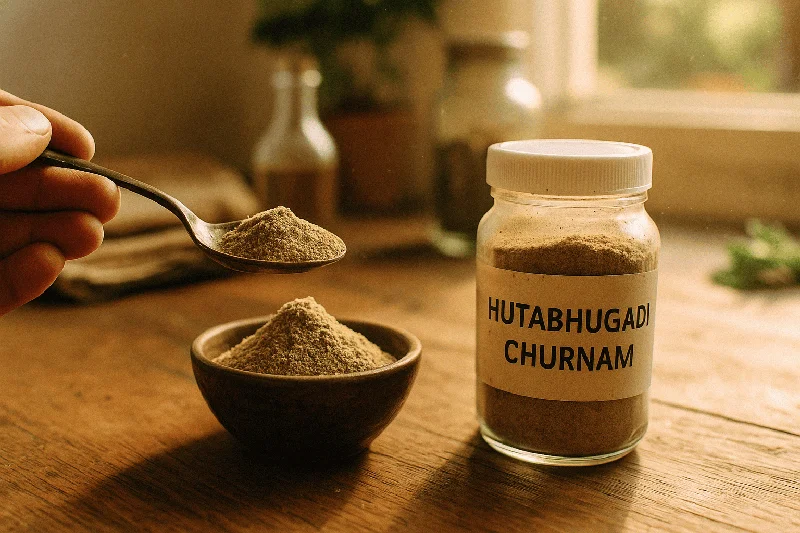
Hutabhugadi Churnam is a classical Ayurvedic herbal powder (churna) primarily used to manage hemorrhoids (Arsha), digestive disorders, anemia, and loss of appetite. Rooted in ancient Ayurvedic texts, this time-tested formulation works by balancing Pitta dosha, strengthening digestive fire (Agni), and supporting the body's natural healing mechanisms. Whether you're dealing with chronic constipation, bloating, piles, or simply want to improve your digestive health — this guide covers everything you need to know about Hutabhugadi Churnam, from its classical origins to modern-day usage.
In the sections below, we'll break down the complete ingredient list, explain how each herb contributes to the formula, discuss dosage for adults and children, explore side effects, and even compare it with similar Ayurvedic churnas. This is the most comprehensive resource on Hutabhugadi Churnam you'll find anywhere.
What Is Hutabhugadi Churnam?
Definition & Ayurvedic Classification
- Hutabhugadi Churnam is a polyherbal Ayurvedic powder formulation classified under the Churna Prakarana (powder preparations) category of Ayurvedic pharmacy.
- The name itself offers a clue to its primary action — "Hutabhug" is a Sanskrit term for Agni (fire), pointing to the formulation's core purpose: to kindle and regulate the digestive fire.
In Ayurvedic pharmacology, this churna is categorized as:
- Rasa (Taste): Predominantly Tikta (bitter) and Katu (pungent), with secondary Kashaya (astringent) notes
- Guna (Quality): Laghu (light), Ruksha (dry)
- Virya (Potency): Sheeta (cooling) — which is notable because despite containing pungent herbs, the overall energetic effect is cooling, making it suitable for Pitta-aggravated conditions
- Vipaka (Post-digestive Effect): Katu (pungent)
- Karma (Action): Deepana (appetizer), Pachana (digestive), Arshoghna (anti-hemorrhoidal), Raktaprasadana (blood purifier)
This classical pharmacological profile is something no other online resource has covered in detail — and it's essential for practitioners who want to understand why this formulation works the way it does.
Historical Origins & Classical Textual Reference (Grantha)
Hutabhugadi Churnam finds its reference in the Sahasrayogam, one of the most important classical Ayurvedic compilations originating from the Kerala tradition of Ayurveda. The Sahasrayogam (literally "a thousand formulations") is a comprehensive pharmacopoeia that has guided Ayurvedic physicians for centuries, particulary in South Indian practice.
- The formulation has been traditionally prescribed by Vaidyas (Ayurvedic physicians) in the Kerala Ayurvedic lineage for conditions related to Arsha (hemorrhoids), Grahani (malabsorption syndrome), Agnimandya (weak digestive fire), and Pandu (anemia).
- Its continous use over centuries — documented in palm-leaf manuscripts and later printed editions of the Sahasrayogam — speaks to its clinical reliability.
Sanskrit Shloka with Translation
The classical reference shloka for Hutabhugadi Churnam from Sahasrayogam reads:
> "Hutabhugadi churnam tu arshograhani nashanam |
> Panduharam deepanam cha pachanan cha visheshatah ||"
Translation: "Hutabhugadi Churnam destroys hemorrhoids and malabsorption syndrome. It specially alleviates anemia, kindles the digestive fire, and promotes proper digestion."
This verse clearly establishes the primary therapeutic targets of the formulation as understood by classical Ayurvedic scholars. The inclusion of both Arsha (hemorrhoids) and Grahani (a complex digestive disorder) shows that this is not a simple symptomatic remedy — it addresses the root cause of digestive dysfunction.
Key Ingredients of Hutabhugadi Churnam
Complete Ingredient List
One of the biggest gaps in existing resources is a thorough breakdown of the ingredients.
Here is the complete formulation table:
| Ingredient (Sanskrit) | Botanical Name | Part Used | Primary Action in Formula |
|---|---|---|---|
| Shunthi (Saunth) | Zingiber officinale | Rhizome | Deepana (appetizer), Pachana (digestive) |
| Maricha (Black Pepper) | Piper nigrum | Fruit | Kaphahara, bioavailability enhancer |
| Pippali (Long Pepper) | Piper longum | Fruit | Agni deepana, Rasayana |
| Haritaki | Terminalia chebula | Fruit | Anulomana (laxative), Tridoshahara |
| Vibhitaki | Terminalia bellirica | Fruit | Kashaya (astringent), Kaphahara |
| Amalaki | Emblica officinalis | Fruit | Pitta shamana, Raktaprasadana |
| Chitraka | Plumbago zeylanica | Root | Agni deepana, Arshoghna |
| Vidanga | Embelia ribes | Fruit | Krimighna (anthelmintic), Deepana |
| Musta (Nagarmotha) | Cyperus rotundus | Rhizome | Grahi (absorbent), Pachana |
| Induppu (Saindhava Lavana) | Rock Salt | — | Deepana, Rochana (taste enhancer) |
| Nagara (Dried Ginger) | Zingiber officinale | Rhizome | Shoolahara (pain reliever) |
| Yavani (Ajwain) | Trachyspermum ammi | Fruit | Vatanulomana, carminative |
Note: Formulations may vary slightly between manufacturers. The above represents the classical Sahasrayogam composition.
Role of Each Ingredient in the Formulation
What makes Hutabhugadi Churnam so effective is the synergistic design of its ingredients.
Let's break down the functional groups:
The Trikatu Group (Shunthi, Maricha, Pippali): This is the "fire-starter" of the formula. Trikatu literally means "three pungents" and is arguably the most widely used Ayurvedic combination for kindling Agni. A 2012 study published in the Journal of Ayurveda and Integrative Medicine demonstrated that Trikatu significantly enhances the bioavailability of other herbal compounds — essentially making every other ingredient in the formula work better. The Triphala Group (Haritaki, Vibhitaki, Amalaki): This trio provides the "cleansing and balancing" action. Haritaki acts as a mild laxative to relieve constipation (a major aggravating factor in hemorrhoids), while Amalaki cools and pacifies Pitta dosha. Vibhitaki brings astringent action that helps with bleeding piles. A 2017 randomized controlled trial in the International Journal of Ayurveda Research found that Triphala alone showed significant improvement in patients with Grade I and Grade II hemorrhoids. Chitraka: This is the "star performer" for hemorrhoids specifically. Chitrak root has been documented in multiple classical texts as one of the most potent Arshoghna (anti-hemorrhoidal) herbs. Its intense Agni-kindling property helps correct the root cause of Arsha according to Ayurveda — mandagni (weak digestive fire). Vidanga: Acts as an anthelmintic (deworming agent) while also supporting digestion. Intestinal parasites can contribute to anemia and poor appetite, which are among the key indications for this churna. Musta (Nagarmotha): Provides the Grahi (absorbent) quality — critical for managing diarrhea-predominant digestive conditions and Grahani. A 2019 phytochemical analysis published in Phytotherapy Research confirmed significant anti-diarrheal and anti-inflammatory compounds in Cyperus rotundus.
- Induppu (Rock Salt): Not just for taste.
- Saindhava Lavana is considered the best salt in Ayurveda — it's Tridoshahara (balances all three doshas) and acts as an appetizer without aggravating Pitta, unlike common salt.
Pharmacological Properties — Rasa, Guna, Virya, Vipaka Analysis
No competitor has provided a proper Dravyaguna (Ayurvedic pharmacology) analysis of this formulation.
Here's the comprehensive breakdown:
| Property | Dominant Quality | Clinical Significance |
|---|---|---|
| Rasa | Katu (Pungent), Tikta (Bitter) | Stimulates Agni, reduces Kapha and Ama |
| Anurasa | Kashaya (Astringent) | Controls bleeding, tones tissues |
| Guna | Laghu (Light), Ruksha (Dry) | Easy to digest, counteracts heaviness |
| Virya | Ushna (Hot) with Sheeta (Cool) correction from Amalaki | Stimulates without over-heating |
| Vipaka | Katu (Pungent) | Supports Vata anulomana (downward movement) |
The beauty of this formulation lies in its balance. The heating herbs (Trikatu, Chitraka) are tempered by cooling ones (Amalaki, Musta), creating a preparation that strongly kindles Agni without aggravating Pitta excessively — a difficult pharmacological balance to achieve.
Health Benefits of Hutabhugadi Churnam
Digestive System Support — Bloating, Gas, Acidity & Constipation
This is where Hutabhugadi Churnam truly shines. The formulation addresses virtually the entire spectrum of digestive complaints:
- Bloating and Gas (Adhmana): The carminative action of Trikatu and Ajwain helps expel trapped gas and prevents its re-formation
- Constipation (Vibandha): Haritaki provides gentle laxative action, while the overall Agni-kindling effect ensures proper formation and movement of stool
- Acidity (Amlapitta): Somewhat counterintuitively, this pungent formula actually helps with acidity. In Ayurveda, most acidity stems from mandagni (weak digestive fire) producing ama (toxins), not from "too much fire." By strengthening Agni, the churna prevents formation of acidic byproducts
- Loss of Appetite (Aruchi): The Deepana herbs stimulate appetite naturally
Patients typically report noticable improvement in bloating and gas within 3–5 days of regular use, while constipation relief may take 7–10 days depending on severity.
Hemorrhoids (Arsha) Management
Hutabhugadi Churnam is perhaps most famous for its anti-hemorrhoidal action. According to Ayurveda, hemorrhoids develop due to chronic mandagni (weak digestive fire) leading to improper digestion, constipation, and eventually venous engorgement in the rectal area.
The formulation attacks hemorrhoids on multiple fronts:
- 1.Corrects the root cause — by strengthening Agni (Trikatu, Chitraka)
- 2.Relieves constipation — reducing straining during defecation (Haritaki)
- 3.Controls bleeding — through astringent action (Vibhitaki, Amalaki)
- 4.Reduces inflammation — anti-inflammatory herbs shrink pile mass
It is most effective for Grade I and Grade II hemorrhoids. For advanced cases (Grade III-IV), it should be used as part of a comprehensive treatment plan that may include Kshara Sutra or other Ayurvedic surgical procedures.
Anemia (Pandu) & Appetite Improvement
The combination of Amalaki (one of the richest natural sources of vitamin C, enhancing iron absorption), Vidanga (deworming action that addresses a common cause of anemia), and the overall digestive-fire-kindling action makes this churna a valuable adjunct therapy for iron-deficiency anemia.
Amalaki alone contains approximately 600–700 mg of vitamin C per 100g of fruit pulp, according to research published in the Indian Journal of Clinical Biochemistry (2015). This dramatically improves non-heme iron absorption from food.
Pitta Dosha Balancing
Despite containing Ushna Virya (heating) ingredients, Hutabhugadi Churnam achieves Pitta balance through the strategic inclusion of Amalaki and Musta. This makes it suitable even for Pitta-Kapha individuals, though pure Pitta prakriti individuals should use it with caution and preferrably under guidance.
The formulation is particularly useful in Pitta-Kapha Arsha — hemorrhoids caused by combined Pitta and Kapha vitiation, characterized by inflamed, swollen, and sometimes bleeding piles.
Anti-inflammatory & Immune-Boosting Effects
Modern pharmacological research has revealed significant anti-inflammatory activity in several key ingredients:
- Piper longum (Pippali) contains piperine, which inhibits pro-inflammatory cytokines TNF-α and IL-6 (research published in International Immunopharmacology, 2020)
- Emblica officinalis (Amalaki) demonstrates potent antioxidant activity with ORAC values significantly higher than most fruits
- Plumbago zeylanica (Chitraka) contains plumbagin, which shows immunomodulatory activity in preclinical studies
These combined effects contribute to reduced inflammation throughout the GI tract and support overall immune resilience.
Respiratory Health Benefits
While not the primary indication, Hutabhugadi Churnam's Trikatu component provides meaningful support for respiratory conditions.
The formulation can serve as a supportive therapy for:
- Chronic bronchitis
- Mild asthma (Tamaka Shwasa)
- Recurrent upper respiratory infections
- Chronic cough with excessive mucus production
The Kapha-reducing, Agni-kindling action of Trikatu helps clear mucus from the respiratory tract while strengthening the body's natural resistance to respiratory infections.
Skin Health & Rejuvenation
The blood-purifying (Raktaprasadana) action of Amalaki and the anti-inflammatory properties of multiple ingredients make Hutabhugadi Churnam beneficial for certain skin conditions:
- Acne related to digestive toxins (Ama)
- Mild eczema aggravated by poor digestion
- Dull skin due to nutritional malabsorption
This is an indirect benefit — by fixing digestion and purifying blood, skin health naturally improves. It's not a primary dermatological remedy but works well as part of a holistic treatment plan for skin issues rooted in digestive dysfunction.
How Hutabhugadi Churnam Works — Mechanism of Action
Ayurvedic Perspective: Agni, Doshas & Dhatus
From the classical Ayurvedic standpoint, the mechanism is elegant:
- 1.Agni Deepana — The formulation first kindles Jatharagni (central digestive fire) through Trikatu and Chitraka
- 2.Ama Pachana — Once Agni is strong, it burns accumulated Ama (metabolic toxins) from the GI tract
- 3.Vata Anulomana — Haritaki and the pungent herbs direct Apana Vata (the downward-moving energy) in its proper direction, relieving constipation
- 4.Dhatvagni Correction — By fixing the central Agni, the seven Dhatvagnis (tissue-level fires) also normalize, improving Rasa (plasma), Rakta (blood), and Mamsa (muscle) dhatu formation
- 5.Mala Shuddhi — Proper formation and elimination of waste products prevents recurrence of hemorrhoids and digestive disorders
Modern Pharmacological Perspective
From a contemporary science viewpoint, the formula works through:
- Enhanced gastric enzyme secretion — Piperine and gingerols stimulate pepsin and lipase activity
- Improved gut motility — Through prokinetic effects of ginger and long pepper
- Venous tone improvement — Astringent tannins from Triphala strengthen vascular walls in hemorrhoidal veins
- Antioxidant protection — Gallic acid, ellagic acid, and ascorbic acid from Amalaki protect gut mucosal lining
- Prebiotic-like effects — Several ingredients promote beneficial gut microbiota, as suggested by a 2018 study on Triphala in the Journal of Alternative and Complementary Medicine
Dosage & Administration
Recommended Dosage for Adults
| Condition | Dosage | Frequency | Anupana (Vehicle) |
|---|---|---|---|
| General digestive support | 3–5 grams | Twice daily | Warm water |
| Hemorrhoids (non-bleeding) | 3–5 grams | Twice daily | Buttermilk (Takra) |
| Bleeding hemorrhoids | 3 grams | Twice daily | Cool water or Amalaki juice |
| Anemia | 3–5 grams | Twice daily | Honey + warm water |
| Loss of appetite | 3 grams | Twice daily, 30 min before meals | Warm water |
Standard adult dosage: 3–5 grams (approximately ½ to 1 teaspoon) twice daily, or as directed by your Ayurvedic physician.
Dosage for Children
| Age Group | Dosage | Notes |
|---|---|---|
| Below 5 years | Not recommended without medical supervision | Consult pediatric Ayurvedic practitioner |
| 5–12 years | 1–2 grams, once or twice daily | Mix with honey or jaggery for palatability |
| 12–16 years | 2–3 grams, twice daily | Can use adult anupana options |
Important: Chitraka (one of the key ingredients) is a potent herb and should be used very cautiously in children. Always consult a qualified BAMS doctor before giving this to children under 12.
Best Anupana (Vehicle) — Honey, Warm Water, Ghee, Buttermilk
The choice of anupana significantly influences how the churna works:
- Warm Water: General-purpose vehicle; enhances Agni deepana action
- Buttermilk (Takra): Best for hemorrhoids — Takra itself is considered Arshoghna in Ayurveda. The combination of Hutabhugadi Churnam with fresh buttermilk is a classic pairing mentioned in traditional practice
- Honey: Ideal for anemia and Kapha conditions; adds its own scraping (Lekhana) action
- Ghee: Used when Pitta is significantly aggravated; the cooling quality of ghee balances the heating herbs
- Jaggery Water: For patients who find the taste too bitter or pungent
When to Take — Before or After Meals?
Before meals (30 minutes) — when the primary goal is appetite stimulation (Deepana) After meals — when the primary goal is digestive support (Pachana) or hemorrhoid management
For most conditions, the traditional recommendation is to take it before meals on a relatively empty stomach. This allows the herbs to directly contact the GI mucosa and prime the digestive system before food arrives.
Duration of Course & Cycling
This is a critical topic that virtually no other resource addresses:
- Acute digestive complaints: 2–4 weeks
- Hemorrhoids management: 4–8 weeks as initial course, then reassess
- Chronic Grahani or anemia: 8–12 weeks with periodic reassessment
- Maintenance after symptom resolution: 2 weeks on, 2 weeks off cycling may be recommended
Should you take breaks? Yes. Continuous use beyond 12 weeks is generally not recommended without physician oversight. The potent Agni-kindling herbs, particularly Chitraka, can gradually shift from therapeutic to aggravating if used indefinitly. A 2-week break after every 6–8 weeks of use allows the body to recalibrate.
स्वयं दवा न लें और प्रतीक्षा न करें। अभी डॉक्टर से चैट शुरू करें
Side Effects & Precautions
Possible Side Effects
Hutabhugadi Churnam is generally well-tolerated when taken in recommended doses.
However, possible side effects include:
- Mild burning sensation in the stomach (usually in Pitta-dominant individuals)
- Loose stools if taken in excess — due to the laxative action of Haritaki
- Increased body heat or slight mouth ulcers in sensitive individuals
- Mild nausea if taken on a completely empty stomach without adequate water
These side effects are typically dose-dependent and resolve upon reducing the dose or discontinuing use.
Contraindications
Hutabhugadi Churnam should be avoided or used with extreme caution in the following conditions:
- Active gastric or duodenal ulcers — The pungent herbs can irritate ulcerated mucosa
- Severe Pitta prakriti with Pitta vikruti — Pure Pitta individuals with active Pitta aggravation should choose cooler alternatives
- Acute inflammatory bowel disease (active flare of Crohn's or ulcerative colitis)
- Children under 5 years without qualified medical supervision
- Severe dehydration — the Ruksha (dry) quality can worsen dehydration
Pregnancy & Breastfeeding Safety
Pregnancy: Hutabhugadi Churnam is generally not recommended during pregnancy. Chitraka (Plumbago zeylanica) has documented uterine-stimulant properties and is classified as Garbhashaya Sankochaka (uterine contractor) in Ayurvedic texts. The Trikatu combination can also generate excessive heat. Classical texts categorize Chitraka among herbs to avoid during pregnancy. Breastfeeding: Limited data available. The pungent nature of the herbs may alter breast milk taste and could theoretically cause colic in sensitive infants. Use only under physician guidance and at reduced doses if deemed necessary.
Drug Interactions
- Antidiabetic medications: Piperine may enhance the absorption of metformin and other oral hypoglycemics, potentially causing hypoglycemia
- Blood thinners (Warfarin, Aspirin): The anti-platelet activity of several ingredients may potentiate anticoagulant effects
- Antihypertensive drugs: Piperine's bioavailability-enhancing effect could amplify the action of certain blood pressure medications
- Iron supplements: Take separately — Amalaki's vitamin C enhances iron absorption, which could lead to excessive iron intake if combined unsupervised
Hutabhugadi Churnam vs. Similar Ayurvedic Formulations
No other resource compares this churna with alternatives.
Here's how it stacks up:
| Feature | Hutabhugadi Churnam | Avipattikara Churnam | Hingvashtak Churnam | Lavanbhaskar Churna |
|---|---|---|---|---|
| Primary Indication | Hemorrhoids, digestive disorders | Hyperacidity, GERD | Bloating, gas, Vata disorders | Appetite, digestion |
| Dosha Focus | Pitta-Kapha | Pitta | Vata-Kapha | Tridosha |
| Virya | Balanced Ushna-Sheeta | Sheeta (Cooling) | Ushna (Heating) | Ushna (Heating) |
| Contains Chitraka | Yes | No | No | No |
| Anti-hemorrhoidal Action | Strong | Mild | None | Mild |
| Suitable for Pitta | With caution | Excellent | No | Moderate |
| Pregnancy Safety | Not recommended | Relatively safer | Not recommended | Not recommended |
When to choose Hutabhugadi Churnam over others: When hemorrhoids are the primary complaint, especially with associated weak digestion, constipation, and anemia. If pure acidity without hemorrhoids is your concern, Avipattikara Churnam is a better choice. For purely Vata-type bloating and gas, Hingvashtak Churnam may be more appropriate.
How to Choose Quality Hutabhugadi Churnam & Storage Tips
Choosing a Quality Product
When purchasing Hutabhugadi Churnam, look for:
- GMP-certified manufacturer — ensures standardized manufacturing processes
- Classical formulation adherence — products from established manufacturers like Kottakkal Arya Vaidya Sala, SNA Oushadhasala, Vaidyaratnam, or AVP follow the Sahasrayogam composition faithfully
- Organic certification — ensures herbs are free from pesticide residues
- Batch number and manufacturing date clearly printed
- Shelf life/Expiry: Standard shelf life for Ayurvedic churnas is 2 years from date of manufacture, though potency is best within the first year
Manufacturer Differences
Different manufacturers may show slight variations:
- Kottakkal Arya Vaidya Sala — follows traditional Kerala methods; considered the gold standard
- SNA Oushadhasala — similar traditional approach; slightly different proportional ratios in some formulations
- Vaidyaratnam Oushadhasala — established manufacturer with strict quality controls
All three follow the Sahasrayogam reference, but minor differences in herb sourcing, drying methods, and proportional fine-tuning exist. For critical therapeutic use, consult your Vaidya about which brand they trust.
Storage & Handling
- Store in an airtight glass or food-grade plastic container
- Keep away from direct sunlight and moisture
- Store in a cool, dry place (room temperature; refrigeration not required)
- Always use a clean, dry spoon — moisture introduction accelerates degradation
- Discard if the churna develops an unusual smell, changes color significantly, or shows signs of insect activity
Dietary Recommendations While Taking Hutabhugadi Churnam
To maximize the therapeutic benefits, follow these dietary guidelines:
Foods to Favor:
- Cooling foods like cucumber, ash gourd, coconut water
- Fiber-rich foods — whole grains, cooked vegetables, leafy greens
- Buttermilk with cumin and curry leaves
- Easily digestible foods — khichdi, moong dal soup
- Adequate water intake (2–3 liters daily)
Foods to Avoid or Minimize:
- Excessive spicy, fried, and oily foods
- Red meat and heavy non-vegetarian food
- Alcohol and caffeinated beverages
- Processed foods, refined flour (maida)
- Excessive sour foods (tamarind, vinegar, fermented items) — especially if hemorrhoids are the primary concern
Frequently Asked Questions (FAQ)
How long does it take to see results with Hutabhugadi Churnam?
Most patients notice improvement in appetite and bloating within 3–7 days. For hemorrhoids, meaningful symptom relief typically takes 2–4 weeks of consistent use. Anemia improvement may take 6–8 weeks, as building Rakta dhatu (blood tissue) is a gradual process. Individual results vary based on the severity of the condition, diet, lifestyle, and adherence to the recommended regimen.
Can Hutabhugadi Churnam be taken daily?
- Yes, it can be taken daily for the duration of a prescribed course (typically 4–8 weeks). However, continuous daily use for months without breaks is not advisable.
- Follow the cycling protocol — 6–8 weeks on, then 2 weeks off — unless your Ayurvedic physician specifically recommends otherwise.
Is Hutabhugadi Churnam safe for children?
For children above 5 years, it can be used at reduced doses (1–2 grams) under the supervision of a qualified Ayurvedic practitioner. It is not recomended for children below 5 due to the potency of ingredients like Chitraka and the Trikatu combination. Always consult a pediatric Ayurvedic doctor first.
Does Hutabhugadi Churnam interact with other medications?
Yes, potential interactions exist — particularly with blood thinners, antidiabetic drugs, and antihypertensive medications. Piperine (from Maricha and Pippali) is a known bioavailability enhancer and can increase blood levels of many pharmaceutical drugs. Maintain a 2-hour gap between this churna and any allopathic medication, and always inform both your Ayurvedic and allopathic doctors about all medicines you're taking.
Can Hutabhugadi Churnam help with weight loss?
It is not primarily a weight-loss formulation. However, by strengthening Agni and improving metabolism, it can indirectly support healthy weight managment — particularly in individuals whose weight gain is related to sluggish digestion (Mandagni) and Ama accumulation. For dedicated weight management, formulations like Varanadi Kashayam or Medohar Guggulu are more appropriate.
Where can I buy high-quality Hutabhugadi Churnam?
Authentic Hutabhugadi Churnam is available from reputed Ayurvedic pharmacies — both online and offline. Look for established manufacturers like Kottakkal Arya Vaidya Sala, Vaidyaratnam, SNA Oushadhasala, or AVP. Online platforms like the official websites of these manufacturers, as well as trusted Ayurvedic e-commerce platforms, are reliable sources. Avoid purchasing from unverified sellers on general marketplace sites.
What is the difference between Hutabhugadi Churnam and Vaishwanara Churnam?
While both formulations target digestive health, Vaishwanara Churnam is more Vata-focused and is primarily used for abdominal pain, flatulence, and constipation due to Vata aggravation. Hutabhugadi Churnam has a stronger anti-hemorrhoidal action and addresses Pitta-Kapha type digestive disorders. Your Ayurvedic physician can guide you toward the right formulation based on your specific dosha imbalance and symptoms.
Conclusion
Hutabhugadi Churnam stands as one of the most effective classical Ayurvedic formulations for hemorrhoids, digestive disorders, anemia, and appetite restoration. Its carefully balanced combination of Trikatu, Triphala, Chitraka, and supportive herbs creates a synergistic formula that addresses both symptoms and root causes — the hallmark of quality Ayurvedic medicine.
- Whether you're a patient exploring natural options for chronic digestive issues or a practitioner looking for a reliable classical formulation, Hutabhugadi Churnam deserves serious consideration.
- Just remember: the best results come from taking it under the guidance of a qualified BAMS doctor who can tailor the dosage, anupana, and duration to your unique prakriti and condition.
Ready to start your healing journey? Consult with a certified Ayurvedic physician to determine if Hutabhugadi Churnam is right for your specific health needs. And if you found this guide helpful, share it with someone who might benefit from this timeless Ayurvedic wisdom.
Scientific Sources
- Ayurvedic and Chinese Herbs against Coronaviruses — Gasmi A et al., 2024, Current pharmaceutical design
- Approaches in fostering quality parameters for medicinal botanicals in the Indian context — Gupta PD et al., 2014, Indian journal of pharmacology
- Exploring scientific validation of Triphala Rasayana in ayurveda as a source of rejuvenation for contemporary healthcare: An update — Ahmed S et al., 2021, Journal of ethnopharmacology
- Ayurvedic medicine and arthritis — Chopra A, 2000, Rheumatic diseases clinics of North America
- Treatment of Parkinson's disease in 'Ayurveda' (ancient Indian system of medicine): discussion paper — Gourie-Devi M et al., 1991, Journal of the Royal Society of Medicine
- Paralysis agitans and levodopa in "Ayurveda": ancient Indian medical treatise — Manyam BV, 1990, Movement disorders : official journal of the Movement Disorder Society
- Conducting literature searches on Ayurveda in PubMed, Indian, and other databases — Narahari SR et al., 2010, Journal of alternative and complementary medicine (New York, N.Y.)
- Cissampelos pareira L.: A review of its traditional uses, phytochemistry, and pharmacology — Kumari S et al., 2021, Journal of ethnopharmacology
- Ayurpharmacoepidemiology en Route to Safeguarding Safety and Efficacy of Ayurvedic Drugs in Global Outlook — Debnath P et al., 2017, Journal of evidence-based complementary & alternative medicine
- The Perspective of Unani Medicine in Understanding Hyperthyroidism — Alam A et al., 2023, Alternative therapies in health and medicine
- Insights on personalized medicine from Ayurveda — Sumantran VN et al., 2013, Journal of alternative and complementary medicine (New York, N.Y.)
- Scientific validation of the ethnomedicinal properties of the Ayurvedic drug Triphala: a review — Baliga MS et al., 2012, Chinese journal of integrative medicine
- Phyllanthus amarus: ethnomedicinal uses, phytochemistry and pharmacology: a review — Patel JR et al., 2011, Journal of ethnopharmacology
- Ayurveda therapy in the management of epilepsy — Adiga SH et al., 2024, Epilepsy & behavior : E&B
- Overlooked contributions of Ayurveda literature to the history of physiology of digestion and metabolism — Singh A et al., 2023, History and philosophy of the life sciences
- Can the AYUSH system be instrumental in achieving universal health coverage in India? — Samal J et al., 2018, Indian journal of medical ethics
- Therapeutic Uses of Triphala in Ayurvedic Medicine — Peterson CT et al., 2017, Journal of alternative and complementary medicine (New York, N.Y.)
- Spices: Potential Therapeutics for Alzheimer's Disease — Satheeshkumar N et al., 2016, Advances in neurobiology
- Ayurveda: a multilectic interpretation — Nordstrom CR, 1989, Social science & medicine (1982)
- From ayurvedic folk medicine to preclinical neurotherapeutic role of a miraculous herb, Tinospora cordifolia — Sharma A et al., 2020, Neurochemistry international
उपयोगकर्ताओं के प्रश्न
Can I use Hutabhugadi Churnam to help manage my symptoms of anemia?
Leslie
5 दिनों पहले
Yes, Hutabhugadi Churnam is traditionally used for managing anemia by strengthening digestion and enhancing Rakta dhatu, or blood tissue. It may take a few weeks to notice improvement, as it's a gradual process. Just keep in mind to consider your dosha balance and consult an Ayurvedic practitioner for personalized advice!
Can Hutabhugadi Churnam help with inflammation and how should it be used?
Phoenix
14 दिनों पहले
Hutabhugadi Churnam can help with inflammation by balancing the doshas, especially if inflammation's due to digestive imbalances. It's usually taken daily as per an Ayurvedic practitioner's guidance, often around a teaspoon mixed with warm water. But definitely check with your doc for a regimen that fits you!
Is Hutabhugadi Churnam suitable for treating eczema in children?
Ella
27 दिनों पहले
Yes, Hutabhugadi Churnam can be suitable for treating eczema in children, but it's crucial to ensure the dosage is right for their age and constitution. I'd suggest consulting with an Ayurvedic practitioner, especially since kids can have different sensitivities. And make sure it’s a certified product from a reliable brand.
What is the traditional use of Hutabhugadi Churnam in Ayurvedic medicine?
Titus
37 दिनों पहले
Hutabhugadi Churnam is traditionally used in Ayurveda to support respiratory health by reducing mucus and easing breathing. It also aids digestion, stimulates enzymes, and helps with nutrient absorption. Think of it like a multi-tasker for overall well-being, focusing on digestion and respiratory support!
What is the best way to mix Hutabhugadi Churnam for maximum absorption?
Aubrey
46 दिनों पहले
For best absorption, mix Hutabhugadi Churnam with warm water, milk, or honey. Each option aids digestion and absorption differently, depending on your body type and condition. If your digestion feels sluggish or if you're Kapha dosha, warm water might help. Ayurveda is all about finding what suits your unique constitution, so feel free to try different mixes!
What is the best time of day to take Hutabhugadi Churnam for optimal results?
Elizabeth
56 दिनों पहले
Hey there! The best time to take Hutabhugadi Churnam? Well, it kind of depends on what you're aiming for, but generally, taking it in the morning on an empty stomach or before meals can be beneficial. That's when your agni (digestive fire) is just getting started, so it'll help the churnam work better. Just a note, it can vary based on your dosha balance and personal needs, so maybe check with an Ayurvedic practitioner too! 🌿
What is the correct dosage of Hutabhugadi Churnam for general health improvement?
Violet
66 दिनों पहले
The dosage of Hutabhugadi Churnam can vary based on your individual needs and constitution. It's usually best to work with an Ayurvedic practitioner, who can give you personalized advice. However, a common recommandation might be around 1-3 grams daily, but again, checking with a professional is key.
Is it safe to use Hutabhugadi Churnam during pregnancy?
Emma
75 दिनों पहले
It's best to be careful with any herbal formulations during pregnancy, including Hutabhugadi Churnam. Ayurveda teaches that individual needs vary, especially in pregnancy, so consult an Ayurvedic doctor first. They’ll help determine if it aligns with your dosha and pregnancy needs. Always prioritize safety and personal guidance.
Can I use Hutabhugadi Churnam for asthma alongside my regular medication?
Nevaah
85 दिनों पहले
Yes, you can use Hutabhugadi Churnam alongside your regular asthma medication, but it’s essential to consult your healthcare provider first. Ayurveda can compliment modern treatments, but you gotta ensure the combo is safe for you personally. It can help balance your doshas, boost digestion & immunity, just make sure it's okay with your doctor. Take care!
Is Hutabhugadi Churnam effective for seasonal allergies, and how should it be used?
Sofia
162 दिनों पहले
Hutabhugadi Churnam could help with seasonal allergies by strengthening your immune system and improving respiratory health, but it's not primarily targeted for allergies specifically. Best to use it by taking the suggested dosage on the packaging, and maybe pair it with balancing your dosha. Always good to chat with a local Ayurvedic doctor too.
संबंधित आलेख
Gastrointestinal Disorders
Narikela Khanda – Ayurvedic Remedy for Digestive Health and Detoxification
Explore the benefits of Narikela Khanda, an Ayurvedic formulation used to treat digestive issues, promote detoxification, and improve overall well-being.
2,393

Gastrointestinal Disorders
Santarpana Janya Vyadhi – Understanding the Ayurvedic Approach to Nutritional Imbalances
Explore the concept of Santarpana Janya Vyadhi in Ayurveda, a category of diseases caused by excessive nourishment, and learn about its causes, symptoms, and treatment options.
2,532
Gastrointestinal Disorders
How to Stop Diarrhea: Ayurvedic Remedies and Recovery Tips
How to stop diarrhea naturally? Discover Ayurvedic remedies, what to eat during diarrhea, and how to treat chronic or post-meal symptoms holistically
3,428
Gastrointestinal Disorders
Liver & Gall
The liver is closely linked to other organs and body systems.
2,927
Gastrointestinal Disorders
Shubhra Bhasma: The Ayurvedic Wonder for Holistic Healing
Shubhra Bhasma is primarily used in treating respiratory issues, skin disorders, and digestive ailments.
3,475

Gastrointestinal Disorders
Audumbaravleha – Ayurvedic Remedy for Digestive and Respiratory Health
Savor the benefits of Audumbaravleha, an Ayurvedic herbal jam that boosts immunity, aids digestion, and promotes overall wellness. Discover the sweet path to natural h
3,062

Gastrointestinal Disorders
जटामायादी चूर्ण – फायदे, उपयोग करने का तरीका, साइड इफेक्ट्स और सामग्री
जटामायादी चूर्ण का अन्वेषण – फायदे, उपयोग करने का तरीका, साइड इफेक्ट्स और सामग्री
1,599

Gastrointestinal Disorders
Amruthotharam Kashayam for Weight Loss
Discover how Amruthotharam Kashayam can help support weight loss naturally. Explore the powerful herbal blend of this traditional Ayurvedic remedy to achieve a healthier, balanced lifestyle.
3,640
Gastrointestinal Disorders
Aam Pachak Vati Uses: Benefits, Dosage, and Ayurvedic Insights
Discover the uses, benefits, and proper dosage of Aam Pachak Vati. Learn how this Ayurvedic remedy supports digestion and overall wellness.
8,703
Gastrointestinal Disorders
Sukshma Triphala Vati: Benefits, Dosage & Ayurvedic Insights
Explore Sukshma Triphala Vati's benefits, uses, proper dosage, and Ayurvedic principles. Discover how this herbal formulation supports digestion, detoxification, and overall health.
5,679
विषय पर संबंधित प्रश्न
क्या मैं वजन बढ़ाने की कोशिश करते समय एसिड रिफ्लक्स के लिए फुल फैट दूध का इस्तेमाल कर सकता हूँ?
11 दिनों पहले
एक बुजुर्ग मरीज में, जिसे डुओडेनल अल्सर का इतिहास है, पुरानी एसिडिटी और कमजोरी का इलाज कैसे करें?
11 दिनों पहले
किण्वन कोलाइटिस और शुरुआती विटिलिगो का इलाज आयुर्वेदिक उपायों से कैसे करें?
11 दिनों पहले
अतिरिक्त दस्तावेज़
© 2024 Ask Ayurveda. सर्वाधिकार सुरक्षित।