आयुर्वेदिक डॉक्टर से प्रश्न पूछें और निःशुल्क या भुगतान मोड में अपनी चिंता की समस्या पर ऑनलाइन परामर्श प्राप्त करें। 2,000 से अधिक अनुभवी डॉक्टर हमारी साइट पर काम करते हैं और आपके प्रश्नों का इंतजार करते हैं और उपयोगकर्ताओं को उनकी स्वास्थ्य समस्याओं को हल करने में प्रतिदिन मदद करते हैं।


Body DetoxEar, Nose, and Throat DisordersGeriatrics & RejuvenationImmunodeficiencyInfertility TreatmentNutritionOrthopedic DisordersPediatricsRespiratory DisordersSexually Transmitted Diseases (STDs)Surgery RecoveryUrological DisordersVascular DisordersDental DisordersEndocrinological DisordersGastrointestinal DisordersYoga TherapyGeneral MedicineAllergic DisordersCardio DisordersGynecology and ObstetricsCosmetologySkin and Hair DisordersEye DisordersInfectious DiseasesMental DisordersNeurological DisordersOncologyPanchakarmaSexual Health & DisordersSports Medicine
पर प्रकाशित 01/30/25
(को अपडेट 08/08/26)
star_border 5
3,947
Amlapitta Samprapti – Understanding the Pathogenesis of Acid Reflux in Ayurveda
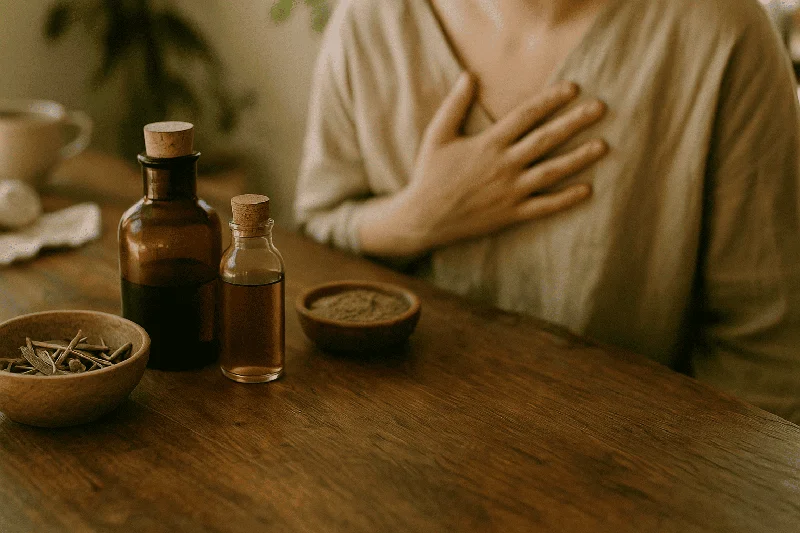
Amlapitta Samprapti describes the step-by-step pathological process through which vitiated Pitta dosha, weakened Agni, and accumulation of Ama collectively give rise to the clinical condition known as Amlapitta — the Ayurvedic equivalent of hyperacidity, acid reflux, and GERD. Understanding this Samprapti is not just academic; it is the very foundation upon which an Ayurvedic physician builds the entire treatment strategy. Without clarity on how the disease forms, stage by stage, there's no way to intervene at the right moment.
In this comprehensive guide, we walk through every element of Amlapitta Samprapti — from the initial causative factors (Nidana) to the final manifestation of symptoms (Vyakti) — including the often-overlooked Shat Kriyakala framework that no other resource seems to cover in full detail. Whether you're a BAMS student, Ayurvedic practitioner, or someone genuinely curious about how Ayurveda explains acid reflux at a pathological level, this article is designed to be the most thorough resource available.
What Is Amlapitta? Definition, Etymology, and Modern Correlation
- The term Amlapitta is a compound of two Sanskrit words: Amla (sour) and Pitta (the biological humor governing digestion, metabolism, and transformation).
- Literally, it means "sour Pitta" — a state where Pitta dosha loses its normal Katu (pungent) and Tikta (bitter) qualities and instead takes on an excessively Amla (sour) nature.
Sushruta Samhita provides a critical distinction here: Prakrita Pitta possesses Katu and Tikta rasa, while Vidagdha Pitta (pathological Pitta) transforms into Amla rasa. This transformation from normal to abnormal Pitta is essentially the biochemical crux of Amlapitta Samprapti. Kashyapa Samhita is one of the earliest texts to describe Amlapitta as a distinct clinical entity, and Madhava Nidana further elaborated its pathogenesis in detail.
How Does Amlapitta Correlate with Modern Medical Conditions?
In contemporary medicine, Amlapitta correlates closely with:
- Hyperacidity (excess HCl secretion in the stomach)
- Gastroesophageal Reflux Disease (GERD)
- Non-erosive reflux disease
- Functional dyspepsia
- Acid peptic disease and gastritis
A 2018 epidemiological review published in the International Journal of Research in Ayurveda and Pharmacy estimated that approximately 25–30% of the Indian population suffers from symptoms consistent with Amlapitta at any given time, making it one of the most prevalent Annavaha Srotovikara (gastrointestinal disorders) encountered in Ayurvedic clinical practice.
The modern pathophysiology — involving excess gastric acid, impaired mucosal defense, vagal nerve overstimulation, and sometimes Helicobacter pylori infection — parallels the Ayurvedic understanding in remarkable ways, as we'll explore throughout this article.
What Causes Amlapitta in Ayurveda? (Nidana – Etiological Factors)
The Samprapti of any disease begins with Nidana (causative factors). Amlapitta doesn't appear overnight. It is the cumulative result of repeated dietary and lifestyle errors that progressively vitiate Pitta and impair Agni.
Aharaja Nidana (Dietary Causes)
These are the most frequently cited causes across classical texts:
| Dietary Factor | Sanskrit Term | Explanation |
|---|---|---|
| Sour foods in excess | Amla Ahara Sevana | Pickles, citrus fruits, fermented foods, tamarind |
| Pungent/spicy foods | Katu Ahara | Chillies, pepper, excessive spices |
| Burning/heating foods | Vidahi Ahara | Foods causing burning sensation — fried items, alcohol |
| Incompatible food combinations | Viruddha Ahara | Fish with milk, honey with hot water, etc. |
| Eating before previous meal digests | Adhyashana | Overloading an already working digestive system |
| Irregular meal timings | Vishamashana | Eating at inconsistent times, skipping meals |
| Stale or reheated food | Paryushita Ahara | Day-old cooked food, repeatedly reheated meals |
Viharaja Nidana (Lifestyle Causes)
- Divaswapna (daytime sleeping, especially after meals)
- Vegadharana (suppression of natural urges — particularly those of vomiting, belching, and flatus)
- Ratri Jagarana (staying up late at night)
- Excessive physical exertion or complete sedentariness — both extremes disturb Agni
Is Stress a Major Factor in Amlapitta?
Absolutely. Classical Ayurveda identifies Krodha (anger), Shoka (grief), Bhaya (fear), and Chinta (excessive worry) as significant Manasika Nidana (psychological causes). These mental states directly aggravate Pitta dosha through the Manovaha Srotas.
Modern research supports this connection. A 2020 study in Gut journal demonstrated that psychological stress increases gastric acid secretion via the hypothalamic-pituitary-adrenal axis and vagal stimulation — essentially the same mechanism Ayurveda described centuries ago, just in different language. Stress-induced Pitta Prakopa is not a metaphor; it has measurable physiological correlates.
Amlapitta Samprapti Explained Step by Step (The Complete Pathogenesis Chain)
This is the heart of the article. The Samprapti of Amlapitta follows a predictable chain of events. Let's trace it precisely.
Stage 1: Nidana Sevana → Pitta Prakopa
Repeated consumption of Pittakara Ahara and Vihara leads to progressive aggravation of Pitta dosha, particularly Pachaka Pitta seated in the Grahani (duodenum) and Amashaya (stomach). The normally balanced Pitta begins to accumulate beyond its physiological limits.
Stage 2: Pitta Prakopa → Jatharagni Mandya
Here's where things get interesting. You'd expect aggravated Pitta to mean stronger digestion, since Pitta and Agni are closely related. But the opposite happens.
- When Pitta becomes Vidagdha (vitiated with Amla guna predominance), it actually deranges Jatharagni rather than strengthening it.
- The result is Agnimandya — weakened or irregular digestive fire. This is a crucial mechanistic point that many students miss. Vitiated Pitta does not equal strong Agni. Vitiated Pitta disrupts Agni.
Stage 3: Agnimandya → Ama Utpatti
- With Jatharagni functioning below par, ingested food is no longer properly digested.
- This leads to the formation of Ama — the toxic, undigested metabolic waste that Ayurveda considers the root of most diseases.
- The food undergoing fermentation (Shukta Parinamana) rather than proper digestion (Pakva Avastha) creates a toxic, sour, foul-smelling residue.
- This is Vidagdhajirna — acid indigestion — which many scholars identify as the Purvarupa (prodromal sign) of Amlapitta.
Stage 4: Ama + Vidagdha Pitta → Pitta-Ama Sammurchhana (The Point of No Return)
- This is arguably the most critical stage in Amlapitta Samprapti, and it is the stage that only a few classical scholars have elaborated on in depth.
- The Ama produced by faulty digestion doesn't just sit there — it combines with the already vitiated Pitta in a process called Pitta-Ama Sammurchhana or sometimes described as Pitta-Amavisha Sammurchhana.
- This fusion creates a pathological complex that is simultaneously toxic (from Ama) and corrosive (from Vidagdha Pitta). The Shukta (fermented, acidified substance) merges with Amla-predominant Pitta, creating a self-reinforcing cycle of acidity.
- Think of it as a biochemical vicious cycle: the more acid, the more fermentation; the more fermentation, the more acidity.
In modern terms, this parallels the cycle where excess HCl damages the mucosal lining, leading to inflammatory mediators that further stimulate acid secretion, and bacterial overgrowth in a stagnant gastric environment compounds the problem.
Stage 5: Shuktata → Amlapitta Lakshanas (Symptom Manifestation)
The Pitta-Ama complex now overflows from the Amashaya and begins affecting Annavaha Srotas and adjacent systems. Depending on the direction of movement, the condition manifests as either Urdhwaga or Adhoga Amlapitta (discussed below). At this stage, full clinical symptoms appear.
Shat Kriyakala in Amlapitta Samprapti — The Six-Stage Framework
This is a significant gap in existing literature online. No competitor has systematically mapped Amlapitta Samprapti onto the Shat Kriyakala (six stages of disease progression) described by Sushruta.
Here's that mapping:
| Kriyakala Stage | What Happens in Amlapitta | Clinical Significance |
|---|---|---|
| 1. Sanchaya (Accumulation) | Pitta gradually accumulates in its own site (Amashaya/Grahani) due to Pittakara Nidana. Mild yellowish discoloration, slight warmth in abdomen. | Best time to intervene — simple dietary correction can reverse the process |
| 2. Prakopa (Aggravation) | Accumulated Pitta becomes aggravated. Sour eructations begin, mild burning sensation in epigastric region. Pitta starts losing normal qualities. | Langhana and Pitta-shamana measures are highly effective here |
| 3. Prasara (Spreading) | Vitiated Pitta overflows from Amashaya and begins spreading via Srotas. Combines with Vata (Samana and Apana) for movement. | This is where directional movement begins — determining Urdhwaga vs Adhoga |
| 4. Sthanasamshraya (Localization) | Pitta-Ama complex lodges in Kha-vaigunya (weakened tissue spaces) — typically the gastric mucosa, esophageal junction, or intestinal lining. | Prodromal symptoms (Vidagdhajirna) appear; disease is now localised but not yet fully manifest |
| 5. Vyakti (Manifestation) | Full clinical picture of Amlapitta emerges — Hrit daha, Kanta daha, Tikta-Amla Udgara, Chardi, Aruchi, etc. | This is when most patients actually seek treatment — unfortunately, we're already at stage 5 |
| 6. Bheda (Complications) | Chronic, untreated Amlapitta leads to Parinama Shula (peptic ulcers), Rakta Pitta (GI bleeding), Grahani roga, and systemic Pitta vitiation affecting Twak (skin), Rakta (blood), etc. | At this stage, disease may become Yapya (manageable but not fully curable) or even Asadhya (incurable) |
Understanding this framework gives clinicians a precise roadmap for intervention. The tragedy is that most patients present at Vyakti stage (stage 5), when simple Sanchaya-stage interventions — like avoiding Viruddha Ahara — could have prevented the entire cascade.
Classification of Amlapitta: Urdhwaga, Adhoga, and Dosha-Predominant Types
Urdhwaga Amlapitta (Upward-Moving)
When the Pitta-Ama complex moves upward (Urdhwa gati), driven by vitiated Udana Vata, it produces:
- Chardi (vomiting — often greenish, yellowish, or sour)
- Tikta Udgara and Amla Udgara (bitter and sour eructations)
- Hrit Daha (burning in the cardiac/chest region)
- Kanta Daha (throat burning)
- Utklesha (nausea)
This type correlates most closely with GERD and esophageal reflux in modern medicine.
Adhoga Amlapitta (Downward-Moving)
When the complex moves downward (Adho gati), influenced by Apana Vata, symptoms include:
- Atisara (diarrhea, often with greenish or yellowish color)
- Udara Shoola (abdominal pain/cramping)
- Shotha (abdominal distension)
- Skin manifestations — Kotha (urticaria), Pidaka (papules/eruptions)
This type more closely resembles acid peptic disease with intestinal involvement.
Dosha-Predominant Subtypes (Detailed Classification)
Beyond the directional classification, Madhava Nidana and commentaries describe dosha-predominant subtypes that are rarely discussed but clinically very important:
Vatadhika Amlapitta
- Tremors, body ache, spasmodic abdominal pain
- Variable appetite
- Astringent taste in the mouth along with sour
Kaphadhika Amlapitta
- Heavy, dull feeling, excessive salivation
- Nausea predominates over burning
- Sweet and sour taste, coated tongue
- Vomiting of Kapha-mixed sour material
Vata-Kaphadhika Amlapitta
- Mixed symptom presentation
- Both heaviness and variable pain
- Most complex to treat as it involves Tridosha management
स्वयं दवा न लें और प्रतीक्षा न करें। अभी डॉक्टर से चैट शुरू करें
Samprapti Ghataka – Components of Amlapitta Pathogenesis
A systematic Samprapti Ghataka (disease component analysis) is essential for planning Samprapti Vighatana (breaking the pathogenesis chain).
Here's the complete breakdown:
| Component | Specific Involvement in Amlapitta |
|---|---|
| Dosha | Pitta (Pachaka, Sadhaka) primarily; Samana Vata, Kledaka Kapha secondarily |
| Dushya | Rasa Dhatu (primarily), Rakta Dhatu (in chronic cases) |
| Srotas | Annavaha Srotas (primary), Rasavaha Srotas, Purishavaha Srotas (in Adhoga type) |
| Srotodusti Prakara | Atipravritti (excessive secretion), Vimargagamana (abnormal flow direction) |
| Agni | Jatharagni Mandya (weakened digestive fire) — this is the pivotal derangement |
| Ama | Present — Vidagdha Ama, Shukta (fermented, acidified Ama) |
| Udbhava Sthana | Amashaya (stomach) |
| Vyakta Sthana | Amashaya, Ura (chest), Kanta (throat) in Urdhwaga; Pakwashaya, Twak in Adhoga |
| Vyadhi Marga | Abhyantara (internal disease pathway) |
| Vyadhi Swabhava | Ashukari (quick onset), Chirakari (becomes chronic if untreated) |
| Sadhyasadhyata | Nava (new) — Sadhya (curable); Jeerna (chronic) — Yapya (manageable); with complications — Asadhya |
Seasonal Factors in Amlapitta Samprapti (The Role of Ritu)
One often-neglected dimension of Amlapitta Samprapti is the role of seasonal cycles, which Ayurveda describes through Ritucharya.
According to the principle of Sanchaya-Prakopa-Prashama, Pitta dosha undergoes:
- Sanchaya (accumulation) during Varsha Ritu (monsoon season, roughly July–September)
- Prakopa (aggravation) during Sharad Ritu (autumn, roughly October–November)
- Prashama (natural pacification) during Hemanta Ritu (early winter)
This explains a well-documented clinical pattern: Amlapitta cases surge during Sharad Ritu. The monsoon's humidity, weakened Agni, and consumption of Pitta-aggravating foods create a perfect storm. By autumn, the accumulated Pitta reaches Prakopa and, with any additional trigger, rapidly progresses through the Samprapti chain.
Practitioners who understand this seasonal vulnerability can implement preventive Virechana (therapeutic purgation) during Sharad Ritu — a practice specifically recommended by Charaka — to eliminate excess Pitta before it progresses to clinical Amlapitta.
Diagnosis of Amlapitta: Ashtavidha Pareeksha and Vidagdhajirna as Purvarupa
Vidagdhajirna — The Prodromal Warning Sign
Vidagdhajirna (acid indigestion) is identified in classical texts as the Purvarupa of Amlapitta.
Its symptoms include:
- Burning sensation during digestion
- Sour belching during or shortly after meals
- Excessive thirst
- Giddiness
- Delayed but acidic bowel movements
Recognizing Vidagdhajirna is clinically vital because it represents Sthanasamshraya Kriyakala — the disease has localized but hasn't fully manifested. Intervention at this stage (through dietary correction and mild Pitta Shamana) can halt the Samprapti entirely.
Ashtavidha Pareeksha (Eight-fold Examination) Findings
| Parameter | Typical Finding in Amlapitta |
|---|---|
| Nadi (Pulse) | Pitta-predominant — sharp, jumping, warm |
| Mutra (Urine) | Deep yellow, may have burning sensation (Daha) |
| Mala (Stool) | Loose, may be yellowish-green; foul-smelling |
| Jivha (Tongue) | Coated (Saam), yellowish coating; Vidagdha appearance |
| Shabda (Voice) | May be normal or slightly hoarse if Kanta Daha is present |
| Sparsha (Touch/Skin) | Warm to touch, may show Daha on palpation of epigastric region |
| Druk (Eyes) | Mild yellowish discoloration of sclera possible in chronic cases |
| Akruti (Build) | Often Pitta prakriti individuals; may show weight loss in chronic Amlapitta |
How Can Ayurveda Treat Amlapitta? (Chikitsa Based on Samprapti Vighatana)
Treatment of Amlapitta follows the principle of Samprapti Vighatana — systematically breaking each link in the pathogenesis chain. Each therapeutic intervention targets a specific Samprapti component.
Can Panchakarma Help in Treating Amlapitta?
Yes, and it is actually the frontline therapy for moderate to severe cases:
- Vamana (Therapeutic Emesis): Specifically indicated for Urdhwaga Amlapitta where Kapha-Pitta vitiation is prominent. It eliminates the Pitta-Ama complex from the upper GI tract.
- Virechana (Therapeutic Purgation): The treatment of choice for both types, but especially Adhoga Amlapitta. Virechana directly eliminates vitiated Pitta from its primary seat. Charaka specifically recommends Sharad Ritu Virechana as preventive therapy.
In What Conditions Shall Emesis and Purgation Be Given?
- Vamana: When Urdhwaga symptoms predominate (vomiting, nausea, sour eructations), when Kapha association is strong, when Ama is predominantly in Amashaya
- Virechana: When Adhoga symptoms predominate, when Pitta vitiation is primary without significant Kapha, in chronic cases, and as a seasonal preventive measure in Sharad Ritu
Note: Vamana and Virechana should only be administered after proper Snehana (oleation) and Swedana (sudation), and only by a qualified Panchakarma practitioner. These are not home remedies.
Shamana Chikitsa (Palliative Medications)
Specific Ayurvedic formulations target different Samprapti components:
| Formulation | Primary Action on Samprapti |
|---|---|
| Kamadudha Rasa | Directly pacifies Vidagdha Pitta; reduces Daha (burning) |
| Avipattikar Churna | Corrects Agnimandya, reduces Ama, normalizes Pitta; one of the most widely used formulations |
| Sutshekhar Rasa | Pitta Shamana with Vata Anulomana; especially useful in Vatadhika Amlapitta |
| Hingvashtak Churna | Primarily Agni Deepana; addresses the Agnimandya component |
| Prawal Pishti / Prawal Bhasma | Cooling, alkalinizing; directly neutralizes Amla guna of Pitta |
| Shatavari Ghrita | Pitta Shamana with mucosal protection; useful in chronic erosive conditions |
Pathya-Apathya (Dietary Do's and Don'ts)
Pathya (Beneficial):
- Old rice (Purana Shali), barley (Yava), green gram (Mudga)
- Bitter gourd (Karavellaka), pointed gourd (Patola), ash gourd (Kushmanda)
- Cow's milk (Godugdha), ghee (Ghrita)
- Coconut water, pomegranate juice
- Shatavari, Amalaki, Yashtimadhu as regular supplements
Apathya (To Be Avoided):
- Pickles, fermented foods, excessive citrus
- Deep-fried foods, excessive oil, reheated food
- Alcohol, tobacco, excessive tea/coffee
- Curd at night, Viruddha Ahara combinations
- Adhyashana (eating before previous meal digests)
Modern Pathophysiology Parallels with Amlapitta Samprapti
One of the most fascinating aspects of studying Amlapitta Samprapti is how precisely it maps onto modern gastroenterological understanding:
| Ayurvedic Concept | Modern Pathophysiological Parallel |
|---|---|
| Pitta Prakopa → increased Amla guna | Excess HCl secretion by parietal cells |
| Agnimandya | Impaired gastric motility and enzymatic function |
| Ama formation | Undigested food residue, bacterial overgrowth, fermentation products |
| Pitta-Ama Sammurchhana | Inflammatory cascade + acid injury to mucosa |
| Shuktata | Fermentation with organic acid production (lactic, acetic acids) |
| Urdhwaga Amlapitta | GERD — reflux through incompetent lower esophageal sphincter |
| Adhoga Amlapitta | Acid-mediated duodenal/intestinal inflammation |
| Vegadharana aggravating the condition | Vagal tone alteration from suppressed reflexes |
| Manasika Nidana (stress, anger) | HPA axis activation → increased gastrin → increased HCl secretion |
A 2019 systematic review in Ayu Journal highlighted that Ayurvedic interventions targeting multiple Samprapti components simultaneously (Agni correction + Pitta Shamana + Ama Pachana) showed superior outcomes in functional dyspepsia compared to single-target therapies — essentially validating the multi-level Samprapti Vighatana approach.
Prognosis of Amlapitta (Sadhyasadhyata)
Understanding prognosis helps both patients and practitioners set realistic expectations:
- Nava Amlapitta (newly developed, within weeks to a few months): Sadhya — completely curable with proper Nidana Parivarjana (cause avoidance) and short-term treatment
- Jeerna Amlapitta (chronic, lasting months to years): Yapya — manageable with ongoing treatment and strict dietary adherence, but prone to relapse
- Amlapitta with complications (ulceration, bleeding, severe mucosal damage): Kastasadhya to Asadhya — difficult to cure or incurable; requires integrated Ayurvedic and modern medical management
How Long Does It Take to Treat Amlapitta with Ayurveda?
This depends entirely on the stage:
- Mild/Nava Amlapitta: 2–4 weeks of dietary correction and basic Shamana therapy
- Moderate/Established Amlapitta: 6–12 weeks including Panchakarma and Shamana therapy
- Chronic/Jeerna Amlapitta: 3–6 months of sustained treatment with periodic Panchakarma, ongoing Pathya adherence, and lifestyle modification. Some patients require lifelong Pathya maintenance.
- Early intervention is everything.
- This is precisely why understanding Samprapti — and recognizing the early Kriyakala stages — is so clinically important.
Amlapitta Samprapti Shloka (Key Classical References)
For students and practitioners seeking textual references, here are the most important shlokas related to Amlapitta Samprapti:
Madhava Nidana (Amlapitta Nidana):
> "Amla-vidahi-guru-snigdha-pishtanna-kulattha-masha sevanaat..."
This shloka lists the primary Nidana — sour, heating, heavy, oily foods, and specific items like Kulattha (horse gram) and Masha (black gram).
Kashyapa Samhita is the earliest available text to provide a dedicated chapter on Amlapitta, describing its Samprapti as arising from Pittasya Vidagdhata — the fundamental transformation of Pitta into its vitiated, acidified state. Chakradatta provides treatment protocols specifically linked to the Samprapti, recommending that therapy should address: first Nidana Parivarjana, then Ama Pachana, then Pitta Shamana — in that exact sequence.
Frequently Asked Questions About Amlapitta Samprapti
What Are the Main Symptoms of Amlapitta?
The cardinal symptoms include Avipaka (indigestion), Tikta Udgara (bitter eructations), Amla Udgara (sour belching), Hrit Daha (heartburn), Kanta Daha (throat burning), Utklesha (nausea), Aruchi (loss of appetite), Gaurava (heaviness in body), and Klama (fatigue without exertion). In Urdhwaga type, vomiting predominates; in Adhoga type, diarrhea and skin manifestations are more prominent.
Are There Any Side Effects of Ayurvedic Remedies for Amlapitta?
When prescribed by a qualified practitioner and taken in correct dosages, Ayurvedic formulations for Amlapitta are generally safe. However, some Rasa Aushadhis (mineral preparations like Kamadudha Rasa or Sutshekhar Rasa) require careful dosing and should not be self-prescribed. Virechana and Vamana, if performed improperly, can cause dehydration or electrolyte imbalance. Always consult a registered Ayurvedic physician before beginning any treatment protocol.
What Is the Best Ayurvedic Medicine for Amlapitta?
There is no single "best" medicine — the choice depends on the predominant dosha involvement and the specific Samprapti stage. That said, Avipattikar Churna is probably the most universally applicable formulation, addressing both Agnimandya and Pitta vitiation. For acute Pitta Shamana, Kamadudha Rasa is widely considered first-line. For prevention, Amalaki (Indian gooseberry) taken regularly as Rasayana offers excellent long-term Pitta balance.
Can Amlapitta Be Completely Cured?
Yes — if caught early (Nava Amlapitta, Sanchaya-Prakopa Kriyakala stage). The key is Nidana Parivarjana (strict avoidance of causative factors) combined with appropriate Shamana or Shodhana therapy. Chronic cases can be effectively managed but may require ongoing dietary discipline to prevent recurrence.
Conclusion — Why Understanding Samprapti Is the Key to Curing Amlapitta
- Amlapitta Samprapti is not merely a theoretical construct for examinations.
- It is a precise clinical roadmap.
- Every stage — from Pitta Sanchaya through Ama formation, through Pitta-Ama Sammurchhana, to full symptomatic manifestation — represents a potential point of intervention.
- The Shat Kriyakala framework, when applied to Amlapitta, makes one thing painfully clear: by the time a patient shows up with full-blown heartburn and acid reflux, they are already at stage 5 of a 6-stage process.
- The real power of Ayurveda lies in stages 1 through 3 — prevention, early detection, and intervention before the disease takes root.
If you're experiencing early signs of acidity — mild sour belching after meals, occasional epigastric warmth, or Vidagdhajirna symptoms — don't wait for full Amlapitta to develop. Consult a qualified Ayurvedic practitioner, correct your dietary habits according to the Pathya guidelines above, and address the Samprapti while it's still reversible.
Your Agni is your health. Protect it.
Scientific Sources
- A review on the concept of aging in Ayurveda literature — Yamuna Sisupalan A et al., 2022, Journal of complementary & integrative medicine
- Recapitulation of Ayurveda constitution types by machine learning of phenotypic traits — Tiwari P et al., 2017, PloS one
- Psychodermatology: An Indian perspective — Shenoi SD et al., 2018, Clinics in dermatology
- Research, biomedicine and Ayurveda: From evidence-based medicine to evidence-informed healthcare — Chaturvedi S et al., 2021, Indian journal of medical ethics
- Healthcare and disease management in Ayurveda — Mishra L et al., 2001, Alternative therapies in health and medicine
- Evaluating Ayurveda — Bodeker G, 2001, Journal of alternative and complementary medicine (New York, N.Y.)
- An introduction to Ayurveda — Lad V, 1995, Alternative therapies in health and medicine
- Brain enhancing ingredients from Āyurvedic medicine: quintessential example of Bacopa monniera, a narrative review — Singh HK, 2013, Nutrients
- Ayurveda: alternative or complementary? — O'Cathail S et al., 2012, The Lancet. Oncology
- Ayurveda and in silico Approach: A Challenging Proficient Confluence for Better Development of Effective Traditional Medicine Spotlighting Network Pharmacology — Sahu R et al., 2023, Chinese journal of integrative medicine
- Ayurvedic genomics: establishing a genetic basis for mind-body typologies — Patwardhan B et al., 2008, Journal of alternative and complementary medicine (New York, N.Y.)
- Psychogenic pseudo-myasthenic ptosis - management with ayurvedic medicines and Smriti meditation — Edavalath M et al., 2022, Journal of complementary & integrative medicine
- Ayurveda and Epigenetics — Sharma H et al., 2020, Medicina (Kaunas, Lithuania)
- An Insight of Clinical Evidence of Ayurveda Interventions in the Management of COVID-19 Patients — Maideen NMP et al., 2022, Infectious disorders drug targets
- Bioethics and ayurveda — Valiathan MS, 2008, Indian journal of medical ethics
- Exploring the Role of Mentha in Gut Microbiota: A Modern Perspective of an Ancient Herb — Arora S et al., 2023, Recent advances in food, nutrition & agriculture
- Review on some plants of Indian traditional medicine with antioxidant activity — Scartezzini P et al., 2000, Journal of ethnopharmacology
- Contention and collaboration: the tenuous encounter of modern Ayurveda and Western medicine in the twentieth and twenty-first centuries — Katial JM, 2024, Medical humanities
- Nootropic potential of Ashwagandha leaves: Beyond traditional root extracts — Wadhwa R et al., 2016, Neurochemistry international
- Vedic principles of therapy — Boyer RW, 2012, Explore (New York, N.Y.)
उपयोगकर्ताओं के प्रश्न
What lifestyle changes can help prevent Amlapitta from worsening?
Client_4d567f
4 दिनों पहले
To prevent Amlapitta, or hyperacidity, from worsening, lifestyle changes are crucial. Begin by eating smaller, more frequent meals to avoid overloading the stomach. Avoid spicy, fried, and processed foods, as they can exacerbate symptoms. Keep stress in check through activities like yoga or meditation. Limit alcohol, caffeine, and smoking, as they can irritate the stomach lining. Allow at least two to three hours before lying down after a meal to support digestion. If symptoms persist despite these changes, consult a healthcare provider to rule out underlying conditions.
How to adjust my diet to relieve Amlapitta symptoms?
Client_fdae08
14 दिनों पहले
To relieve symptoms of Amlapitta, or acid reflux, start by adjusting your diet to include less spicy, oily, and acidic foods. Incorporate more cooling and alkaline foods like cucumbers, bananas, and melons. Eating smaller, more frequent meals can also help manage symptoms. Ensure you stay hydrated, but avoid caffeinated and carbonated beverages. Typically, improvements can be seen within a few weeks of dietary adjustments. If symptoms persist or worsen, consult a healthcare professional. It's also wise to rule out any underlying conditions that may require specialized treatment.
How can I identify the psychological factors contributing to my Amlapitta symptoms?
Client_fd94a5
24 दिनों पहले
To identify psychological factors contributing to Amlapitta, consider how emotions like anger, grief, fear, and excessive worry might be affecting your digestion. These emotions can disrupt your body's balance and contribute to the symptoms of Amlapitta, which include acidity, bloating, and discomfort. Stress reduction techniques, such as mindfulness or counseling, can help manage these emotional triggers. If symptoms persist despite self-care and lifestyle changes, consult a healthcare provider to rule out other conditions.
What are the early warning signs of Amlapitta I should watch for?
Client_17f986
33 दिनों पहले
The early warning signs of Amlapitta, known in modern terms as acid dyspepsia or acid reflux, include symptoms such as a burning sensation in the stomach or chest (heartburn), sour or bitter taste in the mouth, and mild abdominal discomfort. You might also experience mild nausea or bloating. These symptoms often occur shortly after eating, especially after consuming spicy or fatty foods. If symptoms persist or worsen, or if you experience severe pain, weight loss, or difficulty swallowing, it's important to see a doctor for a thorough evaluation. Early intervention often involves dietary changes, so monitor your symptoms and nutritional triggers closely.
How long does it take for Virechana therapy to show results?
Client_1fb77c
43 दिनों पहले
Virechana therapy, an Ayurvedic purgation treatment primarily aimed at expelling toxins and balancing the doshas, typically takes between one to two weeks to show noticeable results. The timelines vary based on individual health conditions and the severity of the imbalance. Patients often experience improvements in digestive health and relief from symptoms related to Pitta dosha imbalances after completion. Ensure proper supervision to avoid dehydration or electrolyte imbalances, and consult a doctor if adverse symptoms persist or worsen after the therapy.
What is the importance of properly diagnosing Amlapitta before starting treatment?
Client_edaa7d
52 दिनों पहले
Proper diagnosis of Amlapitta is super important because it helps you understand which type you’re dealing with - Urdhwaga or Adhoga. This guides the treatment approach, focuses on balancing the aggravated doshas and ensuring appropriate remedies and lifestyle changes. If you misjudge it, the treatment might not be as effective and could even aggravate the condition. Always best to consult with a qualified Ayurvedic practitioner for an accurate diagnosis!
What is the role of Srotas in the spread of vitiated Pitta during Amlapitta?
Client_82ea05
62 दिनों पहले
Srotas play a vital role in the spread of vitiated Pitta during Amlapitta. Think of them like channels that move substances through the body. When Pitta gets aggravated and overflows from the stomach (Amashaya), it spreads via these Srotas. That's why treating the srotas is key in managing Amlapitta. Balancing the flow can help calm the symptoms.
Can I use meditation techniques to help manage stress and improve my digestion with Amlapitta?
Client_3803a0
76 दिनों पहले
Yes, meditation can definitely help manage stress and might indirectly improve digestion when dealing with Amlapitta. Stress aggravates Pitta dosha, and meditation helps calm the mind, reducing this stress. Combine meditation with cooling practices like deep breathing and focus on gentle, slow methods. Balance your Pitta by keeping cool, both on the outside and inside!
What is the role of Guduchi in balancing Pitta dosha and improving digestion?
Client_5c74ae
85 दिनों पहले
Guduchi, or Tinospora cordifolia, is pretty great for balancing Pitta dosha. It's detoxifying and anti-inflammatory, so it cools down that heat and acidity that Pitta sometimes cause. It also helps improve digestion by supporting a balanced Agni, helping with issues like heartburn. Give it time though—it’s gentle!
How can I naturally restore balance to my Pitta dosha if I have Amlapitta?
Client_a0e5df
94 दिनों पहले
To balance Pitta and manage Amlapitta naturally, focus on cooling and calming the body. Eat Pitta-pacifying foods like sweet fruits, cucumbers, or yogurt and avoid spicy, oily foods. Sip on herbs like licorice or coriander tea. Practice calming activities like yoga or meditation. But yeah, if it's stubborn, consider consulting an Ayurvedic specialist.
संबंधित आलेख

Gastrointestinal Disorders
Pushyanuga Churna Benefits, Dosage, Ingredients, Side Effects, Reference
Exploration of Pushyanuga Churna Benefits, Dosage, Ingredients, Side Effects, Reference
1,871
Gastrointestinal Disorders
Amrutadi Guggul Uses: Bridging Ayurvedic Tradition and Modern Science
Explore Amrutadi Guggul Uses from an Ayurvedic and scientific perspective. Learn about traditional benefits, research insights, dosage guidelines, and practical tips for wellness.
2,910

Gastrointestinal Disorders
Agnitundi Vati – Ayurvedic Medicine for Digestive Health
earn about Agnitundi Vati, an Ayurvedic formulation for digestive wellness. Discover its benefits, usage, and potential side effects to ensure safe and effective treatment.
3,726

Gastrointestinal Disorders
लिवोकॉट टैबलेट के उपयोग, खुराक, सामग्री, साइड इफेक्ट्स
लिवोकॉट टैबलेट के उपयोग, खुराक, सामग्री, और साइड इफेक्ट्स की जानकारी
3,049

Gastrointestinal Disorders
Vilwadi Gutika: Scientific Insights & Practical Applications
Explore the science behind Vilwadi Gutika, its Ayurvedic origins, research findings, and expert tips for safe, effective use in holistic healthcare.
3,182
Gastrointestinal Disorders
Guggulu Tiktaka Ghrita: Uses, Benefits, and How to Use It Effectively
Explore the uses, benefits, proper dosage, and scientific research behind Guggulu Tiktaka Ghrita, a potent Ayurvedic formulation for joint health and inflammation.
6,398

Gastrointestinal Disorders
वैश्वानर चूर्ण के फायदे, खुराक, सामग्री, साइड इफेक्ट्स
वैश्वानर चूर्ण के फायदे, खुराक, सामग्री, और साइड इफेक्ट्स की जानकारी
3,331

Gastrointestinal Disorders
Parijatak Ghan Vati
Parijatak Ghan Vati is a powerful Ayurvedic remedy that addresses a range of health concerns while promoting holistic wellness. Its ability to manage inflammation, support joint health, and boost immunity makes it a valuable addition to your wellness rout
4,050

Gastrointestinal Disorders
Kapardika Bhasma Uses – Ayurvedic Remedy for Enhancing Health and Vitality
Explore the therapeutic benefits of Kapardika Bhasma, an Ayurvedic formulation used for various health conditions, including improving digestion, boosting immunity, and promoting overall wellness.
3,441

Gastrointestinal Disorders
Bilwadi Vati – Traditional Ayurvedic Remedy for Holistic Health
Discover the benefits of Bilwadi Vati, an Ayurvedic formulation renowned for supporting digestive health, detoxification, and overall wellness through a unique blend of natural herbs.
3,573
विषय से संबंधित परामर्श
अतिरिक्त दस्तावेज़
© 2024 Ask Ayurveda. सर्वाधिकार सुरक्षित।