आयुर्वेदिक डॉक्टर से प्रश्न पूछें और निःशुल्क या भुगतान मोड में अपनी चिंता की समस्या पर ऑनलाइन परामर्श प्राप्त करें। 2,000 से अधिक अनुभवी डॉक्टर हमारी साइट पर काम करते हैं और आपके प्रश्नों का इंतजार करते हैं और उपयोगकर्ताओं को उनकी स्वास्थ्य समस्याओं को हल करने में प्रतिदिन मदद करते हैं।


Body DetoxEar, Nose, and Throat DisordersGeriatrics & RejuvenationImmunodeficiencyInfertility TreatmentNutritionOrthopedic DisordersPediatricsRespiratory DisordersSexually Transmitted Diseases (STDs)Surgery RecoveryUrological DisordersVascular DisordersDental DisordersEndocrinological DisordersGastrointestinal DisordersYoga TherapyGeneral MedicineAllergic DisordersCardio DisordersGynecology and ObstetricsCosmetologySkin and Hair DisordersEye DisordersInfectious DiseasesMental DisordersNeurological DisordersOncologyPanchakarmaSexual Health & DisordersSports Medicine
पर प्रकाशित 01/10/25
(को अपडेट 08/12/26)
3,137
Discover Gaytarin: Natural Ayurvedic Thyroid Support – Benefits, Dosage & Science-Backed Insights
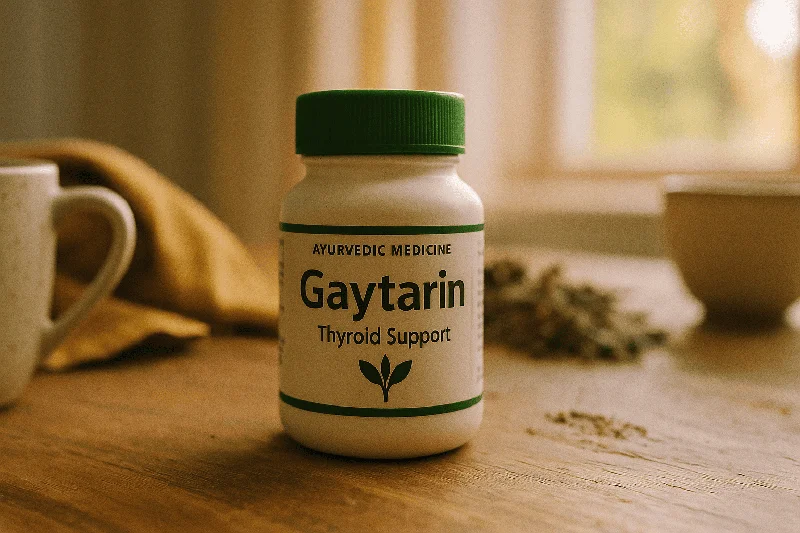
Gaytarin is an Ayurvedic proprietary medicine manufactured by Arya Aushadi Pharmaceuticals, formulated specifically to support thyroid health, manage goiter (enlarged thyroid gland), and address hormonal imbalances related to hypothyroidism. It combines classical Ayurvedic ingredients like Kanchanar (Bauhinia variegata), Guggulu, Triphala, and mineral-based Bhasmas into a single tablet designed to regulate thyroid hormone production, boost metabolism, and promote overall endocrine wellness.
If you've been searching for a natural approach to thyroid care — whether alongside conventional medication or as a standalone Ayurvedic therapy — this guide covers everything you need to know about Gaytarin tablets. From exact ingredient dosages and mechanisms of action to safety precautions, dietary tips, and how it compares to other Ayurvedic thyroid formulations.
What Is Gaytarin and What Is It Used For?
Gaytarin tablets are a polyherbal-mineral Ayurvedic formulation that falls under the category of proprietary medicines. Unlike classical Ayurvedic preparations that follow ancient textbook formulas exactly, proprietary medicines are developed by specific pharmaceutical companies using traditional ingredients in their own unique ratios and processing methods.
Arya Aushadi Pharmaceuticals designed Gaytarin primarily for:
- Goiter (Galaganda in Ayurveda) — abnormal enlargement of the thyroid gland
- Hypothyroidism — underactive thyroid leading to fatigue, weight gain, and sluggish metabolism
- Thyroid hormone imbalance — irregularities in T3, T4, and TSH levels
- Metabolic sluggishness associated with thyroid dysfunction
How Does Gaytarin Support Thyroid Health?
Gaytarin works through multiple mechanisms, which is actually one of the strengths of polyherbal formulations compared to single-ingredient supplements.
Here's what happens when you take it consistently:
- 1.Modulation of thyroid hormone production:** The Kanchanar Guggulu base — a classical Ayurvedic combination — has been traditionally used for centuries to address Kapha-related growths and swellings, including goiter. Modern pharmacological research suggests that Bauhinia variegata (Kanchanar) contains flavonoids and phenolic compounds that may influence thyroid peroxidase activity, a key enzyme in thyroid hormone synthesis.
- 2.Antioxidant protection of thyroid cells:* Ingredients like Triphala, Punarnava, and Guggulu provide significant antioxidant support. The thyroid gland is particularly vulnerable to oxidative stress because hormone production naturally generates reactive oxygen species. A 2018 study published in the Journal of Ayurveda and Integrative Medicine* confirmed that Triphala exhibits potent free radical scavenging activity, which could protect thyrocytes from oxidative damage.
- 3.Anti-inflammatory action:* Guggulu (Commiphora mukul) contains guggulsterones — bioactive compounds extensively studied for their anti-inflammatory properties. A 2019 review in Phytomedicine* highlighted that guggulsterones modulate NF-κB signaling pathways, potentially reducing thyroid gland inflammation associated with conditions like Hashimoto's thyroiditis.
- 4.Mineral supplementation through Bhasmas:** The inclusion of Nag Bhasma (lead calx), Yashad Bhasma (zinc calx), and Pravala Bhasma (coral calx) provides bioavailable trace minerals essential for thyroid function. Zinc, in particular, is critical for the conversion of T4 to the active T3 hormone.
- 5.Endocrine system harmonization:** Rather than targeting the thyroid in isolation, Gaytarin's Dashmool component (a combination of ten roots) supports the broader endocrine and nervous systems, addressing the interconnected nature of hormonal health.
The Ayurvedic Perspective: Galaganda and Agni
In classical Ayurvedic texts like Sushruta Samhita, thyroid enlargement is described as Galaganda — a Kapha-dominant condition where accumulated Kapha dosha blocks the channels (srotas) in the throat region, leading to swelling and functional impairment of the thyroid gland.
Gaytarin addresses this through what Ayurveda calls Lekhana (scraping) and Shodhana (purifying) actions. Kanchanar and Guggulu are both considered powerful Lekhana dravyas — substances that "scrape away" abnormal tissue accumulation.
Equally important is the concept of Agni — the digestive and metabolic fire. Compromised Agni leads to the formation of Ama (metabolic toxins), which further aggravates thyroid dysfunction. Several ingredients in Gaytarin, notably Triphala and Dashmool, work to rekindle Agni, ensuring proper digestion and nutrient absorption. This is why some Ayurvedic practitioners emphasize that maintaining strong Agni during Gaytarin therapy is crucial for seeing optimal results.
Key Ingredients in Gaytarin Tablets
Understanding what goes into each tablet helps you appreciate how the formulation works synergistically. Here is the detailed composition based on available product information:
Core Formulation Components
| Ingredient | Quantity per Tablet | Primary Role |
|---|---|---|
| Kachnar Guggul (Kanchanar + Guggulu compound) | 350 mg | Anti-goiter, thyroid hormone regulation |
| Gandmala Kandan Ras | 75 mg | Classical preparation for glandular swellings |
| Praval Panchamrit | 25 mg | Calcium supplementation, Pitta balancing |
| Rasmanikya | 25 mg | Mineral complex for metabolic support |
| Nag Bhasma | 15 mg | Trace mineral (processed lead calx) for hormonal balance |
| Yashad Bhasma | 10 mg | Zinc source — essential for T4 to T3 conversion |
Processing Herbs (Bhavana Dravya)
These herbs are used to process and potentiate the core ingredients, each contributing its own therapeutic value:
| Processing Herb | Quantity | Key Action |
|---|---|---|
| Punarnava (Boerhavia diffusa) | 100 mg | Diuretic, anti-inflammatory, detoxifying |
| Gorakhmundi (Sphaeranthus indicus) | 100 mg | Thyroid stimulant, anti-inflammatory |
| Jalkumbhi (Pistia stratiotes) | 50 mg | Natural iodine source, thyroid nourishment |
| Kachur (Curcuma zedoaria) | 50 mg | Digestive support, anti-inflammatory |
What Each Major Ingredient Does
Kanchanar (Bauhinia variegata): The backbone of this formulation. Kanchanar bark has been used in Ayurveda for over 2,000 years specifically for glandular swellings, cysts, and tumors. Its astringent and Kapha-reducing properties make it the primary thyroid-supportive herb in the formula. Guggulu (Commiphora mukul): Beyond its anti-inflammatory guggulsterones, Guggulu is known to enhance the bioavailability of other herbs it's combined with. A 2009 study in Thyroid journal found that guggulsterone increased iodine uptake by thyroid cells and enhanced thyroid peroxidase activity in animal models. Dashmool (Ten-root combination): This classical group of ten roots — five from large trees (Brihat Panchamool) and five from smaller plants (Laghu Panchamool) — provides broad-spectrum anti-inflammatory and nervine support. It helps address the fatigue, body aches, and nervous system dysfunction often accompanying thyroid disorders. Triphala (Amalaki, Haritaki, Bibhitaki): This renowned trio supports detoxification through gentle bowel regulation — important because constipation is one of the most common and frustrating symptoms of hypothyroidism. Punarnava (Boerhavia diffusa): Literally meaning "one that renews," Punarnava combats the water retention and puffiness (myxedema) that frequently accompanies hypothyroidism. Its diuretic and anti-inflammatory actions complement the thyroid-specific herbs well. Gandhak (Purified Sulphur): Supports metabolic processes and has traditional use in managing skin conditions — relevant because thyroid dysfunction often manifests as dry skin and hair. Jalkumbhi (Pistia stratiotes): This aquatic plant is a natural source of iodine and other micronutrients. Its inclusion is particularly clever since iodine deficiency remains a leading cause of goiter, especially in certain regions of India.
Benefits of Gaytarin Tablets
Primary Thyroid Benefits
- Regulates TSH, T3, and T4 levels — helps bring thyroid hormones toward normal ranges when used consistently over weeks to months
- Reduces thyroid gland enlargement — the Lekhana (scraping) action of Kanchanar and Guggulu targets abnormal tissue growth
- Supports thyroid hormone conversion — zinc from Yashad Bhasma assists the peripheral conversion of T4 (inactive) to T3 (active hormone)
- Protects thyroid cells from autoimmune damage — antioxidant and anti-inflammatory ingredients may help in autoimmune thyroid conditions
Beyond the Thyroid: Additional Benefits
What many people don't realize is that Gaytarin's formulation offers benefits beyond just thyroid health:
Metabolic support: By improving thyroid function, Gaytarin naturally helps address sluggish metabolism — potentially aiding in weight management that's often disrupted by hypothyroidism. This isn't a weight loss pill by any means, but restoring proper thyroid function can remove one significant barrier to healthy metabolism. Respiratory health: Several ingredients, particularly Dashmool and Kanchanar, have traditional use in managing respiratory congestion and throat disorders. Since the thyroid sits in the throat region, this area-specific action provides dual benefits. Digestive comfort: Triphala and Kachur support healthy digestion and regular bowel movements. For hypothyroid patients who struggle with persistent constipation, this is a genuinely welcome additional benefit. Stress modulation: Chronic stress elevates cortisol, which directly interferes with thyroid hormone production and conversion. Adaptogenic properties of several herbs in the formula help modulate the stress response. Detoxification: Punarnava and Triphala support the body's natural detoxification pathways through the liver and kidneys, helping clear metabolic waste products that accumulate when thyroid function is compromised.
Gaytarin Tablet Dosage: How to Use It Properly
Standard Dosage Guidelines
| Patient Category | Dosage | Frequency | When to Take |
|---|---|---|---|
| Adults (general) | 1–2 tablets | 2–3 times daily | After meals with lukewarm water |
| Mild thyroid imbalance | 1 tablet | 2 times daily | Morning and evening |
| Moderate to severe cases | 2 tablets | 2–3 times daily | As directed by physician |
Important: Always follow your Ayurvedic practitioner's specific recommendation, as dosage may vary based on your Prakriti (constitutional type), severity of condition, and other medications you may be taking.
How Long Does It Take to Notice Effects?
This is probably the most common question people have, and the honest answer is: it varies.
Most practitioners report that patients begin noticing subtle improvements in energy levels and general well-being within 3–4 weeks of consistent use. However, measurable changes in thyroid hormone levels (TSH, T3, T4) typically require 2–3 months of regular therapy.
For goiter reduction, the timeline is longer — often 4–6 months before visible changes in thyroid gland size become apparent. This is similar to what you'd expect with classical Kanchanar Guggulu therapy.
Some factors that influence how quickly you respond:
- Severity and duration of your thyroid condition
- Dietary compliance — are you supporting the treatment with proper nutrition?
- Stress levels — chronic stress works against thyroid recovery
- Consistency — irregular dosing significantly delays results
- Agni status — strong digestive fire improves herb absorption and efficacy
Tips for Maximum Effectiveness
- Take tablets with lukewarm water, not cold — this supports better absorption
- Maintain regular meal times to support Agni
- Avoid taking Gaytarin with milk or calcium-rich foods, as calcium can interfere with thyroid medication absorption
- Practice gentle neck exercises and Sarvangasana (shoulder stand) under guidance — these yoga postures specifically support throat region circulation
Gaytarin Side Effects and Safety Precautions
Do Ayurvedic Tablets Have Side Effects?
Yes — and anyone who tells you Ayurvedic medicines have zero side effects isn't being entirely truthful. While Gaytarin is generally well-tolerated by most adults, some potential side effects include:
- Mild gastrointestinal discomfort — some users report slight nausea or loose stools during the first few days, typically resolving as the body adjusts
- Gastric irritation — the Guggulu component can occasionally cause stomach upset, especially if taken on an empty stomach
- Allergic reactions — rare, but possible if you have sensitivity to any specific herb in the formulation
Who Should Avoid Using Gaytarin?
- Pregnant women — several ingredients (particularly Guggulu) are traditionally contraindicated during pregnancy. Do not take without explicit medical approval.
- Lactating mothers — insufficient safety data; consult your doctor first
- Children under 12 — not typically recommended without pediatric Ayurvedic consultation
- Patients with hyperthyroidism — this is critical and often overlooked. Gaytarin is primarily formulated for hypothyroidism and goiter. Using it for an overactive thyroid without proper medical guidance could potentially worsen the condition (more on this below).
- Those with known heavy metal sensitivities — due to the presence of Bhasmas
Is Gaytarin Safe for Long-Term Use?
When used under proper medical supervision, Gaytarin is generally considered safe for extended periods. Most Ayurvedic practitioners prescribe courses of 3–6 months, followed by reassessment. The presence of Bhasmas (metallic/mineral preparations) in the formula means that long-term unsupervised use is not advisable — periodic monitoring of liver and kidney function is a reasonable precaution.
Gaytarin vs Other Ayurvedic Thyroid Medicines: A Comparison
- This is something no other guide on Gaytarin covers, and it's arguably one of the most practical pieces of information you need. If you're considering Ayurvedic thyroid support, you've likely come across several options.
- Here's how they stack up:
| Feature | Gaytarin (Arya Aushadi) | Kanchanar Guggulu (Classical) | Thyroid Care (Himalaya) | Divya Thyrogrit (Patanjali) |
|---|---|---|---|---|
| Formulation type | Proprietary | Classical textbook formula | Proprietary herbal | Proprietary |
| Primary herbs | Kanchanar, Guggulu, Triphala, Dashmool | Kanchanar, Guggulu, Triphala, Trikatu | Bauhinia, Guggulu, Commiphora, etc. | Singhnad Guggulu, Kanchanar, etc. |
| Contains Bhasmas | Yes (Nag, Yashad, Pravala) | No | No | Some variants |
| Mineral supplementation | Zinc, calcium, trace minerals | None inherently | Minimal | Variable |
| Natural iodine source | Yes (Jalkumbhi) | No | No | Variable |
| Best suited for | Goiter + hypothyroidism | Goiter, cysts, tumors | General thyroid support | Hypo/hyperthyroid |
| Price range | ₹35–₹385 (10–100 tablets) | ₹100–₹250 (varies by brand) | ₹200–₹400 | ₹100–₹200 |
| Clinical evidence | Traditional use; limited modern studies | Some clinical studies | Company-funded research | Limited |
What Makes Gaytarin Different?
The key differentiator is its comprehensive mineral-herbal approach. While classical Kanchanar Guggulu relies purely on herbal ingredients, Gaytarin adds processed mineral preparations (Bhasmas) that supply trace elements directly involved in thyroid function. The inclusion of Jalkumbhi as a natural iodine source is another thoughtful addition that you won't find in most competing formulas.
However, this also means Gaytarin requires more careful supervision than a purely herbal alternative. It's a trade-off between potency and simplicity.
Hypothyroidism vs Hyperthyroidism: Does Gaytarin Work for Both?
This is a critical distinction that most resources on Gaytarin fail to address clearly.
For Hypothyroidism (Underactive Thyroid)
This is Gaytarin's primary indication.
The formulation is specifically designed to:
- Stimulate sluggish thyroid function
- Support iodine uptake and hormone synthesis
- Address Kapha accumulation that characterizes hypothyroidism in Ayurvedic pathology
Gaytarin is well-suited for hypothyroidism and goiter.
For Hyperthyroidism (Overactive Thyroid)
- Here's where caution is essential.
- Hyperthyroidism involves excess thyroid hormone production — the opposite problem. Many of Gaytarin's ingredients are designed to stimulate or support thyroid function, which could theoretically aggravate an already overactive gland.
That said, some ingredients like Guggulu and Triphala have adaptogenic qualities that may help modulate (rather than simply stimulate) thyroid activity. But this is a nuanced clinical decision that absolutely requires professional guidance.
Bottom line: If you have hyperthyroidism or Graves' disease, do not self-prescribe Gaytarin. Consult an experienced Ayurvedic physician who can assess your specific situation.
Dosage Differences
Even within hypothyroidism, dosage may vary based on TSH levels:
Mild Subclinical Hypothyroidism (TSH 5–10 mIU/L)
- 1 tablet twice daily is often sufficient
- May be used as primary therapy in some cases
Overt Hypothyroidism (TSH >10 mIU/L)
- 2 tablets 2–3 times daily is more common
- Typically used as adjunctive therapy alongside conventional medication (levothyroxine)
स्वयं दवा न लें और प्रतीक्षा न करें। अभी डॉक्टर से चैट शुरू करें
Dietary Recommendations While Taking Gaytarin
- Your diet can significantly amplify or undermine the effects of Gaytarin therapy.
- Here's what to include and avoid:
Foods That Support Thyroid Recovery
- Iodine-rich foods: Seaweed (kelp, nori), iodized salt, dairy products, eggs — iodine is the fundamental building block of thyroid hormones
- Selenium sources: Brazil nuts (just 2–3 per day provides adequate selenium), sunflower seeds, mushrooms — selenium is essential for T4 to T3 conversion
- Zinc-rich foods: Pumpkin seeds, chickpeas, lentils — complements the Yashad Bhasma in Gaytarin
- Anti-inflammatory spices: Turmeric, ginger, cinnamon, cumin — these support the anti-inflammatory action of the medicine
- Coconut oil: Contains medium-chain fatty acids that support thyroid function and metabolism
Foods to Limit or Avoid
- Raw cruciferous vegetables in excess: Broccoli, cabbage, cauliflower, kale contain goitrogens that can interfere with iodine uptake. Cooking significantly reduces goitrogenic activity, so cooked versions are fine.
- Soy products: Soy isoflavones may interfere with thyroid hormone absorption and synthesis
- Highly processed foods: Increase inflammation and provide empty calories
- Excessive caffeine: Can interfere with thyroid hormone absorption
- Gluten (if sensitive): There's a well-documented association between celiac disease/gluten sensitivity and autoimmune thyroid conditions
Can Gaytarin Be Used Alongside Conventional Thyroid Medication?
Yes — and this is actually how many patients use it in practice.
However, there are important guidelines to follow:
- Maintain a 2–3 hour gap between taking levothyroxine (Thyronorm, Eltroxin) and Gaytarin tablets. Levothyroxine absorption is affected by many substances, so taking them at separate times prevents interference.
- Regular monitoring of thyroid levels (TSH, free T3, free T4) every 6–8 weeks when combining treatments. As thyroid function improves with Gaytarin, your conventional medication dose may need adjustment.
- Never discontinue prescribed thyroid medication without your endocrinologist's approval, even if you feel better. Abrupt withdrawal can cause thyroid crisis.
- Inform both your Ayurvedic and allopathic doctors about all medications you're taking. This ensures coordinated care and prevents adverse interactions.
Where to Purchase Authentic Gaytarin Tablets
Authenticity matters enormously with Ayurvedic products, particularly those containing Bhasmas. Improperly processed metallic preparations can be harmful.
Here's what to look for:
- Buy from authorized dealers of Arya Aushadi Pharmaceuticals or reputed online Ayurvedic pharmacies
- Check for GMP certification on the packaging — this ensures manufacturing quality standards
- Verify batch number and expiry date — genuine products always carry these
- Pricing reference: 10 tablets typically cost around ₹35, 100 tablets around ₹385, and bulk packs of 1200 tablets approximately ₹3,341
Available Formats
- Gaytarin is primarily available as tablets.
- There are also references to Gaytarin Ointment — a topical formulation from the same manufacturer, designed for external application on the throat area to support thyroid health from the outside. The ointment is sometimes used in conjunction with the oral tablets for a more comprehensive approach.
Gaytarin Tablets Reviews: What Users Report
While individual experiences vary, common themes from user feedback include:
- Positive: Improved energy levels within 2–4 weeks; gradual improvement in TSH levels over 2–3 months; reduced neck swelling; better digestion and reduced constipation; general feeling of well-being
- Mixed: Some users report minimal changes in the first month, requiring patience; taste can be unpleasant for some
- Concerns: A few users report mild gastric discomfort initially; some note that results require concurrent dietary changes to become noticeable
The most consistent feedback is that patience and consistency are essential — Gaytarin is not a quick fix, but a gradual, systemic approach to thyroid health.
Frequently Asked Questions (FAQ)
What is Gaytarin Tablet used for?
Gaytarin is primarily used for managing goiter (thyroid gland enlargement), hypothyroidism, and thyroid hormone imbalances. It supports thyroid function through a combination of Ayurvedic herbs and mineral preparations.
What are the key ingredients in Gaytarin Tablets?
The core ingredients include Kachnar Guggul (350 mg), Gandmala Kandan Ras (75 mg), Praval Panchamrit (25 mg), Rasmanikya (25 mg), Nag Bhasma (15 mg), and Yashad Bhasma (10 mg), along with processing herbs like Punarnava, Gorakhmundi, Jalkumbhi, and Kachur.
Can Gaytarin be used alongside conventional thyroid medication?
Yes, but maintain a 2–3 hour gap between Gaytarin and medications like levothyroxine. Regular thyroid level monitoring is essential, and always keep both your Ayurvedic and allopathic doctors informed.
Is Gaytarin safe for long-term use?
Under medical supervision, Gaytarin can be used for extended periods (typically 3–6 month courses). However, due to the presence of Bhasmas, periodic health monitoring is recommended for long-term use.
What is the Gaytarin tablet dosage?
The standard adult dosage is 1–2 tablets, taken 2–3 times daily with lukewarm water after meals. Your practitioner may adjust this based on your specific condition.
Are there any Gaytarin tablet side effects?
Side effects are generally mild and uncommon. Some users may experience temporary gastrointestinal discomfort, slight nausea, or loose stools during the initial days of use. Taking tablets after meals usually minimizes these issues.
Where can I purchase authentic Gaytarin Tablets?
Purchase from authorized Arya Aushadi dealers, reputed Ayurvedic pharmacies, or verified online health platforms. Always check for GMP certification, batch numbers, and expiry dates to ensure authenticity.
Is there information available about Gaytarin tablet uses in Hindi?
Gaytarin is widely used across India, and information in Hindi is available through Arya Aushadi's official materials and several Hindi-language Ayurvedic health portals. The product packaging itself typically includes Hindi instructions.
What is Gaytarin Ointment?
Gaytarin Ointment is a topical formulation from the same manufacturer, designed for external application on the throat area. It's sometimes used alongside the oral tablets for complementary thyroid support.
Conclusion: Is Gaytarin Right for You?
Gaytarin represents a well-thought-out Ayurvedic approach to thyroid health — combining classical herbal wisdom with mineral supplementation in a convenient tablet form. Its comprehensive formula addresses not just thyroid hormones in isolation, but the broader metabolic, digestive, and endocrine context that determines thyroid health.
However, it's not a magic pill. The best outcomes come from combining Gaytarin with proper diet, stress management, regular exercise, and — when necessary — conventional medical treatment. Thyroid conditions require ongoing monitoring regardless of whether you choose Ayurvedic, allopathic, or integrative approaches.
If you're considering Gaytarin, start by consulting a qualified Ayurvedic practitioner who can assess your Prakriti, evaluate your current thyroid status, and design a personalized treatment plan. With patience, consistency, and proper guidance, Gaytarin can be a valuable tool in your thyroid health journey. Disclaimer: This article is for informational purposes only and does not constitute medical advice. Always consult a qualified healthcare professional before starting any new supplement or medication, especially if you have an existing thyroid condition or are taking prescription medications.
Scientific Sources
- Ayurvedic medicine in Goa according to European sources in the sixteenth and seventeenth centuries — de Figueiredo JM, 1984, Bulletin of the history of medicine
- 'Indian ginseng' brings royalties for tribe — Jayaraman KS, 1996, Nature
- An update on Shankhpushpi, a cognition-boosting Ayurvedic medicine — Sethiya NK et al., 2009, Zhong xi yi jie he xue bao = Journal of Chinese integrative medicine
- Lead poisoning due to Ayurvedic medicine: how about the risk? — Joob B et al., 2016, International journal of occupational and environmental health
- Ayurved for digestion — Krebs K, 2004, Gastroenterology nursing : the official journal of the Society of Gastroenterology Nurses and Associates
- Things do not get better by being left alone.The physician and complementary medicine — Perlman AI, 2000, The Journal of rheumatology
- Scott Gerson, MD.Ayurvedic medicine.Interview by Bonnie Horrigan — Gerson S, 2001, Alternative therapies in health and medicine
- Vitiligo--a retrospect — Nair BK, 1978, International journal of dermatology
- Evaluation of Na and K in anti-diabetic ayurvedic medicine using LIBS — Kumari R et al., 2022, Lasers in medical science
- Culture and complementary therapies — Engebretson J, 2002, Complementary therapies in nursing & midwifery
- Snake stone for snake envenomization — Rasquinha D, 1996, The American journal of emergency medicine
- Severe Lead Toxicity Due to Ayurvedic Medicine in a Child with Type 1 Diabetes Mellitus — Roy K et al., 2022, Indian journal of pediatrics
- Perceptions of Ayurvedic medicine by citizens in Dhaka, Bangladesh — Yoshida Y et al., 2016, Nagoya journal of medical science
- Prevention of diseases an Ayurvedic approach — Upadyay RL, 1998, Indian journal of medical sciences
- Some thoughts on the undergraduate Ayurveda curriculum — Chandra S, 2023, Indian journal of medical ethics
- Ayurvedic interventions for diabetes mellitus: a systematic review — Hardy ML et al., 2001, Evidence report/technology assessment (Summary)
- Rabies treatment — Lele RD, 1982, Science (New York, N.Y.)
- ON INDIAN COLORS(https://pubmed.ncbi.nlm.nih.gov/14093449/) — MUELLER RF, 1963, Sudhoffs Archiv fur Geschichte der Medizin und der Naturwissenschaften
- Factors that influence patients in Sri Lanka in their choice between Ayurvedic and Western medicine — Glynn JR et al., 1985, British medical journal (Clinical research ed.)
- Medical ethics in India: then and now — Pandya SK, 1999, Acta neurochirurgica. Supplement
उपयोगकर्ताओं के प्रश्न
What are the side effects of using Gaytarin for thyroid health?
Client_863cdb
28 दिनों पहले
The side effects of using Gaytarin, which includes processed mineral preparations known as Bhasmas, could vary depending on individual health conditions and the state of their thyroid health. Some users might experience gastrointestinal discomfort, skin reactions, or changes in thyroid hormone levels that could potentially worsen hyperthyroidism. If you have an overactive thyroid or any other thyroid disorder, consult with your healthcare provider before using products like Gaytarin. It is crucial to monitor any symptoms and seek medical advice if adverse effects occur.
How long does it take to notice changes after starting Gaytarin?
Client_e1605c
38 दिनों पहले
You might begin to notice changes from Gaytarin, an Ayurvedic supplement for thyroid support, within 3 to 6 months of consistent use, as treatment courses often last this length of time. The supplement is not a substitute for conventional thyroid medication, so never alter your prescribed medication without consulting your endocrinologist. Monitor for any side effects like gastrointestinal discomfort and consult a healthcare provider if they persist. If you’re a lactating mother or have hyperthyroidism, seek medical advice before starting Gaytarin to ensure safety and efficacy.
What dietary changes can enhance the benefits of Gaytarin for thyroid health?
Client_49a0f9
47 दिनों पहले
To enhance the benefits of Gaytarin for thyroid health, consider incorporating a diet rich in selenium, iodine, and zinc, which are essential for thyroid function. Foods like fish, dairy, nuts, seeds, and seaweed can be beneficial. Also, maintaining a balanced intake of macronutrients without excessive carbohydrate restriction supports overall health. Avoid goitrogenic foods like soy and cruciferous vegetables in raw form, as they may interfere with thyroid hormone production. Monitor symptoms and seek medical advice if fatigue or mood disturbances persist, adjusting your eating habits as needed.
How can Gaytarin affect my overall energy levels and mood balance?
Client_6663df
57 दिनों पहले
Gaytarin tablets may boost your energy levels and help stabilize mood by supporting thyroid hormone regulation and promoting endocrine health. This supplement includes ingredients like Kanchanar and Guggulu, which aim to alleviate symptoms such as fatigue and body aches associated with thyroid disorders like hypothyroidism. The adaptogenic herbs in Gaytarin might also support stress management, potentially improving mood balance. To effectively evaluate its impact, monitoring your thyroid levels regularly and consulting with a healthcare provider for personalized guidance is advisable, especially when used alongside conventional thyroid medications.
What natural ingredients in Gaytarin help reduce thyroid inflammation?
Client_46da01
67 दिनों पहले
Guggulsterones in Gaytarin are key for reducing thyroid inflammation, especially in conditions like Hashimoto's. They influence NF-κB pathways to help calm the inflammation. Also, Nag, Yashad, and Pravala Bhasmas offer essential minerals that support thyroid health. Just remember, always talk with a doc to ensure safety!
What is the recommended method for applying Gaytarin Ointment for throat issues?
Client_e25156
76 दिनों पहले
Applying Gaytarin Ointment is pretty straightforward—just take a small amount and gently massage it onto the throat area. Do it 2-3 times a day, unless told different by a health practitioner. Just remember, it's for external use only, so don't ingest. If you're uncertain, it's always good to double-check with an Ayurvedic doctor!
What ingredients in Gaytarin help support digestive health in addition to thyroid function?
Client_5992fa
85 दिनों पहले
Triphala and Kachur are the main ingredients in Gaytarin that support digestive health. Triphala is famous in Ayurveda for promoting digestion and regular bowel movements, while Kachur assists with digestive comfort. Together, they help ease the fatigue and discomfort that sometimes comes with thyroid issues.
How does Gaytarin support holistic health beyond thyroid regulation?
Client_0dafc1
97 दिनों पहले
So, Gaytarin goes beyond just thyroid regulation by supporting holistic health through its Ayurvedic formulation. This means it helps your body’s natural healing processes, which can impact energy and weight management too. Think of it like nurturing your overall balance! Always good to chat with a pro and see what works for you individually.
Can I take Gaytarin with other herbal supplements for thyroid support?
Client_748f57
106 दिनों पहले
You can generally take Gaytarin with other herbal supplements, but it's good to be cautious. Since herbs can interact in unexpected ways, it's smart to consult an Ayurvedic doctor who knows your dosha type and health status, just to be on the safe side. Also, make sure you're buying high-quality supplements from trusted sources to avoid any issues.
What is Gaytarin and how does it help with thyroid health?
Client_4f6af2
116 दिनों पहले
Gaytarin is an Ayurvedic herbal supplement aimed at regulating thyroid hormones. It's known for balancing the endocrine system, which can help with symptoms like fatigue, weight changes, and mood swings linked to thyroid imbalances. It supports healthy metabolism too. But, dosage should be personalized, so best to consult with an Ayurvedic practitioner!
संबंधित आलेख

Ear, Nose, and Throat Disorders
Dashmool Haritaki – A Powerful Ayurvedic Formula for Health and Vitality
Discover the benefits and uses of Dashmool Haritaki, a traditional Ayurvedic formulation known for enhancing digestion, boosting immunity, and promoting overall wellness.
3,579

Ear, Nose, and Throat Disorders
कान के दर्द से छुटकारा कैसे पाएं: असरदार घरेलू उपाय और प्राकृतिक इलाज
घर पर कान के दर्द से छुटकारा पाने के तरीके जानें। घर पर आयुर्वेदिक कान दर्द उपचार, प्राकृतिक इलाज और कान के दर्द को जल्दी से रोकने के उपायों के बारे में जानें।
6,494

Ear, Nose, and Throat Disorders
Chronic Cough Treatment in Ayurveda – Natural Holistic Remedies
Discover effective Ayurvedic methods for chronic cough treatment. Learn about herbal remedies, dietary adjustments, and holistic therapies that soothe and heal persistent cough.
3,468

Ear, Nose, and Throat Disorders
Ayurvedic Treatment for Ear Blockage – Natural Remedies for Clear Hearing
Discover effective Ayurvedic treatment for ear blockage, featuring herbal therapies, ear drops, and lifestyle tips to naturally relieve congestion and promote optimal ear health.
5,580

Ear, Nose, and Throat Disorders
Karpuradi Vati Revealed: Detox & Rejuvenate with Ancient Ayurvedic Wisdom!
Unlock the secrets of Karpuradi Vati for detoxification and rejuvenation. Discover how this ancient Ayurvedic tablet can transform your wellness journey.
2,473

Ear, Nose, and Throat Disorders
Ayurvedic Ear Drops for Hearing Loss – Benefits & Uses
Discover the benefits of Ayurvedic ear drops for hearing loss. Learn about ingredients, how they work, and their effectiveness based on Ayurvedic principles.
5,852

Ear, Nose, and Throat Disorders
Amodini Tablet Uncovered: The Secret to Boosting Digestion & Gut Health!
Explore the health benefits of Amodini Tablet, an Ayurvedic remedy designed for hormonal balance, menstrual health, and overall wellness in women.
2,548

Ear, Nose, and Throat Disorders
Sarivadi Vati Uses – Ayurvedic Remedy for Ear Health & Tinnitus Relief
Discover how Sarivadi Vati alleviates mild tinnitus, ear pain, and ear infections with anti-inflammatory herbs like Nagkeshar, Phoolpriyangu, and Laung for optimal ear health.
3,846

Ear, Nose, and Throat Disorders
कौन सा जूस गले के दर्द और खराश में राहत देता है?
जानें कौन सा जूस गले के दर्द और खराश में राहत देता है। आयुर्वेदिक पेय और फलों के जूस के बारे में जानें जो जलन को शांत करते हैं और ठीक होने में मदद करते हैं।
9,650

Ear, Nose, and Throat Disorders
What Kills a Sore Throat Fast Overnight: Best Remedies & Ayurvedic Tips
Discover what kills a sore throat fast overnight using powerful natural and Ayurvedic remedies. Explore instant relief methods and bedtime healing rituals for a pain-free morning
5,805
विषय से संबंधित परामर्श
अतिरिक्त दस्तावेज़
© 2024 Ask Ayurveda. सर्वाधिकार सुरक्षित।