आयुर्वेदिक डॉक्टर से प्रश्न पूछें और निःशुल्क या भुगतान मोड में अपनी चिंता की समस्या पर ऑनलाइन परामर्श प्राप्त करें। 2,000 से अधिक अनुभवी डॉक्टर हमारी साइट पर काम करते हैं और आपके प्रश्नों का इंतजार करते हैं और उपयोगकर्ताओं को उनकी स्वास्थ्य समस्याओं को हल करने में प्रतिदिन मदद करते हैं।


Body DetoxEar, Nose, and Throat DisordersGeriatrics & RejuvenationImmunodeficiencyInfertility TreatmentNutritionOrthopedic DisordersPediatricsRespiratory DisordersSexually Transmitted Diseases (STDs)Surgery RecoveryUrological DisordersVascular DisordersDental DisordersEndocrinological DisordersGastrointestinal DisordersYoga TherapyGeneral MedicineAllergic DisordersCardio DisordersGynecology and ObstetricsCosmetologySkin and Hair DisordersEye DisordersInfectious DiseasesMental DisordersNeurological DisordersOncologyPanchakarmaSexual Health & DisordersSports Medicine
पर प्रकाशित 01/06/25
(को अपडेट 08/10/26)
4,062
Talisadi Churna: Ayurvedic Remedy for Dry Cough and Respiratory Health
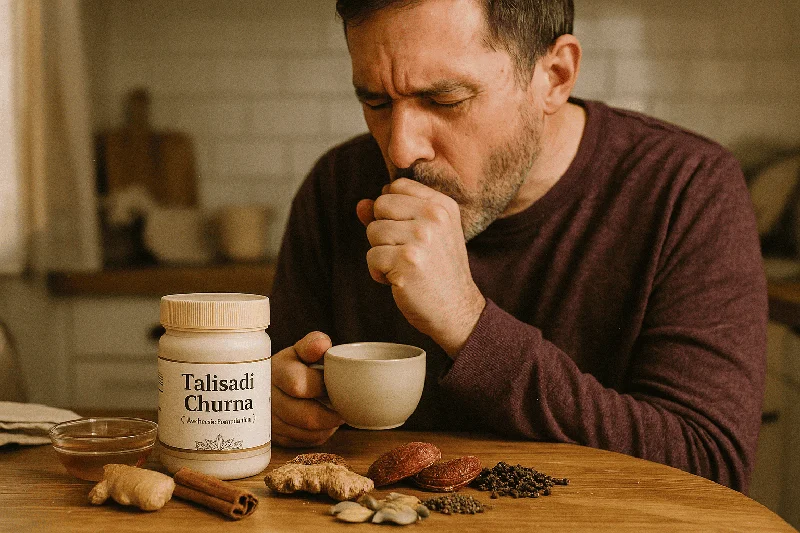
Talisadi Churna is a classical Ayurvedic polyherbal powder formulation used primarily for treating cough, cold, respiratory disorders, and digestive complaints. Originating from ancient Ayurvedic texts, it combines Talispatra (Indian silver fir) with warming spices and rock candy to create a balanced remedy that pacifies Kapha and Vata doshas. Whether you're dealing with a persistent dry cough, seasonal bronchitis, or sluggish digestion, Talisadi Churna has been trusted for centuries — and modern pharmacological research is beginning to explain why it works.
This comprehensive guide covers everything you need to know: ingredients with exact proportions, health benefits backed by science, proper dosage for adults and children, side effects, drug interactions, and how to make it at home. We've also included comparisons with similar formulations like Sitopaladi Churna so you can make an informed choice.
What Is Talisadi Churna?
- Talisadi Churna is a finely powdered Ayurvedic medicine classified as a churna (powder) formulation.
- The name derives from its primary ingredient — Talispatra (Abies webbiana), also known as Indian silver fir or Talis patra. The suffix "adi" means "and others," indicating that the formulation contains Talispatra along with several other medicinal ingredients.
It is one of the most widely prescribed Ayurvedic remedies for respiratory and digestive disorders across India, and has been in continous use for hundreds of years.
History and Ayurvedic Origins
Talisadi Churna finds its earliest documented reference in the Sharangdhara Samhita, a foundational Ayurvedic text composed around the 13th–14th century CE by Acharya Sharangdhara. The formulation is described in the Churna Kalpana (powder preparations) section. It is also referenced in the Bhaishajya Ratnavali, another authoritative compendium of Ayurvedic formulations.
The formula was designed following the principle of Samyoga (combination) — where multiple herbs with complementary properties are combined to enhance therapeutic efficacy while minimizing adverse effects. The fact that this formulation has survived virtually unchanged for over 700 years speaks to its clinical reliability.
Ayurvedic Properties (Rasa, Guna, Virya, Vipaka)
Understanding the pharmacological profile through Ayurvedic terminology:
| Property | Description |
|---|---|
| Rasa (Taste) | Madhura (sweet), Katu (pungent) |
| Guna (Quality) | Laghu (light), Ruksha (dry) |
| Virya (Potency) | Ushna (hot) |
| Vipaka (Post-digestive effect) | Madhura (sweet) |
| Dosha Karma | Kapha-Vata Shamaka (pacifies Kapha and Vata) |
| Prabhava (Special effect) | Shwasahara (anti-asthmatic), Kasahara (anti-tussive) |
The combination of hot potency with sweet post-digestive effect makes Talisadi Churna particularly effective for conditions where cold and dampness (Kapha) have accumulated in the respiratory tract.
Ayurvedic Indications (Sanskrit Terminology)
Classical texts list the following indications (Rogaghnata):
- Kasahara — Alleviates cough
- Shwasahara — Relieves dyspnea and asthma
- Deepana — Kindles digestive fire (Agni)
- Pachana — Promotes digestion of toxins (Ama)
- Jwaraghna — Reduces fever
- Aruchihara — Treats loss of appetite/anorexia
- Chhardihara — Controls vomiting and nausea
- Plihaghna — Benefits spleen disorders
Talisadi Churna Ingredients and Proportions
Complete Ingredient List with Ratios
The classical formulation follows a specific ratio pattern where each successive ingredient is double the previous one.
Here are the exact proportions:
| Ingredient | Botanical Name | Proportion | Percentage |
|---|---|---|---|
| Talispatra (Indian Silver Fir) | Abies webbiana | 1 part | ~2.21% |
| Marich (Black Pepper) | Piper nigrum | 2 parts | ~4.42% |
| Pippali (Long Pepper) | Piper longum | 4 parts | ~8.84% |
| Sonth/Shunthi (Dry Ginger) | Zingiber officinale | 8 parts | ~6.63% |
| Vanshlochan (Bamboo Manna) | Bambusa arundinacea | 16 parts | ~17.68% |
| Mishri (Rock Candy/Sugar) | — | Equal to all above combined | ~60.22% |
Note: Some classical references give slightly different sugar ratios, which is why percentages may vary between manufacturers.
Role of Each Ingredient
Talispatra (Abies webbiana): The principal ingredient. It acts as an expectorant and bronchodilator. The essential oils in Talispatra leaves contain bornyl acetate and alpha-pinene, which help relax bronchial smooth muscles and loosen mucus. Marich (Black Pepper): Contains piperine, a bioavailability enhancer that increases absorption of other active compounds. It also acts as a decongestant and stimulates mucus membrane secretions, helping clear congested airways. Pippali (Long Pepper): Perhaps the most pharmacologically studied ingredient here. Pippali contains piperine and piperlongumine, which exhibit anti-inflammatory, immunomodulatory, and anti-asthmatic properties. A 2016 study published in the Journal of Ethnopharmacology demonstrated that Piper longum extracts significantly reduced airway inflammation in animal models. Sonth (Dry Ginger): A powerful anti-inflammatory and carminative. Gingerols and shogaols in dry ginger inhibit prostaglandin synthesis, reducing inflammation. It also enhances digestive fire (Agni) and helps in the absorption of nutrients. Vanshlochan (Bamboo Manna): Rich in natural silica and acts as a natural expectorant. It has cooling properties that balance the heating effect of pepper and ginger. Traditional texts credit it with strengthening lung tissue. Mishri (Rock Candy): Serves as a vehicle (anupana) and a demulcent that soothes irritated throat membranes. It also balances the pungent taste making the formulation palatable, and provides quick energy.
How to Make Talisadi Churna at Home (Recipe)
Making Talisadi Churna at home ensures freshness and purity.
Here's a step-by-step method:
- 1.Source quality ingredients — Purchase whole herbs from a reputable Ayurvedic supplier. Ensure Talispatra leaves are dry and aromatic.
- 2.Dry roast lightly — Individually dry roast Marich, Pippali, and Sonth on low heat for 2–3 minutes to remove moisture (do NOT burn).
- 3.Grind separately — Powder each ingredient separately using a mortar-pestle or mixer-grinder.
- 4.Sieve through fine cloth — Pass each powder through a fine muslin cloth (100-mesh sieve) to ensure uniform particle size.
- 5.Combine in correct proportions — Mix 1 part Talispatra + 2 parts Marich + 4 parts Pippali + 8 parts Sonth + 16 parts Vanshlochan.
- 6.Add Mishri — Powder the rock candy separately and add it equal to the combined weight of all other ingredients.
- 7.Blend thoroughly — Mix all ingredients together for at least 10 minutes until homogeneous.
- 8.Store properly — Transfer to an airtight glass jar. Keep in a cool, dry place away from direct sunlight.
Shelf life of homemade Talisadi Churna: Approximately 6–12 months if stored correctly. Commercially manufactured products typically have a 2–3 year shelf life due to controlled manufacturing conditions.
How Does Talisadi Churna Work? (Mechanism of Action)
Ayurvedic Perspective: Dosha Balancing
From the Ayurvedic viewpoint, most respiratory disorders result from aggravated Kapha dosha (causing mucus accumulation, congestion, heaviness) often combined with disturbed Vata dosha (causing dryness, spasmodic cough, pain).
Talisadi Churna works through multiple Ayurvedic mechanisms:
- Ushna Virya (hot potency) liquefies and expels accumulated Kapha from the respiratory tract
- Deepana-Pachana properties kindle the digestive fire, preventing formation of Ama (metabolic toxins) that contribute to respiratory congestion
- Laghu Guna (lightness) counteracts the heavy, sticky quality of Kapha
- The sweet post-digestive effect (Madhura Vipaka) nourishes body tissues without aggravating Pitta
Modern Pharmacological Perspective
Contemporary research reveals several pharmacological mechanisms that validate traditional claims:
Anti-inflammatory action: Multiple ingredients — particularly ginger (gingerols), black pepper (piperine), and long pepper (piperlongumine) — inhibit cyclooxygenase (COX-2) and lipoxygenase (LOX) enzymes, reducing inflammatory mediators in the respiratory tract. A 2019 study in Phytotherapy Research confirmed that piperine significantly suppressed NF-κB pathway activation, a key driver of airway inflammation. Bronchodilatory effect: Talispatra essential oils and piperine relax bronchial smooth muscles by modulating calcium channels. This effect is similar to, though milder than, conventional bronchodilators. Mucolytic and expectorant activity: The formulation stimulates serous gland secretions in the airways, thinning thick mucus and facilitating its expulsion. Ginger's 6-gingerol has been shown to enhance mucociliary transport velocity. Immunomodulatory properties: Pippali and Vanshlochan have been demonstrated to enhance macrophage activity and natural killer cell function, bolstering innate immune defenses. A 2020 paper in Journal of Ayurveda and Integrative Medicine noted that polyherbal formulations containing Piper longum showed significant immunostimulatory activity. Bioavailability enhancement: Piperine from black pepper increases the bioavailability of other active compounds by 30–200% by inhibiting hepatic and intestinal glucuronidation and slowing gastrointestinal transit.
Health Benefits of Talisadi Churna
Relieves Cough and Cold
This is the primary and most well-documented benefit.
Talisadi Churna addresses all types of cough:
For Dry Cough
The demulcent properties of Mishri and Vanshlochan soothe irritated throat membranes, while the anti-inflammatory action of ginger and pepper reduces airway hypersensitivity. For dry cough, it is best taken with ghee (clarified butter) as the anupana, which adds lubrication to dry airways.
For Wet/Productive Cough
The expectorant and mucolytic properties help thin and expel mucus from the lungs. For productive cough with excessive mucus, take it with honey — honey's hygroscopic nature draws out excess Kapha, and its antimicrobial properties prevent secondary infections.
For Allergic Cough
The immunomodulatory effects help regulate the hyperactive immune response that triggers allergic cough. Regular use during allergy seasons can reduce the frequency and severity of episodes.
Treats Sore Throat and Hoarseness
Talisadi Churna's combination of anti-inflammatory and demulcent properties makes it effective for sore throat (Kantha Roga) and hoarseness of voice (Swarabheda). The rock candy soothes inflamed mucous membranes while the warming spices increase blood circulation to the throat, promoting healing.
Practical tip: Mix 3g of Talisadi Churna with 1 teaspoon of honey and allow it to slowly dissolve in the mouth rather than swallowing immediately. This allows prolonged contact with the throat for maximum benefit.
Manages Asthma and Bronchitis
The bronchodilatory and anti-inflammatory properties make Talisadi Churna a valuable adjunct therapy for:
- Bronchial asthma (Tamaka Shwasa) — helps reduce bronchospasm and airway inflammation
- Chronic bronchitis (Kaphaja Kasa) — reduces chronic mucus production and improves airflow
- Exercise-induced bronchoconstriction — some practitioners recommend it as a preventive 30 minutes before physical activity
Important note: Talisadi Churna should be used as complementary therapy alongside conventional asthma medications, not as a replacement. Never discontinue prescribed inhalers or medications without consulting your doctor.
Reduces Fever
The formulation exhibits antipyretic (fever-reducing) properties (Jwaraghna). The combination of Pippali and Sonth has been shown to reduce prostaglandin E2 synthesis, which is responsible for resetting the body's thermostat during fever. It is particularly effective for low-grade fevers associated with respiratory infections.
Promotes Digestion and Relieves Bloating
Beyond respiratory health, Talisadi Churna is equally valued for its digestive benefits:
- Stimulates Agni (digestive fire) — improves overall digestion and metabolism
- Carminative effect — relieves gas, bloating, and abdominal distension
- Anti-emetic — reduces nausea and vomiting
- Corrects Ama — helps digest metabolic toxins that impair digestion
The Deepana (appetizer) and Pachana (digestive) properties are primarily attributed to Sonth, Marich, and Pippali — the three ingredients that also form the famous Trikatu combination.
Treats IBS (Irritable Bowel Syndrome)
While not a classical indication, modern practitioners have reported benefits in managing IBS symptoms, particularly the bloating-predominant and constipation-predominant types. The carminative and antispasmodic properties of ginger and pepper help regulate intestinal motility and reduce visceral hypersensitivity. A 2018 clinical observation published in Ayu Journal noted improvement in IBS symptoms in patients treated with Trikatu-containing formulations.
Enhances Appetite and Treats Anorexia
- Talisadi Churna is classically indicated for Aruchi (anorexia/loss of appetite). By kindling the digestive fire and improving the secretion of digestive enzymes, it naturally enhances appetite.
- This makes it particularly useful for:
- Post-illness recovery when appetite is diminished
- Children with poor eating habits
- Elderly patients with age-related appetite decline
Supports in Anaemia and Spleen Disorders
Classical Ayurvedic texts mention Talisadi Churna's benefit in Pandu (anaemia) and Plihavridhi (spleen enlargement). The improved digestive capacity enhances iron absorption from food, while Pippali's hepatoprotective properties support healthy liver and spleen function.
Talisadi Churna Dosage and How to Take It
Standard Adult Dosage
| Condition | Dosage | Frequency | Anupana (Vehicle) |
|---|---|---|---|
| Dry cough | 3–6 g | Twice daily | Ghee + warm milk |
| Wet cough with mucus | 3–6 g | Twice daily | Honey |
| Sore throat | 2–3 g | 3 times daily | Honey (dissolve slowly) |
| Asthma/Bronchitis | 3–6 g | Twice daily | Honey + ghee |
| Digestive complaints | 2–4 g | Twice daily after meals | Warm water |
| Fever | 3–4 g | Twice daily | Warm water or honey |
| Loss of appetite | 2–3 g | Before meals | Warm water |
General guideline: 3–6 grams per day, divided into two doses, taken after meals unless otherwise directed.
Talisadi Churna Dosage for Children
This is an area where most references fall short, so here are age-appropriate guidelines based on classical dosimetry principles (Sharangdhara's Vayoanupata):
Children's Dosage by Age
| Age Group | Dose per Administration | Frequency | Notes |
|---|---|---|---|
| 1–3 years | 500 mg – 1 g | Twice daily | Mix with honey for palatability |
| 4–8 years | 1–2 g | Twice daily | With honey or warm milk |
| 9–12 years | 2–3 g | Twice daily | Same as adult anupana |
| 13–16 years | 3–4 g | Twice daily | Near-adult dosage |
Always consult a qualified Ayurvedic practitioner before giving Talisadi Churna to children under 5 years.
Choosing the Right Anupana (Vehicle)
The choice of anupana is not arbitrary — it fundamentaly changes how the medicine works:
- Honey — Best for Kapha conditions (productive cough, congestion, excess mucus). Honey's scraping (Lekhana) quality helps remove Kapha.
- Ghee — Best for Vata conditions (dry cough, dryness in throat, emaciation). Ghee lubricates and nourishes depleted tissues.
- Honey + Ghee in unequal proportions — For mixed conditions. Never mix equal quantities of honey and ghee — Ayurveda considers this combination toxic (Viruddha Ahara).
- Warm water — Best for digestive complaints and fever.
- Warm milk — For general tonification and when the patient is weak.
Duration of Treatment
Another gap that most resources don't address.
Based on classical guidelines and clinical practice:
- Acute conditions (cold, cough, fever): 7–14 days
- Subacute conditions (lingering cough, recurring bronchitis): 4–6 weeks
- Chronic conditions (chronic asthma, IBS): 2–3 months with periodic breaks (take for 6 weeks, pause for 2 weeks, repeat)
Do not self-medicate for more than 2 weeks without professional guidance.
स्वयं दवा न लें और प्रतीक्षा न करें। अभी डॉक्टर से चैट शुरू करें
Talisadi Churna vs Sitopaladi Churna
This is one of the most frequently searched comparisons, and for good reason — these two formulations are closely related and often confused.
| Parameter | Talisadi Churna | Sitopaladi Churna |
|---|---|---|
| Key ingredient | Talispatra + all Sitopaladi ingredients | Vanshlochan, Pippali, Ela, Dalchini, Mishri |
| Relationship | Sitopaladi Churna + Talispatra + Marich + Sonth | Base formulation |
| Potency | Stronger (more Ushna/hot) | Milder |
| Best for | Severe/chronic cough, asthma, bronchitis, digestive issues | Mild cough, cold, low-grade fever |
| Kapha pacification | Stronger | Moderate |
| Digestive action | Stronger (contains Trikatu) | Milder |
| Suitable for Pitta types | Use with caution | Generally safer |
| Children | Effective but needs careful dosing | Preferred first-line for children |
In simple terms: Talisadi Churna is essentially Sitopaladi Churna with the addition of Talispatra, black pepper, and dry ginger. This makes it a more potent and heating formulation. If Sitopaladi isn't providing sufficient relief, practitioners often "upgrade" to Talisadi.
Comparison with Other Ayurvedic Formulations
- Lavangadi Churna — More specific for sore throat and voice disorders; less effective for lower respiratory conditions
- Kanakasava — Liquid formulation better suited for chronic asthma; Talisadi is more versatile
- Vasavaleha — Avaleha (confection) form, specific for bleeding disorders of lungs and hemoptysis; Talisadi has broader application
- Trikatu Churna — Contains only the three pungent spices; more focused on digestion, less on respiratory support
Side Effects and Precautions
Possible Side Effects
Talisadi Churna is generally well-tolerated when taken in recommended doses.
However, some individuals may experience:
- Gastric irritation or heartburn — Due to pungent ingredients, especially in people with sensitive stomachs or existing Pitta aggravation
- Increased body heat — The Ushna Virya can cause a sensation of heat, particularly during summer
- Loose stools — In sensitive individuals, the stimulating effect on digestion can occasionally cause loose motions
- Allergic reactions — Rare, but possible in individuals allergic to any specific ingredient
Precautions for Specific Groups
Pregnant women: Not recommended during pregnancy, especially in the first trimester. The Ushna Virya (hot potency) and uterine-stimulating properties of Pippali and Marich may pose risks. Consult your obstetrician and Ayurvedic practitioner. Breastfeeding mothers: Use only under professional supervision. Small amounts of active compounds can pass into breast milk. Diabetic patients: The formulation contains approximately 60% sugar (Mishri). This can significanly impact blood glucose levels. Diabetic patients should either use a sugar-free version (available from some manufacturers) or consult their doctor for dose adjustments. Heart disease and hypertension patients: The stimulating properties of black pepper and ginger may interact with cardiac medications. Use under medical supervision only.
Drug Interactions
This is an area almost completely neglected by other resources.
Known and potential interactions include:
- Anticoagulants (Warfarin, Aspirin): Ginger and piperine have mild blood-thinning properties and may potentiate anticoagulant effects
- Antidiabetic medications: The high sugar content may counteract blood sugar-lowering drugs
- Beta-blockers and calcium channel blockers: Piperine may alter the metabolism of these drugs by inhibiting CYP3A4 enzyme
- Phenytoin and Carbamazepine: Piperine is known to increase bioavailability of these anti-epileptic drugs, potentially causing toxicity
- Theophylline: Used for asthma — piperine may increase its blood levels
Rule of thumb: Maintain a 2-hour gap between Talisadi Churna and any allopathic medication.
Complete List of Contraindications
- Severe gastritis or peptic ulcer disease
- Pitta-predominant conditions (high acidity, inflammatory conditions)
- Pregnancy (especially first trimester)
- Known allergy to any ingredient
- Active bleeding disorders
- High-grade fever (above 103°F) — seek immediate medical attention instead
- Uncontrolled diabetes (without dose modification)
How to Choose Quality Talisadi Churna
Not all Talisadi Churna products are created equal.
Here's what to look for:
Check for GMP certification — The manufacturer should be GMP (Good Manufacturing Practices) certified by the AYUSH Ministry of India. Verify ingredient authenticity — The label should list all classical ingredients with their botanical names. Be wary of products listing "proprietary blends" without specifics. Look for batch testing — Reputable manufacturers test each batch for heavy metals (lead, mercury, arsenic), microbial contamination, and aflatoxins. Observe physical characteristics — Good quality Talisadi Churna should be:
- Fine, uniform powder (not coarse or lumpy)
- Light brownish-grey color
- Pleasant aromatic smell with ginger-pepper notes
- Sweet taste followed by mild pungency
Check manufacturing and expiry dates — Ayurvedic churnas lose potency over time. Prefer products manufactured within the last 6 months. Trusted manufacturers include Baidyanath, Dabur, Zandu, Kottakkal Arya Vaidya Sala, and Sri Sri Tattva — though quality can vary between product lines.
Seasonal Guide: When to Use Talisadi Churna
The concept of Ritucharya (seasonal regimen) in Ayurveda makes seasonal timing important:
- Monsoon season (July–September): Kapha and Vata aggravation peaks. This is when respiratory infections are most common. Talisadi Churna is most beneficial during this period as a preventive and therapeutic agent.
- Winter (November–February): Cold weather aggravates Kapha. Regular use can prevent winter colds and bronchitis.
- Season transitions: The shift between seasons (Ritu Sandhi) is when immunity dips. A short 7–10 day course of Talisadi Churna can help maintain respiratory health.
- Summer (April–June): Use with caution due to its heating nature. Not generally recommended unless specifically needed for a respiratory condition. If used, take with cooling anupanas like milk.
Frequently Asked Questions (FAQ)
What is Talisadi Churna made of?
Talisadi Churna contains six ingredients: Talispatra (Indian Silver Fir), Marich (Black Pepper), Pippali (Long Pepper), Sonth (Dry Ginger), Vanshlochan (Bamboo Manna), and Mishri (Rock Candy). The ingredients follow a doubling ratio pattern, with Mishri constituting approximately 60% of the total formulation.
What is the difference between Sitopaladi and Talisadi Churna?
Talisadi Churna contains all the ingredients of Sitopaladi Churna plus three additional ones — Talispatra, Marich, and Sonth. This makes Talisadi more potent and heating. Sitopaladi is preferred for mild coughs and for children, while Talisadi is chosen for severe, chronic, or stubborn respiratory conditions and when digestive support is also needed.
Can I use Talisadi Churna for dry cough?
Yes, absolutely. Talisadi Churna is highly effective for dry cough. Take 3–6g with ghee and warm milk twice daily. The ghee acts as a lubricant for dry, irritated airways while the formulation's anti-inflammatory and bronchodilatory properties address the root cause.
What are the synonyms of Talisadi Churna?
In different regional languages: Thalisadi Choornam (Malayalam/Tamil), Talisadi Choorna (Kannada), Talishadi Churna (alternate Hindi spelling). Some texts also refer to it as Talisa Churna or Talisapatradi Churna — indicating the same formulation.
What is the source of Talisadi Churna?
The primary classical source is Sharangdhara Samhita (Madhyama Khanda, Chapter 6), composed in the 13th–14th century CE. It is also referenced in Bhaishajya Ratnavali and Yoga Ratnakara with minor variations.
Can Talisadi Churna be taken daily as a preventive?
- While short-term preventive use during season changes is acceptable (7–14 days), long-term daily use without a medical condition is not recommended. The heating nature of the formulation may gradually aggravate Pitta dosha over time.
- Follow the principle of taking breaks — 6 weeks on, 2 weeks off — if extended use is needed.
Is Talisadi Churna safe during COVID-19 recovery?
During the COVID-19 pandemic, several Ayurvedic practitioners recommended Talisadi Churna for post-COVID respiratory recovery. A 2021 observational study published in the Journal of Ayurveda and Integrative Medicine explored Ayurvedic interventions including Talisadi Churna for mild COVID-19 cases and reported favorable outcomes in symptom management. However, it should not replace standard medical care for COVID-19.
Final Thoughts
Talisadi Churna remains one of the most versatile and effective formulations in the Ayurvedic pharmacopoeia. Its dual action on both the respiratory and digestive systems makes it uniquely valuable — since Ayurveda has always recognized the deep connection between digestion and respiratory health.
- The key to getting maximum benefit lies in three things: choosing the right anupana based on your condition, following proper dosage guidelines, and selecting a quality product. Don't treat it as just another supplement.
- Treat it as medicine — because that's exactly what it is.
If you're dealing with persistent cough, recurrent bronchitis, or digestive complaints that haven't responded well to conventional treatment, consider consulting a qualified Ayurvedic practitioner who can prescribe Talisadi Churna as part of a personalized treatment plan. The best outcomes happen when this ancient wisdom is applied with proper clinical guidance.
Disclaimer: This article is for educational purposes only and should not replace professional medical advice. Always consult a qualified healthcare practitioner before starting any new medication or supplement, especially if you are pregnant, nursing, taking prescription medications, or managing a chronic health condition.
Scientific Sources
- Structure-based docking, pharmacokinetic evaluation, and molecular dynamics-guided evaluation of traditional formulation against SARS-CoV-2 spike protein receptor bind domain and ACE2 receptor complex — Kumar BH et al., 2022, Chemicke zvesti
- Ayurvedic treatment of COVID-19: A case report — Girija PLT et al., 2022, Journal of Ayurveda and integrative medicine
उपयोगकर्ताओं के प्रश्न
How does Talisadi Churna aid recovery after illness?
Client_f0d108
3 घंटे पहले
Talisadi Churna can aid recovery after illness by enhancing digestive function and improving appetite. It stimulates the digestive fire and increases enzyme secretion, which helps in better nutrient absorption and strengthens the body after illness. Typically, individuals may notice improved appetite and general well-being within a few weeks of regular use. Be mindful of potential interactions if you have heart disease or hypertension, because components like black pepper and ginger may affect certain medications. Consult a doctor if symptoms persist or worsen.
What are common side effects of Talisadi Churna use?
Client_a91362
5 दिनों पहले
Common side effects of Talisadi Churna may include gastrointestinal discomfort, such as gas, bloating, or mild stomach upset. These effects can occur since it is a herbal formulation with heating properties, often containing ginger and pepper which may irritate sensitive stomachs. It's essential to follow the recommended dosage, typically 3–6 grams with ghee and warm milk, to minimize risks. If you experience persistent adverse reactions, consider reducing the dosage or discontinuing use. Consulting a healthcare professional is advised if symptoms persist or if you're pregnant, nursing, or taking other medications.
How does Talisadi Churna support immune function during winter?
Client_be3149
10 दिनों पहले
Talisadi Churna may support immune function during winter by acting primarily as a decongestant and expectorant, which can be particularly beneficial as respiratory infections are more common during the colder months. The churna helps clear airways by stimulating mucus secretion. For optimal results, it is generally advised to take it under the guidance of a healthcare provider, especially since components like Sonth can affect blood glucose levels. It is also recommended to take breaks after continuous use, like 6 weeks on followed by a 2-week pause. Regular monitoring is advised to avoid any potential Pitta aggravation. Always consult a doctor if symptoms persist or if you have pre-existing health conditions.
Can Talisadi Churna aid in managing symptoms of IBS?
Client_cc1ef6
15 दिनों पहले
Talisadi Churna may help manage some symptoms of IBS, particularly if your symptoms include digestive disturbances like gas and bloating. It contains ingredients like ginger and black pepper, known for their digestive benefits. Clinical observations have noted improvement in IBS symptoms with Trikatu, which is part of Talisadi Churna. While this may offer some relief, it is important to see a doctor for a personalized treatment plan, especially if symptoms persist or worsen. Conventional treatments such as dietary changes, fiber supplements, and medication should be considered alongside any herbal remedies.
What ingredients are found in Talisadi Churna for cough relief?
Client_22e681
20 दिनों पहले
Talisadi Churna is a traditional herbal formulation used for cough relief that typically contains ingredients like Piper longum (long pepper), Zingiber officinale (dry ginger), Piper nigrum (black pepper), Cinnamomum zeylanicum (cinnamon), Elettaria cardamomum (cardamom), Bambusa arundinacea (bamboo manna), and Saccharum officinarum (sugar). Researchers and practitioners note that these ingredients, especially long pepper and ginger, incorporate expectorant and bronchodilator properties, providing relief from cough and enhancing respiratory function. Honey is often recommended to mix with the churna to mitigate excessive mucus and prevent infections. Consult a healthcare professional if symptoms persist beyond a few weeks or if you experience additional symptoms like high fever or chest pain.
What are the health benefits of Talisadi Churna for appetite stimulation?
Client_1ff820
30 दिनों पहले
Talisadi Churna can help stimulate appetite by improving digestive function. It is traditionally used in Ayurveda to address issues like anorexia and loss of appetite, known as "Aruchi." The formulation contains Talispatra, which may enhance digestive enzyme activity and nutrient absorption, potentially leading to increased appetite. However, the efficacy can vary among individuals, and improvements may take several weeks to become apparent. If you experience persistent appetite loss, consult a healthcare provider to rule out underlying conditions.
How long can I use Talisadi Churna for respiratory recovery?
Client_27b216
40 दिनों पहले
Talisadi Churna can be used for respiratory recovery typically following a 6-week on, 2-week off cycle, especially for extended use. This approach helps prevent aggravation of heat (in Ayurveda, Pitta dosha) due to its warming nature. Talisadi Churna is often recommended for its expectorant and bronchodilator properties, which can benefit respiratory health. However, individuals with diabetes should be cautious due to its high sugar content. If respiratory issues persist or worsen, it is advisable to consult a healthcare professional to rule out underlying conditions.
What are the potential interactions of Talisadi Churna with prescription medications?
Client_ff122c
49 दिनों पहले
Talisadi Churna can interact with prescription medications, particularly those affecting the gastrointestinal system or metabolized by the liver, as it can influence digestive function and enzyme activity. It may alter blood sugar levels, so caution is advised if you're on antidiabetic drugs. Be cautious with anticoagulants, as some spice constituents might affect blood clotting. Always inform your healthcare provider about any herbal supplements when taking prescription medications. If you notice unexpected side effects or your condition worsens, contact a doctor promptly.
What should I look for when choosing a quality Talisadi Churna product?
Client_bb6362
59 दिनों पहले
When choosing a quality Talisadi Churna product, first ensure that the manufacturer conducts batch testing for contaminants like heavy metals, microbes, and aflatoxins. This is crucial for safety, as it confirms purity and quality. Also check the label for all classical ingredients with their botanical names to verify ingredient authenticity. Look for rock candy in the formulation, as this ingredient soothes inflamed mucous membranes, while warming spices aid blood circulation in the throat. If you are a breastfeeding mother, consult a healthcare professional before use due to specific active compounds like piperine. Always consult a healthcare provider if symptoms persist or if you're dealing with Vata conditions.
Can Talisadi Churna be used for conditions other than cough and cold?
Client_f81ea5
68 दिनों पहले
Absolutely, Talisadi Churna can be used for other conditions too. It's often used for improving digestion, relieving bloating and gas, and supporting respiratory health overall. It's good for balancing the Kapha and Vata doshas, so it can help with related imbalances like sluggish digestion or low energy. Just remember, for chronic or serious conditions it's best to consult an Ayurvedic practitioner. It's all about balance!
संबंधित आलेख

Ear, Nose, and Throat Disorders
What Causes Tinnitus: Common Causes and Ayurvedic Understanding
What causes tinnitus? Discover common causes of ringing in the ears, including drug-related factors, and explore how Ayurveda addresses tinnitus naturally
2,845

Ear, Nose, and Throat Disorders
Rhinex Granules: Benefits, Dosage & Science-Backed Insights
Discover the proven benefits, proper dosage, side effects, and scientific research behind Rhinex Granules, an effective treatment for nasal congestion and allergic rhinitis.
3,726

Ear, Nose, and Throat Disorders
Vishwachi in Ayurveda – Traditional Herbal Remedy & Therapeutic Benefits
Discover the traditional uses and benefits of Vishwachi in Ayurveda. Learn about its rejuvenative properties, therapeutic applications, and how it supports holistic health and vitality.
2,979

Ear, Nose, and Throat Disorders
Narasimha Churna – Ayurvedic Powder for Digestive Health and Immunity Boost
Learn about the uses and benefits of Narasimha Churna, a powerful Ayurvedic powder formulated to improve digestion, boost immunity, and promote overall well-being.
3,697

Ear, Nose, and Throat Disorders
Deepika Taila: Boost Digestion and Metabolism Naturally
Explore Deepika Taila, an Ayurvedic oil with therapeutic benefits, natural remedies, and holistic applications to enhance well-being using ancient wisdom.
3,842
Ear, Nose, and Throat Disorders
Best Ayurvedic Ear Drops: Natural Remedies for Ear Health
Ayurvedic ear drops are natural formulations made from herbal extracts, oils, and minerals. These drops aim to treat common ear problems, such as ear pain, wax build-up, infections, and tinnitus.
7,123

Ear, Nose, and Throat Disorders
Chronic Cough Treatment in Ayurveda – Natural Holistic Remedies
Discover effective Ayurvedic methods for chronic cough treatment. Learn about herbal remedies, dietary adjustments, and holistic therapies that soothe and heal persistent cough.
3,468

Ear, Nose, and Throat Disorders
Grihadhoomadi Choornam: A Potent Ayurvedic Solution for Respiratory Health
Grihadhoomadi Choornam is a traditional Ayurvedic medicine widely recognized for its effectiveness in treating respiratory and nasal disorders
2,709

Ear, Nose, and Throat Disorders
Best Ayurvedic Medicine for Tonsil
Explore the best Ayurvedic medicines for tonsils, including their benefits, proper dosage, side effects, and scientific research. Discover natural remedies for tonsil health and infections.
4,236

Ear, Nose, and Throat Disorders
Why Is My Ear Ringing All of a Sudden? Ayurvedic and Spiritual Insights
Why is your ear ringing all of a sudden? Discover Ayurvedic and spiritual meanings behind ringing in the left or right ear and natural ways to restore balance
20,197
विषय से संबंधित परामर्श
अतिरिक्त दस्तावेज़
© 2024 Ask Ayurveda. सर्वाधिकार सुरक्षित।