आयुर्वेदिक डॉक्टर से प्रश्न पूछें और निःशुल्क या भुगतान मोड में अपनी चिंता की समस्या पर ऑनलाइन परामर्श प्राप्त करें। 2,000 से अधिक अनुभवी डॉक्टर हमारी साइट पर काम करते हैं और आपके प्रश्नों का इंतजार करते हैं और उपयोगकर्ताओं को उनकी स्वास्थ्य समस्याओं को हल करने में प्रतिदिन मदद करते हैं।


Body DetoxEar, Nose, and Throat DisordersGeriatrics & RejuvenationImmunodeficiencyInfertility TreatmentNutritionOrthopedic DisordersPediatricsRespiratory DisordersSexually Transmitted Diseases (STDs)Surgery RecoveryUrological DisordersVascular DisordersDental DisordersEndocrinological DisordersGastrointestinal DisordersYoga TherapyGeneral MedicineAllergic DisordersCardio DisordersGynecology and ObstetricsCosmetologySkin and Hair DisordersEye DisordersInfectious DiseasesMental DisordersNeurological DisordersOncologyPanchakarmaSexual Health & DisordersSports Medicine
पर प्रकाशित 03/11/25
(को अपडेट 08/16/26)
4,427
Rajahpravartini Vati and Menstrual Irregularities: An Ayurvedic Perspective
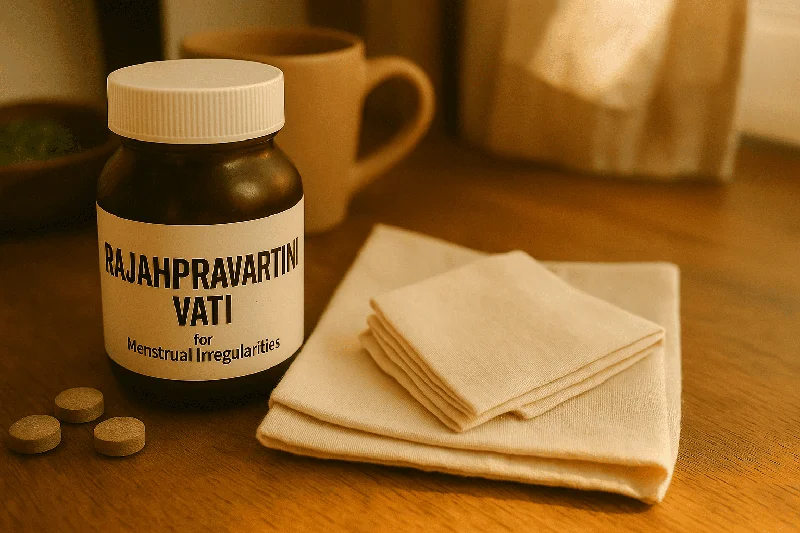
Rajahpravartini Vati is a classical Ayurvedic formulation specifically designed to stimulate and regulate menstruation. If you're dealing with delayed periods, painful cramps, or irregular cycles, this tablet — rooted in centuries-old Ayurvedic wisdom — is one of the most widely prescribed solutions across India. But what exactly does it contain, how does it work, and is it truly safe? This comprehensive guide covers everything you need to know, including details that most sources online simply don't mention.
In Ayurveda, menstrual health is governed primarily by Vata dosha, specifically Apana Vayu — the downward-moving energy responsible for the expulsion of menstrual blood, urine, and reproductive fluids. When Apana Vayu gets obstructed or vitiated, menstrual flow is disrupted. Rajahpravartini Vati works by correcting this imbalance, clearing the channels (Artava Vaha Srotas), and encouraging the natural downward flow of menstruation.
What Is Rajahpravartini Vati?
- Rajahpravartini Vati (also spelled Rajapravartini Vati or Raja Pravartini Vati) is a traditional Ayurvedic tablet-form medicine.
- The name itself is revealing: Rajah means menstrual blood, and Pravartini means "that which initiates or propels." So literally, it's "the tablet that initiates menstruation."
This formulation is documented in Bhaishajya Ratnavali, one of the most authoritative classical Ayurvedic texts, compiled by Govind Das Sen in the 18th century. The specific reference appears in Chapter 67 (Stri Roga Adhikara), verses 57-58.
Historical Background and Classical References
The original Sanskrit shloka from Bhaishajya Ratnavali describes the formulation as follows:
> *"Hingu Kasisa Tankana Samyuktam Kumari Swarasa Bhavitam |
> Rajah Pravartini Vati Artava Kshaya Nashini ||"*
This translates roughly to: "The tablet prepared with Hingu, Kasisa, Tankana, and processed in Kumari (Aloe Vera) juice destroys the diminishment of menstrual flow."
The text prescribes it primarily for Artava Kshaya (scanty or absent menstruation) and related Vata-Kapha disorders of the female reproductive system. Unlike many Ayurvedic formulations that evolved through oral tradition, Rajahpravartini Vati has a well-documented textual lineage, which adds to its credibility and standardization across manufacturers.
How Rajahpravartini Vati Works (Mechanism of Action)
From a modern pharmacological standpoint, the formulation works through multiple pathways simultaneously:
- 1.Uterine stimulation — Hingu (Asafoetida) contains ferulic acid and its derivatives, which have demonstrated spasmogenic (contraction-inducing) effects on uterine smooth muscle in animal studies. A 2017 study published in the Journal of Ethnopharmacology confirmed that Ferula asafoetida extracts stimulate uterine contractions by influencing prostaglandin synthesis.
- 2.Iron supplementation and blood building — Shuddha Kasisa (purified ferrous sulfate) directly addresses iron deficiency, which is a common underlying cause of menstrual irregularities. WHO data indicates that over 50% of Indian women of reproductive age are anemic, making this ingredient particularly relevant.
- 3.Channel clearing (Sroto Shodhana) — Tankana (purified borax) has Lekhana (scraping) properties in Ayurveda, which help remove blockages in the reproductive channels. In modern terms, it may assist in reducing excess Kapha (mucus-like obstructions) in the uterine environment.
- 4.Hormonal modulation — Aloe Vera (Kumari) contains phytoestrogens that can gently influence estrogen receptors. A 2019 study in Phytotherapy Research showed that Aloe vera gel supplementation improved menstrual regularity in women with oligomenorrhea over a 3-month period.
The combined effect is a formulation that simultaneously stimulates uterine contractions, nourishes the blood, clears obstructive Kapha, and balances Vata's downward movement.
Key Ingredients and Their Roles
- Rajahpravartini Vati is a remarkably simple formulation — just four core ingredients, each serving a distinct purpose.
- The classical proportion is 1:1:1 parts of the three main ingredients, processed in Aloe Vera juice.
Shuddha Hingu (Purified Asafoetida / Ferula Asafoetida)
Hingu is a powerful antispasmodic and uterine stimulant. In Ayurveda, it's classified as having Ushna Virya (hot potency) and Katu Rasa (pungent taste), making it excellent for pacifying Vata dosha. It directly stimulates Apana Vayu and promotes downward movement.
Key actions: relieves menstrual cramps, reduces bloating, stimulates uterine contractions, and improves digestive fire (Agni). The resin contains compounds like ferulic acid, umbelliferone, and various sulfur compounds that contribute to its antispasmodic and anti-inflammatory properties.
Important: Only Shuddha (purified) Hingu is used. Raw asafoetida contains impurities that can cause gastric irritation. The purification (Shodhana) process typically involves heating it in ghee, which removes toxic resins while retaining therapeutic compounds.
Shuddha Kasisa (Purified Ferrous Sulfate / Green Vitriol)
Kasisa is a mineral-based ingredient — essentially an Ayurvedic form of iron supplementation. It's the formulation's blood-building component, classified as Tikta (bitter) and Kashaya (astringent) in taste with Ushna Virya.
Key actions: replenishes iron stores, supports hemoglobin formation, and directly addresses the connection between anemia and amenorrhea. In Ayurvedic terms, it nourishes Rakta Dhatu (blood tissue).
Critical safety note: Kasisa MUST undergo proper Shodhana (purification) before medicinal use. The purification involves repeated heating and quenching in specific herbal decoctions (often Bhringaraj juice or cow's urine). Unpurified Kasisa contains excess sulfur compounds and heavy metal impurities that can cause severe gastric distress, vomiting, and even liver toxicity. This is something no other online resource adequately warns about — always ensure your product comes from a GMP-certified manufacturer.
Shuddha Tankana (Purified Borax / Suhaga)
Tankana is a mineral ingredient with Lekhana (scraping/clearing) and Kaphahara (Kapha-reducing) properties. It helps dissolve obstructions in the reproductive channels and has mild antiseptic properties.
Key actions: clears uterine channel blockages, reduces excessive mucus, mild emmenagogue effect, and supports the overall cleansing action of the formulation.
Shodhana process for Tankana: Borax is purified by heating until it swells and becomes porous (a process called Phutana). This removes the bound water and alters the crystalline structure, reducing its potential for mucosal irritation. Without purification, raw borax can cause nausea, vomiting, and in large doses, kidney damage.
Kumari (Aloe Vera) — The Processing Medium
Aloe Vera serves dual purpose — it's both a Bhavana Dravya (processing medium) and an active therapeutic ingredient. The three powdered ingredients are triturated (ground repeatedly) in fresh Aloe Vera pulp or juice until a uniform pill mass forms.
Key actions: mild laxative (supports Apana Vayu), uterine tonic, phytoestrogenic activity, anti-inflammatory, and detoxifying. Aloe Vera also improves the bioavailability of the mineral ingredients.
Ingredient Proportions and Formulation Table
| Ingredient | Sanskrit Name | Proportion | Part Used | Key Properties (Rasa/Virya/Vipaka) |
|---|---|---|---|---|
| Purified Asafoetida | Shuddha Hingu | 1 part | Oleo-gum resin | Katu / Ushna / Katu |
| Purified Ferrous Sulfate | Shuddha Kasisa | 1 part | Mineral | Tikta-Kashaya / Ushna / Katu |
| Purified Borax | Shuddha Tankana | 1 part | Mineral | Katu / Ushna / Katu |
| Aloe Vera | Kumari Swarasa | Q.S. (sufficient quantity) | Fresh leaf pulp/juice | Tikta / Sheeta / Katu |
Q.S. = Quantum Satis — as much as needed for processing
Benefits of Rajahpravartini Vati
Regulates Irregular Menstrual Cycles (Amenorrhea & Oligomenorrhea)
This is the primary indication.
The formulation is most effective for:
- Secondary amenorrhea — absence of periods for 3+ months in a woman who previously had normal cycles
- Oligomenorrhea — infrequent periods with cycles longer than 35 days
- Delayed puberty menstruation — when menarche is delayed beyond expected age
The hot potency ingredients work together to "unblock" the menstrual flow. Most practitioners report visible results within 1 to 3 menstrual cycles of consistent use, though individual responses vary significantly.
Relieves Menstrual Pain and Dysmenorrhea
The antispasmodic properties of Hingu combined with the anti-inflammatory action of Aloe Vera make this formulation effective against painful periods. It works on the smooth muscle of the uterus, reducing excessive contractions that cause cramping.
Addresses Symptoms Beyond Menstruation
According to classical texts, Rajahpravartini Vati also helps with:
- Lower back and pelvic pain associated with menstrual disorders
- Fatigue and excessive sleepiness during menstrual period
- Eye-related burning sensations linked to Pitta-Vata imbalance during menstruation
- Limb pain and heaviness associated with Vata vitiation
Supportive Role in PCOS Management
- While Rajahpravartini Vati is not a standalone treatment for Polycystic Ovary Syndrome (PCOS), it plays a supportive role in comprehensive PCOS protocols.
- PCOS often presents with oligomenorrhea or amenorrhea — precisely the symptoms this formulation targets. Practitioners typically combine it with other formulations like Kanchanara Guggulu and Arogyavardhini Vati for holistic PCOS management.
Potential Impact on Fertility
- Here's something most resources overlook entirely. By regulating ovulation and menstrual cycles, Rajahpravartini Vati can indirectly support fertility in women whose infertility stems from anovulation or irregular cycles.
- However — and this is crucial — the formulation should be discontinued once pregnancy is confirmed or actively being attempted, as its uterine-stimulating properties could theoretically cause complications. Always work with a qualified practitioner when using this for fertility support.
Dosage: How to Take Rajahpravartini Vati
Standard Adult Dosage
| Parameter | Recommendation |
|---|---|
| Dose | 1 tablet (approximately 250 mg) |
| Frequency | Twice daily |
| Timing | After breakfast and after dinner |
| Anupana (vehicle) | Warm water, Tila Kashaya (sesame decoction), or Kulattha Kashaya (horse gram decoction) |
The choice of Anupana matters. Tila Kashaya (sesame seed decoction) is preferred for its Vata-pacifying and uterine-nourishing properties. Kulattha Kashaya (horse gram decoction) is chosen specifically when there's associated obesity or Kapha aggravation.
How Many Days to Take Rajahpravartini Vati to Get Periods?
This is one of the most commonly asked questions. Honestly, there's no universal answer, but here's what clinical experience suggests:
- For simple delayed periods: 5-7 days of use often initiates menstruation
- For chronic oligomenorrhea: 2-3 complete menstrual cycles of use
- For secondary amenorrhea: 3-6 months of consistent use may be needed
Duration of Treatment Course
Most Ayurvedic practitioners recommend a treatment course of 3 to 6 months, taken cyclically.
A common protocol is:
- Take the medicine from day 15 to day 28 of the menstrual cycle (luteal phase)
- Discontinue during active menstruation
- Resume after menstruation stops
- Continue this pattern for 3-6 cycles
Some practitioners prescribe continuous daily use for the first 1-2 months in cases of prolonged amenorrhea, then switch to the cyclical protocol once periods resume.
Age Considerations
No competitor addresses this, so let me be direct:
- Adolescents (under 16): Rajahpravartini Vati should only be used under strict medical supervision. Adolescent menstrual irregularity is often physiological (the body is still establishing its rhythm), and aggressive intervention may not be necessary.
- Women over 40: Use cautiously, as menstrual irregularity may indicate perimenopause rather than a correctable imbalance. Proper diagnosis is essential before starting treatment.
Side Effects of Rajahpravartini Vati
When taken in recommended doses under professional guidance, Rajahpravartini Vati is generally well-tolerated.
However, possible side effects include:
- Gastric irritation — burning sensation, acidity, or nausea (usually due to Kasisa)
- Increased menstrual flow — the medicine is designed to promote flow, so it can sometimes cause heavier-than-normal bleeding
- Loose stools — Aloe Vera has mild laxative properties
- Metallic taste in the mouth (from the mineral ingredients)
- Allergic reactions — rare, but possible especially in those sensitive to Asafoetida
Is Rajahpravartini Vati Safe for Long-Term Use?
This requires nuance. Short to medium-term use (up to 6 months) under medical supervision is generally considered safe. However, long-term continuous use is not recommended because:
- Kasisa (ferrous sulfate) can cause iron overload with prolonged use
- Tankana (borax) may accumulate and potentially affect kidney function over extended periods
- The uterine-stimulating action isn't meant for indefinite use
Always get periodic check-ups including a complete blood count if using beyond 3 months.
स्वयं दवा न लें और प्रतीक्षा न करें। अभी डॉक्टर से चैट शुरू करें
Safety Information and Contraindications
When NOT to Take Rajahpravartini Vati
| Condition | Reason |
|---|---|
| Pregnancy | Strong uterine stimulant — can cause contractions and potential miscarriage |
| Heavy menstrual bleeding (Menorrhagia) | Will worsen excessive bleeding |
| Active gastric ulcer or severe acidity | Hingu and Kasisa can aggravate gastric conditions |
| Known allergy to any ingredient | Particularly Asafoetida allergy |
| Severe anemia (Hb < 7 g/dL) | Needs medical iron supplementation and monitoring first |
| Breastfeeding | Insufficient safety data; mineral ingredients may pass into breast milk |
| Children below 12 years | Not indicated for prepubertal use |
Drug Interactions
This is a significant gap in existing online resources.
Here's what you should know:
- Hormonal contraceptives (birth control pills): Rajahpravartini Vati may interfere with the action of oral contraceptives. Do not take them simultaneously without consulting both your gynecologist and Ayurvedic practitioner.
- Anticoagulants (blood thinners): The emmenagogue action combined with blood thinners may increase bleeding risk.
- Iron supplements: Taking additional iron along with Kasisa-containing formulations can lead to iron overload. Monitor serum ferritin levels.
- Antacids: May reduce absorption of the mineral ingredients.
- Other uterine stimulants: Combined use can cause excessive uterine contractions.

Rajahpravartini Vati vs Other Ayurvedic Menstrual Health Formulations
No online resource currently offers this comparison, and it's something women genuinely need when choosing between options.
| Feature | Rajahpravartini Vati | Ashokarishta | Pushyanuga Churna | Shatavari | M2 Tone |
|---|---|---|---|---|---|
| Primary Action | Stimulates menstrual flow | Regulates flow & reduces bleeding | Controls excessive bleeding | Nourishes female reproductive system | Multi-herb menstrual regulator |
| Best For | Amenorrhea, delayed periods | Heavy bleeding, irregular cycles | Menorrhagia, leucorrhea | General reproductive tonic, menopausal support | PCOS, irregular cycles |
| Dosha Action | Vata-Kapha shamaka | Pitta shamaka | Pitta-Kapha shamaka | Vata-Pitta shamaka | Tridosha |
| Form | Tablet | Liquid (fermented) | Powder | Powder/Tablet | Tablet (proprietary) |
| Can Be Used in Pregnancy | ❌ No | ✅ Yes (with guidance) | ❌ No | ✅ Yes | ❌ Not recommended |
| Classical/Proprietary | Classical | Classical | Classical | Single herb | Proprietary (Charak Pharma) |
- Key takeaway: If your periods are absent or delayed, Rajahpravartini Vati is likely the right choice.
- If you're bleeding heavily, it's the wrong choice — look at Ashokarishta or Pushyanuga Churna instead. For general reproductive wellness, Shatavari is the gentler, long-term option.
Diet and Lifestyle Recommendations During Treatment (Pathya-Apathya)
To maximize the effectiveness of Rajahpravartini Vati, Ayurveda recommends specific dietary and lifestyle modifications:
Pathya (Favorable)
- Warm, freshly cooked foods — soups, khichdi, cooked vegetables
- Sesame seeds and sesame oil — highly beneficial for Vata balance and uterine health
- Horse gram (Kulattha) dal — specifically recommended in classical texts alongside this formulation
- Jaggery in moderate amounts — supports iron absorption and blood building
- Warm water throughout the day — never cold or iced beverages
- Mild exercise — walking, gentle yoga (especially Baddha Konasana, Supta Virasana, and Malasana)
- Regular sleep schedule — aim for 7-8 hours, sleeping by 10 PM
Apathya (Unfavorable)
- Cold foods and drinks — ice cream, cold salads, smoothies (these aggravate Vata)
- Excessively spicy, oily, or processed foods
- Excessive physical exertion or intense exercise during menstruation
- Emotional stress and anxiety — these directly disturb Apana Vayu
- Fasting or skipping meals — irregular eating disrupts Vata
- Daytime sleeping — increases Kapha and can worsen menstrual obstruction
Quick Practical Tips
- Drink warm water first thing in the morning
- Apply warm castor oil to lower abdomen before bed during the luteal phase
- Avoid sitting cross-legged for extended periods as it can obstruct pelvic circulation
- Practice Pranayama (especially Anulom Vilom and Bhramari) daily for hormonal balance
Available Brands and Modern Formulations
Several reputable manufacturers produce Rajahpravartini Vati. Since this is a classical formulation, the core ingredients remain the same across brands, but quality of raw materials, purification processes, and manufacturing standards can vary.
| Brand | Approx. Price (60 tabs) | GMP Certified | Notable Feature |
|---|---|---|---|
| Dabur | ₹85-110 | Yes | Most widely available |
| Baidyanath | ₹75-100 | Yes | Long heritage brand |
| Patanjali Divya | ₹60-80 | Yes | Affordable option |
| Kottakkal (AVN) | ₹90-130 | Yes | Kerala Ayurvedic tradition |
| Dhanvantari | ₹70-95 | Yes | Traditional preparation methods |
| Uma Ayurveda | ₹80-100 | Yes | Available widely online |
What to look for when buying: Always check for GMP certification, manufacturing date and expiry, batch number, and that the label specifically mentions Shuddha (purified) forms of Kasisa and Tankana. Avoid loose, unlabelled preparations from unverified sources.
Frequently Asked Questions (FAQ)
Can Rajahpravartini Vati be taken during pregnancy?
Absolutely not. Rajahpravartini Vati is a strong uterine stimulant. Taking it during pregnancy can cause dangerous uterine contractions, potentially leading to miscarriage. Discontinue immediately if you suspect pregnancy and consult your doctor.
How long does Rajahpravartini Vati take to work?
For simple delayed periods, many women report onset of menstruation within 5-10 days. For chronic irregularities, expect to take the formulation consistently for 2-3 menstrual cycles before seeing significant improvement. Severe or long-standing amenorrhea may require 3-6 months.
Why did my periods stop after taking Rajahpravartini Vati?
This paradoxical response, while uncommon, can occur due to several reasons: incorrect diagnosis (the underlying cause may not be Vata-Kapha related), aggravation of Pitta dosha in Pitta-dominant constitutions, or coexisting conditions like thyroid disorders or PCOS that need separate treatment. If this happens, stop the medicine and consult a qualified Ayurvedic practitioner for reassessment.
Can I take Rajahpravartini Vati with birth control pills?
It's not advisable to take both simultaneously without medical supervision. The uterine-stimulating action of the Vati may interfere with the mechanism of hormonal contraceptives. Consult both your gynecologist and Ayurvedic doctor before combining these.
Is Rajahpravartini Vati effective for PCOS?
It can be a supportive part of a PCOS treatment protocol, particularly for addressing the amenorrhea/oligomenorrhea aspect. However, PCOS is a complex metabolic-hormonal condition that typically requires a comprehensive approach — dietary changes, lifestyle modifications, and often multiple Ayurvedic formulations working together.
What is the difference between Rajahpravartini Vati and Rajapravartini Vati?
There's no difference — these are simply different transliterations of the same Sanskrit name. You'll also see it spelled as Raja Pravartini Vati, Rajah Pravartini Vati, or Rajapravartani Vati. They all refer to the same formulation.
Conclusion
- Rajahpravartini Vati remains one of Ayurveda's most effective classical formulations for addressing absent or delayed menstruation.
- Its elegant simplicity — just four ingredients working synergistically — combined with centuries of documented clinical use makes it a trusted choice for menstrual health support.
However, effectiveness depends heavily on correct diagnosis, proper dosage, quality of the product, and supportive diet and lifestyle measures. Self-medication, especially with mineral-containing Ayurvedic formulations, carries real risks.
My strong recommendation: Consult a qualified Ayurvedic practitioner (BAMS or MD Ayurveda) before starting Rajahpravartini Vati. They can assess your specific Prakriti (constitution), identify the exact cause of your menstrual irregularity, determine whether this formulation is appropriate for you, and design a complete treatment protocol — including dietary guidelines and complementary therapies — that gives you the best chance of lasting results.
- Your menstrual health is a window into your overall wellbeing.
- Don't settle for quick fixes — invest in understanding your body through the lens of Ayurveda.
Disclaimer: This article is for informational and educational purposes only and should not be considered medical advice. Always consult a qualified healthcare practitioner before starting any new medication or supplement. Individual results may vary based on constitution, condition severity, and adherence to treatment protocols.
Scientific Sources
- Efficacy of phytochemicals as immunomodulators in managing COVID-19: a comprehensive view — Bhattacharya S et al., 2021, Virusdisease
- Polyherbal formulation: Concept of ayurveda — Parasuraman S et al., 2014, Pharmacognosy reviews
- Herb-drug interactions — Fugh-Berman A, 2000, Lancet (London, England)
- Medicinal plants of genus Curculigo: traditional uses and a phytochemical and ethnopharmacological review — Nie Y et al., 2013, Journal of ethnopharmacology
- An update on Shankhpushpi, a cognition-boosting Ayurvedic medicine — Sethiya NK et al., 2009, Zhong xi yi jie he xue bao = Journal of Chinese integrative medicine
- SitoshnaPred: Learning phytochemical descriptors to elucidate Ayurvedic herbal potency — Panghalia A et al., 2026, Journal of ethnopharmacology
- From ayurvedic folk medicine to preclinical neurotherapeutic role of a miraculous herb, Tinospora cordifolia — Sharma A et al., 2020, Neurochemistry international
- Benefits of antioxidant supplements for knee osteoarthritis: rationale and reality — Grover AK et al., 2016, Nutrition journal
- Studies on the Determination of Antioxidant Activity and Phenolic Content of Plant Products in India (2000-2017) — Sharma RK et al., 2019, Journal of AOAC International
- Association of L-DOPA with recovery following Ayurveda medication in Parkinson's disease — Nagashayana N et al., 2000, Journal of the neurological sciences
- Are Ayurvedic herbs for diabetes effective? — Shekelle PG et al., 2005, The Journal of family practice
- Ayurveda and in silico Approach: A Challenging Proficient Confluence for Better Development of Effective Traditional Medicine Spotlighting Network Pharmacology — Sahu R et al., 2023, Chinese journal of integrative medicine
- Pharmacological potentials of Premna integrifolia L — Mali PY, 2016, Ancient science of life
- Alteration of Community Metabolism by Prebiotics and Medicinal Herbs — Peterson CT et al., 2023, Microorganisms
- Herbal and Holistic Solutions for Neurodegenerative and Depressive Disorders: Leads from Ayurveda — Sharma R et al., 2018, Current pharmaceutical design
- Terminalia bellirica (Gaertn.) roxb. (Bahera) in health and disease: A systematic and comprehensive review — Gupta A et al., 2020, Phytomedicine : international journal of phytotherapy and phytopharmacology
- Utilization of Ayurveda in health care: an approach for prevention, health promotion, and treatment of disease.Part 1--Ayurveda, the science of life — Sharma H et al., 2007, Journal of alternative and complementary medicine (New York, N.Y.)
- Healthcare and disease management in Ayurveda — Mishra L et al., 2001, Alternative therapies in health and medicine
- Nano-ayurvedic medicine and its potential in cancer treatment — Lopus M, 2023, Journal of integrative medicine
- Analyzing the Use of Medicinal Herbs During the First Wave and Second Wave of COVID-19 — Singh T et al., 2022, Proceedings of the National Academy of Sciences, India. Section B
उपयोगकर्ताओं के प्रश्न
What are the side effects of using Rajahpravartini Vati?
Client_54a28a
6 दिनों पहले
The side effects of using Rajahpravartini Vati may include nausea, vomiting, abdominal pain, and diarrhea, especially if not taken under proper medical guidance. As it is a strong uterine stimulant, it should never be used during pregnancy due to the risk of uterine contractions. It is typically used to address menstrual irregularities and should not be consumed for more than six months continuously unless advised by a healthcare provider. Always consult a qualified practitioner, especially if you have pre-existing health conditions or are on other medications, to avoid potential interactions.
What dietary changes can enhance the effectiveness of Rajahpravartini Vati?
Client_2db334
16 दिनों पहले
To enhance the effectiveness of Rajahpravartini Vati, focus on a well-balanced diet rich in iron, especially if you're dealing with menstrual irregularities or anemia. Foods like leafy greens, lentils, and fortified cereals can support overall health and help manage symptoms. Avoid combining it with anticoagulants, as this may increase bleeding risk. Also, be cautious with iron supplements, as excessive intake with the Kasisa in Rajahpravartini Vati could lead to iron overload. Always consult your gynecologist or healthcare provider before making dietary changes.
Can I use Rajahpravartini Vati to ease PMS symptoms?
Client_e4fa50
25 दिनों पहले
You can use Rajahpravartini Vati to ease PMS symptoms, specifically those related to delayed or irregular menstruation, as it is formulated to stimulate and regulate menstrual cycles. Many women report the onset of menstruation within 5 to 10 days of usage. However, this Ayurvedic formulation is primarily designed for regulating periods rather than specifically targeting PMS symptoms such as bloating, mood swings, or breast tenderness. If you suspect pregnancy, discontinue use immediately and consult a doctor. Always consult with a healthcare provider to ensure it's appropriate for your needs and to avoid potential interactions or side effects.
How long does it take for Rajahpravartini Vati to regulate menstrual flow?
Client_773dbf
35 दिनों पहले
Rajahpravartini Vati may start showing effects on menstrual flow within one to two months, but this can vary depending on individual health conditions and the underlying cause of menstrual irregularities. While this Ayurvedic medicine can help regulate periods by promoting the natural menstrual cycle, it's essential to consider possible interactions with other medications, especially hormonal contraceptives. If you experience severe side effects, such as gastric distress or vomiting, or if menstruation does not regulate after a reasonable period, consult a healthcare professional for a comprehensive evaluation.
How does Rajahpravartini Vati impact fertility in women?
Client_f6d0c8
45 दिनों पहले
Rajahpravartini Vati is traditionally used in Ayurveda to support menstrual health, potentially impacting fertility by promoting regular menstrual cycles. If a woman's irregular periods are due to hormonal imbalances or blockages in the uterine environment, this supplement might aid in addressing these issues, thereby improving fertility over time. However, due to its uterine-stimulating properties, it may interfere with hormonal contraceptives. For women over 40, caution is advised as irregular cycles might indicate perimenopause. Always consult a healthcare provider when considering herbal supplements to address fertility or menstrual issues.
Can I take Rajahpravartini Vati with other supplements for better menstrual health?
Client_19e31e
54 दिनों पहले
Taking Rajahpravartini Vati with other supplements can be helpful, but it depends on what you're planning to combine. It's best to consult an Ayurvedic practitioner to make sure they're compatible and safe, especially if you have other health concerns. Balancing your doshas and understanding your prakriti will help personalize the right approach for your menstrual health!
Can Rajahpravartini Vati help with irregular periods caused by stress?
Client_5a3f51
66 दिनों पहले
Yes, Rajahpravartini Vati can help with irregular periods, including those caused by stress. It helps to balance the doshas and stimulate uterine activity. But for stress-related issues, also focus on calming your mind, maybe try meditation, yoga, or adaptogenic herbs like Ashwagandha. Always consult an Ayurvedic practicioner for personalized advice.
Is it normal to experience mood swings while taking Rajahpravartini Vati?
Client_285c19
75 दिनों पहले
Mood swings could happen with Rajahpravartini Vati, especially if there's an imbalance in doshas or if you're sensitive to its effects. Everyone's prakriti (constitution) is different, so it might not suit everyone the same. Keep an eye on your moods and cycle, & consider adjusting the dose or consulting with a practitioner if you're feeling off track.
What causes hormonal imbalances in women besides Pitta and Vata doshas?
Client_b7e01c
84 दिनों पहले
Hormonal imbalances can also be influenced by stress, nutritional deficiencies (like low iron or vitamin D), and lifestyle habits like poor sleep or exercise. Agni, or digestive fire, plays a big role too - if it's weak, it'll affect how your body processes nutrients and hormones. Balancing your lifestyle and diet's key to managing this!
Can Rajahpravartini Vati help with painful periods?
Client_9d494e
93 दिनों पहले
Yup, Rajahpravartini Vati is traditionally used in Ayurveda to help regulate and stimulate the menstrual cycle, which can make it useful for painful periods. But, it's key to consider your unique dosha balance (like Pitta or Vata) to get the best results. I'd recommend reaching out to an Ayurvedic practitioner to see how it fits with your body and specific needs.
संबंधित आलेख

Gynecology and Obstetrics
How to Balance Hormones for Acne: Ayurvedic Approach and Natural Treatment
How to balance hormones for acne? Discover Ayurvedic methods, hormonal acne treatment, natural remedies, and how to clear up hormonal acne fast at home
3,458

Gynecology and Obstetrics
Indukantham Kashayam Side Effects – Understanding Risks & Precautions
Explore the potential side effects and precautions associated with Indukantham Kashayam, a traditional Ayurvedic decoction. Learn how to use this remedy safely for optimal wellness.
4,567
Gynecology and Obstetrics
Natural Adenomyosis Treatment in Ayurveda for Relief & Wellness
Discover Ayurvedic approaches for adenomyosis, including herbal remedies, treatment protocols, dosage guidelines, and evidence-based insights to support women's health.
4,429

Gynecology and Obstetrics
Bulky Uterus Treatment in Ayurveda – Natural Approach for Uterine Health
Bulky uterus treatment in Ayurveda offers a holistic and natural approach to managing conditions related to an enlarged or bulky uterus.
4,214

Gynecology and Obstetrics
How to Get Periods Immediately: Ayurvedic Remedies, Food, and Tips
Learn how to get periods immediately using natural methods, food, exercises, and Ayurvedic remedies. Understand safe ways to induce menstruation effectively
16,225

Gynecology and Obstetrics
Ayurvedic Medicine for Amenorrhea: A Natural Approach to Restoring Menstrual Health
Amenorrhea, the absence of menstrual periods, can be a distressing condition for many women. It can stem from various causes such as hormonal imbalances, stress, excessive exercise, or underlying health issues.
3,596

Gynecology and Obstetrics
Bartholin Cyst Ayurvedic Treatment – Natural Remedies & Holistic Healing
Discover effective Ayurvedic treatments for Bartholin cysts, utilizing natural herbs and holistic practices to alleviate symptoms, reduce cyst size, and promote vaginal health naturally.
7,201

Gynecology and Obstetrics
What Causes Lower Abdominal Pain in Females: Ayurvedic Diagnosis and Relief
What causes lower abdominal pain in females? Discover Ayurvedic insights into left and right lower belly pain, root causes, and natural ways to restore balance
2,202

Gynecology and Obstetrics
How to Increase Sperm Count by Food: Ayurvedic Nutrition and Fertility
Explore food to increase sperm count, improve motility, and boost male fertility with the best Ayurvedic nutrition, herbs, and lifestyle practices
4,084

Gynecology and Obstetrics
After Pregnancy Belt: An Ayurvedic Perspective That’s More Than Skin-Deep
Okay, let's get something straight right from the start — the phrase “after pregnancy belt” might sound like something you’d pick off a shelf at a pharmacy or buy online without a second thought. Something modern, maybe even gimmicky. But in Ayurveda, thi
2,761
विषय से संबंधित परामर्श
अतिरिक्त दस्तावेज़
© 2024 Ask Ayurveda. सर्वाधिकार सुरक्षित।