आयुर्वेदिक डॉक्टर से प्रश्न पूछें और निःशुल्क या भुगतान मोड में अपनी चिंता की समस्या पर ऑनलाइन परामर्श प्राप्त करें। 2,000 से अधिक अनुभवी डॉक्टर हमारी साइट पर काम करते हैं और आपके प्रश्नों का इंतजार करते हैं और उपयोगकर्ताओं को उनकी स्वास्थ्य समस्याओं को हल करने में प्रतिदिन मदद करते हैं।
मुफ्त! आयुर्वेदिक डॉक्टरों से पूछें 24/7

 तेज़ प्रतिक्रियाएँ
 1000+ सत्यापित डॉक्टर
Body DetoxEar, Nose, and Throat DisordersGeriatrics & RejuvenationImmunodeficiencyInfertility TreatmentNutritionOrthopedic DisordersPediatricsRespiratory DisordersSexually Transmitted Diseases (STDs)Surgery RecoveryUrological DisordersVascular DisordersDental DisordersEndocrinological DisordersGastrointestinal DisordersYoga TherapyGeneral MedicineAllergic DisordersCardio DisordersGynecology and ObstetricsCosmetologySkin and Hair DisordersEye DisordersInfectious DiseasesMental DisordersNeurological DisordersOncologyPanchakarmaSexual Health & DisordersSports Medicine
पर प्रकाशित 04/24/25
(को अपडेट 06/18/26)
3,807
Ayurvedic Steam Bath: The Ancient Detox Ritual That Still Works Wonders
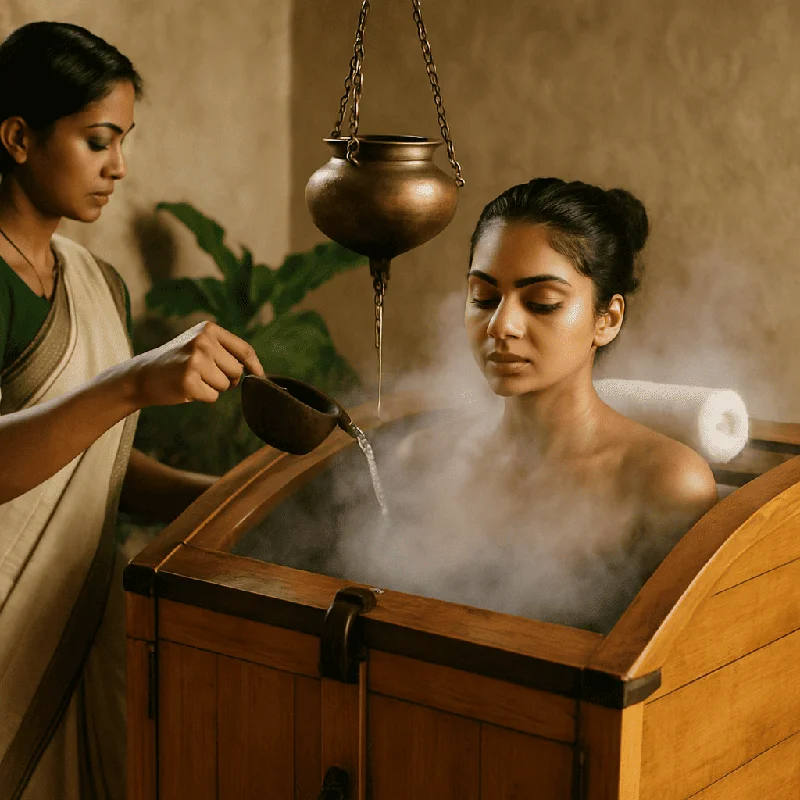
What’s an Ayurvedic Steam Bath Anyway? (And Why It’s a Big Deal)
Let’s be honest — the idea of sitting in a cloud of herbal steam doesn’t immediately scream “deep healing,” right? Feels more like a fancy spa indulgence. But in Ayurveda, this isn’t just a luxury. It’s a freaking core therapeutic ritual, and it goes by the name Swedana (or Swedana Karma, if we’re being formal).
So what is it?
Simply put, an Ayurvedic steam bath is a process where the body is exposed to steam infused with medicinal herbs — not just to make you sweat, but to mobilize toxins, loosen stubborn doshas, and open up the body’s inner channels (srotas). This isn’t your run-of-the-mill steam room. It’s personalized, deeply intentional, and tailored to your constitution (prakriti), imbalances (vikriti), and even the weather outside.
The role it plays in Ayurveda is massive. Swedana is often a preliminary step in Panchakarma, the legendary five-fold detox. Think of it as the warm-up before a serious reset — it loosens up everything gunky inside so it can be expelled properly later.
But why should you care?
Here’s what you’re walking away with after reading this:
-
A full grasp of what an Ayurvedic steam bath actually involves (not the “Instagram version”).
-
The real reasons Ayurveda swears by this practice for everything from stiff joints to anxiety.
-
Whether it’s something you should try (spoiler: maybe, but not blindly).
-
How to actually do it — ingredients, steps, and post-care included.
-
Plus, scattered real-life stories and reflections that make it all feel... well, human.
So whether you’re here because someone at yoga class mentioned it, or because your back feels like it belongs to a 70-year-old, welcome. Let’s unpack this.
Where Did Ayurvedic Steam Baths Even Come From?
A Look Back: The History and Origin of Swedana (Ayurvedic Steam Bath)
To appreciate Ayurvedic steam baths, we’ve gotta rewind a long way. Like, way before saunas became trendy wellness retreats in the West — we’re talking ancient India, where health wasn't separated from spirituality, environment, or daily routine.
Historical Background and Roots of Swedana
The practice of inducing sweat isn’t new — various cultures have used it as a purification method (Native American sweat lodges, Roman baths, Turkish hammams). But in Ayurveda, Swedana is systematized. It’s not just about sweating. It’s about unblocking stagnation, correcting dosha imbalances, and preparing the body for deeper healing.
The word “Swedana” comes from the Sanskrit root “sveda”, meaning sweat. But there are actually multiple types:
-
Nadi Swedana: Using a tube or steam pipe to target specific parts of the body.
-
Bashpa Swedana: A full-body steam bath (except for the head), where you sit inside a wooden steam box.
-
Upanaha, Ushma, and Avagaha: These are more localized or specialized forms.
Ayurvedic Textual References
In the Charaka Samhita, a foundational Ayurvedic text (think medical textbook meets spiritual guide), Swedana is described in detail as a Purvakarma (pre-procedure) for Panchakarma. Charaka goes deep into who should do it, when, how, and with what herbs. Sushruta and Vagbhata — other legendary Ayurvedic scholars — also emphasized its use for muscular disorders, skin issues, and even mental fog.
Some lines even say Swedana can make the body “as soft and flexible as a creeper in the wind.” Kind of poetic, right?
Traditional Use and Evolution
In olden times, Swedana wasn’t some high-end therapy. It was practical. Farmers used it after long days of labor. Monks and yogis used it to keep the body light and the mind clear. Families had home setups with boiling herbs in clay pots and makeshift tents.
Over time, the ritual aspect faded for many, replaced by mechanical steam rooms. But in authentic Ayurvedic clinics (especially in Kerala), the original methods — with their intoxicating herbal scents and careful doshic adjustments — are still alive and well.
Why Even Bother with It? Let’s Talk Purpose and Benefits
Okay, so now that we know what Swedana is and where it comes from, let’s get into the why. Why do people keep going back to this steaming ritual? Why would a 5,000-year-old therapy still have a seat at the wellness table in 2025?
Physical Health Benefits of Ayurvedic Steam Baths
-
Detox, but not the Instagram kind. Swedana helps open the skin’s pores and liquefies toxins (called ama in Ayurveda), which are then flushed out through sweat. It's actual physiological detox, not just lemon water.
-
Joint pain? Stiffness? Say less. The heat penetrates tissues, reducing Vata-related stiffness — it’s especially helpful in arthritis, back pain, and frozen shoulder.
-
Boosts metabolism. Some people report better digestion post-Swedana. Why? The heat increases Agni, your digestive fire. Everything flows better when you're warm.
-
Improves circulation and clears the channels (srotas). Think less sludge, more smooth flow.
Mental and Emotional Benefits
This is the part that often surprises people.
-
The herbal steam can feel like a warm, mossy cocoon — grounding, calming, sometimes even emotional.
-
It’s not uncommon to cry during Swedana. And no, not because of the heat. It's like your body’s way of releasing tension it’s been holding for years.
-
When done properly, Swedana helps reduce Tamas (inertia) and Rajas (overactivity) in the mind — leaving a sense of lightness and clarity.
Balancing the Doshas
Let’s break it down:
-
Vata (air + space): Swedana calms Vata beautifully. The warmth, the moisture — it’s like giving your nervous system a warm hug.
-
Kapha (earth + water): It’s a game-changer for Kapha. Melts heaviness, congestion, lethargy.
-
Pitta (fire + water): Tricky. Pitta types may overheat, so herbs and temperature must be adjusted carefully. Think coriander, sandalwood — cooling additions to balance the fire.
Okay, But How Do You Actually Do an Ayurvedic Steam Bath?
So you’re convinced — or at least curious. But you’re wondering what the heck this looks like in real life. Is it DIY-able? Is there a huge wooden box involved? Can you do it wrong?
Let’s walk through it.
Preparation for the Procedure
You don’t just hop into a steam bath after a burger and three espressos.
-
Light meal or empty stomach is ideal.
-
Some Panchakarma protocols recommend a light Abhyanga (oil massage) beforehand — helps loosen toxins.
-
Choose your herbs based on your dosha or condition (more on this later).
Oh, and be hydrated. You’d be surprised how many people forget that one.
Step-by-step Guide
-
Set up the steam chamber or tent. If you’re at home, this might be a wooden box, or just a stool and a thick sheet over a boiling herb pot. The idea: your body gets steamed, but not your head.
-
Sit inside or on the stool. Keep your head cool. Steam should envelop your body — not blast it.
-
Let the herbs do their magic. Steam for 10–20 minutes, or until light sweat forms. You shouldn’t be exhausted or drenched.
-
Rest afterward. No running to your phone. Just sit. Or lie down. Let your body cool naturally.
How Often Should You Do It?
-
For general wellness: once a week is lovely.
-
For specific conditions: your Ayurvedic practitioner will decide — could be daily during detox.
-
Don’t overdo it. Too much Swedana can deplete Ojas, your vital energy.
Herbs, Oils, and Secret Sauce That Go Into It
Here’s where things get really interesting. Because this isn’t just water vapor — the steam is loaded with herbs that literally change its effect on your body and mind.
Key Herbs and Oils
-
Dashamoola: Classic combo of ten roots, especially good for Vata and joint issues.
-
Nirgundi: Pain-relieving, anti-inflammatory.
-
Tulsi and Eucalyptus: Great for Kapha — opens up sinuses.
-
Sandalwood and Vetiver: For cooling and grounding. Think Pitta.
-
Lemongrass, Ginger, or Trikatu: Stimulating, warming, metabolism-boosting.
Why These Ingredients Matter
Every single herb has a guna — a quality — and that affects how it interacts with your dosha. That’s why Ayurvedic steam isn’t a one-size-fits-all deal.
It’s also why doing Swedana without understanding these herbs can sometimes make things worse. Example: adding mustard seed steam to an already inflamed Pitta person? Recipe for disaster.
Where to Get the Good Stuff
Ideally:
-
Reputed Ayurvedic pharmacies like Arya Vaidya Sala, Kottakkal, or Himalaya.
-
Local Ayurvedic doctors — they often make custom blends.
-
Online? Maybe. But stick to certified, organic sources. And watch out for shady listings on marketplaces.
स्वयं दवा न लें और प्रतीक्षा न करें। अभी डॉक्टर से चैट शुरू करें
Not for Everyone: When to Use Caution
I know, I’ve been hyping this up. But here’s the catch: Ayurvedic steam baths aren’t a universal miracle.
Who Should Definitely Consider It
-
People with joint stiffness, dry skin, or poor circulation.
-
Folks undergoing Panchakarma or seasonal detox.
-
Those feeling mentally heavy, sluggish, or foggy-brained.
Who Should Avoid or Be Super Careful
-
Pregnant women — the heat can be risky.
-
People with Pitta aggravation (acne, ulcers, inflammation).
-
Those with weak heart or low blood pressure — steam can be too intense.
-
Debilitated or elderly individuals unless supervised by a practitioner.
When to Seek Advice First
If you’re not sure about your dosha, your health status, or which herbs to use — talk to someone. A real Ayurvedic expert can make or break your experience here. This isn’t a one-size-fits-all sauna.
What Happens After the Steam? Don’t Skip the Aftercare
This part’s easy to forget. You’ve just had a warm, herb-infused session that made you feel floaty and detoxed — you’re glowing. But Ayurvedic wisdom is very clear: what you do next can make or break the benefits.
Lifestyle Adjustments After Swedana
-
Rest. Seriously, rest. This isn’t the time to sprint to the grocery store or scroll Instagram. Let your body recalibrate.
-
No cold exposure. Don’t jump into an AC room or shower with cold water — your pores are open, your agni is stirred up. Keep warm and cozy.
-
Be gentle with exercise — yoga, walking, or just stretching. Nothing intense right after.
What to Eat (and What Not To)
Ayurveda's post-Swedana diet is all about simplicity.
-
Warm, light meals. Think khichdi, soups, soft vegetables, rice gruel (kanji).
-
Avoid anything cold, raw, fried, or heavy.
-
Drink warm herbal teas to stay hydrated — cumin-coriander-fennel tea is a go-to.
-
No caffeine, alcohol, or sugary desserts for at least 12 hours — just don’t.
Common Post-Steam Mistakes
-
Going out in wind or sun immediately afterward.
-
Eating a large, greasy meal right after. Your body is still processing!
-
Doing it too frequently or too long — which can dry you out or deplete Ojas.
Post-care is where you lock in the transformation. Skip it, and it’s like watering a plant and then tossing it in the sun with no pot.
What Does Modern Science Say About All This?
Alright, let’s get nerdy. Ayurvedic steam baths sound poetic and ancient — but do they hold up in the age of double-blind clinical trials?
Surprisingly, yes.
Research Supporting Swedana
-
A 2013 study in the Journal of Ayurveda and Integrative Medicine found that Swedana improved outcomes in arthritis patients when used alongside other Panchakarma therapies.
-
Another study noted increased circulation, muscle relaxation, and skin detoxification markers post-treatment.
-
Anecdotally, many Ayurvedic doctors report improvements in menstrual issues, asthma, and anxiety.
Clinical Trials and Evidence
Let’s be real — Ayurvedic therapies don’t always get big funding. But a few trials do exist:
-
Comparative studies showed Swedana was equally (or more) effective than physical therapy in reducing lower back pain in certain age groups.
-
Mental health studies showed steam therapy helped reduce cortisol and improve sleep.
Are the trials massive and multi-centered? Not yet. But they’re there, and the trend is growing.
Ayurveda vs. Conventional Steam Therapies
A steam room in your gym might help you sweat, sure. But it doesn’t:
-
Use herbs tailored to your constitution.
-
Work in harmony with a larger healing protocol.
-
Follow a pre/post care ritual that considers every layer of your being.
Ayurvedic steam isn’t just therapy — it’s a relationship with your body.
So... Does It Actually Work? Let’s Hear from Real People
Sometimes, the best science is in the stories.
Patient Stories
-
Ritu, 39, Mumbai: “I had chronic fatigue after my second child. My doctor added Swedana to my detox plan — within 10 sessions, my sleep and digestion improved dramatically.”
-
Kabir, 62, Delhi: “I’ve had osteoarthritis for years. Steam baths with Dashamoola made my joints feel less stiff — I started gardening again.”
-
Anonymous (me, actually): I cried during my third Swedana. Not sobbing — more like a deep sigh from the body. Something old, gone.
Realistic Expectations
Swedana isn’t a magic pill. But when used properly, it:
-
Loosens deep-seated tension (physical and emotional).
-
Helps your body eliminate stuff it’s been holding onto for too long.
-
Can be profoundly therapeutic — especially as part of a bigger Ayurvedic plan.
Wrapping It Up: Final Thoughts on Ayurvedic Steam Bath
So — where are we now?
We’ve covered:
-
What an Ayurvedic steam bath is.
-
How it's rooted in ancient texts, but still wildly relevant.
-
The physical, emotional, and spiritual benefits.
-
Who should do it (and who really shouldn’t).
-
How to actually do it.
-
And why science is slowly catching up to what Ayurveda knew all along.
Here’s what I think: Swedana is one of those practices that reveals more with time. It’s not loud or trendy. It’s subtle. It works in whispers, not shouts. And if you’re ready to listen — it’s kind of beautiful.
If you're thinking of trying it, talk to a real Ayurvedic practitioner. Not just Google. Get guidance, especially the first time.
Want to explore a Swedana protocol designed just for your dosha and health goals? Visit Ask-Ayurveda.com — their practitioners offer personal consultations, and they actually care.
FAQs About Ayurvedic Steam Baths
1. Can I do an Ayurvedic steam bath at home?
Yes — with caution. Use a stool, a tent or thick sheet, a pot of herbs, and be sure to keep your head cool. But ideally, consult a practitioner first.
2. How is it different from a regular steam room?
Ayurvedic steam uses medicinal herbs customized to your body type. It’s also part of a broader detox or healing protocol — not just for relaxation.
3. Is it safe during pregnancy?
No. Ayurveda generally advises against steam therapy during pregnancy due to risks of overheating and circulation shifts.
4. How often should I do Swedana?
Once a week is great for general wellness. More frequent sessions may be part of a detox program under expert supervision.
5. What should I eat after a steam bath?
Light, warm, cooked foods — khichdi, soups, herbal teas. Avoid cold, raw, fried, or processed stuff.
References and Sources
-
Ministry of AYUSH, Government of India -
Arya Vaidya Sala, Kottakkal -
The Ayurvedic Institute -
Journal of Ayurveda and Integrative Medicine
उपयोगकर्ताओं के प्रश्न
What is the role of Agni in Ayurvedic steam therapy for digestion?
Una
8 दिनों पहले
Agni, or digestive fire, is boosted by steam therapy in Ayurveda, helping you digest food better and balance digestion. When you increase your Agni with Swedana (steam), it helps your body process nutrients more efficiently. However, it's important to be mindful, as too much heat can sometimes aggravate Pitta, leading to imbalances. Use it thoughtfully!
Is it safe to use Ayurvedic steam therapy for someone with respiratory issues?
Avery
17 दिनों पहले
Ayurvedic steam therapy, or Swedana, can sometimes help alleviate respiratory issues by loosening mucus and soothing discomfort, but it's not for everyone. If you have specific respiratory conditions like asthma, I'd say proceed cautiously. Best to consult an ayurvedic practitioner to check if it’s a good fit for your dosha and health state. Keep the head cool during steam sessions to balance Pitta.
How does Ayurvedic steam therapy support detoxification in the body?
Raven
26 दिनों पहले
Ayurvedic steam therapy, known as Swedana, helps support detox by opening up your pores and promoting sweating, which helps eliminate toxins, improve circulation, and boost agni (digestive fire). It's like giving your body a gentle push to let go of what's not needed—Sushruta, an ancient scholar, was all for it. Keep in mind though, it's not a one-size-fits-all and best done considering your individual dosha and imbalances.
Can I use Ayurvedic steam baths to help with stress relief and relaxation?
Xanthe
35 दिनों पहले
Yes, Ayurvedic steam baths, or Swedana, can be amazing for stress relief and relaxation! The steam helps open up your inner channels and can reduce tension. Just remember to keep the temperature in check, especially if you're a Pitta type, as they can overheat quickly. Pick herbs that calm the mind, like lavender or chamomile, for added benefits.
Is it safe to combine Ayurvedic steam baths with other wellness practices?
Owen
45 दिनों पहले
Yeah, Ayurvedic steam baths can be combined with other wellness practices but there’s some things to consider. Be mindful not to overstimulate yourself or overwhelm your system. Listen to your body, and if you're unsure, consult with an Ayurvedic practitioner to ensure it aligns with your dosha balance and overall health goals.
Can I use steam baths to help with muscle soreness after workouts?
Charlotte
55 दिनों पहले
Yeah, steam baths can help with muscle soreness, they work wonders for increasing circulation and relaxing tight muscles. Just be mindful of your body’s heat capacity—keep your head cool and don’t overdo it! If you have a Pitta imbalance, maybe go easy on the heat. A little trip to the steam room could be a great addition for post-workout recovery.
What is the history and origin of Ayurvedic steam therapy in traditional practices?
Isabella
64 दिनों पहले
Ayurvedic steam therapy, or Swedana, origins trace back to ancient India as a part of Panchakarma. Traditionally, it was used to balance the doshas and improve prana (life energy). Unlike regular steam rooms, it mixes herbs based on your specific needs, helping detox and rejuvenate. It's been part of not just wellness, but also healing traditions. It's kinda personalized medicine!
What is the best food to eat after a steam bath for recovery?
Zara
74 दिनों पहले
After a steam bath, it's great to go for light, warm, and cooked foods. Things like khichdi, soups, and herbal teas are awesome because they're easy to digest and nourishing. They help balance your doshas and support digestion. Plus, your body’s saying “ahhh” in relief not “oh no". Enjoy the warmth!
What is the best time of day to do an Ayurvedic steam bath for maximum benefits?
Lucy
83 दिनों पहले
The best time to do an Ayurvedic steam bath, or Swedana, is generally in the morning. Your agni (digestive fire) is getting started, so it's a good time for detox. Just make sure not to do it on a full stomach. If morning doesn’t work for you, try late afternoon but definitely avoid doing it right after eating. Hope that helps!
What traditional practices can I combine with Ayurvedic steam baths for better physical and mental health?
River
161 दिनों पहले
Combining Ayurvedic steam baths with practices like Abhyanga, self-massage using herbal oils, can really enhance relaxation. Also, try breathing exercises like pranayama to balance prana and calm the mind. A short meditation session post-steam helps reset mentally. Make sure to avoid these when you're too hot; listen to your body!
संबंधित आलेख
Body Detox
Shirobasti: The Ayurvedic Secret Your Head Has Been Waiting For
Alright, let’s get real for a second. You ever feel like your head’s just... full? Not full of ideas or thoughts — I mean full, like pressure, pain, fog, heat, tension, noise, or all of the above doing a party up there with no invitation? That’s the world
2,468

Body Detox
How to Take Steam Bath at Home: Ayurvedic Guide to Detox and Relaxation
How to take steam bath at home? Learn how to make a steam bath at home, set it up safely, and use herbal bath powders for detox, relaxation, and skin care
6,258

Body Detox
दिव्य मुक्तावटी के उपयोग, खुराक, सामग्री, साइड इफेक्ट्स
<div>दिव्य मुक्तावटी के उपयोग, खुराक, सामग्री, और साइड इफेक्ट्स की खोज</div>
2,990
Body Detox
How to Detox Your Body Naturally with Ayurvedic Practices
Learn how to detox your body naturally with Ayurvedic methods. Discover herbs, tips, and home remedies to remove toxins and restore energy—start your cleanse today
2,775

Body Detox
Pitta Body Part: The Ayurvedic Key to Balance, Energy, and Vitality
In Ayurveda, pitta dosha governs transformation. It’s the element that takes the raw materials of life — food, information, sunlight, even emotions — and cooks them into something we can actually use. It’s metabolism, digestion, comprehension. Pitta’s pla
2,555

Body Detox
Disadvantages of Drinking Lemon Water Daily: What Ayurveda Says
Discover the disadvantages of drinking lemon water daily. Learn its side effects on kidneys, digestion, and hormonal balance, especially for males and females
6,655

Body Detox
त्रिफला क्वाथ के फायदे, खुराक, सामग्री, साइड इफेक्ट्स
त्रिफला क्वाथ के फायदे, खुराक, सामग्री, और साइड इफेक्ट्स की खोज
2,324

Body Detox
अमृतोत्तरा कषायम के फायदे, खुराक, साइड इफेक्ट्स और सामग्री
अमृतोत्तरा कषायम के फायदे, खुराक, साइड इफेक्ट्स और सामग्री की खोज
1,565

Body Detox
Ayush Kwath Powder: How to Use It, Benefits, and Daily Dosage
Explore Ayush kwath powder uses. Learn the correct dosage, benefits, uses, and ingredients of Ayush kwath powder and how to prepare it at home for immunity
3,141

Body Detox
How to Balance Vata Dosha Without Losing Your Mind (or Your Sleep)
Yeah, that title might sound dramatic, but if you've ever experienced a Vata imbalance, you’ll get it. Racing thoughts, dry skin, irregular digestion, insomnia... it’s like your body forgot the rhythm of life. So, how do we bring it back into balance?
2,840
विषय पर संबंधित प्रश्न
जिंदल में पहले ठहरने के बाद वजन घटाने और कमर दर्द से राहत पाने के लिए डिटॉक्स कैसे करें?
21 दिनों पहले
108 किलो वजन वाले 20 साल के लड़के को डाइट बदलने के बाद भी कोई रिजल्ट नहीं मिला है, तो उसे डिटॉक्स कैसे करें?
27 दिनों पहले
क्या मुझे बेहतर परिणामों के लिए ब्लड डिटॉक्स खाने के साथ लेना चाहिए या बिना?
27 दिनों पहले
अतिरिक्त दस्तावेज़
© 2024 Ask Ayurveda. सर्वाधिकार सुरक्षित।