Agastiprash: Comprehensive Benefits and Ayurvedic Uses Explained
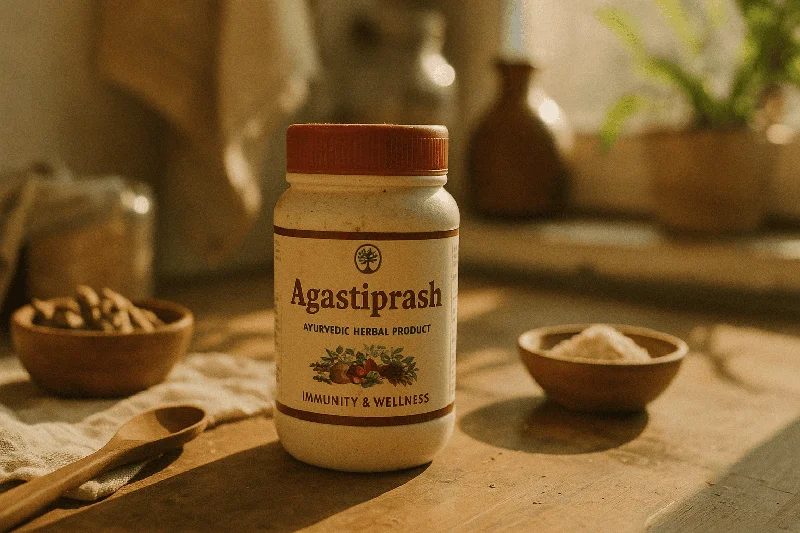
Agastiprash is a classical Ayurvedic herbal formulation (Avaleha/Rasayana) used primarily for chronic constipation, respiratory disorders, hemorrhoids, appetite loss, and age-related weakness. It works as a metabolic rejuvenator tonic that gently detoxifies the body while strengthening digestion, immunity, and overall vitality. Named after the legendary Vedic sage Agastya, this semi-solid herbal jam has been prescribed in traditional Indian medicine for centuries — and remains one of the most trusted formulations in clinical Ayurvedic practice today.
If you've been searching for a natural, time-tested solution that addresses multiple health concerns simultaneously, this is probably the most comprehensive guide you'll find on Agastiprash. We cover everything from its full ingredient breakdown and dosage guidelines to side effects, seasonal recommendations, and how it compares to the more popular Chyawanprash.
What Is Agastiprash?
Agastiprash (also spelled Agastyaprash or Agastya Rasayana) belongs to the Avaleha category of Ayurvedic medicines — semi-solid herbal preparations made by cooking herbs in a decoction with jaggery or sugar, ghee, and honey. It is classified as a Rasayana, meaning its primary purpose is rejuvenation and longevity.
Unlike many modern supplements that target a single symptom, Agastiprash operates on the Ayurvedic principle of holistic restoration. It simultaneously addresses digestive sluggishness, respiratory congestion, and metabolic weakness. Think of it as a full-system tune-up rather than a quick fix.
The formulation is referenced in classical Ayurvedic texts including the Charaka Samhita and Sharangdhara Samhita, placing it firmly in the category of classical (Shastriya) medicines — not proprietary or patent formulations. This distinction matters because classical preparations follow standardized recipes documented over millennia, ensuring consistency across manufacturers.
The Legacy of Sage Agastya
The name "Agastiprash" derives from Maharishi Agastya, one of the Saptarishis (seven great sages) in Vedic tradition. Sage Agastya is particularly revered in South Indian Siddha medicine and is credited with developing several Rasayana formulations designed to combat aging and disease.
According to Ayurvedic lore, Agastya developed this formulation specifically to address the health challenges caused by damp, cold environments — which explains its strong emphasis on respiratory health and digestive fire (Agni). The formulation was later codified by Charaka and other classical authors, preserving it for clinical use across generations.
Agastiprash vs Chyawanprash: Key Differences
This is a question almost everyone asks but surprisingly, none of the existing guides online answer it properly. Both are Avaleha-type Rasayanas, but they serve quite different primary purposes.
| Feature | Agastiprash | Chyawanprash |
|---|---|---|
| Primary action | Mild laxative + respiratory support | Immunity booster + general tonic |
| Key base herb | Haritaki (Terminalia chebula) | Amla (Emblica officinalis) |
| Best for | Constipation, piles, cough, senile debility | Low immunity, frequent infections, weakness |
| Dosha focus | Primarily Vata and Kapha | All three Doshas (Tridosha) |
| Laxative effect | Yes (mild, non-habit-forming) | Minimal |
| Digestive fire | Strongly kindles Agni | Moderately supports Agni |
| Seasonal preference | Monsoon & Winter (Varsha, Hemant) | Winter & Spring (Hemant, Vasant) |
| Common availability | Specialty Ayurvedic stores | Widely available (supermarkets) |
Bottom line: If your main concerns are chronic constipation, non-bleeding piles, or persistent cough with digestive weakness, Agastiprash is the more targeted choice. Chyawanprash is better suited as a general daily immunity tonic.
Complete Ingredients List of Agastiprash
One of the biggest gaps in existing online resources is a detailed breakdown of what actually goes into Agastiprash. Here's the full composition based on classical references, along with each ingredient's therapeutic role.
Primary Herbs and Their Roles
| Ingredient (Sanskrit) | Botanical Name | Key Action in Formula |
|---|---|---|
| Haritaki | Terminalia chebula | Chief ingredient — mild laxative, digestive stimulant, Rasayana |
| Dashamoola (10-root blend) | Various (including Aegle marmelos, Gmelina arborea) | Anti-inflammatory, Vata-pacifying, pain relief |
| Gokshura | Tribulus terrestris | Urinary tract support, kidney tonic, aphrodisiac |
| Pippali | Piper longum | Bioavailability enhancer, respiratory expectorant |
| Draksha | Vitis vinifera (grape) | Nutritive tonic, mild laxative, blood purifier |
| Chandana | Santalum album (Sandalwood) | Cooling, anti-inflammatory, pitta-pacifying |
| Vamshalochana | Bambusa arundinacea (Bamboo manna) | Respiratory support, calcium source |
| Twak | Cinnamomum zeylanicum (Cinnamon) | Digestive stimulant, carminative, flavoring |
| Ela | Elettaria cardamomum (Cardamom) | Carminative, anti-nausea, respiratory support |
| Ashtavarga | Group of 8 rare herbs | Rejuvenative, strength-promoting (traditionally difficult to source, often substituted) |
Base & Processing Ingredients
- Sharkara (Sugar/Mishri) — acts as a vehicle and preservative; also has cooling properties
- Ghrita (Clarified butter/Ghee) — lipid-soluble herb carrier, enhances bioavailability
- Madhu (Honey) — added after cooling; acts as Yogavahi (carrier that enhances drug delivery)
- Til Taila (Sesame oil) — in some formulations, used as an additional lipid base
Approximate Proportions
Classical texts describe Haritaki as the dominant ingredient by weight, typically constituting around 25-30% of the total herbal content. Dashamoola collectively makes up another 20-25%, while the remaining herbs are present in smaller but therapeutically significant quantities (typically 3-8% each). Sugar, ghee, and honey together form the base medium, roughly equaling the total herbal content by weight.
> Note: Exact proportions vary slightly between manufacturers depending on which classical text they reference. Always check the label for the specific formulation you purchase.
What Is Agastiprash Used For? — Key Benefits and Indications
Digestive Health and Chronic Constipation
This is perhaps the most well-documented application. Agastiprash works as a mild, non-griping laxative primarily through the action of Haritaki, which promotes intestinal peristalsis without causing dependency. Unlike stimulant laxatives (such as senna), Haritaki-based formulations regulate bowel movements by toning the intestinal muscles rather than irritating them.
A 2017 study published in the Journal of Ethnopharmacology confirmed that Terminalia chebula exhibits prokinetic activity in the gastrointestinal tract, supporting its traditional use for constipation. Clinical Ayurvedic practitioners commonly prescribe Agastiprash for patients with chronic functional constipation, particularly in elderly individuals where harsh purgatives are contraindicated.
Practical tip: For constipation specifically, taking Agastiprash at bedtime with warm milk tends to yield the best results, with improved bowel movement typically noticed within 3-5 days of regular use.
Respiratory Support — Cough, Cold, and Lung Health
Agastiprash is considered one of the best Ayurvedic medicines for lungs according to classical texts. The combination of Pippali, Vamshalochana, Dashamoola, and Ela creates a potent expectorant and bronchodilatory effect.
It is particularly indicated for:
- Chronic cough with thick, sticky mucus (Kapha-type cough)
- Recurrent cold and upper respiratory infections
- Age-related decline in lung capacity
- Post-infection respiratory weakness
Piper longum (Pippali) has been extensively studied for respiratory benefits. A 2015 clinical trial published in Ayu journal demonstrated that Pippali-containing formulations significantly improved FEV1 (forced expiratory volume) in patients with mild-to-moderate bronchial conditions over a 60-day treatment period.
Hemorrhoids (Non-Bleeding Piles)
- Agastiprash is traditionally indicated for Arsha (hemorrhoids) — specifically the non-bleeding type.
- Its mechanism here is twofold: it softens stool through mild laxative action (reducing straining), and the anti-inflammatory properties of Dashamoola help reduce swelling of hemorrhoidal tissue.
Important Distinction
This formulation is recommended only for non-bleeding hemorrhoids. If you have bleeding piles (Raktarsha), Agastiprash is generally contraindicated because some of its warming ingredients can aggravate Pitta and potentially worsen bleeding. Consult a qualified Ayurvedic physician before use if you're unsure about your condition type.
Senile Debility and Age-Related Weakness
As a Rasayana, Agastiprash is extensively used in Ayurvedic geriatric care (Jara Chikitsa).
The formulation addresses multiple dimensions of aging:
- Physical weakness: Gokshura and Dashamoola support muscle and joint strength
- Metabolic slowdown: Pippali and Twak rekindle digestive fire (Agni)
- Immune decline: The synergistic herbal blend provides immunomodulatory effects
- Cognitive dullness: Haritaki is classified as Medhya (intellect-promoting) in Ayurveda
A 2019 review in Evidence-Based Complementary and Alternative Medicine noted that Terminalia chebula demonstrates significant antioxidant activity, with DPPH radical scavenging capacity comparable to standard ascorbic acid — providing a plausible scientific basis for its anti-aging Rasayana claims.
Joint and Bone Health
- Dashamoola, the ten-root combination within Agastiprash, has documented anti-inflammatory and analgesic properties.
- It works primarily by modulating inflammatory pathways — a 2016 study in Pharmacognosy Reviews showed that Dashamoola extracts inhibited COX-2 and TNF-alpha inflammatory markers in vitro.
This makes Agastiprash a useful adjunct therapy for:
- Osteoarthritis (Sandhivata)
- Age-related joint stiffness
- Early-stage osteoporosis support (Vamshalochana provides natural calcium)
Metabolism, Weight Management, and Blood Sugar
While not its primary indication, Agastiprash has shown promise in metabolic regulation. Haritaki has been studied for its effect on glucose metabolism — a 2018 randomized controlled trial published in Complementary Therapies in Medicine found that Terminalia chebula supplementation reduced fasting blood glucose levels by approximately 15% over 90 days in pre-diabetic subjects compared to placebo.
The formulation's ability to improve Agni (digestive fire) also supports healthy weight management by ensuring proper nutrient absorption and waste elimination. However, it's important to note that Agastiprash contains sugar, so diabetic patients should use it only under medical supervision and monitor blood sugar levels closely.
Appetite Stimulation and Nutrient Absorption
Loss of appetite (Aruchi) is one of the classical indications. By kindling Agni, Agastiprash helps restore normal hunger signals and improves the body's ability to extract nutrients from food. This is especially valuable in post-illness recovery, elderly patients with poor appetite, and individuals with chronic digestive sluggishness.
Dosage: How Much Agastiprash Should You Take?
Standard Adult Dosage
The generally recommended dose is 2 teaspoons (approximately 10-12 grams) once or twice daily, preferably with warm milk or warm water.
Most clinical practitioners suggest taking it:
- Morning: On an empty stomach, 30 minutes before breakfast
- Evening: Before dinner or at bedtime
Age-Specific Dosage Guidelines
| Age Group | Recommended Dose | Frequency | Notes |
|---|---|---|---|
| Children (5-12 years) | ½ to 1 teaspoon (3-5g) | Once daily | Only under pediatric Ayurvedic supervision |
| Adolescents (13-17 years) | 1 to 1.5 teaspoons (5-8g) | Once or twice daily | With milk preferred |
| Adults (18-60 years) | 2 teaspoons (10-12g) | Once or twice daily | Standard therapeutic dose |
| Elderly (60+ years) | 1 to 2 teaspoons (5-12g) | Once or twice daily | Start with lower dose, increase gradually |
Is Agastiprash Safe for Children?
Yes, but with important caveats. Children under 5 years should generally not be given Agastiprash without direct supervision from a qualified Ayurvedic pediatrician. For children aged 5-12, the dose should be halved and administered with honey or milk to improve palatability. Always monitor for loose stools, as children are more sensitive to the mild laxative effect.
How Long Does It Take to See Results from Agastiprash?
This depends entirely on the condition being treated:
- Constipation: 3-7 days for noticeable improvement
- Appetite loss: 1-2 weeks
- Respiratory congestion: 2-4 weeks for significant relief
- Hemorrhoids: 4-6 weeks for meaningful symptom reduction
- General rejuvenation: 2-3 months for full Rasayana effect
Recommended Course Duration
This is a critical detail that most online guides completely miss.
Based on classical Ayurvedic principles:
- Acute conditions (constipation, recent cough): 2-4 weeks
- Chronic conditions (piles, recurring respiratory issues): 2-3 months
- Rasayana/rejuvenation purposes: 3-6 months, ideally starting at the beginning of a season
Ayurvedic texts recommend periodic breaks — typically 1 week off after every 6-8 weeks of continuous use to prevent the body from developing tolerance to the laxative effect.
Can Agastiprash Be Taken Daily? — Safety, Side Effects, and Contraindications
Side Effects
Agastiprash is generally well-tolerated when taken in recommended doses.
However, some individuals may experience:
- Loose stools or mild diarrhea — most common, especially when starting; usually resolves within 2-3 days as the body adjusts
- Mild abdominal cramping — typically related to dosage being too high
- Increased urination — due to Gokshura's diuretic properties
- Heartburn in Pitta-dominant individuals — Pippali can aggravate Pitta in sensitive constitutions
Contraindications
Agastiprash should be avoided or used with extreme caution in the following situations:
- Pregnancy and breastfeeding — laxative herbs can stimulate uterine contractions
- Diabetes (uncontrolled) — contains sugar; can spike blood glucose levels
- Bleeding hemorrhoids or any active bleeding condition — warming ingredients may worsen bleeding
- Acute diarrhea or dysentery — laxative effect will aggravate the condition
- Severe hyperacidity or active gastric ulcers — Pippali can increase acid secretion
Interaction with Other Medications
If you are taking allopathic (modern) medicines, maintain a gap of at least 30 minutes between Agastiprash and your conventional medication. This prevents potential interference with drug absorption.
For those on homeopathic remedies, a gap of 45-60 minutes is generally advised, as Ayurvedic formulations containing strong-flavored herbs (cardamom, cinnamon, pippali) may potentially antidote certain homeopathic preparations.
Agastiprash can usually be taken alongside other Ayurvedic medicines and dietary supplements without issues, but always inform your practitioner about everything you're taking.
Dosha Balance: How Agastiprash Affects Vata, Pitta, and Kapha
Understanding Agastiprash through the lens of Tridosha theory — a fundamental aspect that existing online resources have completely overlooked — is essential for determining whether this formulation suits your constitution.
Vata Dosha
Effect: Strongly pacifies Vata. Haritaki is considered the supreme herb for Vata disorders in Ayurveda. Combined with the Vata-pacifying action of Dashamoola and the warming qualities of Pippali and Twak, Agastiprash is exceptionally effective for Vata-type constipation (dry, hard stools), Vata-related joint pain, and nervous system weakness.
Kapha Dosha
Effect: Moderately pacifies Kapha. The warming, expectorant, and metabolism-boosting ingredients help break down Kapha accumulations — particularly in the respiratory tract and digestive system. This is why Agastiprash works so well for productive cough with thick mucus.
Pitta Dosha
Effect: Mildly increases Pitta. Due to the warming herbs (Pippali, Twak), individuals with strong Pitta prakriti should use Agastiprash cautiously. The presence of Chandana (sandalwood) and Draksha (grape) provides some Pitta-balancing effect, but overall, this formulation is best suited for Vata-Kapha constitutions or disorders with Vata-Kapha predominance.
Seasonal Recommendations (Ritucharya) and Dietary Guidelines
Best Seasons for Agastiprash
Following Ayurvedic seasonal regimen (Ritucharya), Agastiprash is most effective during:
- Varsha Ritu (Monsoon / July-September): Vata naturally aggravates during monsoon. Agastiprash's Vata-pacifying properties are most beneficial during this period.
- Hemant Ritu (Early Winter / November-January): Digestive fire is naturally strong, enhancing the body's ability to process and assimilate the rich herbal formula.
- Shishira Ritu (Late Winter / January-March): Kapha begins accumulating; Agastiprash helps prevent respiratory congestion.
Less ideal: Summer (Grishma Ritu) — the warming nature of the formulation can aggravate Pitta during hot months. If needed during summer, reduce the dose by half and take with cold milk instead of warm.
Dietary Do's and Don'ts (Pathya-Apathya)
Foods to favor during Agastiprash course:
- Warm, freshly cooked meals
- Whole grains (rice, wheat, barley)
- Cooked vegetables, soups and stews
- Warm milk, ghee, buttermilk
- Light, easily digestible proteins (mung dal, fish)
Foods to avoid:
- Cold, raw, and refrigerated foods
- Excessively spicy or fried items
- Heavy, hard-to-digest foods (red meat, cheese in excess)
- Incompatible food combinations (Viruddha Ahara) such as fruit with milk, fish with dairy
- Alcohol — can interfere with the Rasayana effect
How to Choose Quality Agastiprash — Buying Guide
Manufacturing Standards to Look For
- GMP Certification — Good Manufacturing Practice certification ensures standardized production
- FSSAI License — mandatory for any food/supplement product sold in India
- Classical formulation label — look for "Shastriya Aushadhi" or reference to the classical text (e.g., "as per Charaka Samhita")
- AYUSH Ministry approved manufacturing unit
Storage and Shelf Life
Another detail completely missing from other online resources:
- Shelf life: Typically 2-3 years from date of manufacture (check label)
- Storage: Keep in a cool, dry place away from direct sunlight. Do not refrigerate unless the manufacturer specifically recommends it — cold temperatures can cause the preparation to harden excessively
- Hygiene: Always use a clean, dry spoon. Moisture introduction can cause mold growth in the herbal jam
- Visual check: Fresh Agastiprash should be dark brown to blackish-brown with a smooth, jam-like consistency. If you notice any unusual odor, mold spots, or fermentation bubbles, discard immediately
Price Range
Agastiprash is generally available from ₹150 to ₹350 for a 200-500g container, depending on the brand and quality of ingredients. Premium organic versions may cost more. Be cautious of products priced significantly below market average — the Ashtavarga group of herbs is genuinely expensive, and unusually cheap products may use inferior substitutes.
Traditional Preparation Process — How Agastiprash Is Made
Understanding the manufacturing process helps appreciate why quality varies between brands.
The classical method involves several distinct stages:
- 1.Kwatha (Decoction preparation): Haritaki and other primary herbs are boiled in water (typically 4-8 times the volume of herbs) until the liquid reduces to one-quarter. This concentrated decoction extracts water-soluble active compounds.
- 2.Kalka preparation: Some herbs are separately ground into a fine paste (kalka), which will be added later. This ensures that both water-soluble and fat-soluble components are represented.
- 3.Paka (Cooking with sweetener): The decoction is combined with sugar or jaggery and cooked on medium heat with continuous stirring. This stage requires precise temperature control — too high and the active compounds degrade; too low and the preparation won't achieve proper consistency.
- 4.Sneha addition: Ghee and/or sesame oil are added during the cooking phase when the mixture reaches a specific consistency. The lipid base acts as a carrier for fat-soluble phytochemicals and improves shelf life.
- 5.Prakshepa (Addition of powdered herbs): Once the mixture cools to approximately 40-50°C, finely powdered aromatic herbs (Ela, Twak, etc.) are blended in. These volatile-oil-rich herbs would lose potency if added during the high-heat phase.
- 6.Madhu (Honey addition): Honey is added last, only after the preparation has cooled below 40°C. Ayurveda explicitly warns against heating honey — a principle that modern research supports, as heated honey can produce hydroxymethylfurfural (HMF), a potentially harmful compound.
This entire process typically takes 8-12 hours of careful preparation, which is partly why authentic Agastiprash carries a higher price point than simple herbal powders.
Frequently Asked Questions (FAQ)
Can Agastiprash help with weight loss?
Agastiprash is not primarily a weight-loss supplement, but it can support healthy weight management indirectly. By improving digestive fire (Agni) and ensuring regular elimination, it helps the body metabolize food more efficiently and reduces the accumulation of Ama (metabolic toxins). For dedicated weight loss, it should be combined with appropriate diet, exercise, and possibly other Ayurvedic formulations like Triphala or Guggulu.
Does Agastiprash interact with other medications?
Generally, Agastiprash is safe alongside most conventional medications when a 30-minute gap is maintained. However, exercise caution if you're taking blood-thinning medications (Haritaki has mild antiplatelet activity), diabetic medications (the sugar content may affect blood glucose), or immunosuppressants. Always consult your physician before combining.
Which Ayurvedic medicine is best for piles?
- For non-bleeding piles, Agastiprash is one of the most effective classical preparations due to its dual action of stool-softening and anti-inflammatory effects. Other commonly used medicines include Abhayarishta, Arshoghni Vati, and Kankayan Vati.
- The best choice depends on the type and severity — bleeding piles may require different formulations entirely.
Which Ayurvedic medicine is best for lungs?
Agastiprash is certainly among the top Ayurvedic formulations for lung health, particularly for chronic cough, mucus congestion, and post-infection respiratory recovery. Other highly regarded options include Kantakari Avaleha, Vasarishta, and Sitopaladi Churna. For best results, combine with Pranayama (yogic breathing exercises).
Where can I buy high-quality Agastiprash supplements?
Look for established Ayurvedic pharmacies and manufacturers such as Kottakkal Arya Vaidya Sala, Nagarjuna Ayurveda, AVP, or other AYUSH-certified companies. Online platforms like 1mg, Amrutam, and Amazon India carry authentic products — but always verify seller ratings and check for GMP/FSSAI certifications before purchasing.
What is the regulatory status of Agastiprash?
Agastiprash is classified as a classical Ayurvedic medicine under the Drugs and Cosmetics Act, 1940 (Schedule E-1) in India. As a classical formulation, it does not require separate clinical trials for market approval, but manufacturers must be licensed by the state AYUSH directorate and follow pharmacopeial standards published in the Ayurvedic Formulary of India.
Final Thoughts — Is Agastiprash Right for You?
- Agastiprash occupies a unique niche in the Ayurvedic pharmacopoeia.
- It's not trying to be a do-everything miracle cure — its strengths are specific and well-documented: chronic constipation, respiratory support, hemorrhoid management, and gentle rejuvenation for aging bodies. If these align with your health concerns, and particularly if you have a Vata or Vata-Kapha constitution, Agastiprash deserves serious consideration.
- Start with a lower dose, observe how your body responds over the first week, and gradually increase to the full recommended amount. Give it at least 4-6 weeks for chronic conditions before evaluating effectiveness.
- And most importantly — work with a qualified Ayurvedic practitioner who can assess your individual Prakriti and Vikriti to confirm this formulation is appropriate for your specific situation.
This article is for informational purposes only and should not replace professional medical advice. Always consult a qualified Ayurvedic physician or healthcare provider before starting any new herbal supplement, especially if you have pre-existing health conditions or are taking medications.
Scientific Sources
- Utilization of Ayurveda in health care: an approach for prevention, health promotion, and treatment of disease.Part 2--Ayurveda in primary health care — Sharma H et al., 2007, Journal of alternative and complementary medicine (New York, N.Y.)
- Changing scenario for promotion and development of Ayurveda--way forward — Mukherjee PK et al., 2012, Journal of ethnopharmacology
- Ayurveda and in silico Approach: A Challenging Proficient Confluence for Better Development of Effective Traditional Medicine Spotlighting Network Pharmacology — Sahu R et al., 2023, Chinese journal of integrative medicine
- Exploring the signature gut and oral microbiome in individuals of specific Ayurveda prakriti — Shalin TV et al., 2021, Journal of biosciences
- Contention and collaboration: the tenuous encounter of modern Ayurveda and Western medicine in the twentieth and twenty-first centuries — Katial JM, 2024, Medical humanities
- Legal status of ayurveda in the healthcare system — Pashkov VМ et al., 2025, Polski merkuriusz lekarski : organ Polskiego Towarzystwa Lekarskiego
- A Review of the Evolution of Ayurveda in the United States — Halpern M, 2018, Alternative therapies in health and medicine
- Ayurveda and Epigenetics — Sharma H et al., 2020, Medicina (Kaunas, Lithuania)
- Providing alternative health care: an ancient system for a modern age — Titus GW, 1995, Advanced practice nursing quarterly
- Contributions of Indian Council of Medical Research (ICMR) in the area of Medicinal plants/Traditional medicine — Tandon N et al., 2017, Journal of ethnopharmacology
- Twenty-eight days of repeated dose sub-acute toxicological evaluation of polyherbal Ayurvedic medicine BPGrit in Sprague-Dawley rats — Balkrishna A et al., 2024, Journal of applied toxicology : JAT
- Mainstreaming AYUSH: an ethical analysis — Gopichandran V et al., 2012, Indian journal of medical ethics
- Indian folklore medicine in managing men's health and wellness — Lohiya NK et al., 2016, Andrologia
- Application of diet-derived taste active components for clinical nutrition: perspectives from ancient Ayurvedic medical science, space medicine, and modern clinical nutrition — Kulkarni AD et al., 2014, Current pharmaceutical design
- Celebrity-based medicine — Ernst E et al., 2006, The Medical journal of Australia
- Social and cultural foundations of the health services systems of India — Banerji D, 1975, Inquiry : a journal of medical care organization, provision and financing
- Maharishi Ayurveda for postpartum care — Boes RR, 2013, Midwifery today with international midwife
- Psychodermatology: An Indian perspective — Shenoi SD et al., 2018, Clinics in dermatology
- Genomic insights into ayurvedic and western approaches to personalized medicine — Prasher B et al., 2016, Journal of genetics
- Exploring pluralism--the many faces of Ayurveda — Nordstrom CR, 1988, Social science & medicine (1982)
Ask Ayurvedic doctor a question and get a consultation online on the problem of your concern in a free or paid mode.
More than 2,000 experienced doctors work and wait for your questions on our site and help users to solve their health problems every day.
Related articles