Sukumara Erandam: Ayurvedic Detox Solution for Digestive Health
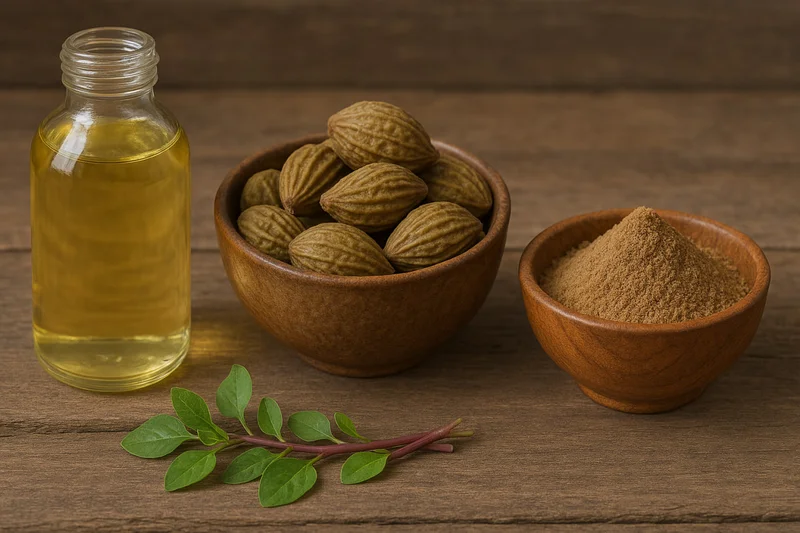
Sukumara Erandam is a classical Ayurvedic castor oil–based formulation used primarily for constipation, infertility, abdominal disorders, IVDP (intervertebral disc prolapse), rheumatic conditions, and varicose veins. Described in the ancient text Ashtanga Hridayam, it works by pacifying aggravated Vata and Kapha doshas, clearing body channels (srotas), and rekindling digestive fire (agni). Available as a liquid oil and as soft gel capsules, Sukumara Erandam remains one of the most prescribed classical remedies across Kerala Ayurveda and beyond.
If you've been searching for a single, comprehensive guide that covers everything — from the exact classical reference to how to actually take this medicine and what to eat during the course — you're in the right place. This article goes deeper than any other resource available online.
What Is Sukumara Erandam?
Sukumara Erandam is a medicated castor oil preparation (Erandam = castor oil in Malayalam) that belongs to the "Sneha Kalpana" category of Ayurvedic pharmaceutics — meaning it's an oil processed with a decoction of multiple herbs. The base ingredient, Eranda Taila (Ricinus communis oil), is repeatedly cooked with herbal decoctions and milk until it absorbs the therapeutic properties of every ingredient in the formula.
This isn't a modern supplement. It's a time-tested formulation with roots going back over a thousand years.
Meaning of the Name "Sukumara Erandam"
The Sanskrit word "Sukumara" translates to "tender" or "delicate." It refers to the formulation's ability to make the body soft, supple, and free from stiffness — essentially restoring tenderness to tissues that have become dry, rigid, or inflamed due to Vata aggravation. "Erandam" is the Malayalam term for castor oil (Eranda Taila in Sanskrit). So the full name literally means "the castor oil preparation that makes the body tender."
This naming convention is significant because it tells the practitioner exactly what to expect: a gentle yet powerful oil that works on deep tissues without being harsh.
Classical Reference: Ashtanga Hridayam
The original formulation of Sukumara Erandam is documented in Ashtanga Hridayam, Chikitsa Sthana, Chapter 15 (Gulma Chikitsa) — the chapter dedicated to the treatment of abdominal tumors and masses. The verse describes the preparation method, ingredients, and indications. While the exact shloka is lengthy (spanning multiple verses), the key reference is:
> "Sukumaram eranda tailam... gulma, udara, pleeha, arsha, anaha, vibandha nashakam"
> (Sukumara castor oil destroys abdominal tumors, enlargement of organs, splenic disorders, hemorrhoids, bloating, and constipation.)
The formulation is also referenced in Sahasrayogam, another authoritative Kerala Ayurvedic text, where it appears under the Taila Prakarana (oil preparations) section with slight variations in proportions.
Difference Between Sukumara Erandam, Sukumara Kashayam & Sukumara Ghritam
This is one of the most common points of confusion. All three share a similar herb base but differ in the medium and clinical application:
| Feature | Sukumara Erandam | Sukumara Kashayam | Sukumara Ghritam |
|---|---|---|---|
| Base medium | Castor oil (Eranda Taila) | Water decoction (Kashayam) | Ghee (Ghritam) |
| Primary action | Strong Vata pacification + laxative | Mild Vata-Pitta pacification | Deep tissue nourishment |
| Best for | Constipation, IVDP, rheumatic conditions, varicose veins | Gynecological disorders, mild digestive issues | Infertility, emaciation, Pitta-dominant conditions |
| Laxative effect | Strong (due to castor oil) | Mild | Minimal |
| Suitable for Pitta types | Use with caution | Yes | Excellent |
| Form | Oil / Soft Gel Capsules | Liquid decoction / Tablet | Medicated ghee |
When to choose which: If constipation is present alongside the main complaint, Sukumara Erandam is preferred. If the patient has Pitta aggravation (acidity, burning sensation), Sukumara Ghritam is safer. Sukumara Kashayam is the lightest option and works best for ongoing maintenance therapy.
Key Ingredients & Their Roles
The formulation contains over 25 ingredients, each serving a specific therapeutic purpose. Here are the most pharmacologically significant ones, followed by a complete ingredient table.
Erandam (Castor Oil) – Ricinus communis
The base and star ingredient. Castor oil is classified as the most potent Vata-pacifying oil in Ayurveda. It has strong Virechana (purgative) properties, meaning it cleans the intestinal tract and removes accumulated toxins (ama). A 2012 study published in the Journal of Naturopathy confirmed that ricinoleic acid — the active compound in castor oil — binds to EP3 prostanoid receptors in the intestinal wall, promoting peristalsis. This explains its time-tested laxative action.
Beyond purgation, castor oil penetrates deep tissues (Asthi and Majja dhatu) which makes it particularly effective for joint disorders and nerve-related conditions like IVDP.
Punarnava – Boerhavia diffusa
A powerful anti-inflammatory and diuretic herb. Punarnava literally means "that which renews the body." It reduces inflammatory oedemas by promoting fluid drainage through the kidneys. Research published in the Indian Journal of Experimental Biology (2004) demonstrated significant anti-inflammatory activity of Boerhavia diffusa root extract, comparable to ibuprofen in some parameters.
Dashamoola (Ten Roots Group)
Dashamoola is a classical combination of ten roots — five from large trees (Brihat Panchamoola) and five from smaller plants (Laghu Panchamoola). These include Bilva, Agnimantha, Shyonaka, Patala, Gambhari, Brihati, Kantakari, Gokshura, Shalaparni, and Prishnaparni. Together, they provide powerful anti-inflammatory and Vata-pacifying action. This group is responsible for much of the formulation's effectiveness in rheumatic and musculoskeletal conditions.
Shatavari – Asparagus racemosus
The premier female reproductive tonic in Ayurveda. Shatavari nourishes the Rasa and Shukra dhatu (plasma and reproductive tissues), making it critical for the formulation's infertility-related indications. A 2018 review in Biomedicine & Pharmacotherapy confirmed its phytoestrogenic, antioxidant, and immunomodulatory properties.
Pippali – Piper longum
Acts as a bioavailability enhancer (Yogavahi). Pippali ensures that the active compounds from other herbs are absorbed more efficiently. It also strengthens Agni (digestive fire) without aggravating Pitta excessively — a rare and valuable quality.
Full Ingredient Table with Botanical Names & Quantities
| Sanskrit Name | Botanical Name | Part Used | Key Action |
|---|---|---|---|
| Eranda Taila | Ricinus communis | Seed oil | Laxative, Vata pacifier |
| Punarnava | Boerhavia diffusa | Root | Anti-inflammatory, diuretic |
| Shatavari | Asparagus racemosus | Root | Reproductive tonic |
| Pippali | Piper longum | Fruit | Bioavailability enhancer |
| Devadaru | Cedrus deodara | Heartwood | Analgesic, anti-arthritic |
| Musta | Cyperus rotundus | Rhizome | Digestive, anti-spasmodic |
| Rasna | Pluchea lanceolata | Leaf | Anti-rheumatic |
| Haritaki | Terminalia chebula | Fruit | Mild laxative, rejuvenative |
| Bilva | Aegle marmelos | Root | Anti-inflammatory (Dashamoola) |
| Agnimantha | Premna integrifolia | Root | Anti-inflammatory (Dashamoola) |
| Shyonaka | Oroxylum indicum | Root bark | Anti-inflammatory (Dashamoola) |
| Patala | Stereospermum suaveolens | Root bark | Anti-inflammatory (Dashamoola) |
| Gambhari | Gmelina arborea | Root | Anti-inflammatory (Dashamoola) |
| Brihati | Solanum indicum | Root | Anti-inflammatory (Dashamoola) |
| Kantakari | Solanum xanthocarpum | Root | Respiratory + anti-inflammatory |
| Gokshura | Tribulus terrestris | Fruit | Diuretic, urinary tonic |
| Shalaparni | Desmodium gangeticum | Root | Vata pacification |
| Prishnaparni | Uraria picta | Root | Vata pacification |
| Eranda Moola | Ricinus communis | Root | Vata pacification, anti-arthritic |
| Ksheera (Milk) | — | — | Processing medium, tissue nourishment |
Note: Quantities vary slightly between manufacturers. The standard reference follows the Sahasrayogam proportions used by major Kerala Ayurvedic pharmacies.
How Sukumara Erandam Works (Mechanism of Action)
This is something no other guide explains properly. Understanding the mechanism helps you understand why the medicine works — and why it works slowly but deeply.
Ayurvedic Perspective: Dosha, Dhatu & Srotas
Sukumara Erandam primarily targets Vata dosha — the energy principle governing all movement in the body, including nerve impulses, peristalsis, blood circulation, and joint mobility. When Vata becomes aggravated (due to dry food, stress, aging, or irregular routines), it causes constipation, joint stiffness, nerve compression, and poor circulation.
The formulation works on three levels simultaneously:
- 1.Dosha level: Castor oil and Dashamoola pacify Vata. Punarnava and Haritaki manage secondary Kapha involvement (swelling, fluid retention).
- 2.Dhatu level (tissues): The oil penetrates through Rasa (plasma) → Mamsa (muscle) → Asthi (bone) → Majja (nerve/marrow).
- This explains why it takes 2-3 months for full effect — the medicine must reach progressively deeper tissue layers.
- 3.Srotas level (channels): It clears blockages in Annavaha Srotas (digestive channels), Artavavaha Srotas (reproductive channels), and Purishavaha Srotas (excretory channels).
Action on Agni (Digestive Fire)
The Pippali and Musta in the formulation rekindle Agni without overheating the system. This is crucial because weak Agni produces Ama (metabolic toxins), which is considered the root cause of most chronic diseases in Ayurveda. By strengthening Agni, the formulation prevents new Ama formation while the castor oil base eliminates existing Ama through the bowels.
Modern Pharmacological Explanation
From a modern science perspective, several mechanisms converge:
- Ricinoleic acid (from castor oil) activates EP3 receptors → increases intestinal motility → relieves constipation
- Boerhavia diffusa alkaloids inhibit COX-2 and LOX pathways → reduce inflammation and oedema
- Withaferin A (from Ashwagandha-group herbs in some formulations) modulates NF-κB inflammatory pathway
- Phytoestrogens from Shatavari support ovarian function and endometrial health
- Terpenes from Devadaru provide analgesic effects by modulating pain signaling pathways
The oil-based medium itself enhances lipophilic absorption, allowing herbal compounds to cross cell membranes more effectively than water-based preparations.
Uses & Health Benefits of Sukumara Erandam
Constipation & Digestive Disorders
This is the most common indication. Sukumara Erandam provides reliable, non-habit-forming relief from chronic constipation. Unlike stimulant laxatives that cause dependency, the castor oil base combined with Haritaki provides a Mridu Virechana (gentle purgation) that trains the bowels to function independently over time.
It's also effective for bloating (Anaha), flatulence, and loss of appetite — all signs of Vata-type digestive disturbance. Most patients report improved bowel regularity within 3-5 days, though the full digestive reset takes 4-6 weeks.
Infertility (Male & Female)
The Shatavari and milk processing in the formulation nourish Shukra Dhatu (reproductive tissue). For women, it helps by regulating menstrual cycles, supporting ovulation, and preparing the uterine lining. For men, it improves sperm motility by reducing oxidative stress in the reproductive tract.
Female Infertility Specifics
- Sukumara Erandam is particularly prescribed when infertility is accompanied by constipation or irregular periods — which indicates Apana Vata dysfunction.
- Apana Vata governs both downward movements: elimination and menstruation. By correcting Apana Vata, a single formulation addresses both issues simultaneously.
Male Fertility Support
In men, the formulation's ability to reduce Vata in the pelvic region improves blood flow to reproductive organs. It's often prescribed alongside Ashwagandhadi Lehyam for synergistic effects.
IVDP & Rheumatic Conditions
Intervertebral disc prolapse (IVDP) and conditions like sciatica, lumbar spondylosis, and rheumatoid arthritis all involve Vata lodged in Asthi (bone) and Sandhi (joints). The Dashamoola and Eranda Moola in the formulation specifically target these tissues.
A standard Kerala Ayurvedic treatment protocol for IVDP often includes Sukumara Erandam internally alongside external therapies like Kati Basti and Kizhi. The internal administration is critical because it works from within, softening the disc space and reducing nerve compression through anti-inflammatory action.
Inflammatory Oedemas & Varicose Veins
This is a unique therapeutic application that deserves special attention. For varicose veins, Sukumara Erandam is used both internally and externally.
Internal use: 1 tablespoon at bedtime with warm milk — addresses the root cause by improving venous return and reducing Kapha-mediated fluid stagnation.
- External application for varicose veins: Warm a small quantity of Sukumara Erandam and apply it gently over the affected veins in an upward direction (from ankle toward the knee).
- Do not massage vigorously — just light, upward strokes. Cover with a warm cloth for 20 minutes. This improves local circulation and reduces venous pooling. Repeat daily for 2-3 months.
A 2011 study on Punarnava (one of the key ingredients) published in International Journal of Research in Pharmaceutical and Biomedical Sciences showed significant reduction in edema in animal models, supporting this traditional application.
Abdominal Tumors, Spleen Disorders & Hernia
The classical text specifically mentions Gulma (abdominal tumors/masses), Pleeha Roga (splenic disorders), and Antra Vriddhi (hernia). While these are serious conditions requiring medical supervision, Sukumara Erandam is used as an adjunct therapy to reduce the mass effect, improve digestion, and prevent further accumulation.
Hemorrhoids (Piles)
Chronic constipation is the primary aggravating factor for hemorrhoids. By resolving constipation and reducing Vata in the Apana region, Sukumara Erandam addresses both the cause and the symptom. It softens stools, reduces straining, and the anti-inflammatory herbs help shrink swollen hemorrhoidal veins.
Dosage, Forms & How to Take Sukumara Erandam
Liquid Oil Form
- Standard adult dose: 1 tablespoon (approximately 15 ml) at bedtime
- Medium: Mix with warm milk or warm water
- Frequency: Once daily, preferably on an empty stomach at night
The warm milk is not optional — it acts as an Anupana (vehicle) that enhances absorption and reduces the heaviness of the oil on digestion.
Soft Gel Capsules (SGC)
- Standard dose: 1-2 capsules twice daily, or as directed by physician
- Medium: Warm water or warm milk
- Available strengths: Regular and 7-Avarthi (seven times processed — more potent)
Liquid Oil vs Soft Gel Capsules: Which to Choose?
| Parameter | Liquid Oil | Soft Gel Capsules |
|---|---|---|
| Bioavailability | Higher (direct absorption) | Slightly lower (capsule dissolution time) |
| Taste | Strong, oily (some patients find it unpleasant) | Tasteless — easy to consume |
| Dosage precision | Requires measuring | Pre-measured, convenient |
| Shelf life | 3 years from manufacture | 3 years from manufacture |
| Laxative strength | Stronger | Milder (smaller oil volume per dose) |
| Price (approx.) | ₹220 for 200 ml | ₹850-900 for capsule pack |
| Best for | Chronic constipation, varicose veins, external application | Travel, taste-sensitive patients, mild symptoms |
| External use possible? | Yes | No |
Clinical tip: For severe constipation or IVDP, liquid form is preferred. For maintenance therapy or mild symptoms, SGC offer convenience and compliance.
Duration of Course
Most Ayurvedic physicians recommend a 2-3 month course.
Here's why, and what happens at each stage:
- Week 1-2: Bowel regulation begins. Constipation relief is usually the first noticeable effect.
- Week 3-6: Deeper tissue action starts. Patients with joint pain or IVDP begin noticing reduced stiffness and pain.
- Week 7-12: Reproductive tissue nourishment reaches its peak. Infertility patients often see hormonal improvements during this phase.
- After 3 months: Re-evaluation by the physician. The course may be extended, modified, or stopped based on response.
Comparison with Similar Ayurvedic Formulations
| Feature | Sukumara Erandam | Gandharvahasthadi Erandam | Nimbamruthadi Erandam |
|---|---|---|---|
| Primary indication | Constipation + infertility + IVDP | Constipation + rheumatic conditions | Skin diseases + constipation |
| Dosha target | Vata-Kapha | Vata | Pitta-Kapha |
| Reproductive action | Strong (contains Shatavari) | Minimal | None |
| Anti-inflammatory strength | Moderate-Strong | Strong | Mild |
| When to prefer | Multi-system Vata disorders with reproductive involvement | Pure musculoskeletal + constipation | Constipation with skin issues, Pitta involvement |
| Laxative strength | Moderate | Strong | Mild-Moderate |
This comparison should help both practitioners and patients choose the right Erandam preparation for their specific condition.
Pathya-Apathya: Diet & Lifestyle During the Course
No other guide covers this, but in Ayurveda, medicine without proper diet is considered only half-treatment.
What to Eat (Pathya)
- Warm, cooked foods — rice, moong dal, cooked vegetables
- Ghee in moderate amounts — supports oil absorption
- Warm water throughout the day — aids detoxification
- Buttermilk with cumin and ginger — supports Agni
- Leafy greens (especially drumstick leaves, spinach) — provide fiber and micronutrients
What to Avoid (Apathya)
- Cold foods and drinks — directly aggravate Vata and slow down oil absorption
- Raw salads in excess — difficult to digest during Sneha therapy
- Fried and processed foods — create Ama and counteract the medicine's detox action
- Excessive exercise or fasting — increases Vata, working against the treatment
- Curd at night — increases Kapha and blocks Srotas
Lifestyle Recommendations
- Regular sleep schedule (before 10 PM ideally)
- Warm oil self-massage (Abhyanga) twice a week enhances the medicine's action
- Avoid suppressing natural urges (especially bowel and urination)
- Gentle yoga — particularly Pavanamuktasana, Malasana, and Supta Baddha Konasana
Side Effects, Contraindications & Safety
Are There Side Effects?
Sukumara Erandam is generally well-tolerated when taken in prescribed doses.
However, potential side effects include:
- Loose stools or mild diarrhea — especially in the first few days, due to the castor oil base. This usually self-corrects.
- Mild nausea — more common with the liquid form on an empty stomach. Taking it with warm milk reduces this.
- Abdominal cramping — rare, typically indicates the dose is too high.
Detailed Contraindications
Most websites simply say "no known side effects." That's incomplete and potentially irresponsible.
Here are the actual contraindications:
- Active diarrhea or dysentery — castor oil will worsen these conditions
- Acute inflammatory conditions of the GI tract (acute gastritis, ulcerative colitis flare) — the oil can irritate inflamed mucosa
- Patients on anticoagulant therapy (Warfarin, Heparin) — some ingredients may potentiate blood-thinning effects. Consult your physician.
- Pregnancy — Not recommended during pregnancy unless specifically prescribed by an Ayurvedic physician. Castor oil has uterine-stimulating properties and may cause contractions.
- Lactation — Generally considered safe, but use under medical guidance
- Children under 12 — Not typically prescribed; dose adjustment required if used
Compatibility with Other Medicines
- Allopathic medicines: Maintain a 30-minute gap between Sukumara Erandam and any Western medication. The oil can alter absorption rates of conventional drugs.
- Homeopathic medicines: Generally compatible. Maintain a 30-minute gap.
- Other Ayurvedic medicines: Compatible with most. Often prescribed alongside Kashayams and Lehyams in clinical practice.
Shelf Life & Storage
- Shelf life: 3 years from the date of manufacture
- Storage: Store in a cool, dry place below 30°C. Keep away from direct sunlight.
- Do not refrigerate the oil form — it may solidify.
Frequently Asked Questions
What is the use of Sukumara Erandam?
Sukumara Erandam is used for chronic constipation, infertility (both male and female), intervertebral disc prolapse (IVDP), rheumatic conditions, varicose veins, hemorrhoids, abdominal tumors, splenic disorders, and inflammatory oedemas. It's a Vata-pacifying classical Ayurvedic castor oil preparation.
Which Ayurvedic tablet is best for gas and bloating?
For gas and bloating associated with Vata imbalance, Sukumara Erandam Soft Gel Capsules are effective, especially when constipation is also present. For gas without constipation, Hinguvachadi Gulika or Vilwadi Gulika may be more appropriate. Consult a physician for personalized advice.
How do I apply Sukumara Erandam for varicose veins?
Warm a small amount of the liquid oil and apply it over the affected veins using gentle, upward strokes (from ankle to knee). Do not apply pressure on the veins themselves. Cover with a warm cloth for 15-20 minutes. Do this daily alongside internal consumption for best results. Most patients notice visible improvement after 6-8 weeks of consistent use.
Can Sukumara Erandam be used alongside other treatments for varicose veins?
Yes. It is frequently used alongside compression stockings, leg elevation therapy, and other Ayurvedic treatments like Lepa (herbal paste application). If you're undergoing allopathic treatment for varicose veins, inform your doctor about using this formulation.
How long does it take to see results?
- For constipation: 3-5 days.
- For joint pain and IVDP: 3-6 weeks.
- For infertility: 2-3 months.
- For varicose veins: 6-8 weeks for visible improvement. Results vary based on the severity of the condition, adherence to dosage, and dietary compliance.
Can Sukumara Erandam prevent the recurrence of varicose veins?
It can significantly reduce recurrence when combined with lifestyle modifications — regular walking, leg elevation, avoiding prolonged standing, and periodic maintenance courses (1 month every 6 months). However, no single medicine can guarantee complete prevention, especially if the underlying lifestyle factors persist.
What is the difference between regular and 7-Avarthi Sukumara Erandam?
"7 Avarthi" means the oil has been processed seven times with the herbal decoction, rather than the standard one or three times. Each processing cycle increases the potency and tissue-penetrating ability of the oil. 7-Avarthi formulations are stronger and typically prescribed for more severe or chronic conditions. They're also more expensive.
What is Sukumara Ghritam used for?
Sukumara Ghritam uses the same herb base but in a ghee medium instead of castor oil. It's preferred for infertility treatment (especially in Pitta-constitution patients), gynecological disorders, and conditions where a laxative effect is not desired. It's gentler on the digestive system than the Erandam form.
Conclusion
Sukumara Erandam is far more than just a laxative — it's a multi-system classical Ayurvedic formulation that addresses the root cause of Vata-driven disorders across digestion, reproduction, musculoskeletal health, and vascular function. Its strength lies in the synergy between castor oil's deep-penetrating properties and a carefully selected group of herbs that work progressively through the body's tissue layers.
Whether you're dealing with stubborn constipation, exploring Ayurvedic options for infertility, managing IVDP pain, or seeking relief from varicose veins — Sukumara Erandam deserves serious consideration as part of your treatment protocol.
Important: Always consult a qualified Ayurvedic physician before starting Sukumara Erandam. Self-medication, even with classical formulations, can lead to imbalances if the dose, duration, or combination isn't tailored to your individual Prakriti (constitution) and Vikriti (current imbalance). A personalized approach is what makes Ayurveda truly effective.
Scientific Sources
- Safe and effective management of psoriasis through Ayurveda: A case report — Nille GC et al., 2025, Journal of Ayurveda and integrative medicine
- Rasayana properties of Ayurvedic herbs: Are polysaccharides a major contributor — Thakur M et al., 2012, Carbohydrate polymers
- Ayurvedic medicine: An introduction for nurses — Narayanasamy A et al., 2006, British journal of nursing (Mark Allen Publishing)
- Diagnostic methods in ayurveda — Thakar VJ, 1982, Ancient science of life
- A review on traditional practice of tooth brushing in Ayurveda and its relevance in current era — Devi D et al., 2019, Journal of complementary & integrative medicine
- The Phytoneuroendocrine System: Connecting Plants to Human Systems Biology — Minich DM, 2024, Integrative medicine (Encinitas, Calif.)
- [[Boswellic acids (components of frankincense) as the active principle in treatment of chronic inflammatory diseases]](https://pubmed.ncbi.nlm.nih.gov/12244881/) — Ammon HP, 2002, Wiener medizinische Wochenschrift (1946)
- Yoga at Primary Health Centers - A Pathway to Holistic Health: Narrative Review — Gupta P, 2024, International journal of yoga
- The Role of Ayurveda in Chronic Disease Management: A Review of Clinical Evidence — Karambhe AD et al., 2026, Cureus
- Analgesic principle from Curcuma amada — Faiz Hossain C et al., 2015, Journal of ethnopharmacology
- Biogenic Synthesis of Copper-Based Nanomaterials Using Plant Extracts and Their Applications: Current and Future Directions — Vincent J et al., 2022, Nanomaterials (Basel, Switzerland)
- Ayurveda treatment in management of snoring, obesity and type 2 Diabetes Mellitus: A case report — Nakanekar A et al., 2022, Journal of Ayurveda and integrative medicine
- Principles, methods and importance of literary research in the history of Ayurveda — Ali M, 1991, Bulletin of the Indian Institute of History of Medicine (Hyderabad)
- Do Ayurveda drugs induce liver injury? — Ruknuddin G, 2018, World journal of hepatology
- Scientific validation of the antidiabetic effects of Syzygium jambolanum DC (black plum), a traditional medicinal plant of India — Baliga MS et al., 2013, Journal of alternative and complementary medicine (New York, N.Y.)
- Image-Based Communication for Strengthening Patient Health Education in Rural and Underserved Settings — Tiwari RR et al., 2023, Cureus
- Integrating Quality by Design (QbD) in Phytosomal Drug Delivery: A New Era in Precision Phytotherapy — Kumar S et al., 2025, AAPS PharmSciTech
- Ayurvedic medicine and arthritis — Chopra A, 2000, Rheumatic diseases clinics of North America
- Visualization and quantitative analysis of pulse diagnosis in ayurveda - iind report — Uebaba K et al., 1993, Ancient science of life
- Knowledge, attitude and practices of ayurvedic medicine practitioners in Kerala towards millets and millet-based diet: a prospective cross-sectional online survey study — Chettiyam Kandy S et al., 2024, BMJ nutrition, prevention & health
Ask Ayurvedic doctor a question and get a consultation online on the problem of your concern in a free or paid mode.
More than 2,000 experienced doctors work and wait for your questions on our site and help users to solve their health problems every day.
Related articles