Ask Ayurvedic doctor a question and get a consultation online on the problem of your concern in a free or paid mode. More than 2,000 experienced doctors work and wait for your questions on our site and help users to solve their health problems every day.


Body DetoxEar, Nose, and Throat DisordersGeriatrics & RejuvenationImmunodeficiencyInfertility TreatmentNutritionOrthopedic DisordersPediatricsRespiratory DisordersSexually Transmitted Diseases (STDs)Surgery RecoveryUrological DisordersVascular DisordersDental DisordersEndocrinological DisordersGastrointestinal DisordersYoga TherapyGeneral MedicineAllergic DisordersCardio DisordersGynecology and ObstetricsCosmetologySkin and Hair DisordersEye DisordersInfectious DiseasesMental DisordersNeurological DisordersOncologyPanchakarmaSexual Health & DisordersSports Medicine
Published on 02/19/25
(Updated on 08/13/26)
2,930
Gandha Taila for Joint & Bone Health – Natural Relief for Pain, Stiffness & Strain
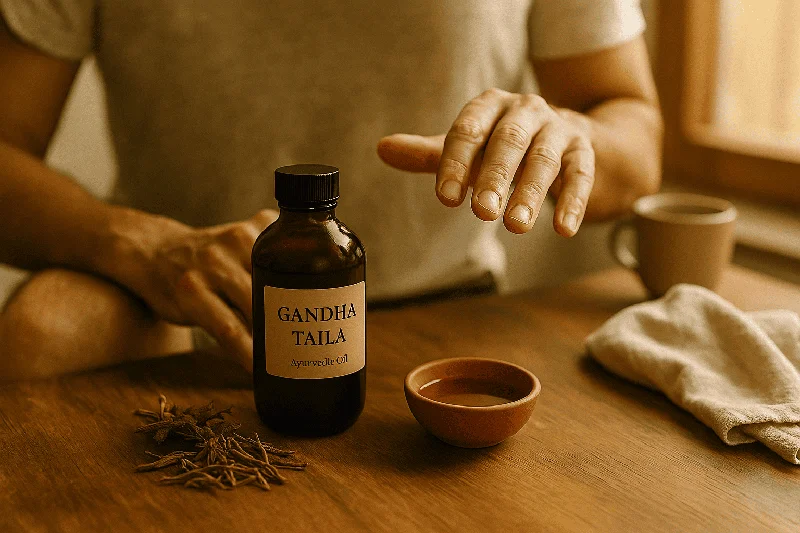
Gandha Taila is a classical Ayurvedic medicated oil primarily used to strengthen bones, heal fractures, and relieve joint pain and stiffness. Referenced in ancient texts like Sahasrayogam and Sushruta Samhita, this time-tested formulation works by pacifying Vata dosha and nourishing Asthi dhatu (bone tissue). Whether you're recovering from a fracture, managing chronic joint discomfort, or dealing with sports injuries — Gandha Taila offers a natural, holistic approach that has been trusted by Ayurvedic practitioners for centuries.
In this comprehensive guide, we cover everything you need to know: what Gandha Taila is, its full ingredient list with pharmacological details, how it works according to both Ayurveda and modern science, precise dosage protocols for different age groups, detailed instructions for internal and external use, side effects, manufacturer comparisons, and much more. This is the most thorough resource on Gandha Taila you'll find anywhere online.
What Is Gandha Taila?
Definition and Meaning of the Name
"Gandha" in Sanskrit means "fragrance" or "smell," and "Taila" means "oil." The name refers to the characteristic aromatic quality of this medicated oil, which comes from the blend of fragrant herbs processed into a sesame oil base. In Kerala Ayurvedic tradition, it's commonly called Gandha Thailam (the Malayalam/Tamil pronunciation), while in North Indian texts you'll see it as Gandha Taila or Gandha Tel.
- Gandha Taila is classified as a Taila Kalpana (medicated oil preparation) in Ayurvedic pharmacology.
- It's not just a simple herbal-infused oil — it's a carefully formulated medicine where herbs are processed through a specific cooking method to extract and concentrate their therapeutic compounds into the sesame oil medium.
Historical Background and Classical References
Gandha Taila finds mention in several authoritative Ayurvedic texts:
- Sahasrayogam — The primary reference text, particularly the Taila Prakarana (chapter on medicated oils), which provides the complete formulation
- Sushruta Samhita — References to similar bone-healing oil formulations in the Chikitsa Sthana
- Charaka Samhita — Discusses the principles behind Vata-pacifying oils for musculoskeletal disorders
- Kashyapa Samhita — Mentions applications in pediatric bone health
- Bhaishajya Ratnavali — Includes variants of the formulation
The original Sanskrit shloka from Sahasrayogam describes the oil as specifically indicated for Bhagna (fractures), Sandhi Vikara (joint disorders), and Vata Vyadhi (diseases caused by aggravated Vata dosha).
Forms of Gandha Taila: Oil vs. Capsules vs. Soft Gel
Gandha Taila is available in three primary forms today. Choosing the right one depends on your specific needs and convenience:
| Feature | Traditional Oil | Capsules | Soft Gel Capsules |
|---|---|---|---|
| Best for | External massage + internal use | Internal use only | Internal use only |
| Convenience | Requires measuring drops | Easy, pre-dosed | Easy, pre-dosed |
| External application | ✅ Yes | ❌ No | ❌ No |
| Taste concern | Strong herbal taste | No taste issue | No taste issue |
| Bioavailability | High (liquid form) | Moderate | High (oil in gel form) |
| Typical packaging | 10ml, 25ml, 200ml bottles | 100 capsules/bottle | 60-100 per bottle |
| Price range (India) | ₹80–₹250 | ₹180–₹350 | ₹200–₹400 |
| Ideal when | Need both massage & oral intake | Travel, office use | Prefer no measuring |
Pro tip: If you're recovering from a fracture or serious joint injury, the traditional oil form is generally preferred because it allows both internal consumption and external application — giving you dual-route benefits.
How Does Gandha Taila Work? (Ayurvedic Principle & Modern Pharmacology)
Mechanism According to Ayurveda
To understand why Gandha Taila is so effective for bone and joint problems, you need to understand the Ayurvedic concept of Vata dosha and Asthi dhatu.
In Ayurveda, Vata is the dosha (biological energy) that governs all movement in the body — nerve impulses, muscle contractions, joint movements, and even the circulation of nutrients. When Vata becomes aggravated (Vata Prakopa), it directly impacts Asthi dhatu (bone tissue) because Vata and Asthi have an Ashraya-Ashrayi relationship — meaning Vata resides in the bones. Aggravated Vata literally depletes bone tissue, leading to fractures, osteoporosis, joint pain, and stiffness.
Gandha Taila works through several Ayurvedic mechanisms:
- Vata Shamana (pacification of Vata dosha) — The sesame oil base and most herbs in the formula are inherently Vata-pacifying
- Asthi Dhatu Poshana (nourishment of bone tissue) — Ingredients like Laksha, Ashwagandha, and Yashtimadhu directly nourish and strengthen bones
- Sandhaniya (union-promoting) — The formulation promotes the healing and joining of broken or damaged tissues
- Vedanasthapana (pain-relieving) — Multiple ingredients have analgesic properties that ease pain without suppressing it artificially
- Balya (strength-promoting) — Strengthens muscles, ligaments and tendons surrounding the joints
What Modern Pharmacology Tells Us
While large-scale clinical trials specifically on Gandha Taila are limited, research on its individual ingredients provides strong scientific support:
- Sesame oil (Sesamum indicum): A 2017 study published in the Journal of Medicinal Food demonstrated that sesame oil possesses significant anti-inflammatory and antioxidant properties due to its lignan compounds (sesamin and sesamolin). These compounds inhibit NF-κB pathway activation, reducing inflammatory cytokines like TNF-α and IL-6.
- Withania somnifera (Ashwagandha): A randomized controlled trial published in the Journal of Ayurveda and Integrative Medicine (2015) showed that Ashwagandha root extract significantly improved bone calcification markers. Its withanolides have demonstrated osteoprotective activity by stimulating osteoblast differentiation.
- Glycyrrhiza glabra (Yashtimadhu): Research published in Phytotherapy Research (2019) confirmed its anti-inflammatory, analgesic, and immunomodulatory properties. Glycyrrhizin, its primary active compound, inhibits COX-2 and 5-LOX enzymes — similar to how NSAIDs work, but through a gentler mechanism.
- Commiphora mukul (Guggulu): Multiple studies, including one in Molecular and Cellular Biochemistry (2010), showed guggulsterones promote anti-inflammatory activity and support the regeneration of cartilage tissue.
- Cissus quadrangularis (Asthi Sanharaka): A 2009 study in the Journal of Medicinal Food found that this plant accelerated fracture healing by 33-55% in animal models, primarily through enhanced calcium absorption and osteoblast proliferation.
The combined pharmacological profile of Gandha Taila's ingredients suggests it works through: anti-inflammatory action (COX-2/LOX inhibition), enhanced osteoblast activity, improved calcium metabolism, antioxidant protection of joint tissues, and nerve-calming effects that reduce pain perception.
Complete Ingredients of Gandha Taila
Full Ingredient List with Botanical Names
The classical formulation of Gandha Taila contains a complex blend of herbs processed in a sesame oil base. Here is the comprehensive ingredient list as per Sahasrayogam:
| Sanskrit Name | Botanical / English Name | Part Used | Primary Action |
|---|---|---|---|
| Tila Taila | Sesamum indicum (Sesame oil) | Seed oil | Base oil, Vata-pacifying |
| Gandha (Tagara) | Valeriana wallichii | Root | Analgesic, nervine |
| Rasna | Pluchea lanceolata | Leaf | Anti-inflammatory |
| Ashwagandha | Withania somnifera | Root | Bone strengthening, adaptogenic |
| Yashtimadhu | Glycyrrhiza glabra (Licorice) | Root | Anti-inflammatory, healing |
| Devadaru | Cedrus deodara (Himalayan Cedar) | Heartwood | Vata-pacifying, analgesic |
| Kushta | Saussurea lappa | Root | Anti-inflammatory, antimicrobial |
| Manjishta | Rubia cordifolia (Indian Madder) | Root | Blood purifying, tissue repair |
| Bala | Sida cordifolia | Root | Strengthening, nervine tonic |
| Atibala | Abutilon indicum | Root | Joint nourishment |
| Sariva | Hemidesmus indicus | Root | Blood purifier, coolant |
| Nagakeshara | Mesua ferrea | Flower | Anti-inflammatory |
| Padmaka | Prunus cerasoides | Heartwood | Cooling, tissue repair |
| Priyangu | Callicarpa macrophylla | Fruit/Flower | Bone healing |
| Laksha | Laccifer lacca (Lac resin) | Resin | Fracture healing, Sandhaniya |
| Haridra | Curcuma longa (Turmeric) | Rhizome | Anti-inflammatory |
| Daruharidra | Berberis aristata | Stem | Anti-inflammatory, antimicrobial |
| Ela | Elettaria cardamomum | Seed | Aromatic, digestive |
| Saindhava Lavana | Rock salt | Mineral | Penetration enhancer |
| Ksheera | Cow's milk | — | Processing medium |
Note: Some manufacturers may include slight variations. The formulation from Kottakkal Arya Vaidya Sala may differ marginally from Kerala Ayurveda's version. Always check the label for the specific product you purchase.
Key Active Herbs and Their Pharmacological Roles
Tila (Sesame Oil) — The Base: Not merely a carrier, sesame oil is therapeutically active. It's the most Vata-pacifying oil in Ayurveda. Rich in linoleic acid, sesamin, and vitamin E, it penetrates deep into tissues (Sukshma Guna), carrying the herbal actives into bones and joints. Its antioxidant lignans protect joint cartilage from oxidative degradation. Yashtimadhu (Licorice): The glycyrrhizic acid in licorice is a potent anti-inflammatory that works on multiple pathways simultaneously. It also has mild corticosteroid-like activity, which helps reduce swelling without the side effects of synthetic steroids. In the context of Gandha Taila, it soothes inflamed joint tissues and promotes tissue regeneration.
- Bala and Atibala: These two herbs form a synergistic pair.
- Bala means "strength" in Sanskrit — and true to its name, it strengthens muscles, tendons and nerves. Its alkaloid ephedrine supports neuromuscular function, while its phytosterols nourish depleted tissues. Atibala complements this with additional joint-nourishing properties.
Devadaru (Himalayan Cedar): Contains himachalol and β-himachalene, which have demonstrated anti-inflammatory and analgesic effects in studies. In Ayurvedic terms, it's one of the best herbs for pacifying Vata in the channels of movement (Asthi Vaha Srotas). Kushta: Its sesquiterpene lactones (particularly costunolide and dehydrocostus lactone) show significant anti-inflammatory activity by inhibiting NF-κB signaling. Research published in International Immunopharmacology (2014) confirmed these mechanisms. Manjishta: Known primarily as a blood purifier, Manjishta plays a crucial role in Gandha Taila by improving microcirculation to damaged bone and joint tissues. Better blood flow means better nutrient delivery and faster healing.
What Is Gandha Taila Used For? (Indications and Benefits)
Bone Health and Fracture Recovery
This is the primary and most celebrated use of Gandha Taila.
It is considered one of the best Ayurvedic medicines for:
- Fresh fractures — Accelerates callus formation and bone union
- Delayed union / non-union fractures — Stimulates healing in cases where fractures aren't mending properly
- Osteoporosis — Strengthens bone density when used as part of a long-term protocol
- Post-surgical bone recovery — Supports healing after orthopedic surgeries
Detailed Protocol for Fracture Recovery
Here's what most Ayurvedic practitioners recommend — and something no other guide covers in this detail:
- Phase 1 (Week 1-2, Acute Phase): Start with internal use only. Take 10-15 drops of Gandha Taila with warm milk twice daily.
- Do NOT massage the fracture site during this phase — the bone needs immobilization. Focus on dietary calcium sources.
Phase 2 (Week 3-6, Healing Phase): Continue internal use. Once the cast is removed or the doctor confirms initial callus formation, begin gentle external application around (not on) the fracture site. Light, non-pressured application allows the oil's anti-inflammatory compounds to penetrate. Phase 3 (Week 7-12, Strengthening Phase): Increase external massage intensity gradually. Combine with Basti (Ayurvedic enema therapy) using Gandha Taila if possible, under practitioner guidance. This phase focuses on restoring full strength and mobility. Phase 4 (Month 4-6, Rehabilitation): Reduce to maintenance dose. Combine Gandha Taila with Lakshadi Guggulu (tablets) and Asthisanharaka (Cissus quadrangularis) for comprehensive bone rebuilding.
Joint Pain, Stiffness, and Arthritis
Gandha Taila is highly effective for various joint conditions:
- Osteoarthritis (Sandhivata)
- Rheumatoid arthritis (Amavata) — as an adjuvant
- Cervical spondylosis (Greeva Sandhigata Vata)
- Frozen shoulder / Periarthritis of shoulder joint
- Knee pain and stiffness
- Tennis elbow / golfer's elbow
- Lumbar spondylosis and lower back pain
Sports Injuries and Strain
Athletes and physically active individuals benefit from Gandha Taila for:
- Muscle strains and sprains
- Ligament injuries
- Post-workout recovery (external massage)
- Prevention of repetitive strain injuries
Neurological Conditions
A lesser-known but equally important application — Gandha Taila is used in certain neurological conditions:
- Facial paralysis (Bell's palsy) — External application on affected areas
- Hemiplegia — As part of Panchakarma protocols
- Sciatica — Both internal and external use
- Peripheral neuropathy — Nourishes Vata-affected nerves
Ear, Nose, and Throat Applications
In traditional practice, Gandha Taila is also used for:
- Karna Sneha (ear oiling) — 2-3 warm drops in the ear for tinnitus and ear pain
- Nasya (nasal administration) — 2 drops in each nostril for sinusitis and headaches related to Vata imbalance
Dosage of Gandha Taila for Different Age Groups
Internal Use (Oral Administration)
| Age Group | Oil Form (with warm milk) | Capsule Form | Frequency | Duration |
|---|---|---|---|---|
| Children (5-12 yrs) | 3-5 drops | Not recommended | Once daily | 1-2 months |
| Adolescents (13-17 yrs) | 5-10 drops | 1 capsule | Once or twice daily | 2-3 months |
| Adults (18-60 yrs) | 10-15 drops | 1-2 capsules | Twice daily | 3-6 months |
| Elderly (60+ yrs) | 8-12 drops | 1 capsule | Twice daily | 3-6 months |
| Pregnant women | ❌ Not recommended | ❌ Not recommended | — | — |
| Lactating mothers | Only under medical supervision | Only under supervision | — | — |
Important: These are general guidelines. Your Ayurvedic practitioner may adjust the dosage based on your Prakriti (constitution), severity of condition, and other medications.
External Application — How to Use Gandha Taila for Massage
Many people buy Gandha Taila but don't know the correct technique.
Here's a detailed guide:
Technique for Joint Massage
- 1.Warm the oil: Place the bottle in warm water for 5 minutes. Never microwave it. The oil should be comfortably warm, not hot.
- 2.Apply generously: Take adequate oil on your palms and apply around the affected joint.
- 3.Massage direction: Always massage towards the heart (centripetal direction) for better lymphatic drainage.
- 4.Duration: Massage each affected area for 10-15 minutes minimum.
- The oil needs time to penetrate — rushing won't help.
- 5.Leave on: Allow the oil to remain on the skin for at least 30-45 minutes before washing. Ideally, apply at night and wash off in the morning.
- 6.Follow with warmth: After massage, apply a warm towel or take a warm shower (not immediately — wait 30 minutes). Heat enhances absorption.
Integration with Panchakarma Therapies
In clinical Ayurvedic settings, Gandha Taila is often used in:
- Abhyanga — Full-body therapeutic oil massage
- Pizhichil — Warm oil pouring therapy (Kerala specialty)
- Kati Basti — Oil pooling over the lower back using a dough dam
- Janu Basti — Oil pooling over the knee joint
- Greeva Basti — Oil pooling over the cervical spine
These professional treatments magnify the oil's benefits significantly compared to self-massage alone.
Don't wait or self medicate. Start chat with Doctor NOW
Diet and Lifestyle During Gandha Taila Use (Pathya-Apathya)
This is something almost no one talks about, but it can literally make or break your results. Ayurveda emphasizes that medicine alone is only half the treatment — diet and lifestyle are the other half.
Foods That Enhance Gandha Taila's Effects
- Sesame seeds and sesame-based foods — Synergistic with the sesame oil base
- Warm, cooked foods — Soups, stews, khichdi (rice-lentil porridge)
- Ghee — 1-2 teaspoons daily enhances fat-soluble nutrient absorption
- Milk (warm, preferably with turmeric) — Nourishes Asthi dhatu directly
- Calcium-rich foods — Ragi (finger millet), moringa leaves, almonds
- Bone broth — If non-vegetarian, this is exceptionally helpful for fracture healing
Foods to Avoid or Reduce
- Cold and raw foods — Salads, smoothies, ice cream — these aggravate Vata
- Carbonated drinks — Interfere with calcium absorption
- Excessive caffeine — More than 2 cups of coffee/tea daily can leach calcium
- Refined sugar — Creates inflammation and opposes the oil's anti-inflammatory action
- Dry, rough foods — Crackers, popcorn, dry cereals (increase Vata)
Lifestyle Recommendations
- Regular sleep schedule — Sleep before 10 PM; Vata aggravates during late nights
- Gentle exercise — Walking, swimming, gentle yoga. Avoid high-impact activities during recovery
- Stay warm — Cold exposure aggravates Vata and worsens joint stiffness
- Oil your body regularly — Even on non-treatment days, self-massage with plain sesame oil helps
Interaction with Modern Medicines
If you're taking allopathic medications alongside Gandha Taila, here's what you should know:
| Modern Medicine | Interaction Level | Notes |
|---|---|---|
| NSAIDs (Ibuprofen, Diclofenac) | Low risk | Can be used together, but may have additive effects. Monitor for stomach upset |
| Calcium supplements | No known interaction | Actually complementary — take them at different times of day |
| Bisphosphonates (for osteoporosis) | Caution | Consult your doctor. Theoretical overlap in mechanism |
| Anticoagulants (Warfarin, etc.) | Moderate caution | Some ingredients may have mild blood-thinning properties. Get INR monitored |
| Corticosteroids | Low risk | Gandha Taila may help counteract some side effects of long-term steroid use |
| Antihypertensives | Low risk | No known significant interactions |
| Diabetes medications | Low risk | Monitor blood sugar, as some ingredients may have mild hypoglycemic effects |
- Always maintain a 30-minute gap between taking Gandha Taila and any allopathic medicine.
- And please — inform both your Ayurvedic practitioner and allopathic doctor about all medications you're using.
Side Effects and Contraindications
Gandha Taila is generally considered safe when used in recommended doses. However, being aware of potential issues is important.
Possible Side Effects
- Mild digestive discomfort — Some people experience loose stools or mild nausea initially. Taking it with warm milk usually prevents this.
- Allergic reactions — Rare, but possible if you're allergic to sesame or any specific herb in the formulation. Do a patch test before first external use.
- Heaviness or sluggishness — Oil preparations can feel heavy for people with Kapha constitution. If this happens, reduce the dose.
Who Should NOT Use Gandha Taila
- Pregnant women — Many ingredients have uterine-stimulating properties
- People with severe Ama (toxin accumulation) — Indicated by thick white tongue coating, sluggish digestion, body heaviness. Oil therapies can worsen Ama conditions.
- During acute fever or infection — Oil-based medicines are contraindicated during active infection/fever
- Sesame allergy — Obvious, but worth mentioning
- Children under 5 years — Unless specifically prescribed by a qualified Ayurvedic pediatrician
Comparing Gandha Taila Manufacturers
Kerala Ayurveda vs. AVP vs. Kottakkal vs. Vaidyaratnam
| Parameter | Kerala Ayurveda | AVP (Arya Vaidya Pharmacy) | Kottakkal (Arya Vaidya Sala) | Vaidyaratnam |
|---|---|---|---|---|
| Founded | 1943 | 1943 | 1902 | 1942 |
| Base location | Aluva, Kerala | Coimbatore, TN | Kottakkal, Kerala | Ollur, Kerala |
| GMP Certified | ✅ Yes | ✅ Yes | ✅ Yes | ✅ Yes |
| AYUSH License | ✅ Yes | ✅ Yes | ✅ Yes | ✅ Yes |
| Available forms | Oil, Capsules | Oil | Oil, Soft Gel Capsules | Oil |
| Oil sizes | 10ml, 25ml | 10ml, 25ml, 200ml | 25ml, 200ml | 10ml, 25ml |
| Online availability | Excellent (Amazon, 1mg) | Good | Good | Moderate |
| Formulation base | Sahasrayogam | Sahasrayogam | Sahasrayogam | Sahasrayogam |
| Price (25ml oil) | ~₹120-150 | ~₹100-130 | ~₹130-160 | ~₹90-120 |
| Reputation | Premium commercial | Physician-trusted | Gold standard traditional | Value for money |
All four manufacturers follow the classical formulation from Sahasrayogam, but minor differences exist in herb sourcing, processing duration, and quality of raw materials. Kottakkal Arya Vaidya Sala is generally considered the gold standard by traditional practitioners, while Kerala Ayurveda has the best commercial availability and marketing.
How to Choose a Quality Product
- Check for AYUSH license number on the label
- Look for GMP certification
- Verify the manufacturing and expiry dates — Ayurvedic oils typically have a shelf life of 3 years
- Store in a cool, dark place — away from direct sunlight
- The oil should have a characteristic herbal aroma — if it smells rancid or purely like plain sesame oil, the quality is suspect
- Buy from authorized retailers — counterfeit Ayurvedic products are a real problem in India
What Results to Expect and When
- Setting realistic expectations is crucial.
- Gandha Taila is not a quick fix — it's a gradual, deep-acting medicine.
| Timeline | What to Expect |
|---|---|
| Week 1-2 | Mild reduction in pain and stiffness; improved sleep quality due to Vata pacification |
| Month 1 | Noticeable decrease in joint pain; improved range of motion; reduced morning stiffness |
| Month 2-3 | Significant improvement in joint function; fracture healing acceleration visible on X-ray; reduced dependence on painkillers |
| Month 3-6 | Substantial bone strengthening; near-complete fracture healing (in uncomplicated cases); improved muscle and ligament strength |
| Month 6+ | Maintenance phase; long-term bone health support; prevention of recurrence |
Individual results vary based on age, severity of condition, diet, lifestyle, and adherence to the full protocol.
Gandha Taila vs. Similar Ayurvedic Medicines
A common question practitioners get: "How is Gandha Taila different from other bone and joint medicines?"
| Parameter | Gandha Taila | Yogaraja Guggulu | Dhanwantharam Thailam | Lakshadi Guggulu |
|---|---|---|---|---|
| Form | Oil | Tablet | Oil | Tablet |
| Primary action | Bone nourishment + pain relief | Anti-inflammatory + Ama removal | Vata pacification + nerve nourishment | Bone calcification |
| Best for | Fractures, bone weakness | Arthritis, inflammatory conditions | Neurological + joint pain | Fracture healing, osteoporosis |
| Route | Internal + external | Internal only | External (mainly) | Internal only |
| Combine with Gandha Taila? | — | ✅ Yes, excellent combination | ✅ Yes, for different body areas | ✅ Yes, synergistic for fractures |
Frequently Asked Questions (FAQ)
How often should I use Gandha Taila?
For internal use, most practitioners recommend twice daily — morning and evening — with warm milk. For external massage, once daily is usually sufficient, though in acute cases your practitioner may recommend twice daily application.
Can Gandha Taila help in paralysis?
Yes. Gandha Taila is traditionally used in the management of paralysis (Pakshaghata), including facial paralysis and hemiplegia. It works by nourishing the depleted Vata in nerve channels. However, it should be part of a comprehensive treatment plan under professional supervision, often combined with Panchakarma therapies like Basti and Nasya.
Is Gandha Taila safe for children?
For children above 5 years, it can be used in reduced doses (3-5 drops with milk) under medical guidance. For children under 5, consult a qualified Ayurvedic pediatrician before use. Kottakkal's soft gel capsules are NOT suitable for young children.
Can I use Gandha Taila during pregnancy?
No. Gandha Taila is contraindicated during pregnancy due to the presence of herbs that may have uterine-stimulating effects. If you're pregnant and experiencing bone or joint issues, consult your Ayurvedic doctor for safe alternatives.
How long can I take Gandha Taila continuously?
For therapeutic purposes, courses of 3-6 months are common. For chronic conditions like osteoporosis, longer use (up to 12 months) may be recommended with periodic breaks. A typical pattern is 3 months on, 2 weeks off, then reassess with your practitioner.
What is the difference between Gandha Taila and Gandhak Tail?
These are two completely different preparations. Gandha Taila (Gandha Thailam) is the bone and joint oil discussed in this article. Gandhak Tail is a sulphur-based oil preparation used primarily for skin conditions like scabies and fungal infections. Don't confuse the two.
Can I use Gandha Taila with other Ayurvedic medicines?
Yes, Gandha Taila is commonly prescribed alongside other formulations for enhanced results. Common combinations include Lakshadi Guggulu (for fractures), Yogaraja Guggulu (for arthritis), Maharasnadi Kashayam (for Vata disorders), and Ashwagandha Churna (for general strength). Your practitioner will customize the combination for your specific condition.
Are Gandha Thailam Soft Gel Capsules as effective as the oil?
Soft gel capsules (like those from Kottakkal) contain the same medicated oil in an encapsulated form. For internal use, they are equally effective and far more convenient. However, you lose the ability to use them externally. If you need only internal use, soft gels are a perfectly good choice.
Conclusion: Is Gandha Taila Right for You?
Gandha Taila is one of the most well-documented, clinically trusted Ayurvedic formulations for bone and joint health. Whether you're dealing with a recent fracture, chronic joint pain, osteoporosis, sports injuries, or neurological conditions affecting your musculoskeletal system — this ancient medicine offers a comprehensive, natural approach to healing.
The key to getting the best results: use the right dose, be consistent, follow the dietary guidelines, and work with a qualified Ayurvedic practitioner who can tailor the treatment to your unique constitution and condition.
Don't just rely on the medicine alone. Combine it with proper diet, gentle exercise, adequate rest, and — if possible — professional Panchakarma therapies. That's when you'll experience the full power of what this classical formulation can do. Disclaimer: This article is for informational purposes only and should not replace professional medical advice. Always consult a qualified Ayurvedic practitioner or healthcare provider before starting any new treatment, especially if you are taking other medications or have pre-existing health conditions.
Scientific Sources
- Exploring the Efficacy of Integrating Yoga and Ayurveda for Hypertension Treatment — Balkrishna A et al., 2025, Current hypertension reviews
- From ancient medicine to modern medicine: ayurvedic concepts of health and their role in inflammation and cancer — Garodia P et al., 2007, Journal of the Society for Integrative Oncology
- Paradox in treatment seeking: an experience from rural Sri Lanka — Weerasinghe MC et al., 2011, Qualitative health research
- Effect of Ayurveda intervention in the integrated management of essential hypertension- a retrospective observational study — Sharma R et al., 2021, Journal of Ayurveda and integrative medicine
- A century of 'The science of yoga' (1921-2021): Revival, renewal and renaissance — Vaidya ADB et al., 2023, Journal of Ayurveda and integrative medicine
- Integrative oncology: Addressing the global challenges of cancer prevention and treatment — Mao JJ et al., 2022, CA: a cancer journal for clinicians
- Application of a Non-Linear multi-model Ayurveda Intervention in elderly COVID-19 patients- a retrospective case series — Dinesh KS et al., 2022, Journal of Ayurveda and integrative medicine
- Comparative analysis of traditional and modern epigenetic therapies for diabetes associated cognitive decline — Meher R et al., 2026, Computational biology and chemistry
- An Ayurvedic approach to sustaining and pampering the feet of healthcare workers — Schexnaildre D, 2022, Journal of interprofessional education & practice
- Ayurveda Body-Mind Constitutional Types and Role of Yoga Intervention Among Type 2 Diabetes Mellitus Population of Chandigarh and Panchkula Regions — Sivapuram MS et al., 2020, Annals of neurosciences
- Classical ayurveda management of TCH (taxane, carboplatin, and herceptin) based chemotherapy induced peripheral neuropathy- A case report — Buch Z et al., 2024, Journal of Ayurveda and integrative medicine
- Role of Ayurvedic Plants as Anticancer Agents — Pandey N et al., 2022, Methods in molecular biology (Clifton, N.J.)
- Role of integrative medicine in the continuum of care of breast cancer patients in the Indian context — Basu P et al., 2021, Cancer causes & control : CCC
- Understanding Atherosclerotic Cardiovascular disease in the light of Ayurveda — Menon M et al., 2025, Journal of Ayurveda and integrative medicine
- The Role of Ayurveda in Chronic Disease Management: A Review of Clinical Evidence — Karambhe AD et al., 2026, Cureus
- A review of antidiabetic active thiosugar sulfoniums, salacinol and neokotalanol, from plants of the genus Salacia — Morikawa T et al., 2021, Journal of natural medicines
- Ayurvedic management of female infertility due to tubal blockage — Otta SP et al., 2021, Journal of complementary & integrative medicine
- Ethnobotanical study of medicinal plants used by the Kenyah community of Borneo — Sundara Rajoo K et al., 2023, Journal of ethnopharmacology
- Integrated Management Strategies for Diabetes Mellitus and Hypertension: A Systematic Review — Nampalliwar A et al., 2026, Cureus
- Efficacy and Safety of Ayurveda interventions in the management of conjunctivitis: A systematic review and meta-analysis — V KK et al., 2022, Complementary therapies in clinical practice
Questions from users
How to properly warm Gandha Taila for effective use?
Client_c1d83d
24 days ago
To properly warm Gandha Taila for effective use, avoid using a microwave as it may degrade the oil's beneficial properties. Instead, place the bottle in a bowl of warm water for about 5 minutes. This gentle method maintains the oil's integrity and ensures it absorbs effectively into the skin and joints. Always test the oil temperature on your wrist before applying. If you notice skin reactions or persistent discomfort, consult a healthcare professional. For specific health concerns, seek advice from a qualified healthcare provider.
How long should I use Kushta for inflammation relief?
Client_958595
34 days ago
You should use Kushta for inflammation relief based on the severity and type of your condition, but guidelines suggest that for chronic conditions, treatment might extend up to 12 months with periodic breaks. Its sesquiterpene lactones, like costunolide, help by inhibiting NF-κB signaling, thereby reducing inflammation. Monitor your symptoms and watch for any side effects. Consult your doctor or healthcare provider regularly to determine if Kushta is still beneficial for your situation or if adjustments are needed. Always perform a patch test if using topically to check for any allergic reactions.
What dietary changes should I make while using Gandha Taila?
Client_d88614
44 days ago
While using Gandha Taila, it is advisable to incorporate foods that are rich in calcium and healthy fats to support bone health and maximize the benefits of the oil. Foods like leafy greens, broccoli, sesame seeds, almonds, and dairy can be beneficial. Additionally, focus on warming, easily digestible foods such as soups and stews to maintain digestive comfort, as some individuals might experience mild digestive discomfort initially. If symptoms persist or worsen, consult a healthcare professional. It's essential to seek medical advice rather than relying solely on Ayurveda for health concerns.
Is it safe to use Gandha Taila during pregnancy?
Client_63af8f
54 days ago
It is generally not recommended to use Gandha Taila during pregnancy unless specifically advised by a qualified healthcare provider. This traditional oil, primarily used for bone and joint health, can have ingredients that may not be advisable for pregnant individuals, particularly due to potential allergies or reactions. Pregnant women are advised to avoid oil-based treatments like Gandha Taila during conditions of active infection or fever. If you are considering using Gandha Taila or any herbal supplement during pregnancy, it is crucial to consult with your doctor to ensure it is safe and appropriate for your specific health needs.
What is the best way to store Gandha Taila to maintain its effectiveness?
Client_9b3a75
63 days ago
To store Gandha Taila properly, keep it in a cool, dark place, away from sunlight, as light and heat can degrade the oil’s quality. Make sure the cap is tightly sealed. Avoid keeping it in the bathroom, as moisture can also affect it. A cupboard or pantry is great. Smell it time to time to make sure it hasn't gone off.
Can I use Gandha Taila alongside other Ayurvedic treatments for joint health?
Client_1370d9
73 days ago
Yes, you can totally use Gandha Taila alongside other Ayurvedic treatments for joint health. It works well with therapies like Panchakarma. Just make sure to consult with a practitioner to keep things aligned with your dosha balance and other treatments. Keep an eye on any allergies, especially if there's sesame in the mix.
What is the best time of day to apply Gandha Taila for joint pain relief?
Client_fe3a8a
85 days ago
Hey there! It's usually best to apply Gandha Taila in the morning or before bedtime. Morning applications can help invigorate and loosen up the joints for the day, while night applications can help soothe and relax the joints. But, if you're feeling extra stiff or sore, don't hesitate to apply whenever you need relief!
Is it safe to use Gandha Taila on the skin for treating muscle soreness?
Client_78c170
94 days ago
Yes, Gandha Taila is often used for treating muscle soreness and it's generally considered safe, but do a patch test first to make sure your skin reacts well to it. Its warming nature can help reduce muscle stiffness, but listen to your body — if there's irritation, it's smart to stop! And if you're unsure, chatting with a local Ayurvedic practitioner is always a good call!
Can I use Gandha Taila for sprained ankles to help with recovery?
Client_2c0acd
103 days ago
Yup, Gandha Taila can be really helpful for sprained ankles! It's great at reducing pain and stiffness which is super useful for recovery from ankle sprains. Remember to massage it gently into the area for better absorption and effects. Also, keeping the ankle elevated and resting it can speed up the healing too. 🌿
What is the role of dosha balance in the effectiveness of Gandha Taila for joint health?
Client_83c948
113 days ago
Dosha balance plays a crucial role in Gandha Taila's effectiveness for joint health. When doshas are balanced, it enhances the body's natural healing process, especially in reducing joint pain and stiffness. Gandha Taila helps align your body’s constitution (prakriti) with stronger bones & muscles by tuning the body's natural energies, making it more effective—if your doshas are off-balance, it might not work as well. If you're unsure about your dosha, maybe a consult with an Ayurvedic practitioner could help tailor the treatment for you.
Related articles

Orthopedic Disorders
Calcury Tablet
Exploration of Calcury Tablet
2,678

Orthopedic Disorders
How to Lubricate Joints Naturally and Improve Flexibility
Learn how to lubricate joints naturally, increase synovial fluid, use herbs for joint lubrication, and relieve stiffness with natural methods and diet tips
5,587
Orthopedic Disorders
Ayurvedic Treatment for Back Pain: What You Should Know (and What Most People Get Wrong)
If you’ve ever groaned while getting out of bed, shifted awkwardly in your chair by 3 PM, or found yourself standing oddly at a party because your lower back “just won’t loosen up today,” then welcome to the club. You’re not alone—nearly 80% of adults exp
3,308

Orthopedic Disorders
How to Cure Rheumatoid Arthritis Permanently with Ayurveda
Learn how to cure rheumatoid arthritis permanently using Ayurvedic herbs, therapies, and diet. Discover root causes and holistic treatments for joint relief
2,455

Orthopedic Disorders
Sciatilon Capsules Benefits, Dosage, Ingredients, Side Effects
Exploration of Sciatilon Capsules Benefits, Dosage, Ingredients, Side Effects
2,551

Orthopedic Disorders
Ligament Injury Treatment in Ayurveda: A Holistic Approach to Healing
Ligaments are fibrous tissues that connect bones and provide stability to joints. Injuries often occur due to overuse, trauma, or sudden movements, leading to sprains, tears, or strains.
4,519

Orthopedic Disorders
How to Treat Tennis Elbow Naturally with Ayurveda and Exercise
Learn how to treat tennis elbow naturally with Ayurvedic remedies, yoga, and home-based therapies. Discover safe exercises, treatments, and recovery tips
2,762

Orthopedic Disorders
Kasisadi Tailam Benefits, How To Use, Ingredients, Side Effects
Exploration of Kasisadi Tailam Benefits, How To Use, Ingredients, Side Effects
2,212

Orthopedic Disorders
Karutha Vattu – Traditional Ayurvedic Remedy for Holistic Wellness
Explore Karutha Vattu, a time-honored Ayurvedic formulation known for its healing properties. Learn about its benefits, ingredients, uses, and how it supports overall health and balance.
3,217

Orthopedic Disorders
Paddari Malam: Benefits, Uses, and Complete Guide
Discover the benefits, uses, and dosage of Paddari Malam. Learn how this traditional remedy helps with skin issues, pain relief, and more.
2,898
Related consultations on the topic
Legal
Additional Documents
© 2024 Ask Ayurveda. All rights reserved.