Jantu Kitanu Buti: Ayurvedic Approach to Eliminate Germs and Pathogens Naturally
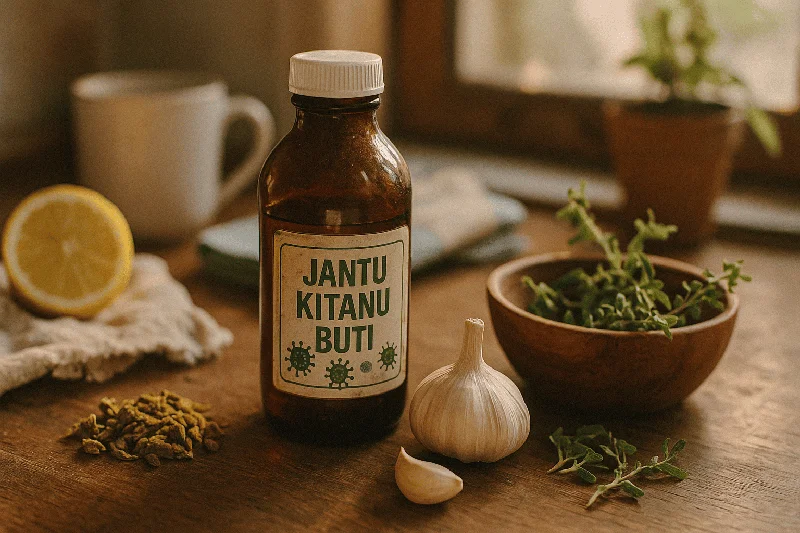
Jantu Kitanu Buti is an Ayurvedic herbal formulation designed to fight germs (jantu), bacteria (kitanu), and pathogens naturally — without the side effects commonly associated with synthetic antibiotics. It combines time-tested antimicrobial herbs like Neem, Tulsi, Turmeric, Giloy, and Amla to boost immunity, detoxify the body, and eliminate harmful microorganisms at their root.
If you've been searching for "jantu kitanu buti" — whether you want to understand what it is, how to use it, what it costs, or whether it actually works — this is the most comprehensive guide available. We'll cover everything from ingredients and scientific evidence to dosage for children, side effects, and how it compares to modern antibiotics.
What Is Jantu Kitanu Buti? (जन्तु कीटाणु बूटी क्या है?)
The term "Jantu Kitanu Buti" is a Hindi-origin name that translates roughly to "germ-destroying herb" or "pathogen-eliminating botanical." In Ayurvedic terminology, jantu refers to organisms or parasites, kitanu means germs or microbes, and buti means herb or plant remedy.
- At its core, this formulation is designed around Ayurveda's concept of Krimi Nashak (destruction of harmful organisms) and Ama Pachana (digestion of accumulated toxins).
- When the body accumulates Ama — undigested metabolic waste — it creates a breeding ground for pathogens.
- Jantu Kitanu Buti aims to address both: killing the microbes and cleaning the environment that allowed them to thrive.
Meaning and Ayurvedic Origin
Here's something important that most websites won't tell you: Jantu Kitanu Buti is not a classical Ayurvedic formulation found in ancient texts like Charaka Samhita or Sushruta Samhita. Unlike well-documented classical preparations such as Sanjivani Vati or Chandraprabha Vati, this formulation appears to be a proprietary modern Ayurvedic blend — developed by contemporary Ayurvedic pharmacies using principles from classical texts but not following a single ancient recipe.
This doesn't make it ineffective. Many respected Ayurvedic pharmacies create proprietary formulations based on classical knowledge. But it does mean you should pay attention to the manufacturer, their certifications, and the specific ingredients listed — because the exact composition can vary from brand to brand.
The Krimi (parasites/pathogens) concept is indeed classical. Charaka Samhita describes 20 types of Krimi classified by their location — external (bahya), gastrointestinal (abhyantara), and blood-borne (raktaja). The herbs used in Jantu Kitanu Buti formulations target all three categories.
Jantu Kitanu Buti vs Kitanu Buti vs Kitanu Buti Swarn — Key Differences
- If you've browsed Ayurvedic pharmacies like Gadwal Pharmacy — which stocks over 200 Ayurvedic products — you may have noticed multiple similar-sounding products.
- Here's how they differ:
| Feature | Jantu Kitanu Buti | Kitanu Buti | Kitanu Buti Swarn |
|---|---|---|---|
| Primary Focus | Broad-spectrum antimicrobial + antiparasitic | General antimicrobial | Enhanced antimicrobial with gold (Swarn Bhasma) |
| Key Addition | Antiparasitic herbs (Vidanga, Neem) | Standard antimicrobial herbs | Swarn Bhasma (gold ash) for potency |
| Price Range | ₹150–₹350 | ₹120–₹280 | ₹500–₹1,200+ |
| Typical Use | Infections + parasitic conditions | Mild to moderate infections | Chronic or resistant infections, debility |
| Availability | Moderate | Common | Limited, specialty pharmacies |
The "Swarn" (gold) variant contains Swarn Bhasma, an Ayurvedic gold preparation believed to enhance the bioavailability and therapeutic potency of herbal formulas. It's significantly more expensive and typically reccommended for chronic conditions or patients with weakened constitutions.
Is It a Classical Ayurvedic Formulation?
To be transparent — no, its not. Dr. Rushi Vyas, a practicing Ayurvedic physician, has noted that "this isn't a classical Ayurvedic formulation" in the traditional sense. The individual ingredients are classical and well-documented, but the specific combination branded as "Jantu Kitanu Buti" is a modern pharmacological creation.
This is actually common in Ayurveda today. Pharmacies combine well-researched herbs into new formulas targeting modern health concerns. The key is to verify that each individual ingredient has both traditional backing and, ideally, scientific research supporting its use.
Jantu Kitanu Buti Ingredients (सामग्री और घटक)
- While exact proportions vary by manufacturer (and frustratingly, no brand publishes precise ratios publicly), the core ingredients remain consistent across most formulations.
- Let's examine each one — including what the science actually says.
Neem (Azadirachta indica)
Neem is arguably the most powerful antimicrobial herb in the Ayurvedic pharmacopoeia. A 2017 study published in the Journal of Pharmacognosy and Phytochemistry demonstrated that neem leaf extracts showed significant antibacterial activity against both gram-positive (Staphylococcus aureus) and gram-negative (Escherichia coli) bacteria.
- Key active compounds include azadirachtin, nimbin, and nimbidin.
- These don't just kill bacteria — they disrupt biofilm formation, which is the protective shield bacteria create to resist antibiotics. This mechanism is particularly relevant in the age of antibiotic resistance.
In Ayurvedic terms, Neem is Tikta (bitter) and Kashaya (astringent), pacifying both Pitta and Kapha doshas. It's considered a frontline Krimi Nashak herb.
Tulsi (Ocimum sanctum)
Tulsi — or Holy Basil — has been called "The Queen of Herbs" for good reason. A comprehensive review published in the Journal of Ayurveda and Integrative Medicine (2014) found that Tulsi exhibits antibacterial, antiviral, antifungal, and anti-inflammatory properties simultaneously.
Eugenol, the primary active compound in Tulsi, has demonstrated antimicrobial activity comparable to some pharmaceutical agents. A 2013 study in the Indian Journal of Physiology and Pharmacology showed that regular Tulsi consumption increased T-helper cells and natural killer cells — key components of the immune response.
Turmeric (Curcuma longa)
Curcumin, the active compound in turmeric, has over 12,000 peer-reviewed publications studying its therapeutic effects. A 2019 meta-analysis in Frontiers in Microbiology confirmed curcumin's antimicrobial activity against a broad spectrum of bacteria, fungi, and even some viruses.
- But here's what makes turmeric especially valuable in this formulation: it's a potent Ama Pachana agent.
- It doesn't just fight microbes — it helps digest and eliminate the toxic metabolic waste that creates conditions for infection. This dual action is why turmeric appears in virtually every Jantu Kitanu Buti formulation.
Giloy (Tinospora cordifolia)
Giloy — known as Guduchi or "Amrita" (nectar of immortality) in Sanskrit — is the primary immunomodulator in this formula. Research published in the International Journal of Pharmaceutical Sciences (2018) showed that Giloy significantly increased macrophage activity and antibody production.
During the COVID-19 pandemic, India's AYUSH Ministry specifically recommended Giloy for preventive care, which brought renewed scientific attention to this herb. A clinical study at AIIMS found that Giloy supplementation increased lymphocyte counts in immunocompromised patients.
Amla (Phyllanthus emblica)
Amla contains one of the highest concentrations of natural Vitamin C — approximately 600-700 mg per fruit, which is about 20 times that of an orange. This makes it an extraordinary antioxidant and immune supporter.
A 2011 study in the European Journal of Clinical Nutrition demonstrated that Amla supplementation reduced C-reactive protein (an inflammatory marker) by 36% over 12 weeks. In the context of Jantu Kitanu Buti, Amla serves as both an immune booster and a synergistic agent that enhances the absorption of other herbs.
Other Supporting Herbs
Depending on the manufacturer, formulations may also include:
- Vidanga (Embelia ribes) — specifically targets intestinal parasites; mentioned in Charaka Samhita as the foremost Krimi Nashak
- Kutaja (Holarrhena antidysenterica) — effective against amoebic and bacterial dysentery
- Pippali (Piper longum) — bioavailability enhancer that increases absorption of other herbs by up to 30%
- Haridra (Berberis aristata) — contains berberine, which has strong antibacterial properties validated by modern research
Jantu Kitanu Buti ke Fayde — Benefits (फायदे)
Antimicrobial and Infection-Fighting Properties
The primary benefit — and the whole reason this formulation exists — is its broad-spectrum antimicrobial action. Unlike synthetic antibiotics that typically target either bacteria or fungi, the multi-herb approach of Jantu Kitanu Buti provides simultaneous antibacterial, antiviral, antifungal, and antiparasitic activity.
A significant advantage here is the reduced risk of antimicrobial resistance. The WHO has identified antibiotic resistance as one of the top 10 global public health threats. Herbal antimicrobials work through multiple mechanisms simultaneously, making it significantly harder for pathogens to develop resistance compared to single-compound antibiotics.
Immunity Boosting
- Rather than simply killing pathogens, Jantu Kitanu Buti strengthens the body's own defense systems.
- The combination of Giloy, Tulsi, and Amla has been shown to:
- Increase production of white blood cells (leukocytes)
- Enhance natural killer cell activity
- Stimulate antibody production
- Improve the body's first-line mucosal immunity
This is the Ayurvedic concept of Vyadhikshamatva (disease resistance) — building immunity so the body can fight infections independently.
Detoxification and Ama Removal
In Ayurvedic philosophy, Ama (accumulated toxins from improper digestion) is considered the precursor to most diseases. When Ama builds up, it creates a hospitable enviroment for pathogens.
Jantu Kitanu Buti addresses this through herbs like Turmeric and Giloy that stimulate Agni (digestive fire) and help metabolize accumulated toxins. This is why many users report improved digestion and increased energy even before noticing antimicrobial effects.
Gut Health and Digestive Support
- This is a benefit that most competitors overlook entirely.
- Unlike synthetic antibiotics — which indiscriminately destroy both harmful and beneficial gut bacteria — Jantu Kitanu Buti demonstrates selective antimicrobial activity.
Research on Neem and Tulsi has shown they preferentially target pathogenic bacteria while supporting beneficial Lactobacillus and Bifidobacterium strains. This prebiotic-like effect means the formulation actually supports healthy gut flora rather than devastating it. A 2020 study in Phytotherapy Research confirmed that curcumin supplementation increased gut microbial diversity by 7% over 8 weeks.
Lymphatic System and Anti-Inflammatory Effects
- Dr. Mishra, a practicing Ayurvedic vaidya, has specifically highlighted Jantu Kitanu Buti's effect on the lymphatic system (known as Rasa Dhatu in Ayurveda).
- When the lymphatic system is congested, it manifests as:
- Chronic skin problems (acne, eczema, rashes)
- Persistent fatigue despite adequate sleep
- Recurrent swollen lymph nodes
- Sluggish recovery from infections
The anti-inflammatory herbs in the formulation — particularly Turmeric and Giloy — help decongest lymphatic channels, improving the body's ability to identify and destroy pathogens efficiently.
Energy and Vitality
- Many users report a noticable increase in energy within 2-3 weeks of starting Jantu Kitanu Buti.
- This makes sense physiologically: when the body is fighting low-grade chronic infections or dealing with accumulated toxins, significant energy resources are diverted to immune function. By eliminating pathogens and clearing Ama, the body can redirect that energy toward daily activities.
How to Use Jantu Kitanu Buti — Dosage Guide (सेवन विधि)
Standard Adult Dosage
| Form | Dosage | Frequency | Best Time | With What |
|---|---|---|---|---|
| Powder (Churna) | 3–5 grams | Twice daily | Before meals | Warm water or honey |
| Tablets/Vati | 1–2 tablets (500mg each) | Twice daily | After meals | Lukewarm water |
| Capsules | 1 capsule (500mg) | Twice daily | After meals | Water |
Important: Always start with the lower dose for the first week to assess tolerance, then increase to the full recommended dose.
- The recommended course duration is 4–6 weeks for acute conditions and 8–12 weeks for chronic issues.
- Ayurvedic practitioners typically recommend cycling: take the formulation for 2 months, then pause for 2-4 weeks before resuming if needed.
Dosage for Children (बच्चों के लिए)
This is a critical gap in existing information online. Here are general pediatric guidelines based on Ayurvedic practice:
| Age Group | Powder Dosage | Tablet Dosage | Notes |
|---|---|---|---|
| 2–5 years | 0.5–1 gram, once daily | Not recommended | Mix with honey or warm milk |
| 6–12 years | 1–2 grams, once daily | Half tablet, once daily | Can mix with jaggery water |
| 13–17 years | 2–3 grams, once or twice daily | 1 tablet, once or twice daily | Same as adult with lower dose |
Always consult a qualified Ayurvedic practitioner before giving any herbal formulation to children under 5.
Dosage for Elderly Patients
For individuals over 65, start with half the standard adult dose and increase gradually. The elderly often have reduced Agni (digestive capacity), so the formulation may need to be taken with a digestion-supporting adjuvant like ginger tea or Trikatu churna.
Ayurvedic Practices That Enhance Effectiveness
Jantu Kitanu Buti works best as part of a comprehensive approach, not in isolation:
- Steam Inhalation (Nadi Swedana): Add Tulsi leaves and eucalyptus to boiling water; inhale steam for 5-10 minutes daily. This enhances the respiratory antimicrobial effects.
- Panchakarma Support: Virechana (therapeutic purgation) and Nasya (nasal administration of herbal oils) can significantly enhance the detoxification effects.
- Dietary Discipline: Avoid processed foods, excessive sugar, and cold beverages during the course. These increase Ama formation and work against the formulation's effects.
- Yoga and Pranayama: Kapalabhati and Bhastrika pranayama improve lymphatic circulation and enhance herb distribution throughout the body.
Jantu Kitanu Buti Price and Where to Buy (कीमत और कहाँ खरीदें)
What Is the Price of Jantu Kitanu Buti Special?
Prices vary considerably based on brand, form, and potency:
| Product | Approximate Price (INR) | Quantity | Per-Gram Cost |
|---|---|---|---|
| Jantu Kitanu Buti (Standard Powder) | ₹150–₹250 | 50–100g | ₹2.5–₹3.0/g |
| Jantu Kitanu Buti Special | ₹250–₹400 | 50–100g | ₹4.0–₹5.0/g |
| Kitanu Buti Swarn (Gold-enhanced) | ₹500–₹1,200 | 25–50g | ₹15–₹25/g |
| Kitanu Buti 1 gram sachets | ₹8–₹15 per sachet | 1g each | ₹8–₹15/g |
The "Special" variant typically contains higher concentrations of premium herbs or additional ingredients like Swarn Bhasma (gold ash) or Rajat Bhasma (silver ash).
Where to Buy Authentic Jantu Kitanu Buti
- 1.Authorized Ayurvedic Pharmacies — Gadwal Pharmacy, Unjha Pharmacy, and similar established manufacturers
- 2.AYUSH-Certified Online Retailers — Look for the AYUSH certification mark
- 3.Directly from Ayurvedic Practitioners — Many vaidyas stock formulations from trusted sources
Red flags when buying: No ingredient list, no manufacturer address, no manufacturing/expiry date, unrealistic claims like "cures all diseases in 3 days."
Side Effects and Contraindications (नुकसान और सावधानियाँ)
This is perhaps the most neglected topic across all existing content on Jantu Kitanu Buti. Let's fix that.
Known Side Effects
- Most people tolerate Jantu Kitanu Buti well.
- However, the following side effects have been reported:
- Mild gastrointestinal discomfort — nausea, loose stools, or stomach cramping, especially in the first 3-5 days. Usually resolves as the body adjusts.
- Hypoglycemia risk — Neem and Giloy both have blood-sugar-lowering properties. Diabetics on medication should monitor glucose carefully.
- Excessive detoxification symptoms — Headache, fatigue, or mild skin breakouts in the first week. This is sometimes called a "healing crisis" in Ayurveda.
- Allergic reactions — Rare, but possible if you're allergic to any component herb. Start with a small dose.
Contraindications
| Condition | Risk Level | Recommendation |
|---|---|---|
| Pregnancy | HIGH — Do Not Use | Neem has potential abortifacient properties |
| Breastfeeding | MODERATE | Consult doctor; bitter herbs may affect milk taste |
| Pre-surgery (within 2 weeks) | HIGH | Turmeric has blood-thinning effects |
| Auto-immune diseases | MODERATE | Immunomodulators may overstimulate immune response |
| On immunosuppressant drugs | HIGH | Can counteract medication effects |
| Severe liver disease | MODERATE to HIGH | Some herbs require hepatic metabolism |
| Children under 2 years | HIGH — Do Not Use | Insufficient safety data |
Drug Interactions
- Diabetes medications (Metformin, Glimepiride): May cause excessive blood sugar drops
- Blood thinners (Warfarin, Aspirin): Turmeric and Neem may enhance anti-coagulant effects
- Immunosuppressants (Cyclosporine, Tacrolimus): Giloy may reduce drug efficacy
- Thyroid medications: Some herbs may alter thyroid hormone levels
Can You Combine It with Other Ayurvedic Preparations?
Yes, but with awareness:
- With Chyawanprash: Generally safe and complementary — Chyawanprash enhances immunity while Jantu Kitanu Buti targets pathogens
- With Ashwagandha: Safe combination; Ashwagandha adds adaptogenic stress support
- With Triphala: Excellent combination for enhanced detoxification
- With other Krimi Nashak formulas: Avoid stacking — this can cause excessive antimicrobial activity and gut flora disruption
Jantu Kitanu Buti vs Modern Antibiotics — A Honest Comparison
This comparison is not about declaring one "better" than the other. Both have their place.
| Parameter | Jantu Kitanu Buti | Modern Antibiotics |
|---|---|---|
| Speed of Action | Gradual (1–3 weeks) | Rapid (24–72 hours) |
| Spectrum | Broad (antibacterial + antiviral + antifungal) | Usually narrow/specific |
| Resistance Risk | Very low (multi-mechanism action) | High (single-target mechanisms) |
| Gut Flora Impact | Preserves/supports beneficial bacteria | Often devastates gut microbiome |
| Side Effects | Generally mild | Can be significant (diarrhea, allergies, liver stress) |
| Severe Infections | NOT SUFFICIENT as sole treatment | Essential and life-saving |
| Preventive Use | Well-suited | Not recommended (promotes resistance) |
| Cost (per course) | ₹200–₹600 | ₹100–₹2,000+ |
| Scientific Evidence | Moderate (individual herbs well-studied) | Extensive (rigorous clinical trials) |
Critical note: For serious infections — pneumonia, sepsis, urinary tract infections with fever, tuberculosis — modern antibiotics are essential and potentially life-saving. Jantu Kitanu Buti should be considered a complementary and preventive approach, not a replacement for acute medical care.
Quality Verification: How to Ensure Authenticity (गुणवत्ता जाँच)
Certifications to Look For
- AYUSH License Number — Every legitimate Ayurvedic manufacturer must have this
- GMP Certification — Good Manufacturing Practice ensures standardized production
- FSSAI Registration — Required for any ingestible product in India
- Batch Number and Expiry Date — Must be clearly printed
Storage and Shelf Life
- Powder form: Store in airtight container, cool dry place. Shelf life typically 2–3 years from manufacturing.
- Tablets: Keep in original packaging, away from moisture. Shelf life 3–5 years.
- Avoid: Direct sunlight, humid environments, refrigeration (unless specified).
- Post-opening: Use powder within 6 months for maximum potency.
Preventive Daily Routine with Jantu Kitanu Buti (दैनिक दिनचर्या)
For those using this formulation as preventive care rather than treatment, here's a practical daily routine:
Morning (6:00–7:00 AM)
- Warm water with half teaspoon turmeric and Jantu Kitanu Buti powder
- 10 minutes Kapalabhati pranayama
- Light breakfast with seasonal fruits
Afternoon (12:00–1:00 PM)
- Balanced meal with digestive spices (cumin, coriander, fennel)
- Avoid combining with cold beverages
Evening (6:00–7:00 PM)
- Second dose of Jantu Kitanu Buti with warm water
- Light dinner — soups, khichdi, steamed vegetables
Night (9:00–10:00 PM)
- Tulsi tea or golden milk (haldi doodh)
- Adequate sleep (7-8 hours minimum)
Frequently Asked Questions (FAQ)
What is Janu Basti treatment, and is it related to Jantu Kitanu Buti?
No, these are completely different. Janu Basti is an Ayurvedic external therapy where warm medicated oil is pooled over the knee joint using a dough ring — it's used for knee pain, osteoarthritis, and joint stiffness. Jantu Kitanu Buti is an internal herbal formulation for fighting infections. The similar spelling causes confusion, but they have no connection.
What is the use of Sanjivani Vati, and how does it compare?
Sanjivani Vati is a classical Ayurvedic formulation (from Sharangdhara Samhita) primarily used for fevers, digestive disorders, and Ama conditions. While both have antimicrobial properties, Sanjivani Vati focuses more on acute febrile conditions and digestion, whereas Jantu Kitanu Buti has broader antiparasitic and immune-modulating focus. They can actually be used together under practitioner guidance.
Is Kitanu Buti Powder more effective than tablets?
Powder (churna) form is generally considered more effective in Ayurveda because it has direct contact with the digestive mucosa and absorbs faster. However, tablets are more convenient, have better taste compliance (especially for children), and offer more precise dosing. For serious infections, powder form is preferable. For daily preventive use, tablets work fine.
How long does it take to see results?
- For acute conditions (active infections): 1–2 weeks for noticeable improvement.
- For chronic issues (recurring infections, low immunity): 4–8 weeks for meaningful change.
- For preventive immune building: 6–12 weeks for measurable immunity enhancement.
Can I take Jantu Kitanu Buti during monsoon season as prevention?
Absolutely — in fact, this is one of its most traditional uses. The monsoon season (Varsha Ritu) increases Pitta and aggravates pathogenic growth. Starting a preventive course 2 weeks before monsoon and continuing through the season is a well-established Ayurvedic practice.
Are there any real patient testimonials or documented cases?
- This remains a significant gap in available evidence. While thousands of Ayurvedic practitioners report positive clinical outcomes anecdotally, there are no formally published case studies or patient-documented recovery stories specifically for branded Jantu Kitanu Buti formulations.
- Individual herbs have robust research — the specific combination needs more formal documentation.
Final Verdict: Is Jantu Kitanu Buti Worth It? (निष्कर्ष)
Jantu Kitanu Buti represents a genuinely useful Ayurvedic approach to managing infections, building immunity, and supporting the body's natural defense mechanisms. The individual ingredients have substantial scientific backing, the Ayurvedic rationale is sound, and the safety profile is significantly better than long-term antibiotic use.
- However, be realistic about what it can and cannot do.
- It's excellent for:
- Preventive immune support
- Mild to moderate infections as complementary therapy
- Post-antibiotic recovery (rebuilding gut flora)
- Chronic low-grade infections and recurring illness
- Seasonal protection during monsoon and winter
It's not appropriate as a sole treatment for serious bacterial infections, sepsis, tuberculosis, or any life-threatening condition.
Your next step: Consult a qualified Ayurvedic practitioner (BAMS or MD Ayurveda) who can assess your specific constitution (Prakriti), current health status (Vikriti), and recommend the right variant, dosage, and duration for your individual needs. If you're currently on any medications, share the complete list with both your Ayurvedic and allopathic doctors to avoid interactions. This article is for informational purposes only and does not replace professional medical advice. Always consult a qualified healthcare provider before starting any new supplement or herbal formulation.
Scientific Sources
- Rosemary and neem: an insight into their combined anti-dandruff and anti-hair loss efficacy — Hashem MM et al., 2024, Scientific reports
- Bangladeshi medicinal plant dataset — Borkatulla B et al., 2023, Data in brief
- Phytotherapy in periodontics as an effective and sustainable supplemental treatment: a narrative review — Gawish AS et al., 2024, Journal of periodontal & implant science
- Formulation and Evaluation of Turmeric- and Neem-Based Topical Nanoemulgel against Microbial Infection — Giri S et al., 2024, Gels (Basel, Switzerland)
- Molecular insights into anti-inflammatory activities of selected Indian herbs — Upadhyay S et al., 2025, Journal of Ayurveda and integrative medicine
आयुर्वेदिक डॉक्टर से एक प्रश्न पूछें और मुफ़्त या सशुल्क मोड में अपनी चिंता की समस्या पर ऑनलाइन परामर्श प्राप्त करें।
2,000 से अधिक अनुभवी डॉक्टर हमारी साइट पर काम करते हैं और आपके प्रश्नों की प्रतीक्षा करते हैं और प्रतिदिन उपयोगकर्ताओं को उनकी स्वास्थ्य समस्याओं को हल करने में मदद करते हैं।
संबंधित आलेख