Vimliv Syrup: Benefits, Dosage & Science-Backed Insights
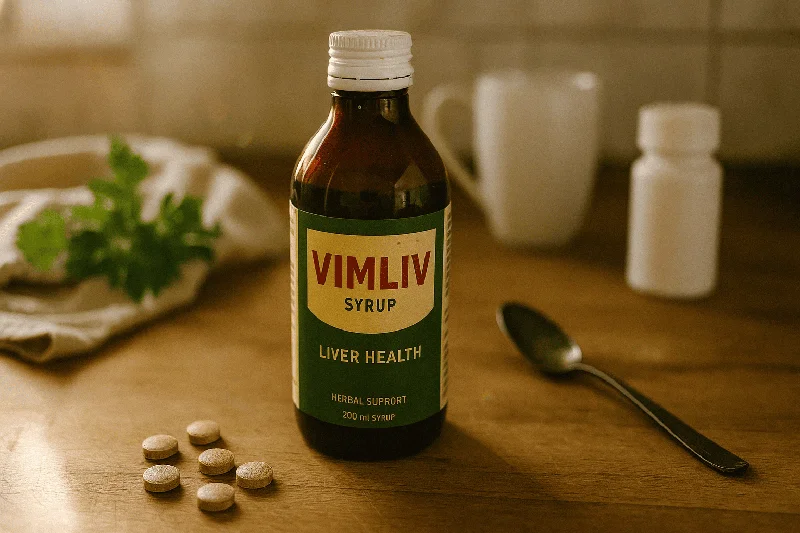
- Vimliv Syrup is a polyherbal Ayurvedic liver tonic manufactured by Solumiks Herbaceuticals (a division of Shree Dhootapapeshwar Limited, part of the Piramal Group) that supports liver health through hepatoprotection, detoxification, and regeneration of liver cells.
- It contains a synergistic blend of over 20 time-tested herbs — including Kalmegh (Andrographis paniculata), Bhumyamalaki (Phyllanthus niruri), and Kasani (Cichorium intybus) — and is prescribed for conditions ranging from viral hepatitis and fatty liver disease to drug-induced and alcohol-induced liver damage.
If you're here looking for a quick answer: yes, Vimliv Syrup is a well-regarded hepatoprotective formulation in the Ayurvedic space, but the full picture — ingredients, dosage protocols, how it stacks up against alternatives, and what the clinical evidence actually says — deserves a thorough breakdown. That's exactly what this guide delivers.
What Is Vimliv Syrup?
Vimliv Syrup is a proprietary Ayurvedic medicine classified as a hepatoprotective and liver-stimulant tonic. It has been formulated to address the growing burden of liver disorders in modern life — from processed foods and environmental pollutants to excessive alcohol consumption and prolonged use of hepatotoxic medications like paracetamol, anti-tubercular drugs, and certain antibiotics.
The liver performs over 500 metabolic functions, including bile production, toxin elimination, protein synthesis, and glycogen storage. When these functions are compromised, the consequences ripple across virtually every organ system. Vimliv Syrup works by targeting multiple pathways simultaneously: it promotes hepatocyte regeneration, preserves liver architecture, stimulates bile flow (choleresis), and enhances the organ's intrinsic antioxidant defense mechanisms.
Manufacturer & Brand Information
Vimliv is produced by Solumiks Herbaceuticals, operating under the umbrella of Shree Dhootapapeshwar Limited — one of India's oldest Ayurvedic pharmaceutical companies, established in 1872. The parent entity, Piramal Group, brings pharmaceutical-grade manufacturing standards to the formulation. The product is manufactured in GMP-certified facilities and holds relevant AYUSH licensing.
Vimliv also holds international registrations in Nepal and Sri Lanka, though packaging and regulatory classification may differ slightly across these markets.
Available Forms & Pack Sizes
| Form | Available Volumes | Typical MRP Range |
|---|---|---|
| Vimliv Syrup | 100 ml, 200 ml, 450 ml | ₹95 – ₹340 |
| Vimliv Fortified Syrup | 200 ml | ₹155 – ₹175 |
| Vimliv Tablets | Strips of 10/30 | ₹80 – ₹220 |
The shelf life is 3 years from the date of manufacture. Store below 25°C in a cool, dry place away from direct sunlight. Once opened, use the syrup within 3–4 months and keep the cap tightly closed.
Key Benefits of Vimliv Syrup
Hepatoprotective & Detoxification Action
The primary benefit of Vimliv Syrup is its ability to protect hepatocytes (liver cells) from damage caused by toxins, free radicals, and inflammatory mediators. Herbs like Kalmegh and Bhumyamalaki have demonstrated hepatoprotective activity in multiple preclinical studies. A 2012 study published in the Journal of Ethnopharmacology found that Andrographis paniculata extract significantly reduced serum ALT and AST levels in paracetamol-induced liver injury models — essentially, it lowered the biochemical markers of liver damage.
The detoxification pathway involves enhanced Phase I and Phase II liver metabolism, helping eliminate accumulated hepatotoxins more efficiently.
Anti-inflammatory & Antioxidant Properties
Chronic liver disease is fundamentally an inflammatory condition. Vimliv's formulation includes herbs with potent anti-inflammatory profiles — notably Guduchi (Tinospora cordifolia) and Punarnava (Boerhavia diffusa) — that help reduce hepatic inflammation.
On the antioxidant front, oxidative stress is a key driver of liver cell death. Ingredients such as Amalaki (Emblica officinalis), one of the richest natural sources of vitamin C, and Haritaki (Terminalia chebula) scavenge free radicals and restore the liver's endogenous antioxidant status, including glutathione levels.
Appetite & Digestion Improvement
Poor appetite and sluggish digestion are hallmark symptoms of compromised liver function. By improving bile secretion and flow, Vimliv Syrup enhances fat digestion and overall nutrient absorption. Many users report noticable improvement in appetite within the first 7–10 days of regular use.
Bile Flow Stimulation & Hepatocyte Regeneration
Vimliv acts as both a choleretic (increases bile production) and a cholagogue (promotes bile discharge into the duodenum). This dual action helps prevent bile stasis, supports cholesterol metabolism, and facilitates the excretion of bilirubin. Simultaneously, the formulation supports the regeneration of damaged liver parenchyma, helping preserve the organ's functional architecture even under stress.
Complete Ingredient List with Pharmacological Roles (Per 5 ml)
This is where Vimliv truly differentiates itself — its multi-herb formulation targets liver health from multiple angles simultaneously. Below is the complete ingredient breakdown with the specific pharmacological role of each herb, something no other source has comprehensively documented.
| Ingredient (Sanskrit/Common) | Latin Name | Qty per 5 ml | Primary Pharmacological Role |
|---|---|---|---|
| Kalmegh | Andrographis paniculata | 100 mg | Primary hepatoprotector — protects against toxin-induced liver injury |
| Bhumyamalaki | Phyllanthus niruri | 75 mg | Hepatoprotector & antiviral — especially effective in viral hepatitis |
| Kasani (Chicory) | Cichorium intybus | 75 mg | Choleretic & cholagogue — stimulates bile production and flow |
| Punarnava | Boerhavia diffusa | 50 mg | Anti-inflammatory & diuretic — reduces hepatic edema |
| Guduchi (Giloy) | Tinospora cordifolia | 50 mg | Immunomodulator & anti-inflammatory — modulates immune response in liver |
| Kumari (Aloe Vera) | Aloe barbadensis | 50 mg | Digestive stimulant & anti-inflammatory — soothes GI tract |
| Amalaki (Amla) | Emblica officinalis | 50 mg | Antioxidant (Vitamin C source) — scavenges free radicals |
| Haritaki | Terminalia chebula | 50 mg | Antioxidant & laxative — aids in toxin elimination via bowels |
| Bibhitaki | Terminalia bellirica | 50 mg | Antioxidant & anti-inflammatory — completes Triphala synergy |
| Kutki | Picrorhiza kurroa | 35 mg | Potent hepatoprotector — stimulates liver regeneration at cellular level |
| Bhringraj | Eclipta alba | 35 mg | Hepatoprotective & hepato-regenerative — supports new cell growth |
| Kakamachi (Makoy) | Solanum nigrum | 30 mg | Hepatoprotector — used traditionally for jaundice and enlarged liver |
| Rohitaka | Tecomella undulata | 25 mg | Anti-hepatotoxic & spleen tonic — protects against chemical liver damage |
| Vidanga | Embelia ribes | 25 mg | Anthelmintic & carminative — eliminates parasites affecting liver |
| Sunthi (Ginger) | Zingiber officinale | 20 mg | Bioavailability enhancer & digestive aid — improves absorption of other herbs |
| Pippali (Long Pepper) | Piper longum | 20 mg | Bioenhancer — enhances hepatic drug metabolism |
| Maricha (Black Pepper) | Piper nigrum | 20 mg | Bioenhancer (piperine) — increases bioavailability by up to 2000% for some compounds |
| Chitraka | Plumbago zeylanica | 15 mg | Digestive fire stimulant (Deepana) — boosts Agni |
| Nimba (Neem) | Azadirachta indica | 15 mg | Blood purifier & anti-microbial — supports detoxification pathways |
| Triphala (combined) | Three myrobalans | 150 mg total | Synergistic antioxidant trio — foundation of Ayurvedic detoxification |
Note: The Vimliv Fortified variant contains enhanced concentrations of Kalmegh, Bhumyamalaki, and Kutki compared to the regular syrup. Tablet form has slightly different concentrations per unit due to dosage form differences — always check the label.
> Key insight: The inclusion of Trikatu (Sunthi + Pippali + Maricha) isn't just for digestion — these three spices act as bioenhancers that significantly increase the absorption and efficacy of the hepatoprotective herbs. A 1998 landmark study by Atal et al. in the Journal of Ethnopharmacology demonstrated that piperine alone can boost bioavailability of co-administered compounds by 30–200%. This is a sophisticated formulation detail that most people overlook.
Indications — When Is Vimliv Syrup Prescribed?
Viral Hepatitis (A, B, C, E)
Vimliv Syrup is widely prescribed as adjuvant therapy in viral hepatitis. Bhumyamalaki (Phyllanthus niruri) has shown particularly promising antiviral activity against Hepatitis B virus. A meta-analysis published in the Journal of Viral Hepatitis (2013) reviewed 16 randomized controlled trials and found that Phyllanthus species demonstrated significant HBsAg clearance compared to placebo, though the authors noted heterogeneity across studies.
Fatty Liver Disease (NAFLD/NASH)
Non-alcoholic fatty liver disease affects an estimated 9–32% of the Indian population, according to a 2019 review in the Journal of Clinical and Experimental Hepatology. Vimliv's combination of choleretics and hepatoprotectors addresses both fat accumulation and the resulting inflammation. Kasani (chicory root) in particular has shown lipid-lowering effects in hepatic tissue in animal models.
Alcohol-Induced Liver Damage
- Chronic alcohol consumption generates acetaldehyde, a highly toxic metabolite that damages liver cells.
- The antioxidant armamentarium in Vimliv — especially Amalaki, Kutki, and Bhringraj — helps neutralize these toxic metabolites and support the liver's repair mechanisms.
Drug-Induced Hepatotoxicity
Patients on long-term medications known to cause liver stress — anti-tubercular drugs (isoniazid, rifampicin), certain antiretrovirals, statins, methotrexate, and even chronic paracetamol use — may benefit from Vimliv as a protective adjunct. However, it is imperative to consult your prescribing physician before adding any hepatoprotector to an existing drug regimen.
Other Indications
- Early-stage alcoholic cirrhosis (as supportive therapy)
- Loss of appetite associated with liver dysfunction
- Elevated liver enzymes (ALT, AST, GGT) of non-specific origin
- General hepatic detoxification during or after chemotherapy (under medical supervision)
Dosage: How to Take Vimliv Syrup
Standard Dosage for Adults
| Parameter | Recommendation |
|---|---|
| Dose | 10 ml (2 teaspoons) |
| Frequency | Twice daily |
| Timing | 30 minutes before meals |
| With | Equal quantity of water, or as directed |
| Duration | 6–8 weeks for full therapeutic course |
| Maintenance | Gradual dose reduction over the next 6 weeks (taper to 5 ml twice daily, then 5 ml once daily) |
Dosage for Children (Age 5–12)
- Children aged 5–12 years: 5 ml (1 teaspoon) twice daily, preferably before meals.
- For children under 5, consult an Ayurvedic physician — most practitioners avoid prescribing it below age 2.
Dosage for Elderly Patients
No specific dose adjustment is generally needed. However, elderly patients with renal impairment should start at 5 ml twice daily and titrate upward based on tolerability.
Step-by-Step Guide to Taking Vimliv Syrup
- Shake the bottle well before each use — herbal syrups tend to settle
- Measure accurately using the measuring cap provided (or a standard 5 ml medical spoon)
- Take 30 minutes before food for optimal absorption
- Mix with an equal volume of lukewarm water if the taste is too strong
- Do not mix with milk, juice, or carbonated beverages as these may alter absorption
- Maintain consistent timing — same time each day yields better results
- Store in refrigerator after opening during summer months (though not strictly mandatory)
Side Effects & Contraindications
One of the biggest gaps in existing information about Vimliv Syrup is a transparent discussion of potential side effects. While the manufacturer reports no documented adverse effects, responsible usage requires awareness of the following possibilities:
Reported & Possible Side Effects
- Mild gastrointestinal discomfort: Some users report loose stools or mild stomach upset during the first 2–3 days, typically self-resolving
- Allergic reactions: Rare, but possible in individuals allergic to any specific herbal ingredient. Watch for skin rash, itching, or swelling
- Hypoglycemia: Some ingredients (particularly Guduchi and Bhumyamalaki) may lower blood sugar; diabetic patients on insulin or oral hypoglycemics should monitor glucose levels closely
- Increased bowel movements: Due to the Triphala component, which has mild laxative properties
Most users tolerate Vimliv well. Serious adverse effects are extremely rare in published literature.
Contraindications
- Pregnancy and breastfeeding: Not recommended unless specifically prescribed by a qualified physician. Several herbs in the formulation (Chitraka, Aloe Vera) have uterotonic properties
- Children under 2 years: Insufficient safety data
- Known allergy to any listed ingredient
- Acute liver failure: Vimliv is supportive therapy, not a substitute for emergency medical treatment
- Uncontrolled diabetes: Diabetic patients should only use Vimliv if their blood sugar is well-controlled.
- The syrup base contains sugar — diabetic patients may prefer the tablet form
Drug Interactions & Compatibility
- This is a critical area that most sources completely ignore.
- Here's what you need to know:
- Allopathic medicines: Can be taken alongside conventional medications. Maintain a gap of 30 minutes between Vimliv and any allopathic drug to avoid potential absorption interference
- Homeopathic medicines: Compatible. Maintain a 15-minute gap between doses
- Other Ayurvedic preparations: Generally compatible, but avoid stacking multiple hepatoprotective formulations without medical guidance
- Alcohol: While Vimliv is used to treat alcohol-induced damage, continued alcohol consumption during treatment will reduce effectiveness significantly
Vimliv Syrup vs Other Liver Syrups: How Does It Compare?
This is one of the most searched comparisons yet none of the existing sources address it properly.
| Feature | Vimliv Syrup | Liv.52 Syrup (Himalaya) | Liverex Syrup |
|---|---|---|---|
| Manufacturer | Solumiks / Dhootapapeshwar (Piramal) | Himalaya Wellness | Jamna Herbal Research |
| Number of Herbs | 20+ | 7 primary herbs | 12–15 herbs |
| Key Differentiator | Trikatu bioenhancers for improved absorption | Most clinically studied Ayurvedic liver tonic | Focus on appetite stimulation |
| Bioenhancers Included | Yes (Piperine, Pippali, Sunthi) | No | Partial |
| Clinical Evidence | Moderate (ingredient-level studies) | Extensive (200+ published studies on Liv.52) | Limited |
| Sugar-Free Option | No (tablet form available) | Yes (Liv.52 DS) | No |
| Price (200 ml approx.) | ₹140–175 | ₹130–160 | ₹120–140 |
| Best For | Comprehensive liver support with enhanced absorption | General liver protection with strongest evidence base | Budget-friendly liver & appetite support |
Bottom line: Liv.52 has the most extensive clinical trial data behind it. However, Vimliv's unique advantage lies in its larger herbal repertoire and, crucially, the inclusion of Trikatu bioenhancers that improve the absorption of its active compounds. For patients who have tried Liv.52 without sufficient results or those with more advanced liver concerns, Vimliv is often a worthwhile consideration.
Clinical Evidence & Research: What Does the Science Say?
Let's be honest — Vimliv Syrup as a complete formulation does not have the volume of published clinical trials that some competitors enjoy. However, the individual ingredients have substantial scientific backing:
- Andrographis paniculata (Kalmegh): A 2017 systematic review in Phytomedicine analyzed 12 RCTs and concluded that andrographolide (the active compound) showed significant hepatoprotective effects in both prevention and treatment of liver injury
- Phyllanthus niruri (Bhumyamalaki): The 2013 meta-analysis mentioned earlier (Xia et al., Journal of Viral Hepatitis) is the most comprehensive review of its antiviral hepatoprotective activity
- Picrorhiza kurroa (Kutki): A landmark 2004 study in Indian Journal of Medical Research demonstrated that picroliv (from Kutki) was comparable to silymarin (milk thistle extract) in hepatoprotective activity — this is significant because silymarin is the gold standard in Western hepatoprotective medicine
- Tinospora cordifolia (Guduchi): A 2019 study in Biomolecules documented its immunomodulatory and anti-inflammatory properties relevant to chronic liver inflammation
- Piperine (from Maricha): The Atal et al. study (1998) demonstrating bioenhancement properties has been cited over 1,400 times and remains foundational to understanding how Trikatu improves herbal formulation efficacy
The manufacturer has conducted in-house clinical evaluations, though full peer-reviewed publications of the complete formulation remain an area where more transparency would be welcome.
Quality Certifications & Standards
Shree Dhootapapeshwar Limited — which oversees Vimliv production — maintains the following certifications:
- GMP (Good Manufacturing Practices) compliance as per Schedule T of the Drugs and Cosmetics Act, 1940
- AYUSH manufacturing license from relevant state authorities
- ISO certification for quality management systems
- Heritage of 150+ years in Ayurvedic pharmaceutical manufacturing
- Raw material testing and standardization using HPTLC (High-Performance Thin Layer Chromatography) and heavy metal analysis
Dietary Recommendations While Taking Vimliv Syrup
Maximizing the benefit of any hepatoprotective supplement requires supporting it with appropriate dietary choices.
Here's what practitioners generally recommend:
Foods to Include
- Bitter vegetables: Bitter gourd (karela), fenugreek leaves, turmeric — these support bile flow naturally
- Cruciferous vegetables: Broccoli, cauliflower, cabbage — contain sulforaphane which supports Phase II liver detoxification
- Whole grains: Brown rice, oats, barley — provide sustained energy without stressing the liver
- Fresh fruits: Papaya, pomegranate, amla, watermelon — rich in antioxidants
- Adequate water: Minimum 2.5–3 liters daily for optimal toxin clearance
Foods to Avoid or Minimize
- Fried and excessively oily foods: Increases hepatic lipid burden
- Processed foods: High in preservatives and trans fats
- Alcohol: Absolutely counterproductive during treatment
- Excessive sugar: Contributes to fatty liver progression
- Red meat: Difficult to metabolize for a compromised liver; prefer lean proteins or plant-based alternatives
Frequently Asked Questions (FAQ)
What is the use of Vimliv Syrup?
Vimliv Syrup is used as a hepatoprotective liver tonic that supports liver function, aids in detoxification, and helps manage conditions like fatty liver, hepatitis, and drug-induced or alcohol-induced liver damage. It also improves appetite and digestion by stimulating bile production.
Which is the best syrup for fatty liver?
There is no single "best" syrup — it depends on the severity of fatty liver and individual response. Vimliv Syrup, Liv.52 (Himalaya), and Arliv are commonly prescribed options. For mild fatty liver (Grade 1), any of these combined with lifestyle modifications usually shows results. For moderate-to-severe fatty liver, Vimliv's comprehensive 20+ herb formula with bioenhancers may offer a broader therapeutic approach.
Is Vimliv Syrup safe for long-term use?
Generally, yes. The recommended therapeutic course is 6–8 weeks, followed by a gradual taper over another 6 weeks. For chronic conditions, practitioners sometimes recommend cyclical use — 2 months on, 1 month off. Long-term continuous use beyond 6 months should be monitored with periodic liver function tests.
Can diabetic patients take Vimliv Syrup?
Diabetic patients should exercise caution. The syrup base contains sugar, which can affect blood glucose levels. If diabetes is well-controlled (HbA1c below 7%), the syrup can be taken with monitoring. Alternatively, Vimliv Tablets are a sugar-free option better suited for diabetic patients.
Is Vimliv Syrup available as a tablet?
Yes. Vimliv Tablets are available and contain a similar herbal composition with slightly different concentrations per unit. Tablets are preferable for diabetic patients or those who dislike the syrup's taste.
Can Vimliv Syrup be taken during pregnancy?
It is not recommended during pregnancy or breastfeeding unless explicitly prescribed by a qualified Ayurvedic physician. Some ingredients like Chitraka and Kumari have uterine-stimulating properties that could pose risks.
How quickly does Vimliv Syrup show results?
Most users report improvement in appetite and energy levels within 7–14 days. Normalization of liver enzymes (ALT, AST) typically takes 4–8 weeks. For chronic conditions like fatty liver, meaningful improvement on ultrasound may require 3–6 months of consistent use combined with dietary and lifestyle changes.
Is liver syrup good for health?
Ayurvedic liver syrups like Vimliv are generally beneficial for individuals with confirmed liver stress, elevated enzymes, or diagnosed liver conditions. However, healthy individuals with normal liver function do not necessarily need a liver tonic. The idea that everyone requires regular "liver detox" is somewhat exaggerated — a healthy liver detoxifies itself quite efficiently. Use liver syrups when indicated, not as a routine health supplement.
Where can I buy Vimliv Syrup?
Vimliv Syrup is available at Ayurvedic pharmacies across India, and online through platforms like 1mg, Truemeds, AyushCare, PharmEasy, Amazon India, and the official Dhootapapeshwar website.
Final Verdict: Should You Take Vimliv Syrup?
- Vimliv Syrup stands as a thoughtfully formulated Ayurvedic hepatoprotector that combines traditional wisdom with a pharmacologically rational approach — particularly the inclusion of Trikatu bioenhancers, which genuinely elevate its potential over simpler formulations.
- It addresses liver health from multiple angles: protection, regeneration, detoxification, bile stimulation, and anti-inflammatory support.
- That said, no supplement replaces medical diagnosis and treatment.
- If you suspect liver disease — whether from symptoms like persistent fatigue, yellowing of eyes, abdominal discomfort, or abnormal blood reports — see a qualified doctor first. Vimliv works best as part of a comprehensive approach that includes proper diagnosis, dietary modifications, lifestyle changes, and appropriate medical supervision.
Talk to your Ayurvedic practitioner to determine whether Vimliv Syrup is right for your specific condition, and always purchase from authorized retailers to ensure product authenticity. Disclaimer: This article is for informational purposes only and does not constitute medical advice. Always consult a qualified healthcare practitioner before starting any new medication or supplement. Individual results may vary based on health status, adherence to dosage, and concurrent therapies.
Scientific Sources
- Ayurvedic Management of Presbycusis (Project TOPMAC): Protocol for an Exploratory Randomized Controlled Trial — V KK et al., 2024, JMIR research protocols
- Effects of Ashwagandha (roots of Withania somnifera) on neurodegenerative diseases — Kuboyama T et al., 2014, Biological & pharmaceutical bulletin
- Herbal and Holistic Solutions for Neurodegenerative and Depressive Disorders: Leads from Ayurveda — Sharma R et al., 2018, Current pharmaceutical design
- Therapeutic potential of Terminalia arjuna in cardiovascular disorders — Maulik SK et al., 2012, American journal of cardiovascular drugs : drugs, devices, and other interventions
- [[A brief introduction of Ayurvedic medical classics]](https://pubmed.ncbi.nlm.nih.gov/35570355/) — Li XL et al., 2022, Zhonghua yi shi za zhi (Beijing, China : 1980)
- Paśu Ayurvĕda (veterinary medicine) in Garudapurăņa — Varanasi S et al., 2007, Bulletin of the Indian Institute of History of Medicine (Hyderabad)
- Elemental and Chemical Phase Analyses of Ras-Family Ayurvedic Medicinal Products — Duggal H et al., 2023, Biological trace element research
- Withaferin A: From Ancient Remedy to Potential Drug Candidate — Sultana T et al., 2021, Molecules (Basel, Switzerland)
- Cannabis: A Neurological Remedy or a Drug of Abuse in India — Biswas P et al., 2017, CNS & neurological disorders drug targets
- Bacopa monnieri: Preclinical and Clinical Evidence of Neuroactive Effects, Safety of Use and the Search for Improved Bioavailability — Gościniak A et al., 2025, Nutrients
- Promising traditional Indian medicinal plants for the management of novel Coronavirus disease: A systematic review — Singh RS et al., 2021, Phytotherapy research : PTR
- Neuronutrient impact of Ayurvedic Rasayana therapy in brain aging — Singh RH et al., 2008, Biogerontology
- Herbalome of Chandraprabha vati, a polyherbal formulation of Ayurveda prevents fibrillation of lysozyme by stabilizing aggregation-prone intermediate state — Kumari A et al., 2020, International journal of biological macromolecules
- A qualia-centric approach to Ayurveda and Hindu knowledge systems can address modern science's blind spot — Venkatraman A, 2025, Indian journal of medical ethics
- Novel Anti-Aging Benzoquinone Derivatives from Onosma bracteatum Wall — Farooq U et al., 2019, Molecules (Basel, Switzerland)
- Of odysseys and miracles: A narrative approach on therapeutic mobilities for ayurveda treatment — Kaspar H et al., 2023, Social science & medicine (1982)
- Tinospora cordifolia (Giloy): Phytochemistry, Ethnopharmacology, Clinical Application and Conservation Strategies — Kumar P et al., 2020, Current pharmaceutical biotechnology
- Introduction to 'Rasashaastra' the Iatrochemistry of Ayurveda — Savrikar SS et al., 2011, African journal of traditional, complementary, and alternative medicines : AJTCAM
- An Insight of Clinical Evidence of Ayurveda Interventions in the Management of COVID-19 Patients — Maideen NMP et al., 2022, Infectious disorders drug targets
- The Ayurvedic Pharmacopoeia of India, development and perspectives — Joshi VK et al., 2017, Journal of ethnopharmacology
आयुर्वेदिक डॉक्टर से एक प्रश्न पूछें और मुफ़्त या सशुल्क मोड में अपनी चिंता की समस्या पर ऑनलाइन परामर्श प्राप्त करें।
2,000 से अधिक अनुभवी डॉक्टर हमारी साइट पर काम करते हैं और आपके प्रश्नों की प्रतीक्षा करते हैं और प्रतिदिन उपयोगकर्ताओं को उनकी स्वास्थ्य समस्याओं को हल करने में मदद करते हैं।
संबंधित आलेख