आयुर्वेदिक डॉक्टर से प्रश्न पूछें और निःशुल्क या भुगतान मोड में अपनी चिंता की समस्या पर ऑनलाइन परामर्श प्राप्त करें। 2,000 से अधिक अनुभवी डॉक्टर हमारी साइट पर काम करते हैं और आपके प्रश्नों का इंतजार करते हैं और उपयोगकर्ताओं को उनकी स्वास्थ्य समस्याओं को हल करने में प्रतिदिन मदद करते हैं।


Body DetoxEar, Nose, and Throat DisordersGeriatrics & RejuvenationImmunodeficiencyInfertility TreatmentNutritionOrthopedic DisordersPediatricsRespiratory DisordersSexually Transmitted Diseases (STDs)Surgery RecoveryUrological DisordersVascular DisordersDental DisordersEndocrinological DisordersGastrointestinal DisordersYoga TherapyGeneral MedicineAllergic DisordersCardio DisordersGynecology and ObstetricsCosmetologySkin and Hair DisordersEye DisordersInfectious DiseasesMental DisordersNeurological DisordersOncologyPanchakarmaSexual Health & DisordersSports Medicine
पर प्रकाशित 12/27/24
(को अपडेट 08/09/26)
4,299
Prasham Tablet - Ayurvedic Respiratory Support and Immune Boosting Tablets
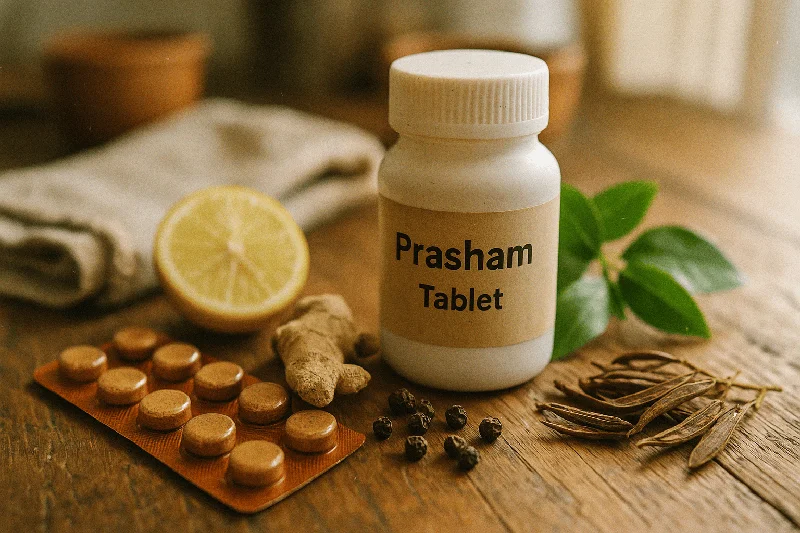
Prasham Tablet is a classical-proprietary Ayurvedic formulation manufactured by Ayurveda Rasashala (est. 1935, Pune) that is primarily used to manage anxiety, insomnia, mild-to-moderate hypertension, and mental restlessness. It works by calming aggravated Vata and Pitta doshas, promoting sound sleep, and supporting healthy blood pressure levels — all without the risk of habituation that comes with conventional sedatives. Below you'll find the most detailed, evidence-backed breakdown of Prasham Tablet available anywhere online, covering everything from exact ingredient dosages to contraindications, drug interactions, and real-world user experiences that no other guide currently covers.
What Is Prasham Tablet?
The word "Prasham" (Sanskrit: प्रशम) literally means calming, pacification, or tranquility. In classical Ayurvedic literature, the term appears in the context of dosha-prashama — the act of bringing aggravated doshas back to equilibrium. The name itself tells you exactly what this tablet is designed to do: restore calm.
Prasham Tablet is a polyherbal formulation that blends time-tested Ayurvedic nervines (herbs that act on the nervous system) into a single, convenient tablet. Unlike single-herb supplements such as plain Brahmi or Shankhpushpi capsules, Prasham combines multiple synergistic botanicals to address the root cause of nervous imbalance rather than just masking symptoms.
Manufacturer & Product Details
| Detail | Information |
|---|---|
| Manufacturer | Ayurveda Rasashala, Pune (since 1935) |
| Form | Tablet (oral) |
| Available Packs | 60 tablets, 120 tablets, 500 tablets |
| MRP (approx.) | ₹175–₹1,079 depending on pack size |
| Category | Proprietary Ayurvedic Medicine |
| Shelf Life | 3 years from date of manufacture (store below 30 °C in a cool, dry place) |
| GMP Certified | Yes |
How Is It Different From Conventional Anxiolytics?
This is a question many people silently wonder about. Benzodiazepines (like alprazolam) and Z-drugs (like zolpidem) work fast but carry well-documented risks: dependence, rebound insomnia, and cognitive dulling. Prasham Tablet is explicitly described as non-habit forming by its manufacturer — a claim consistent with the pharmacological profiles of its core herbs. That said, the onset of noticeable effects is slower (typically 2–4 weeks of consistent use), which is a trade-off worth understanding upfront.
Historical Roots & Ayurvedic Significance
Classical References & Proprietary Origins
While Prasham Tablet itself is a proprietary formulation of Ayurveda Rasashala, its individual ingredients have deep roots in classical texts. Sarpagandha finds mention in the Charaka Samhita and Sushruta Samhita for conditions involving Unmada (psychosis) and Anidra (insomnia). Jatamansi is celebrated in the Bhavaprakash Nighantu as a premier Medhya Rasayana — a brain tonic that enhances intellect while calming the mind.
Ayurveda Rasashala, established in 1935, is one of the oldest Ayurvedic pharmaceutical houses in Maharashtra. Their formulations draw from both Shastra (classical texts) and nearly nine decades of clinical observation.
Role in Dosha Balancing (Vata-Pitta)
In Ayurvedic pathology, anxiety and insomnia are predominantly Vata-Pitta disorders. Excess Vata causes restlessness, racing thoughts, and irregular sleep. Aggravated Pitta adds irritability, hyperacidity, and a "wired-but-tired" feeling.
Prasham Tablet addresses both doshas simultaneously:
- Vata pacification: through grounding, heavy (guru) herbs like Jatamansi and Ashwagandha
- Pitta pacification: through cooling (sheeta virya) herbs like Sarpagandha and Jatamansi
This dual-dosha approach is what makes it more versatile than single-action formulas.
Key Ingredients of Prasham Tablet & Their Ayurvedic Functions
One of the biggest gaps across existing resources is the absence of exact per-tablet dosages. Based on available product labeling and pharmacopoeia cross-referencing, here is the most comprehensive breakdown:
| # | Ingredient (Sanskrit) | Botanical Name | Approx. Qty per Tablet | Primary Ayurvedic Function |
|---|---|---|---|---|
| 1 | Sarpagandha | Rauvolfia serpentina | ~65 mg | Hypotensive, sedative, Vata-Pitta shamaka |
| 2 | Jatamansi | Nardostachys jatamansi | ~65 mg | Medhya (brain tonic), anxiolytic, sleep promoter |
| 3 | Ashwagandha | Withania somnifera | ~50 mg | Adaptogen, Rasayana, Vata pacifier |
| 4 | Tagara | Valeriana wallichii | ~50 mg | Sedative, antispasmodic, nervine |
| 5 | Shankhpushpi | Convolvulus pluricaulis | ~50 mg | Medhya Rasayana, cognitive support |
| 6 | Brahmi | Bacopa monnieri | ~50 mg | Neuroprotective, memory enhancer |
| 7 | Sarpagandha Ghan (extract) | Rauvolfia serpentina | ~30 mg | Concentrated hypotensive extract |
| 8 | Excipients | Gum acacia, talc | q.s. | Binding & tablet formation |
Note: Exact quantities may vary slightly between batches. Always check the label on your specific pack. "q.s." means quantum satis (as much as needed).
Sarpagandha (Rauvolfia serpentina)
This is arguably the star ingredient. Sarpagandha contains reserpine, an indole alkaloid that was actually one of the first effective antihypertensive drugs used in modern medicine (introduced in the 1950s). A 2015 review published in the Journal of Ethnopharmacology confirmed Rauvolfia's dose-dependent hypotensive and sedative effects. In Ayurveda, it's classified as Nidrajanana (sleep-inducing) and is specifially used for Uccha Raktachapa (high blood pressure).
Jatamansi (Nardostachys jatamansi)
Often called "Indian Spikenard," Jatamansi is one of the most prized nervine herbs in the Ayurvedic pharmacopoeia. A 2019 study in Phytotherapy Research demonstrated its GABAergic activity — essentially, it enhances the same calming neurotransmitter system that benzodiazepines target, but through a gentler, modulatory mechanism. It's also a potent antioxidant that protects neural tissue from oxidative stress.
Ashwagandha (Withania somnifera)
Needs little introduction at this point. A landmark 2012 double-blind, placebo-controlled study published in the Indian Journal of Psychological Medicine found that Ashwagandha root extract significantly reduced serum cortisol levels and improved stress-resistance scores compared to placebo. In the Prasham formulation, it serves as the adaptogenic backbone.
Tagara (Valeriana wallichii)
The Indian cousin of European Valerian (Valeriana officinalis), Tagara has been used for centures in Ayurvedic practice for insomnia and nervous agitation. It contains valerenic acid, which inhibits the enzyme-induced breakdown of GABA in the brain, effectively keeping calming signals active for longer.
Shankhpushpi & Brahmi
These two Medhya Rasayanas round out the formula by adding cognitive support. Where other ingredients calm the mind, Shankhpushpi and Brahmi ensure that calmness doesn't come at the cost of mental clarity — a common complaint with pharmaceutical sedatives.
Uses and Benefits of Prasham Tablet
Primary Indications
Prasham Tablet is indicated for the following conditions in Ayurvedic practice:
- Anxiety and nervousness (Chittodvega) — the most common reason people reach for this formulation
- Insomnia and disturbed sleep (Anidra) — particularly difficulty falling asleep due to an overactive mind
- Mild to moderate hypertension (Uccha Raktachapa) — especially stress-related blood pressure elevation
- Mental restlessness and irritability — the "racing mind" that won't shut off
Secondary Benefits
Beyond the core indications, regular users and practitioners report several additional benefits:
- 1.Improved mental clarity and focus — thanks to the Medhya Rasayana herbs
- 2.Reduced psychosomatic symptoms — tension headaches, stress-related acidity, nervous palpitations
- 3.Better stress resilience over time — the adaptogenic effect of Ashwagandha builds cumulative resilience
- 4.Support during withdrawal from sleep medications — some Ayurvedic practitioners use it as a bridge therapy (always under medical supervision)
Who Is Prasham Tablet Recommended For?
- Adults experiencing work-related stress and anxiety
- People with sleep-onset insomnia (trouble falling asleep, not staying asleep)
- Individuals with borderline or Stage 1 hypertension seeking complementary support
- Students facing exam anxiety and cognitive overload
- Elderly patients with age-related restlessness and sleep disturbances
- Anyone looking for a non-habit-forming alternative to OTC sleep aids
Dosage: How to Take Prasham Tablet
Standard Adult Dosage
| Parameter | Recommendation |
|---|---|
| Dose | 1–2 tablets, twice daily |
| Timing | After meals (lunch and dinner) |
| Anupana (adjuvant) | Lukewarm water or warm milk |
| Course duration | 4–12 weeks, or as directed by a physician |
How Long Does It Take to Show Results?
This is one of the most commonly asked questions — and honestly, most resources dodge it. Here's a realistic timeline based on practitioner observations:
- Week 1–2: Subtle improvement in sleep quality; slight reduction in nighttime restlessness
- Week 3–4: Noticeable reduction in anxiety levels; sleep onset becomes easier
- Week 6–8: Blood pressure readings may begin to show consistent improvement; overall sense of calm becomes more stable
- Week 10–12: Full therapeutic benefits typically established
Individual results vary. Some people respond faster, particularly those with milder symptoms. Chronic, severe cases may need longer courses or combination therapy.
Dosage Adjustments for Special Groups
- Elderly (65+): Start with 1 tablet twice daily; increase only under medical supervision
- Adolescents (16–18): Generally not recommended without a qualified Ayurvedic doctor's prescription
- Children under 16: Not recommended
स्वयं दवा न लें और प्रतीक्षा न करें। अभी डॉक्टर से चैट शुरू करें
Side Effects and Safety Profile of Prasham Tablet
- Prasham Tablet is generally well-tolerated when taken at recommended doses.
- However, no medicine — herbal or otherwise — is completely free of potential side effects.
Reported Side Effects
- Mild drowsiness: Especially during the first few days. This is actually the intended effect at bedtime, but it can be inconvenient during daytime hours. If drowsiness is excessive, reduce to 1 tablet at night only.
- Mild gastrointestinal discomfort: Some users report slight nausea or heaviness in the stomach. Taking the tablets after food usually prevents this.
- Low blood pressure (hypotension): Due to Sarpagandha's antihypertensive action. People with already-low blood pressure should use this formulation cautiously.
- Nasal congestion: Reserpine (from Sarpagandha) is known to occasionally cause nasal stuffiness at higher doses.
Contraindications — Who Should NOT Take Prasham Tablet
This is a critical section that virtually no competing resource addresses adequately:
- Pregnant women: Sarpagandha (Rauvolfia) has uterotonic properties and is contraindicated in pregnancy
- Breastfeeding mothers: Reserpine can pass into breast milk; avoid unless specifically cleared by a doctor
- Patients with clinical depression: Reserpine has been historically associated with depressive symptoms at high doses — this formulation uses low doses, but caution is warranted
- People with peptic ulcers: Reserpine can increase gastric acid secretion
- Patients scheduled for surgery: Discontinue at least 2 weeks before elective surgery due to potential interactions with anesthesia
- People with Parkinson's disease: Reserpine depletes dopamine, which could theoretically worsen symptoms
Drug Interactions
- Another massive gap in existing content.
- Here are the key interactions to be aware of:
| Medication Class | Interaction Risk | Notes |
|---|---|---|
| Antihypertensives (amlodipine, losartan) | Moderate — additive hypotension | Monitor BP closely; may need dose adjustment |
| Benzodiazepines / Z-drugs | Moderate — excessive sedation | Avoid concurrent use without medical supervision |
| Antidepressants (SSRIs, MAOIs) | Moderate-to-High | Sarpagandha may interfere with serotonin/monoamine pathways |
| Levodopa / Dopaminergic drugs | Moderate | Reserpine depletes catecholamines; may reduce efficacy |
| Blood thinners (warfarin) | Low but theoretical | Some herbs may have mild antiplatelet activity |
| Diabetes medications | Low | Monitor blood sugar; some herbs have mild hypoglycemic effects |
- Bottom line: If you are on any prescription medication, consult your doctor before starting Prasham Tablet.
- This is not just a legal disclaimer — it's genuinely important.
Prasham Tablet vs. Similar Ayurvedic Formulations
No other guide currently offers this comparison, so here's a practical reference table:
| Feature | Prasham Tablet | Brahmi Vati | Sarpagandha Ghan Vati | Shankhpushpi Syrup |
|---|---|---|---|---|
| Primary Focus | Anxiety + Sleep + BP | Cognitive enhancement | Blood pressure | Memory & calm |
| Sedative Strength | Moderate-Strong | Mild | Moderate-Strong | Mild |
| Antihypertensive | Yes (significant) | No | Yes (primary) | Minimal |
| Cognitive Support | Yes (secondary) | Yes (primary) | No | Yes (primary) |
| Non-Habit Forming | Yes | Yes | Yes | Yes |
| Best For | Anxiety + insomnia + mild HBP | Study/work focus | Hypertension-specific | Mild stress, children |
| Dosha Target | Vata-Pitta | Pitta-Kapha | Vata-Pitta | Pitta-Vata |
If your primary concern is only cognitive performance, Brahmi Vati or Shankhpushpi might be better choices. If you're dealing with the triad of anxiety, poor sleep, and elevated blood pressure, Prasham Tablet is the more comprehensive formulation.
Diet & Lifestyle Recommendations While Taking Prasham Tablet (Pathya-Apathya)
In Ayurveda, medicine alone is rarely sufficient. The concept of Pathya (favorable diet/lifestyle) and Apathya (unfavorable) can dramatically influence treatment outcomes.
Pathya (Do's)
- Follow a regular sleep schedule — aim for lights-off by 10:00 PM
- Favour warm, freshly cooked, easily digestible meals
- Include Sattvic foods: milk, ghee, almonds, fresh fruits, whole grains
- Practice daily Abhyanga (self-oil massage) with sesame oil before bathing — this alone can significantly pacify Vata
- Gentle exercise: walking, yoga, Pranayama (especially Nadi Shodhana and Bhramari)
- Reduce screen exposure at least 1 hour before bedtime
Apathya (Don'ts)
- Avoid caffeine after 2:00 PM — it directly antagonizes the calming effects of Prasham
- Minimize spicy, sour, and fermented foods (they aggravate Pitta)
- Avoid alcohol — it disrupts sleep architecture and interferes with Sarpagandha
- Reduce exposure to overly stimulating content (news, social media arguments, intense gaming) in the evening
- Don't skip meals — irregular eating aggravates Vata
Real User Experiences & Practitioner Observations
While formal clinical trials specifically on the Prasham Tablet formulation are not yet published in indexed journals (a gap across the entire proprietary Ayurvedic product space), practitioner feedback and user reviews provide valuable real-world insight:
Common positive feedback:
- "Sleep comes more naturally within 10–14 days" — frequently reported on pharmacy platforms
- "Less morning grogginess compared to allopathic sleep aids" — a recurring theme
- "Blood pressure readings improved after 6–8 weeks of use alongside lifestyle changes"
- "Feeling of overall calmness without feeling sedated or 'drugged'"
Common criticisms:
- "Takes too long to work" — users expecting immediate results are often disappointed
- "Mild drowsiness in the first week made driving difficult"
- "Wish the tablets were smaller — they're a bit hard to swallow"
These observations align with what we'd expect from the pharmacological profile of the ingredients. The delayed onset is typical of herbal nervines, and the mild initial drowsiness usually self-resolves as the body adjusts.
Where to Buy Prasham Tablet & Price Comparison
| Source | Pack Size | Price (Approx.) | Notes |
|---|---|---|---|
| Ayurveda Rasashala (official) | 60 tablets | ₹175–₹200 | Direct from manufacturer |
| Ayurveda Rasashala | 120 tablets | ₹340–₹380 | Better per-tablet value |
| Ayurveda Rasashala | 500 tablets | ₹1,079 | Best for long-term use |
| MedPlus Mart | 60 tablets | ₹175 | Trusted pharmacy chain |
| Wellness Forever | 60 tablets | ₹180–₹195 | Online delivery available |
| AyurDeli | 60 tablets | ₹200–₹250 | International shipping available |
Tip: Always buy from authorized retailers or the manufacturer's official outlets. Ayurvedic products are sometimes counterfeited, and quality varies enormously between genuine and fake products. Look for the GMP certification mark and valid manufacturing/expiry dates on the packaging.
Storage Conditions
Store in a cool, dry place below 30°C. Keep away from direct sunlight and moisture. Do not refrigerate. Keep out of reach of children. Once opened, use within the shelf life printed on the pack (typically 3 years from manufacture).
Frequently Asked Questions (FAQ)
What is the use of Prasham Tablet?
Prasham Tablet is used primarily for managing anxiety, insomnia, and mild-to-moderate hypertension. It calms the nervous system, promotes restful sleep, and supports healthy blood pressure. Secondary benefits include improved mental clarity and reduced stress-related symptoms.
Can Prasham Tablet be taken daily?
Yes, Prasham Tablet is designed for daily use over a course of 4–12 weeks. It is non-habit forming. However, long-term use beyond 12 weeks should be supervised by a qualified Ayurvedic practitioner who can assess your progress and adjust the treatment plan.
Is Prasham Tablet safe for women?
Prasham Tablet is generally safe for adult women who are not pregnant or breastfeeding. Women with hormonal conditions, PCOS, or those taking oral contraceptives should consult their doctor first, as some ingredients may have mild hormonal-modulatory effects.
What are the side effects of Prasham Tablet?
The most commonly reported side effects are mild drowsiness (especially in the first week), occasional nasal congestion, and mild stomach discomfort. These are usually transient. Serious side effects are rare at recommended doses but can include excessive drop in blood pressure in sensitive individuals.
Can I take Prasham Tablet with my blood pressure medication?
This requires caution. Since Prasham Tablet contains Sarpagandha, which has its own antihypertensive effect, combining it with allopathic BP medications could lead to an excessive drop in blood pressure. Never combine without your doctor's knowledge and monitoring.
Is Prasham Tablet the same as Sarpagandha Ghan Vati?
- No. While both contain Sarpagandha, Prasham Tablet is a multi-herb formula that also includes Jatamansi, Ashwagandha, Tagara, Brahmi, and Shankhpushpi.
- This makes it more comprehensive — addressing anxiety and cognitive function alongside blood pressure, whereas Sarpagandha Ghan Vati focuses primarily on hypertension.
How long does it take for Prasham Tablet to show results?
Most users notice initial improvements in sleep quality within 1–2 weeks. Significant anxiety reduction typically becomes apparent by weeks 3–4. Blood pressure effects may take 6–8 weeks to manifest consistently. Full therapeutic benefits usually establish by 10–12 weeks.
Can Prasham Tablet be given to children?
Prasham Tablet is not recommended for children under 16 years of age. For adolescents aged 16–18, it should only be given under the direct supervision of a qualified Ayurvedic physician.
Final Thoughts: Is Prasham Tablet Right for You?
Prasham Tablet occupies a valuable niche in the Ayurvedic pharmacopoeia — it's one of the few formulations that simultaneously addresses the interconnected triad of anxiety, insomnia, and elevated blood pressure. Its non-habit-forming nature makes it a compelling option for people who are wary of conventional sedatives and sleeping pills.
That said, it is not a magic pill. It works best as part of a holistic approach that includes proper diet (Pathya), regular gentle exercise, stress management techniques like Pranayama, and — critically — professional medical guidance.
If you're dealing with chronic stress, restless sleep, or borderline high blood pressure, Prasham Tablet is worth discussing with your Ayurvedic practitioner or integrative medicine doctor. Start with the lower dose, give it at least 4 weeks, and track your symptoms honestly.
Disclaimer: This article is for informational purposes only and should not be considered medical advice. Always consult a qualified healthcare practitioner before starting any new supplement or medication, especially if you have pre-existing health conditions or are taking prescription drugs.
Scientific Sources
- Contribution of astrology in medicine -- a review — Sharma BK et al., 2007, Bulletin of the Indian Institute of History of Medicine (Hyderabad)
- From ancient medicine to modern medicine: ayurvedic concepts of health and their role in inflammation and cancer — Garodia P et al., 2007, Journal of the Society for Integrative Oncology
- Why the "sugars" in traditional Unani formulations are a pivotal component: A viewpoint perspective — Fazil M et al., 2022, Journal of integrative medicine
- Maternal health, supraja (eugenics) and ayurveda — Nanal VV et al., 2008, Ancient science of life
- Effect of Ayurveda intervention in the integrated management of essential hypertension- a retrospective observational study — Sharma R et al., 2021, Journal of Ayurveda and integrative medicine
- Ayurvedic management of female infertility due to tubal blockage — Otta SP et al., 2021, Journal of complementary & integrative medicine
- Ayurvedic medicine and arthritis — Chopra A, 2000, Rheumatic diseases clinics of North America
- Effect of an Innovative Online Ayurveda Program for Detox and Lifestyle on Mental and Physical Health in Home-Based Adults: A Pilot Study — Luhaste V et al., 2025, Journal of integrative and complementary medicine
- Evaluation of diet and life style in the etiopathogenesis of Urdhwaga Amlapitta (non-ulcer dyspepsia) — Baragi UC et al., 2013, Ayu
- Ancient Indian concepts about phenomenology, biology, and therapeutics of epilepsy — Arya R, 2018, Journal of the history of the neurosciences
- Ancient Indian perspectives and practices of mental well-being — Bhati R et al., 2025, Frontiers in psychology
- Chronic inflammation: Cross linking insights from Ayurvedic Sciences, a silver lining to systems biology and personalized medicine — Nair PP et al., 2024, Journal of Ayurveda and integrative medicine
- Efficacy of traditional Indian diet (Ayush ahara) on muscle strength and Sarcopenia: A scoping review — Katkar R et al., 2026, Journal of Ayurveda and integrative medicine
- Prevalence of metabolic syndrome and its risk factors among the government bank's employees of district Bijnor, Uttar Pradesh: A cross-sectional study — Prajapati AK et al., 2024, Journal of family medicine and primary care
- Utilization of Ayurveda in health care: an approach for prevention, health promotion, and treatment of disease.Part 1--Ayurveda, the science of life — Sharma H et al., 2007, Journal of alternative and complementary medicine (New York, N.Y.)
- Ayurveda management of pulmonary mycosis: an integrative approach: a case report — Shankar P et al., 2023, Journal of medical case reports
- Yoga at Primary Health Centers - A Pathway to Holistic Health: Narrative Review — Gupta P, 2024, International journal of yoga
- Yoga as a Preventive Intervention for Cardiovascular Diseases and Associated Comorbidities: Open-Label Single Arm Study — Sharma K et al., 2022, Frontiers in public health
- Managing Scalp Psoriasis Through Ayurvedic Therapies: A Case Report — Nagpure D et al., 2025, Alternative therapies in health and medicine
- Management of Pandu (Iron Deficiency Anaemia) through Ayurveda — Davkare M et al., 2025, Journal of pharmacy & bioallied sciences
उपयोगकर्ताओं के प्रश्न
What natural ingredients are in Prasham Tablet and their benefits?
Client_bddda1
1 दिन पहले
Prasham Tablet contains natural ingredients like Sarpagandha (Rauvolfia serpentina) and Jatamansi (Nardostachys jatamansi). Sarpagandha is primarily known for its potential to manage high blood pressure and is classified in Ayurveda as a sleep-inducing herb. Jatamansi is valued for its nervine properties, which may help reduce anxiety and stress. If you experience any side effects like drowsiness or stomach discomfort, consult a healthcare provider. It's especially important for women with hormonal conditions or those on contraceptives to seek medical advice before using Prasham Tablet.
Can Prasham Tablet help improve stress-related symptoms effectively?
Client_dcbc8a
6 दिनों पहले
Prasham Tablet may help alleviate stress-related symptoms by incorporating herbs known for their calming and mental clarity benefits. However, concrete evidence of its efficacy largely depends on individual response and adherence to usage guidelines. To observe noticeable results, it is recommended to use it daily for at least four weeks. If significant improvements in stress symptoms are not observed or if side effects like excessive drowsiness or gastrointestinal discomfort occur, consult a healthcare professional for guidance and possible alternatives.
What lifestyle changes can enhance the effects of Prasham Tablet?
Client_780dc2
11 दिनों पहले
To enhance the effects of Prasham Tablet, combine its use with a balanced diet, regular light exercise, and stress relief practices like Pranayama. These lifestyle changes support its role in managing anxiety, insomnia, and borderline hypertension. Ensure you consult with a healthcare professional before starting or combining treatments. Stay mindful of any new symptoms or side effects, and adhere to the advised shelf life, usually 3 years. Avoid refrigeration, as improper storage could reduce the effectiveness of the supplement.
How does Prasham Tablet affect digestion and stomach comfort?
Client_244356
16 दिनों पहले
Prasham Tablet can affect digestion and stomach comfort by potentially causing mild gastrointestinal discomfort such as slight nausea or a feeling of heaviness in the stomach. These effects are generally transient and should subside as your body adjusts to the supplement. If symptoms persist or become severe, consider consulting a healthcare professional. It can take 6–8 weeks for certain benefits related to blood pressure to manifest. Ayurveda mentions Jatamansi as a key ingredient in Prasham Tablet for its calming properties. Always start with a lower dose and give the treatment at least 4 weeks while monitoring your symptoms.
What are the signs of Prasham Tablet side effects I should watch for?
Client_29cc47
21 दिनों पहले
The primary side effect to watch for with Prasham Tablet is mild drowsiness, particularly during the initial days of use. This is typically temporary and may resolve as your body adjusts. If drowsiness persists or worsens, it's advisable to consult a healthcare provider. Some users, especially those with more severe symptoms, may experience these side effects longer. The Tablet is generally not recommended for adolescents without professional guidance, and not advised at all for children under 16. Always monitor for unusual symptoms and seek medical advice if you have concerns.
How should Prasham Tablet be stored for maximum effectiveness?
Client_348b37
31 दिनों पहले
Prasham Tablets should be stored in a cool, dry place with temperatures below 30°C to maintain their effectiveness. It's important to store them away from moisture and heat, so avoid keeping them in bathrooms or near kitchens. Never refrigerate Prasham Tablets, as this can affect their stability. Always check for GMP certification and the valid manufacturing and expiry dates on the packaging before use to ensure quality and safety. Keep them out of reach of children and consult your doctor before combining with other medications.
How long can I safely use Prasham Tablet for sleep support?
Client_65336c
41 दिनों पहले
It is generally safe to use Prasham Tablet for sleep support for up to 12 weeks under self-supervision. Beyond this period, it is recommended to consult a qualified healthcare provider who can monitor your progress and make adjustments as needed. This tablet contains Sarpagandha, which influences blood pressure, so you should be cautious if you have low blood pressure. Stay alert for any side effects like dizziness or a significant drop in blood pressure. If these occur, or if you experience any adverse effects, seek medical advice promptly.
What potential interactions should I know about before taking Prasham Tablet?
Client_34438e
50 दिनों पहले
Before taking Prasham Tablet, be aware of potential interactions, particularly if you are using medications for managing blood pressure, anxiety, or insomnia. The tablet contains Sarpagandha (Rauvolfia serpentina), known for its hypotensive and sedative effects, which could enhance or interfere with the effectiveness of these medications. If you are pregnant, breastfeeding, or have underlying health conditions such as heart issues, consult a healthcare provider first. Watch for signs of excessive sedation or unusually low blood pressure. Always consult a healthcare professional for personalized advice, especially if you are on other medications, to prevent adverse interactions.
What mechanisms in Prasham Tablet contribute to balancing Vata and Pitta doshas?
Client_b2509f
60 दिनों पहले
Prasham Tablet is designed to balance the Vata and Pitta doshas by using a combination of carefully selected herbs. Vata is pacified through grounding, heavy herbs like Jatamansi and Ashwagandha, known for their calming and stabilizing effects. For Pitta, cooling herbs such as Sarpagandha and Jatamansi help reduce heat and irritability. This dual approach makes it a versatile option for managing symptoms like irritability and hyperacidity. If symptoms persist or worsen, consult a healthcare professional for tailored advice.
What is the recommended dosage of Prasham Tablet for improving sleep quality?
Client_c4e33b
70 दिनों पहले
Hey! So, the dosage for Prasham Tablet isn't directly mentioned in the article, but generally, you'd want to follow the instructions on the packaging or consult an Ayurvedic practitioner. Dosage can vary based on your body type and specific needs, so personalized guidance would work best. Don't forget to keep an eye on how it affects you as you go along!
संबंधित आलेख

Gastrointestinal Disorders
हर्बोलैक्स कैप्सूल
हर्बोलैक्स कैप्सूल की खोज
3,222

Gastrointestinal Disorders
Dhatryarishtam: Benefits, Dosage & Science-Backed Insights
Discover the proven benefits, proper dosage, side effects, and scientific research behind Dhatryarishtam, the powerful Ayurvedic herbal tonic.
2,114

Gastrointestinal Disorders
Rasnasaptakam Kashayam: Metabolic Health Booster
Learn about the benefits, proper dosage, side effects, and scientific research behind Rasnasaptakam Kashayam Tablets, a potent Ayurvedic herbal remedy.
3,501

Gastrointestinal Disorders
पोन्नावाराई चूर्णम
पोन्नावाराई चूर्णम की खोज
2,312

Gastrointestinal Disorders
पतंजलि दिव्य उदरकल्प चूर्ण
पतंजलि दिव्य उदरकल्प चूर्ण की खोज
3,900

Gastrointestinal Disorders
Chincha Lavan Tail – Ayurvedic Oil for Digestive Health and Detoxification
Learn about Chincha Lavan Tail, an Ayurvedic oil used to improve digestion, treat constipation, and support overall gastrointestinal health.
4,344

Gastrointestinal Disorders
Kamdhenu Ras: A Scientific Look at Ayurvedic Healing
Explore Kamdhenu Ras from a scientific perspective. Learn its uses, benefits, safety, and the latest research in this comprehensive, evidence-based guide.
3,168

Gastrointestinal Disorders
Dinacharya: Ayurvedic morning self-care for you
“well begun is half done”, it’s a proverb that not only sticks to the work we do but also to our own daily lives which has a direct impact on all the important milestones we achieve.
3,090

Gastrointestinal Disorders
महाशंख वटी के फायदे, खुराक, सामग्री, साइड इफेक्ट्स
महाशंख वटी के फायदे, खुराक, सामग्री, और साइड इफेक्ट्स की जानकारी
9,731

Gastrointestinal Disorders
तककरिश्ता
तकरारिष्ट की खोज
3,032
विषय से संबंधित परामर्श
अतिरिक्त दस्तावेज़
© 2024 Ask Ayurveda. सर्वाधिकार सुरक्षित।