आयुर्वेदिक डॉक्टर से प्रश्न पूछें और निःशुल्क या भुगतान मोड में अपनी चिंता की समस्या पर ऑनलाइन परामर्श प्राप्त करें। 2,000 से अधिक अनुभवी डॉक्टर हमारी साइट पर काम करते हैं और आपके प्रश्नों का इंतजार करते हैं और उपयोगकर्ताओं को उनकी स्वास्थ्य समस्याओं को हल करने में प्रतिदिन मदद करते हैं।


Body DetoxEar, Nose, and Throat DisordersGeriatrics & RejuvenationImmunodeficiencyInfertility TreatmentNutritionOrthopedic DisordersPediatricsRespiratory DisordersSexually Transmitted Diseases (STDs)Surgery RecoveryUrological DisordersVascular DisordersDental DisordersEndocrinological DisordersGastrointestinal DisordersYoga TherapyGeneral MedicineAllergic DisordersCardio DisordersGynecology and ObstetricsCosmetologySkin and Hair DisordersEye DisordersInfectious DiseasesMental DisordersNeurological DisordersOncologyPanchakarmaSexual Health & DisordersSports Medicine
पर प्रकाशित 01/22/25
(को अपडेट 08/14/26)
4,504
Dashanga Lepa Uses: Ayurvedic Remedy for Pain and Swelling
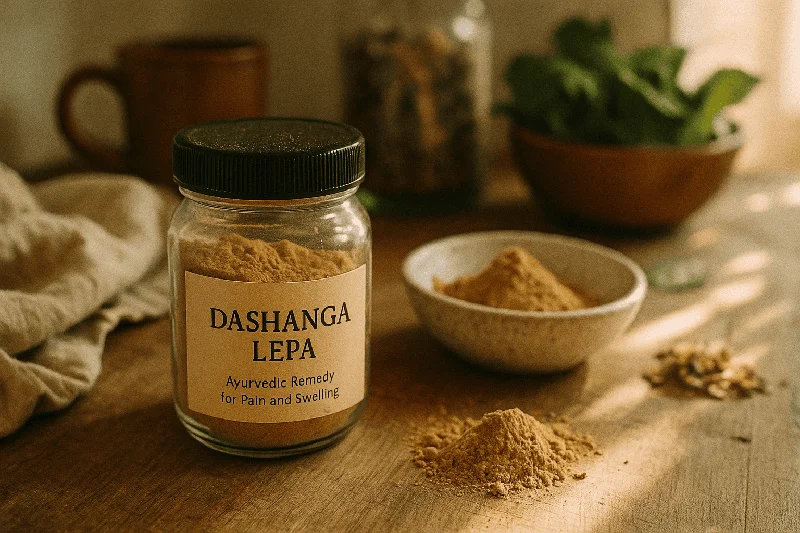
Dashanga Lepa is a classical Ayurvedic polyherbal paste made from ten medicinal herbs, applied externally to treat inflammatory skin conditions, joint pain, wounds, and swelling. Described in ancient texts like the Sushruta Samhita and Sharangdhara Samhita, this formulation has been used for centuries as a first-line external therapy in Ayurvedic clinical practice. Unlike most modern topical anti-inflammatory agents, Dashanga Lepa works through a multi-target herbal synergy — addressing inflammation, microbial infection, and tissue repair simultaneously.
In this comprehensive guide, we cover everything: the complete ingredient list with individual pharmacological profiles, classical references with Sanskrit shlokas, evidence-based mechanism of action, how to prepare and apply the paste at home, side effects documented in clinical literature, and critical comparisons with modern anti-inflammatory options. Whether you're an Ayurvedic practitioner, a student, or someone exploring natural remedies — this is the most detailed resource on Dashanga Lepa you'll find.
What Is Dashanga Lepa?
Meaning and Etymology
The name "Dashanga Lepa" comes from two Sanskrit words: Dasha (दश) meaning "ten" and Anga (अङ्ग) meaning "parts" or "limbs." Lepa (लेप) translates to "paste" or "external application." So the literal translation is "a paste of ten components." This naming convention is common in Ayurveda — the formulation name directly tells practitioners how many ingredients are involved.
- In Ayurvedic pharmacology (Bhaishajya Kalpana), a Lepa is a specific dosage form meant exclusively for external use. It falls under the broader category of topical formulations that include Pradeha (thick application), Pralepa (thin application), and Alepa (general coating).
- Dashanga Lepa is typically classified as a Pralepa — a thin, cooling paste applied to the affected area and allowed to dry.
Classical References: Sushruta Samhita vs. Sharangdhara Samhita
One thing no other resource has systematically addressed is that the composition of Dashanga Lepa actually varies across classical texts. This is a critical point for practitioners.Here's what we know:
Sushruta Samhita — The earliest reference appears in Sushruta's chapters on Visarpa (herpes/erysipelas) and Vrana Shopha (inflammatory swelling). Sushruta describes Dashanga Lepa primarily as an anti-inflammatory paste for acute inflammatory conditions. Sharangdhara Samhita — A later medieval text that provides a more standardised formulation with clearer preparation instructions. The Sharangdhara version is what most modern Ayurvedic manufacturers follow. Ashtanga Hridaya — Vagbhata mentions similar ten-herb combinations in the context of Visarpa Chikitsa, though the exact composition may differ slightly from Sushruta's version.
| Parameter | Sushruta Samhita | Sharangdhara Samhita | Ashtanga Hridaya |
|---|---|---|---|
| Primary Indication | Visarpa, Vrana Shopha | Inflammatory skin conditions | Visarpa Chikitsa |
| Number of Herbs | 10 | 10 | 10 (slight variation) |
| Key Difference | Emphasis on wound healing | Standardised proportions | Integration with Panchakarma |
| Medium Recommended | Ghrita (ghee) | Water or ghee | Context-dependent |
| Era | ~600 BCE | ~14th century CE | ~7th century CE |
The most commonly referenced version across modern Ayurvedic pharmacies is from Sharangdhara Samhita, which standardises equal parts of all ten herbs.
Sanskrit Shlokas with Translation
The classical shloka from Sharangdhara Samhita describing Dashanga Lepa:
> "Shirishamadhukatagarachandanaila-jatamansiharidra-daruharidra-kushtausheera samanyogah Dashanga Lepa iti smritah"
Translation: "The combination of Shirisha, Madhuka (Yashtimadhu), Tagara, Chandana (Rakta Chandana), Ela, Jatamansi, Haridra, Daruharidra, Kushta, and Usheera — this is known as Dashanga Lepa."
Sushruta Samhita (Chikitsa Sthana, Chapter 18) describes its application in Visarpa: "Dashanga lepam sa-ghritam pradeham kuryat visheshatah" — meaning the paste should be applied especially with ghee as the mixing medium.
Dashanga Lepa Ingredients: Complete List of 10 Herbs
Ingredient Table with Sanskrit, Hindi, English & Latin Names
| No. | Sanskrit Name | Hindi Name | English Name | Latin Botanical Name | Part Used |
|---|---|---|---|---|---|
| 1 | Shirisha | Siris | Lebbeck Tree | Albizzia lebbeck | Bark |
| 2 | Yashtimadhu | Mulethi | Liquorice | Glycyrrhiza glabra | Root |
| 3 | Tagara | Tagar | Indian Valerian | Valeriana wallichii | Root |
| 4 | Rakta Chandana | Lal Chandan | Red Sandalwood | Pterocarpus santalinus | Heartwood |
| 5 | Ela | Chhoti Elaichi | Cardamom | Elettaria cardamomum | Seed |
| 6 | Jatamansi | Jatamansi | Spikenard | Nardostachys jatamansi | Rhizome |
| 7 | Haridra | Haldi | Turmeric | Curcuma longa | Rhizome |
| 8 | Daruharidra | Daruhaldi | Indian Barberry | Berberis aristata | Stem |
| 9 | Kushta | Kuth | Costus Root | Saussurea lappa | Root |
| 10 | Usheera | Khas | Vetiver | Vetiveria zizanioides | Root |
All ten herbs are taken in equal proportions (Samabhaga) according to the Sharangdhara Samhita.
Individual Benefits of Each Ingredient
Understanding why each herb was selected reveals the genius of this formulation. Each ingredient addresses a different aspect of the inflammatory cascade:
- 1.Shirisha (Albizzia lebbeck)* — Perhaps the most critical ingredient. Shirisha is classically known as the best Vishaghna (anti-toxin) herb in Ayurveda. Modern research shows its bark contains saponins and flavonoids with potent anti-allergic and mast cell-stabilising properties. A 2017 study in the Journal of Ethnopharmacology* demonstrated that Albizzia lebbeck bark extract significantly inhibited histamine release from sensitised mast cells.
- 2.Yashtimadhu (Glycyrrhiza glabra)** — The glycyrrhizin in liquorice root is a well-studied anti-inflammatory compound. It inhibits 11β-hydroxysteroid dehydrogenase and has cortisol-like anti-inflammatory effects without the side effects of synthetic corticosteroids. It also functions as a demulcent, soothing irritated skin tissue.
- 3.Tagara (Valeriana wallichii)** — Known primarily for its sedative properties, Tagara contributes analgesic action to the paste. Its valerenic acid content modulates GABA receptors, which may explain the pain-relief effect when applied topically.
- 4.Rakta Chandana (Pterocarpus santalinus)** — Red sandalwood is a powerful coolant (Sheeta Virya). Its pterostilbene content provides antioxidant and anti-inflammatory benefits. Classically used to pacify Pitta dosha and reduce burning sensations.
- 5.Ela (Elettaria cardamomum)** — Cardamom contributes aromatic volatile oils (1,8-cineole) that enhance skin penetration of other active compounds. It also has mild antimicrobial properties.
- 6.Jatamansi (Nardostachys jatamansi)** — This Himalayan herb is rich in jatamansone and nardosinone. It has documented anti-inflammatory and neuroprotective properties. In topical application, it helps calm the local nerve endings, reducing both pain and itching.
- 7.Haridra (Curcuma longa)* — Turmeric needs little introduction. Curcumin inhibits NF-κB pathway activation, downregulates COX-2 and LOX enzymes, and reduces pro-inflammatory cytokines (TNF-α, IL-1β, IL-6). A 2016 systematic review in the Journal of Medicinal Food* confirmed curcumin's efficacy in managing inflammatory skin conditions.
- 8.Daruharidra (Berberis aristata)** — Contains berberine, a potent alkaloid with broad-spectrum antimicrobial and anti-inflammatory properties. Berberine inhibits MAPK signaling pathways and has shown efficacy against MRSA in topical applications.
- 9.Kushta (Saussurea lappa)** — Costunolide and dehydrocostuslactone from this root are potent NF-κB inhibitors. A 2014 study showed that Saussurea lappa extract reduced edema in carrageenan-induced paw inflammation models by 67% — comparable to indomethacin.
- 10.Usheera (Vetiveria zizanioides)** — Vetiver root is a Pitta-pacifying coolant. Its essential oil contains vetiverol and khusimol, which exhibit wound-healing and anti-inflammatory properties. Traditionally considered excellent for burning sensations and skin detoxification.
Ayurvedic Properties and Mechanism of Action
Rasa, Guna, Virya, Vipaka of the Formulation
| Property | Predominant Quality | Significance |
|---|---|---|
| Rasa (Taste) | Tikta (Bitter), Madhura (Sweet), Kashaya (Astringent) | Bitter and astringent tastes are inherently Pitta-pacifying and anti-inflammatory |
| Guna (Quality) | Laghu (Light), Ruksha (Dry) | Light quality enables faster absorption; dry quality reduces Kapha-type swelling |
| Virya (Potency) | Sheeta (Cooling) | Cooling potency directly counteracts inflammatory heat (Pitta aggravation) |
| Vipaka (Post-digestive effect) | Madhura (Sweet) | Supports tissue nourishment and healing even in topical application |
How Dashanga Lepa Works: Pharmacodynamics
No competitor has adequately explained the mechanism of action at the cellular level.
Here's what current research suggests:
COX-2 and LOX Inhibition: Multiple ingredients (Haridra, Kushta, Daruharidra) contain compounds that inhibit cyclooxygenase-2 and lipoxygenase enzymes. These are the same enzyme targets that NSAIDs like ibuprofen and diclofenac block. However, unlike single-molecule NSAIDs, the polyherbal combination provides multi-pathway inhibition with lower risk of resistance or localized skin atrophy. NF-κB Pathway Suppression: Curcumin (from Haridra), berberine (from Daruharidra), and costunolide (from Kushta) all independently suppress NF-κB — the master transcription factor driving inflammatory gene expression. This triple-layer suppression is something no single modern topical agent achieves. Mast Cell Stabilization: Shirisha's saponins prevent degranulation of mast cells, reducing histamine release. This explains the formulation's effectiveness in allergic skin conditions like contact dermatitis and urticaria. Antioxidant Cascade: At least six of the ten ingredients (Haridra, Yashtimadhu, Jatamansi, Rakta Chandana, Daruharidra, Shirisha) have documented antioxidant activity. Together, they scavenge reactive oxygen species (ROS) generated at inflammation sites, preventing oxidative tissue damage. Antimicrobial Action: Berberine, curcumin, and vetiver oil provide broad-spectrum antimicrobial coverage — preventing secondary infections in wounds and open skin lesions.
What Is Dashanga Lepa Used For? Benefits and Indications
Skin Diseases and Inflammatory Conditions
Dashanga Lepa is most extensively described in the treatment of Visarpa — a condition correlating with herpes zoster, erysipelas, and cellulitis in modern medicine. The paste is applied directly over the lesions to reduce redness, swelling, burning, and spreading of the condition.
Other skin indications include:
- Vicharchika (Eczema) — Reduces itching, oozing, and skin thickening
- Kitibha (Psoriasis patches) — When combined with ghee as a medium
- Vrana (Wounds) — Especially Dushta Vrana (non-healing or infected wounds)
- Dadru (Fungal infections/ringworm) — Due to the antifungal properties of berberine and curcumin
- Burns (Dagdha Vrana) — The cooling potency provides immediate relief from burning sensation
Is Dashanga Lepa a Natural Remedy for Joint Pain and Muscle Inflammation?
Yes — and this is one of its most popular modern applications. A clinical study published in the World Journal of Pharmaceutical and Medical Research (2017) evaluated Dashanga Lepa in cases of Vrana Shopha (inflammatory swelling) and found significant reduction in cardinal signs of inflammation — redness, heat, swelling, and pain — in the treatment group.
For rheumatoid arthritis (Amavata), the paste is typically applied over swollen joints and wrapped loosely with a cotton cloth. The anti-inflammatory action reduces synovial inflammation, while the analgesic herbs (Tagara, Jatamansi) address pain directly.
Application for Specific Musculoskeletal Conditions
- Sandhigata Vata (Osteoarthritis): Apply lukewarm paste mixed with sesame oil over the affected joint
- Katishoola (Low back pain): Apply as a thick layer over the lumbar region
- Mamsagata Vata (Myalgia/muscle pain): Apply with Dashmoola oil as the mixing medium
- Sports injuries (acute sprains/strains): Apply within first 24-48 hours to reduce swelling
Wound Healing and Post-Surgical Recovery
- Sushruta specifically recommended Dashanga Lepa in post-surgical wound management.
- Modern understanding supports this — the antimicrobial (berberine, curcumin), anti-inflammatory (costunolide), and tissue-regenerating (glycyrrhizin) properties create an optimal healing environment. The paste forms a protective layer that keeps the wound moist while preventing bacterial colonisation.
How to Use Dashanga Lepa: Preparation and Application
Dashanga Lepa Preparation at Home
- Step 1: Obtain all ten herbs in dried form from a reputable Ayurvedic supplier.
- Check for authentication — Kushta (Saussurea lappa) is a CITES-regulated species, so ensure sourcing is legal and sustainable.
Step 2: Wash each herb thoroughly and sun-dry for 2-3 hours to remove surface moisture. Step 3: Grind each herb separately into a fine powder (mesh size 80-100 ideally). Then combine equal parts by weight (e.g., 10 grams of each herb for a total of 100 grams). Step 4: Mix the combined powder thoroughly. Store in a dark-coloured glass jar with an airtight lid, away from moisture and direct sunlight. Step 5: Before application, take the required amount of powder and mix with an appropriate medium to form a smooth paste of moderate thickness.
Choosing the Right Mixing Medium
This is a nuanced but important decision — one that most resources overlook entirely. The mixing medium (Anupana) significantly affects how the paste interacts with the skin.
| Medium | When to Use | Why |
|---|---|---|
| Plain Water | Acute inflammation with intense heat/burning | Maximises cooling effect; fastest onset |
| Ghrita (Cow's Ghee) | Pitta-dominant conditions; sensitive skin; patients with diabetes | Ghee acts as a protective buffer, preventing direct irritation; enhances absorption of lipophilic compounds |
| Sesame Oil (Tila Taila) | Vata-dominant conditions; joint stiffness; chronic pain | Oil provides warmth and deeper tissue penetration |
| Coconut Oil | Pitta-type skin rashes; tropical climates | Cooling + moisturising; suitable for sensitive skin |
| Triphala Kashaya (Decoction) | Infected wounds; chronic non-healing ulcers | Adds additional antimicrobial and wound-cleansing properties |
| Milk | Cosmetic applications; mild skin irritation | Gentle, nourishing medium suitable for facial application |
How Much to Apply and For How Long
Thickness: Apply a layer approximately 3-5 mm thick over the affected area. Too thin won't deliver adequate therapeutic concentration; too thick may cause excessive cooling and stiffness. Direction of Application: Apply in the direction opposite to hair growth (Pratiloma) for better absorption, as recommended in classical texts. Duration per application: Leave on until the paste dries completely (typically 30-45 minutes). Do not let it stay overnight unless specifically advised by a practitioner.
Duration of Treatment Course by Condition
| Condition | Typical Duration | Frequency |
|---|---|---|
| Acute inflammation/swelling | 5-7 days | 2-3 times daily |
| Eczema/dermatitis | 2-4 weeks | Once or twice daily |
| Joint pain (chronic) | 4-6 weeks | Once daily |
| Post-surgical wounds | Until wound closure | Once daily under supervision |
| Visarpa (herpes/erysipelas) | 10-14 days | 2 times daily |
- Shelf life of the dry powder: 2 years from the date of manufacture when stored properly.
- Once mixed into paste form, use immediately — do not store wet paste.
स्वयं दवा न लें और प्रतीक्षा न करें। अभी डॉक्टर से चैट शुरू करें
Side Effects and Safety Concerns
Documented Adverse Reactions
- A notable case report published in the Journal of Ayurveda and Integrative Medicine (2012, PMC3530337) documented a significant adverse dermatological reaction in a 42-year-old female patient.
- Here are the details:
- Patient profile: 42 years old, diagnosed with Type 2 Diabetes Mellitus, Pitta-Kapha Prakriti
- Complaint: Vrana Shopha (inflammatory swelling) of the right lower limb
- Treatment: Dashanga Lepa mixed with water, applied topically
- Adverse reaction: Erythematous skin rash with intense itching at the application site, appearing within 6 hours
- Naranjo Adverse Drug Reaction Score: 8 (probable adverse reaction)
- WHO-UMC Causality Assessment: Probable
- Dechallenge: Rash resolved within 48 hours of discontinuing the lepa
- Rechallenge: Rash reappeared on reapplication, confirming the causal relationship
- This case highlights two critical points. First, the patient's Pitta-dominant constitution made her more susceptible to allergic skin reactions.
- Second, the paste was mixed with plain water — not with ghee. The researchers specifically noted that ghee (Ghritha) acts as a protective medium that could have potentially prevented the reaction. Ghee is known to act as a detoxifier and is traditionally recommended as an antidote for Pitta-aggravating formulations.
Who Should Avoid Dashanga Lepa?
Contraindications by Constitutional Type (Prakriti)
- Pitta-Kapha Prakriti individuals: Higher risk of allergic contact dermatitis. Always use ghee as mixing medium and do a patch test first
- Known allergy to any of the ten ingredients: Particularly Shirisha (Albizzia) and Kushta (Saussurea), which contain potent bioactive compounds
- Open deep wounds with active bleeding: The astringent herbs may cause excessive contraction of wound edges
Special Populations
- Pregnancy and Lactation: No clinical safety data exists for pregnant or lactating women. Avoid use unless specifically prescribed by a qualified Ayurvedic practitioner. Kushta (Saussurea lappa) has shown uterotonic activity in animal studies, which raises theoretical concerns.
- Pediatric use (children under 5): Not recommended due to thinner skin barrier and higher risk of systemic absorption. For children aged 5-12, use only under practitioner supervision with ghee as the medium and reduced application time (15-20 minutes max).
- Diabetic patients: As the case report demonstrates, altered immune function in diabetes may increase susceptibility to contact reactions. Always patch test.
Drug Interactions
- While Dashanga Lepa is applied externally, some degree of transdermal absorption occurs.
- Potential interactions to be aware of:
- Metformin and other anti-diabetic drugs: Berberine from Daruharidra has hypoglycemic properties. In diabetic patients using both Dashanga Lepa and oral hypoglycemics, monitor blood sugar levels more closely
- Anticoagulants (Warfarin, Aspirin): Turmeric (Haridra) has mild anti-platelet activity. Unlikely to be clinically significant from topical use, but worth noting for patients on blood thinners who apply the paste over large body areas
- Topical corticosteroids: Do not apply Dashanga Lepa simultaneously with steroidal creams on the same area. Use at different times of the day if both are prescribed
Dashanga Lepa vs. Modern Anti-Inflammatory Agents
- This comparison has never been systematically presented elsewhere.
- Here's an honest assessment:
| Parameter | Dashanga Lepa | NSAID Gels (Diclofenac) | Corticosteroid Creams |
|---|---|---|---|
| Mechanism | Multi-target (COX, LOX, NF-κB, mast cells) | Primarily COX inhibition | Broad immunosuppression |
| Onset of Action | 30-60 minutes | 15-30 minutes | 1-4 hours |
| Risk of Skin Atrophy | None | None | High with prolonged use |
| Antimicrobial Effect | Yes (berberine, curcumin) | No | Increases infection risk |
| Safe for Long-Term Use | Generally yes (4-6 weeks) | Limited (2-3 weeks max) | Not recommended beyond 2 weeks |
| Wound Healing | Promotes healing | May delay healing | Significantly delays healing |
| Cost (India) | ₹80-200 per 100g | ₹50-150 per tube | ₹30-250 per tube |
| Standardization | Variable between manufacturers | Highly standardised | Highly standardised |
| Evidence Level | Traditional use + limited clinical studies | Multiple RCTs | Multiple RCTs |
- The honest takeaway: Dashanga Lepa has broader therapeutic action and a superior safety profile for long-term use. However, modern anti-inflammatory agents have faster onset and stronger evidence from randomised controlled trials. For acute severe inflammation, modern medicine may be more appropriate.
- For chronic, recurrent conditions — Dashanga Lepa offers advantages that modern topicals simply cannot match.
Dashanga Lepa vs. Other Ayurvedic Lepa Formulations
| Formulation | Number of Herbs | Primary Indication | Key Differentiator |
|---|---|---|---|
| Dashanga Lepa | 10 | Inflammatory swelling, Visarpa, joint pain | Broadest anti-inflammatory spectrum |
| Jatyadi Lepa | 12+ | Chronic non-healing wounds, fistula | Contains Jati (Jasminum) — superior for wound granulation |
| Manjishtadi Lepa | 4-6 | Skin pigmentation, acne, cosmetic use | Manjishtha-dominant — better for complexion |
| Eladi Lepa | 6-8 | Facial skin care, burning sensation | Lighter formulation, suitable for facial use |
| Sarjarasa Lepa | Variable | Deep tissue wounds, fracture support | Contains resin — creates stronger protective barrier |
Quality, Standardization, and Buying Guide
How to Choose a Quality Product
When buying commercial Dashanga Lepa powder, look for:
- 1.
- GMP Certification — Ensure the manufacturer follows Good Manufacturing Practices as mandated by AYUSH Ministry
- 2.
- Complete ingredient list — All ten herbs should be listed with their botanical names
- 3.
- Batch number and manufacture date — Essential for traceability
- 4.
- Mesh size — Finer powder (80-100 mesh) ensures better paste formation and skin adhesion
- 5.
- No synthetic additives — Authentic Dashanga Lepa should not contain preservatives, fragrances, or coloring agents
Price range in India: ₹80-300 for 100g depending on manufacturer and raw material quality. Unusually cheap products may indicate adulteration or substitution of expensive herbs like Jatamansi and Kushta.
Prominent Manufacturers
Several established Ayurvedic companies produce Dashanga Lepa, including SDM Ayurveda (Udupi), Kottakkal Arya Vaidya Sala, Revinto, Jiva Ayurveda, and various state Ayurveda pharmacies. Each may have slight variations in processing methods though the core ten-herb formulation remains consistent.
Frequently Asked Questions
What is Dashang Lep Churna?
Dashang Lep Churna is simply the powdered (Churna) form of Dashanga Lepa. "Churna" means fine powder in Sanskrit. The powder is stored dry and mixed with an appropriate liquid (water, ghee, oil) just before application to form the paste (Lepa). This is the most common commercial format available.
How to Use Dashang Lep Churna for Skin Diseases?
Take 2-3 teaspoons of Dashang Lep Churna and mix with enough water or ghee to form a smooth paste. Apply a 3-5mm thick layer over the affected skin area. Leave it on for 30-45 minutes until completely dry, then wash off with lukewarm water. Repeat once or twice daily. For eczema and dermatitis, mixing with ghee is preferable. Always do a patch test on a small area first.
Is Dashanga Lepa Considered One of the Best Ayurvedic Herbs for Inflammation and Pain Relief?
It's not a single herb but a polyherbal formulation — and yes, it is considered one of the most effective topical anti-inflammatory preparations in the Ayurvedic pharmacopeia. Its multi-target mechanism (COX-2 inhibition, NF-κB suppression, mast cell stabilisation) makes it particularly effective for complex inflammatory conditions where single-agent therapies fall short.
What Is Kumkumadi Lepam Used For?
Kumkumadi Lepam is a different Ayurvedic formulation altogether. While Dashanga Lepa targets inflammation and pain, Kumkumadi Lepam (based on Kumkuma/Saffron) is primarily a cosmetic preparation used for skin brightening, reducing pigmentation, and improving complexion. They should not be confused with each other.
What Is Dashamoola Good For?
Dashamoola (ten roots) is a different ten-herb formulation used primarily internally for Vata disorders, respiratory conditions, and pain management. Despite the similar "Dasha" (ten) prefix, Dashamoola and Dashanga Lepa share almost no ingredients and have different therapeutic applications.
Can Dashanga Lepa Be Used Daily for Long Periods?
For chronic conditions like osteoarthritis or recurrent eczema, Dashanga Lepa can be used daily for 4-6 weeks. After this period, take a break of 1-2 weeks before resuming. Extended continuous use beyond 6 weeks has not been studied and is not recommended without practitioner guidance.
Conclusion
Dashanga Lepa remains one of the most intelligently designed topical formulations in classical Ayurveda. Its ten-herb combination delivers anti-inflammatory, antimicrobial, analgesic, and wound-healing benefits through multiple pharmacological pathways — something that no single modern topical agent can replicate. The formulation is safe for most adults when used correctly, though the documented case of allergic reaction in a Pitta-Kapha diabetic patient reminds us that even natural remedies require respect and proper application.
If you are considering Dashanga Lepa for a specific condition, consult a qualified Ayurvedic practitioner who can assess your Prakriti, select the appropriate mixing medium, and determine the right duration of treatment. For best results, source your product from GMP-certified manufacturers or prepare it fresh at home using authenticated herbs.
This article is for informational purposes only and should not replace professional medical advice. Always consult a qualified healthcare provider before starting any new treatment.
Scientific Sources
- A case study on the management of dry gangrene by Kaishore Guggulu, Sanjivani Vati and Dashanga Lepa — Bharati PL et al., 2019, Ayu
- Skin rash on site of application of Dashanga Lepa (polyherbal formulation): A rare and unexpected drug reaction — Ajanal M et al., 2012, Ancient science of life
उपयोगकर्ताओं के प्रश्न
Is Dashanga Lepa safe for use during pregnancy or breastfeeding?
Client_6e6e0d
26 दिनों पहले
Dashanga Lepa is not specifically studied for safety during pregnancy or breastfeeding, so it should be used with caution. Due to its potent combination of herbs with anti-inflammatory and antimicrobial properties, there is a potential risk of adverse reactions, particularly because pregnant and breastfeeding women are more sensitive to many substances. It's crucial to consult with a healthcare provider before using Dashanga Lepa during these periods. If you're considering it, make sure to discuss with your doctor any herbal formulations you are using or plan to use.
Is Dashanga Lepa effective for treating skin infections?
Client_75ab05
36 दिनों पहले
Dashanga Lepa can be effective for minor skin infections due to its antimicrobial properties from ingredients like berberine, curcumin, and vetiver oil. These compounds offer broad-spectrum antimicrobial effects, which may help prevent secondary infections in wounds and lesions. However, it's essential to use Dashanga Lepa only under the supervision of a qualified Ayurvedic practitioner, especially since it may not be suitable for deep wounds or severe infections. Always perform a patch test before full application to check for allergic reactions, particularly if you are sensitive to Shirisha or Kushta. If skin issues persist or worsen, consult a healthcare professional promptly.
What is the best method to apply Dashanga Lepa for optimal results?
Client_da919f
45 दिनों पहले
For optimal results, apply Dashanga Lepa by thoroughly mixing the powder with a suitable base like water or rose water to form a paste. This should be applied to the affected area, usually once or twice daily. Allow it to dry completely before washing it off. Consistent use over 4-6 weeks is often recommended for chronic conditions like osteoarthritis or recurrent eczema. Patch testing is advisable to avoid allergic reactions. If you experience adverse reactions or the condition worsens, consult a healthcare professional.
Can I use Dashanga Lepa on open wounds or cuts?
Client_a3ecb5
55 दिनों पहले
You should not apply Dashanga Lepa on open wounds or cuts, especially if there is active bleeding. The astringent properties of some herbs in Dashanga Lepa may cause excessive contraction of the wound edges, potentially hindering healing. Additionally, the antiseptic compounds are meant for use on closed skin or minor abrasions rather than deep wounds. Always patch-test on the skin and consult a healthcare professional if you have known allergies to any ingredients. If you experience increased redness, swelling, or pain, see a doctor immediately.
What alternative treatments can complement the use of Dashanga Lepa for inflammation?
Client_184fd9
65 दिनों पहले
To complement Dashanga Lepa in treating inflammation, consider integrating anti-inflammatory dietary choices such as omega-3 fatty acids found in fish oil, turmeric, and ginger. Lifestyle changes like stress reduction techniques, e.g., yoga or meditation, and regular exercise can also support inflammation reduction. It's essential to monitor symptoms, as they can evolve, and consult a healthcare professional if inflammation persists, worsens, or is accompanied by severe pain or infection, as these might require conventional medical intervention.
Can I use Dashamoola for improving respiratory health and reducing allergies?
Client_95eb21
74 दिनों पहले
Yeah, Dashamoola can be quite helpful for respiratory health and reducing allergy symptoms. It's known for balancing the Vata dosha, which can help with respiratory issues. Just remember, everyone's body is different, so it's good to consult with an Ayurvedic practitioner to see if it's right for you and maybe adjust it according to your specific needs.
Can Dashanga Lepa be used as a daily moisturizer for dry skin?
Client_4964fa
83 दिनों पहले
Dashanga Lepa is more of an anti-inflammatory treatment, not really a daily moisturiser. It's great for calming pain and itching, but regular use might be too much for your dry skin. Try using it occasionally when you have skin flare-ups, and consider using a ghee-based product for daily moisture.
Can Dashanga Lepa be used for scalp issues like dandruff or inflammation?
Client_f4c87b
95 दिनों पहले
Dashanga Lepa might help with scalp issues like inflammation, thanks to its anti-inflammatory properties. But for dandruff, its effectiveness isn’t clear. Always do a patch test and consult a practitioner to see if it suits your specific needs! Ayurveda takes into account your dosha and other factors, so personalized advice is key.
What is the recommended duration for using Dashanga Lepa to see benefits for skin health?
Client_71491e
104 दिनों पहले
Timing for using Dashanga Lepa can vary depending on your skin issue. For general skin health or detox, it might be good to use it 2-3 times a week. If you’re addressing something specific like eczema, daily use can be beneficial. Always check how your skin reacts, and maybe consult an Ayurvedic practitioner for personalized advice!
Can I use Dashanga Lepa for muscle soreness after workouts?
Client_41a291
113 दिनों पहले
Yes, you can use Dashanga Lepa for muscle soreness after workouts! It's great for reducing inflammation and relieving pain in muscles, so it can be soothing after a tough workout. Just make sure you're not allergic to any of the ingredients. If you have any doubts, consulting an Ayurvedic practitioner would be wise to ensure it's suitable for you. :)
संबंधित आलेख
Skin and Hair Disorders
Valiya Madhusnuhi Rasayanam – Traditional Ayurvedic Rejuvenation Therapy for Enhanced Vitality
Discover Valiya Madhusnuhi Rasayanam, a classical Ayurvedic rejuvenation therapy. Learn about its ingredients, benefits, usage, and how it promotes holistic health and longevity naturally.
3,093

Skin and Hair Disorders
बालों के लिए एसेंशियल ऑयल का प्रभावी तरीके से उपयोग कैसे करें
जानें कैसे एसेंशियल ऑयल्स का इस्तेमाल करके बालों की ग्रोथ, मोटाई और स्कैल्प की सेहत को बढ़ावा दें। जानिए सबसे अच्छे ऑयल्स, मिक्सिंग टिप्स और बालों की देखभाल के लिए आयुर्वेदिक उपाय।
7,214

Skin and Hair Disorders
Jeevanthyadi Yamakam Ointment – Ayurvedic Ointment for Healing & Rejuvenation
Discover Jeevanthyadi Yamakam Ointment, a traditional Ayurvedic remedy formulated with potent herbs to promote wound healing, reduce inflammation, and rejuvenate skin health.
3,010
Skin and Hair Disorders
Tinea Cruris Treatment in Ayurveda: A Holistic Overview
Discover how Ayurveda addresses tinea cruris, or jock itch, using time-tested remedies, expert insights, and evidence-based herbal approaches.
4,504

Skin and Hair Disorders
How to Use Chirata for Skin: Ayurvedic Remedies and Benefits
Exploration of Chirata: The Ayurvedic Herb for Clearer and Brighter Skin
4,695

Skin and Hair Disorders
ईवन्शेड क्रीम
इवेनशेड क्रीम की खोज
3,052

Skin and Hair Disorders
दैनिक जीवन में जायफल पाउडर का प्रभावी उपयोग कैसे करें
जानें कैसे जायफल पाउडर का इस्तेमाल त्वचा, चेहरे, नींद और पिग्मेंटेशन के लिए करें। इसके आयुर्वेदिक फायदों, रेसिपीज़ और रोज़मर्रा की सेहत के लिए उपयोगी टिप्स के बारे में जानें।
7,550

Skin and Hair Disorders
सोमाराजी तेल: फायदे, उपयोग करने का तरीका, सामग्री, साइड इफेक्ट्स
सोमाराजी तेल की खोज: फायदे, उपयोग करने का तरीका, सामग्री, साइड इफेक्ट्स
2,512

Skin and Hair Disorders
How to Reduce Skin Dryness: Ayurvedic Remedies, Causes, and Prevention
Exploration of Effective Ayurvedic and Home Remedies to Combat Skin Dryness
2,493

Skin and Hair Disorders
चंदनादि थैलम: फायदे, उपयोग करने का तरीका, सामग्री, साइड इफेक्ट्स
चंदनादि थैलम की खोज: फायदे, उपयोग करने का तरीका, सामग्री, साइड इफेक्ट्स
2,532
विषय से संबंधित परामर्श
अतिरिक्त दस्तावेज़
© 2024 Ask Ayurveda. सर्वाधिकार सुरक्षित।