आयुर्वेदिक डॉक्टर से प्रश्न पूछें और निःशुल्क या भुगतान मोड में अपनी चिंता की समस्या पर ऑनलाइन परामर्श प्राप्त करें। 2,000 से अधिक अनुभवी डॉक्टर हमारी साइट पर काम करते हैं और आपके प्रश्नों का इंतजार करते हैं और उपयोगकर्ताओं को उनकी स्वास्थ्य समस्याओं को हल करने में प्रतिदिन मदद करते हैं।


Body DetoxEar, Nose, and Throat DisordersGeriatrics & RejuvenationImmunodeficiencyInfertility TreatmentNutritionOrthopedic DisordersPediatricsRespiratory DisordersSexually Transmitted Diseases (STDs)Surgery RecoveryUrological DisordersVascular DisordersDental DisordersEndocrinological DisordersGastrointestinal DisordersYoga TherapyGeneral MedicineAllergic DisordersCardio DisordersGynecology and ObstetricsCosmetologySkin and Hair DisordersEye DisordersInfectious DiseasesMental DisordersNeurological DisordersOncologyPanchakarmaSexual Health & DisordersSports Medicine
पर प्रकाशित 01/31/25
(को अपडेट 08/08/26)
4,216
Azoospermia Success Stories in Ayurveda – Natural Healing & Fertility Restoration
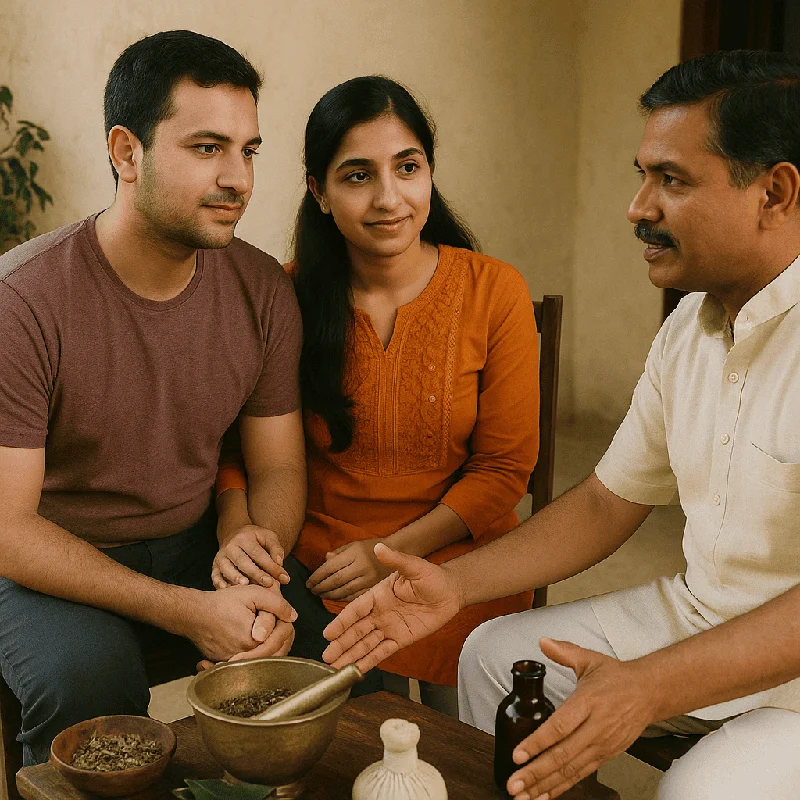
Azoospermia — the complete absence of sperm in the ejaculate — affects roughly 1% of all men and accounts for 10–15% of male infertility cases. If you've been diagnosed and are wondering whether Ayurveda can help, here's the direct answer: yes, Ayurvedic treatment has shown documented results in restoring sperm production in certain types of azoospermia, particularly non-obstructive forms linked to hormonal imbalance, toxin accumulation, or post-chemotherapy damage. Published case reports in peer-reviewed Ayurvedic journals show patients going from zero sperm count to measurable counts — and in some cases, achieving natural pregnancy — after structured Panchakarma and Rasayana protocols lasting 3 to 9 months.
- That said, Ayurveda is not a miracle overnight fix. The outcome depends heavily on the type of azoospermia, its underlying cause, and the patient's overall constitution.
- This guide covers everything: the Ayurvedic understanding of azoospermia, step-by-step treatment protocols, evidence-backed herbs, real case studies, and an honest comparison with conventional treatments like IVF/ICSI. Let's get into it.
What Is Azoospermia? Understanding the Condition Through Modern and Ayurvedic Lenses
- Azoospermia is formally defined as the absence of spermatozoa in at least two centrifuged semen samples.
- It is not a disease in itself — it is a symptom of an underlying issue in sperm production, transport, or hormonal regulation.
Classification of Azoospermia
Understanding the type is crucial because it determines whether Ayurvedic treatment is likely to help, and what kind of protocol is appropriate.
| Type | Cause | Examples | Ayurvedic Prognosis |
|---|---|---|---|
| Pre-testicular (Hormonal) | Inadequate hormonal stimulation of testes | Hypogonadotropic hypogonadism, pituitary disorders, steroid abuse | Good — responds well to Rasayana & Vajikarana therapy |
| Testicular (Non-obstructive) | Intrinsic failure of spermatogenesis | Klinefelter syndrome, cryptorchidism, varicocele, chemotherapy damage, mumps orchitis | Moderate — depends on degree of damage; documented successes exist |
| Post-testicular (Obstructive) | Physical blockage in reproductive tract | Ejaculatory duct obstruction, vasectomy, infections (epididymitis) | Variable — Virechana & Uttara Basti may help; surgery sometimes needed |
Ayurvedic Equivalent: Shukra Kshaya and Shukra Dosha
- In classical Ayurvedic texts, azoospermia correlates most closely with Shukra Kshaya (depletion of the reproductive tissue) and Kshina Shukra (diminished semen). Charaka Samhita describes Shukra as the seventh and final dhatu (tissue), which means it is the end-product of a long metabolic chain.
- Any disruption at earlier dhatu levels — Rasa, Rakta, Mamsa, Meda, Asthi, Majja — can ultimately starve Shukra Dhatu of nourishment.
The Vajikarana branch of Ashtanga Ayurveda is entirely dedicated to reproductive health and sexual vitality. Charaka explicitly states that Vajikarana therapy is meant for those seeking progeny and improved Shukra quality — making it directly relevant to azoospermia management.
- A key pathological concept here: Pitta dosha, with its Aagneya (fiery) quality, is inherently antagonistic to the Saumya (cool, nourishing) quality of Shukra.
- Excessive Pitta — from stress, inflammatory conditions, alcohol, or pitta-aggravating diet — can literally "burn through" reproductive tissue. This is why Pitta-pacifying therapies often form the backbone of azoospermia treatment in Ayurveda.
Common Causes of Azoospermia
From both modern and Ayurvedic perspectives, the causes include:
- Hormonal imbalances — elevated FSH, low testosterone, hyperprolactinemia
- Varicocele — enlarged veins in the scrotum impairing testicular temperature regulation
- Genetic factors — Y-chromosome microdeletions, Klinefelter syndrome (47,XXY)
- Infections — mumps orchitis, tuberculosis, sexually transmitted infections
- Cryptorchidism — undescended testes, especially if corrected late
- Post-chemotherapy/radiation damage — cytotoxic drugs destroying germinal epithelium
- Lifestyle factors — chronic stress, obesity, excessive heat exposure, tobacco, alcohol
- Srotoras Avarodha (channel blockage) — Ayurvedic concept of obstruction in Shukravaha Srotas preventing sperm transport
Is Azoospermia Curable in Ayurveda? Honest Assessment by Type
This is the question most people ask first. The answer is nuanced.
For non-obstructive azoospermia with partial spermatogenic failure: Ayurvedic treatment has the best documented outcomes. Multiple case reports published in journals like AYU, Journal of Ayurveda and Integrative Medicine, and International Journal of Research in Ayurveda & Pharmacy show recovery of sperm in ejaculate after Panchakarma followed by Vajikarana therapy. For obstructive azoospermia: If the obstruction is due to inflammation or mild scarring, Ayurvedic therapies — particularly Uttara Basti and anti-inflammatory formulations — may help. Complete mechanical obstruction (e.g., congenital absence of vas deferens) typically requires surgical intervention. For genetic azoospermia: Cases with complete Y-chromosome microdeletions (AZFa, AZFb) have very poor prognosis in any medical system. However, AZFc microdeletions, which sometimes allow residual spermatogenesis, may respond partially to Ayurvedic support.
Can I Treat Azoospermia in 3 Months?
Three months is the minimum biological timeframe for a new spermatogenesis cycle (approximately 74 days for sperm maturation plus 12–14 days for transport). Some patients show initial improvement in semen analysis at the 3-month mark, but most Ayurvedic practitioners recommend 6 to 9 months of sustained treatment for meaningful results. In the case study published by Bhatted et al. (2019), the patient showed sperm in ejaculate after approximately 4 months of combined Shodhana and Shamana therapy. Another case documented by researchers at Gujarat Ayurved University demonstrated progressive improvement over 6 months, with total sperm count reaching 14 million/mL from zero.
Setting realistic expectations is important. Not every patient will respond, and some may achieve oligospermia (low count) rather than complete normalization — but even low counts can enable conception through IUI or natural methods.
Step-by-Step Ayurvedic Treatment Protocol for Azoospermia
- Ayurvedic treatment for azoospermia follows a structured, phased approach.
- This isn't about taking one supplement — it's a comprehensive protocol that addresses root causes systematically.
Phase 1: Ayurvedic Diagnosis (Pariksha)
Before any treatment begins, a qualified Ayurvedic physician conducts:
- Ashtavidha Pariksha (eightfold examination) — Nadi (pulse), Mutra (urine), Mala (stool), Jihwa (tongue), Shabda (voice), Sparsha (touch/skin), Druk (eyes), Akriti (body build)
- Dashavidha Pariksha (tenfold examination) — Prakriti (constitution), Vikriti (pathological state), Sara (tissue quality), Samhanana (body compactness), Pramana (proportions), Satmya (adaptability), Satva (mental strength), Ahara Shakti (digestive capacity), Vyayama Shakti (exercise capacity), Vaya (age)
- Nadi Pariksha — pulse diagnosis to assess dominant dosha imbalance
This assessment determines the patient's Prakriti (e.g., Pitta-Vata, Kapha-Pitta) and the specific nature of the Shukra Dhatu impairment. A Pitta-Vataj prakriti patient, for instance, may need stronger Pitta-pacifying measures before Vajikarana can be effective.
Phase 2: Shodhana Chikitsa (Purification Therapy)
This is the foundation. Without clearing accumulated toxins (Ama) and unblocking channels (Srotoshodhana), oral medications simply won't reach the target tissue effectively.
Virechana (Therapeutic Purgation)
Virechana is the most commonly employed Shodhana procedure for azoospermia.
Here's why it works:
- 1.Clears Pitta excess — removes accumulated heat that damages Shukra Dhatu
- 2.Opens Srotas (channels) — eliminates Srotoras Avarodha, allowing nutrients and medicines to reach reproductive tissues
- 3.Activates Dhatvagni — restores metabolic fire at the tissue level, improving the sequential nourishment from Rasa to Shukra Dhatu
- 4.Enhances bioavailability — post-Virechana, the body absorbs and utilizes medications significantly better
Typical Virechana protocol for azoospermia:
| Step | Duration | Details |
|---|---|---|
| Deepana-Pachana (digestive preparation) | 3–5 days | Chitrakadi Vati 250 mg × 2 tablets × twice daily |
| Snehapana (internal oleation) | 5–7 days | Mahatiktaka Ghrita in escalating doses (30 mL to 150 mL) |
| Abhyanga + Swedana (external oleation & sudation) | 3 days | Full body massage with medicated oil + steam |
| Virechana day | 1 day | Trivrit Lehya or Abhayadi Modaka administered early morning |
| Samsarjana Krama (post-purification diet) | 3–7 days | Graduated reintroduction of food (Peya → Vilepi → Akrita Yusha → Krita Yusha) |
Basti (Medicated Enema Therapy)
While Virechana addresses Pitta, Basti is the primary therapy for Vata dosha — and Vata governs all movement in the body, including sperm transport and ejaculation. Anuvasana Basti (oil enemas) with Shukra-nourishing oils and Niruha Basti (decoction enemas) with Dashmool or Guduchyadi formulations are used.
Uttara Basti (Urethral Administration)
- This specialized procedure, where medicated oil or ghee is administered through the urethra, is considered the most targeted therapy for reproductive disorders in men. Uttara Basti with Phala Ghrita or Shatavari Taila directly nourishes the Shukravaha Srotas.
- It's not widely available — only experienced Panchakarma centers offer it — but it's considered highly effective for obstructive causes.
Phase 3: Shamana Chikitsa (Pacification Therapy with Internal Medicines)
After Shodhana, the body is primed to receive medicines.
This phase lasts 3–6 months and involves:
- Vajikarana formulations (aphrodisiac/reproductive tonics)
- Rasayana preparations (rejuvenation therapy)
- Rasaushadhi (herbo-mineral medicines)
Specific formulations commonly used include: Shukra Stambhana medicines, Musli Pak, Ashwagandha Churna, Vanari Gutika, Shilajit Vati, Punarnavadi Mandur (if anemia co-exists), and Chandraprabha Vati.
Phase 4: Rasayana Therapy (Rejuvenation)
Rasayana is not just an add-on — it's central to the treatment. After depletion of Shukra Dhatu, the body needs deep nourishment at the cellular level.
Rasayana therapy:
- Promotes Ojas (vital essence) formation
- Enhances immunity and tissue repair
- Improves the quality — not just quantity — of newly produced sperm
Key Rasayana agents for azoospermia include Chyawanprash, Brahma Rasayana, and specific milk-based preparations (Ksheera Paka) with Ashwagandha or Shatavari.
Evidence-Based Ayurvedic Herbs for Azoospermia: What Research Actually Shows
This is where many articles fall short — they list herbs without citing evidence. Here are the herbs with actual published research relevant to spermatogenesis.
Ashwagandha (Withania somnifera)
A 2013 study published in Evidence-Based Complementary and Alternative Medicine by Ahmad et al. found that Ashwagandha root extract (5g/day for 90 days) significantly increased sperm concentration, semen volume, and sperm motility in infertile men. A 2010 study in Fertility and Sterility by Ambiye et al. demonstrated a 167% increase in sperm count in oligospermic men. While these studies focused on oligospermia rather than complete azoospermia, the spermatogenic stimulation mechanism is directly relevant.
Key actions: Adaptogenic, antioxidant, testosterone-modulating, reduces cortisol (stress hormone that suppresses HPG axis)
Kapikacchu (Mucuna pruriens)
Mucuna pruriens seeds contain natural L-DOPA, a dopamine precursor. A 2009 study by Shukla et al. in Fertility and Sterility showed that treatment with M. pruriens seed powder (5g/day) significantly improved testosterone, LH, dopamine, adrenaline, and noradrenaline levels in infertile men while reducing FSH — a hormone profile shift favorable for spermatogenesis. Sperm count and motility improved significantly across 60 patients over 3 months.
Gokshura (Tribulus terrestris)
A 2012 study published in the Journal of Pharmacology and Pharmacotherapeutics found that Tribulus terrestris improved sperm count, motility, and morphology in men with idiopathic oligoasthenoteratozoospermia. Its mechanism involves mild testosterone enhancement through saponin content, plus diuretic properties that help clear the urinary and reproductive tract.
Shilajit (Purified Asphaltum)
A 2010 study by Biswas et al. in Andrologia demonstrated that purified Shilajit (200mg twice daily for 90 days) increased total sperm count by 61.4%, sperm motility by 12.4–17.4%, and serum testosterone by 23.5% in 60 oligospermic patients. Shilajit is a classical Rasayana considered the premier mineral-based reproductive tonic in Ayurveda.
Safed Musli (Chlorophytum borivilianum)
Known as the "divya aushadh" (divine medicine) in Ayurvedic texts for reproductive disorders, Safed Musli has shown spermatogenic activity in animal models (Kenjale et al., 2008, Journal of Ethnopharmacology). It's widely used in Vajikarana formulations, though more human clinical trials are needed.
| Herb | Key Evidence | Typical Dosage | Duration |
|---|---|---|---|
| Ashwagandha | 167% increase in sperm count (Ambiye et al.) | 300–600 mg extract or 5g churna/day | 90 days |
| Kapikacchu | Improved testosterone, LH; reduced FSH | 5g seed powder/day | 90 days |
| Gokshura | Improved count, motility, morphology | 500–750 mg extract/day | 60–90 days |
| Shilajit | 61.4% increase in sperm count | 200 mg purified form twice daily | 90 days |
| Safed Musli | Spermatogenic in animal studies | 500 mg–2g/day | 90 days |
> Important note: These herbs work best after Shodhana therapy and as part of a comprehensive protocol — not as standalone supplements.
Real Azoospermia Success Stories in Ayurveda: Published Case Reports
Case Study 1: Post-Chemotherapy Azoospermia
Published in an Ayurvedic journal, this case involved a 32-year-old male diagnosed with azoospermia following chemotherapy for colorectal cancer. His semen analysis showed complete absence of sperm. FSH was elevated at 18.6 mIU/mL (indicating testicular damage).
Treatment protocol:
- Virechana with Mahatiktaka Ghrita (5-day Snehapana) followed by Trivrit-based purgation
- Shamana therapy with Vanari Gutika, Ashwagandha Churna, Chandraprabha Vati
- Pathya (diet): Milk, ghee, dates, almonds, seasonal fruits; avoidance of spicy, sour, and fermented foods
Results after 4 months:
- Sperm count: 0 → 8 million/mL
- Motility: 0 → 22% progressive motility
- FSH reduced to 12.1 mIU/mL
The patient's Prakriti was assessed as Pitta-Vataj, which guided the specific selection of Pitta-pacifying medicines. This case is particularly significant because post-chemotherapy azoospermia is considered very difficult to treat in conventional medicine — often the only option offered is donor sperm or adoption.
Case Study 2: Idiopathic Non-Obstructive Azoospermia with Quality of Life Improvement
A case report from an Ayurvedic hospital documented a 28-year-old male with idiopathic non-obstructive azoospermia, associated insomnia, and chronic fatigue. Beyond sperm parameters, the researchers tracked subjective quality of life measures.
Results:
- Sperm count: 0 → 14 million/mL over 6 months
- Insomnia Severity Index: 18 → 8 (from "moderate clinical insomnia" to "subthreshold")
- Fatigue Severity Scale: 45 → 25 (from "significant fatigue" to "normal")
This case highlights something often overlooked — azoospermia doesn't exist in isolation. The Ayurvedic approach of treating the whole person, not just the semen analysis, leads to improvements in energy, sleep, mental health, and overall vitality. And these improvements in general health may themselves contribute to better spermatogenesis.
Case Study 3: Varicocele-Related Azoospermia
A 30-year-old male with bilateral varicocele and azoospermia underwent Virechana followed by 6 months of Shamana therapy including Kanchanara Guggulu (for varicocele), Gokshura, and Shilajit. Repeated semen analysis at 3 months showed 2 million sperm/mL; at 6 months, count reached 11 million/mL with 30% motility.
Ayurveda vs Conventional Treatment for Azoospermia: An Honest Comparison
No other article in the current Google top results provides this comparison — and it's something patients desperately need.
| Parameter | Ayurvedic Treatment | Conventional (ART/ICSI/TESE) |
|---|---|---|
| Approach | Treats root cause; whole-body healing | Bypasses the problem; retrieves sperm directly |
| Timeline | 3–9 months minimum | Weeks (for sperm retrieval + IVF cycle) |
| Success rate | Variable; best in non-obstructive hormonal cases (published case reports show recovery in ~40–60% of selected cases) | TESE retrieval rate: 30–60% for NOA; ICSI pregnancy rate per cycle: 25–40% |
| Cost (India) | ₹15,000–₹60,000 for full course | ₹2,00,000–₹5,00,000+ per IVF/ICSI cycle |
| Side effects | Minimal (mild GI discomfort during Virechana) | Surgical risks, ovarian hyperstimulation (for female partner), multiple pregnancy |
| Natural pregnancy possible? | Yes — if sperm production restored | Only through IVF/ICSI (unless micro-TESE + IUI) |
| Addresses underlying health | Yes — improves hormones, energy, sleep, immunity | No — focused solely on achieving pregnancy |
| Best suited for | Hormonal NOA, post-infection, mild testicular failure, post-chemotherapy | Genetic azoospermia, complete obstruction, when time is critical (e.g., advanced female age) |
When to Choose Ayurveda, When to Choose Conventional — Or Both
Choose Ayurveda first when:
- Non-obstructive azoospermia with hormonal imbalance
- Post-chemotherapy or post-infection recovery
- The female partner is under 35 and there's time to try
- You want to address overall health alongside fertility
- Financial constraints (Ayurveda is significantly more affordable)
Choose conventional treatment when:
- Genetic azoospermia (Klinefelter, complete AZF deletions)
- The female partner is over 37 — time pressure is real
- Complete structural obstruction not amenable to Basti therapy
- After 6–9 months of Ayurvedic treatment without response
- Integrative approach (increasingly popular in India): Start Ayurvedic treatment to optimize overall health and hormone balance.
- If sperm production recovers — great, try naturally. If not, the improved hormonal milieu may still improve TESE retrieval rates when attempting IVF/ICSI. This is not an either-or decision.
Pathya-Apathya: Diet and Lifestyle Guidelines for Azoospermia
Ayurvedic treatment is incomplete without Pathya-Apathya. In fact, Vagbhata states that medicine without proper diet is futile.
Foods to Include (Pathya)
- Milk and ghee — considered the premier Shukra-vardhaka (sperm-increasing) foods
- Dates, almonds, walnuts, pumpkin seeds — rich in zinc, selenium, omega-3 fatty acids
- Shatavari Ksheera Paka — Shatavari root boiled in milk, taken at bedtime
- Black sesame seeds — nourishing to Shukra Dhatu
- Seasonal fruits — especially pomegranate, banana, mango (in season)
- Whole grains — especially rice, wheat, and barley
- Honey (in moderate quantity) — enhances bioavailability of medicines
Foods to Avoid (Apathya)
- Excessive spicy, sour, and salty foods (Pitta-aggravating)
- Alcohol and tobacco — directly toxic to spermatogenesis
- Processed and fermented foods
- Excessive caffeine
- Soy products in large quantities (phytoestrogen concern)
- Refined sugar and trans fats
Yoga and Pranayama for Reproductive Health
Specific practices that improve blood circulation to reproductive organs and reduce stress:
- Ashwini Mudra — repeated contraction of anal sphincter muscles, improves pelvic blood flow
- Padmasana and Vajrasana — seated postures that direct energy to the lower abdomen
- Sarvangasana (shoulder stand) — improves hormonal regulation through thyroid stimulation
- Dhanurasana (bow pose) — stimulates reproductive organs
- Nadi Shodhana Pranayama (alternate nostril breathing) — balances the nervous system, reduces cortisol
- Bhramari Pranayama (humming bee breath) — reduces stress, supports hormonal balance
Practice daily for 30–45 minutes, ideally in the morning. A 2015 study in the Journal of Sexual Medicine found that a 12-week yoga program significantly improved testosterone levels and sexual function in men.
Frequently Asked Questions (FAQ)
Can azoospermia lead to natural pregnancy after Ayurvedic treatment?
Yes. If Ayurvedic treatment successfully restores sperm production — even to oligospermic levels (say, 5–15 million/mL with reasonable motility) — natural pregnancy becomes possible. Published case reports document exactly this outcome. However, results vary significantly based on the type and cause of azoospermia.
Is 70% sperm motility normal?
- Yes, 70% total motility is actually above the WHO reference value of 40% total motility (or 32% progressive motility). If your motility is 70%, that parameter is excellent.
- In azoospermia, motility is not the primary concern — the absence of sperm is. Once sperm production is restored through treatment, motility usually improves concurrently.
Can homeopathy cure azoospermia?
While some homeopathic practitioners claim results, there is very limited published clinical evidence for homeopathy in azoospermia compared to Ayurveda. Ayurveda has the advantage of Panchakarma (physical detoxification procedures) and a well-documented pharmacopoeia of spermatogenic herbs with supporting research.
What is the best azoospermia treatment in the world?
There is no single "best" treatment — it depends on the type. For obstructive azoospermia, microsurgical reconstruction or TESE+ICSI has the highest success rates. For non-obstructive azoospermia, a combination of hormonal optimization (whether through Ayurveda or conventional endocrinology) followed by ART if needed represents the most comprehensive approach. India is actually a global leader in both Ayurvedic reproductive medicine and affordable ART, making it an ideal location for an integrative approach.
How long does azoospermia treatment take in Ayurveda?
- Minimum 3 months (one spermatogenesis cycle).
- Realistic expectation: 4–9 months for meaningful results. Some patients require 12 months. Regular semen analysis every 2–3 months helps track progress and adjust the treatment protocol.
Is azoospermia treatment available in Patanjali products?
While Patanjali and other commercial brands offer general reproductive health supplements, treating azoospermia requires a customized, physician-supervised protocol — not over-the-counter products. The Shodhana (purification) component cannot be replaced by oral supplements alone. Consult a qualified Ayurvedic practitioner (BAMS or MD Ayurveda) rather than self-treating.
Conclusion: Your Path Forward with Azoospermia Ayurveda Treatment
- Azoospermia can feel like a devastating diagnosis, but it is not necessarily permanent.
- Ayurveda offers a time-tested, systematic framework — Shodhana for purification, Shamana for targeted therapy, Rasayana for rejuvenation, and Vajikarana for reproductive restoration — that has produced documented successes in restoring sperm production.
- The key is working with a qualified Ayurvedic practitioner who can properly diagnose your specific type of azoospermia, assess your Prakriti, and design a personalized protocol.
- Not every herbal supplement you find online will work — this condition requires professional guidance.
What to do right now:
- Get a complete semen analysis (two samples, 2–4 weeks apart) and hormonal profile (FSH, LH, testosterone, prolactin)
- Consult a qualified Ayurvedic physician experienced in male infertility (look for MD/MS Ayurveda with Kaumarabhritya or Kayachikitsa specialization)
- Be prepared for a 6–9 month treatment commitment
- Follow Pathya-Apathya guidelines strictly — medicines alone won't deliver optimal results
- Track progress with semen analysis every 2–3 months
Whether Ayurveda becomes your primary treatment or part of an integrative strategy alongside conventional medicine, taking action now — rather than waiting — gives you the best chance of restoring fertility and building the family you want.
Scientific Sources
- Can Ashwagandha Benefit the Endocrine System?-A Review — Wiciński M et al., 2023, International journal of molecular sciences
- Pharmacological evaluation of Ashwagandha highlighting its healthcare claims, safety, and toxicity aspects — Mandlik Ingawale DS et al., 2021, Journal of dietary supplements
- Clinician guidelines for the treatment of psychiatric disorders with nutraceuticals and phytoceuticals: The World Federation of Societies of Biological Psychiatry (WFSBP) and Canadian Network for Mood and Anxiety Treatments (CANMAT) Taskforce — Sarris J et al., 2022, The world journal of biological psychiatry : the official journal of the World Federation of Societies of Biological Psychiatry
- Effects of Withania somnifera (Ashwagandha) on Stress and the Stress- Related Neuropsychiatric Disorders Anxiety, Depression, and Insomnia — Speers AB et al., 2021, Current neuropharmacology
- Plant-derived nootropics and human cognition: A systematic review — Lorca C et al., 2023, Critical reviews in food science and nutrition
- Ayurvedic Herbal Medicines: A Literature Review of Their Applications in Female Reproductive Health — Patibandla S et al., 2024, Cureus
- Efficacy and Safety of Shatavari Root Extract for the Management of Menopausal Symptoms: A Double-Blind, Multicenter, Randomized Controlled Trial — Gudise VS et al., 2024, Cureus
- Wild Asparagus — 2006
- Shatavari supplementation in postmenopausal women alters the skeletal muscle proteome and pathways involved in training adaptation — O'Leary MF et al., 2024, European journal of nutrition
- A Standardized Asparagus Racemosus Root Extract Improves Hormonal Balance and Menstrual Health and Reduces Vasomotor Symptoms in Perimenopausal Women: A Randomized, Double-Blind, Placebo-Controlled Study — Yadav P et al., 2025, Journal of the American Nutrition Association
उपयोगकर्ताओं के प्रश्न
How do herbal supplements influence sperm health in Ayurvedic practices?
Client_9ec714
1 दिन पहले
Herbal supplements like Ashwagandha, Shatavari, and Safed Musli are often used in Ayurvedic practices to support sperm health and enhance fertility. These herbs are believed to improve overall vitality and optimize the reproductive system by reducing stress, balancing hormones, and improving blood flow. It typically takes about three to six months to notice significant improvements in sperm health. However, scientific evidence supporting the efficacy of these herbs is limited. If you are experiencing fertility issues, it's advisable to consult with a healthcare professional to rule out underlying conditions.
How does microsurgical reconstruction help in treating azoospermia?
Client_fcec2e
6 दिनों पहले
Microsurgical reconstruction can help treat azoospermia, particularly in cases of obstructive azoospermia, where a physical blockage prevents sperm from reaching the ejaculate. This procedure typically involves techniques such as vasoepididymostomy or vasovasostomy, which reconnect sperm pathways that are blocked. Success rates depend on multiple factors, including the site and extent of obstruction, and patients often see improvement within 3 to 12 months. If you're unable to impregnate after a year despite treatment, consult a fertility specialist for alternative approaches like TESE and ICSI.
What are the most effective medical treatments for azoospermia?
Client_a06e62
11 दिनों पहले
The most effective medical treatments for azoospermia depend on the underlying cause. For obstructive azoospermia, surgical procedures such as vasovasostomy or epididymovasostomy can restore fertility. Non-obstructive azoospermia might be addressed through hormone treatments like gonadotropins or surgical sperm retrieval techniques combined with assisted reproductive technologies such as IVF. Timelines vary; some improvements are noticeable in months, while others may take a year. Regular semen analysis tracks progress. Consult a fertility specialist if you suspect azoospermia for personalized treatment options.
What are the emotional effects of azoospermia on male fertility?
Client_aa8f60
16 दिनों पहले
The emotional effects of azoospermia on male fertility can be profound, often including feelings of inadequacy, stress, depression, and anxiety. As a condition where a man's semen contains no sperm, azoospermia can significantly impact self-esteem and relationships. It's important for those affected by azoospermia to seek psychological support or counseling to address these emotional challenges. Medical treatments vary based on the type of azoospermia and can sometimes offer hope, alleviating some psychological distress. Consult a healthcare provider for personalized treatment and support strategies.
How does nutrition impact sperm quality during azoospermia treatment?
Client_a977e4
21 दिनों पहले
Nutrition can significantly impact sperm quality during azoospermia treatment. Consuming a balanced diet rich in antioxidants, vitamins (such as C and E), zinc, and folate can support spermatogenesis and potentially improve sperm quality. A diet low in processed foods and high in fruits, vegetables, whole grains, and lean proteins is recommended. Typical timelines for observing improvements align with the spermatogenesis cycle, which is about 3 months. If you experience persistent azoospermia or other fertility issues, it is crucial to consult with a healthcare provider.
What lifestyle changes can enhance sperm production in azoospermia?
Client_e48ddf
31 दिनों पहले
Azoospermia, a condition characterized by a complete lack of sperm in the ejaculate, can sometimes be improved through lifestyle changes, particularly for non-obstructive azoospermia. Key recommendations include maintaining a healthy weight, as obesity can affect hormone levels; avoiding smoking, excessive alcohol intake, and drugs, which can impact sperm production negatively. Regular exercise and a diet rich in antioxidants, vitamins (like C and E), and zinc can support better hormonal environments. It is also beneficial to reduce stress and avoid overheating the testicular area, such as from saunas or hot baths. If no improvement is noted, consulting a healthcare provider for personalized advice and exploring medical treatments like hormonal therapies or surgical options might be necessary.
How long should I follow Ayurvedic dietary guidelines to improve fertility?
Client_13180a
41 दिनों पहले
To improve fertility using Ayurvedic dietary guidelines, you might need to follow them consistently for 6 to 12 months, as improvements such as sperm count increases have been observed within this timeframe. The specific duration varies depending on individual health conditions and baseline fertility issues. Increases in sperm count and improved quality of life are possible outcomes during this period. However, addressing underlying causes of infertility, such as obstructive azoospermia, often requires medical interventions like surgical procedures for the best outcomes. Consult a healthcare provider to tailor a plan that's best suited to your needs.
How can insomnia and fatigue impact male fertility and treatment outcomes?
Client_642f83
51 दिनों पहले
Insomnia and fatigue can significantly impact male fertility by affecting the quality and quantity of sperm. These conditions can lead to hormonal imbalances and increased stress levels, which can adversely affect sperm production and quality. Treatment outcomes for fertility may also be delayed or compromised if insomnia and fatigue are not addressed. Improvements in sleep and energy levels have been associated with increased sperm count, as seen in the case study mentioned, where a patient's sperm count improved markedly alongside better sleep and reduced fatigue over six months. It's essential to seek medical advice if experiencing persistent insomnia or fatigue to determine appropriate treatments, potentially including lifestyle changes or therapy in conjunction with fertility treatments.
What is Rasayana therapy and how does it support male fertility?
Client_d15f3f
60 दिनों पहले
Rasayana therapy in Ayurveda is designed to rejuvenate the body and improve overall vitality, which can support male fertility by enhancing sperm quality and production. It involves the use of specific herbs and preparations, such as Chyawanprash, Brahma Rasayana, and milk-based preparations with Ashwagandha or Shatavari, which are intended to nourish the body at a cellular level and promote Ojas, or vital essence. While these remedies are believed to boost immunity and tissue repair, contributing to better sperm health, it should be noted that scientific evidence supporting the effectiveness of specific Rasayana agents for male fertility is limited. Some studies suggest that supplements like Shilajit can improve sperm count and motility. Consulting a healthcare professional is advised to rule out underlying issues and determine an appropriate treatment plan.
How does stress affect sperm production and what Ayurvedic methods are suggested to reduce it?
Client_10f609
70 दिनों पहले
Stress can mess with sperm production by, like, rampin' up cortisol, which can throw off hormone balance. For Ayurveda, think about Ashwagandha—it’s an adaptogen that might help with stress. Meditating or simple pranayama (breath work) can also chill that stress. Maybe take some Kapikacchu too; it's thought to boost mood and support sperm health.
संबंधित आलेख

Urological Disorders
Neeri Tablet
Exploration of Neeri Tablet
8,202

Urological Disorders
उरल बीपीएच कैप्सूल
यूरल बीपीएच कैप्सूल की खोज
3,290

Urological Disorders
Which Fruit Is Good for Urine Infection?
Find out which fruit is good for urine infection. Explore the best fruits and Ayurvedic remedies to support urinary health and prevent recurring infections naturally
8,984
Urological Disorders
Brihatyadi Kashayam Uses: A Science-Backed Ayurvedic Remedy
Explore Brihatyadi Kashayam uses, an Ayurvedic herbal decoction known for supporting respiratory, urinary, and digestive health with scientific insights.
3,491

Urological Disorders
पेशाब के बाद जलन को कैसे रोकें: घरेलू उपाय
जानें पेशाब के बाद जलन को रोकने के लिए प्रभावी घरेलू उपाय। आयुर्वेदिक समाधान और प्राकृतिक उपचार से यूटीआई से राहत पाने के तरीके सीखें।
7,757

Urological Disorders
Urinary Incontinence Treatment in Ayurveda – Holistic Natural Approaches for Bladder Health
Explore Ayurvedic treatments for urinary incontinence, featuring herbal remedies, detoxification, and lifestyle modifications that promote optimal bladder function and overall well-being.
3,358

Urological Disorders
Ayurvedic Medicine for Urine Incontinence: Regain Comfort Naturally
Discover Ayurvedic medicine for urine incontinence. Learn about natural herbal remedies, therapies, and lifestyle adjustments to manage and improve urinary control using ancient wisdom.
6,004

Urological Disorders
Karpasmoolasav – Ayurvedic Remedy for Uterine Disorders
Karpasmoolasav is a potent Ayurvedic formulation traditionally used in the management of uterine disorders. Known for its ability to cause contraction of the uterus
3,691
Urological Disorders
Ayurvedic Medicine for Prostatitis – Natural Prostate Health & Relief
Discover Ayurvedic medicine for prostatitis and learn how natural herbal remedies, detoxification therapies, and lifestyle modifications can promote prostate health, reduce inflammation, and improve urinary function.
4,650

Urological Disorders
नीरी सिरप के उपयोग, सामग्री, खुराक, साइड इफेक्ट्स
नीरी सिरप के उपयोग, सामग्री, खुराक, और साइड इफेक्ट्स की जानकारी
7,902
विषय से संबंधित परामर्श
अतिरिक्त दस्तावेज़
© 2024 Ask Ayurveda. सर्वाधिकार सुरक्षित।