आयुर्वेदिक डॉक्टर से प्रश्न पूछें और निःशुल्क या भुगतान मोड में अपनी चिंता की समस्या पर ऑनलाइन परामर्श प्राप्त करें। 2,000 से अधिक अनुभवी डॉक्टर हमारी साइट पर काम करते हैं और आपके प्रश्नों का इंतजार करते हैं और उपयोगकर्ताओं को उनकी स्वास्थ्य समस्याओं को हल करने में प्रतिदिन मदद करते हैं।


Body DetoxEar, Nose, and Throat DisordersGeriatrics & RejuvenationImmunodeficiencyInfertility TreatmentNutritionOrthopedic DisordersPediatricsRespiratory DisordersSexually Transmitted Diseases (STDs)Surgery RecoveryUrological DisordersVascular DisordersDental DisordersEndocrinological DisordersGastrointestinal DisordersYoga TherapyGeneral MedicineAllergic DisordersCardio DisordersGynecology and ObstetricsCosmetologySkin and Hair DisordersEye DisordersInfectious DiseasesMental DisordersNeurological DisordersOncologyPanchakarmaSexual Health & DisordersSports Medicine
पर प्रकाशित 04/21/25
(को अपडेट 08/09/26)
2,904
Kidney Treatment in Ayurveda: Ancient Wisdom, Modern Relevance
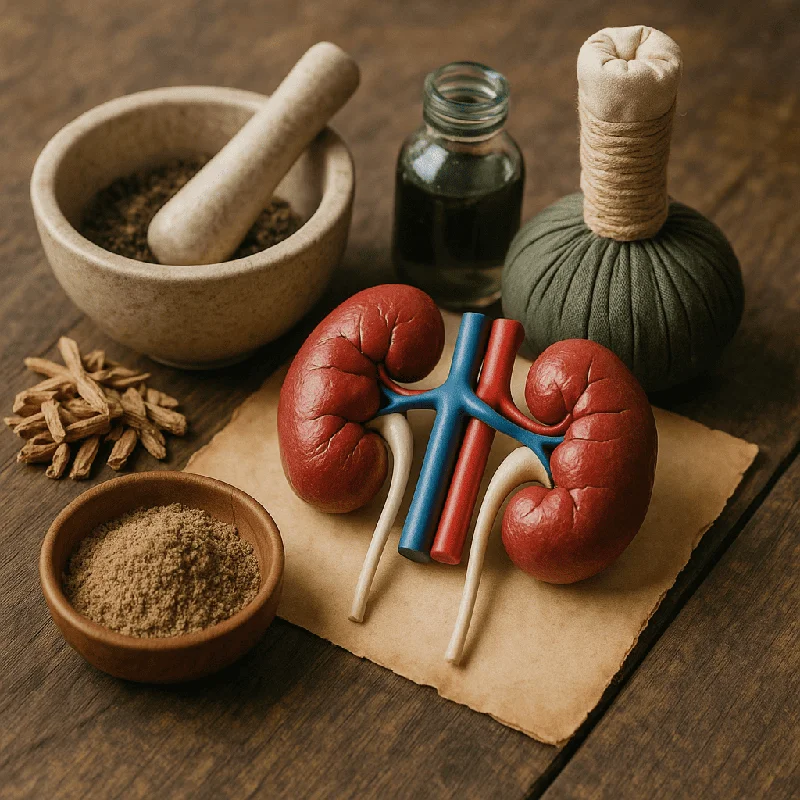
So, Kidney Treatment in Ayurveda? Here's Why You Should Really Care
Look, I know — when people hear "Ayurveda," they sometimes imagine incense sticks, turmeric lattes, and some vague idea of holistic healing. But here's the thing: when it comes to kidney treatment in Ayurveda, we’re talking about something way deeper than wellness trends.
Kidneys are small, sure, but when they start to falter? Everything spirals. Fatigue creeps in. Swelling starts. Blood pressure plays ping-pong. And suddenly you’re neck-deep in tests, prescriptions, and warnings you half understand.
Here’s the wild part — Ayurvedic medicine has been addressing kidney issues for centuries. Long before we even had words like “glomerular filtration rate” or “creatinine,” Ayurvedic scholars were mapping how imbalances in Vata, Pitta, and Kapha could wreck your internal filters.
And it's not just spiritual or anecdotal. Modern science is starting to catch up. Studies now highlight how Ayurvedic herbs like Punarnava, Varuna, and Gokshura help manage fluid retention, reduce inflammation, and support kidney function. Real clinical backing — not just folk wisdom.
Let’s not ignore the elephant in the room: kidney diseases are on the rise, especially with our over-processed diets, sedentary routines, and stress-packed lifestyles. According to WHO, chronic kidney disease (CKD) is among the top 10 causes of death worldwide. In India alone, over 17% of the population may be living with some form of kidney dysfunction. Sobering, huh?
This article? It’s for you if:
- You’re living with kidney issues.
- Someone you love is navigating it.
- You’re just tired of the allopathic side effects and looking for something gentler, deeper, and more sustainable.
We’ll explore what Ayurveda really says about kidney disease, how it’s diagnosed (spoiler: your tongue might tell more than a urine test), which herbs and treatments are considered gold-standard, and whether those Panchakarma therapies are worth the hype.
I’ll throw in some honest thoughts, things that don’t always fit perfectly, even a couple contradictions. Because real healing? It’s not always linear. But Ayurveda, when done right, offers hope. Let’s dive in.
Understanding Kidney Treatment in Ayurveda – What’s Actually Going On?
So What Is Kidney Disease Anyway? (And Why Should You Care?)
Scientifically, kidney disease kicks in when these two bean-shaped organs can’t do their job — filtering waste, balancing electrolytes, regulating blood pressure, and producing essential hormones. It sneaks up through high blood pressure, diabetes, recurring infections, or sometimes, no clear reason at all.
The stages? Oh, they’re sneaky. It usually starts silent — a bit of swelling, maybe tiredness. Then comes fluid retention, anemia, bone issues, nerve problems, and eventually… the dreaded dialysis conversation. Chronic kidney disease (CKD) has five stages, and by the time most people discover it, they're often past stage 2.
It’s a systemic condition. Meaning: when kidneys go bad, everything else gets dragged down with them.
Ayurveda’s Take: It’s All About the Imbalance
Now, the Ayurvedic model? Completely different lens.
In Ayurveda, kidney issues fall under categories like Mutravaha Srotas Dushti (disorder of the urinary channels), Ashmari (kidney stones), Mutrakrichra (painful urination), and Mutraghata (urinary retention/blockage). The root of the disease? Imbalance of Doshas.
- Vata controls movement. When aggravated, it causes dryness, degeneration, blockages — perfect storm for kidney dysfunction.
- Pitta, the fire element, when heightened, inflames — think infection, burning urination, inflammation.
- Kapha brings heaviness and sluggishness. When out of sync? Swelling, fluid retention, poor filtration.
But it’s rarely just one dosha. Usually, there’s a chaotic dance between all three.
Now throw in factors like:
- Irregular eating habits
- Eating too much salty/spicy/processed food
- Holding in your urges (yes, that matters)
- Emotional overload (especially suppressed anger or fear)
And voilà — your kidneys start rebelling.
Here’s Where Ayurveda Splits from Modern Medicine
Modern nephrology and Ayurveda don't necessarily contradict — they just zoom in from different angles.
Western medicine looks at organs and symptoms. It’s biochemical, focused on test results and external interventions. It’s brilliant for acute cases, no doubt.
But Ayurveda? It sees the person. Not just creatinine levels. It asks:
- What’s your Prakriti (constitution)?
- What’s your digestion like?
- Are you emotionally stagnant?
- Have you been ignoring your body’s subtle cries?
And instead of jumping straight to suppressing symptoms, Ayurvedic kidney treatment is about unblocking, balancing, nourishing, and slowly guiding the body back to homeostasis.
Yes, it takes time. But the goal is deeper — not just survival, but sustainable wellness.
So What Causes Kidney Issues Anyway? (According to Ayurveda)
Kidneys don’t just break down overnight. Ayurveda sees disease as a slow build-up — imbalance brewing quietly before it screams loud enough to be diagnosed.
The Main Ayurvedic Causes Behind Kidney Problems
First off, it’s almost never just the kidneys. Ayurveda says it’s a systemic doshic disturbance, usually rooted in digestive fire (Agni) going weak.
- Poor diet over time – like heavy, greasy, salty, overly spicy food. It dampens Agni, builds up Ama (toxic sludge), which clogs micro-channels (Srotas) – including those feeding the kidneys.
- Holding in natural urges – pee, poop, even tears. It’s not just poetic; suppression messes with Vata and eventually leads to blockages.
- Emotional suppression – especially unresolved grief and fear. These emotions are believed to lodge in the lower abdomen, influencing Apana Vata — the flow governing elimination and reproduction. If blocked, toxins back up.
- Late nights, erratic schedules, stress – these destabilize your internal rhythm, increasing systemic Vata and slowly damaging kidney function.
Common Triggers and Risk Factors in Ayurveda
- Overuse of antibiotics, painkillers, or harsh medicines
- Too much alcohol, caffeine, or processed junk
- Chronic constipation (yep, linked!)
- Sedentary lifestyle, overexposure to AC, lack of sun
- Even excessive sex or ejaculation can disturb Shukra Dhatu and by extension, affect kidney health
Basically, anything that derails balance — physically, emotionally, energetically — can mess with your kidneys from an Ayurvedic lens.
Why Our Modern Life Isn’t Helping
We don’t move much. We eat late. We sleep with our phones. We snack when anxious. We’ve created the perfect environment for kidney disorders to rise. The body’s trying to whisper, but we’ve turned the volume up on everything else — until it finally screams with swelling legs or abnormal test results.
Ayurveda didn’t need lab reports to predict this. The sages already knew — imbalance always begins subtly.
Spotting the Signs Before It’s Too Late
Let’s get real — kidney problems don’t usually announce themselves with big neon signs. They sneak in.
The Obvious Ones (But People Still Miss Them)
- Swelling in feet, face, or hands — often written off as “just tiredness”
- Fatigue that doesn’t match your activity level
- Frequent urination, especially at night
- Changes in urine color or volume — foamy, dark, or super pale
- Itchy skin, without a clear allergy or rash
- Muscle cramps, especially at night
- Shortness of breath — from fluid overload
These are classical indicators of kidney stress — and Ayurveda connects them with mutravaha srotas dushti, water metabolism imbalance, and rising Kapha or Vata.
The Subtle, Easy-to-Ignore Ones
- Feeling cold all the time
- Bad breath or metallic taste
- Brain fog, trouble focusing
- Persistent lower back or abdominal dull pain
- Loss of appetite
- Dark circles under the eyes
Ayurveda notes these as signs of accumulating Ama or doshic vitiation. They're like little red flags your body's waving — and most of us are too distracted to notice.
When to See an Ayurvedic Practitioner
Early-stage kidney imbalances often respond beautifully to Ayurvedic intervention. But there’s a catch: timing.
💡 Come early — when you’re just noticing swelling, weird urination, fatigue.
❗ Avoid waiting until there's heavy protein loss, advanced CKD, or GFR drops below 30 — Ayurveda isn’t magic. It supports function, slows decline, but cannot regrow a severely damaged kidney. Be realistic.
In severe cases? Ayurveda works with allopathy — not against it.
How Ayurveda Figures Out What’s Really Going On (Spoiler: It's Not Just Lab Reports)
The diagnostic vibe in Ayurveda is more Sherlock Holmes than spreadsheet. You’re not just a creatinine number — you’re a whole energy system. Let's dig into how they decode it.
Pulse, Tongue, and Other Ancient Tricks
Ayurvedic doctors don’t always need a lab. They’ll:
- Read your pulse (Nadi Pariksha) – Not just rate, but rhythm, volume, and tension. Each dosha feels different.
- Look at your tongue – Coated? Cracked? Pale? That’s a roadmap to your digestion and organ health.
- Observe your face, eyes, skin, voice – Dullness or puffiness around the eyes can scream kidney distress.
- Check your urine — for color, foaminess, sediment, smell.
These aren't random — they're built into the diagnostic systems of Charaka and Sushruta.
Determining Your Dosha Imbalance
They’ll also map your Prakriti (original constitution) and Vikriti (current imbalance).
- Kidney disorders with Kapha dominance often show swelling, heaviness, sluggish digestion.
- Vata-driven issues lean toward dryness, degeneration, pain, poor circulation.
- Pitta types may experience burning, inflammation, reddish urine, irritability.
And based on that, treatment gets tailored — herb, therapy, diet, and lifestyle. No cookie-cutter cures here.
स्वयं दवा न लें और प्रतीक्षा न करें। अभी डॉक्टर से चैट शुरू करें
The Big Question: So, What Actually Helps?
Time to roll up our sleeves. This is the meat — the real Ayurvedic tools used for kidney healing.
So here’s the deal: Ayurveda doesn’t rely on just one miracle herb. It’s about synergy — the right herbs, for the right person, at the right stage. But still, there are a few power players that show up again and again when it comes to kidney health.
- Punarnava is a big one. It acts as a natural diuretic, helps reduce swelling, and supports kidney rejuvenation. Most commonly used as a powder or decoction, it works best when taken consistently. A typical dosage? About 3 to 5 grams of the powder with warm water, twice a day.
- Gokshura is another star. Known for strengthening the urinary tract and calming inflammation, it’s often found in capsule or powder form. It’s particularly useful in cases of burning urination or UTIs associated with kidney imbalance.
- Varuna is your go-to if stones or urinary blockages are part of the picture. It’s traditionally used in decoctions or tablets and helps break down obstructions while improving overall flow.
- Chandraprabha Vati is kind of like a Swiss Army knife. This classical formulation combines multiple herbs and helps balance all three doshas. It’s often prescribed as a general kidney tonic and detoxifier — one to two tablets after meals is the usual dosage.
- Palaash Pushpa, a lesser-known but highly effective herb, is used to reduce proteinuria (protein in the urine) and enhance renal tissue strength. Usually taken as a powder, often under close supervision.
Important heads-up:
These herbs are powerful. Don’t go playing pharmacist on yourself. If you’re pregnant, breastfeeding, allergic, or already on diuretics or BP meds — stop. Get a professional consult before adding anything new. Even natural stuff has side effects when misused.
Therapies That Actually Work
- Basti (medicated enema) – especially good for Vata-dominant issues. Clears blockages and ama from deep tissues.
- Virechana (purgation) – for clearing excess Pitta and Ama.
- Abhyanga (oil massage) – helps with circulation, lymph drainage.
- Swedana (steam therapy) – reduces fluid retention, balances Kapha.
These aren’t spa days — they’re intense, medically supervised treatments. Always under a qualified Vaidya.
What You Can Try at Home (Safely)
- Barley water – gentle diuretic, balances Kapha and Pitta
- Coriander seed decoction – reduces inflammation
- Lukewarm water with lemon – mild detoxifier (skip if you have ulcers or high Pitta)
- Yoga – focus on twisting asanas, gentle stretching, and Pranayama like Anulom Vilom
✨ Little actions add up — especially when you’re consistent.
What You Eat & How You Live Really Does Matter — Big Time
If you’re hoping to heal your kidneys with just pills and powders while still bingeing on chips at 11 p.m. — well, Ayurveda would like a word.
Foods That Help (Like, Really Help)
Kidney health = clean digestion, zero toxicity, balanced doshas. Here's how to eat like your kidneys depend on it (because they do):
- Barley – hands down, the MVP. Light, diuretic, pacifies Kapha.
- Red rice or unpolished rice – easy to digest, non-clogging.
- Bottle gourd (lauki) – cooling, light, detoxifying.
- Coriander, cumin, fennel – in warm teas or added to food. Help flush out toxins gently.
- Mung dal – protein source that’s gentle on kidneys.
- Cooked apples and pears – sweet, cooling, easy on digestion.
- Cow’s ghee – in small amounts, it nourishes tissues without clogging.
- Rock salt (Sendha namak) – better than table salt; use sparingly.
Cooking tips:
- Steam or sauté — no deep-frying.
- Eat warm, fresh food. Leftovers = Ama generators.
- Lunch = your biggest meal. Dinner = lightest.
- Space meals at least 3–4 hours apart.
Spices should be supportive, not aggressive. Ginger and turmeric? Yes, in moderation. Avoid excess garlic or onion — they’re heavy and heating.
What to Avoid (Even If It Hurts Your Soul a Bit)
This one stings, but here goes:
- Excess salt – especially iodized/table salt. Retains water, increases blood pressure.
- Processed or canned food – loaded with sodium, preservatives.
- Red meat and shellfish – super heavy, acid-forming.
- Cold drinks, soda, packaged juices – spike Kapha and mess with Agni.
- Tomatoes, spinach, and beets (in excess) – oxalates can burden weak kidneys.
- Heavy dairy – especially chilled milk, cheese, paneer.
- Caffeine & alcohol – both dehydrate and overwork kidneys.
Even “healthy” stuff like green smoothies or raw salads? Not advised in many kidney cases — they’re often too cooling, rough, and hard to digest in chronic illness.
Daily Routine & Lifestyle That Can Save Your Kidneys
- Wake up before sunrise – this keeps Apana Vata flowing properly.
- Hydrate smartly – warm water, sip throughout the day. Not chugging liters at once.
- Exercise gently – walking, yoga, pranayama. No overexertion.
- Regular bowel movements – this is huge. Constipation = kidney stress.
- Nap? No thanks – daytime sleep increases Kapha.
- Stress management – meditation, laughter, time in nature. Cortisol is kidney-toxic, y’all.
Consistency is more important than perfection. Ayurveda isn’t looking for saints — just mindful effort.
A Quick Reminder About Herbs (Again)
You might see miracle videos online. “Cure kidney failure in 3 days with Punarnava!” Please. Stop.
Yes, Ayurveda is powerful. But dosing depends on the stage of your condition, your dosha, your digestion, your age, your everything.
Basic caution:
- Pregnancy or breastfeeding? Get a qualified Ayurvedic doc — don’t wing it.
- Allergies? Start small, observe.
- Already on meds? Let your Vaidya and physician talk to each other. Integrative care is the future.
Real People, Real Recoveries: It’s Not Just Theory
I spoke to Meera aunty from Surat — 63, borderline diabetic, mild CKD stage 2. Fatigue was her everyday state. Doctors kept increasing meds. She turned to Ayurveda.
- Started Punarnava and Gokshura combo under guidance
- Switched to a Kapha-Pitta balancing diet
- Took Basti treatments twice a month
- Walked daily, followed sleep routine like clockwork
Three months in? Her creatinine stabilized, swelling gone, energy up. No magic. Just consistency.
Then there’s Arvind, a 28-year-old with a high-protein fitness diet. Had stone formation, frequent UTIs. Switched to Ayurvedic teas, Varuna decoctions, added yoga. In six weeks, symptoms vanished.
These aren’t unicorn cases — just stories of people listening to their bodies. Ayurveda works best with you, not for you.
Does Science Actually Back Any of This Up?
Short answer: Yup. And it’s growing.
What Research Says
- Punarnava (Boerhaavia diffusa): Proven diuretic, anti-inflammatory, renal protective in rats and humans alike.
- Gokshura (Tribulus terrestris): Shown to improve renal function markers and reduce urea/creatinine levels in mild to moderate cases.
- A study in AYU Journal reported Chandraprabha Vati led to significant symptom reduction in CKD patients over 8 weeks.
More and more researchers are now realizing: Ayurveda doesn’t just mask symptoms. It works at the root — digestion, immunity, circulation, stress regulation.
Ayurveda vs. Allopathy: A Fight or a Friendship?
Honestly, both have strengths.
- Allopathy is unbeatable in crisis care, dialysis, transplants.
- Ayurveda shines in prevention, early-stage management, slowing progression, improving quality of life.
They shouldn’t compete. They should collaborate.
Reliable Sources (Not Just WhatsApp Forwards)
- Journal of Ethnopharmacology
- AYU International Research Journal
- NCBI Database
- Charaka Samhita, Sushruta Samhita
Always fact-check. There's real science behind the herbs — but also a lot of online noise.
Wait, Isn’t This All a Little... Woo-Woo? (Common Misconceptions)
Let’s clear the air.
- “Ayurveda is slow.” → Healing takes time, sure. But early symptoms often improve within weeks.
- “No science behind it.” → False. Plenty of peer-reviewed studies exist — they just don’t get mass funding.
- “It’s all herbs and massages.” → Also wrong. Ayurveda is a full system: diagnostics, psychology, routines, lifestyle, food, and herbs.
- “Anyone can practice it.” → Definitely not. Real Vaidyas study for years. There are quacks, sure — just like anywhere.
Don't dismiss it just because it doesn't come in blister packs.
Wrapping It Up: So What’s the Ayurvedic Takeaway?
Alright, we’ve covered a lot. Like, a lot.
Here’s the core idea: Kidney treatment in Ayurveda isn’t a quick fix. It’s a full-body, full-life reset. And that’s actually what makes it work.
Ayurveda doesn’t fight disease. It restores balance.
So whether you’re in early-stage CKD or just worried about long-term kidney health — don’t wait. Get assessed, get a plan, get consistent. Small changes done regularly = real transformation.
Still unsure? Don’t self-diagnose on the internet. Reach out to a qualified practitioner through Ask-Ayurveda.com and get a personalized consultation. Your kidneys will thank you — silently, of course.
FAQs
1. Can Ayurveda cure chronic kidney disease (CKD)?
Not “cure” in the instant sense. But yes, Ayurveda can slow progression, improve function, and manage symptoms in early-to-mid stages. Late-stage support is possible too — but it’s case-dependent.
2. Are there side effects of Ayurvedic kidney treatments?
If done right? Very minimal. But if you self-medicate or mix herbs randomly — yes, risks exist. Always work with a trained practitioner.
3. Can I follow Ayurveda alongside dialysis?
Yes — many patients use Ayurvedic support during dialysis to improve energy, reduce complications, and improve overall wellbeing. Just don’t skip allopathic care.
4. What herbs are safe for mild kidney issues?
Punarnava, Gokshura, Varuna — but again, dosage and combinations matter. What’s mild for one person might be risky for another.
5. How soon can I see results with Ayurvedic treatment?
Some people feel better in a week. Others take a few months. It depends on your stage, constitution, and how disciplined you are with lifestyle changes.
References & Authoritative Sources
- Ministry of AYUSH, Government of India
India’s official body promoting and regulating Ayurveda, Yoga & Naturopathy, Unani, Siddha, and Homeopathy systems of medicine. - National Center for Biotechnology Information (NCBI)
A highly respected database for peer-reviewed research, including studies on Ayurvedic herbs and kidney health. - World Health Organization (WHO)
Global health authority offering reports and statistics on kidney diseases and traditional medicine integration. - PubMed Central (PMC)
A free digital repository of full-text biomedical and life sciences journal articles with references to Ayurveda. - Central Council for Research in Ayurvedic Sciences (CCRAS)
India's premier Ayurveda research organization under the Ministry of AYUSH, focused on validating Ayurvedic treatments scientifically. - National Institute of Ayurveda (NIA), Jaipur
An apex educational and research institute for Ayurveda under the Ministry of AYUSH. - Journal of Ayurveda and Integrative Medicine (Elsevier/ScienceDirect)
A peer-reviewed journal offering research on integrating Ayurveda with modern medicine. - National Kidney Foundation
Trusted source for conventional kidney disease information, useful for comparison with Ayurvedic approaches. - Ayurveda Research and Wellness Institutes (Private & Public)
Institutions focused on education and research in Ayurvedic sciences, often publishing studies on herbal formulations and chronic diseases.
उपयोगकर्ताओं के प्रश्न
How to prevent fatigue related to kidney disease symptoms?
Client_ce8a79
10 घंटे पहले
To help prevent fatigue related to kidney disease, it's important to manage the symptoms actively. Start by maintaining a balanced diet low in sodium, phosphates, and potassium, as advised by your healthcare provider, and stay hydrated. Iron supplements may be necessary if anemia is a factor, as iron deficiency can exacerbate fatigue. Regular exercise can improve energy levels, though it should be tailored to your capacity. Monitor your symptoms and any new onset of fatigue closely, and consult a doctor if your fatigue persists or worsens, as it may indicate an underlying issue requiring attention.
How long can kidney swelling last before seeking help?
Client_71a8d2
5 दिनों पहले
Kidney swelling, or nephritis, can last anywhere from a few days to several weeks. It is crucial to seek medical help if swelling persists for more than a few days, especially if accompanied by symptoms like fatigue, changes in urination, or fluid retention. Early diagnosis and treatment can prevent further kidney damage. Keep an eye on symptoms that may worsen, and never self-diagnose. If you notice severe pain, blood in the urine, or high blood pressure, see a doctor immediately. Ayurvedic practices can support kidney health, but they should not replace medical advice.
What are the symptoms of kidney problems that require immediate attention?
Client_1f246d
10 दिनों पहले
If you experience severe symptoms such as painful urination, blood in urine, decreased urine output, or sudden swelling in legs, ankles, or around the eyes, seek medical attention immediately, as these may indicate urgent kidney problems. Persistent back pain below the ribs or extreme fatigue, nausea, and difficulty concentrating can also be warning signs. Kidney issues can escalate quickly, so it's crucial to consult a doctor if you notice these symptoms. While herbs like Punarnava may support kidney health, they are not substitutes for medical diagnosis or treatment.
What supplements can support kidney function during dialysis?
Client_0b6bfd
15 दिनों पहले
To support kidney function during dialysis, certain supplements may be beneficial, but they must be tailored to individual needs under medical supervision. Commonly recommended supplements can include phosphate binders to manage phosphate levels, B vitamins to replenish those lost during dialysis, and omega-3 fatty acids for cardiovascular health. It is critical to monitor these closely, as excess intake of certain vitamins, like fat-soluble vitamins A, D, E, and K, can be harmful. Always consult with your healthcare provider before starting any supplements to ensure they align with your dialysis plan and address specific health needs.
How to identify early signs of kidney health issues at home?
Client_d83e2a
20 दिनों पहले
To identify early signs of kidney health issues at home, look for unexplained fatigue, swelling in your hands or feet, changes in urination patterns, such as an increase or decrease in frequency or foamy urine, and persistent puffiness around the eyes. These symptoms tend to be subtle and can develop slowly. If you notice any of these signs, it's essential to consult a healthcare professional for appropriate tests and diagnosis. While herbal and alternative approaches like Ayurveda can be supportive, they shouldn't replace conventional medical evaluation and treatment.
How long does it take to see kidney health improvements with lifestyle changes?
Client_86b592
30 दिनों पहले
Seeing improvements in kidney health through lifestyle changes can take several weeks to months, depending on the individual and the specific interventions made. A balanced diet low in sodium and rich in fruits and vegetables, regular physical activity, staying well-hydrated, and managing blood pressure can support kidney function over time. Improvements are gradual and require consistency; there are no quick fixes or miracle cures. If you have underlying conditions like diabetes or hypertension impacting kidney health, it's crucial to monitor changes with a healthcare professional. Always seek medical advice if you notice worsening symptoms or if lifestyle changes don't seem effective.
What lifestyle changes can improve overall kidney function?
Client_46a9ba
40 दिनों पहले
To improve overall kidney function, prioritize maintaining a balanced diet rich in fruits, vegetables, and whole grains while reducing sodium and protein intake, as high levels can strain the kidneys. Regular exercise, staying well-hydrated, and avoiding smoking and excessive alcohol consumption can also benefit kidney health. Blood pressure and blood sugar control are crucial since both hypertension and diabetes can damage kidneys over time. If you experience persistent issues like fatigue, swelling, or trouble urinating, consult a healthcare professional for a tailored assessment.
What are the best dietary choices to support kidney detoxification?
Client_e16534
49 दिनों पहले
The best dietary choices to support kidney detoxification include foods that help manage blood pressure and glucose levels. Incorporating plenty of whole grains like barley, fruits, and vegetables can be beneficial due to their fiber content and antioxidants. Limit salt, potassium, and phosphorus intake, particularly if kidney function is already compromised. Ginger and turmeric may offer anti-inflammatory benefits. If you experience symptoms such as persistent fatigue or swelling, consult a healthcare professional for personalized advice.
Can I manage fluid retention through dietary choices effectively?
Client_6135ce
59 दिनों पहले
You can manage fluid retention through dietary choices by reducing salt intake, as excess sodium can cause the body to hold onto water. Aim for less than 2,300 mg of sodium per day. Incorporating potassium-rich foods like bananas, sweet potatoes, and spinach can help balance sodium levels and reduce fluid retention. Staying hydrated is crucial, as it helps maintain fluid balance and reduces retention. Typical relief can be seen within a few days to weeks. If fluid retention persists, leads to swelling, or is accompanied by other symptoms, consult a healthcare professional to rule out underlying health issues. Ayurveda suggests herbal remedies like ginger and turmeric, but these should complement, not replace, medical advice.
How to use ginger and turmeric for kidney health effectively?
Client_31c02b
69 दिनों पहले
You can try making a decoction with fresh ginger and turmeric. Boil a piece of each in water, strain, and sip it through the day. Both herbs can help with inflammation and improve circulation, which supports kidney health. Always consider your dosha, ginger is heating, so consult an Ayurvedic doc if you're pitta dominant!
संबंधित आलेख

Urological Disorders
स्टोनएक्स कैप्सूल
स्टोनक्स कैप्सूल की खोज
3,809

Urological Disorders
Ayurvedic Treatment for Uterine Fibroids
Uterine fibroids also known as leiomyoma or myoma are non-cancerous growths in the uterus that can cause symptoms such as excessive menstrual bleeding, pelvic pain, lumps or pelvic pressure
4,619

Urological Disorders
Cystone सिरप
सिस्टोन सिरप की खोज
8,864

Urological Disorders
Ayurvedic Medicine for Urine Leakage – Holistic Natural Remedies for Incontinence
Discover effective Ayurvedic approaches for urine leakage. Learn how traditional herbal formulations, lifestyle modifications, and dosha balancing can naturally support urinary health and reduce incontinence.
4,292

Urological Disorders
Brihatyadi Kashayam Uses: A Science-Backed Ayurvedic Remedy
Explore Brihatyadi Kashayam uses, an Ayurvedic herbal decoction known for supporting respiratory, urinary, and digestive health with scientific insights.
3,490

Urological Disorders
Karpasmoolasav – Ayurvedic Remedy for Uterine Disorders
Karpasmoolasav is a potent Ayurvedic formulation traditionally used in the management of uterine disorders. Known for its ability to cause contraction of the uterus
3,689

Urological Disorders
नीरी सिरप के उपयोग, सामग्री, खुराक, साइड इफेक्ट्स
नीरी सिरप के उपयोग, सामग्री, खुराक, और साइड इफेक्ट्स की जानकारी
7,901

Urological Disorders
Urinary Incontinence Treatment in Ayurveda – Holistic Natural Approaches for Bladder Health
Explore Ayurvedic treatments for urinary incontinence, featuring herbal remedies, detoxification, and lifestyle modifications that promote optimal bladder function and overall well-being.
3,357

Urological Disorders
Ayurvedic Medicine for Prostatitis – Natural Prostate Health & Relief
Discover Ayurvedic medicine for prostatitis and learn how natural herbal remedies, detoxification therapies, and lifestyle modifications can promote prostate health, reduce inflammation, and improve urinary function.
4,650

Urological Disorders
उरल बीपीएच कैप्सूल
यूरल बीपीएच कैप्सूल की खोज
3,289
विषय से संबंधित परामर्श
अतिरिक्त दस्तावेज़
© 2024 Ask Ayurveda. सर्वाधिकार सुरक्षित।