आयुर्वेदिक डॉक्टर से प्रश्न पूछें और निःशुल्क या भुगतान मोड में अपनी चिंता की समस्या पर ऑनलाइन परामर्श प्राप्त करें। 2,000 से अधिक अनुभवी डॉक्टर हमारी साइट पर काम करते हैं और आपके प्रश्नों का इंतजार करते हैं और उपयोगकर्ताओं को उनकी स्वास्थ्य समस्याओं को हल करने में प्रतिदिन मदद करते हैं।


Body DetoxEar, Nose, and Throat DisordersGeriatrics & RejuvenationImmunodeficiencyInfertility TreatmentNutritionOrthopedic DisordersPediatricsRespiratory DisordersSexually Transmitted Diseases (STDs)Surgery RecoveryUrological DisordersVascular DisordersDental DisordersEndocrinological DisordersGastrointestinal DisordersYoga TherapyGeneral MedicineAllergic DisordersCardio DisordersGynecology and ObstetricsCosmetologySkin and Hair DisordersEye DisordersInfectious DiseasesMental DisordersNeurological DisordersOncologyPanchakarmaSexual Health & DisordersSports Medicine
पर प्रकाशित 02/25/25
(को अपडेट 08/13/26)
3,732
Raj Pravartini Vati Uses – Natural Ayurvedic Formulation for Holistic Health
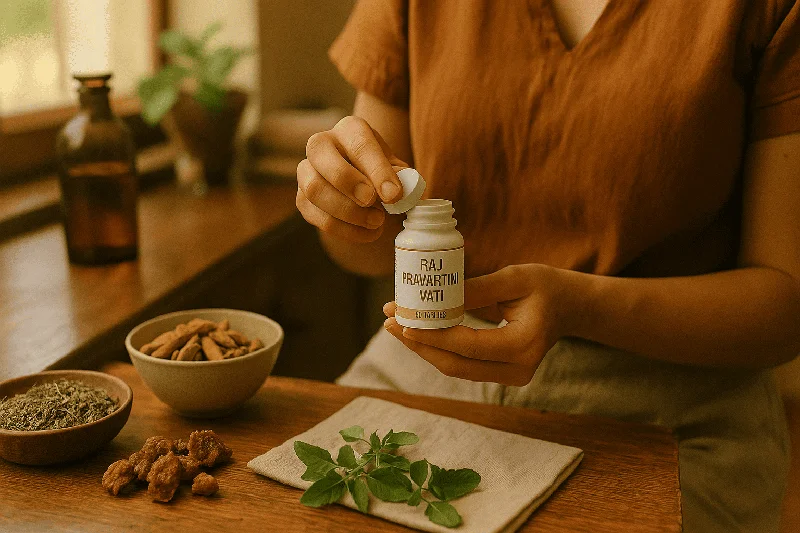
Raj Pravartini Vati (also spelled Rajah Pravartini Vati or Rajapravartini Vati) is a classical Ayurvedic formulation primarily used to regulate menstrual cycles, relieve period pain, and restore hormonal balance in women. Described in the ancient text Bhaishajya Ratnavali (Chapter 67, Shloka 57-58), this potent vati combines mineral bhasmas with herbal ingredients to stimulate the downward flow of apana vayu—the subdosha of Vata responsible for menstruation, elimination, and reproductive health.
If you're dealing with irregular periods, painful menstruation, or even PCOS-related hormonal disruption, this guide covers everything you need to know — from the exact mechanism of action to ingredient-level scientific evidence, dosage timelines, and how Raj Pravartini Vati compares to other Ayurvedic alternatives.
What Is Raj Pravartini Vati?
- Raj Pravartini Vati is a herbomineral tablet classified under Vati/Gutika (pill) preparations in Ayurvedic pharmacology.
- The name itself reveals its purpose: "Raja" refers to Artava (menstrual blood), and "Pravartini" means "one that initiates or promotes." So literally, it is "the tablet that promotes menstruation."
Classical Reference and Sanskrit Source
The original formulation is documented in Bhaishajya Ratnavali, one of the most authoritative texts in Ayurvedic medicine, compiled by Govind Das Sen in the 18th century.
The relevant shloka (67/57-58) reads:
> कासीसं तन्कणं चैव कुमारीरससंयुतम्।
> वटीकृत्य प्रदातव्या राजःप्रवर्तिनी मता॥
This verse prescribes combining Kasisa (green vitriol/iron sulfate), Tankana (borax), and Kumari Rasa (Aloe vera juice) into pills — a deceptively simple formulation with profound therapeutic effects on the female reproductive system.
Who Can Take Raj Pravartini Vati?
This formulation is indicated for women of reproductive age who experience:
- Amenorrhea (absent periods)
- Oligomenorrhea (infrequent periods)
- Dysmenorrhea (painful menstruation)
- Irregular menstrual cycles linked to hormonal imbalance
- PCOS/PCOD-related menstrual irregularities
- Delayed periods after discontinuing oral contraceptives
- Postpartum menstrual restoration
It is not recommended for pregnant women, women with heavy menstrual bleeding (menorrhagia), or individuals with known allergy to any component.
Raj Pravartini Vati Composition: Ingredients and Their Roles
Understanding the composition helps explain why this formulation works. Despite having only three core ingredients, each plays a specific and synergistic role.
| Ingredient | Sanskrit/Common Name | Proportion | Key Action |
|---|---|---|---|
| Kasisa Bhasma | Green vitriol (Iron sulfate processed) | 1 part | Emmenagogue, iron supplementation, Vata-balancing |
| Tankana Bhasma | Suhaga / Borax (purified) | 1 part | Uterine stimulant, Kapha-reducing, cleansing |
| Kumari Rasa | Aloe vera juice (Aloe barbadensis) | Q.S. (for processing) | Hormonal modulation, anti-inflammatory, pitta-balancing |
Some manufacturers add Loha Bhasma (calcined iron) or Hingu (asafoetida) to enhanced versions. Always check the label of the specific brand you purchase.
Kasisa Bhasma (Iron Sulfate Ash)
Kasisa is a mineral preparation processed through shodhana (purification) and marana (incineration). It acts as a potent artava-janana (menstruation promoter) by stimulating uterine contractility and improving blood formation. A 2017 study published in the Journal of Ayurveda and Integrative Medicine confirmed that traditionally processed Kasisa Bhasma contains bioavailable iron compounds that can support hemoglobin synthesis — making it useful for women with anemia-related menstrual dysfunction.
Tankana Bhasma (Purified Borax)
Tankana works as a yoni vishodhana (uterine cleanser) in Ayurvedic terminology. Pharmacologically, borax exhibits mild estrogenic and smooth muscle-stimulating properties. Research published in Ancient Science of Life (2015) documented its role in reducing uterine congestion and facilitating the shedding of the endometrial lining — essentially the exact process needed when periods are delayed or absent.
Kumari Rasa (Aloe Vera Juice)
- Aloe vera is not merely a binder here. It serves as both the bhavana dravya (processing medium) and an active ingredient. A 2019 animal study in Phytomedicine demonstrated that Aloe vera gel extract significantly modulated estrogen and progesterone levels in rats with induced PCOS.
- Its anti-inflammatory compounds — particularly acemannan and aloin — help reduce the prostaglandin-driven inflammation responsible for menstrual cramps.
How Does Raj Pravartini Vati Work? (Mechanism of Action)
This is something no other resource explains properly, so let's break it down through both Ayurvedic and modern pharmacological lenses.
Ayurvedic Mechanism: Apana Vayu and Artava Vaha Srotas
In Ayurvedic physiology, menstruation is governed by Apana Vayu — the downward-moving form of Vata dosha located in the pelvic region. When Apana Vayu becomes vitiated (blocked, aggravated, or weakened), the natural downward flow of artava (menstrual blood) gets disrupted.
Raj Pravartini Vati works by:
- 1.Clearing Artava Vaha Srotas — the channels carrying menstrual fluid — of any obstruction caused by excess Kapha (mucus/congestion) or Vata (dryness/spasm)
- 2.Normalizing Apana Vayu — restoring its natural downward movement through the uterine musculature
- 3.Reducing Ama — metabolic toxins that accumulate in the reproductive tissues and impair function
Modern Pharmacological Perspective
From a biomedical standpoint, the formulation likely works through multiple pathways:
- Uterine smooth muscle stimulation: Tankana and Kasisa both promote uterine contractions, facilitating endometrial shedding
- Iron supplementation: Kasisa and Loha Bhasma (when included) address iron-deficiency anemia, which is itself a cause of amenorrhea in many Indian women — the National Family Health Survey (NFHS-5, 2019-21) reports that 57% of Indian women aged 15-49 are anemic
- Hormonal modulation: Aloe vera's phytoestrogenic compounds may help rebalance the estrogen-progesterone ratio
- Anti-inflammatory action: Reduced prostaglandin synthesis leads to less painful contractions during menstruation
This dual mechanism — stimulating menstruation while simultaneously addressing underlying deficiencies — is what makes the formulation uniquely effective.
Raj Pravartini Vati Benefits: Beyond Just Period Regulation
While menstrual regulation is the primary indication, the benefits extend into several related areas of women's health.
Amenorrhea and Irregular Periods
The most well-documented benefit. Women experiencing primary or secondary amenorrhea (absence of periods for 3+ months without pregnancy) often respond to Raj Pravartini Vati within 1-3 menstrual cycles. It is particularly effective when irregularity is caused by stress, weight changes, or hormonal fluctuation rather than structural abnormalities.
Relief from Menstrual Pain (Dysmenorrhea)
The anti-spasmodic properties of Tankana Bhasma combined with Aloe vera's anti-inflammatory action help reduce:
- Lower abdominal cramping
- Lower back pain radiating to thighs
- Bloating and pelvic heaviness
- Headaches associated with menstruation
Many practitioners report that patients experience noticeable pain reduction by the second cycle of treatment.
PCOS/PCOD Support
Raj Pravartini Vati is increasingly prescribed as an adjunct therapy for Polycystic Ovary Syndrome. While it does not directly address ovarian cysts, it helps restore regular ovulatory cycles disrupted by the hormonal imbalance characteristic of PCOS. The estrogen-progesterone modulation through Aloe vera, combined with iron replenishment, addresses two key aspects of PCOS management — cycle regularity and anemia.
A small observational study conducted at Gujarat Ayurved University (2018) on 30 women with PCOD-related oligomenorrhea showed that 73% of participants resumed regular cycles within 3 months of taking Rajapravartini Vati alongside lifestyle modifications.
Postpartum Menstrual Recovery
After delivery (especially after cesarean sections), many women experience delayed return of menstruation. Raj Pravartini Vati, when prescribed after the breastfeeding period or as directed by a physician, can help normalize the cycle. This is one of those benefits that surprisingly few resources mention.
Anemia Management
- The iron-containing bhasmas in the formulation — Kasisa and Loha (in certain preparations) — contribute to increasing hemoglobin levels.
- This makes Raj Pravartini Vati a dual-purpose medicine: it triggers menstruation while preventing the iron loss from becoming a worsening cycle of anemia and irregular periods.
Eye Health (Netra Daha)
An uncommon but traditionally documented benefit: the classical text mentions relief from netra daha (burning sensation in the eyes), likely due to the Pitta-balancing properties of Aloe vera and the overall systemic effect of correcting Vata-Pitta imbalance.
How to Take Raj Pravartini Vati: Dosage and Administration
Standard Dosage
| Parameter | Recommendation |
|---|---|
| Dose | 1-2 tablets (125-250 mg each) |
| Frequency | Twice daily |
| Anupana (vehicle) | Lukewarm water or as directed |
| Timing | After meals |
| Course duration | 2-3 months minimum; up to 6 months under supervision |
How Many Days to Take Raj Pravartini Vati to Get Periods?
This is one of the most commonly asked questions.
Based on clinical practice:
- For delayed periods (less than 2 months): Effects may be seen within 5-15 days
- For secondary amenorrhea (3+ months absent): Typically requires 1-3 full cycles (4-12 weeks)
- For PCOS-related irregularity: A minimum 3-month course is usually needed to establish regularity
Important: these are general timelines. Individual response varies based on the underlying cause, body constitution (Prakriti), severity of dosha imbalance, and adherence to dietary/lifestyle recommendations.
When to Take It During Your Cycle
Most Ayurvedic physicians recommend starting Raj Pravartini Vati from the expected date of menstruation or 7-10 days before the anticipated period date. If periods have been absent for several months, the medicine can be started on any day and continued as directed.
स्वयं दवा न लें और प्रतीक्षा न करें। अभी डॉक्टर से चैट शुरू करें
Side Effects and Safety Considerations
- Raj Pravartini Vati is generally considered safe when taken at recommended doses under qualified supervision.
- However, like any medicine — herbal or otherwise — it carries potential risks.
Known Side Effects
- Mild gastric irritation or acidity (due to Kasisa)
- Loose stools in sensitive individuals
- Metallic taste in mouth (from bhasma components)
- Slight increase in menstrual flow initially — which is actually the intended effect
Contraindications (Who Should NOT Take It)
- Pregnant women — the emmenagogue action can cause uterine contractions leading to miscarriage. This is the most critical contraindication.
- Women with menorrhagia (heavy menstrual bleeding) — the medicine promotes flow; it should not be taken when bleeding is already excessive
- Known allergy to borax or aloe vera
- Children and adolescents who have not yet reached menarche
- Women with uterine fibroids causing heavy bleeding — without physician clearance
Interaction with Modern Medications
A frequently asked but rarely answered question: Can Raj Pravartini Vati be taken with oral contraceptives?
The honest answer: there is no published research on this specific interaction. However, since oral contraceptives work by suppressing ovulation and Raj Pravartini Vati works by stimulating uterine activity, their mechanisms are potentially contradictory. Taking them simultaneously without medical guidance is not advisable. If you're transitioning off birth control pills and experiencing delayed periods, consult an integrative medicine practitioner who understands both systems.
Similarly, women on anticoagulant therapy (blood thinners like Warfarin) should avoid Raj Pravartini Vati without medical clearance, as increased menstrual flow could compound bleeding risks.
Raj Pravartini Vati vs. Other Ayurvedic Formulations
One area where existing resources completely fall short is comparison. Here's how Raj Pravartini Vati stacks up against other common Ayurvedic medicines for menstrual disorders:
| Feature | Raj Pravartini Vati | Pushyanug Churna | Bolbaddh Ras | Ashokarishta |
|---|---|---|---|---|
| Primary Action | Promotes menstruation | Stops excessive bleeding | Promotes menstruation & stops leucorrhea | Uterine tonic, reduces bleeding |
| Best For | Amenorrhea, delayed periods | Menorrhagia, leucorrhea | Amenorrhea with vaginal discharge | Heavy periods, general uterine health |
| Form | Tablet (Vati) | Powder (Churna) | Tablet (Ras) | Liquid (Arishta) |
| Contains Metals | Yes (Kasisa, sometimes Loha) | No (purely herbal) | Yes (Ras Sindur, Loha) | No (herbal fermented) |
| Safe in Pregnancy | ❌ No | ✅ With guidance | ❌ No | ✅ With guidance |
| PCOS Support | ✅ Yes | ⚠️ Limited | ✅ Yes | ⚠️ Limited |
Key takeaway: Raj Pravartini Vati is specifically for promoting menstruation. If your problem is heavy bleeding, you need the opposite approach — something like Pushyanug Churna or Ashokarishta. Getting this distinction wrong can worsen your condition.
Lifestyle and Dietary Tips for Better Results
Taking the medicine alone is only half the equation. Ayurveda emphasizes pathya (supportive lifestyle) for any treatment to work optimally.
Dietary Recommendations
- Iron-rich foods: Jaggery, beetroot, pomegranate, spinach, dates, and black sesame seeds support the hemoglobin-building action of the medicine
- Warm, freshly cooked meals: Cold and raw foods aggravate Vata dosha and counteract the medicine's effect
- Avoid excessive caffeine and processed sugar: Both can worsen hormonal imbalance
- Include healthy fats: Ghee, coconut oil, and flaxseeds support hormone production
Lifestyle Practices
- Gentle yoga asanas: Baddha Konasana (butterfly pose), Supta Virasana, and Malasana help improve pelvic circulation and support Apana Vayu
- Stress management: Chronic stress elevates cortisol, which directly suppresses ovulation. Meditation, pranayama (especially Nadi Shodhana), and adequate sleep are non-negotiable
- Regular exercise: 30 minutes of moderate activity daily — but avoid excessive high-intensity exercise, which can itself cause amenorrhea
- Warm compress on lower abdomen: During the expected period window, applying warmth can complement the medicine's uterine-stimulating effect
When to Consult a Doctor
Raj Pravartini Vati is available over-the-counter in India, but self-medication is not always wise.
Seek professional medical advice if:
- Your periods have been absent for more than 3 consecutive months (rule out pregnancy first)
- You experience severe pelvic pain that doesn't respond to basic treatment
- There is abnormally heavy bleeding (soaking through a pad every hour)
- You have symptoms suggestive of PCOS: acne, facial hair growth, rapid weight gain, darkened skin patches
- The medicine shows no improvement after 2-3 months of regular use
- You are taking any allopathic medications simultaneously
- You suspect pregnancy — stop the medicine immediately and test
Storage and Shelf Life
Store Raj Pravartini Vati in a cool, dry place away from direct sunlight. Most brands specify a shelf life of 5 years from the date of manufacture, though this can vary. Always check the expiry date on the packaging before use.
Frequently Asked Questions (FAQ)
What is the main use of Raj Pravartini Vati?
Raj Pravartini Vati is primarily used to induce and regulate menstruation in women experiencing delayed, irregular, or absent periods (amenorrhea). It also helps relieve menstrual pain and supports hormonal balance.
Are there any serious side effects of Rajah Pravartini Vati?
When taken at recommended doses under medical supervision, serious side effects are rare. Mild gastric irritation or slightly heavier initial periods may occur. The main danger is using it during pregnancy, which is strictly contraindicated as it can cause uterine contractions.
How many days does it take for Raj Pravartini Vati to show results?
- For recently delayed periods, some women notice results within 5-15 days. For chronic irregularity or PCOS-related issues, expect 1-3 months of consistent use.
- Individual results vary — some respond faster, others need the full 3-6 month course.
Can Raj Pravartini Vati help with fertility and conception?
Indirectly, yes. By restoring regular ovulatory cycles, the medicine creates the necessary conditions for conception. However, it is not a fertility drug per se. Women trying to conceive should work with a practitioner who can integrate this medicine into a broader fertility protocol — and importantly, the medicine should be discontinued once pregnancy is confirmed.
What is the composition of Raj Pravartini Vati?
The classical composition includes three ingredients: Kasisa Bhasma (processed iron sulfate), Tankana Bhasma (purified borax), and Kumari Rasa (Aloe vera juice). Some brands add Loha Bhasma or Hingu. Always verify the ingredient list on your specific product.
Can I take Raj Pravartini Vati along with oral contraceptives or other modern medicines?
There is no published clinical data on this interaction. Since the medicine promotes menstruation while contraceptives suppress it, their actions may conflict. Never combine them without consulting a qualified integrative medicine practitioner.
Is Raj Pravartini Vati safe for long-term use?
Most Ayurvedic physicians recommend courses of 2-6 months rather than indefinite use. Long-term consumption of bhasma-containing medicines without supervision is not advisable due to cumulative mineral exposure. Periodic blood tests (hemoglobin, liver function) are a good practice during extended use.
Final Thoughts: Is Raj Pravartini Vati Right for You?
Raj Pravartini Vati remains one of the most effective classical Ayurvedic formulations for menstrual health — backed by centuries of clinical use and increasingly supported by modern pharmacological understanding of its ingredients. Its strength lies in the elegant simplicity of its composition: three ingredients working synergistically to restore what nature intended.
But here's what matters most: context. This medicine works best when the right patient takes it for the right indication at the right dose, supported by the right lifestyle choices. It's not a magic pill, and it's definitely not appropriate for every menstrual problem.
If irregular or absent periods are affecting your quality of life, consult a qualified Ayurvedic physician (BAMS or MD Ayurveda) who can assess your Prakriti, identify the root dosha imbalance, and determine whether Raj Pravartini Vati — alone or in combination with other therapies — is the right approach for your specific situation.
This article is for informational purposes only and does not replace professional medical advice. Always consult a qualified healthcare practitioner before starting any new medication.
Scientific Sources
- HERB: a high-throughput experiment- and reference-guided database of traditional Chinese medicine — Fang S et al., 2021, Nucleic acids research
- Butterbur — Din L et al., 2026
- Chrysanthemum morifolium as a traditional herb: A review of historical development, classification, phytochemistry, pharmacology and application — Liu Y et al., 2024, Journal of ethnopharmacology
- Ashwagandha as an Adaptogenic Herb: A Comprehensive Review of Immunological and Neurological Effects — Jamnekar PP et al., 2025, Cureus
- From Traditional Usage to Pharmacological Evidence: A Systematic Mini-Review of Spina Gleditsiae — Gao J et al., 2016, Evidence-based complementary and alternative medicine : eCAM
- An update on Ayurvedic herb Convolvulus pluricaulis Choisy — Agarwa P et al., 2014, Asian Pacific journal of tropical biomedicine
- Global Downregulation of Penicillin Resistance and Biofilm Formation by MRSA Is Associated with the Interaction between Kaempferol Rhamnosides and Quercetin — He X et al., 2022, Microbiology spectrum
- Longevity effect of a polysaccharide from Chlorophytum borivilianum on Caenorhabditis elegans and Saccharomyces cerevisiae — Pannakal ST et al., 2017, PloS one
- Molecular Discrimination of Cynanchum wilfordii and Cynanchum auriculatum by InDel Markers of Chloroplast DNA — Kim Y et al., 2018, Molecules (Basel, Switzerland)
- Cordyceps sinensis extract suppresses hypoxia-induced proliferation of rat pulmonary artery smooth muscle cells — Gao BA et al., 2010, Saudi medical journal
- Spatial structure and geographic distribution of major active component in medical herb Dipsacus asperoides population(https://pubmed.ncbi.nlm.nih.gov/24490546/) — Ma WF et al., 2013, Zhongguo Zhong yao za zhi = Zhongguo zhongyao zazhi = China journal of Chinese materia medica
उपयोगकर्ताओं के प्रश्न
Is raj pravartini vati safe to use during pregnancy?
Client_a22e3a
26 दिनों पहले
Raj Pravartini Vati is generally not recommended for use during pregnancy. This Ayurvedic formulation is designed to stimulate uterine activity, which can potentially lead to complications such as miscarriage or premature labor. It is primarily used to regulate menstrual cycles and relieve menstrual pain, which are not conditions that need management during pregnancy. If you are pregnant or planning to become pregnant, it's essential to consult a healthcare professional before taking any new medications, including Ayurvedic supplements. Always prioritize medical advice tailored to your specific circumstances over generalized information.
How long should I take raj pravartini vati for best results?
Client_404e35
36 दिनों पहले
For best results, Rajapravartini Vati is commonly taken for about 3 months, as suggested by a study at Gujarat Ayurved University, where 73% of women with PCOD-related oligomenorrhea resumed regular cycles within that time frame when combined with lifestyle changes. It's crucial to monitor your response to the treatment and consult with a healthcare provider before starting, especially if you are postpartum, on birth control, or anticoagulants, due to potential interactions or side effects like increased menstrual flow.
Can raj pravartini vati help manage symptoms of premenstrual syndrome (PMS)?
Client_59b703
46 दिनों पहले
Raj Pravartini Vati is not specifically indicated for managing premenstrual syndrome (PMS) symptoms but is primarily used for addressing issues like delayed, irregular, or absent periods (amenorrhea). While it can aid in menstrual regulation and may help with menstrual pain, it is not a first-line treatment for PMS. For PMS symptom relief, lifestyle changes such as regular exercise, a balanced diet, and adequate sleep are often beneficial. Over-the-counter medications like NSAIDs can help alleviate physical discomfort, while techniques like yoga and stress management can address mood-related symptoms. If your PMS symptoms are severe or disrupt daily activities, consulting a healthcare professional for a tailored treatment plan is advisable.
How does raj pravartini vati affect hormonal balance in women?
Client_6e8c03
55 दिनों पहले
Raj Pravartini Vati can help regulate menstrual cycles and support hormonal balance in women by promoting ovulation and addressing menstrual irregularities. The key ingredients, Kasisa Bhasma, Tankana Bhasma, and Kumari Rasa, work together to support the endocrine system, which can help normalize hormonal levels and menstrual flow. It may take a few cycles to notice improvements. However, if you experience persistent heavy bleeding or other troubling symptoms, consult a healthcare provider. Raj Pravartini Vati is not suitable during pregnancy, and you should discontinue use once pregnancy is confirmed.
What is the role of Aloe vera in raj pravartini vati for managing menstrual cramps?
Client_7df31c
65 दिनों पहले
Aloe vera in raj pravartini vati helps with menstrual cramps mainly due to its anti-inflammatory properties. Specifically, compounds like acemannan and aloin in Aloe vera reduce prostaglandin-induced inflammation, which is often a culprit behind those painful cramps. Plus, it helps modulate hormones, which is important for managing menstrual issues.
Can raj pravartini vati help regulate menstrual cycles in women with PCOS?
Client_2afc69
75 दिनों पहले
Yes, raj pravartini vati can help with regulating menstrual cycles in women wih PCOS. It stimulates uterine contractility and supports balanced hormone levels, both critical in addressing cycle irregularities. Remember, it's good to consult an ayurvedic practitioner for personalized advice, though. And, watch out for mild gastric irritation or other possible effects!
Can raj pravartini vati help boost my immune system during cold season?
Client_16dd73
88 दिनों पहले
Raj pravartini vati's main use is usually related to women's health issues, but it's packed with herbs that can support overall health. So, it might help boost your immune system due to its antioxidant properties, as mentioned. However, always chat with an Ayurvedic practitioner to make sure it fits your specific needs and dosha balance.
What is the best way to store raj pravartini vati for maximum potency?
Client_27c7d2
97 दिनों पहले
To store raj pravartini vati for maximum potency, keep it in a cool, dry place away from direct sunlight. Moisture and heat can lessen its effectiveness, so an airtight container might help too. Just be sure to check the expiry date and follow any specific storage instructions from your practitioner!
Can raj pravartini vati improve mental clarity and spiritual balance?
Client_af7ccc
107 दिनों पहले
Yes, raj pravartini vati can supports mental clarity and spiritual balance as part of its holistic benefits in Ayurveda. It's rich in specific herbs that are known to influence the mind and subtle energies. But remember, for the best results, consult an Ayurvedic practitioner to align it with your unique dosha and needs!
Can I use raj pravartini vati for improving my energy levels?
Client_3a37b0
116 दिनों पहले
Raj pravartini vati is mainly used for balancing hormones, especially in menstrual health. While it might help indirectly with energy by supporting dosha balance and digestion, it's not a primary remedy for boosting energy levels. Consider adaptogens like ashwagandha or shatavari for more direct energy support. You might wanna chat with an Ayurvedic practitioner to get more personalized insight based on your unique needs!
संबंधित आलेख

Body Detox
Pizhichil: The Royal Ayurvedic Oil Bath Therapy You Never Knew You Needed
Let’s be real: “Pizhichil” probably isn’t the first word you’d throw into everyday conversation—unless you’re steeped in Ayurveda or grew up around someone who swore by it. But once you discover what it is, it’s hard not to talk about. I mean, how often d
3,034
Body Detox
Vata Dosha Meaning in Ayurveda: What It Is, Signs of Imbalance, and How to Calm It Naturally
If you’ve ever felt kind of scattered, dry-skinned, anxious for no good reason, constantly chilly, or like your mind races ahead of your body—then yeah, you’ve probably danced with Vata Dosha. And if you’re anything like me, once you start digging into Ay
4,157

Body Detox
कौन सी सब्जी गैस्ट्रिक समस्या और पाचन के लिए अच्छी है?
पता करें कि कौन सी सब्जी गैस्ट्रिक समस्या के लिए अच्छी है, गैस्ट्रिक सब्जियों की पूरी सूची और किन खाद्य पदार्थों से बचना चाहिए। पाचन के लिए सबसे अच्छे विकल्प और आयुर्वेदिक टिप्स जानें।
7,170

Body Detox
महातिक्तम कषायम के फायदे, खुराक, साइड इफेक्ट्स, सामग्री, संदर्भ
महातिक्तम कषायम के फायदे, खुराक, साइड इफेक्ट्स, सामग्री, संदर्भ की खोज
2,747

Body Detox
Ayush Kwath Powder: How to Use It, Benefits, and Daily Dosage
Explore Ayush kwath powder uses. Learn the correct dosage, benefits, uses, and ingredients of Ayush kwath powder and how to prepare it at home for immunity
3,645

Body Detox
वीर्य शोधन बटी
वीर्य शोधन बटी की खोज
3,928

Body Detox
सुपारी क्या है: आयुर्वेदिक उपयोग, फायदे और जोखिम
जानें कि सुपारी क्या है, इसके फायदे, साइड इफेक्ट्स और प्रकार। सुपारी के प्रभाव, आयुर्वेद में इसके उपयोग, सुपारी के प्रकार और जायफल से इसके अंतर को एक्सप्लोर करें।
23,523

Body Detox
मंजिष्ठादि तैलम के फायदे, उपयोग करने का तरीका, सामग्री, साइड इफेक्ट्स
मंजिष्ठादि तेल के फायदे, उपयोग करने का तरीका, सामग्री, और साइड इफेक्ट्स की जानकारी
2,625

Body Detox
Which Oil Is Best for Navel? Ayurvedic Guide to Navel Oiling
Which oil is best for the navel? Explore Ayurvedic benefits of coconut, castor, mustard, and sesame oils, and how navel oiling supports skin, digestion, and mood
26,352
Body Detox
Hirak Bhasm: The Miracle Ayurvedic Medicine for Detoxification & Rejuvenation
Discover the proven benefits, proper dosage, side effects, and scientific research behind Hirak Bhasm, a powerful Ayurvedic mineral preparation for holistic health.
2,774
विषय से संबंधित परामर्श
अतिरिक्त दस्तावेज़
© 2024 Ask Ayurveda. सर्वाधिकार सुरक्षित।