आयुर्वेदिक डॉक्टर से प्रश्न पूछें और निःशुल्क या भुगतान मोड में अपनी चिंता की समस्या पर ऑनलाइन परामर्श प्राप्त करें। 2,000 से अधिक अनुभवी डॉक्टर हमारी साइट पर काम करते हैं और आपके प्रश्नों का इंतजार करते हैं और उपयोगकर्ताओं को उनकी स्वास्थ्य समस्याओं को हल करने में प्रतिदिन मदद करते हैं।
मुफ्त! आयुर्वेदिक डॉक्टरों से पूछें 24/7

 तेज़ प्रतिक्रियाएँ
 1000+ सत्यापित डॉक्टर
Body DetoxEar, Nose, and Throat DisordersGeriatrics & RejuvenationImmunodeficiencyInfertility TreatmentNutritionOrthopedic DisordersPediatricsRespiratory DisordersSexually Transmitted Diseases (STDs)Surgery RecoveryUrological DisordersVascular DisordersDental DisordersEndocrinological DisordersGastrointestinal DisordersYoga TherapyGeneral MedicineAllergic DisordersCardio DisordersGynecology and ObstetricsCosmetologySkin and Hair DisordersEye DisordersInfectious DiseasesMental DisordersNeurological DisordersOncologyPanchakarmaSexual Health & DisordersSports Medicine
पर प्रकाशित 02/28/25
(को अपडेट 06/27/26)
2,875
Mansyadi Kwath – Natural Ayurvedic Remedy for Digestive Health & Detoxification
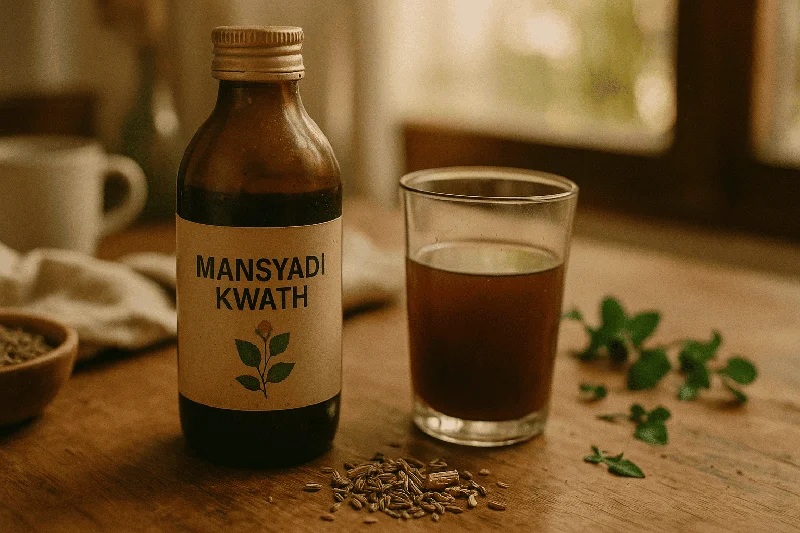
- Mansyadi Kwath (also spelled Mamsyadi Kwatha or Mansyadi Kashaya) is a classical Ayurvedic herbal decoction primarily used to manage mental health conditions — including depression, insomnia, anxiety, epilepsy, and hysteria.
- Composed of just three potent herbs — Jatamansi, Ashwagandha, and Parasika Yavani — in a precise 8:4:1 ratio, this formulation has been referenced in authoritative Ayurvedic texts like the Siddha Yoga Sangraha and Bheshaja Samhita. Unlike many Ayurvedic preparations that remain purely traditional, Mansyadi Kwath has attracted modern pharmacological interest, with animal studies demonstrating statistically significant antidepressant activity.
- This guide covers everything you need to know — from composition and home preparation to neuropharmacological mechanisms and comparisons with similar formulations.
What Is Mansyadi Kwath?
Definition and Classification in Ayurveda
Mansyadi Kwath belongs to the Kwatha (Kashaya) category of Ayurvedic preparations — water-based herbal decoctions where coarse powders of medicinal plants are boiled until the volume reduces significantly. The name "Mansyadi" derives from "Mansi" (another name for Jatamansi, the primary ingredient), and the suffix "-adi" indicates that additional herbs follow. In Ayurvedic pharmacology, it is classified as a Medhya Rasayana (intellect-promoting rejuvenative) and Nadibalya (nervine tonic).
The formulation is specifically designed to pacify aggravated Vata dosha, which in Ayurvedic theory governs all nervous system functions. When Vata becomes vitiated, it manifests as anxiety, sleeplessness, tremors, and mental instability — precisely the conditions Mansyadi Kwath targets.
Historical Context and Classical References
The primary textual reference for Mansyadi Kwath is the Siddha Yoga Sangraha, a respected compendium of proven Ayurvedic formulations. Additional references appear in the Bheshaja Samhita and Ayurved Saar Sangrah. In these texts, the formulation is recommended specifically for Apasmara (epilepsy), Unmada (psychosis/insanity), Nidranasha (insomnia), and Chittodvega (anxiety disorders).
What's important to understand is that Kwatha preparations have been considered the most potent oral dosage form in Ayurveda — more bioavailable than churnas (powders) or vatis (tablets) because the active phytochemicals are already extracted into the water medium during decoction.
Ingredients and Their Proportions
The formula is elegantly simple. Only three herbs, but each plays a distinct pharmacological and Ayurvedic role.
| Ingredient | Botanical Name | Sanskrit Synonyms | Proportion | Part Used |
|---|---|---|---|---|
| Jatamansi (Mansi) | Nardostachys jatamansi | Tapaswini, Jatila, Bhutajata | 8 parts | Rhizome |
| Ashwagandha | Withania somnifera | Vajigandha, Balada, Hayagandha | 4 parts | Root |
| Parasika Yavani (Khurasani Ajwayan) | Hyoscyamus niger | Turushka, Parsikahuva | 1 part | Seed |
Jatamansi (Nardostachys jatamansi) — The Primary Nervine
Jatamansi is the hero ingredient, constituting over 61% of the formula.
Its Ayurvedic profile:
- Rasa (taste): Tikta (bitter), Kashaya (astringent), Madhura (sweet)
- Virya (potency): Sheeta (cooling)
- Vipaka (post-digestive effect): Katu (pungent)
- Prabhava (special action): Medhya (intellect-promoting)
- The rhizome contains sesquiterpenes — particularly jatamansone (valeranone) — which modern pharmacology has identified as responsible for its sedative and tranquilizing effects. A 2005 study published in the Indian Journal of Pharmacology demonstrated that Jatamansi extract increases levels of serotonin, 5-hydroxyindole acetic acid, and GABA in the brain, offering a plausible neurochemical basis for its traditional use.
- The plant looks distinctive: the rhizome is covered with thick, fibrous, reddish-brown hair-like remnants of old stems, giving it a characteristic "matted" appearance — in fact, "Jata" literally means matted hair.
Ashwagandha (Withania somnifera) — The Adaptogenic Support
Making up approximately 30% of the formula, Ashwagandha serves as the adaptogenic backbone.
Its properties:
- Rasa: Tikta, Katu, Madhura
- Virya: Ushna (heating)
- Vipaka: Madhura (sweet)
- Dosha Karma: Kapha-Vata shamaka
- Ashwagandha's role in Mansyadi Kwath is two-fold: it provides anxiolytic and anti-stress effects through withanolides (its principal bioactive compounds), and its warming potency balances the cooling nature of Jatamansi — creating pharmacodynamic harmony. A 2012 randomized, double-blind, placebo-controlled study in the Indian Journal of Psychological Medicine found that Ashwagandha root extract significantly reduced serum cortisol levels and perceived stress scores in adults (n=64).
- The root, when fresh, is stout, fleshy, and whitish — resembling a small parsnip. Dried, it becomes pale yellowish-brown and has a distinctive horse-like odor (hence "Ashwa" = horse).
Parasika Yavani (Hyoscyamus niger) — The Antispasmodic Catalyst
This is the smallest but perhaps most pharmacologically intense component at just about 7.7% of the formula. Also known as Khurasani Ajwayan or Henbane, it contains tropane alkaloids — hyoscyamine and scopolamine — that have potent anticholinergic and antispasmodic properties.
- Rasa: Katu, Tikta
- Virya: Ushna (heating)
- Vipaka: Katu (pungent)
- Dosha Karma: Vata-Kapha shamaka
- In traditional Ayurvedic practice, Parasika Yavani is specifically indicated for Apasmara (epilepsy) and convulsive disorders. The seeds are small, grayish-brown, and kidney-shaped.
- Critical safety note: Hyoscyamus niger is toxic in large doses, which is exactly why the classical ratio limits it to just 1 part. This proportion is critical and should never be altered without expert guidance.
How to Prepare Mansyadi Kwath at Home: Step-by-Step
No competitor provides a truly detailed preparation method. Here's the complete process based on classical Kwatha preparation guidelines from the Sharangdhara Samhita:
Ingredients needed:
- Jatamansi coarse powder (yavakuta): 8 grams
- Ashwagandha coarse powder: 4 grams
- Parasika Yavani coarse powder: 1 gram
- Water: 208 ml (16 times the total drug weight, per Sharangdhara's guidelines for standard kwatha)
Equipment: Earthen pot or stainless steel vessel (avoid aluminum or non-stick), cotton cloth or fine strainer, wooden stirrer. Procedure:
- 1.Measure and combine all three coarse powders (total: 13 grams) in your vessel.
- 2. Add 208 ml of water (some practitioners simplify to roughly 200 ml) at room temperature. Let it soak for 2–4 hours or overnight for better extraction — this step is often overlooked but significantly improves yield.
- 3.Heat on medium flame. Once boiling begins, reduce to a low-gentle simmer.
- 4.Reduce to one-fourth of the original volume — approximately 50–52 ml. This typically takes 30–45 minutes. Stir occasionally to prevent sticking.
- 5.Remove from heat and let it cool to a lukewarm temperature.
- 6.Filter through a double-layered cotton cloth or fine muslin into a clean glass or steel cup. Squeeze gently to extract residual liquid.
- 7.Consume warm — ideally within 3 hours of preparation, as kwatha loses potency over time.
Practical tip: If you find the decoction too bitter, classical texts permit adding 1–2 teaspoons of honey as anupana (vehicle/adjuvant) — but only after it cools to lukewarm. Never add honey to hot liquids, as Ayurveda considers heated honey toxic (ama-producing).
For those who find daily preparation impractical, many manufacturers now offer Mansyadi Kwath in tablet, capsule, and syrup forms. Tablets and capsules are more convenient but generally slower in onset compared to the fresh decoction.
Benefits and Indications of Mansyadi Kwath
Primary Mental Health Applications
The core indications, consistently cited across classical texts and modern sources:
- Depression (Vishada/Avasada): The primary indication supported by both textual references and experimental evidence
- Insomnia (Nidranasha/Anidra): Jatamansi's sedative properties combined with Ashwagandha's stress-reducing effects promote natural sleep
- Anxiety disorders (Chittodvega): Adaptogenic and GABAergic mechanisms calm the overactive nervous system
- Epilepsy (Apasmara): Parasika Yavani's antispasmodic action, combined with Jatamansi's anticonvulsant properties
- Hysteria (Yoshapasmara): Classical indication well-documented in Siddha Yoga Sangraha
- Psychotic conditions (Unmada): Used as adjunct therapy, not standalone treatment for severe psychosis
Mechanism of Action: Bridging Ayurveda and Neuropharmacology
This is where it gets really interesting.
Here's what's likely happening at the neurochemical level:
Serotonergic pathway: Jatamansi has been shown to inhibit the degradation of serotonin (5-HT) and increase its availability at synaptic junctions. Low serotonin is implicated in depression, anxiety, and insomnia — making this mechanism directly relevant to Mansyadi Kwath's traditional indications. Noradrenergic pathway: In anti-reserpine tests (described below), the formulation reversed reserpine-induced depletion of noradrenaline, suggesting it also acts on catecholamine systems.
- GABAergic pathway: Both Jatamansi and Ashwagandha have demonstrated GABA-mimetic activity.
- GABA is the brain's primary inhibitory neurotransmitter — enhancing its activity produces calming, anxiolytic, and anticonvulsant effects. This likely explains the formulation's efficacy in epilepsy and anxiety.
HPA axis modulation: Ashwagandha's withanolides reduce cortisol output from the adrenal glands, buffering the neuroendocrine stress response.
In Ayurvedic terms, this translates as: Mansyadi Kwath pacifies Prana Vayu (governing mental functions), nourishes Majja Dhatu (nervous tissue), and clears Tamas (mental inertia/darkness) — restoring Sattva (mental clarity).
Scientific Evidence: What Research Tells Us
In Vivo Animal Studies
The most rigorous study available was published through PMC/NIH and evaluated Mansyadi Kwath's antidepressant activity using three well-established behavioral models in mice:
- 1.Behavioral Despair Test (Forced Swim Test): Mice treated with Mansyadi Kwath showed statistically significant reduction in immobility time compared to controls (P < 0.05), indicating antidepressant-like effect.
- 2.Anti-Reserpine Test: Reserpine depletes monoamines (serotonin, noradrenaline, dopamine), producing depression-like symptoms. Mansyadi Kwath significantly reversed reserpine-induced behavioral depression and ptosis (P < 0.001).
- 3.Chronic Fatigue Stress Model: Animals subjected to chronic unpredictable stress showed marked behavioral recovery when treated with the kwath, with results reaching high statistical significance.
These results are noteworthy because the anti-reserpine test directly parallels the mechanism of modern antidepressants like SSRIs and SNRIs — both aim to increase monoamine availability at the synapse.
What About Human Clinical Trials?
As of the last available literature review, no published randomized controlled trials (RCTs) have been conducted on Mansyadi Kwath specifically in human subjects. This is a significant gap. However, individual ingredients have substantial human evidence — Ashwagandha alone has over 5 RCTs for anxiety and stress, and Jatamansi has human data for cognitive enhancement. The combination's synergistic effects in humans remains an open research question and a promising area for future investigation.
Case Reports and Clinical Observations
Several Ayurvedic practitioners have published case reports in journals like AYU and Journal of Ayurveda and Integrative Medicine documenting positive outcomes with Mansyadi Kwath in patients with generalized anxiety disorder and chronic insomnia — typically as part of a multi-modal Ayurvedic treatment protocol including Panchakarma and lifestyle modifications. While these don't constitute rigorous clinical evidence, they do provide real-world practice-based support.
स्वयं दवा न लें और प्रतीक्षा न करें। अभी डॉक्टर से चैट शुरू करें
Dosage, Administration, and Duration of Treatment
Standard Dosage
| Form | Dose | Frequency | Best Time |
|---|---|---|---|
| Fresh decoction (Kwatha) | 40–80 ml | Twice daily | Morning empty stomach & bedtime |
| Tablet form | 1–2 tablets (500 mg each) | Twice daily | Before meals |
| Syrup (Mansyadi Kashaya syrup) | 15–20 ml | Twice daily | With equal water |
Dosage Adjustments by Population
- Adults (18–60 years): Standard dose as above
- Elderly (60+ years): Start with half the standard dose and titrate upward based on response
- Children (under 12): Generally not recommended without direct Ayurvedic physician supervision.
- If prescribed, dose is typically calculated as: (child's age ÷ adult age) × adult dose
- Pregnancy and lactation: Contraindicated — Hyoscyamus niger has uterotonic and anticholinergic properties that pose risks to both mother and fetus
Anupana (Adjuvant/Vehicle)
Classical texts suggest specific anupanas based on the target condition:
- For insomnia: Warm milk at bedtime
- For depression: Honey (1–2 tsp mixed after cooling)
- For epilepsy: Warm water
- General use: Luke-warm water
Recommended Duration by Condition
This differentiated guidance is something no competitor currently provides:
| Condition | Suggested Minimum Duration | Notes |
|---|---|---|
| Acute insomnia | 2–4 weeks | Taper gradually, don't stop abruptly |
| Generalized anxiety | 6–8 weeks | Reassess with practitioner at week 4 |
| Clinical depression | 8–12 weeks | Often combined with other formulations |
| Epilepsy (adjunct) | 3–6 months | Must be used alongside conventional treatment |
| Chronic stress/burnout | 4–8 weeks | Combine with lifestyle modifications |
Safety, Side Effects, and Contraindications
Known Side Effects
When taken in prescribed doses under qualified supervision, Mansyadi Kwath is generally considered safe.
However, possible side effects include:
- Mild drowsiness (especially initially — actually therapeutic for insomnia patients)
- Dry mouth — due to the anticholinergic effects of Hyoscyamus niger
- Occasional mild gastrointestinal discomfort
- Lightheadedness at higher doses
Specific Contraindications
This is an area where competitors simply say "consult your doctor" and move on.
Here's a more complete picture:
- Pregnancy and lactation — absolutely avoid due to Hyoscyamus niger content
- Children under 5 years — risk of anticholinergic toxicity even at small doses
- Glaucoma — anticholinergic agents can increase intraocular pressure
- Benign prostatic hyperplasia — may worsen urinary retention
- Concurrent use of antidepressants (SSRIs, SNRIs, MAOIs) — potential for serotonin syndrome due to additive serotonergic effects of Jatamansi
- Concurrent use of benzodiazepines or sedatives — additive CNS depression
- Severe hepatic impairment — compromised drug metabolism capacity
- Known allergy to any ingredient
Is Mansyadi Kwath Habit-Forming?
No. Unlike conventional sedatives and anxiolytics (benzodiazepines, Z-drugs), Mansyadi Kwath does not create physical dependence. However, it's still advisable to taper off gradually after prolonged use rather than stopping suddenly, as the body adjusts to the neurochemical support it provides.
Interaction with Homeopathy and Western Medicine
- Mansyadi Kwath can generally be taken alongside homeopathic medicines, as homeopathic remedies operate at a different pharmacological level. However, maintain a gap of at least 30 minutes between the two.
- With Western pharmaceuticals — particularly psychotropic drugs — always inform both your allopathic doctor and Ayurvedic practitioner, as dose adjustments may be needed.
Storage
Store the dry herb powder in an airtight glass or food-grade container, away from direct sunlight and moisture. Fresh decoction should be consumed within 3–4 hours. Commercially packaged tablets and syrups typically have a shelf life of 2–3 years — check the label for specifics.
Mansyadi Kwath vs. Other Ayurvedic Formulations for Mental Health
This comparative overview helps you understand where Mansyadi Kwath fits within the broader Ayurvedic pharmacopoeia for neuropsychiatric conditions.
| Parameter | Mansyadi Kwath | Saraswatarishta | Ashwagandharishta | Brahmi Vati |
|---|---|---|---|---|
| Primary form | Kwatha (decoction) | Arishta (fermented) | Arishta (fermented) | Vati (tablet) |
| Key ingredient | Jatamansi | Brahmi | Ashwagandha | Brahmi + Shankhpushpi |
| Self-generated alcohol | No | ~5–10% | ~5–10% | No |
| Best for | Depression, insomnia, epilepsy | Memory, speech disorders | Stress, fatigue, weakness | Anxiety, memory, ADHD |
| Onset of action | Fast (kwatha form) | Moderate | Moderate | Slower |
| Shelf life | Hours (fresh); years (tablets) | Years (self-preserving) | Years (self-preserving) | 2–5 years |
| Suitable for children | Not routinely | Yes (in reduced dose) | Yes (in reduced dose) | Yes |
| Contains toxic herb | Yes (Hyoscyamus) | No | No | No (usually) |
| Requires supervision | Essential | Recommended | Recommended | Recommended |
Key insight: Mansyadi Kwath is uniquely positioned for moderate-to-severe depression and epilepsy due to its inclusion of Hyoscyamus niger — a more potent neuroactive agent than what's found in other common formulations. But this same potency means it requires more careful prescribing.
Dietary Recommendations During Treatment
What you eat matters. These dietary guidelines can enhance the formulation's effectiveness:
Foods to include:
- Ghee (clarified butter) — nourishes Majja Dhatu (nervous tissue) and aids absorption of fat-soluble phytochemicals
- Warm milk (preferably A2 cow's milk) — synergizes with Ashwagandha
- Omega-3 rich foods: flaxseeds, walnuts, fatty fish — support neuronal membrane integrity
- Broccoli, spinach, and dark leafy greens — provide folate, which supports serotonin synthesis
- Almonds soaked overnight — traditional Medhya (brain-nourishing) food
Foods to reduce or avoid:
- Excessive caffeine — counteracts the calming effect
- Processed sugar and refined carbohydrates — can worsen mood instability
- Alcohol — additive CNS depression risk and liver burden
- Very spicy, sour, or fermented foods — can aggravate Pitta and disrupt sleep
- Stale or leftover food (Paryushita Anna) — increases Tamas
Frequently Asked Questions
What are the ingredients in Mansyadi Kwath?
Mansyadi Kwath contains three herbs: Jatamansi (Nardostachys jatamansi) — 8 parts, Ashwagandha (Withania somnifera) — 4 parts, and Parasika Yavani / Khurasani Ajwayan (Hyoscyamus niger) — 1 part. The coarse powders are combined and decocted in water to prepare the kashaya.
What is the reference text for Mamsyadi Kwatha?
The primary reference is the Siddha Yoga Sangraha (Unmada Chikitsa section). Additional references are found in Bheshaja Samhita and Ayurved Saar Sangrah. Some editions of Yoga Ratnakara also mention similar formulations.
Is Mansyadi Kwath the same as Mansyadi Kashaya?
- Yes. "Kwath" and "Kashaya" both mean herbal decoction in Ayurvedic terminology.
- You may also see it spelled as "Mamsyadi Kwatha" — all refer to the same formulation.
Can I take Mansyadi Kwath with my antidepressant medication?
- This requires careful medical supervision. Since Jatamansi increases serotonin availability, combining it with SSRIs or SNRIs could theoretically increase the risk of serotonin syndrome.
- Never self-combine — consult both your psychiatrist and Ayurvedic physician.
How long does Mansyadi Kwath take to show results?
For insomnia, many patients report improvement within 1–2 weeks. For anxiety, noticeable changes typically emerge by weeks 3–4. Depression may require 6–8 weeks of consistent use. Individual responses vary significantly based on dosha constitution, disease chronicity, and lifestyle factors.
Is Mansyadi Kwath available in syrup or tablet form?
Yes. Several manufacturers produce Mansyadi Kashaya in syrup, tablet, and capsule forms for convenience. The fresh decoction remains the most potent form, but commercial preparations offer standardized dosing and longer shelf life. Tablets are particularly popular for patients who cannot tolerate the bitter taste.
Can Mansyadi Kwath be taken during pregnancy?
No. It is contraindicated in pregnancy and lactation due to the presence of Hyoscyamus niger, which contains tropane alkaloids with potential adverse effects on fetal development and uterine activity.
What is the difference between Mansyadi Kwath and Nagaradi Kwath Churna?
Nagaradi Kwath Churna is a different formulation entirely — it primarily addresses digestive and respiratory conditions, with Nagara (dry ginger) as its chief ingredient. Mansyadi Kwath targets neuropsychiatric conditions. They share the "Kwath" preparation method but have completely different ingredients and indications.
Is Mansyadi Kwath habit forming?
No. It does not produce physical dependence or withdrawal symptoms like conventional sedatives. However, gradual tapering is recommended after prolonged use rather than abrupt discontinuation.
Can I prepare Mansyadi Kwath from fresh herbs instead of dried?
Classical texts specify dried herbs (shushka dravya) for Kwatha preparation. Fresh herbs have higher water content, which would alter the concentration ratios. Stick with properly dried, coarse-powdered herbs from a reputable supplier.
Conclusion
- Mansyadi Kwath represents one of Ayurveda's most focused and pharmacologically interesting formulations for mental health — a three-herb combination that elegantly addresses depression, insomnia, anxiety, and epilepsy through complementary neurochemical pathways.
- Its simplicity is deceptive; the 8:4:1 ratio reflects centuries of clinical refinement documented in texts like Siddha Yoga Sangraha.
While animal studies have validated its antidepressant activity with impressive statistical significance, the need for rigorous human clinical trials remains. Until such evidence emerges, Mansyadi Kwath should be used under the guidance of a qualified Ayurvedic practitioner — especially given the presence of Hyoscyamus niger, which demands precise dosing.
- If you're considering Mansyadi Kwath for yourself or a loved one, start by consulting a certified Ayurvedic physician who can assess your Prakriti (constitution), current Vikriti (imbalance), and potential drug interactions.
- The right formulation, in the right dose, at the right time — that's the foundation of effective Ayurvedic practice.
Scientific Sources
- Evaluation of antioxidant profile and activity of amalaki (Emblica officinalis), spirulina and wheat grass — Shukla V et al., 2009, Indian journal of clinical biochemistry : IJCB
- Influence of Amalaki Rasayana on telomerase activity and telomere length in human blood mononuclear cells — Guruprasad KP et al., 2017, Journal of Ayurveda and integrative medicine
- Triphala's characteristics and potential therapeutic uses in modern health — Bairwa VK et al., 2025, International journal of physiology, pathophysiology and pharmacology
- Amalaki rasayana, a traditional Indian drug enhances cardiac mitochondrial and contractile functions and improves cardiac function in rats with hypertrophy — Kumar V et al., 2017, Scientific reports
- Ayurvedic formulations amalaki rasayana and rasa sindoor improve age-associated memory deficits in mice by modulating dendritic spine densities — Verma B et al., 2022, Journal of Ayurveda and integrative medicine
- Therapeutic Uses of Triphala in Ayurvedic Medicine — Peterson CT et al., 2017, Journal of alternative and complementary medicine (New York, N.Y.)
- Evaluation of the anti-hyperlipidemic effects of Triphala in high fat diet fed rats: Studies with two combinations — Rana S et al., 2022, Ayu
- Scientific validation of the ethnomedicinal properties of the Ayurvedic drug Triphala: a review — Baliga MS et al., 2012, Chinese journal of integrative medicine
- Effect of Triphala on dextran sulphate sodium-induced colitis in rats — Rayudu V et al., 2014, Ayu
- Bangladeshi medicinal plant dataset — Borkatulla B et al., 2023, Data in brief
- Extraction, phytochemical characterization and anti-cancer mechanism of Haritaki churna: An ayurvedic formulation — Khan MRUZ et al., 2023, PloS one
- Unique aspect of Tibetan medicine — Dakpa T, 2014, Acupuncture & electro-therapeutics research
- The Ayurvedic medicines Haritaki, Amala and Bahira reduce cholesterol-induced atherosclerosis in rabbits — Thakur CP et al., 1988, International journal of cardiology
- A critical review of Ginger's (Zingiber officinale) antioxidant, anti-inflammatory, and immunomodulatory activities — Ayustaningwarno F et al., 2024, Frontiers in nutrition
- Gingerols and shogaols: Important nutraceutical principles from ginger — Semwal RB et al., 2015, Phytochemistry
- Ayurvedic Herbal Medicines: A Literature Review of Their Applications in Female Reproductive Health — Patibandla S et al., 2024, Cureus
- Ginger (Zingiber officinale Rosc.) and its bioactive components are potential resources for health beneficial agents — Zhang M et al., 2021, Phytotherapy research : PTR
- Ginger — 2012
उपयोगकर्ताओं के प्रश्न
Can I take Mansyadi Kwath while on medication for anxiety or depression?
Mckenzie
11 घंटे पहले
It's best to be cautious when mixing Mansyadi Kwath with other anxiety or depression meds, as interactions might occur. Chat with your doctor or an Ayurvedic practitioner who knows your history—they'll give you the safest advice. Herbals like Jatamansi & Ashwagandha are powerful in their own, so balance is key here.
Can Mansyadi Kwath help reduce inflammation from joint pain or arthritis?
Alexander
17 दिनों पहले
Mansyadi Kwath does have anti-inflammatory properties but is more commonly used for skin issues and digestive discomfort. For joint pain or arthritis, it might not be the first choice. A tailored approach would be better - maybe consider herbs like Guggulu or Ashwagandha, and consult an Ayurvedic practitioner for personalized advice.
Can Mansyadi Kwath be used for detoxification in children, or is it only for adults?
Thomas
26 दिनों पहले
Mansyadi Kwath can be used for detox in adults, but for kids, it's best to be careful. Children's bodies are more sensitive, so I'd recommend consulting an Ayurvedic doctor before giving it to them. There might be gentler options or adjustments based on the child's dosha and overall health. Better safe than sorry!
What is the best way to store Mansyadi Kwath to maintain its effectiveness?
Joseph
36 दिनों पहले
To store Mansyadi Kwath, keep it in a cool, dry place, away from direct sunlight and moisture. If it's a liquid form, refrigerating can also help preserve its potency. Make sure it's in an airtight container to protect it from air and humidity. Always check for any storage instructions on the packaging too!
What is the ideal time of day to take Mansyadi Kwath for the best results?
Xander
46 दिनों पहले
The best time to take Mansyadi Kwath is usually early in the morning on an empty stomach, and then possibly again in the evening. It's great because it helps with digestion throughout the day. But, you really should check with your Ayurvedic practitioner first, especially to get the right dose for your prakriti and any specific conditions you might have.
What is the best way to prepare Mansyadi Kwath for maximum health benefits?
Zachary
55 दिनों पहले
To prepare Mansyadi Kwath for the best health benefits, use fresh or high-quality dried herbs. Boil the herbs in water on low heat until reduced to half. Let it cool, strain, and drink it warm. Consistency's key for benefits. Enjoy it daily for a while, and make sure it suits your dosha! If unsure, check with an Ayurvedic practitioner.
What is the main ingredient in Mansyadi Kwath and how does it support detoxification?
Violet
65 दिनों पहले
The main ingredient in Mansyadi Kwath is usually Manjistha, which is a powerful blood purifier. It supports detoxification by promoting the elimination of toxins through the lymphatic system and improving circulation. This helps cleanse the blood and enhance your skin's health while assisting in reducing inflammation. If you’re considering it, make sure it's a quality product!
Can Mansyadi Kwath help improve overall gut health beyond digestion?
Sage
74 दिनों पहले
Yes, Mansyadi Kwath can be good for overall gut health, not just digestion. Its anti-inflammatory properties, especially from Mansyadi and ginger, can help reduce gut discomfort. Triphala supports detoxification, which is great for the microbiome. Just remember, balance in your diet and lifestyle is crucial for long-term gut health too!
Is it safe to take Mansyadi Kwath if I'm pregnant or breastfeeding?
Tucker
84 दिनों पहले
If you're pregnant or breastfeeding, it's best to consult with an Ayurvedic practitioner or your healthcare provider before taking Mansyadi Kwath. Herbal remedies can be quite potent, and individual circumstances like your dosha balance or current health state might influence the safety or benefits for you and your baby.
Do I need to modify my diet when taking Mansyadi Kwath for better digestive benefits?
Claire
162 दिनों पहले
Yeah, adjusting your diet a bit could totally help! Since Mansyadi Kwath balances Vata and Pitta, you'd wanna eat foods that are grounding and soothing for Vata, and cooling for Pitta. Think warm, moist foods like soups, cooked veggies, and avoid really spicy or fried stuff. Consistent meal times and chewing well can also improve digestion.
संबंधित आलेख

Gastrointestinal Disorders
Drakshasava Uses, Side Effects, Dose, And Ingredients
Exploration of Drakshasava Uses, Side Effects, Dose, And Ingredients
2,497

Gastrointestinal Disorders
How to Reduce Bile Naturally: Ayurvedic Remedies and Home Treatments
Exploration of Natural Remedies and Lifestyle Changes to Manage Bile Reflux
5,231

Gastrointestinal Disorders
Is Rice Good for Piles? Ayurvedic View on White, Brown, and Curd Rice
Is rice good for piles? Learn if white rice, brown rice, or curd rice helps or harms piles. Discover Ayurvedic advice on rice for hemorrhoid relief
5,590

Gastrointestinal Disorders
Rasnasaptakam Kashayam: Metabolic Health Booster
Learn about the benefits, proper dosage, side effects, and scientific research behind Rasnasaptakam Kashayam Tablets, a potent Ayurvedic herbal remedy.
2,975

Gastrointestinal Disorders
अमृतारिष्ट: उपयोग, सामग्री, खुराक, साइड इफेक्ट्स
अमृतारिष्ट की खोज: उपयोग, सामग्री, खुराक, साइड इफेक्ट्स
3,045
Gastrointestinal Disorders
Pittashamak Vati: Balance Your Pitta with Effective Ayurvedic Remedies
Discover Pittashamak Vati, an Ayurvedic remedy to balance Pitta dosha. Learn its benefits, usage guidelines, dosage, and scientific insights for optimal health.
4,288

Gastrointestinal Disorders
Chopchinyadi Churna Uses – Ayurvedic Remedy for Digestive Health & Detoxification
Discover the uses of Chopchinyadi Churna, an Ayurvedic herbal powder known for its digestive health benefits, detoxifying properties, and ability to balance doshas.
2,505

Gastrointestinal Disorders
पोन्नावाराई चूर्णम
पोन्नावाराई चूर्णम की खोज
1,494

Gastrointestinal Disorders
Is Ginger Good for Piles: Ayurvedic Insights and Practical Tips
Discover if ginger is good for piles, its benefits, risks, and Ayurvedic recommendations. Learn how ginger affects piles, and safe usage tips
10,997

Gastrointestinal Disorders
Amruthotharam Kashayam for Weight Loss
Discover how Amruthotharam Kashayam can help support weight loss naturally. Explore the powerful herbal blend of this traditional Ayurvedic remedy to achieve a healthier, balanced lifestyle.
3,644
विषय पर संबंधित प्रश्न
क्या मैं वजन बढ़ाने की कोशिश करते समय एसिड रिफ्लक्स के लिए फुल फैट दूध का इस्तेमाल कर सकता हूँ?
11 दिनों पहले
एक बुजुर्ग मरीज में, जिसे डुओडेनल अल्सर का इतिहास है, पुरानी एसिडिटी और कमजोरी का इलाज कैसे करें?
11 दिनों पहले
किण्वन कोलाइटिस और शुरुआती विटिलिगो का इलाज आयुर्वेदिक उपायों से कैसे करें?
12 दिनों पहले
अतिरिक्त दस्तावेज़
© 2024 Ask Ayurveda. सर्वाधिकार सुरक्षित।