


आयुर्वेदिक डॉक्टर से प्रश्न पूछें और निःशुल्क या भुगतान मोड में अपनी चिंता की समस्या पर ऑनलाइन परामर्श प्राप्त करें। 2,000 से अधिक अनुभवी डॉक्टर हमारी साइट पर काम करते हैं और आपके प्रश्नों का इंतजार करते हैं और उपयोगकर्ताओं को उनकी स्वास्थ्य समस्याओं को हल करने में प्रतिदिन मदद करते हैं।


Body DetoxEar, Nose, and Throat DisordersGeriatrics & RejuvenationImmunodeficiencyInfertility TreatmentNutritionOrthopedic DisordersPediatricsRespiratory DisordersSexually Transmitted Diseases (STDs)Surgery RecoveryUrological DisordersVascular DisordersDental DisordersEndocrinological DisordersGastrointestinal DisordersYoga TherapyGeneral MedicineAllergic DisordersCardio DisordersGynecology and ObstetricsCosmetologySkin and Hair DisordersEye DisordersInfectious DiseasesMental DisordersNeurological DisordersOncologyPanchakarmaSexual Health & DisordersSports Medicine
पर प्रकाशित 03/30/25
(को अपडेट 08/14/26)
2,878
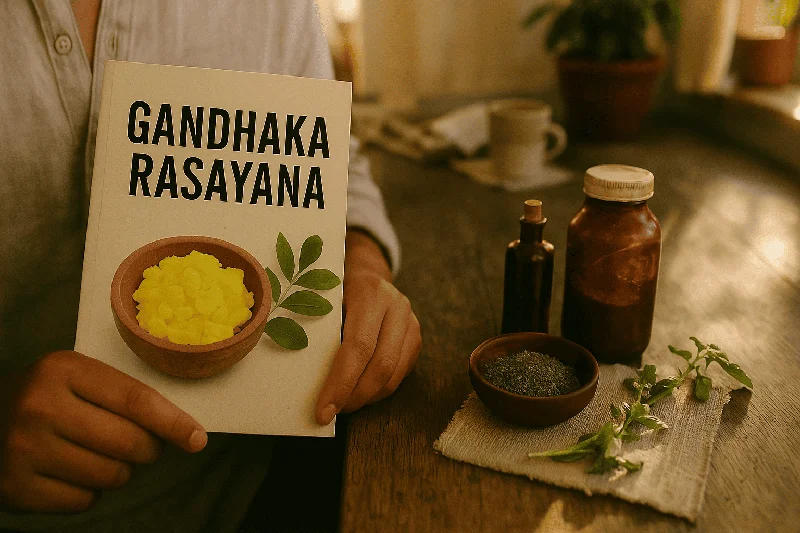
Gandhaka Rasayana: Scientific Insights & Health Applications
Disclaimer: The information provided in this article is for educational purposes only. It is not intended to replace professional medical advice, diagnosis, or treatment. Always consult a qualified healthcare provider before starting any new treatment or supplement.
Introduction
According to certain Ayurvedic traditions, sulfur holds a place of high regard for its purported detoxifying and revitalizing effects. One formulation that has stood out in classical Ayurvedic texts is Gandhaka Rasayana, commonly known as a sulfur-based rejuvenator. Modern interest in Gandhaka Rasayana has grown as people seek holistic, complementary therapies that integrate ancient wisdom with contemporary research. For anyone looking to expand their therapeutic repertoire or simply learn more about natural healthcare, Gandhaka Rasayana offers a fascinating case study.
This article delves into the scientific aspects of Gandhaka Rasayana, its proposed mechanisms, and the current state of research. We will provide an evidence-based perspective by referencing peer-reviewed studies and recognized medical institutions where available. In addition, you will find practical tips and safety guidelines that help you decide if this traditional remedy might be suitable for your unique needs.
What Is Gandhaka Rasayana?
The Ayurvedic Context
Gandhaka Rasayana is a classic preparation mentioned in Rasashastra, a specialized branch of Ayurveda dealing with the therapeutic usage of metals and minerals. The word “Gandhaka” translates to sulfur, while “Rasayana” generally refers to rejuvenating therapies aimed at promoting vitality, longevity, and overall well-being.
In traditional Ayurvedic lore, sulfur is considered a potent substance for:
-
Balancing Doshas: Particularly beneficial in certain imbalances of Vata, Pitta, or Kapha.
-
Detoxification: Believed to support the body’s natural cleansing processes.
-
Rejuvenation: Aims to renew the body at the cellular level by enhancing tissue quality.
Key Components
Although sulfur is the major mineral in Gandhaka Rasayana, various herbs and adjuncts are added to refine its efficacy and reduce potential toxicity. Typical ingredients can include:
-
Purified sulfur (Gandhaka)
-
Herbal juices or decoctions (e.g., from plants like Triphala or Guduchi)
-
Honey, ghee, and other carriers to improve absorption
These components are meticulously processed and combined to create a homogenous, semi-solid formulation.
Scientific Foundations and Mechanisms
Biochemical Role of Sulfur
Sulfur is a critical element in various biological functions. It is present in some of the essential amino acids, such as methionine and cysteine, which are foundational to proteins in the human body. The significance of sulfur extends to:
-
Detoxification Pathways: Sulfur-containing compounds support liver function in processes like glutathione production.
-
Antioxidant Defense: Sulfur is integral to the antioxidant glutathione, which helps counteract oxidative stress.
-
Collagen Synthesis: Sulfur is vital for maintaining skin elasticity, joint health, and connective tissue integrity.
Ayurvedic Synergy
In Ayurveda, sulfur is thought to acquire Rasayana properties when purified and processed with specific herbal extracts. This synergy is believed to enhance:
-
Bioavailability: Herb-sulfur combinations may increase nutrient absorption and utilization at the cellular level.
-
Immunomodulation: Some Ayurvedic practitioners suggest that Gandhaka Rasayana supports a balanced immune response by regulating inflammatory pathways.
-
Adaptogenic Effects: The herbal matrix may help the body adapt to various stressors, although more clinical data is needed to confirm this.
Potential Health Benefits of Gandhaka Rasayana
-
Skin Health
-
Traditional Claim: Used for conditions like eczema, acne, and psoriasis, owing to sulfur’s antimicrobial and keratolytic effects.
-
Modern Perspective: Sulfur-based treatments are well-documented in dermatology. While Gandhaka Rasayana has not been extensively studied in large-scale clinical trials, smaller observational studies suggest potential benefits in managing mild to moderate skin issues.
-
-
Digestive Support
-
Traditional Claim: Believed to strengthen the digestive fire (Agni) and help in nutrient assimilation.
-
Scientific Possibility: Some sulfur-containing compounds in the body aid digestion and metabolism. More in-depth clinical research is required to confirm how Gandhaka Rasayana specifically affects gastrointestinal function.
-
-
Immunity and Overall Vitality
-
Traditional Claim: Considered a Rasayana or rejuvenator, thus supporting overall wellness and disease resistance.
-
Scientific Insight: Immunomodulatory effects of sulfur compounds have been studied in various contexts. While direct evidence on Gandhaka Rasayana is limited, preliminary lab-based studies indicate antioxidant and antibacterial properties.
-
-
Joint and Connective Tissue
-
Traditional Claim: Used to maintain flexibility and lubrication in joints.
-
Modern Perspective: Sulfur is a key element in glycosaminoglycans and proteoglycans, which are essential for joint health. Integrative practitioners occasionally recommend sulfur-based supplements (like MSM) for joint complaints, suggesting that Gandhaka Rasayana might offer similar support.
-
स्वयं दवा न लें और प्रतीक्षा न करें। अभी डॉक्टर से चैट शुरू करें
Current Research Findings
Despite Gandhaka Rasayana’s long history, high-quality clinical data remains relatively scarce. However, several peer-reviewed studies and reviews in Ayurvedic and integrative medicine journals provide early insights:
-
A 2020 pilot study published in an Ayurvedic research journal indicated that Gandhaka Rasayana could potentially alleviate mild dermatitis symptoms. Participants showed improvements in skin hydration and a reduction in redness after eight weeks. Larger, controlled trials are necessary for validation.
-
A systematic review (2018) in an alternative medicine journal mentioned sulfur-based Ayurvedic formulations for their antimicrobial properties, emphasizing that more robust, randomized clinical trials are required.
-
Laboratory studies exploring the biochemical pathways of purified sulfur have pointed towards anti-inflammatory and immune-regulating effects. These findings warrant clinical investigations specifically targeting Gandhaka Rasayana.
While these preliminary results are promising, the consensus among experts is that further placebo-controlled studieswith larger sample sizes are needed to firmly establish the efficacy and safety profile of Gandhaka Rasayana.
Usage, Dosage, and Safety Measures
Traditional Guidelines
In classical Ayurveda, the dosage and administration of Gandhaka Rasayana can vary depending on individual factors, such as Prakruti (body constitution), age, and the condition being treated. Typically, the formulation is administered in small quantities—often between 250 mg to 500 mg once or twice daily—under professional supervision.
Modern Considerations
-
Quality Control
-
Look for GMP-certified or reputable Ayurvedic pharmaceutical companies that follow standardized purification processes.
-
Obtain a certificate of analysis if possible, ensuring the product is free from heavy metals and contaminants.
-
-
Professional Supervision
-
Self-prescribing Gandhaka Rasayana is discouraged due to sulfur’s potency.
-
Consult an Ayurvedic practitioner or an integrative healthcare provider who can monitor your response and adjust doses as needed.
-
-
Potential Side Effects
-
Some individuals may experience gastrointestinal distress or mild allergic reactions.
-
Rare but possible interactions with medications—especially drugs that affect liver enzymes—warrant caution.
-
-
Contraindications
-
Pregnant or nursing women should consult their healthcare provider before use.
-
People with known sulfur allergies or severe liver or kidney conditions should exercise extreme caution or avoid use altogether.
-
Debates and Controversies
Lack of Large-Scale Clinical Trials
Critics point out the paucity of robust clinical data for Gandhaka Rasayana, noting that existing studies often have small sample sizes or lack rigorous controls. This leaves many questions unanswered about its long-term safety and specific mechanisms of action.
Regulatory Landscape
While the World Health Organization (WHO) has guidelines for traditional and complementary medicines, there is no uniform international regulation for Ayurvedic products. Quality can vary, causing skepticism among conventional medical professionals. Efforts by Indian regulatory authorities and global bodies are ongoing to improve standardizationand ensure consumer safety.
Potential Overhype
Some marketing materials tout Gandhaka Rasayana as a “miracle cure” for diverse conditions. This overselling can undermine scientific credibility and lead consumers to try it without appropriate clinical oversight. Responsible practitioners advocate a balanced approach, recognizing the formulation’s promise while calling for cautious optimismand more scientific inquiry.
Frequently Asked Questions (FAQ)
1. Is Gandhaka Rasayana safe for long-term use?
Short-term use under professional guidance is generally considered safe. However, well-designed long-term studies are limited. Always consult a qualified healthcare provider for personalized advice.
2. Can Gandhaka Rasayana treat severe skin conditions like psoriasis?
Preliminary research and anecdotal evidence suggest potential benefits for skin health, but it should not replace conventional treatments for severe conditions. It’s best used as a complementary approach under medical supervision.
3. Are there any dietary restrictions while taking Gandhaka Rasayana?
Ayurvedic practitioners often recommend a balanced, easily digestible diet to optimize the effects of Rasayana therapies. Specific guidelines may vary based on individual constitution.
4. How does it differ from other sulfur supplements like MSM?
While both are sulfur-based, Gandhaka Rasayana is processed with various herbs and undergoes specific purification techniques according to Ayurvedic texts. MSM is typically a chemically isolated form of sulfur.
5. Where can I find peer-reviewed research on Gandhaka Rasayana?
Search reputable databases such as PubMed, or consult journals specializing in Ayurvedic and integrative medicine. Some institutions, like the All India Institute of Ayurveda (AIIA), also publish relevant research.
Practical Tips for Real-World Use
-
Consult First: Talk to an experienced Ayurvedic practitioner if you are interested in trying Gandhaka Rasayana. They can tailor a dosage plan and monitor your progress.
-
Monitor for Reactions: Keep a journal of any changes you notice, whether skin-related or general well-being, and report them to your healthcare provider.
-
Lifestyle Matters: Combine its use with a holistic lifestyle—balanced diet, regular exercise, and adequate sleep—to maximize potential benefits.
-
Stay Informed: Periodically review emerging research to stay updated on safety guidelines and recommended best practices.
Conclusion
Gandhaka Rasayana represents a rich confluence of traditional Ayurvedic wisdom and evolving scientific inquiry. While sulfur’s importance in human biology is well-established, the specific health benefits and safety profiles of Gandhaka Rasayana require further high-quality clinical trials for definitive conclusions. Preliminary research points to potential advantages in skin health, immunity, and overall vitality, but a careful, evidence-based approach is imperative.
For healthcare professionals and patients alike, understanding both the promise and the limitations of Gandhaka Rasayana is key. If you are considering this formulation, consult an expert, adhere to high-quality sourcing, and remain mindful of any regulatory guidelines in your region. By doing so, you stand to gain from a centuries-old tradition while maintaining the safeguards of modern medicine.
Call to Action
Found this article helpful? Share it with others who might benefit from this information! Feel free to leave a commentbelow with your thoughts, experiences, or questions about Gandhaka Rasayana. For more articles on holistic and integrative medicine, subscribe to our newsletter and stay updated.
Disclaimer: This article is intended for informational purposes only and is not a substitute for professional medical advice. Please consult a licensed healthcare provider for personalized recommendations.
उपयोगकर्ताओं के प्रश्न
How does Gandhaka Rasayana influence inflammation and immune response?
Client_153653
26 दिनों पहले
Gandhaka Rasayana is believed to impact inflammation and immune response primarily due to its sulfur content, which can contribute to joint health by supporting glycosaminoglycans and proteoglycans necessary for flexibility and lubrication. However, direct scientific evidence on its effectiveness is limited. Preliminary lab studies have noted antioxidant and antibacterial properties, which might indirectly support immune function. It's crucial to note that evidence for these effects in humans is sparse. If you're considering ayurvedic supplements like Gandhaka Rasayana for inflammation or immune support, consult with a healthcare provider, especially if you're managing serious or chronic conditions.
Is it safe to take Gandhaka Rasayana long-term for health benefits?
Client_aee58d
35 दिनों पहले
Gandhaka Rasayana, a sulfur-based Ayurvedic formulation, may offer short-term health benefits such as improved skin hydration and reduced redness. However, the safety of long-term use is not well-established due to limited scientific studies. Short-term trials have shown benefits in about eight weeks, but these do not confirm safety or efficacy for longer durations. If you are considering Gandhaka Rasayana for long-term use, consult a healthcare provider, especially if you have underlying health conditions or are taking other medications, to avoid potential side effects or interactions.
What manufacturing standards should I check for Gandhaka Rasayana quality?
Client_5dd8db
45 दिनों पहले
When evaluating Gandhaka Rasayana for quality, check for Good Manufacturing Practices (GMP) certification and ISO standards compliance. These indicate the product is made under strict quality controls. Look for third-party testing for contaminants and sulfur content to ensure purity and safety. Additionally, confirm the product is sourced from a reputable manufacturer with transparent labeling. If unsure about the product's suitability, consult a healthcare professional, especially if you have sensitivities or underlying health conditions.
How does Gandhaka Rasayana interact with traditional skincare routines?
Client_40daf8
55 दिनों पहले
Gandhaka Rasayana, a traditional sulfur-based Ayurvedic preparation, can complement skincare routines by potentially improving skin hydration and reducing redness, as seen in some anecdotal evidence and preliminary studies over an eight-week period. It may offer benefits similar to other sulfur-based supplements, but it should not replace conventional treatments, especially for severe skin conditions like psoriasis. Results can vary, and it is crucial to consult a healthcare provider before incorporating it into your routine to ensure it doesn't interact negatively with existing skincare products or underlying health conditions.
What evidence supports the use of Gandhaka Rasayana for joint pain relief?
Client_2a2fb1
64 दिनों पहले
Current evidence supporting the use of Gandhaka Rasayana for joint pain relief is limited and primarily anecdotal. Clinical studies are scarce, so it’s crucial to rely on scientifically robust evidence before considering it as a treatment option. While some users report benefits, these claims lack broad scientific validation. For joint pain, clinically supported treatments include NSAIDs, physical therapy, and lifestyle changes. Consult a healthcare provider for persistent joint pain or before beginning any new supplement, especially if you are considering alternative therapies like Gandhaka Rasayana.
Can Gandhaka Rasayana be beneficial for overall skin rejuvenation?
Client_cc58f3
74 दिनों पहले
Yes, Gandhaka Rasayana can be helpful for skin rejuvenation! It's known for detoxifying properties because of sulfur, which is great for the skin. But, you wanna make sure to use it with the guidance of an Ayurvedic practitioner since they can tailor it to your dosha. Also, check how your body respond to it — everyone’s different!
How does Gandhaka Rasayana affect the body's detoxification processes?
Client_a8e26e
83 दिनों पहले
Gandhaka Rasayana is known in Ayurveda for its detoxifying properties. It supports the liver and purifies the blood, which helps eliminate toxins from the body. By balancing the doshas, especially Pitta, it can enhance overall metabolism and improve digestive fire (agni). But it’s always a good idea to consult a professional for personalized advice.
What is the connection between sulfur and essential amino acids like methionine and cysteine?
Client_4622fb
92 दिनों पहले
Sulfur is a key component of amino acids like methionine and cysteine. These aminos are essential for protein building and detoxification processes in your body. In Ayurveda, these attributes match the idea of keeping your system clean and balanced. It's all about ensuring your doshas stay in harmony!
Can I use Gandhaka Rasayana to support respiratory health?
Client_e3c06b
101 दिनों पहले
Yes, Gandhaka Rasayana can be helpful for respiratory health due to its detoxifying and immune-boosting properties. However, it's vital to consider your body's specific dosha and constitution before starting it. Since it involves sulfur, balance is key, and it's best to consult with an Ayurvedic practitioner who knows your overall health.
What is the traditional use of Gandhaka Rasayana in promoting digestive health?
Client_2f2978
110 दिनों पहले
Gandhaka Rasayana, in traditional Ayurvedic practice, is claimed to boost the digestive fire, or Agni, which is key in breaking down food and absorbing nutrients properly. It's believed to support smoother digestion overall. It's the mix of this herb with sulfur that's thought to help, but scientific proof is still limited. If you’re thinking of trying it, consulting with an Ayurvedic practitioner could be really helpful!
संबंधित आलेख

Skin and Hair Disorders
Indralupta Mashi – Effective Ayurvedic Treatment for Hair Loss
Learn about Indralupta Mashi, a powerful Ayurvedic formulation for promoting hair growth, preventing hair loss, and rejuvenating the scalp naturally.
6,114

Skin and Hair Disorders
Panchvalkal Kwath: A Comprehensive Exploration of Ayurveda’s Ancient Remedy
Discover Panchvalkal Kwath—its benefits, scientific insights, and usage. Learn how this Ayurvedic formulation supports holistic wellness and skin care.
2,990

Skin and Hair Disorders
लोमसथाना थैलम: अनचाहे बालों के लिए आयुर्वेदिक दवा
जानें कि आयुर्वेद कैसे अनचाहे बालों का समाधान करता है लोंमसथाना थैलम और अन्य प्राकृतिक उपायों के जरिए। जानें इसके फायदे, उपयोग के टिप्स और पारंपरिक आयुर्वेदिक ज्ञान पर आधारित जानकारी।
10,130

Skin and Hair Disorders
Which Dry Fruit Is Good for Skin and Hair: Ayurvedic Guide
Exploration of Unlock Radiant Skin and Lustrous Hair with Dry Fruits: A Comprehensive Guide
5,879

Skin and Hair Disorders
मेलास्मा के लिए बेस्ट आयुर्वेदिक क्रीम्स: त्वचा की चमक के लिए टॉप नैचुरल सॉल्यूशन्स
जानें मेलास्मा के लिए सबसे अच्छे आयुर्वेदिक क्रीम्स के बारे में, उनके फायदे, वे कैसे काम करते हैं, सही इस्तेमाल और साफ, चमकदार त्वचा के लिए विशेषज्ञों की सिफारिशें।
6,081

Skin and Hair Disorders
क्या एलोवेरा टैन हटाएगा? आयुर्वेदिक गाइड और फायदे
क्या एलोवेरा टैन हटाएगा? जानें कैसे एलोवेरा टैन हटाने, चेहरे की देखभाल और त्वचा को निखारने में मदद करता है। प्राकृतिक तरीके से टैन हटाने के लिए आयुर्वेदिक विधियों के बारे में जानें।
8,077

Skin and Hair Disorders
Cyst Treatment in Ayurveda: A Comprehensive Overview
Explore cyst treatment in Ayurveda, backed by scientific insights. Learn herbs, lifestyle tips, and evidence-based approaches for holistic cyst management.
6,356

Skin and Hair Disorders
प्राकृतिक समाधान खोजें: चेहरे पर मेलास्मा के लिए सबसे अच्छा आयुर्वेदिक इलाज
चेहरे पर मेलास्मा के लिए शीर्ष आयुर्वेदिक उपचारों की खोज करें, जिसमें जड़ी-बूटियाँ, उपाय और जीवनशैली के सुझाव शामिल हैं, ताकि आप स्वाभाविक रूप से साफ और चमकदार त्वचा पा सकें।
6,443
Skin and Hair Disorders
मंजिष्ठादि लेपम: त्वचा की सेहत के लिए पारंपरिक आयुर्वेदिक पेस्ट
मंजिष्ठादि लेपम के बारे में जानें, जो एक पारंपरिक आयुर्वेदिक पेस्ट है। इसके फायदे, उपयोग, खुराक और त्वचा की सेहत और उपचार के लिए वैज्ञानिक जानकारी प्राप्त करें।
3,474
विषय से संबंधित परामर्श
अतिरिक्त दस्तावेज़
© 2024 Ask Ayurveda. सर्वाधिकार सुरक्षित।