आयुर्वेदिक डॉक्टर से प्रश्न पूछें और निःशुल्क या भुगतान मोड में अपनी चिंता की समस्या पर ऑनलाइन परामर्श प्राप्त करें। 2,000 से अधिक अनुभवी डॉक्टर हमारी साइट पर काम करते हैं और आपके प्रश्नों का इंतजार करते हैं और उपयोगकर्ताओं को उनकी स्वास्थ्य समस्याओं को हल करने में प्रतिदिन मदद करते हैं।


Body DetoxEar, Nose, and Throat DisordersGeriatrics & RejuvenationImmunodeficiencyInfertility TreatmentNutritionOrthopedic DisordersPediatricsRespiratory DisordersSexually Transmitted Diseases (STDs)Surgery RecoveryUrological DisordersVascular DisordersDental DisordersEndocrinological DisordersGastrointestinal DisordersYoga TherapyGeneral MedicineAllergic DisordersCardio DisordersGynecology and ObstetricsCosmetologySkin and Hair DisordersEye DisordersInfectious DiseasesMental DisordersNeurological DisordersOncologyPanchakarmaSexual Health & DisordersSports Medicine
पर प्रकाशित 03/11/25
(को अपडेट 08/16/26)
3,026
Indralupta Treatment in Ayurveda: Revitalizing Health with Ancient Wisdom
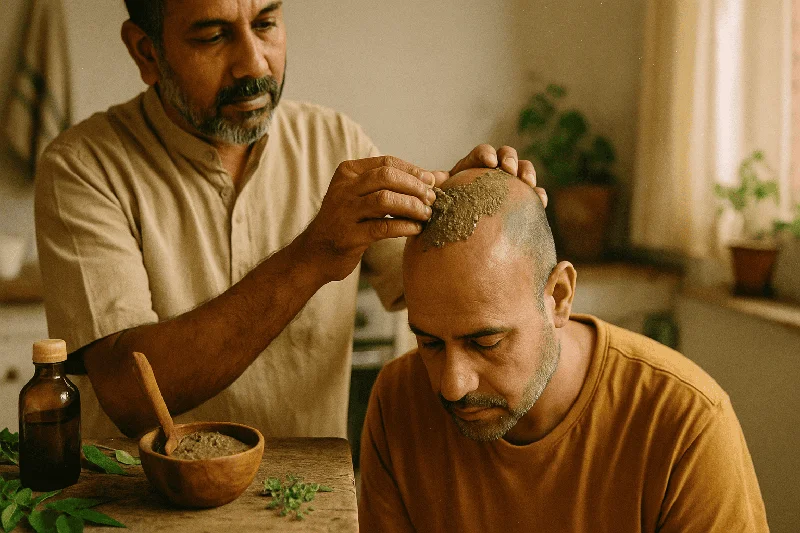
Indralupta is an Ayurvedic term for a specific type of patchy hair loss that closely correlates with what modern dermatology calls Alopecia Areata. Described extensively in classical texts like Charaka Samhita, Sushruta Samhita, and Ashtanga Hridaya, Indralupta is classified as a Kshudra Roga (minor disease) involving the vitiation of Vata, Pitta, and Kapha doshas along with Rakta (blood tissue). The aggravated doshas reach the hair follicles (Romakupa), cause the roots to weaken, and hair falls out in well-defined patches — sometimes suddenly, sometimes progressively. In this comprehensive guide, we cover everything from the classical Ayurvedic understanding to modern clinical correlation, detailed Panchakarma protocols, home remedies, dietary guidelines, and prognosis — filling gaps that no single resource online currently addresses in full.
What Is Indralupta? Meaning, Synonyms & Modern Correlation
Etymology and Literal Meaning of Indralupta
- The word Indralupta is derived from two Sanskrit roots: Indra (chief, lord) and Lupta (to disappear or be removed).
- Literally, it signifies a condition where hair — considered the "crown" (Indra) of the body — disappears. The term appears across multiple classical Ayurvedic texts, and it carries slightly different shades of meaning depending on the Acharya (classical author) interpreting it.
Other synonyms used in classical literature include:
- Ruja — emphasizing the painful or distressing nature of hair loss
- Khalitya — sometimes used interchangeably, though technically Khalitya refers specifically to hair fall from the scalp and may progress to total baldness, while Indralupta refers to patchy loss
- Palitya — premature greying of hair; related but distinct
Understanding these distinctions matters clinically. Many students and even some practitioners confuse Indralupta with Khalitya, but in Sushruta Samhita (Nidana Sthana 13), the two conditions are described with overlapping but separate pathogenesis.
Definition in Classical Ayurvedic Texts
| Classical Text | Classification | Key Description | Unique Contribution |
|---|---|---|---|
| Charaka Samhita | Kshudra Roga | Vata-Pitta-Kapha involvement with Rakta dushti causing hair loss in patches | Emphasis on Nidana Parivarjana (avoiding causative factors) |
| Sushruta Samhita | Kshudra Roga (Nidana Sthana 13) | Hair falls out and does not regrow due to dosha blocking Romakupa (hair follicles) | Detailed surgical/para-surgical approach (Pracchana Karma) |
| Ashtanga Hridaya | Shiroroga / Kshudra Roga | Tridoshaja condition with predominant Pitta-Rakta involvement | Integration of both Shodhana and Shamana approaches |
| Madhava Nidana | Kshudra Roga | Comprehensive Samprapti (pathogenesis) with clear Lakshana differentiation | Best source for differential diagnosis among hair disorders |
| Sharangadhara Samhita | — | Formulations (Yoga) for external and internal treatment | Practical treatment recipes with exact proportions |
- This comparative view is something you won't easily find compiled elsewhere.
- Each text brings a unique lens to the same condition — Charaka focuses on causes, Sushruta on intervention, Vagbhata on integrated management, and Madhava Nidana on diagnosis.
Modern Correlation — Alopecia Areata
In contemporary medicine, Indralupta closely corresponds to Alopecia Areata — an autoimmune condition where the body's immune system mistakenly attacks hair follicles, leading to non-scarring, patchy hair loss. A 2020 systematic review published in the Journal of the American Academy of Dermatology estimated global prevalence at approximately 2% lifetime risk, affecting men and women equally across all age groups.
Key modern understanding includes:
- Autoimmune mechanism: CD8+ T-lymphocytes attack anagen-phase hair follicles
- Genetic predisposition: ~10-20% of patients have a family history
- Triggers: emotional stress, infections, hormonal changes, nutritional deficiencies
The Ayurvedic concept of Vata-Pitta-Kapha vitiating Rakta and blocking Romakupa aligns surprisingly well with the modern understanding of immune-mediated follicular damage — a point increasingly acknowledged in integrative dermatology literature.
Nidana (Causes and Risk Factors) of Indralupta
Aharaja Nidana — Dietary Causes
Classical texts identify several dietary factors that aggravate the doshas responsible for Indralupta:
- Excessive intake of Lavana Rasa (salty food) — vitiates Pitta and Rakta
- Katu Rasa excess (pungent/spicy food) — aggravates Pitta, dries Rakta
- Vidahi Ahara (food causing burning sensation) — directly damages Rakta Dhatu
- Viruddha Ahara (incompatible food combinations) — e.g., fish with milk, honey with ghee in equal quantities
- Excessive Madya Sevana (alcohol consumption) — disturbs all three doshas and impairs liver function (Yakrit), which governs Rakta Dhatu metabolism
Viharaja Nidana — Lifestyle and Behavioural Causes
- Ratri Jagarana (staying up late at night) — aggravates Vata and Pitta
- Ati Atapa Sevana (excessive sun exposure) — vitiates Pitta in scalp region
- Divaswapna (daytime sleeping) — increases Kapha, blocks Srotas (channels)
- Improper head hygiene practices — using harsh chemicals, excessive heat styling (relevant modern-day application)
- Dhooma Sevana (exposure to smoke/pollution) — vitiates Vata and dries Rasa Dhatu
Manasika Nidana — Psychological and Stress Factors
This is an area where Ayurvedic and modern perspectives converge powerfully. Classical texts mention Chinta (worry), Shoka (grief), and Krodha (anger) as significant causative factors.
- A 2015 study in the Indian Journal of Dermatology found that 74% of Alopecia Areata patients reported a significant stressful event within 6 months prior to onset.
- Among young adults aged 18-30, the incidence has been rising — attributed largely to stress, poor nutrition, and lifestyle factors.
- The psychosocial impact is also significant: patients report anxiety, depression, and social withdrawal, creating a vicious cycle where stress from hair loss further aggravates the condition.
Modern Autoimmune Triggers
Beyond the Ayurvedic framework, modern triggers include:
- Thyroid disorders (both hypo- and hyperthyroidism)
- Vitamin D deficiency (prevalent in ~70-80% of Indian population per ICMR data)
- Iron deficiency anemia
- Atopic conditions (eczema, asthma — approximately 40% comorbidity rate)
- COVID-19 — a noticeable spike in Alopecia Areata cases was reported post-pandemic; a 2022 study in Dermatologic Therapy documented a 2.5x increase in new cases
Samprapti (Pathogenesis) — How Indralupta Develops
Role of Tridosha and Rakta
The disease process begins when etiological factors (Nidana) vitiate the three doshas along with Rakta.
Here's the dosha-specific role:
- Vata: Being the chief dosha, vitiated Vata causes dryness of scalp (Rukshata), roughness of hair, and eventual displacement of hair from follicles
- Pitta: Specifically Bhrajaka Pitta (governing skin) — causes inflammation, burning sensation, and destruction of hair root (Kesha Bhoomi)
- Kapha: Vitiated Kapha blocks the channels (Romakupa/Svedavaha Srotas), preventing nourishment from reaching the hair root
- Rakta: Serves as the vehicle (Ashrayashrayi relationship with Pitta) carrying vitiated doshas to the Romakupa
Samprapti Ghatakas (Components of Pathogenesis)
| Component | Involvement in Indralupta |
|---|---|
| Dosha | Vata-Pitta-Kapha (Tridoshaja), Pitta-Rakta predominant |
| Dushya | Rakta, Rasa, Asthi (bone — hair is Mala of Asthi Dhatu) |
| Agni | Mandagni (weakened digestive fire) → Ama formation |
| Srotas | Rasavaha, Raktavaha, Asthivaha, Svedavaha Srotas |
| Srotodushthi | Sanga (obstruction) in Romakupa |
| Udbhava Sthana | Amashaya (stomach) and Yakrit (liver) |
| Vyakta Sthana | Shiras (scalp), Romakupa (hair follicles) |
| Rogamarga | Bahya (external disease pathway) |
Samprapti Chakra (Disease Progression Flowchart)
Nidana Sevana (Dietary/lifestyle/stress triggers)
→ Dosha Prakopa (Vata-Pitta-Kapha aggravation)
→ Dosha-Rakta Sammurchhana (Mixing of vitiated doshas with blood)
→ Sthanasamshraya in Romakupa (Localization in hair follicles)
→ Srotas Avarodha (Channel blockage cutting off nutrition)
→ Kesha Patan (Hair fall in patches)
→ Romakupa Pidana (Follicular damage — prevents regrowth)
→ Indralupta Vyakti (Manifest disease — smooth, bald patches)
Modern Pathophysiology Comparison
The Ayurvedic Samprapti shows remarkable parallels with the modern immunopathological model:
- Dosha Prakopa ≈ Immune dysregulation (T-cell activation)
- Srotas Avarodha ≈ Peribulbar lymphocytic infiltration ("swarm of bees" pattern on histopathology)
- Kesha Patan ≈ Premature catagen/telogen transition of hair follicle
- Romakupa Pidana ≈ Loss of follicular immune privilege
This cross-mapping isn't just academic — it helps practitioners from both systems understand each other's logic and design better integrative treatment plans.
Lakshana (Signs and Symptoms) of Indralupta
Dosha-Specific Lakshana (Classical Presentation)
| Type | Signs & Symptoms | Scalp Appearance |
|---|---|---|
| Vataja | Dry, rough scalp; hair falls with pain; thin, scanty hair around patches | Dusky/dark, rough texture |
| Pittaja | Burning sensation; yellowish/reddish discoloration; sweating on scalp; hair falls with follicle attached | Reddish, warm to touch |
| Kaphaja | Itching; oily/sticky scalp; white discoloration; mild swelling around patch | Pale, moist, heavy feeling |
| Tridoshaja | Combined symptoms; most severe and difficult to treat | Variable, mixed features |
Clinical Presentation in Modern Terms
Alopecia Areata typically presents as:
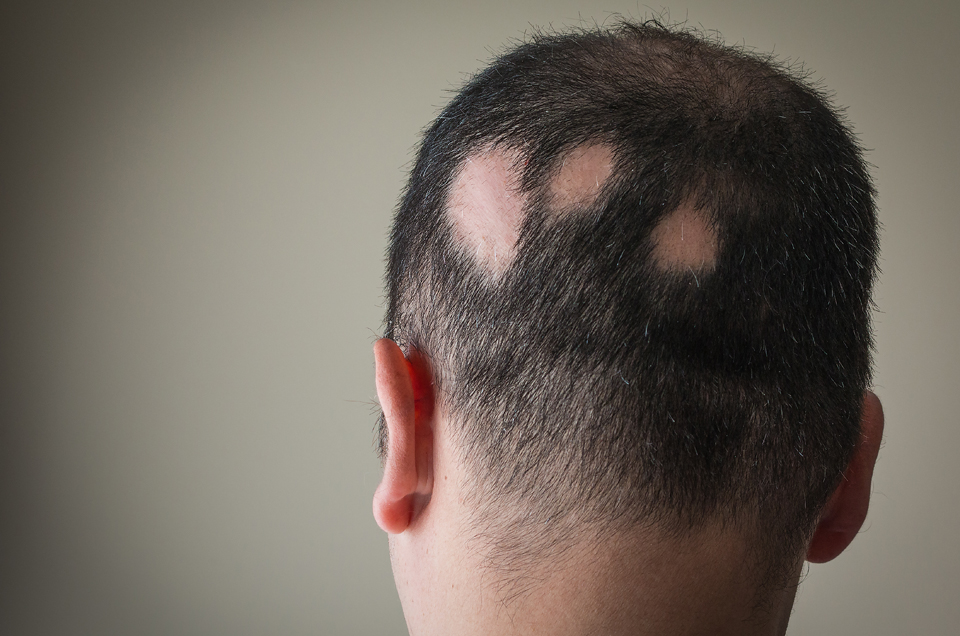
- Well-circumscribed, round or oval, smooth bald patches — most commonly on the scalp
- Exclamation mark hairs — short broken hairs (3-4 mm) that taper at the base, seen at margins of active patches
- Positive hair pull test — gentle traction removes >10% of hairs at patch margins
- Nail changes — pitting, ridging, brittleness (seen in ~10-20% of patients)
- No scarring — follicular openings preserved (unlike scarring alopecias)
Differential Diagnosis — Indralupta vs Other Conditions
- This is a critical gap in existing resources.
- Proper differential diagnosis prevents mismanagement:
| Condition | Key Differentiating Feature | Ayurvedic Term |
|---|---|---|
| Indralupta | Patchy, non-scarring hair loss; smooth patches; potential for regrowth | Indralupta / Ruja |
| Khalitya | Progressive, diffuse hair thinning leading to complete baldness | Khalitya |
| Palitya | Premature greying without significant hair fall | Palitya |
| Darunaka | Dandruff/scaling with secondary hair fall | Darunaka (≈ Seborrheic dermatitis) |
| Alopecia Totalis | Complete scalp hair loss | Severe Khalitya |
| Tinea Capitis | Fungal infection; broken hairs, black dots, scaling, sometimes pustules | — (closest: Dadru Kushtha) |
| Trichotillomania | Self-induced; irregular patches; broken hairs of varying length | Manasika Vikara |
Chikitsa (Treatment) of Indralupta — The Complete Ayurvedic Protocol
Shodhana Chikitsa — Panchakarma-Based Purification
Shodhana (bio-purification) is the cornerstone of Indralupta management in classical texts.
Here is a step-by-step Panchakarma protocol:
Purvakarma (Preparatory Phase) — Days 1-7
- 1.Deepana-Pachana: Trikatu Churna (1-2 g) or Chitrakadi Vati (2 tablets twice daily) with warm water for 3-5 days to kindle Agni and digest Ama
- 2.Snehapana (Internal Oleation): Mahatiktaka Ghrita or Panchatikta Ghrita — starting with 30 ml on day 1, increasing daily by 15-20 ml until Samyak Snigdha Lakshana (proper oleation signs) appear — typically 5-7 days. This ghrita specifically pacifies Pitta-Rakta and nourishes Asthi Dhatu.
- 3.Abhyanga + Swedana: Full body oil massage with Dhanwantaram Taila followed by steam therapy on the last 2-3 days of Snehapana
Pradhana Karma (Main Procedure) — Day 8
Virechana (Therapeutic Purgation) is the treatment of choice for Indralupta because Pitta-Rakta is the predominant pathological factor:
- Drug: Trivrit Leha (25-50 g) or Avipattikara Churna (5-10 g) with warm water, administered early morning on empty stomach
- Expected Vegas (bouts): 15-20 for Madhyama Shuddhi (moderate purification)
- Why Virechana? It directly eliminates vitiated Pitta from its main site (Amashaya/small intestine) and purifies Rakta Dhatu — the key Dushya in Indralupta
In some cases, Nasya (nasal administration) with Anu Taila (6-8 drops in each nostril) is also recommended — the nose being the gateway to the head (Shiro Dwara).
Paschatkarma (Post-Procedure Phase) — Days 9-15
- Samsarjana Krama: Graded dietary rehabilitation starting with Peya (rice gruel), progressing to Vilepi, Akrita/Krita Yusha, and finally normal diet over 3-7 days depending on Shuddhi achieved
- Rest and avoidance of wind exposure, excessive sun, heavy food, travel
Shamana Chikitsa — Internal Medicines
After Shodhana, or in cases where Panchakarma is contraindicated, internal medications are prescribed:
| Formulation | Dose | Anupana (Vehicle) | Action |
|---|---|---|---|
| Arogyavardhini Vati | 2 tablets (250 mg each) twice daily | Warm water | Deepana, Pitta-Kapha Shamana, Yakrit (liver) support, Rakta Shodhaka |
| Gandhaka Rasayana | 250 mg twice daily | Milk | Rakta Prasadana, Kushtha-hara, immune modulation |
| Bhringarajasava | 15-20 ml with equal water after meals | — | Keshya (hair tonic), Rasayana |
| Mahamanjishthadi Kashaya | 15 ml with 45 ml warm water twice daily | — | Rakta Shodhaka, anti-inflammatory |
| Saptamrita Loha | 250 mg twice daily | Ghrita or honey | Asthi-Kesha Poshaka, rich in iron |
| Praval Pishti | 250-500 mg twice daily | Honey/milk | Calcium supplement, Pitta Shamana |
Note: Exact dosages should be individualized by a qualified Ayurvedic practitioner based on Prakriti (constitution), Bala (strength), and Koshtha (bowel habit) of the patient.
Bahirparimarjana Chikitsa — External/Topical Treatments
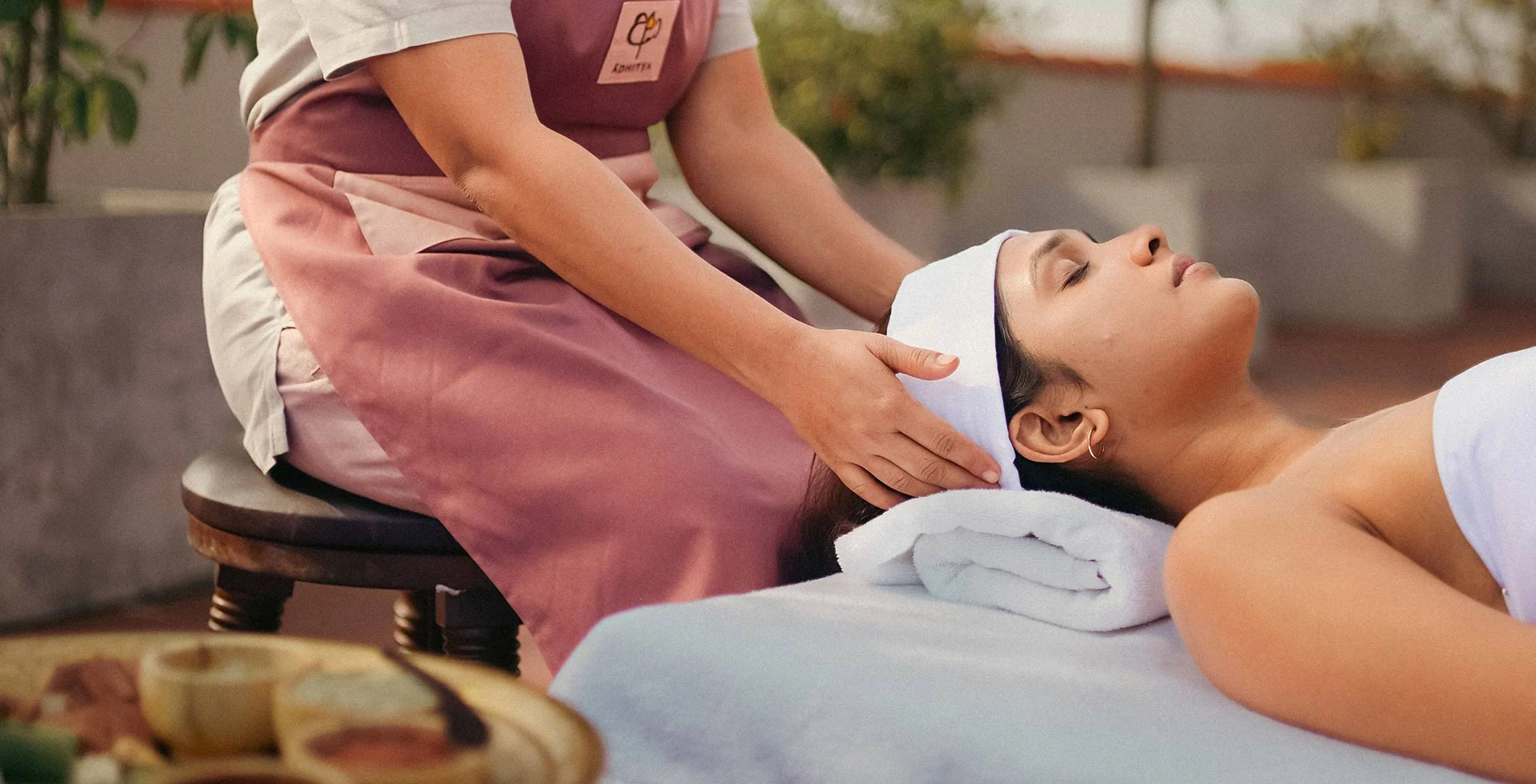
This is where Indralupta treatment gets distinctive.
Classical texts describe a unique combination of procedures:
Pracchana Karma (Therapeutic Scarification)
Described specifically by Sushruta — superficial incisions are made over the bald patch using a sterile surgical blade or needle.
The purpose:
- Creates controlled micro-injury stimulating local blood flow
- Removes vitiated Rakta (localized bloodletting)
- Modern parallel: Microneedling — a 2019 RCT in Dermatologic Surgery showed microneedling combined with topical therapy produced 40% more hair regrowth than topical therapy alone
After Pracchana, a medicated paste (Lepa) is applied.
Classical references recommend:
- Gunja (Abrus precatorius) seed paste with sesame oil
- Karanja (Pongamia pinnata) seed paste mixed with buttermilk
- Langalika (Gloriosa superba) rhizome paste — applied carefully, as it is potent
Topical Oils and Lepas (Pastes)
| Preparation | Ingredients | Application Method |
|---|---|---|
| Bhringa Malakadi Taila | Bhringaraja, Amalaki, Yashtimadhu in Tila Taila base | Gentle scalp massage on affected areas, leave overnight, wash morning |
| Neelibhringadi Kera Taila | Neeli (Indigofera), Bhringaraja, Coconut oil base | Same as above — popular in Kerala tradition |
| Mahabhringaraj Taila | Multiple herbs in sesame oil | Scalp massage 30 min before washing |
| Jatyadi Ghrita | Jati, Nimba, Patola, Karanja in ghee base | Apply after Pracchana for wound healing + hair growth |
स्वयं दवा न लें और प्रतीक्षा न करें। अभी डॉक्टर से चैट शुरू करें
Pathya-Apathya (Diet & Lifestyle Guidelines)
This section is rarely covered in detail by other resources, but it is essential for treatment success and preventing recurrence.
Pathya (Recommended)
Diet:
- Green leafy vegetables — especially Jivanti, Vastuka (Chenopodium), spinach
- Tikta Rasa (bitter taste) vegetables — Patola (pointed gourd), Karavellaka (bitter gourd) — cleanse Rakta
- Mudga (green gram) — light, Tridosha-balancing
- Old rice (Purana Shali) — easy to digest
- Cow's milk and ghee — nourishes Rasa and Asthi Dhatu (from which hair originates as Mala)
- Amalaki (Indian gooseberry) — rich in Vitamin C, promotes Pitta balance and iron absorption
- Adequate water intake — 8-10 glasses daily
Lifestyle:
- Regular sleep by 10 PM (avoids Pitta aggravation during Pitta Kala)
- Yoga and Pranayama — Sheetali, Sheetkari Pranayama for Pitta Shamana; Balasana, Sarvangasana for scalp blood flow
- Regular Shiroabhyanga (head oil massage) — minimum 2-3 times weekly
- Nasya with Anu Taila — 2 drops each nostril, weekly maintenance
Apathya (To Be Avoided)
Diet:
- Excessive salt, spice, sour foods
- Fermented foods (Dosa, Idli batter left too long, vinegar-based pickles)
- Alcohol and smoking
- Viruddha Ahara — fish + milk, honey + ghee in equal quantity, hot and cold foods together
- Excessive tea/coffee — Pitta-vitiating
Lifestyle:
- Late nights and irregular sleep
- Excessive sun exposure without head covering
- Harsh chemical shampoos, hair dyes, heat styling
- Suppressing natural urges (Vegadharana) — especially of urination, defecation, sneezing
- Excessive mental stress without coping strategies
Prognosis (Sadhya-Asadhyata) — Which Forms Are Curable?
Another critical gap in existing online resources.
Classical Ayurvedic texts provide clear prognostic criteria:
| Category | Criteria | Prognosis |
|---|---|---|
| Sadhya (Easily Curable) | Single patch, recent onset (<6 months), Ekadoshaja (single dosha involvement), young patient, no family history | Good — complete regrowth expected with proper treatment |
| Yapya (Manageable) | Multiple patches, Dwidoshaja, chronic (6-24 months), moderate extent | Requires long-term management; regrowth possible but slower |
| Kashtasadhya (Difficult to Cure) | Extensive patches, Tridoshaja, >2 years duration, associated with nail changes, family history positive | Partial regrowth possible; high recurrence risk |
| Asadhya (Incurable) | Complete scalp hair loss (Alopecia Totalis), universal body hair loss (Alopecia Universalis), scarring present, deeply vitiated Asthi Dhatu | Palliative management only |
A practical rule from clinical experience: patches that show vellus hair (fine, colorless hair) in the center are responding to treatment and carry a good prognosis. Patches that remain completely smooth and shiny after 3 months of treatment suggest deeper Dhatu involvement and may need protocol modification.
Ayurvedic vs Conventional Treatment — A Comparison
| Parameter | Ayurvedic Management | Conventional Medicine |
|---|---|---|
| Primary approach | Dosha balance, Rakta Shodhana, Panchakarma | Immunosuppression / Immune modulation |
| First-line treatment | Virechana + Shamana Aushadhi + Lepa/Taila | Topical corticosteroids (Clobetasol), Intralesional steroid injections |
| Advanced treatment | Raktamokshana, Pracchana, Nasya | JAK inhibitors (Baricitinib — FDA approved 2022), Contact immunotherapy (DPCP) |
| Side effects | Minimal when administered by qualified practitioner | Skin atrophy, telangiectasia, immunosuppression, hepatotoxicity (methotrexate) |
| Recurrence rate | Lower with Shodhana-based protocols (limited published data — one 2018 pilot study showed 25% recurrence at 1 year vs 50% with corticosteroids alone) | 40-50% recurrence after discontinuation of therapy |
| Addresses root cause? | Yes — Nidana Parivarjana + Dosha correction + Agni restoration | Partially — manages immune response but doesn't address underlying triggers |
| Cost | Moderate (Panchakarma is investment-intensive but medications are affordable) | Low-moderate for topical; very high for JAK inhibitors (~₹45,000-60,000/month) |
| Time to visible results | 2-4 months typically | 4-8 weeks for corticosteroids; 3-6 months for JAK inhibitors |
The ideal approach? Integrative. A growing number of dermatologists in India are combining conventional first-line treatments with Ayurvedic internal medicines and Panchakarma — getting faster initial response while building long-term dosha correction to reduce recurrence.
Pharmacological Basis — Why Do These Ayurvedic Medicines Work?
This is a question modern-minded patients rightfully ask. Here's the science behind key dravyas (drugs) used in Indralupta:
- Bhringaraja (Eclipta alba): Contains wedelolactone, which has demonstrated Wnt/β-catenin pathway activation in hair follicle stem cells (a 2017 Phytomedicine study). Also shows 5α-reductase inhibition and anti-inflammatory effects
- Yashtimadhu (Glycyrrhiza glabra): Glabridin inhibits tyrosinase and reduces oxidative stress in scalp tissue; glycyrrhizin modulates T-cell response — directly relevant to the autoimmune mechanism
- Nimba (Azadirachta indica): Potent immunomodulatory — normalizes (rather than suppresses) immune response; antimicrobial for secondary infections
- Karanja (Pongamia pinnata): Karanjin has documented anti-inflammatory, antioxidant, and UV-protective properties; historically used for skin diseases
- Amalaki (Emblica officinalis): Highest natural source of Vitamin C (~600-700 mg per fruit); essential for collagen synthesis in dermal papilla
- Gunja (Abrus precatorius): External application causes mild irritation → vasodilation → increased blood flow to bald patches → follicle stimulation (similar mechanism to modern Anthralin therapy)
These aren't just traditional claims — they represent a growing body of phytopharmacological evidence that supports the classical Ayurvedic Keshya (hair-beneficial) categorization of these plants.
Frequently Asked Questions (FAQ)
What are the main symptoms of Indralupta?
Indralupta presents as sudden, patchy hair loss on the scalp (occasionally on beard or body). The patches are typically round or oval, smooth and shiny with no scarring. Depending on dosha predominance, there may be dryness and roughness (Vata), burning and redness (Pitta), or itching and oiliness (Kapha). Some patients experience mild tingling or sensitivity in the area before hair falls out.
Can Alopecia Areata be cured naturally?
- Yes, mild to moderate Alopecia Areata (single or few patches, recent onset) has a good prognosis with natural/Ayurvedic treatment. Studies indicate that up to 50% of patients with limited patches experience spontaneous regrowth within 1 year even without treatment.
- With a structured Ayurvedic protocol — Panchakarma, internal medicines, topical applications, and diet/lifestyle modification — the recovery rate and speed can be significantly improved while reducing recurrence. However, extensive or long-standing cases (Alopecia Totalis/Universalis) are much harder to treat by any system of medicine.
What is the best Ayurvedic oil for Indralupta?
The most frequently referenced oils in classical texts and clinical practice include Bhringaraj Taila, Neelibhringadi Kera Taila (especially from Kerala tradition), and Mahabhringaraj Taila. The "best" oil depends on individual Prakriti and dosha predominance — a Pitta-predominant Indralupta responds better to coconut oil-based preparations (cooling), while Vata-predominant types benefit more from sesame oil-based formulations (warming and nourishing).
What is the role of Pracchana Karma (microneedling/scarification) in Indralupta treatment?
Pracchana Karma involves making superficial incisions over the affected patch, which serves multiple purposes: local bloodletting to remove vitiated Rakta, micro-injury-induced growth factor release (PDGF, VEGF), and enhanced absorption of topically applied medicines. This is essentially the ancient predecessor of modern dermaroller/microneedling — and a 2019 clinical trial confirmed that microneedling significantly enhances treatment outcomes in Alopecia Areata when combined with topical therapy.
What is the meaning of Indralupta Mashi?
Indralupta Mashi refers to a specific Ayurvedic preparation in ash (Mashi/Bhasma) form used in the management of Indralupta. Mashi preparations typically involve incineration of specific herbs and are applied externally on the bald patches, sometimes mixed with honey or oil as a base. The exact formulation varies by text and practitioner lineage.
Are there any relevant shlokas (verses) about Indralupta?
Yes. One of the most cited is from Sushruta Samhita, Nidana Sthana 13/33-34:
*"Pittam Saraktam Sthanagam Keshaan Romakupashritam |
Vahninaabhinya Keshamscha Romani Patayedyadaa |
Sa Indralupta..."*
Translation: When vitiated Pitta along with Rakta, situated in the hair follicles (Romakupa), burns the hair roots with its inherent heat and causes hair to fall — that condition is called Indralupta.
Conclusion — A Holistic Path to Hair Regrowth
Indralupta is far more than a cosmetic concern. It's a systemic imbalance manifesting at the level of the scalp — a signal from the body that doshas are disturbed, Agni is compromised, and Dhatu nourishment is disrupted. What makes the Ayurvedic approach powerful is that it addresses all of these layers simultaneously — not just the bald patch you can see.
Whether you're dealing with a single small patch or multiple areas of hair loss, the first step is always proper assessment by a qualified Ayurvedic practitioner who can determine your specific dosha involvement, chronicity, and prognostic category. From there, a personalized protocol combining Panchakarma (where indicated), internal medicines, topical therapies, and diet-lifestyle modifications gives you the best chance at sustainable regrowth with minimal recurrence.
Don't wait for patches to multiply. Early intervention in Indralupta — ideally within the first 3-6 months of onset — produces dramatically better outcomes. Consult a certified Ayurvedic dermatologist today and take the first step toward restoring not just your hair, but your confidence and overall health.
Scientific Sources
- Ayurvedic management of alopecia areata: A case report — Singhal P et al., 2022, Journal of Ayurveda and integrative medicine
- A comparative antibacterial evaluation of raw and processed Guñjā (Abrus precatorius Linn.) seeds — Roy S et al., 2012, Ancient science of life
- Effective management Alopecia totalis by Ayurveda - A case report — Patil SB et al., 2023, Journal of Ayurveda and integrative medicine
- Ayurveda management of large endometrioma - A case report — Sanjay Jadhav S, 2023, Journal of Ayurveda and integrative medicine
उपयोगकर्ताओं के प्रश्न
How long does it take for Indralupta Treatment to show results?
Client_1eb739
23 दिनों पहले
Indralupta treatment, typically aimed at addressing what is known as Alopecia Areata in modern medicine, can vary widely in how quickly it shows results. While some individuals may notice changes in hair growth within a few weeks to months, others might require a longer duration, usually up to 6 months or more, to see significant improvement. The effectiveness depends on the treatment methods used, including ancient preparations like Indralupta Mashi and modern techniques like microneedling. If hair loss persists or worsens, consulting a dermatologist for tailored advice and treatment is advisable.
How effective is microneedling for treating Alopecia Areata?
Client_8afb01
33 दिनों पहले
Microneedling can be effective in treating Alopecia Areata, particularly when combined with topical treatments. A 2019 clinical trial showed that microneedling significantly enhances the outcomes of standard topical therapies. Typically, patients might see initial results after several sessions, with noticeable hair regrowth often occurring after a few months. However, results can vary, and not everyone may respond. Always consult a dermatologist for tailored advice, especially if you're considering new or additional treatments. Microneedling risks include skin irritation and infection if done improperly.
How can I enhance the effectiveness of Indralupta Treatment at home?
Client_120da6
43 दिनों पहले
To enhance the effectiveness of Indralupta treatment at home, focus on consistent application of herbal mashi preparations on the affected areas. Such preparations can be boosted by mixing them with oil or honey to help with absorption. Complement this with a balanced diet rich in proteins and vitamins, which support hair health. Regular stress management techniques, like meditation or gentle yoga, can also be beneficial, as stress is known to exacerbate hair loss. If you notice progression or lack of improvement over months, consult a healthcare professional to explore additional treatments.
What are the long-term effects of untreated Indralupta on hair health?
Client_ff8552
52 दिनों पहले
Untreated Indralupta, known medically as Alopecia Areata, can lead to further hair loss and more extensive bald patches over time. In some cases, it might progress to Alopecia Totalis (loss of all hair on the scalp) or Alopecia Universalis (loss of all body hair). While some individuals may experience spontaneous hair regrowth, others might suffer from chronic hair loss without treatment. Long-term effects on hair health can also include diminished hair quality upon regrowth. If patches persist or worsen, or if new symptoms like itching or burning occur, consult a dermatologist. Effective treatments such as corticosteroids or topical immunotherapy can help promote hair regrowth and manage symptoms.
What lifestyle habits can support recovery from Indralupta?
Client_f394b3
62 दिनों पहले
To support recovery from Indralupta, or alopecia areata, adopting certain lifestyle habits can be beneficial. Regularly using stress-reduction techniques like meditation or yoga can help as stress is a known trigger for hair loss. Maintaining a balanced diet rich in vitamins and minerals such as zinc, iron, and biotin supports healthy hair growth. Adequate sleep and scalp hygiene are also crucial. If you notice significant hair loss or patches that don't improve, it's advisable to consult a dermatologist for potential treatments such as corticosteroids or topical immunotherapy.
What is the best way to apply Ayurvedic oils for treating Indralupta effectively?
Client_c10855
71 दिनों पहले
To apply Ayurvedic oils for Indralupta, gently warm the oil (like Bhringaraj Taila or Neelibhringadi Kera Taila). Use your fingertips to massage it into the scalp, focusing on affected patches. Leave it on for at least 30-60 mins before washing. Regular application, along with attention to diet n lifestyle can help balance your doshas. Consult with an Ayurvedic practitioner for personalized advice!
What is Agni in Ayurveda and why is it important for overall health?
Client_214eae
84 दिनों पहले
Ah, Agni, the digestive fire! In Ayurveda, Agni is super important cuz it's responsible for metabolizing food and turning it into energy and nutrients the body can use. A strong Agni keeps your body balanced and healthy, while a weak one can lead to issues like indigestion or low energy. It plays a big role in nutrient absorption, so keeping it strong is key for overall health!
Can Indralupta Treatment help with improving my sleep quality and reducing insomnia?
Client_76a214
94 दिनों पहले
Indralupta Treatment might not directly improve sleep or reduce insomnia, since it's primarily aimed at hair issues. But Ayurveda focuses on holistic health, so addressing doshas and stress through herbs, diet, and lifestyle changes could eventually help sleep. Consider a chat with an Ayurvedic practitioner for a plan tailored to your needs.
What is the role of inflammation in Ayurvedic health and how do herbs help manage it?
Client_953105
103 दिनों पहले
Inflammation in Ayurveda is seen as a sign of imbalance, often linked to dosha disturbances, especially Pitta dosha. It's like having too much heat in the body! Herbs like turmeric and ginger are popular in Ayurveda for their anti-inflammatory properties. They help calm that excess heat and bring balance, supporting the agni — your digestive fire - and overall harmony.
What is immunomodulation and how does it work in Ayurvedic treatments like Indralupta?
Client_f6dcdf
112 दिनों पहले
In Ayurveda, immunomodulation involves using certain herbs to support and balance the immune system. With treatments like Indralupta, it's about using these herbs to enhance the body's natural defense by boosting cytokine production and activating immune cells. This helps in balancing the doshas and maintaining overall health. The exact herbal mix can vary, but the goal stays the same: promote balance and vitality.
संबंधित आलेख
Skin and Hair Disorders
लक्षादी केरा थैलम: आयुर्वेदिक बालों की देखभाल
लक्षादी केरा थैलम के फायदे, सही खुराक, साइड इफेक्ट्स और इसके पीछे के वैज्ञानिक शोध के बारे में जानें। यह एक शक्तिशाली आयुर्वेदिक हर्बल तेल है जो बालों और स्कैल्प की सेहत के लिए फायदेमंद है।
3,762

Skin and Hair Disorders
कौन सा पाउडर है हाइट बढ़ाने के लिए सबसे अच्छा: प्राकृतिक और आयुर्वेदिक विकल्प
जानें कि ऊंचाई बढ़ाने के लिए कौन सा पाउडर सबसे अच्छा है, चाहे वो अश्वगंधा हो, मोरिंगा या ऊंट के दूध का पाउडर। प्राकृतिक तरीके से ऊंचाई बढ़ाने के सुरक्षित उपायों के बारे में जानें।
16,125
Skin and Hair Disorders
Understanding Skin Pigmentation Problems
Skin pigmentation problems can be caused by factors such as sun exposure and hormonal changes, affecting skin tone and texture.
2,597

Skin and Hair Disorders
Chicken Pox Treatment in Ayurveda: Natural Remedies for Relief
Discover effective chicken pox treatment in Ayurveda with herbal remedies, dietary tips, and lifestyle practices that soothe symptoms, boost immunity, and restore balance.
7,865
Skin and Hair Disorders
Effective Xanthelasma Treatment in Ayurveda for Clearer Skin
Explore xanthelasma treatment in Ayurveda - natural remedies, holistic approaches, benefits, and Ayurvedic insights. Discover effective Ayurvedic treatments for xanthelasma and enhance your wellness naturally.
3,460

Skin and Hair Disorders
How to Use Kasturi Manjal for Skin Whitening and Glow
Learn how to use Kasturi Manjal for skin whitening. Discover its skin benefits, face packs, and Ayurvedic tips to reduce pigmentation and brighten complexion
7,514

Skin and Hair Disorders
Which Oil Is Good for Dandruff: Ayurvedic Oils and Remedies
Which oil is good for dandruff? Learn the best oils for dandruff and hair fall. Discover Ayurvedic hair oil remedies and essential oils for scalp health
9,129

Skin and Hair Disorders
फंगल इन्फेक्शन के लिए सबसे अच्छी आयुर्वेदिक दवा – प्राकृतिक हर्बल समाधान
फंगल इंफेक्शन के इलाज के लिए सबसे बेहतरीन आयुर्वेदिक दवाओं के बारे में जानें। प्राकृतिक उपचार, उनके फायदे, खुराक, उपयोग और इन जड़ी-बूटियों के पीछे के वैज्ञानिक प्रमाणों के बारे में जानकारी प्राप्त करें।
6,744

Skin and Hair Disorders
क्या एलोवेरा टैन हटाएगा? आयुर्वेदिक गाइड और फायदे
क्या एलोवेरा टैन हटाएगा? जानें कैसे एलोवेरा टैन हटाने, चेहरे की देखभाल और त्वचा को निखारने में मदद करता है। प्राकृतिक तरीके से टैन हटाने के लिए आयुर्वेदिक विधियों के बारे में जानें।
8,077
Skin and Hair Disorders
Ayurvedic Treatment for Cellulitis: Safe & Natural Healing
Explore Ayurvedic treatment for cellulitis. Discover holistic remedies, herbal therapies, and lifestyle changes to alleviate symptoms, reduce inflammation, and promote natural healing of cellulitis.
4,966
विषय से संबंधित परामर्श
अतिरिक्त दस्तावेज़
© 2024 Ask Ayurveda. सर्वाधिकार सुरक्षित।