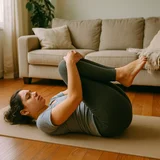
What Is Somatic Yoga? Meaning, Benefits & Poses
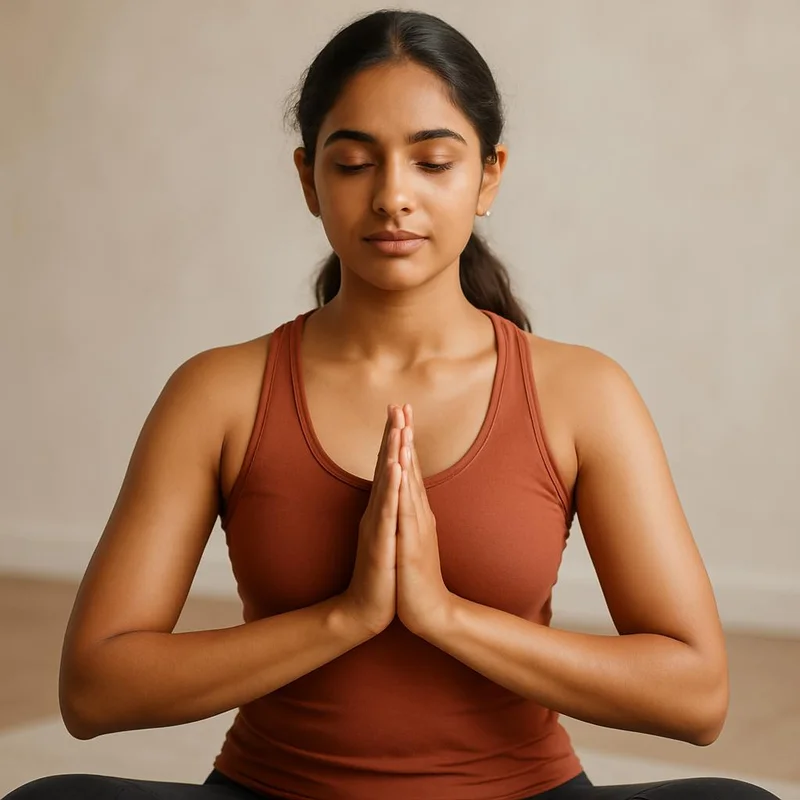
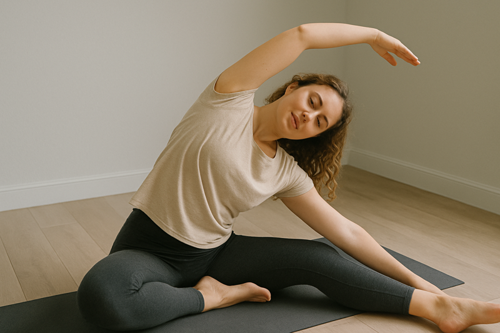
What Is Somatic Yoga?
Somatic yoga definition and meaning
So, what is somatic yoga?
Let’s be honest — the name sounds a little technical, right? The word somatic itself comes from the Greek word soma, meaning “the body.” But in practice, somatic yoga is a whole different vibe than what most of us picture when we think about yoga.
When people first ask me what is somatic yoga, I usually pause. Because, well, it’s not quite the bendy Instagram-yoga scene. It’s slower. Softer. Quieter. Think: micro-movements, body awareness, and nervous system reset rather than calorie burn or athletic poses.
At its core, somatic yoga is a gentle, mindful movement practice that combines somatic education (like the kind taught by Thomas Hanna or Moshe Feldenkrais) with the breath, flow, and structure of yoga. It’s designed to help you feel your body more clearly — not just stretch or strengthen it.
When someone says “somatic yoga definition,” they might be looking for something tidy and academic. But the real meaning of somatic yoga is experiential — it’s about retraining your nervous system, noticing habits in how you move or hold tension, and giving your body permission to change. Slowly. Kindly.
Sometimes it feels more like a moving meditation than a “workout.” And that’s exactly the point.
How it differs from traditional yoga
Okay, but how is somatic yoga actually different from the kind of yoga we see at studios or on YouTube?
Honestly, the contrast can be dramatic.
Traditional yoga — especially the more physical types like vinyasa or ashtanga — is often about flow, alignment, and sequences. You move from one pose to the next, guided by breath, sometimes to music, sometimes with a good sweat.
Somatic yoga? It slows that all way down. Like, glacial slow sometimes.
Instead of pushing yourself into shapes, you explore the sensory feedback from your muscles. You might spend five minutes on a single movement — say, rolling your pelvis or gently rotating your head — and that’s your entire “pose.”
In a regular yoga class, you’re often told what to do. In somatic yoga, you’re invited to explore how it feels.
That’s a big shift. It can be unnerving at first — especially if you’re used to following rules or sequences. But it can also be profoundly healing. You’re not just stretching a hamstring; you’re changing the way your brain maps that muscle.
One friend of mine — a lifelong yogi — tried somatic yoga for the first time and told me afterward, “I didn’t sweat at all. But I feel like something inside me unclenched.”
So yeah, it’s subtle. But don’t confuse subtle with weak. Somatic yoga might look chill, but the effects go deep.
And in terms of benefits? We’ll get to those in the next section, but spoiler: there’s more to it than meets the eye.
Benefits of Somatic Yoga
Physical and mental health benefits
Let me be real with you — when I first stumbled into a somatic yoga class, I wasn’t expecting much. I thought it was going to be a glorified nap. Spoiler: I was very wrong.
There’s this weird magic to somatic yoga. You do these teeny-tiny movements — like lifting your shoulder a few inches and slowly releasing it — and somehow it unlocks places you didn’t even realize were tight. I mean, how is my jaw connected to my hips?! I don’t know. But apparently, it is.
Anyway, the point is — somatic yoga benefits your body in subtle but powerful ways. Physically, it can:
-
Improve posture and alignment
-
Release chronic muscle tension
-
Reduce joint pain and stiffness
-
Increase mobility (especially if you’re dealing with stuff like frozen shoulder or low back pain)
But the bigger shift, honestly, is in your brain. There’s a neurological thing happening — called sensory-motor amnesia — where your brain literally forgets how to let go of tension. Somatic yoga retrains that. It reminds your body how to relax. On purpose.
Mentally? Somatic yoga is kind of like a nervous system whisperer. You get calmer. More present. Less reactive. It’s not flashy, but it’s the kind of practice that can pull you back from burnout.
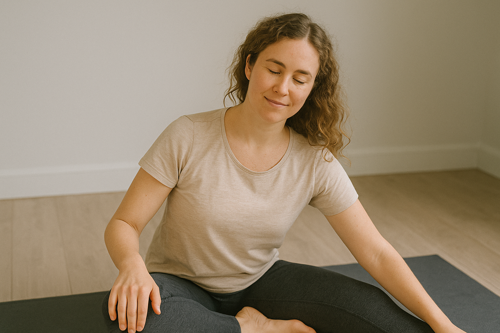
Detox and relaxation effects
Now let’s talk somatic yoga detox — and I don’t mean green juice or 10-day cleanses.
This kind of detox is nervous-system deep. When your body is constantly in fight-or-flight mode (and let’s be honest, most of us are), your organs, muscles, even your breathing patterns get stuck in stress mode. Somatic yoga helps unwind that.
By gently working through tension patterns, especially in the diaphragm and belly, you start to breathe better — which supports digestion, sleep, and even lymphatic flow. Some practitioners say it helps your body literally flush out stress.
And I gotta say — some sessions feel like a full-on emotional exhale. You might cry. You might yawn 50 times. You might just melt into your mat and feel like you slept for eight hours. That’s the kind of detox we’re talking about.
Somatic Yoga for Beginners
How to get started
Thinking about trying somatic yoga for beginners? Good. Because if there’s one practice that’s beginner-friendly by design, this is it.
You don’t need flexibility. You don’t need gear. You don’t need to chant in Sanskrit or know how to do a headstand. In fact, if you can’t do any of those things — you’re probably in the perfect place to start.
Find a somatic yoga teacher who emphasizes awareness over achievement. Or, if you’re flying solo, YouTube has some gentle intro sessions. (Look for keywords like “somatic movement for beginners” or “Hanna Somatics.”)
Start small. Like, 15 minutes on the floor. No expectations.
Tips for your first session
Okay, so here’s the thing: your first somatic yoga session might feel weird. That’s normal.
You might think, “Am I doing this right?” (Probably, yes.) Or, “Is this really yoga?” (Also yes.) Or even, “I’m just lying here — should I be doing more?” (Nope. Just feel more.)
Some quick tips:
-
Slow way down. Like, slower than slow.
-
Keep your eyes closed if you can — it helps you feel more.
-
Don’t stretch to your edge. This isn’t that kind of party.
-
Follow sensation, not shape. If it feels good, you’re winning.
-
Breathe naturally. No fancy techniques required.
Somatic yoga invites you to trust your body again. That’s the hardest part — and also the most healing.
Best Somatic Yoga Poses and Moves
Top beginner-friendly poses
So, let’s talk somatic yoga poses. And spoiler alert — they don’t look like your usual downward dog or crow pose.
Instead, we’re talking about subtle, slow movements designed to retrain your brain-body connection. You might do something that looks like a stretch, but the goal isn’t to go deep — it’s to go aware.
A few favorites:
-
Arch & Flatten – Lying on your back, gently arch and flatten your lower back. Super simple, surprisingly profound.
-
Pelvic Clock – Imagine your pelvis as a clock face and slowly “roll” through the hours. This one feels amazing if you sit a lot.
-
Shoulder Rolls (Somatic-style) – Not your gym-class version. These are done slowly, with attention to tension and release.
-
Somatic Cat-Cow – Yes, like the yoga version, but slower and focused on internal sensation rather than form.
These moves are great because they don’t require flexibility or strength — just presence.
Sample somatic yoga workout
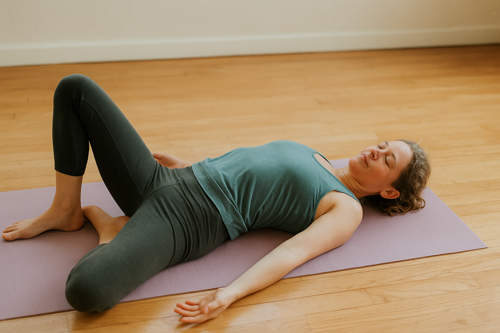
A short somatic yoga workout (like, 20 minutes) could go something like this:
-
Begin lying down — settle into your mat, breathe.
-
Pelvic Clock — 3 minutes, moving gently through “hours.”
-
Arch & Flatten — 5 minutes, slow and conscious.
-
Somatic Cat-Cow — 5 minutes on all fours.
-
Side Lying Twist — gently rolling from the center of the spine.
-
Finish in constructive rest — knees bent, feet flat, just breathing.
Play music if you want. Or don’t. Just keep it slow and curious.
Is Somatic Yoga Right for You?
Who should practice it
Honestly? Somatic yoga is for just about everyone.
-
Chronic tension? Yes.
-
Desk job body? Definitely.
-
Anxiety, stress, or burnout? This is your jam.
-
Aging joints or limited mobility? Perfect fit.
A lot of folks come to somatic yoga when traditional yoga just isn’t cutting it — or when they realize they don’t want to push anymore. They want to listen.
When to avoid somatic yoga
Now, full honesty — somatic yoga isn’t for every mood.
If you’re looking for a hardcore workout or you need the rush of a sweaty flow, somatic yoga might feel… too mellow.
Also, if you’ve experienced certain types of trauma, some of the inward focus might feel intense or triggering. In that case, finding a trauma-informed teacher is essential.
Conclusion
So… what is somatic yoga, really?
It’s a gentle rebellion against the performance-driven version of yoga. A quiet revolution in how we move. A permission slip to stop pushing and start sensing.
Whether you’re burned out, beat up, or just bored of doing everything fast and hard — somatic yoga offers something different.
It’s not about becoming flexible. It’s about becoming aware.
FAQs
Can you lose weight with somatic yoga?
Kind of. Not in the HIIT sense. But it can help reduce stress (which is huge for metabolism) and increase body awareness, which often leads to healthier choices.
Is somatic yoga legit?
Yep. It’s based on neurophysiology and somatic education. It’s used in rehab, chronic pain recovery, and mental health programs.
Is 30 minutes of yoga a day enough to lose weight?
If it’s consistent and paired with a mindful lifestyle — yes. And somatic yoga might be a surprising piece of that puzzle.
What time of day is best to do somatic yoga?
Evenings are magic for it — it helps downshift your nervous system before sleep. But really, any time works if you can be present.
Is Pilates a somatic exercise?
Some styles of Pilates have somatic qualities, especially if they focus on internal awareness. But somatic yoga is slower, less structured, more exploratory.
Call to Action
Ready to explore more? Somatic yoga is just one doorway into a more present, grounded version of you. Try a class, book a session with a somatic educator, or dive deeper into Ayurveda for even more support. And hey — if this sparked something, consider subscribing to our newsletter for monthly insights on mind-body wellness. Your nervous system will thank you.
आयुर्वेदिक डॉक्टर से एक प्रश्न पूछें और मुफ़्त या सशुल्क मोड में अपनी चिंता की समस्या पर ऑनलाइन परामर्श प्राप्त करें।
2,000 से अधिक अनुभवी डॉक्टर हमारी साइट पर काम करते हैं और आपके प्रश्नों की प्रतीक्षा करते हैं और प्रतिदिन उपयोगकर्ताओं को उनकी स्वास्थ्य समस्याओं को हल करने में मदद करते हैं।
संबंधित आलेख