Our Team of Ayurvedic Experts
Convenient search allows you to find good specialists based on the following parameters: doctor’s rating, work experience, patient reviews, specialization, academic degree, and online presence.
On the page, you can get an individual consultation with a doctor. Many doctors provide online consultations in a consilium format (questions and answers from multiple doctors).
Currently online
With reviews only
Ayurvedic doctors
12
Consultations:
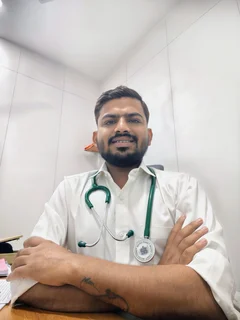
Dr. Haresh Vavadiya
star_border
5
2,691
239 reviews
I am an Ayurvedic doctor currently practicing at Ayushakti Ayurveda—which honestly feels more like a learning ecosystem than just a clinic. Being here has changed the way I look at chronic conditions. You don’t just treat the label—you go after the cause, layer by layer, and that takes patience, structure, and real connection with the person sitting in front of you.
Ayushakti has been around 33+ years, with global reach and seriously refined clinical systems. That means I get to work with protocols that are both deeply rooted in traditional Ayurveda and also super practical for today’s world. Whether I’m managing arthritis, asthma, skin issues like eczema or psoriasis, hormone trouble, gut problems, or stress overload—my first step is always a deep analysis. Prakriti, doshas, ahar-vihar, past treatments—everything gets mapped out.
Once I’ve got that picture clear, I create a plan using herbal medicines, detox programs (especially Panchakarma), Marma therapy if needed, and definitely food and routine corrections. But nothing’s random. Each piece is chosen for *that* person. And I don’t just prescribe—I explain. Because when someone knows *why* they’re doing a certain thing, they stick with it longer, and the results hold.
One thing I’ve learned while working here is how powerful Ayurved can be when it's structured right. At Ayushakti, that structure exists. It helps me treat confidently and track results properly. Whether I’m working with a first-time visitor or a patient who’s been dealing with the same thing for 10 years, my goal stays the same—help their system return to a natural, sustainable state of balance.
What I really enjoy is seeing how people’s mindset changes once they start to feel better. When they stop depending on just temporary relief and start building their health from within—that’s when the real shift happens. And being part of that shift? That’s why I do this.

Dr. M.Sushma
star_border
5
237,210
991 reviews
I am Dr. Sushma M and yeah, I’ve been in Ayurveda for over 20 yrs now—honestly still learning from it every day. I mostly work with preventive care, diet logic, and prakriti-based guidance. I mean, why wait for full-blown disease when your body’s been whispering for years, right? I’m kinda obsessed with that early correction part—spotting vata-pitta-kapha imbalances before they spiral into something deeper. Most ppl don’t realize how much power food timing, digestion rhythm, & basic routine actually have… until they shift it.
Alongside all that classical Ayurveda, I also use energy medicine & color therapy—those subtle layers matter too, esp when someone’s dealing with long-term fatigue or emotional heaviness. These things help reconnect not just the body, but the inner self too. Some ppl are skeptical at first—but when you treat *beyond* the doshas, they feel it. And I don’t force anything… I just kinda match what fits their nature.
I usually take time understanding a person’s prakriti—not just from pulse or skin or tongue—but how they react to stress, sleep patterns, their relationship with food. That whole package tells the story. I don’t do textbook treatment lines—I build a plan that adjusts *with* the person, not on top of them.
Over the years, watching patients slowly return to their baseline harmony—that's what keeps me in it. I’ve seen folks come in feeling lost in symptoms no one explained… and then walk out weeks later understanding their body better than they ever did. That, to me, is healing. Not chasing symptoms, but restoring rhythm.
I believe true care doesn’t look rushed, or mechanical. It listens, observes, tweaks gently. That's the kind of Ayurveda I try to practice—not loud, but deeply rooted.

Dr. Surya Bhagwati
star_border
5
22,298
1378 reviews
I am a Senior Ayurveda Physician with more than 28 years in this field — and trust me, it still surprises me how much there is to learn every single day. Over these years, I’ve had the chance to treat over 1 lakh patients (probably more by now honestly), both through in-person consults and online. Some come in with a mild cough, others with conditions no one’s been able to figure out for years. Each case brings its own rhythm, and that’s where real Ayurveda begins.
I still rely deeply on classical tools — *Nadi Pariksha*, *Roga-Rogi Pariksha*, proper *prakriti-vikriti* mapping — not just ticking symptoms into a list. I don’t believe in ready-made cures or generic charts. Diagnosis needs attention. I look at how the disease behaves *inside* that specific person, which doshas are triggering what, and where the imbalance actually started (hint: it’s usually not where the pain is).
Over the years I’ve worked with pretty much all age groups and all kinds of health challenges — from digestive upsets & fevers to chronic, autoimmune, hormonal, metabolic and degenerative disorders. Arthritis, diabetes, PCOD, asthma, thyroid... but also things like unexplained fatigue or joint swelling that comes and goes randomly. Many of my patients had already “tried everything else” before they walked into Ayurveda, and watching their systems respond slowly—but surely—is something I don’t take lightly.
My line of treatment usually combines herbal formulations (classical ones, not trendy ones), Panchakarma detox when needed, and realistic dietary and lifestyle corrections. Long-term healing needs long-term clarity — not just short bursts of symptom relief. And honestly, I tell patients that too.
I also believe patient education isn’t optional. I explain things. Why we’re doing virechana, why the oil changed mid-protocol, why we pause or shift the meds after a few weeks. I want people to feel involved, not confused. Ayurveda works best when the patient is part of the process, not just receiving instructions.
Even now I keep learning — through texts, talks, patient follow-ups, sometimes even mistakes that taught me what not to do. And I’m still committed, still fully into it. Because for me, this isn’t just a job. It’s a lifelong responsibility — to restore balance, protect *ojas*, and help each person live in tune with themselves. That’s the real goal.
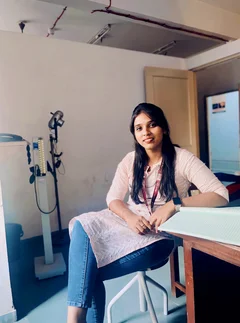
Dr. Karthika
star_border
5
2,563
237 reviews
I am currently a PG 2nd yr student in the dept of Shalakya Tantra at Parul Institute of Ayurveda and Research, batch 2024. I joined right after UG—no break—straight into PG (regular batch). I did my undergrad from Rajiv Gandhi Ayurveda Medical College (2017 batch, CCRAS syllabus under Pondicherry Univ). Somehow managed to secure 2nd rank university-wide back then, which I didn’t totally expect.
Right now, my core interest lies in the Ayurvedic and integrative management of eye disorders. I’ve got decent exposure to both classical texts and clinical practice. From anatomy to pathology, I try to stay grounded in both the traditional Ayurvedic view and also the modern opthalmic understanding, especially with conditions related to the cornea, retina, and anterior segment. During PG deputation in 2nd year, I handled like 200+ OPD patients daily within 1–2 hrs (felt crazy at first but got used to the pace).
I’m also trained hands-on in cataract and cornea surgeries under supervision. Not calling myself a surgeon yet, but I did get a good amout of surgical exposure in the PG postings. In terms of academics, I got 82% in the first-year PG exams—distinction score—secured department 1st and university topper at Parul Institute.
Sometimes I do wonder if all this speed actually lets me go deep into each case but I’m learning to balance efficiency with proper patient care. Honestly I think that’s the biggest challenge in clinical ayurveda today—staying rooted in shastra while also being practically useful in today's overloaded OPDs. Anyway, still got a lot to learn, but I try to show up with clarity, humility and the will to keep improving every day.

Dr. Snehal Tasgaonkar
star_border
5
2,312
256 reviews
I am an Ayurvedic physician with around 7 yrs clinical experience, though honestly—feels like I’ve lived double that in patient hours. I studied from a govt. medical college (reputed one) where I got deep into classical Ayurvedic texts n clinical logic. I treat everything from chronic stuff like arthritis, IBS, eczema... to more sudden conditions that just pop up outta nowhere.
I try to approach each case by digging into the *why*, not just the *what*. I mean—anyone can treat pain, but if you don’t catch the doshic imbalance or metabolic root, it just comes bak right? I use Nadi Pariksha a lot, but also other classical signs to map prakriti-vikruti, dhatu status n agni condition... you know the drill. I like making people *understand* their own health too. Doesn’t make sense to hand meds without giving them tools to prevent a relapse.
My Panchakarma training’s been a core part of my work. I do Abhyanga, Swedana, Basti etc regularly—not just detox but also as restorative therapy. Actually seen cases where patients came in exhausted, foggy... and post-Shodhana, they're just lit up. That part never gets old.
Also I always tie diet & lifestyle changes into treatment. It’s non-negotiable for me, bcs long-term balance needs daily changes, not just clinic visits. I like using classical formulations but I stay practical too—if someone's not ready for full-scale protocol, I try building smaller habits.
I believe healing’s not just abt treating symptoms—it’s abt helping the body reset, then stay there. I’m constantly refining what I do, trying to blend timeless Ayurvedic theory with real-time practical needs of today’s patients. Doesn’t always go perfect lol, but most times we see real shifts. That’s what keeps me going.

Dr. Prasad Pentakota
star_border
5
20,352
1119 reviews
I am Dr. P. Prasad, and I’ve been in this field for 20+ years now, working kinda across the board—General Medicine, Neurology, Dermatology, Cardiology—you name it. Didn’t start out thinking I’d end up spanning that wide, but over time, each area sort of pulled me in deeper. And honestly, I like that mix. It lets me look at a patient not just through one lens but a whole system-wide view... makes more sense when treating something that won’t fit neatly in one category.
I’ve handled everything from day-to-day stuff like hypertension, diabetes, or skin infections to more serious neuro and cardiac problems. Some cases are quick—diagnose, treat, done. Others take time, repeated check-ins, figuring out what’s really going on beneath those usual symptoms. And that’s where the detail matters. I’m pretty big on thorough diagnosis and patient education—because half the problem is ppl just not knowing what’s happening inside their own body.
What’s changed for me over years isn’t just knowledge, it’s how much I lean on listening. If you miss what someone didn’t say, you might also miss their actual illness. And idk, after seeing it play out so many times, I do believe combining updated medical practice with basic empathy really shifts outcomes. Doesn’t have to be complicated... it just has to be consistent.
I keep up with research too—new drugs, diagnostics, cross-specialty updates etc., not because it’s trendy, but cuz it’s necessary. Patients come in better read now than ever. You can’t afford to fall behind. The end goal’s the same tho—help them heal right, not just fast. Ethical practice, evidence-based, and sometimes just being there to explain what’s going on. That’s what I stick to.

Dr. Maitri Bhavesh Kumar Acharya
star_border
5
6,504
707 reviews
I am Dr. Maitri, currently in my 2nd year of MD in Dravyaguna, and yeah, I run my own Ayurvedic clinic in Ranoli where I’ve been seeing patients for 2 years now. Honestly, what pulled me into this path deeper is how powerful herbs really are—when used right. Not just randomly mixing churnas but actually understanding their rasa, virya, vipaka etc. That’s kinda my zone, where textbook knowledge meets day-to-day case handling.
My practice revolves around helping people with PCOD, acne, dandruff, back pain, stiffness in knees or joints that never seem to go away. And I don’t jump to giving a long list of medicines straight away—first I spend time figuring out their prakriti, their habits, food cycle, what triggers what… basically all the small stuff that gets missed. Then comes the plan—herbs (single or compound), some diet reshuffling, and always some lifestyle nudges. Sometimes they’re tiny, like sleep timing. Sometimes big like proper seasonal detox.
Being into Dravyaguna helps me get into the depth of herbs more confidently. I don’t just look at the symptom—I think okay what guna will counter this? Should the drug be snigdha, ushna, tikta? Is there a reverse vipaka that’ll hurt the agni? I ask these questions before writing any combo. That’s made a huge diff in outcomes. Like I had this case of chronic urticaria that would flare up every week, and just tweaking the herbs based on sheetala vs ushna nature... helped calm the system in 3 weeks flat. Not magic, just logic.
I also work with women who are struggling with hormonal swings, mood, delayed periods or even unexplained breakouts. When hormones go haywire, the skin shows, digestion slows, and mind gets foggy too. I keep my approach full-circle—cleansing, balancing, rejuvenating. No quick fixes, I tell them early on.
What I’m hoping to do more of now is make Ayurveda feel practical. Not overwhelming. Just simple tools—ahara, vihara, aushadha—used consistently, with some trust in the body’s own healing. I’m still learning, still refining, but honestly, seeing people feel in control of their health again—that’s what keeps me rooted to this.

Dr. Ravi Chandra Rushi
star_border
5
3,438
1605 reviews
I am working right now as a Consultant Ayurvedic Ano-Rectal Surgeon at Bhrigu Maharishi Ayurvedic Hospital in Nalgonda—and yeah, that name’s quite something, but what really keeps me here is the kind of cases we get. My main focus is managing ano-rectal disorders like piles (Arsha), fistula-in-ano (Bhagandara), fissure-in-ano (Parikartika), pilonidal sinus, and rectal polyps. These are often more complex than they look at first, and they get misdiagnosed or overtreated in a lotta places. That’s where our classical tools come in—Ksharasutra therapy, Agnikarma, and a few other para-surgical techniques we follow from the Samhitas...they’ve been lifesavers honestly.
My work here pushes me to keep refining surgical precision while also sticking to the Ayurvedic core. I do rely on modern diagnostics when needed, but I won’t replace the value of a well-done Nadi Pariksha or assessing dosha-vikruti in depth. Most of my patients come with pain, fear, and usually after a couple of rounds of either incomplete surgeries or just being fed painkillers n antibiotics. And I totally get that frustration. That’s why I combine surgery with a whole support plan—Ayurvedic meds, diet changes, lifestyle tweaks that actually match their prakriti. Not generic stuff off a handout.
Over time, I’ve seen that when people follow the whole protocol, not just the procedure part, the recurrence drops a lot. I’m quite particular about follow-up and wound care too, ‘cause we’re dealing with delicate areas here and ignoring post-op can ruin outcomes. Oh and yeah—I care a lot about educating folks too. I talk to patients in OPD, sometimes give community talks, just to tell people they do have safer options than cutting everything out under GA!
I still study Shalya Tantra like it’s a living document. I try to stay updated with whatever credible advancements are happening in Ayurvedic surgery, but I filter what’s fluff and what’s actually useful. At the end of the day, my aim is to offer respectful, outcome-based care that lets patients walk out without shame or fear. That’s really what keeps me grounded in this field.

Dr. Anirudh Deshmukh
3,965
0 reviews
I am Dr Anurag Sharma, done with BAMS and also PGDHCM from IMS BHU, which honestly shaped a lot of how I approach things now in clinic. Working as a physician and also as an anorectal surgeon, I’ve got around 2 to 3 years of solid experience—tho like, every day still teaches me something new. I mainly focus on anorectal care (like piles, fissure, fistula stuff), plus I work with chronic pain cases too. Pain management is something I feel really invested in—seeing someone walk in barely managing and then leave with actual relief, that hits different.
I’m not really the fancy talk type, but I try to keep my patients super informed, not just hand out meds n move on. Each case needs a bit of thinking—some need Ksharasutra or minor para surgical stuff, while others are just lifestyle tweaks and herbal meds. I like mixing the Ayurved principles with modern insights when I can, coz both sides got value really. It’s like—knowing when to go gentle and when to be precise.
Right now I’m working hard on getting even better with surgical skills, but also want to help people get to me before surgery's the only option. Had few complicated cases where patience n consistency paid off—no shortcuts but yeah, worth it.
The whole point for me is to actually listen first, like proper listen. People talk about symptoms but also say what they feel—and that helps in understanding more than any lab report sometimes. I just want to stay grounded in my work, and keep growing while doing what I can to make someone's pain bit less every day.

Dr. Anupriya
star_border
5
2,397
536 reviews
I am an Ayurvedic doctor trained at one of the most reputed institutes (yeah, the kind that makes u sweat but also feel proud lol) where I completed my BAMS with 70%—not just numbers but real grind behind it. My focus during & after graduation has always been on treating the patient not just the disease, and honestly that philosophy keeps guiding me even now.
I usually see anywhere around 50 to 60 patients a day, sometimes more if there's a health camp or local rush. It’s hectic, but I kinda thrive in that rhythm. What matters to me is not the number but going deep into each case—reading every complaint, understanding symptoms, prakriti, current state, season changes etc. and putting together a treatment that feels “right” for that person, not just for the condition.
Like, I don’t do one-size-fits-all plans. I sit down, make case reports (yup, proper handwritten notes sometimes), observe small shifts, modify herbs, suggest diet tweaks, even plan rest patterns when needed. I find that holistic angle super powerful. And patients feel it too—some who come in dull n restless, over weeks show clarity, skin settles, energy kinda gets back... that makes the day worth it tbh.
There’s no shortcut to trust, and i get that. Maybe that’s why patients keep referring their siblings or maa-papa too. Not bragging, but when people say things like “you actually listened” or “I felt heard”, it stays in the back of my mind even when I’m dog tired lol.
My goal? Just to keep learning, treating honestly and evolving as per what each new case teaches me. Ayurveda isn’t static—it grows with u if u let it. I guess I’m just walking that path, one custom plan at a time.
Latest reviews

Warren
3 hours ago
Thanks a lot for the advice! Really liked the detailed, clear response on how to manage everything. Feeling way better about my next steps.
Thanks a lot for the advice! Really liked the detailed, clear response on how to manage everything. Feeling way better about my next steps.
FAQ
How to ask ayurvedic doctor a question?
keyboard_arrow_down
What should be done to consult on the site?
keyboard_arrow_down
What does the doctor’s rating depend on?
keyboard_arrow_down
© 2024 Ask Ayurveda. All rights reserved.