Ask Ayurvedic doctor a question and get a consultation online on the problem of your concern in a free or paid mode. More than 2,000 experienced doctors work and wait for your questions on our site and help users to solve their health problems every day.


Body DetoxEar, Nose, and Throat DisordersGeriatrics & RejuvenationImmunodeficiencyInfertility TreatmentNutritionOrthopedic DisordersPediatricsRespiratory DisordersSexually Transmitted Diseases (STDs)Surgery RecoveryUrological DisordersVascular DisordersDental DisordersEndocrinological DisordersGastrointestinal DisordersYoga TherapyGeneral MedicineAllergic DisordersCardio DisordersGynecology and ObstetricsCosmetologySkin and Hair DisordersEye DisordersInfectious DiseasesMental DisordersNeurological DisordersOncologyPanchakarmaSexual Health & DisordersSports Medicine
Published on 12/12/24
(Updated on 08/12/26)
2,278
Changeryadi Gulika
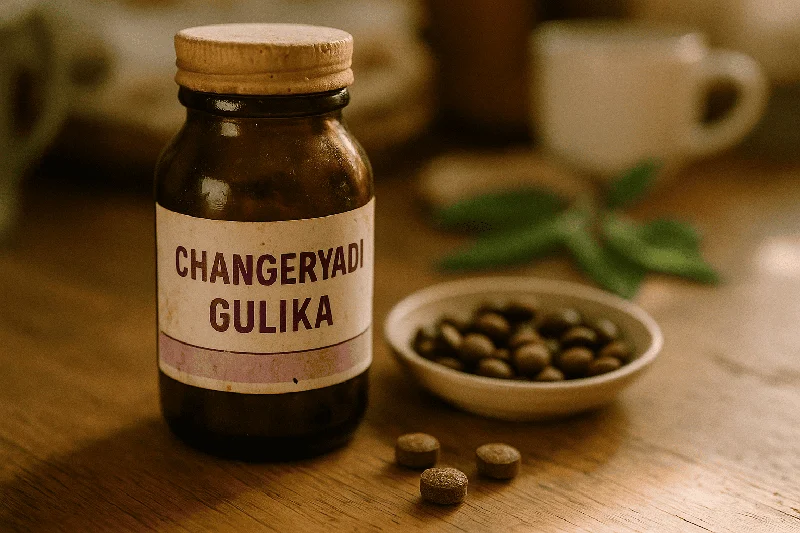
Changeryadi Gulika is a classical Ayurvedic herbal tablet (gulika) primarily used for managing gastrointestinal disorders — especially diarrhea, dysentery, and indigestion — as well as certain respiratory conditions. Rooted in centuries-old Ayurvedic pharmacology, this formulation derives its name from its principal ingredient, Changerya (Oxalis corniculata), a small creeping herb valued in traditional medicine for its astringent, anti-inflammatory, and digestive properties. Unlike many modern supplements, Changeryadi Gulika follows a time-tested polyherbal approach where multiple botanicals work synergistically to restore digestive balance, pacify aggravated doshas, and support immune function.
If you've been searching for clear, evidence-backed information on what this medicine actually contains, how it works, the right dosage, and whether its safe for you — this guide covers everything the other sources leave out, including the full ingredient list with proportions, classical textual references, the preparation method, and how it compares to similar formulations.
What Is Changeryadi Gulika?
- Changeryadi Gulika is a polyherbal Ayurvedic medicine prepared in gulika (tablet/pill) form.
- The word "Changeryadi" breaks down into Changerya — referring to Oxalis corniculata (Indian sorrel or creeping woodsorrel) — and ādi, a Sanskrit suffix meaning "and others" or "beginning with." So the name literally translates to "the tablet beginning with Changerya."
It is classified as a gulika or vati (pill formulation), which means the herbal powders are processed, mixed with a binding liquid, rolled into small tablets, and dried. This makes it convenient for oral administration compared to kashayams (decoctions) or churnas (loose powders).
Origin of the Name and Spelling Variations (Changeryadi / Charngeryadi / Chargeryady)
You'll encounter multiple spellings across different sources, and this causes genuine confusion.
Here's why the variations exist:
- Changeryadi Gulika — most common anglicized spelling, widely used in North Indian and general English contexts
- Charngeryadi Gulika — transliteration closer to the Sanskrit/Malayalam pronunciation (Chārṅgerī), preferred by Kerala-based manufacturers like Kottakkal Arya Vaidya Sala
- Chargeryady Gulika — another transliteration variant found in older pharmacopeial texts and some South Indian manufacturers
- All three refer to the same formulation.
- The differences are purely linguistic — arising from how the Sanskrit root Chāṅgerī (चाङ्गेरी) gets transliterated into English through different regional languages (Malayalam, Hindi, Kannada). When purchasing or researching, treat these as identical.
Classical Textual Source (Sahasrayogam)
This is something almost no online source currently mentions, which is a significant gap. Changeryadi Gulika is referenced in the Sahasrayogam, a compilation of Ayurvedic formulations particularly influential in the Kerala school of Ayurveda (Ashtavaidya tradition). The Sahasrayogam contains thousands of formulations organized by dosage form — kashayams, ghritas, gulikas, etc.
The formulation is also documented in the Ayurvedic Formulary of India (AFI), Volume 2, pages 57–60, published by the Pharmacopoeia Commission for Indian Medicine & Homoeopathy (PCIM&H) under the Ministry of AYUSH, Government of India. This official recognition gives it regulatory standing as a classical Ayurvedic medicine that can be manufactured without separate drug licensing under Schedule K of the Drugs & Cosmetics Act.
Dosage Form and Physical Description
Changeryadi Gulika typically appears as small, dark brown to blackish-brown round tablets with a characteristic herbal aroma. The taste is a complex mix of pungent, sour, and slightly bitter notes — reflecting the diverse pharmacological profile of its ingredients. Each tablet generally weighs between 250 mg and 500 mg depending on the manufacturer.
Full Composition and Key Ingredients
One of the biggest gaps in existing online resources is the lack of a complete ingredient list with proportions. Most sources mention only 4 to 6 herbs. Below is the comprehensive formulation as referenced in classical texts and the AFI.
Complete Ingredient Table with Proportions
| Sanskrit Name | Botanical / Common Name | Part Used | Proportion | Key Active Compounds |
|---|---|---|---|---|
| Changerya (Chāṅgerī) | Oxalis corniculata (Indian Sorrel) | Whole plant | Chief ingredient | Oxalic acid, flavonoids (vitexin, isovitexin) |
| Hingu | Ferula assa-foetida (Asafoetida) | Oleo-gum-resin | Equal part | Ferulic acid, umbelliferone, farnesiferols |
| Jeeraka | Cuminum cyminum (Cumin) | Seeds | Equal part | Cuminaldehyde, thymol, p-cymene |
| Pippali | Piper longum (Long Pepper) | Fruit | Equal part | Piperine, piperlongumine, pipernonaline |
| Shunti | Zingiber officinale (Dry Ginger) | Rhizome | Equal part | Gingerols, shogaols, zingerone |
| Maricha | Piper nigrum (Black Pepper) | Fruit | Equal part | Piperine, piperidine, chavicine |
| Lavanga | Syzygium aromaticum (Clove) | Flower bud | Equal part | Eugenol, eugenyl acetate, β-caryophyllene |
| Yashtimadhu | Glycyrrhiza glabra (Licorice) | Root | Equal part | Glycyrrhizin, liquiritigenin, glabridin |
| Amra | Mangifera indica (Mango) | Seed kernel / bark | Equal part | Mangiferin, gallic acid, tannins |
| Jambu | Syzygium cumini (Java Plum / Jamun) | Seed / bark | Equal part | Jamboline, ellagic acid, gallic acid, myricetins |
Note: Proportions in classical Sahasrayogam formulations are typically equal parts (samabhaga) unless otherwise specified. The binding medium (bhavana dravya) is usually water or a decoction of one of the chief ingredients.
Changerya (Oxalis corniculata) — The Principal Herb
Changerya is a small, creeping herb found abundantly across India. In Ayurveda, it is classified as having amla rasa (sour taste) and laghu, ruksha guna (light and dry qualities). Its importance in this formulation lies in its potent astringent and anti-diarrheal action. A 2014 study published in the Journal of Ethnopharmacology confirmed significant anti-diarrheal activity of Oxalis corniculata extract in castor oil-induced diarrhea models in rats, supporting traditional claims.
Important safety note: Oxalis corniculata contains oxalic acid and oxalates. This is clinically relevant for patients with kidney stones or hyperoxaluria — a contraindication that no current competitor article addresses (more on this in the safety section).
Trikatu Complex (Shunti, Maricha, Pippali)
Three of the ingredients — dry ginger, black pepper, and long pepper — together constitute Trikatu, one of the most well-known Ayurvedic combinations. Trikatu acts as a bioavailability enhancer (the piperine in black pepper and long pepper increases absorption of other compounds by up to 2000%, as demonstrated in Shoba et al., 1998, published in Planta Medica). In this formulation, Trikatu serves the dual purpose of improving digestion (deepana-pachana) and enhancing the therapeutic efficacy of the other ingredients.
Hingu (Asafoetida) — The Digestive Powerhouse
Asafoetida has been extensively studied for its carminative, antispasmodic, and antimicrobial properties. A 2012 review in the Journal of Research in Medical Sciences documented its effectiveness against bloating, flatulence, and intestinal spasms. In Changeryadi Gulika, Hingu addresses vata-type digestive complaints — cramping, irregular bowel movments, and gas.
Yashtimadhu (Licorice) — The Mucosal Protector
Licorice root provides gastroprotective action through glycyrrhizin, which stimulates mucus secretion in the gastric lining. This is particularly valuable in formulations that contain pungent ingredients like Trikatu, as it offers a protective, soothing counterbalance.
Amra and Jambu — The Astringent Duo
Both mango (seed kernel) and Jamun (seed) are rich in tannins and polyphenolic compounds with strong astringent properties. This is why they are specifically included for managing diarrhea and dysentery — they reduce intestinal secretions and firm up loose stools. Jamboline from Jamun seeds also has documented hypoglycemic activity, though this is not the primary indication for this formulation.
Method of Preparation (Pharmaceutical Process)
This is another area where existing online resources provide zero information. Understanding how Changeryadi Gulika is made helps appreciate its therapeutic design.
The preparation follows the standard Gulika/Vati Kalpana methodology described in Ayurvedic pharmaceutical science (Bhaishajya Kalpana):
- 1.Shodhana (Purification): Specific ingredients like Hingu undergo purification processes — typically frying in ghee — to remove impurities and reduce potential irritant properties.
- 2.Churna preparation (Powdering): Each dried herb is individually powdered and sieved through a fine mesh (typically 80–120 mesh). This ensures uniform particle size and consistent dosing.
- 3.Mixing (Mardana): The individual powders are combined in the prescribed proportions and mixed thoroughly in a stone mortar (khalva yantra).
- 4.Bhavana (Wet Grinding/Levigation): The mixed powder is wet-ground with a prescribed liquid — usually water or a herbal decoction — for several hours. This process, called bhavana, is critical because it facilitates molecular-level interaction between the ingredients and activates certain phytochemicals.
- 5.Rolling and Shaping: The wet mass is rolled into uniform pills of specified weight (typically 250–500 mg per tablet).
- 6.Drying: The pills are dried in shade (not direct sunlight) at room temperature to preserve heat-sensitive active compounds. Some modern manufacturing units use controlled-temperature drying chambers maintained below 50°C.
- 7.Quality Testing: Per AYUSH GMP guidelines, the final product undergoes testing for disintegration time, weight uniformity, friability, microbial load, and heavy metal content.
The entire process can take several days, with the bhavana stage alone sometimes repeated 7 to 21 times for certain formulations to increase potency.
How Does Changeryadi Gulika Work? Mechanism of Action
Ayurvedic Perspective: Dosha Balancing
In the framework of Tridosha theory, Changeryadi Gulika primarily pacifies Vata and Kapha doshas while having a mild to neutral effect on Pitta.
- Vata pacification: The warm, pungent ingredients (Trikatu, Hingu) counteract the cold, erratic nature of aggravated Vata that causes irregular digestion, bloating, and intestinal spasms.
- Kapha pacification: The expectorant and drying qualities of ginger, pepper, and clove help clear excess Kapha from the respiratory and digestive tracts — which is why the formulation is also indicated for respiratory congestion.
- Pitta consideration: While the formulation contains heating ingredients, Yashtimadhu and Changerya provide a cooling, soothing counterbalance that prevents Pitta aggravation.
The overall karma (action) profile includes: Deepana (appetite stimulation), Pachana (digestive), Grahi (absorbent/anti-diarrheal), Anulomana (normalizing downward movement of Vata), and Kasa-hara (anti-tussive).
Modern Pharmacological Perspective
From a contemporary pharmacognosy standpoint, the formulation exerts multiple pharmacological actions:
- Anti-diarrheal action: Tannins from Amra and Jambu precipitate proteins on the intestinal mucosal surface, forming a protective layer that reduces secretion and peristalsis
- Antimicrobial activity: Eugenol (from clove), piperine, and gingerols demonstrate activity against common enteropathogens including E. coli, Salmonella, and Shigella species — organisms responsible for infectious diarrhea and dysentery
- Anti-inflammatory effects: Gingerols and shogaols inhibit COX-2 and 5-LOX pathways; glycyrrhizin modulates NF-κB signaling
- Expectorant/Mucolytic: Piperine and gingerols stimulate mucociliary clearance; eugenol acts as a mild bronchodilator
- Immunomodulatory: A 2017 study in Phytotherapy Research showed that piperine enhances macrophage activation and natural killer cell activity
Key Active Compounds and Their Roles
| Compound | Source Ingredient | Primary Action |
|---|---|---|
| Piperine | Black pepper, Long pepper | Bioavailability enhancer, anti-inflammatory |
| Gingerols/Shogaols | Dry ginger | Anti-emetic, prokinetic, anti-inflammatory |
| Eugenol | Clove | Antimicrobial, analgesic, antispasmodic |
| Glycyrrhizin | Licorice | Gastroprotective, anti-ulcer, anti-viral |
| Mangiferin | Mango | Antioxidant, anti-diarrheal, immunomodulatory |
| Jamboline | Jamun | Astringent, hypoglycemic |
| Oxalic acid/Flavonoids | Changerya | Astringent, anti-diarrheal |
| Ferulic acid | Asafoetida | Carminative, antispasmodic |
| Cuminaldehyde | Cumin | Digestive stimulant, antimicrobial |
Therapeutic Benefits and Indications: What Is Changeryadi Gulika Used For?
There's been some inconsistency across online sources about the primary indications — some emphasize respiratory uses, others focus on digestive disorders. Let's clarify based on classical texts.
Primary Indication: Diarrhea and Dysentery (Atisara and Pravahika)
The classical primary indication for Changeryadi Gulika is Atisara (diarrhea) and Pravahika (dysentery). This is clearly stated in the Sahasrayogam and the AFI. The astringent-heavy composition (Changerya, Amra, Jambu) combined with antimicrobial spices makes it specifically designed for managing loose stools, mucus in stool, and abdominal cramping associated with infectious and non-infectious diarrhea.
Digestive Disorders
Beyond diarrhea, the formulation addresses a broad spectrum of digestive complaints:
- Indigestion (Ajirna): Trikatu and Hingu stimulate gastric secretions and improve enzymatic activity
- Bloating and Flatulence (Adhmana): Asafoetida and cumin are potent carminatives that relieve trapped gas
- Loss of appetite (Arochaka): The pungent and aromatic ingredients stimulate taste receptors and appetite centers
- Irritable bowel symptoms: The antispasmodic properties of asafoetida and the soothing action of licorice may help manage IBS-type symptoms
Respiratory Disorders
While not the primary classical indication, Changeryadi Gulika has documented secondary benefits for respiratory conditions:
- Productive cough (Kasa): Expectorant action of ginger and piperine helps clear phlegm
- Bronchitis: Anti-inflammatory and antimicrobial actions help manage bronchial inflammation
- Asthma (supportive): Bronchodilatory effects of eugenol and piperine may provide symptomatic releif in mild cases
Immune Support
The combination of multiple bioactive compounds — particularly piperine, gingerols, and eugenol — provides broad-spectrum immunomodulatory support. This makes the formulation useful during seasonal changes when both digestive and respiratory infections are common.
Don't wait or self medicate. Start chat with Doctor NOW
Dosage and How to Take Changeryadi Gulika
Standard Adult Dosage
| Parameter | Recommendation |
|---|---|
| Dose | 1–2 tablets (250–500 mg each) |
| Frequency | 2–3 times daily |
| Timing | After meals (or as directed) |
| Adjuvant (Anupana) | Warm water, buttermilk, or honey |
| Duration | As prescribed, typically 7–14 days for acute conditions |
The choice of anupana (vehicle) matters in Ayurveda. For digestive complaints, buttermilk (takra) is the preferred vehicle, as it itself has probiotic and digestive properties. For respiratory complaints, honey with warm water is recommended to enhance the expectorant effect.
Dosage for Children
For children aged 5–12 years, the typical dose is half the adult dose (1/2 to 1 tablet), administered 1–2 times daily. For children under 5, this formulation should only be given under direct supervision of a qualified Ayurvedic physician. The spicy nature of Trikatu and Hingu can be too stimulating for very young digestive systems.
Dosage for Elderly
Elderly patients can generally take the standard adult dose. However, those with compromised kidney function should use reduced doses due to the oxalate content from Changerya.
How Long Does It Take for Changeryadi Gulika to Show Results?
For acute diarrhea and digestive complaints, many patients report improvement within 24–48 hours. For chronic digestive conditions, a course of 2–4 weeks may be necessary. Respiratory benefits typically become noticeable within 5–7 days of regular use.
Can I Take Changeryadi Gulika Daily?
For chronic conditions, daily use for extended periods (beyond 1 month) should only be done under medical supervision. The oxalate content from Changerya and the potent nature of Trikatu ingredients mean that long-term unsupervised use is not advisable.
Side Effects, Safety, and Contraindications
Safety Profile Overview
| Safety Parameter | Status | Notes |
|---|---|---|
| General tolerance | Well-tolerated at recommended doses | Mild gastric warmth possible initially |
| Pregnancy | Not recommended | Hingu and Trikatu have uterine stimulant potential |
| Lactation | Use with caution | Consult physician; pungent ingredients may affect milk |
| Children (>5 years) | Safe at reduced dose | Under physician supervision |
| Children (<5 years) | Not recommended without prescription | |
| Alcohol interaction | Avoid concurrent use | Both can irritate gastric mucosa |
| Habit-forming potential | None | |
| Drowsiness | No |
Specific Contraindications No One Else Mentions
This is critical safety information that is absent from all current competing articles:
- 1.Kidney stones (Renal calculi/Nephrolithiasis): Oxalis corniculata contains significant amounts of oxalic acid and calcium oxalate. Patients with a history of calcium oxalate kidney stones should avoid this formulation or use it only under strict medical supervision with increased fluid intake.
- 2.Hyperoxaluria: Individuals with known oxalate metabolism disorders should not take this medicine.
- 3.Gastric ulcers / Peptic ulcer disease: Despite the gastroprotective action of Yashtimadhu, the overall pungent and heating nature of Trikatu can aggravate active ulcers. Wait until the acute ulcer phase has resolved.
- 4.Hyperacidity (severe): Patients with GERD or severe acid reflux may experience worsening of symptoms due to the stimulant effect on gastric secretions.
- 5.Hypertension (long-term use): Glycyrrhizin from Yashtimadhu can cause sodium retention and potassium loss with prolonged use, potentially raising blood pressure.
Can Changeryadi Gulika Be Taken with Other Medications?
Drug interactions to be aware of:
- Antihypertensives: Licorice (Yashtimadhu) may counteract blood pressure-lowering medications
- Diuretics: Glycyrrhizin can potentiate potassium loss when combined with thiazide or loop diuretics
- Anticoagulants: Some ingredients (ginger, clove) have mild antiplatelet activity; exercise caution with warfarin or aspirin
- Diabetes medications: Jamun seeds have hypoglycemic action — monitor blood sugar if combining with metformin or insulin
- Antibiotics (Tetracyclines, Fluoroquinolones): Oxalates can chelate minerals and potentially affect absorption of certain antibiotics; space doses by at least 2 hours
Always inform your physician about all medications — allopathic and Ayurvedic — that you're taking simultaneously.
Comparison with Similar Ayurvedic Formulations
This comparative analysis is entirely absent from existing online resources and helps practitioners and patients choose the most appropriate formulation.
| Feature | Changeryadi Gulika | Changeryadi Kashayam | Kutajghan Vati | Gangadhara Churna |
|---|---|---|---|---|
| Dosage form | Tablet (Gulika) | Decoction (Kashayam) | Tablet | Powder (Churna) |
| Primary indication | Diarrhea, dysentery, digestive disorders | Diarrhea, IBS, malabsorption | Amoebic dysentery, chronic diarrhea | Chronic diarrhea, IBS |
| Key ingredient | Oxalis corniculata | Oxalis corniculata | Holarrhena antidysenterica (Kutaja) | Nagara (ginger), Ativisha |
| Convenience | High (ready-made tablets) | Low (needs preparation) | High | Moderate |
| Speed of action | Moderate | Fast (liquid absorption) | Moderate to slow | Moderate |
| Respiratory benefits | Yes (secondary) | Minimal | No | No |
| Suitable for travel | Yes | No | Yes | Less convenient |
When to choose Changeryadi Gulika over alternatives:
- When you need both digestive AND respiratory support
- When convenience matters (travel, busy schedule)
- For mild to moderate diarrhea with bloating and gas
- When a balanced, multi-target approach is preferred over single-herb therapy
When to choose Kutajghan Vati instead:
- For confirmed amoebic dysentery
- For severe or chronic diarrhea not responding to milder formulations
Storage and Shelf Life
- Shelf life: Typically 3–5 years from date of manufacture when stored properly (as per AFI guidelines for gulika preparations)
- Storage conditions: Store in a cool, dry place away from direct sunlight and moisture. Temperature should ideally stay below 30°C.
- Container: Keep in an airtight container. Do not transfer to plastic containers; use the original packaging or glass/stainless steel containers.
- Signs of deterioration: Discard if you notice mold growth, unusual odor, excessive crumbling, or color changes.
Lifestyle and Dietary Recommendations While Taking Changeryadi Gulika
Ayurveda emphasizes that medicine alone is insufficient — pathya (dietary and lifestyle regimen) significantly influences therapeutic outcomes.
Dietary Guidelines
- Follow a sattvic, easy-to-digest diet: Favor rice gruel (kanji), moong dal, steamed vegetables, and buttermilk
- Avoid: Spicy, oily, and fried foods; raw salads; cold beverages; stale or leftover food; excessive caffeine
- Stay hydrated: Drink warm or room-temperature water throughout the day, especially important if you have diarrhea
- Include: Pomegranate, ripe banana, curd rice (during recovery phase)
Lifestyle Practices
- Yoga: Gentle poses like Vajrasana (sitting after meals), Pawanmuktasana, and Bhujangasana support digestive health
- Pranayama: Nadi Shodhana (alternate nostril breathing) and Kapalbhati (with caution during active diarrhea) can help balance Vata and improve respiratory function
- Stress management: Chronic stress aggravates Vata and disrupts digestion. Meditation, adequate sleep, and regular meal timings are essential complements to the medication
Where Can I Buy Changeryadi Gulika?
- Changeryadi Gulika is manufactured by several reputable Ayurvedic companies.
- The most well-known manufacturers include:
- Arya Vaidya Sala, Kottakkal (marketed as "Chargeryady Gulika") — one of the oldest and most trusted Ayurvedic pharmacies in India, established in 1902
- Rajah Ayurveda Products (marketed as "Charngeryadi Gulika")
- AVP (Arya Vaidya Pharmacy), Coimbatore
These products are available through authorized Ayurvedic pharmacies, major online retailers, and dedicated platforms like AyurvedaBay and AyushBuy. Always purchase from authorized dealers to ensure authenticity and proper GMP compliance.
Frequently Asked Questions (FAQ)
What is the benefit of Gulika tablets in Ayurveda?
Gulika is simply a dosage form — equivalent to "tablet" in modern pharmacy. The benefit depends entirely on the specific formulation. The gulika form offers precise dosing, longer shelf life compared to kashayams, portability, and ease of administration. It also allows for slower disintegration and absorption compared to churnas (powders), providing more sustained action.
Is Charngeryadi Gulika the same as Changeryadi Gulika?
Yes. Charngeryadi Gulika and Changeryadi Gulika are the same formulation. The spelling variation arises from different transliteration conventions of the Sanskrit word चाङ्गेरी (Chāṅgerī) into English. Similarly, "Chargeryady Gulika" used by Kottakkal AVS is also identical.
Are there any side effects of Charngeryadi Gulika?
- At recommended doses, side effects are rare. Some individuals may experience mild gastric warmth, slight burning sensation, or loose stools (paradoxically) if the dosage is too high. Allergic reactions to specific ingredients are possible but uncommon.
- The most significant safety concern — often overlooked — is the oxalate content, which can be problematic for individuals with kidney stone history.
Can Changeryadi Gulika be taken with other medications?
- Yes, but with precautions. It's generally safe to combine with other Ayurvedic medications.
- However, when combining with allopathic drugs — particularly antihypertensives, anticoagulants, diabetes medications, or certain antibiotics — maintain a gap of at least 2 hours between doses and inform your doctor about concurrent use.
Is Changeryadi Gulika safe for children?
For children above 5 years of age, it can be administered at half the adult dosage under medical supervision. It is generally not recommended for children below 5 without a qualified Ayurvedic practitioner's guidance, due to the strong pungent ingredients.
What is Charngeryadi Ghritam (Ghrutham), and how is it different?
Charngeryadi Ghritam is a different formulation where similar herbs are processed in ghee (clarified butter) rather than formed into tablets. The ghritam form is more suitable for Pitta-predominant conditions and has stronger gastroprotective properties due to the ghee base. It is typically prescribed for gastritis and acid-peptic disorders, wheraas the gulika form is preferred for diarrhea and respiratory conditions.
How should I store Changeryadi Gulika?
Store in its original airtight container in a cool, dry place below 30°C, away from direct sunlight and moisture. When stored properly, it maintains efficacy for 3–5 years from the date of manufacture.
Conclusion
Changeryadi Gulika stands as a well-formulated classical Ayurvedic medicine with a clear primary indication for diarrhea, dysentery, and digestive disorders, along with secondary benefits for respiratory health. Its multi-ingredient design reflects the sophisticated pharmacological thinking of traditional Ayurveda — combining astringents, carminatives, bioavailability enhancers, and mucosal protectants into a single, convenient tablet.
However, like any medicine, it is not a one-size-fits-all solution. The oxalate content from Changerya, the heating nature of Trikatu, and the potential interactions with modern drugs mean that informed use is essential. Always consult a qualified Ayurvedic physician before starting this formulation, especially if you have pre-existing kidney conditions, are pregnant, or are taking allopathic medications concurrently.
If you found this guide helpful, consider consulting a certified Ayurvedic doctor who can evaluate your specific prakriti (constitution) and vikriti (current imbalance) to determine whether Changeryadi Gulika is the right formulation for your condition — and what dietary and lifestyle modifications will maximize its benefits.
Scientific Sources
- A critical review of Ginger's (Zingiber officinale) antioxidant, anti-inflammatory, and immunomodulatory activities — Ayustaningwarno F et al., 2024, Frontiers in nutrition
- Gingerols and shogaols: Important nutraceutical principles from ginger — Semwal RB et al., 2015, Phytochemistry
- Ayurvedic Herbal Medicines: A Literature Review of Their Applications in Female Reproductive Health — Patibandla S et al., 2024, Cureus
- Ginger (Zingiber officinale Rosc.) and its bioactive components are potential resources for health beneficial agents — Zhang M et al., 2021, Phytotherapy research : PTR
- Ginger — 2012
- A systematic review on black pepper (Piper nigrum L.): from folk uses to pharmacological applications — Takooree H et al., 2019, Critical reviews in food science and nutrition
- Piper nigrum and piperine: an update — Meghwal M et al., 2013, Phytotherapy research : PTR
- Identification and characterization of piperine synthase from black pepper, Piper nigrum L — Schnabel A et al., 2021, Communications biology
- Volatiles of Black Pepper Fruits (Piper nigrum L.) — Dosoky NS et al., 2019, Molecules (Basel, Switzerland)
- Phytochemical and pharmacological attributes of piperine: A bioactive ingredient of black pepper — Shityakov S et al., 2019, European journal of medicinal chemistry
Questions from users
How long should I take Changeryadi Gulika for best results?
Client_bb9a8e
24 days ago
For acute diarrhea and digestive complaints, Changeryadi Gulika often shows results within 24-48 hours. However, the length of time you should continue taking it can vary based on individual health conditions and should ideally be advised by an Ayurvedic physician or your healthcare provider. Watch for any adverse reactions, especially if you have kidney issues, due to its oxalate content. If symptoms persist beyond a few days or worsen, consult a healthcare professional for further evaluation and management.
What are the side effects of using Changeryadi Gulika?
Client_05b4a2
34 days ago
The side effects of using Changeryadi Gulika can include gastrointestinal issues like upset stomach or acidity due to its heating ingredients like Trikatu and the oxalate content in Changerya (Oxalis corniculata). Potential interactions with modern medications should also be considered, highlighting the need for informed use. It's important to purchase from authorized dealers to ensure authenticity. If you experience persistent side effects or have pre-existing conditions, consult a healthcare professional before use.
What are the historical uses of Changeryadi Gulika in Ayurveda?
Client_89efa9
44 days ago
Changeryadi Gulika is historically used in Ayurveda to treat digestive disorders, respiratory ailments, and certain skin conditions. Its formulation consists of herbal ingredients known for their amla rasa (sour taste) and laghu, ruksha guna (light and dry qualities), which contribute to its effectiveness. It is traditionally used for balancing digestive functions and alleviating symptoms like indigestion or bloating. While efficacy can vary, some improvements might be noticed within a few weeks of regular use. Monitoring for adverse reactions is critical. Consult a healthcare professional if symptoms persist or worsen.
How does Changeryadi Gulika interact with other herbal formulations?
Client_0887e1
54 days ago
Changeryadi Gulika, an Ayurvedic herbal formulation, can interact with other herbal formulations and modern drugs in ways that require careful consideration. Its multi-ingredient design includes herbs like Changerya and Trikatu, which have specific properties that can affect how other herbs work. For instance, the heating quality of Trikatu may enhance the absorption and efficacy of other herbs but could also increase the likelihood of side effects if combined with substances with a similar nature. It is critical to consult an Ayurvedic practitioner or a healthcare provider before combining Changeryadi Gulika with other herbal or pharmaceutical treatments, especially if oxalate levels or heating qualities might pose additional risks. Always monitor for any adverse reactions and consult a doctor if symptoms persist or worsen.
What is the recommended storage method for Changeryadi Gulika to maintain its effectiveness?
Client_2fee40
63 days ago
To keep Changeryadi Gulika effective, store it in an airtight container away from direct sunlight. It helps preserve the active compounds. Make sure it's in a cool, dry place, ideally below 30°C. Changes in humidity or temperature can affect the quality, so it’s good to be a bit careful with it!
What is the preparation process of Changeryadi Gulika in Ayurvedic medicine?
Client_5c53d1
73 days ago
The preparation of Changeryadi Gulika involves a few important steps. First, Shodhana (purification) is done, mainly for ingredients like Hingu, where they might be fried in ghee. Then the dried herbs are individually powdered and sieved. These powders are then mixed and bound into tablets, usually using a binding agent like jaggery or water. Hope that helps!
Is it safe to use Changeryadi Gulika while taking antihypertensive medications?
Client_0a0748
82 days ago
Yes, it's generally okay to use Changeryadi Gulika with antihypertensive medications, but it's best to keep a gap of at least 2 hours between taking them. Also, let your doctor know you're using both. Everyone's body's different, so better safe than sorry!
Is it safe to use Changeryadi Gulika for treating diarrhea in adults?
Client_c11953
91 days ago
Using Changeryadi Gulika for treating diarrhea in adults is generally considered safe, but it's always best to be cautious. As it contains Oxalis corniculata, which has oxalic acid, you might wanna check with a qualified Ayurvedic practitioner before starting. Especially if you're planning to use it for over 2–4 weeks or have any existing health conditions like kidney issues, you know.
Is it safe to use Changeryadi Gulika with other herbal supplements?
Client_30e102
106 days ago
Pairing Changeryadi Gulika with other herbal supplements can be safe, but it's best to consult a qualified Ayurvedic practitioner first. They can consider your doshas and any possible interactions. Ayurveda looks at the whole picture, so best to avoid taking chances on mixin' things up without a professional's advice.
Can Changeryadi Gulika help with chronic sinusitis or respiratory allergies?
Client_2b53e6
116 days ago
Changeryadi Gulika might indeed help with chronic sinusitis or allergies. It's known for supporting respiratory health, so it could help balance Kapha dosha which is often linked to congestion and sinuses issue. But for chronic conditions, it's best to consult with an Ayurvedic practitioner to tailor it to your unique constitution!
Related articles

Gastrointestinal Disorders
Mustharishtam Uses, Dose, Ingredients, And Side Effects
Exploration of Mustharishtam Uses, Dose, Ingredients, And Side Effects
1,772

Gastrointestinal Disorders
Arshoghni Vati Uses – Ayurvedic Remedy for Piles and Hemorrhoids
Discover the benefits and uses of Arshoghni Vati, a powerful Ayurvedic remedy for piles (hemorrhoids). Learn how it helps alleviate symptoms and promotes rectal health.
4,059

Gastrointestinal Disorders
Pittashamak Vati: Balance Your Pitta with Effective Ayurvedic Remedies
Discover Pittashamak Vati, an Ayurvedic remedy to balance Pitta dosha. Learn its benefits, usage guidelines, dosage, and scientific insights for optimal health.
4,932

Gastrointestinal Disorders
Ponnaavaarai Chooranam
Exploration of Ponnaavaarai Chooranam
2,289

Gastrointestinal Disorders
Kapardika Bhasma: Seashell-Based Ayurvedic Remedy for Digestive Health
Discover Kapardika Bhasma, an Ayurvedic mineral preparation made from conch shell. Learn about its benefits, traditional uses, dosage guidelines, and safety precautions for holistic health.
3,394

Gastrointestinal Disorders
Ulset Syrup: Ayurvedic Relief for Gastric Issues
Learn about Ulset Syrup, an Ayurvedic solution for acidity, ulcers, and indigestion. Find its benefits, dosage, and usage instructions for better gut health.
4,022

Gastrointestinal Disorders
Is Lemon Good for Gastric Problems? Ayurvedic Guide and Insights
Exploration of Exploring the Benefits and Precautions of Lemon for Gastric Health
7,877
Gastrointestinal Disorders
Sudha Varga in Ayurveda – Health Benefits and Scientific Insight
Explore the Ayurvedic concept of Sudha Varga, its therapeutic uses, and the latest scientific findings supporting its role in holistic health.
3,292

Gastrointestinal Disorders
Patolamooladi Kashayam Benefits, Dose, Side Effects, Ingredients
Exploration of Patolamooladi Kashayam Benefits, Dose, Side Effects, Ingredients
1,986

Gastrointestinal Disorders
Shadangodak: An In-Depth Exploration of an Ayurvedic Six-Herb Infusion
Discover Shadangodak, an Ayurvedic six-herb water infusion. Learn its benefits, scientific basis, and practical tips for safe use in daily wellness.
3,207
Related consultations on the topic
Legal
Additional Documents
© 2024 Ask Ayurveda. All rights reserved.