आयुर्वेदिक डॉक्टर से प्रश्न पूछें और निःशुल्क या भुगतान मोड में अपनी चिंता की समस्या पर ऑनलाइन परामर्श प्राप्त करें। 2,000 से अधिक अनुभवी डॉक्टर हमारी साइट पर काम करते हैं और आपके प्रश्नों का इंतजार करते हैं और उपयोगकर्ताओं को उनकी स्वास्थ्य समस्याओं को हल करने में प्रतिदिन मदद करते हैं।


Body DetoxEar, Nose, and Throat DisordersGeriatrics & RejuvenationImmunodeficiencyInfertility TreatmentNutritionOrthopedic DisordersPediatricsRespiratory DisordersSexually Transmitted Diseases (STDs)Surgery RecoveryUrological DisordersVascular DisordersDental DisordersEndocrinological DisordersGastrointestinal DisordersYoga TherapyGeneral MedicineAllergic DisordersCardio DisordersGynecology and ObstetricsCosmetologySkin and Hair DisordersEye DisordersInfectious DiseasesMental DisordersNeurological DisordersOncologyPanchakarmaSexual Health & DisordersSports Medicine
पर प्रकाशित 11/06/24
(को अपडेट 08/07/26)
4,868
Unlocking the Health of Potatoes

Potatoes (Solanum tuberosum) are starchy underground tubers that belong to the nightshade family (Solanaceae). They are the world's fourth-largest food crop after rice, wheat, and maize — and for good reason. With over 5,000 known varieties, potatoes deliver a powerful combination of complex carbohydrates, potassium, vitamin C, and dietary fiber at a remarkably low cost per calorie. Whether you boil them, bake them, roast them, or mash them, potatoes remain one of the most versatile, affordable, and nutritious staple foods on the planet.
This guide covers everything you need to know about potatoes: their fascinating history, detailed nutritional breakdown, the major types and how to pick the right one for your dish, health benefits backed by research, safety concerns, storage tips, and much more. We've also included comparison tables, myth-busting sections, and practical advice you won't easily find elsewhere.
What Are Potatoes?
Botanical Description
- The potato is a herbaceous perennial plant that produces edible tubers underground.
- These tubers are actually modified stems — not roots — that the plant uses to store energy in the form of starch. The plant itself can grow 30–100 cm tall and produces white, pink, red, blue, or purple flowers depending on the variety.
Potatoes are tetraploid organisms, meaning they carry four sets of chromosomes (48 total), which makes their genetics unusually complex compared to many other food crops. A landmark study by Zhang et al. (2025) advanced our understanding of potato genomics, helping breeders develop disease-resistant and climate-adapted cultivars using diploid potato lines.
Etymology and Names Around the World
- The English word "potato" comes from the Spanish patata, which itself was borrowed from the Taíno word batata (originally referring to sweet potato). In Hindi, potatoes are called aloo (आलू), in Tamil urulaikizhangu, and in Bengali alu.
- The vegetable goes by hundreds of names across cultures — a testament to its truly global reach.
And if you've ever hesitated at the keyboard: the correct plural is potatoes, not potatos. The "-es" ending follows the standard English rule for words ending in "-o" preceded by a consonant.
History and Origin of Potatoes
Domestication in South America
Potatoes were first domesticated by indigenous peoples in the Andes mountains of present-day Peru and Bolivia, approximately 7,000 to 10,000 years ago. The earliest cultivated varieties were small, knobbly, and came in a wide range of colors — purple, red, yellow, and even black. Ancient Andean farmers developed sophisticated freeze-drying techniques to create chuño, a preserved potato product that could last for years.
Spread to Europe and the World
Spanish conquistadors brought potatoes to Europe in the late 16th century, around the 1570s. Initially, Europeans were deeply suspicious of this strange underground crop. Some thought it caused leprosy. Others considered it food fit only for animals.
It took nearly 200 years for the potato to gain widespread acceptance. Figures like Antoine-Augustin Parmentier in France and Frederick the Great in Prussia championed the potato's nutritional value and promoted its cultivation among skeptical peasants.
Who Brought Potatoes to India?
Portuguese traders are widely credited with introducing potatoes to India in the early 17th century, likely through their colony in Goa. By the 18th century, potato cultivation had spread to Bengal, Bihar, and the Indo-Gangetic plains. Today, India is the world's second-largest potato producer after China, growing over 50 million tonnes annually. The humble aloo has become absolutely central to Indian cuisine — from aloo gobi and aloo paratha to samosas and vada pav.
Potatoes in Culture and World Events
Few vegetables have shaped human history quite like the potato. The Great Irish Famine (1845–1852), caused by a potato blight (Phytophthora infestans), led to the death of approximately one million people and the emigration of another million. It remains one of the most devastating crop failures in modern history.
In art, Vincent van Gogh's 1885 painting The Potato Eaters depicted the harsh realities of peasant life, cementing the potato as a symbol of sustenance and hardship. In Russia and Prussia, "potato riots" erupted when governments tried to force reluctant farmers to adopt the new crop.
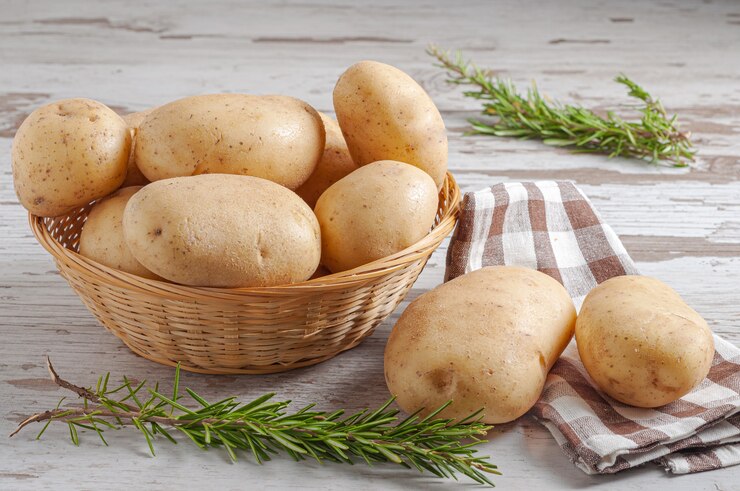
Potato Nutrition Facts
A medium-sized baked potato (about 173 g) with skin provides approximately:
| Nutrient | Amount | % Daily Value |
|---|---|---|
| Calories | 161 kcal | 8% |
| Carbohydrates | 37 g | 13% |
| Dietary Fiber | 3.8 g | 14% |
| Protein | 4.3 g | 9% |
| Fat | 0.2 g | <1% |
| Potassium | 926 mg | 20% |
| Vitamin C | 28 mg | 31% |
| Vitamin B6 | 0.54 mg | 32% |
| Folate | 48 mcg | 12% |
| Magnesium | 48 mg | 12% |
| Iron | 1.9 mg | 10% |
| Niacin | 2.4 mg | 15% |
Source: USDA FoodData Central
Bioactive Plant Compounds
Beyond the basic macro and micronutrients, potatoes contain several bioactive compounds that contribute to health:
- Chlorogenic acid — the primary polyphenol in potatoes, with antioxidant and anti-inflammatory properties
- Catechin — a flavonoid also found in green tea, concentrated mainly in purple-fleshed varieties
- Lutein — a carotenoid important for eye health, present mainly in yellow-fleshed potatoes
- Kukoamines — compounds that may help lower blood pressure (first discovered in potatoes and the Chinese medicinal plant Lycium chinense)
Purple and red-fleshed varieties contain significantly higher levels of anthocyanins and total antioxidants — up to 2 to 3 times more than white-fleshed potatoes.
What Are the 7 Types of Potatoes?
- Understanding potato types is the single most important factor in cooking success.
- Here's a comprehensive breakdown:
| Type | Texture | Starch Level | Best For | GI (Boiled) | Popular Varieties |
|---|---|---|---|---|---|
| Russet | Mealy/Fluffy | High | Baking, frying, mashing | 78–85 | Russet Burbank, Ranger Russet |
| Yellow | Semi-waxy | Medium | Roasting, grilling, soups | 70–77 | Yukon Gold, German Butterball |
| Red | Waxy/Firm | Low-Medium | Salads, boiling, roasting | 55–70 | Red Bliss, Norland |
| White | Semi-mealy | Medium | Mashing, boiling, steaming | 70–80 | Kennebec, Atlantic |
| Purple/Blue | Semi-waxy | Medium | Salads, roasting, baking | 55–65 | Purple Majesty, Adirondack Blue |
| Fingerling | Waxy/Firm | Low | Roasting, pan-frying, salads | 55–68 | Russian Banana, French Fingerling |
| Petite/Baby | Waxy | Low | Roasting whole, side dishes | 55–70 | Baby Dutch Yellow, Marble-sized |
Waxy vs Mealy: A Practical Guide
- Think of it this way.
- A mealy potato is like a dry towel — it absorbs everything. It soaks up butter, cream, gravy. When cooked, its cells separate easily, creating a fluffy, crumbly texture. Perfect for mashed potatoes and baked potatoes.
A waxy potato is like a wet towel — it holds together. The cells stick to each other because of lower starch content and higher moisture. This makes waxy potatoes ideal for dishes where you want the potato to maintain its shape: salads, soups, gratins, and boiled preparations.
The science of crispiness: When roasting, high-starch potatoes develop better Maillard reaction browning because surface starch converts to simple sugars that caramelize. For the crispiest roast potatoes, par-boil russets or Yukon Golds until the edges are slightly roughened, then roast in hot oil at 220°C (425°F).
Health Benefits of Potatoes
Heart Health and Blood Pressure
Potatoes are one of the richest dietary sources of potassium — a single medium potato provides about 20% of daily needs. Potassium helps counteract the effects of sodium and supports healthy blood pressure levels. A 2016 meta-analysis published in the Journal of the American Heart Association found that higher potassium intake was associated with a 24% lower risk of stroke.
Satiety and Weight Management
Contrary to popular belief, potatoes are remarkably filling. In a classic 1995 study by Holt et al. published in the European Journal of Clinical Nutrition, boiled potatoes scored highest on the Satiety Index — 323% compared to the white bread baseline of 100%. This means plain boiled potatoes keep you fuller for longer than almost any other common food, which can actually support weight management when prepared healthfully.
Resistant Starch and Gut Health
Here's a fact that surprises many people: cooling cooked potatoes significantly increases their resistant starch content. When you cook and then refrigerate potatoes, the starch molecules retrograde — they re-crystallize into structures that resist digestion in the small intestine. This resistant starch then functions like soluble fiber, feeding beneficial gut bacteria in the colon.
Research shows that cooling cooked potatoes can reduce their glycemic index by approximately 25–26%. So potato salad, served cold, is genuinely better for blood sugar management than a hot baked potato. Even reheating cooled potatoes retains some of the resistant starch benefit.
Antioxidant Properties
The chlorogenic acid in potatoes has demonstrated anti-inflammatory and antioxidant effects in multiple in vitro studies. Purple potatoes, in particular, contain anthocyanins that have been linked to reduced oxidative stress. A 2012 study in the Journal of Agricultural and Food Chemistry found that consuming 6–8 small purple potatoes twice daily for four weeks lowered blood pressure and did not cause weight gain in overweight participants.
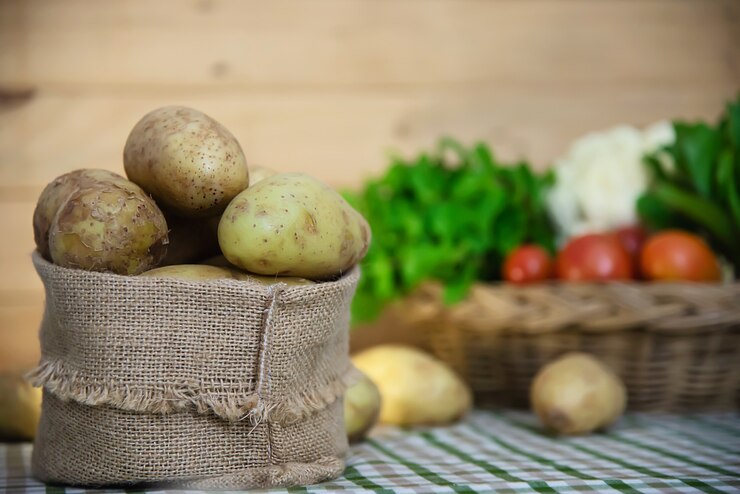
How to Cook Potatoes: Methods and Recipes
Boiling
- Best for: waxy and all-purpose potatoes. Start with cold, salted water. Bring to a boil, then simmer for 15–20 minutes until fork-tender. For even cooking, cut potatoes into uniform pieces.
- Drain thoroughly — excess moisture is the enemy of good mashed potatoes.
Baking
- Best for: high-starch varieties like Russet. Prick the skin several times with a fork, rub with oil and salt, and bake at 200°C (400°F) for 45–60 minutes. The interior becomes fluffy while the skin turns crisp.
- Skip the foil — it traps steam and essentially steams the potato instead.
Roasting
- Best for: Yukon Gold, red, or fingerling potatoes. Cut into even chunks, toss with oil, salt, and herbs.
- Spread in a single layer on a baking sheet — overcrowding causes steaming. Roast at 220°C (425°F) for 30–40 minutes, flipping halfway through.
Frying and Air-Frying
For classic French fries, the double-fry method produces the best results: first fry at 150°C (300°F) for 5–6 minutes to cook through, then fry again at 190°C (375°F) for 2–3 minutes until golden and crispy.
Air-frying uses 70–80% less oil while achieving similar crispness. Toss cut potatoes in 1–2 teaspoons of oil and air-fry at 200°C (400°F) for 20–25 minutes, shaking the basket halfway.
Global Potato Dishes by Country
Potatoes adapt to virtually every cuisine:
- India — Aloo gobi, dum aloo, batata vada, aloo tikki
- France — Pommes frites, gratin dauphinois, pommes purée
- Spain — Patatas bravas, tortilla española
- Peru — Papa a la huancaína, causa limeña
- Germany — Kartoffelsalat, Bratkartoffeln, Knödel
- UK — Shepherd's pie, jacket potatoes, chips
- Korea — Gamja-jeon (potato pancakes), gamja-tang
- Lebanon — Batata harra (spicy potatoes)
- Russia — Draniki (potato pancakes), potato-filled pirozhki
- Japan — Korokke (croquettes), nikujaga (meat and potato stew)
Glycemic Index of Potatoes: A Detailed Comparison
The glycemic index (GI) of potatoes varies dramatically based on variety, preparation method, and whether the potato has been cooled. This is something most guides completely overlook.
| Preparation Method | Russet | Red | Yellow (Yukon Gold) | Purple |
|---|---|---|---|---|
| Boiled (hot) | 78 | 55–59 | 70 | 55–60 |
| Baked | 85–111 | 70–75 | 72–78 | 60–65 |
| Mashed (with butter) | 83–87 | 65–70 | 73 | N/A |
| Fried (French fries) | 75 | 65 | 70 | N/A |
| Boiled then cooled (4°C) | 55–60 | 43–50 | 50–56 | 40–50 |
| Roasted | 80–85 | 65–70 | 72 | 58–63 |
- *GI values are approximate and vary based on cooking time and specific cultivars.
- Sources: University of Sydney GI database, various clinical studies.*
Key takeaways: Purple and red potatoes consistently have lower GI values. Cooling any potato after cooking reduces GI by roughly 25%. Baking tends to produce the highest GI readings. Adding fat or acid (vinegar, lemon juice) to potatoes also lowers the glycemic response.
Potatoes for Special Diets
This is an area that most potato guides ignore entirely, yet it's incredibly relevant to real people making real dietary decisions.
Gluten-Free Diets
Potatoes are naturally 100% gluten-free, making them an excellent carbohydrate source for people with celiac disease or gluten sensitivity. Potato flour and potato starch are widely used in gluten-free baking as wheat substitutes.
Diabetic Diet
People with diabetes don't need to avoid potatoes — but variety and preparation matter. Choose waxy or purple varieties with lower GI, cook and cool before eating, keep portions moderate (about 1/2 to 1 cup cooked), and pair with protein, healthy fat, or vinegar to further blunt the glycemic response.
Low-FODMAP Diet
Plain potatoes are classified as low-FODMAP by Monash University and are generally well-tolerated by people with IBS. However, processed potato products (instant mashed potatoes, potato chips with added ingredients) may contain high-FODMAP additives.
Keto and Low-Carb Diets
With approximately 37 g of carbohydrates per medium potato, regular potatoes are not keto-compatible. Most ketogenic protocols limit daily carbs to 20–50 g. If you're on strict keto, consider small portions of turnips or cauliflower as alternatives.
Sports Nutrition
Potatoes are increasingly popular among endurance athletes as a whole-food carbohydrate source. A 2019 study published in the Journal of Applied Physiology found that potato purée was equally effective as commercial carbohydrate gels for sustaining blood glucose and performance during prolonged cycling. They provide potassium for muscle function and are easier on the stomach than many processed alternatives.
Who Should Avoid Potatoes? Safety and Toxicity
Solanine and Glycoalkaloids
Potatoes naturally produce glycoalkaloids — primarily solanine and chaconine — as a defense mechanism against pests. In normal potatoes, these compounds are present at safe levels (typically 20–80 mg/kg). However, concentrations can spike dangerously in potatoes that are:
- Green-skinned (exposed to light triggers chlorophyll and glycoalkaloid production)
- Sprouted (sprouts and the tissue around them concentrate toxins)
- Damaged or bruised
- Stored improperly (warm, brightly lit conditions)
Symptoms of glycoalkaloid poisoning include nausea, vomiting, diarrhea, abdominal cramps, and in severe cases neurological symptoms. The toxic threshold is approximately 200 mg/kg. Always cut away green portions and sprouts generously. If a potato tastes bitter, discard it.
Acrylamide Concerns
When starchy foods like potatoes are cooked at temperatures above 120°C (250°F), a chemical reaction between amino acids and sugars produces acrylamide — a compound classified as a "probable human carcinogen" by the IARC. Acrylamide levels are highest in chips and French fries, especially when cooked to a dark brown color.
To reduce acrylamide: aim for a golden yellow color rather than dark brown when frying or roasting, soak cut potatoes in water for 15–30 minutes before cooking, and avoid storing raw potatoes in the refrigerator (cold storage increases reducing sugars that contribute to acrylamide formation).
Potato Allergy
True potato allergy is rare but does exist. The primary allergen is patatin, a storage protein in potato tubers. People with latex allergy may experience cross-reactivity with potatoes due to structural similarities between latex proteins and patatin. Symptoms range from mild oral itching to, in rare cases, anaphylaxis.
How to Buy and Store Potatoes
Choosing Potatoes at the Store
- Not all potatoes on the shelf are equal.
- Here's what to look for:
- Firmness — Potatoes should feel solid and heavy for their size. Soft spots indicate decay.
- Skin condition — Smooth, unblemished skin without cuts, bruises, or wrinkles. Minor surface dirt is fine.
- No green patches — Even small green areas indicate elevated solanine.
- No sprouting — Small "eyes" are normal; actual sprouts are not.
- Smell — Fresh potatoes have a mild, earthy scent. A musty or sour smell means spoilage.
Storage Best Practices
- Store potatoes in a cool (7–10°C / 45–50°F), dark, well-ventilated space. A paper bag, burlap sack, or open basket works well.
- Do not store in plastic bags — they trap moisture and accelerate rot.
- Critical: Keep potatoes away from onions. Both release gases that accelerate each other's spoilage.
- Also avoid refrigerating raw potatoes — temperatures below 4°C convert starch to sugar, causing an unpleasant sweet taste and increasing acrylamide formation when cooked.
Properly stored, most potato varieties last 2–3 weeks at room temperature and up to 2–3 months in optimal cool-storage conditions.
Potato Myths — Debunked
Myth 1: "Potatoes are just empty calories."
Reality: Potatoes provide more potassium than bananas, meaningful amounts of vitamin C, B6, fiber, and plant compounds like chlorogenic acid. Calling them "empty" calories is simply inaccurate.
Myth 2: "Potatoes make you fat."
Reality: A plain medium potato has about 160 calories — less than a cup of cooked rice. It's the butter, sour cream, cheese, and deep-frying that add calories. Boiled potatoes are literally the most satiating common food ever measured.
Myth 3: "All the nutrition is in the skin."
Reality: While the skin is fiber-rich and contains concentrated nutrients, the flesh contains the majority of potassium, vitamin C, and B vitamins simply because there's so much more of it. Eating the skin is beneficial, but peeled potatoes are still nutritious.
Myth 4: "You should always avoid potatoes if you have diabetes."
Reality: Portion control and preparation method matter far more than blanket avoidance. Cooled potatoes, purple varieties, and potatoes paired with protein/fat have moderate glycemic responses that many diabetics can accommodate.
Potatoes vs Sweet Potatoes: How Do They Compare?
This is one of the most frequently searched comparisons, so let's settle it with data:
| Factor | Regular Potato (medium, baked) | Sweet Potato (medium, baked) |
|---|---|---|
| Calories | 161 kcal | 103 kcal |
| Carbohydrates | 37 g | 24 g |
| Fiber | 3.8 g | 3.8 g |
| Protein | 4.3 g | 2.3 g |
| Potassium | 926 mg | 542 mg |
| Vitamin C | 28 mg | 22 mg |
| Vitamin A | 17 IU | 21,907 IU |
| GI (boiled) | 55–85 (varies) | 44–61 |
| Best for | Potassium, B6, satiety | Vitamin A, lower GI |
Neither is objectively "healthier" — they offer different nutritional strengths. Sweet potatoes dominate in vitamin A (beta-carotene), while regular potatoes provide significantly more potassium and protein. Ideally, include both in your diet.
They are not interchangeable in all recipes. Sweet potatoes have a distinctly sweet flavor and moister texture that works in different contexts. You wouldn't make aloo gobi with sweet potatoes, and you wouldn't make sweet potato pie with russets.
Environmental Footprint and Sustainability
Potatoes are remarkably efficient compared to other staple crops:
- Water footprint: ~287 liters per kg (vs. rice at ~2,500 L/kg and wheat at ~1,800 L/kg)
- Carbon footprint: ~0.5 kg CO₂e per kg (among the lowest of all staple foods)
- Land use: Potatoes produce more calories per hectare than any major cereal crop
- Yield: Average global yield is approximately 21 tonnes per hectare
Climate change poses emerging threats to potato production worldwide. Rising temperatures increase the prevalence of pests like the potato tuber moth and diseases like late blight. Research institutions including CIP (International Potato Center) in Lima are developing heat-tolerant and disease-resistant varieties to safeguard future production.
Industrial and Processed Potato Products
Beyond the kitchen, potatoes serve a vast industrial ecosystem:
- Potato starch — used in textiles, paper manufacturing, adhesives, and as a thickener in processed foods
- Potato flour and flakes — used in gluten-free baking, instant mashed potatoes, and snack production
- Frozen French fries — a massive global industry (the US alone produces over 4.5 million tonnes annually)
- Chips/Crisps — one of the world's most popular snack foods, though significantly higher in calories, fat, and sodium than whole potatoes
- Bioethanol — potato starch can be fermented to produce bioethanol for fuel
- Bioplastics — emerging applications use potato starch as a base for biodegradable packaging materials
From a nutritional standpoint, whole potatoes are always preferable to highly processed forms. A medium baked potato has about 160 calories; the same weight in potato chips has approximately 530 calories.
Frequently Asked Questions
Is it potatos or potatoes?
The correct spelling is potatoes. The plural adds "-es" to the singular "potato." This follows the same pattern as tomato → tomatoes and hero → heroes. There is no standard English context where "potatos" is correct.
Just how old is the potato, actually?
Wild potato species have existed in South America for approximately 13,000 years. Domesticated potato cultivation dates back 7,000 to 10,000 years in the Peruvian and Bolivian Andes, making potatoes one of humanity's oldest cultivated crops.
Can potatoes help with hyperpigmentation?
Some home remedies suggest raw potato slices can lighten dark spots due to their catecholase enzyme content, which may inhibit melanin production. However, scientific evidence for this is extremely limited. There are no peer-reviewed clinical trials confirming potato as an effective treatment for hyperpigmentation. If dark spots are a concern, consult a dermatologist for proven treatments.
How much do potatoes cost in India?
Potato prices in India fluctuate seasonally and regionally. As of 2024–2025, retail prices typically range from ₹20 to ₹45 per kg depending on the season, variety, and location. Prices tend to be lowest during the main harvest season (January–March) and highest during the lean months (August–October).
Do you want the potato to hold its shape or break down?
This is the fundamental question for choosing the right potato. If you want it to hold its shape (salads, soups, roasting), choose waxy varieties like Red Bliss or fingerlings. If you want it to break down (mashing, baking, thickening stews), choose mealy/starchy varieties like Russet.
Final Thoughts: Why Potatoes Deserve a Place in Your Diet
Potatoes are not a superfood — no single food is. But they are one of the most nutrient-dense, affordable, sustainable, and versatile staple foods available to humanity. They provide essential potassium, vitamin C, vitamin B6, and fiber. They can be prepared in dozens of ways to suit virtually any cuisine or dietary preference.
- The key is preparation. A boiled or baked potato with skin is a genuinely healthful food.
- A plate of deep-fried chips smothered in cheese sauce is not — but that's not the potato's fault.
Choose the right variety for your dish. Store them properly. Don't eat green or heavily sprouted ones. And don't be afraid to enjoy them as part of a balanced diet.
If you found this guide helpful, bookmark it for reference next time you're standing in the produce aisle wondering which potato to pick — or share it with someone who still thinks potatoes are "just carbs." They deserve to know better.
Scientific Sources
- Nightshade Vegetables: A Dietary Trigger for Worsening Inflammatory Bowel Disease and Irritable Bowel Syndrome? — Kuang R et al., 2023, Digestive diseases and sciences
- Associations between specific dietary patterns, gut microbiome composition, and incident subthreshold depression in Chinese young adults — Jiang X et al., 2024, Journal of advanced research
- Lifestyle Patterns in Patients with Type 2 Diabetes — Gherasim A et al., 2023, Metabolites
- Physical, Chemical and Sensory Characterization of Deep-Fried Fresh-Cut Potatoes Coated with Hydrocolloid/Herbal Extracts — Kurek M et al., 2022, Food technology and biotechnology
- The Southern European Atlantic diet and depression risk: a European multicohort study — Carballo-Casla A et al., 2023, Molecular psychiatry
- The Southern European Atlantic diet — Tejera-Pérez C et al., 2021, Minerva endocrinology
- Dietary Transition in the South Asian Diaspora: Implications for Diabetes Prevention Strategies — Parackal S, 2017, Current diabetes reviews
- Healthy aging diets other than the Mediterranean: a focus on the Okinawan diet — Willcox DC et al., 2014, Mechanisms of ageing and development
- [The Secrets of the Mediterranean Diet.Does [Only] Olive Oil Matter?](https://pubmed.ncbi.nlm.nih.gov/31817038/) — Mazzocchi A et al., 2019, Nutrients
- Caloric restriction, caloric restriction mimetics, and healthy aging in Okinawa: controversies and clinical implications — Willcox BJ et al., 2014, Current opinion in clinical nutrition and metabolic care
- Potato Consumption and All-Cause and Cardiovascular Disease Mortality - A Long-Term Follow-Up of a Norwegian Cohort — Arnesen EK et al., 2024, The Journal of nutrition
- The Southern European Atlantic diet and all-cause and cause-specific mortality: a European multicohort study — Carballo-Casla A et al., 2024, European journal of preventive cardiology
- Association of gestational metabolic syndrome with the Chinese Healthy Eating Index in mid-pregnancy: a cross-sectional study — Wu H et al., 2024, Nutrition & metabolism
- A Systematic Review of Principal Component Analysis-Derived Dietary Patterns in Japanese Adults: Are Major Dietary Patterns Reproducible Within a Country? — Murakami K et al., 2019, Advances in nutrition (Bethesda, Md.)
- Are legume-based recipes an appropriate source of nutrients for healthy ageing?
- A prospective cohort study — Caballero FF et al., 2020, The British journal of nutrition
- Accumulation of antitumor polyketides by fermentation of Rubus delavayi Franch. with Clonostachys rogersoniana — Mei RF et al., 2024, Fitoterapia
- Major dietary patterns in relation to preeclampsia among Iranian pregnant women: a case-control study — Abbasi R et al., 2021, The journal of maternal-fetal & neonatal medicine : the official journal of the European Association of Perinatal Medicine, the Federation of Asia and Oceania Perinatal Societies, the International Society of Perinatal Obstetricians
- Extraction of honokiol from Artemisia argyi and in vitro and in vivo investigation of its antifungal activity — Wang X et al., 2023, Natural product research
- [[Secrets of the Mediterranean diet]](https://pubmed.ncbi.nlm.nih.gov/18770965/) — Farah R et al., 2008, Harefuah
- Impact of immediate feedback on the learning of medical students in pharmacology — Badyal DK et al., 2019, Journal of advances in medical education & professionalism
उपयोगकर्ताओं के प्रश्न
How do potatoes compare to rice in calorie content?
Client_800304
2 दिनों पहले
A plain medium potato has about 160 calories, which is fewer than a cup of cooked rice, typically around 200 calories for white rice. Potatoes are also a source of potassium, vitamin C, vitamin B6, and fiber. While potatoes offer nutritional benefits, combining them with high-fat toppings or frying can increase their calorie content significantly. As for rice, varieties like brown rice provide more fiber than white rice, potentially making them more filling. When comparing the two, consider your dietary needs, health goals, and how they fit into your daily calorie intake.
What is the best way to prepare potatoes for maximum antioxidant benefits?
Client_8ef586
7 दिनों पहले
To maximize the antioxidant benefits of potatoes, it's best to cook them with their skins on, as the skin contains substantial amounts of chlorogenic acid, which has antioxidative properties. Baking or steaming potatoes helps preserve these antioxidants better than boiling, where nutrients can leach into the cooking water. If you'd like additional resistant starch benefits, you can cook, cool, and then reheat the potatoes. People with certain allergies or sensitivities, like an allergy to patatin, may need to avoid potatoes. If any adverse reactions occur after eating potatoes, consult a medical professional.
What type of potato is best for making mashed potatoes?
Client_792cef
12 दिनों पहले
For making mashed potatoes, high-starch varieties like Russet potatoes are the best choice. These potatoes have a fluffy texture when cooked, which is ideal for achieving smooth, creamy mashed potatoes. It helps to cut them into uniform pieces for even cooking and to drain thoroughly as excess moisture can lead to watery mash. If you are considering the glycemic index or digestive health, pairing mashed potatoes with protein or healthy fats can help manage the body's glycemic response. If you have IBS, note that plain potatoes are considered low-FODMAP and usually well-tolerated.
How to properly store cooked potatoes for best freshness?
Client_8625bb
17 दिनों पहले
To store cooked potatoes for optimal freshness, place them in an airtight container and refrigerate within two hours of cooking. This inhibits bacterial growth, keeping the potatoes safe to eat for 3–5 days. Avoid leaving cooked potatoes at room temperature, as this can lead to spoilage. If you wish to freeze cooked potatoes, do so only if they are mashed or pureed; freezing whole or cubed potatoes often results in a grainy texture. Ensure to reheat leftovers to at least 165°F (74°C) for food safety. When in doubt, a quick sniff test can help determine freshness—discard if they smell off.
What are the environmental benefits of growing potatoes?
Client_4926dd
22 दिनों पहले
Growing potatoes offers several environmental benefits. Potatoes require less water than most other staple crops, making them an efficient option in areas with water scarcity. They also have a relatively small carbon footprint due to short growing seasons and high yield per hectare, reducing emissions linked to farming activities. Additionally, potatoes improve soil health by increasing organic matter and reducing erosion. However, since conventional potato farming can involve heavy pesticide use, opting for sustainable practices minimizes harm to the environment. Consider incorporating crop rotation and organic methods. Consult an agricultural expert for specific environmental strategies.
How does potassium in potatoes affect heart health?
Client_fbdcee
32 दिनों पहले
Potassium in potatoes can have a positive impact on heart health by helping to lower blood pressure, which reduces the risk of heart disease and stroke. Potassium aids in balancing sodium levels and easing tension in blood vessel walls. To obtain the potassium benefits, opt for boiled or baked potatoes as frying can increase unhealthy fats and acrylamide levels. An average adult should aim for 2,500-3,000 mg of potassium daily, and potatoes provide a good source. Consult a doctor if you have kidney disease, as excessive potassium can be harmful.
Can I eat potatoes if I'm trying to lose weight?
Client_663b1a
42 दिनों पहले
Yes, you can eat potatoes while trying to lose weight, but it depends on how they are prepared. Boiled or baked potatoes with skin are nutrient-dense, offering fiber and vitamins like vitamin C without excessive calories. Avoid frying potatoes or topping them with high-calorie add-ons, as these can lead to weight gain. Stick to moderate portions and pair potatoes with other vegetables and lean proteins for a balanced meal. If you are struggling with weight loss or have specific health conditions, consult a healthcare professional for personalized advice.
How long should I cool potatoes before eating to lower glycemic response?
Client_778487
52 दिनों पहले
To lower the glycemic response of potatoes, you should cool them for at least a few hours after cooking, ideally refrigerating them overnight. This cooling allows the starches to form resistant starch, which is less digestible and helps reduce the glycemic impact. Cooking and then cooling converts some of the starch into resistant starch, which is beneficial for blood sugar control. For best results, use waxy or purple potato varieties and pair them with protein, healthy fat, or vinegar. If you have diabetes or other concerns, consider consulting a doctor or dietitian for personalized advice.
What are the best cooking methods for retaining potatoes' nutrients?
Client_de0abd
61 दिनों पहले
To retain the maximum nutrients when cooking potatoes, opt for methods like steaming or microwaving. These techniques minimize water exposure, helping preserve water-soluble vitamins like vitamin C and B6. Boiling can lead to nutrient loss, especially if potatoes are peeled. Baking retains most nutrients but requires longer cooking times, which may reduce antioxidant levels. Avoid frying, as it adds unhealthy fats and calories. For optimal nutrition, cook potatoes with their skins on and use short cooking durations. If you have specific dietary concerns, consult a nutritionist for personalized advice.
What is the best way to soak potatoes to reduce acrylamide before cooking?
Client_2c6dd5
71 दिनों पहले
To reduce acrylamide, just soak cut potatoes in water for about 15-30 minutes before cooking. This helps to wash away some of the sugars that form acrylamide during cooking. Be sure to dry them well afterwards, though, to avoid splattering when frying. Keep it simple and aim for a nice golden-yellow color when you're cooking them!
संबंधित आलेख

Nutrition
पॉइंट कैप्सूल्स के फायदे, खुराक, सामग्री, साइड इफेक्ट्स
पॉइंट कैप्सूल्स के फायदे, खुराक, सामग्री, और साइड इफेक्ट्स की खोज
2,982

Nutrition
सप्तामृत लौह के फायदे, खुराक, सामग्री, साइड इफेक्ट्स
सप्तामृत लौह के फायदे, खुराक, सामग्री, और साइड इफेक्ट्स की जानकारी
6,150
Nutrition
Side Effects of Curd According to Ayurveda: Why It’s Not Always the Health Food You Think
According to Ayurvedic wisdom, curd can disturb digestion, aggravate certain doshas, and create something called “ama” — toxic buildup in the body. And here's the kicker: these side effects aren't instant. They creep up — through fatigue, sinus issues, sk
17,594

Nutrition
Ikshu Rasa: Health and Science of Sugarcane Juice
Explore the health benefits, modern research, and Ayurvedic views on Ikshu Rasa (sugarcane juice), backed by scientific studies and credible medical sources.
7,338

Nutrition
What to Eat After Masturbation? Ayurvedic Foods and Recovery Advice
Wondering what to eat after ejaculating? Discover Ayurvedic foods, drinks, and energy-restoring practices to support recovery after sperm loss or hand practice
32,764

Nutrition
How to Use Sunflower Seeds for Health, Hair, and Weight Management
Discover how to use sunflower seeds for weight loss, hair health, and more. Learn about sunflower seeds uses, recipes, and Ayurvedic benefits
5,070

Nutrition
तरबूज के बीज कैसे खाएं: फायदे और सुरक्षित उपयोग के लिए आयुर्वेदिक गाइड
तरबूज के बीजों को स्वास्थ्य लाभ के लिए कैसे खाएं? जानें तरबूज के बीज खाने, भूनने और इस्तेमाल करने के बेहतरीन तरीके, साथ ही रोजाना सुरक्षित सेवन के लिए आयुर्वेदिक टिप्स।
11,893

Nutrition
Best Noni Juice India: A Comprehensive Health & Buying Guide
Discover the best noni juice in India through scientific insights, top brand comparisons, and expert tips. Learn how noni benefits health and find your ideal choice.
4,788
Nutrition
Vidaryadi Ghritam Uses and Health Benefits in Ayurveda
Learn about the Ayurvedic formulation Vidaryadi Ghritam, its traditional uses, clinical relevance, and benefits for fertility, immunity, and strength.
3,591

Nutrition
Shilapravang Special Benefits, Dosage, Side Effects, Ingredients
Exploration of Shilapravang Special Benefits, Dosage, Side Effects, Ingredients
3,049
विषय से संबंधित परामर्श
अतिरिक्त दस्तावेज़
© 2024 Ask Ayurveda. सर्वाधिकार सुरक्षित।