आयुर्वेदिक डॉक्टर से प्रश्न पूछें और निःशुल्क या भुगतान मोड में अपनी चिंता की समस्या पर ऑनलाइन परामर्श प्राप्त करें। 2,000 से अधिक अनुभवी डॉक्टर हमारी साइट पर काम करते हैं और आपके प्रश्नों का इंतजार करते हैं और उपयोगकर्ताओं को उनकी स्वास्थ्य समस्याओं को हल करने में प्रतिदिन मदद करते हैं।


Body DetoxEar, Nose, and Throat DisordersGeriatrics & RejuvenationImmunodeficiencyInfertility TreatmentNutritionOrthopedic DisordersPediatricsRespiratory DisordersSexually Transmitted Diseases (STDs)Surgery RecoveryUrological DisordersVascular DisordersDental DisordersEndocrinological DisordersGastrointestinal DisordersYoga TherapyGeneral MedicineAllergic DisordersCardio DisordersGynecology and ObstetricsCosmetologySkin and Hair DisordersEye DisordersInfectious DiseasesMental DisordersNeurological DisordersOncologyPanchakarmaSexual Health & DisordersSports Medicine
पर प्रकाशित 12/16/24
(को अपडेट 08/15/26)
4,263
Ras Pachak Vati Uses: An Ayurvedic Solution for Digestive Wellness
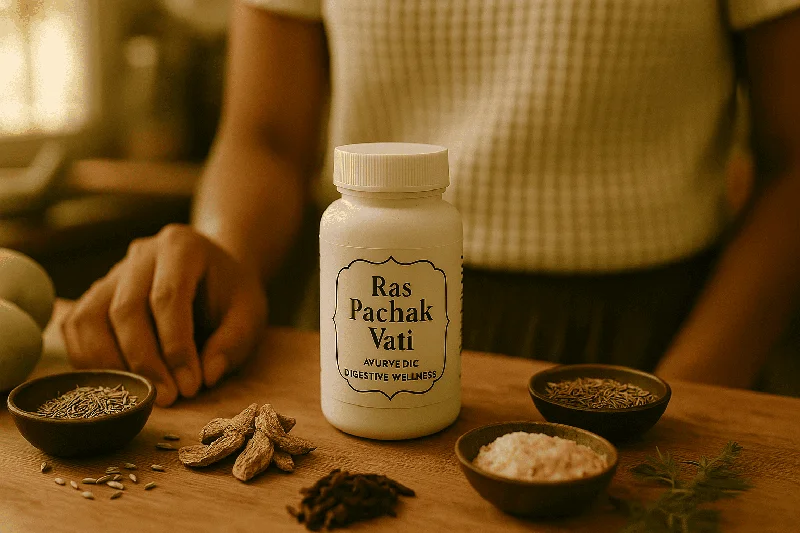
Ras Pachak Vati is a classical Ayurvedic formulation specifically designed to correct disorders originating at the level of Rasa Dhatu — the first and most foundational tissue in the body. If you struggle with chronic indigestion, bloating, loss of appetite, or a sluggish metabolism, this herbal-mineral tablet works by reigniting your digestive fire (Agni) and ensuring that the very first stage of tissue nourishment functions properly. Unlike generic digestive pills, Ras Pachak Vati addresses the root cause of digestive dysfunction according to Ayurvedic physiology, not just the symptoms.
In this comprehensive guide, we break down everything you need to know — from the classical ingredients and their scientifically studied properties, to dosage guidelines, side effects, brand comparisons, and dietary recommendations that no other resource currently covers in one place.
What Is Ras Pachak Vati?
- Ras Pachak Vati (रसपाचक वटी) is a polyherbal Ayurvedic tablet classified under the category of Dipan-Pachan medicines — formulations that simultaneously kindle the digestive fire and help digest accumulated toxins (Ama).
- The term itself tells you exactly what it does:
- Ras (Rasa) — refers to the first Dhatu (tissue) formed after digestion of food
- Pachak — means "that which digests" or "that which corrects"
- Vati — means tablet or pill
So literally, it is "a tablet that corrects/digests the Rasa Dhatu."
The Concept of Rasa Dhatu in Ayurveda
- In Ayurvedic physiology, the food you eat is first converted into Ahara Rasa (nutrient essence) through the action of Jatharagni (stomach fire).
- This Ahara Rasa then transforms into Rasa Dhatu — the first of seven sequential tissues (Sapta Dhatu):
| Dhatu (Tissue) | English Equivalent | Formed From |
|---|---|---|
| Rasa | Plasma / Nutrient fluid | Digested food |
| Rakta | Blood | Rasa |
| Mamsa | Muscle | Rakta |
| Meda | Fat / Adipose | Mamsa |
| Asthi | Bone | Meda |
| Majja | Marrow / Nerve | Asthi |
| Shukra | Reproductive tissue | Majja |
Here's why this matters: if Rasa Dhatu is improperly formed — due to weak Agni, poor diet, or accumulated Ama — every subsequent tissue suffers. It's a domino effect. Weak Rasa leads to poor blood quality, which leads to weak muscles, and so on down the chain. This is why Ayurveda considers Rasa Dhatu correction as foundational to overall health.
What Is Raspradoshaj Vikar?
When Rasa Dhatu becomes vitiated (imbalanced), the resulting cluster of symptoms is called Raspradoshaj Vikar (रसप्रदोषज विकार). Classical texts like Charaka Samhita and Sushruta Samhita describe these symptoms in detail:
- Aruchi — loss of taste / anorexia
- Asya Vairasya — bad or altered taste in the mouth
- Arasagyata — inability to perceive taste
- Hrillas — nausea
- Gaurava — heaviness in the body
- Tandra — drowsiness / lethargy
- Angamarda — body aches and malaise
- Jwara — fever
- Tama — feeling of darkness or fainting
- Pandutva — pallor / anemia
- Srotarodha — blockage of body channels
- Klaibya — impotency
- Saada — general debility
- Krishata — emaciation
- Agnisada — diminished digestive fire
If you recognize several of these in yourself, it's a strong indication that Rasa Dhatu-level correction may be needed — and that's precisely where Ras Pachak Vati comes in.
How Ras Pachak Vati Fits Into the Dhatu Pachan System
- What many people don't realize is that Ras Pachak Vati is part of a broader system of Dhatu-specific corrective formulations in Ayurveda.
- Each Dhatu has its own "Pachak Vati":
| Formulation | Target Dhatu | Primary Action |
|---|---|---|
| Ras Pachak Vati | Rasa (Plasma) | Corrects nutrient fluid, boosts Agni |
| Rakta Pachak Vati | Rakta (Blood) | Purifies blood, detoxifies |
| Mamsa Pachak Vati | Mamsa (Muscle) | Supports muscle tissue metabolism |
| Medo Pachak Vati | Meda (Fat) | Aids fat metabolism, weight management |
| Asthi Majja Pachak Vati | Asthi & Majja (Bone & Marrow) | Supports bone and nerve health |
This systematic approach is unique to Ayurveda and highlights how Ras Pachak Vati is not just "another digestion tablet" — it's a targeted intervention at the most fundamental tissue level.
Key Ingredients of Ras Pachak Vati
Core Classical Ingredients
- The foundational formula of Ras Pachak Vati is rooted in classical Ayurvedic texts, though exact proportions may vary between manufacturers.
- The core ingredients typically include:
| Ingredient | Sanskrit/Hindi Name | Latin Name | Key Action |
|---|---|---|---|
| Kutaki | कुटकी | Picrorhiza kurroa | Hepatoprotective, Agni-kindling |
| Patol | पटोल | Trichosanthes dioica | Anti-inflammatory, Pitta-balancing |
| Indrayava | इन्द्रयव | Holarrhena antidysenterica | Anti-diarrheal, Ama-digesting |
| Guduchi | गुडूची | Tinospora cordifolia | Immunomodulatory, Rasayana |
| Musta | मुस्ता | Cyperus rotundus | Dipan-Pachan, anti-spasmodic |
A 2012 study published in the Journal of Ethnopharmacology demonstrated that Picrorhiza kurroa exhibits significant hepatoprotective and choleretic activity, supporting its traditional use in digestive formulations (Kant et al., 2012). Similarly, a 2011 review in Phytotherapy Research confirmed that Tinospora cordifolia possesses immunomodulatory, anti-inflammatory, and hepatoprotective properties validated through multiple in-vivo studies (Sharma et al., 2011).
Trikatu-Based Variants
Some manufacturers include a Trikatu-based composition, which adds pungent digestive stimulants:
- Shunthi (Dry Ginger / Zingiber officinale) — kindles Agni, reduces Ama
- Maricha (Black Pepper / Piper nigrum) — enhances bioavailability of other herbs
- Pippali (Long Pepper / Piper longum) — stimulates metabolism, supports respiratory health
- Hing (Asafoetida / Ferula assa-foetida) — carminative, anti-flatulent
- Jeera (Cumin / Cuminum cyminum) — digestive stimulant, anti-spasmodic
A noteworthy study in the Indian Journal of Pharmaceutical Sciences (2009) showed that piperine from Piper nigrum can enhance the bioavailability of co-administered compounds by up to 2000%, explaining why Trikatu-containing variants may have enhanced therapeutic effect.
Why Do Compositions Differ Between Manufacturers?
This is a question that confuses many buyers. The answer lies in the diversity of classical Ayurvedic literature itself.
Different manufacturers reference different classical texts — Sharangdhara Samhita, Bhaisajya Ratnavali, Rasa Tarangini, or proprietary modifications based on traditional Guru-Shishya Parampara (teacher-student lineage). Each text may prescribe slightly different combinations for Rasa Dhatu correction.
- For example, one manufacturer might emphasize bitter herbs like Kutaki and Patol (targeting Pitta-related Rasa vitiation), while another might focus on Trikatu and carminatives (targeting Kapha-related Rasa vitiation).
- Neither is "wrong" — they're addressing different pathological pathways that lead to Rasa Dhatu dysfunction.
This is actually a strength of Ayurveda, not a weakness. It allows practitioners to choose the variant best suited to a patient's specific Prakriti (constitution) and Vikriti (current imbalance).
Benefits and Uses of Ras Pachak Vati
Digestive Health and Agni Restoration
The primary benefit — and the reason most people seek out this formulation — is its powerful effect on digestive function:
- Restores Jatharagni (stomach fire) in cases of Mandagni (weak digestion)
- Breaks down Ama (undigested toxic material) that coats the intestinal lining
- Relieves bloating, gas, and abdominal distension through its carminative herbs
- Corrects acid-base imbalance in the stomach without suppressing acid production (unlike antacids)
- Improves nutrient absorption by optimizing the first stage of tissue formation
Thyroid and Metabolic Support
Several ingredients in Ras Pachak Vati — particularly Kutaki and Guduchi — have demonstrated effects on thyroid function and metabolic rate. A 2015 study in Evidence-Based Complementary and Alternative Medicine showed that Tinospora cordifolia supplementation positively influenced thyroid hormone levels in animal models with hypothyroidism.
From the Ayurvedic perspective, thyroid dysfunction is often linked to Rasa Dhatu vitiation and Kapha-Meda imbalance. By correcting Rasa at the foundational level, Ras Pachak Vati can support healthy metabolic function as a secondary benefit.
Appetite Regulation and Anorexia
For individuals suffering from persistent loss of appetite (Aruchi), Ras Pachak Vati works through the Dipana action — kindling the desire for food by stimulating digestive secretions. This is fundamentally diffrent from appetite stimulants that artificially increase hunger; instead, it restores the body's natural hunger signals.
Detoxification and Channel Clearance
Ama — the sticky, toxic byproduct of incomplete digestion — is considered the root cause of most diseases in Ayurveda. Ras Pachak Vati's Pachana (Ama-digesting) action helps clear Srotas (body channels) that have become blocked by this toxin, improving circulation, reducing heaviness, and alleviating body aches.
Who Can Benefit from Ras Pachak Vati?
- Individuals with chronic indigestion or weak appetite
- People experiencing unexplained fatigue, heaviness, or body aches
- Those with early-stage metabolic imbalances
- Anyone recovering from illness where digestive strength has been compromised
- People with symptoms of Raspradoshaj Vikar as described above
Dosage and How to Use Ras Pachak Vati
Standard Adult Dosage
| Parameter | Recommendation |
|---|---|
| Dose | 1–2 tablets |
| Frequency | 2–3 times daily |
| Timing | After meals (or as directed by physician) |
| Anupana (Vehicle) | Warm water or buttermilk |
| Duration | Typically 4–8 weeks, or as prescribed |
Age-Specific Dosage Guidelines
This is an area that virtually no other resource covers, yet it's critically important:
- Children (5–12 years): Half tablet, twice daily after meals with warm water. Only under supervision of a qualified Ayurvedic practitioner.
- Adolescents (13–17 years): 1 tablet, twice daily after meals.
- Adults (18–60 years): 1–2 tablets, 2–3 times daily.
- Elderly (60+ years): Start with 1 tablet twice daily. Elderly patients often have naturally diminished Agni, so lower initial doses are advisable. Adjust based on response and tolerance.
Important: These are general guidelines. Your Vaidya (Ayurvedic doctor) should personalize the dose based on your Prakriti, current disease state, strength, and other medications.
How Long Should You Take It?
Most practitioners recommend a minimum course of 3–4 weeks before evaluating results. Significant improvement in appetite and digestion is often noticed within 7–14 days, but full correction of Rasa Dhatu — especially in chronic cases — may take 2–3 months.
Long-term use (beyond 3 months) should only be continued under professional guidance, particuarly for formulations containing mineral ingredients.
Ras Pachak Vati vs. Chemical Digestive Medicines
This comparison is important because many people default to over-the-counter antacids or proton pump inhibitors (PPIs) without understanding the fundamental differences:
| Feature | Ras Pachak Vati | Antacids / PPIs |
|---|---|---|
| Mechanism | Kindles Agni, digests Ama | Neutralizes or suppresses acid |
| Root cause treatment | Yes — corrects Rasa Dhatu | No — symptom management only |
| Long-term safety | Generally safe with guidance | PPIs linked to nutrient malabsorption, kidney issues (FDA warning, 2014) |
| Dependency | Non-habit forming | Rebound acid secretion on withdrawal |
| Side effects | Minimal when used correctly | B12 deficiency, calcium malabsorption, C. difficile risk |
| Metabolic benefits | Supports thyroid & metabolism | No metabolic benefits |
| Holistic effect | Improves overall tissue nourishment | Limited to acid management |
This is not to say that conventional medicines have no role — they absolutely do in acute situations. But for chronic, functional digestive disorders, the Ayurvedic approach through formulations like Ras Pachak Vati offers a fundamentally different and often more sustainable path.
स्वयं दवा न लें और प्रतीक्षा न करें। अभी डॉक्टर से चैट शुरू करें
Side Effects, Precautions, and Drug Interactions
Side Effects
- When taken in recommended doses under professional guidance, Ras Pachak Vati is generally well tolerated.
- However, possible side effects include:
- Mild burning sensation in the stomach (especially in Pitta-dominant individuals)
- Loose stools if taken in excess
- Dryness of mouth with prolonged use of Trikatu-heavy variants
Who Should Avoid It?
- Pregnant and lactating women — safety not established; avoid unless specifically prescribed by an Ayurvedic gynecologist
- Children under 5 years — not recommended without practitioner supervision
- Individuals with active gastric ulcers or bleeding disorders — the Dipana action may aggravate these conditions
- People with known allergy to any ingredient — review the full composition with your Vaidya
Drug Interactions
While specific drug interaction studies for the complete formulation are lacking, individual ingredients do have known interactions:
- Kutaki (Picrorhiza kurroa) may interact with immunosuppressant drugs due to its immunomodulatory activity
- Pippali and Maricha can alter the bioavailability of co-administered pharmaceutical drugs (due to piperine's effect on cytochrome P450 enzymes)
- Guduchi may enhance the effects of anti-diabetic medications, potentially causing hypoglycemia
If you are on any prescription medications, inform your Ayurvedic practitioner and your allopathic doctor before starting Ras Pachak Vati.
Comparative Guide: Major Brands of Ras Pachak Vati
- No other resource currently provides a side-by-side comparison of commercial products.
- Here's what we've found:
| Brand | Key Composition Focus | Tablet Count | Approximate Price (INR) | Classical Reference |
|---|---|---|---|---|
| BVG Life Sciences | Trikatu + carminatives | 60 tablets | ₹120–150 | Proprietary |
| Arya Vaidya Kalpashala | Kutaki, Patol, Guduchi (Tribhavit Kajjaliyukta) | 60 tablets | ₹80–110 | Sharangdhara Samhita |
| Vishwa Chaitanya Ayurvedic | Classical bitter herbs | Variable | ₹90–130 | Classical |
Prices are approximate and may vary by retailer and region. How to choose: If your primary issue is Kapha-type indigestion (heaviness, sluggishness, white-coated tongue), a Trikatu-based variant may be more appropriate. For Pitta-type indigestion (burning, acidity, sour taste), a Kutaki-Patol based formula is generally preferred. Consult your Vaidya for personalized selection.
Ayurvedic Diet and Lifestyle During Ras Pachak Vati Use (Pathya-Apathya)
This is perhaps the most important — and most overlooked — aspect of treatment. Taking the tablet without correcting diet and lifestyle is like mopping the floor while the tap is still running.
Foods That Enhance the Medicine's Action (Pathya)
- Warm, freshly cooked meals — avoid cold, stale, or reheated food
- Light grains: Old rice (Purana Shali), barley, moong dal
- Spices: Cumin, coriander, fennel, fresh ginger, turmeric
- Warm water or herbal teas throughout the day
- Buttermilk (Takra) with a pinch of roasted cumin — considered the best companion for digestive medicines
- Small, frequent meals rather than 2–3 heavy ones
Foods That Weaken the Medicine's Action (Apathya)
- Cold drinks, ice cream, frozen foods
- Heavy, fried, and excessively oily foods
- Incompatible food combinations (Viruddha Ahara) — e.g., milk with fish, fruit with meals
- Excessive sweets and refined sugar
- Curd (especially at night) — increases Kapha and Ama
- Late night eating or eating before previous meal is digested
Lifestyle Recommendations
- Eat only when genuinely hungry — this single habit can transform digestion
- Walk for 10–15 minutes after meals (Shatapavali — hundred-step walk)
- Avoid sleeping immediately after eating
- Practice Vajrasana (thunderbolt pose) for 5–10 minutes post-meal to enhance digestive blood flow
- Manage stress — chronic stress directly impairs Agni through the gut-brain axis
Interaction with Panchakarma Procedures
If you are undergoing or planning Panchakarma (Ayurvedic detoxification therapy), here's how Ras Pachak Vati fits in:
- Purvakarma (preparatory phase): Ras Pachak Vati can be used during the Dipan-Pachan stage before Snehana (oleation) and Swedana (sudation). In fact, it's one of the commonly prescribed preparatory medicines to ensure Agni is strong enough to handle the cleansing process.
- During Pradhanakarma (main procedures like Vamana or Virechana): Generally discontinued, as the main procedures take priority.
- Paschatkarma (post-procedure recovery): May be reintroduced during Samsarjana Krama (graduated diet protocol) to rebuild Agni after the intensive cleanse.
Always coordinate with your Panchakarma specialist — never self-prescribe during detoxification.
Certifications and Quality Standards to Look For
When purchasing Ras Pachak Vati, verify the following on the packaging:
- AYUSH Ministry License — mandatory for all Ayurvedic medicines manufactured in India
- GMP Certification — ensures Good Manufacturing Practices are followed
- FSSAI License (if marketed as a health supplement)
- Batch number and expiry date — shelf life is typically 3–5 years from manufacture when stored below 30°C in a cool, dry place away from direct sunlight
- Complete ingredient list with proportions — reputable manufacturers disclose this
Avoid purchasing from unlicensed or unverified sources, especially online. Counterfeit Ayurvedic products have been flagged by multiple regulatory bodies, and some have been found to contain undeclared heavy metals.
Frequently Asked Questions (FAQ)
What is the difference between Ras Pachak Vati and regular digestive tablets?
Regular digestive tablets (like enzyme supplements or antacids) work on the surface level — they either add enzymes or neutralize acid. Ras Pachak Vati works at the foundational tissue level by correcting Rasa Dhatu formation and reigniting Agni. It addresses the root cause of digestive dysfunction rather than masking symptoms.
Can I take Ras Pachak Vati without consulting a doctor?
While it is generally considered safe for short-term use, we strongly recommend consulting a qualified Ayurvedic practitioner. The right variant (Trikatu-based vs. bitter herb-based) depends on your constitution and current imbalance. Self-prescribing the wrong type can aggravate symptoms.
What is the price range of Ras Pachak Vati?
Most brands offer 60-tablet packs in the range of ₹80–₹150, making it an affordable option. Prices vary by brand, region, and retailer.
What are the benefits of Ras Pachak Vati in Hindi? (रसपाचक वटी के क्या फायदे हैं?)
रसपाचक वटी के मुख्य फायदे हैं: पाचन शक्ति (Agni) को मजबूत करना, अरुचि (भूख न लगना) दूर करना, पेट फूलना और गैस कम करना, आम (विषाक्त पदार्थ) का पाचन करना, और रस धातु को शुद्ध करके संपूर्ण शारीरिक स्वास्थ्य में सुधार करना।
Can Ras Pachak Vati be taken with allopathic medicines?
It can, but with caution. Some ingredients (particularly piperine from Maricha and Pippali) can alter the absorption rate of pharmaceutical drugs. Maintain a gap of at least 1–2 hours between Ras Pachak Vati and any allopathic medication, and inform both your doctors.
Is Ras Pachak Vati effective for weight loss?
It is not a weight loss supplement per se, but by correcting metabolism at the Rasa Dhatu level and improving Agni, it can support healthy weight management as part of a comprehensive Ayurvedic protocol. For targeted fat metabolism, Medo Pachak Vati is more appropriate.
What classical texts reference Ras Pachak Vati?
The concept of Rasa Dhatu correction is described in Charaka Samhita (Sutrasthana Chapter 28) and Sushruta Samhita. Specific formulations for Rasa Dhatu Pachan are found in Sharangdhara Samhita and Bhaisajya Ratnavali, though different manufacturers may reference different texts or use proprietary modifications.
Final Thoughts
Ras Pachak Vati is not just another Ayurvedic digestive tablet — it represents a systematic, tissue-level approach to correcting the most fundamental stage of nutrition in the body. When Rasa Dhatu is healthy, every subsequent tissue benefits. When it's impaired, the entire body suffers.
The key to getting results lies in three things: choosing the right variant for your constitution, following proper Pathya-Apathya guidelines, and working with a qualified Ayurvedic practitioner who can monitor your progress and adjust the protocol as needed.
If you've been dealing with persistent digestive issues that haven't responded to conventional treatment, or if you recognize the symptoms of Raspradoshaj Vikar in yourself, Ras Pachak Vati deserves serious consideration as part of your healing journey.
Consult a certified Ayurvedic doctor to determine whether Ras Pachak Vati is appropriate for your specific condition, which variant suits your Prakriti, and how to integrate it with your current diet and lifestyle for maximum benefit.
Scientific Sources
- Ayurvedic Response to COVID-19 Pandemic in Kerala, India and Its Impact on Quarantined Individuals - A Community Case Study — Joseph SM et al., 2021, Frontiers in public health
- Development of Ayurveda - Tradition to trend — Mukherjee PK et al., 2017, Journal of ethnopharmacology
- An Ayurgenomics Approach: Prakriti-Based Drug Discovery and Development for Personalized Care — Huang Z et al., 2022, Frontiers in pharmacology
- Integrated approach to yoga — Bhobe S, 2000, The Nursing journal of India
- Evaluation of traditional ayurvedic Kadha for prevention and management of the novel Coronavirus (SARS-CoV-2) using in silico approach — Maurya DK et al., 2022, Journal of biomolecular structure & dynamics
- Prevention of diseases an Ayurvedic approach — Upadyay RL, 1998, Indian journal of medical sciences
- Alternative Medical Therapy — Jethwa JT, 2023, Indian journal of orthopaedics
- The biology of aging (JARA): an ayurvedic approach — Newton KG, 2001, Bulletin of the Indian Institute of History of Medicine (Hyderabad)
- Withaferin A: From ayurvedic folk medicine to preclinical anti-cancer drug — Hassannia B et al., 2020, Biochemical pharmacology
- Brain enhancing ingredients from Āyurvedic medicine: quintessential example of Bacopa monniera, a narrative review — Singh HK, 2013, Nutrients
- Ayurvedic Phytochemicals in Oncology: ADP-Ribosylation as a Molecular Nexus — Reddy GSVSR et al., 2025, Cells
- A comprehensive survey of drug-target interaction analysis in allopathy and siddha medicine — E U et al., 2024, Artificial intelligence in medicine
- Molecular approach to ayurveda — Tripathi YB, 2000, Indian journal of experimental biology
- Ayurvedic management of hemangiomatous ulcer: A case report — Yadav PK et al., 2024, Journal of Ayurveda and integrative medicine
- Ayurvedic Management of Presbycusis (Project TOPMAC): Protocol for an Exploratory Randomized Controlled Trial — V KK et al., 2024, JMIR research protocols
- Hot and Cold Theory: A Personalized Medicine Approach — Xiong Y et al., 2021, Advances in experimental medicine and biology
- Ayurvedic genomics: establishing a genetic basis for mind-body typologies — Patwardhan B et al., 2008, Journal of alternative and complementary medicine (New York, N.Y.)
- Bridging Ayurveda with evidence-based scientific approaches in medicine — Patwardhan B, 2014, The EPMA journal
- Development process of a clinical guideline to manage type 2 diabetes in adults by Ayurvedic practitioners — Chattopadhyay K et al., 2023, Frontiers in medicine
- Ayurvedic management of systemic sclerosis - A case report — Parmar JR et al., 2024, Journal of Ayurveda and integrative medicine
उपयोगकर्ताओं के प्रश्न
How does Ras Pachak Vati affect gut microbiome health?
Client_c3b438
25 दिनों पहले
Ras Pachak Vati may support gut health by improving digestion and possibly influencing the gut microbiome due to its ingredients, which typically include natural digestive aids like ginger and long pepper. However, there is limited scientific evidence directly linking Ras Pachak Vati to specific changes in the gut microbiome. Improvements in digestion usually manifest over weeks of consistent use, but watch for any digestive discomfort as a side effect. If symptoms persist or worsen, it's advisable to consult a healthcare provider. Ayurveda suggests a holistic approach, so diet and lifestyle should also be considered.
How does Ras Pachak Vati compare to other digestive aids?
Client_0e3f36
35 दिनों पहले
Ras Pachak Vati is an herbal supplement aiming to support digestion by balancing digestive enzymes and addressing the root causes of digestive issues. Compared to other digestive aids, it focuses more on underlying digestive health rather than just relieving symptoms like bloating or gas. While Ras Pachak Vati may help with chronic digestive issues over several weeks, over-the-counter antacids or enzyme supplements often provide faster but temporary relief. Watch out for potential interactions with other medications and avoid long-term use without professional guidance. If digestive issues persist, it's best to consult a healthcare provider for a comprehensive evaluation.
What are the criteria for identifying quality Ayurvedic digestive products?
Client_c3b79d
44 दिनों पहले
When identifying quality Ayurvedic digestive products, prioritize those verified by reputable regulatory bodies, ensuring they are free from contaminants like heavy metals. Check for standardized ingredients and sourcing, as consistency in herb quality is crucial. Look for certification from credible organizations and transparency in label information. Be cautious of adulterated products and consult a healthcare professional before combining these products with pharmaceutical drugs, as some ingredients may affect absorption rates or interact with medications.
Can I take Ras Pachak Vati while pregnant or breastfeeding?
Client_5a07b7
54 दिनों पहले
It is crucial to consult your healthcare provider before taking Ras Pachak Vati during pregnancy or breastfeeding. While some Ayurvedic remedies may be safe, the effects on an infant or developing fetus are not well-studied, and individual circumstances vary greatly. Avoid self-medication with Ayurvedic supplements during these sensitive times, as certain ingredients could lead to unwanted side effects. Consulting with a healthcare provider ensures you receive personalized, safe guidance.
What lifestyle habits can enhance the benefits of Ras Pachak Vati?
Client_aab265
63 दिनों पहले
To enhance the benefits of Ras Pachak Vati, focus on a diet and lifestyle that complement its digestive-supporting effects. This includes eating balanced meals at regular intervals to help regulate appetite and digestion. Avoiding heavy, oily, and overly processed foods can also minimize digestive strain. Engaging in regular, moderate exercise improves overall digestion and metabolism. Be cautious of possible interactions with pharmaceutical drugs due to ingredients like piperine. Consult a healthcare provider if you experience any adverse effects or if your symptoms persist.
What is the role of diet in enhancing the effectiveness of Ras Pachak Vati?
Client_6242cc
73 दिनों पहले
Diet plays a big role when you're taking Ras Pachak Vati. Ayurveda stresses on balancing your dosha with the right foods. So avoid heavy, oily foods that dampen Agni (digestive fire). Opt for warm, easy-to-digest meals, like soups or khichdi. Also, moderation is key, too much or too little can affect how well the vati works! If you're unsure, best to check with your Vaidya! :)
Can Ras Pachak Vati help with increasing energy levels in addition to improving digestion?
Client_23abbf
82 दिनों पहले
Ras Pachak Vati primarily aids in digestion by boosting the digestive fire (Agni) and balancing Rasa, which can indirectly boost energy levels if your fatigue is linked to poor digestion. If your energy issues are from another cause, it might not help as much. You might want to check with an Ayurvedic doctor on this :)
What should I do if I experience side effects from taking Ras Pachak Vati?
Client_a35ce7
91 दिनों पहले
If you're having side effects from Ras Pachak Vati, it's best to stop taking it and see how you feel. Some folks might be sensitive to certain herbs or ingredients in it, so it's good to chat with a qualified Ayurvedic practitioner for a personalized consultation. Maybe the dosage is too high or it doesn’t suit your current dosha balance. Stay well!
Can I use Ras Pachak Vati to help with gas and bloating after meals?
Client_3fcdda
102 दिनों पहले
Yes, Ras Pachak Vati can definitely help with gas and bloating after meals. Its carminative herbs are made for expelling trapped gas and relieve abdominal discomfort. If you're also facing issues like low appetite or mild constipation, it might be extra helpful. But always listen to your body, and maybe chat with an Ayurvedic practitioner for personalized advice!
Can I use Ras Pachak Vati for appetite loss and how does it work?
Client_e6af63
112 दिनों पहले
Yes, you can use Ras Pachak Vati for appetite loss! It enhances the secretion of gastric juices, which helps to boost appetite, especially if you're dealing with anorexia or just not feeling hungry. It works by balancing the Pitta dosha, supporting your digestive fire (agni). Just keep an eye on how your body reacts to it!
संबंधित आलेख
Gastrointestinal Disorders
Bhallataka Uses – Ayurvedic Benefits for Health and Wellness
Explore the powerful uses of Bhallataka (Semecarpus anacardium) in Ayurveda for treating various health conditions, promoting joint health, and boosting immunity.
5,192

Gastrointestinal Disorders
Narasimha Rasayanam Side Effects: A Comprehensive Guide
Discover the latest evidence on Narasimha Rasayanam side effects, including its safety profile, clinical insights, and tips for responsible use.
5,282
Gastrointestinal Disorders
Sooranadi Lehyam: A Comprehensive Guide
Sooranadi Lehyam is a traditional Ayurvedic herbal jam that combines the goodness of natural ingredients to support digestive health.
3,527

Gastrointestinal Disorders
Is Banana Good for Loose Motion, Diarrhea, or Indigestion?
Learn if banana is good for loose motion, diarrhea, or indigestion. Discover how bananas help in stopping loose motion and soothe digestive issues naturally
7,342

Gastrointestinal Disorders
Punarnava Guggulu Uses: Benefits, Research, and Precautions
Explore Punarnava Guggulu uses, evidence-based benefits, key research, and expert guidelines. Learn how this Ayurvedic herbal blend may support your health.
3,882

Gastrointestinal Disorders
Agnitundi Vati – Ayurvedic Medicine for Digestive Health
earn about Agnitundi Vati, an Ayurvedic formulation for digestive wellness. Discover its benefits, usage, and potential side effects to ensure safe and effective treatment.
3,812
Gastrointestinal Disorders
Sukshma Triphala Vati: Benefits, Dosage & Ayurvedic Insights
Explore Sukshma Triphala Vati's benefits, uses, proper dosage, and Ayurvedic principles. Discover how this herbal formulation supports digestion, detoxification, and overall health.
6,495

Gastrointestinal Disorders
Patolakaturohinyadi Kashayam – Benefits, Dose, Side Effects, Ingredients
Exploration of Patolakaturohinyadi Kashayam – Benefits, Dose, Side Effects, Ingredients
4,273

Gastrointestinal Disorders
अजमोदादि चूर्ण के फायदे, खुराक, उपयोग कैसे करें, साइड इफेक्ट्स, सामग्री, संदर्भ
अजमोदादि चूर्ण के फायदे, खुराक, उपयोग करने का तरीका, साइड इफेक्ट्स, सामग्री, संदर्भ की खोज
6,028

Gastrointestinal Disorders
Amritprash Ghrita: An Ayurvedic Elixir for Modern Wellness
Discover amritprash ghrita—a traditional Ayurvedic ghee-based remedy. Learn its benefits, scientific research, usage guidelines, and safety considerations.
3,311
विषय से संबंधित परामर्श
अतिरिक्त दस्तावेज़
© 2024 Ask Ayurveda. सर्वाधिकार सुरक्षित।