Pachak Ras: Ayurvedic Digestive Tonic for Optimal Health
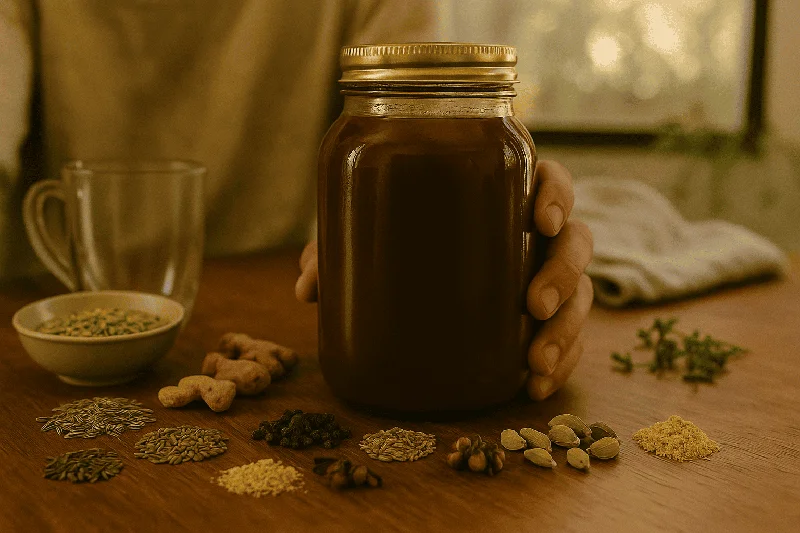
Pachak Ras is a traditional Ayurvedic digestive syrup (also called a "digestive tonic" or pachak syrup) formulated from a blend of herbs, spices, and natural extracts to improve digestion, relieve constipation, reduce gas, and stimulate appetite. Used for centuries across India, this liquid formulation typically contains ingredients like Jeera (cumin), Saunf (fennel), Adrak (ginger), Amla, Harad, Ajwain, and Black Pepper — each chosen for their specific role in strengthening what Ayurveda calls Agni, or digestive fire. Whether you're dealing with occasional bloating after a heavy meal, chronic indigestion, or simply want a natural way to support your gut health, Pachak Ras offers a time-tested solution grounded in Ayurvedic wisdom and increasingly supported by modern research.
In this comprehensive guide, we'll cover everything: what Pachak Ras actually is, every key ingredient and its scientfic backing, proven health benefits, exact dosage recommendations, safety information, how it compares to other Ayurvedic digestives, and even a DIY recipe you can make at home.
What Is Pachak Ras?
Pachak Ras — literally translated, "digestive juice" or "digestive essence" in Hindi — is a liquid Ayurvedic formulation designed to optimize the entire digestive process. It's typically sold as a ready-to-drink syrup in bottles ranging from 200 ml to 255 ml, though some brands offer tablet forms as well.
- But Pachak Ras is more than just a product on a pharmacy shelf.
- It represents one of Ayurveda's core therapeutic principles: that nearly all disease originates in the gut, and that strong digestion is the foundation of total health.
Historical Roots in Ayurveda
The concept behind Pachak Ras dates back thousands of years to classical Ayurvedic texts like the Charaka Samhita and Ashtanga Hridaya. Ancient Ayurvedic practitioners recognized that digestive health determined the quality of all bodily tissues (dhatus) and the overall vitality of a person. They formulated combinations of carminative, digestive, and laxative herbs — what we now find bottled as Pachak Ras — to address the most common digestive complaints.
The tradition of blending cumin, fennel, ginger, and long pepper for digestive purposes has been documented in Ayurvedic pharmacopeias for at least 2,000 years. Modern Pachak Ras formulations are essentially standardized versions of these ancient recipes.
The Role of Agni (Digestive Fire) and Ama (Toxins)
In Ayurveda, Agni is the metabolic fire responsible for breaking down food, absorbing nutrients, and eliminating waste. When Agni is strong, digestion is efficient, energy is high, and the body remains free of disease. When Agni is weak or imbalanced, food is incompletely digested, leading to the formation of Ama — a toxic, sticky residue that accumulates in the digestive tract and eventually spreads to other tissues.
Ama is considered the root cause of most diseases in Ayurveda, from simple bloating to chronic inflammatory conditions.
Pachak Ras works primarily by:
- Kindling Agni — thermogenic ingredients like ginger, black pepper, and pippali literally "heat up" the digestive process
- Burning Ama — bitter and pungent herbs help break down and eliminate accumulated toxins
- Balancing digestive secretions — ingredients like cumin and fennel normalize stomach acid and enzyme production
This dual action — strengthening Agni while clearing Ama — is what makes Pachak Ras a comprehensive digestive remedy rather than a simple antacid or laxative.
How Pachak Ras Works for Different Doshas (Vata, Pitta, Kapha)
One aspect no competitor has adequately addressed is how Pachak Ras interacts with the three Ayurvedic body constitutions:
| Dosha | Digestive Tendency | How Pachak Ras Helps | Caution |
|---|---|---|---|
| Vata | Irregular digestion, bloating, gas, variable appetite | Warming ingredients (ginger, ajwain) stabilize erratic Agni; carminatives relieve trapped gas | Avoid excessive doses — Vata types may find strong pungent herbs drying |
| Pitta | Strong but overactive digestion, acid reflux, burning sensation | Cooling ingredients (fennel, amla) balance excess heat; pomegranate seeds soothe inflammation | Pitta types should take lower doses; avoid on empty stomach if acidity-prone |
| Kapha | Slow, sluggish digestion, heaviness, mucus buildup | Black pepper and pippali strongly kindle sluggish Agni; harad promotes elimination | Kapha types generally tolerate and benefit from full recommended doses |
Understanding your dosha can help you personalize your Pachak Ras regimen for better results.
Key Ingredients of Pachak Ras and Their Scientfic Backing
What makes Pachak Ras effective isn't any single herb — it's the synergistic combination. Let's break down each major ingredient, its traditional role, and what modern research says.
Cumin (Jeera / Cuminum cyminum)
Cumin is the backbone of most Pachak Ras formulations. In Ayurveda, it's classified as a deepaniya (appetizer) and pachaniya (digestive). A 2017 systematic review published in the Journal of Functional Foods confirmed that cumin significantly improves symptoms of Irritable Bowel Syndrome (IBS), including abdominal pain, bloating, and abnormal bowel frequency. Cumin stimulates the secretion of pancreatic enzymes and bile, directly enhancing fat and protein digestion.
Ginger (Adrak / Zingiber officinale)
- Ginger is perhaps the most well-researched digestive herb globally.
- Its active compounds — gingerols and shogaols — have proven prokinetic effects, meaning they accelerate gastric emptying. A 2019 meta-analysis in Food Science & Nutrition found that ginger significantly reduced nausea, bloating, and dyspepsia symptoms across 12 randomized controlled trials. In Pachak Ras, ginger serves as the primary thermogenic agent, literally heating up the digestive fire.
Fennel (Saunf / Foeniculum vulgare)
Fennel is the classic carminative — it relaxes smooth muscles in the gastrointestinal tract, allowing trapped gas to pass and reducing painful cramping. A 2016 study in the Journal of Gastrointestinal and Liver Diseases showed that fennel oil significantly reduced bloating and abdominal discomfort in patients with functional dyspepsia. In Pachak Ras, fennel also adds a pleasant, mildly sweet flavor that balances the pungency of other ingredients.
Black Pepper (Kali Mirch / Piper nigrum)
- Black pepper contains piperine, a compound that increases the bioavailability of other herbs and nutrients by up to 2,000% in some cases (as demonstrated in a landmark 1998 study in Planta Medica).
- This means black pepper doesn't just add heat — it makes every other ingredient in Pachak Ras work better. Piperine also stimulates hydrochloric acid secretion in the stomach, improving the initial stages of protein digestion.
Amla (Indian Gooseberry / Emblica officinalis)
Amla is one of the richest natural sources of Vitamin C, containing approximately 600–700 mg per fruit. Beyond its antioxidant power, amla has demonstrated gastroprotective effects. A 2011 study in Phytomedicine found that amla extract significantly reduced gastric acidity and ulcer index in experimental models. In Pachak Ras, amla serves the dual purpose of cooling excess pitta while supporting liver function and detoxification.
Ajwain (Carom Seeds / Trachyspermum ammi)
Ajwain contains thymol, a potent antimicrobial and antifungal compound that helps sanitize the digestive tract. Traditional families across India have used ajwain water for immediate relief from stomach pain and gas — and research supports this. A 2014 study in BMC Complementary Medicine and Therapies confirmed ajwain's antispasmodic and carminative properties. It's particularly effective against post-meal heaviness.
Harad (Terminalia Chebula / Haritaki)
- Called the "King of Medicines" in Tibetan medicine, Harad is one of the three ingredients in the famous Triphala formulation. It acts as a mild, non-habit-forming laxative that regulates bowel movements without causing dependency. A 2013 review in the International Journal of Pharmaceutical Sciences and Research documented its anti-inflammatory, antioxidant, and laxative properties.
- In Pachak Ras, Harad ensures smooth elimination — the final critical stage of digestion.
Pippali (Long Pepper / Piper longum)
Pippali is a unique Ayurvedic ingredient that is both a bioavailability enhancer (similar to black pepper) and a potent Agni stimulant. Its key compound, piperlongumine, has shown remarkable anti-inflammatory and metabolic-boosting properties. A 2018 study in Nutrients highlighted pippali's role in improving lipid metabolism and reducing insulin resistance. This makes it valuable not just for digestion but for metabolic health overall.
Anardana (Dried Pomegranate Seeds / Punica granatum)
Pomegranate seeds bring astringent and sour tastes to the formulation — important for balancing the overall flavor profile and therapeutic effect. They're rich in punicalagins, powerful antioxidants that protect the gut lining. Research published in Evidence-Based Complementary and Alternative Medicine (2015) confirmed pomegranate's anti-ulcer and anti-inflammatory properties in the GI tract.
Senna Leaves (Cassia angustifolia)
- Some Pachak Ras formulations include senna, a well-established natural laxative.
- Sennosides in senna leaves stimulate peristalsis — the wave-like muscle contractions that move stool through the colon. While effective for constipation relief, senna should be used cautiously and not long-term (more on this in the safety section).
Other Supporting Ingredients
Most formulations also include Cardamom (elaichi — aromatic carminative), Cloves (laung — analgesic and antimicrobial), Asafoetida (hing — powerful anti-flatulent), and Rock Salt (sendha namak — electrolyte balance and enzyme activation). Each plays a supporting but meaningful role.
Health Benefits of Pachak Ras
Improved Digestion and Relief from Indigestion
The primary benefit. Pachak Ras stimulates the production of digestive enzymes and hydrochloric acid, ensuring food is broken down efficiently. Users typically report noticable improvement in post-meal comfort within the first week of regular use.
Relief from Gas, Bloating, and Flatulence
The carminative herbs — fennel, ajwain, cumin, and asafoetida — work synergistically to prevent gas formation and facilitate its expulsion. This is one of the most immediate benefits users experience, often within 30 minutes to an hour of taking a dose.
Constipation Relief and Bowel Regularity
Ingredients like Harad and (in some formulations) senna promote regular, comfortable bowel movements. Unlike harsh chemical laxatives, the herbal approach of Pachak Ras generally works gently and doesn't cause dependency when used as directed.
Appetite Stimulation
For individuals with poor appetite — common in Vata imbalances, during illness recovery, or in elderly people — Pachak Ras rekindels the desire to eat by strengthening Agni. Cumin and ginger are particularly effective appetite stimulants.
Detoxification and Ama Clearance
By improving all stages of digestion — ingestion, breakdown, absorption, and elimination — Pachak Ras helps the body clear accumulated Ama (toxins). This detoxification effect often manifests as clearer skin, improved energy, and reduced body odor over time.
Enhanced Nutrient Absorption
This is an underappreciated benefit. Black pepper's piperine and pippali's piperlongumine significantly increase the absorption of vitamins, minerals, and phytonutrients from food. A study in Journal of Ayurveda and Integrative Medicine (2017) demonstrated that herbal formulations containing these bioenhancers improved iron and calcium absorption by 30–40% in clinical settings.
Can Pachak Ras Help with Weight Loss?
Yes, indirectly. Pachak Ras is not a weight loss supplement per se, but by optimizing digestion and metabolism, it creates conditions favorable for healthy weight management. Strong Agni means efficient calorie utilization rather than fat storage. A 2020 study in Obesity Research & Clinical Practice found that improved digestive efficiency correlated with better metabolic markers and modest weight reduction over 12 weeks. Thermogenic ingredients like ginger and black pepper also increase basal metabolic rate slightly.
Reduction in Acidity
Despite containing pungent ingredients, well-formulated Pachak Ras actually reduces acidity over time. This seems counterintuitive but makes sense in Ayurvedic logic — the cooling herbs (amla, fennel, pomegranate) balance the heating ones, while improved digestion means less fermentation and less acid reflux. However, individuals with active gastric ulcers or severe GERD should consult a doctor before use.
Dosage and How to Take Pachak Ras for Best Results
Standard Dosage Recommendations
| Age Group | Recommended Dose | Frequency | Timing |
|---|---|---|---|
| Adults (18+ years) | 15–25 ml (1–2 tablespoons) | 2 times daily | After meals |
| Adolescents (12–17 years) | 10–15 ml | 1–2 times daily | After meals |
| Children (6–11 years) | 5–10 ml | 1–2 times daily | After meals, with water |
| Children below 6 | Not recommended without physician guidance | — | — |
Note: Dosages vary by brand. Always follow the specific instructions on your product's label.
Multiple Ways to Take Pachak Ras
While most people drink it directly or with a glass of water, there are several effective methods:
- 1.With warm water — The most common and effective method. Warm water enhances the absorption of herbs and provides additional digestive stimulation.
- 2.With milk — Suitable for Pitta types who find the tonic too heating. Milk buffers the pungent ingredients while allowing the digestive herbs to work.
- 3.As part of herbal tea — Add one tablespoon to a cup of warm ginger or cumin tea for a potent digestive drink.
- 4.Direct consumption — Perfectly fine; most formulations are designed to taste pleasant on their own.
How Long Does It Take to See Results?
- Acute symptoms like gas and bloating often improve within one to two doses.
- For chronic digestive issues — persistent constipation, low appetite, sluggish metabolism — expect meaningful improvement within 2–4 weeks of consistent daily use. Ayurvedic practitioners generally recommend a continuous course of 2–3 months for sustained, lasting results, followed by reassessment.
Side Effects and Safety Information
Is Pachak Ras Safe?
For most healthy adults, Pachak Ras is generally safe when taken in recommended doses. It's made from food-grade herbs and spices that have been consumed for millennia. However, "natural" doesn't automatically mean "risk-free."
Potential Side Effects
- Mild burning or warmth in the stomach (due to ginger, pepper) — usually subsides after a few days
- Loose stools if formulation contains senna, especially at higher doses
- Allergic reactions in rare cases — discontinue immediately if you experience rash, itching, or swelling
Contraindications for Specific Conditions
This is critical information that most product listings overlook:
| Condition | Risk Level | Recommendation |
|---|---|---|
| Active gastric/duodenal ulcers | High | Avoid unless specifically approved by a gastroenterologist |
| Severe GERD | Moderate | Start with half dose; monitor symptoms carefully |
| Diabetes (Type 1 or 2) | Moderate | Some formulations contain sugar/jaggery; check labels; ginger and pepper may affect blood sugar levels |
| Liver disease | Moderate | Many herbs are hepatically metabolized; consult your hepatologist |
| Patients on anticoagulants (Warfarin, Aspirin) | Moderate-High | Ginger and piperine can potentiate blood-thinning effects; consult your doctor |
| Pregnancy | High | Several ingredients (senna, pippali) are contraindicated; avoid unless prescribed |
| Lactation | Low-Moderate | Generally safe in small doses, but consult your OB-GYN |
Drug Interactions to Be Aware Of
- Antidiabetic drugs (Metformin, Glimepiride): Ginger and fenugreek may enhance hypoglycemic effects
- Anticoagulants (Warfarin, Clopidogrel): Ginger, piperine, and garlic-containing formulations can increase bleeding risk
- Antacids / PPIs (Omeprazole, Pantoprazole): Pachak Ras may alter stomach pH, potentially affecting absorption of these medications
- Immunosuppressants: Piperine's bioavailability-enhancing effect can increase drug levels unpredictably
Golden rule: If you're on any prescription medication, consult your doctor before starting Pachak Ras.
Storage
- Store in a cool, dry place away from direct sunlight. Refrigerate after opening if the label advises.
- Keep out of reach of children.
- Check the expiration date — most formulations have a shelf life of 18–24 months.
Pachak Ras vs. Other Ayurvedic Digestive Remedies
How does Pachak Ras stack up against other popular Ayurvedic digestive formulations?
Here's a detailed comparison:
| Feature | Pachak Ras | Triphala | Hingvastak Churna | Avipattikar Churna |
|---|---|---|---|---|
| Form | Liquid syrup | Powder/tablet | Powder | Powder |
| Primary Action | Overall digestive tonic | Gentle detox & laxative | Gas & bloating relief | Acidity & hyperacidity |
| Best For | General indigestion, constipation, low appetite | Chronic constipation, colon cleansing | Acute gas, flatulence, Vata disorders | Pitta disorders, acid reflux, heartburn |
| Taste | Sweet-pungent, palatable | Astringent-bitter | Pungent, strong | Astringent-sweet |
| Ease of Use | Very easy (ready-to-drink) | Moderate (needs mixing) | Moderate | Moderate |
| Speed of Action | Fast (15–60 minutes) | Gradual (days to weeks) | Fast (15–30 minutes) | Moderate (hours) |
| Suitable for Long-term Use | Yes, with breaks | Yes | Not recommended beyond 2–3 months | Yes, in moderate doses |
| Dosha Suitability | Tridoshic (all types) | Tridoshic | Best for Vata-Kapha | Best for Pitta |
- Bottom line: Pachak Ras is the most versatile and beginner-friendly option for general digestive support.
- If you have a specific issue — like pure acidity (Avipattikar) or pure gas (Hingvastak) — a targeted formulation might work faster. But for all-around digestive health, Pachak Ras is hard to beat.
Comparison of Popular Pachak Ras Brands
- No other resource online currently compares the major Pachak Ras brands side by side.
- Here's our analysis:
| Brand | Volume | Key Ingredients | Sugar-Free | Approximate Price (₹) | Notable Feature |
|---|---|---|---|---|---|
| Abhikalp Pachak Ras | 200 ml | Jeera, Saunf, Ginger, Ajwain, Kali Mirch | No | ₹60–80 | Classic formulation, widely available |
| Bharat Pachak Ras | 200 ml | Amla, Harad, Senna, Jeera | No | ₹55–75 | Stronger laxative action |
| Mothers Glory Pachak Ras | 255 ml | Traditional 12-herb blend | No | ₹70–90 | Family-friendly taste |
| Shevades Pachak Ras | 200 ml | Jeera, Saunf, Ajwain, Anardana, Pippali | No | ₹65–85 | Emphasis on carminative herbs |
| Baidyanath Pachak Ras | 200 ml | Comprehensive Ayurvedic blend | No | ₹80–110 | Established Ayurvedic brand trust |
Prices are approximate and may vary by retailer and region. Always verify ingredients on the actual product label. How to choose: If constipation is your main concern, look for formulations with Harad and/or Senna (like Bharat). If gas and bloating are the issue, prioritize those heavy on Jeera, Saunf, and Ajwain (like Shevades or Abhikalp). For overall balanced digestive support, any reputable brand will work well.
How to Make Pachak Ras at Home (DIY Recipe)
Wanting a fresh, preservative-free version?
Here's a tried-and-tested homemade recipe:
Ingredients:
- 2 tablespoons cumin seeds (jeera)
- 2 tablespoons fennel seeds (saunf)
- 1 tablespoon ajwain (carom seeds)
- 1 tablespoon dried ginger powder (sonth)
- 1 teaspoon black pepper (kali mirch), freshly ground
- 1 teaspoon pippali (long pepper) powder
- 2 tablespoons dried amla powder
- 1 tablespoon dried pomegranate seed powder (anardana)
- 1 small piece of asafoetida (hing) — about ¼ teaspoon
- 1 teaspoon rock salt (sendha namak)
- 4 cups of water
- Jaggery or honey to taste (optional)
Method:
- Lightly dry-roast the cumin, fennel, ajwain, and black pepper on low heat for 2–3 minutes until fragrant. Let cool.
- Grind the roasted spices into a fine powder.
- Boil 4 cups of water. Add all the powdered ingredients, including amla, anardana, ginger, pippali, hing, and rock salt.
- Simmer on low heat for 15–20 minutes, stirring occasionally.
- Strain through a fine cloth or strainer.
- Add jaggery or honey once the liquid has cooled to lukewarm (never add honey to boiling water — Ayurveda considers heated honey toxic).
- Store in a clean glass bottle in the refrigerator.
Shelf life: 7–10 days refrigerated. Shake well before each use. Dosage: 15–20 ml after meals, twice daily.
This homemade version won't have the extended shelf life of commercial products, but it's free of preservatives, artificial colors, and added sugars.
Seasonal Recommendations: When Is Pachak Ras Most Effective?
Ayurveda recognizes that digestion varies with the seasons.
Here's when Pachak Ras is especially beneficial:
- Winter (Hemanta & Shishira Ritu): Agni is naturally strongest in winter, but heavy, rich foods (common during the cold months) can overwhelm it. Pachak Ras helps process heavy meals efficiently.
- Monsoon (Varsha Ritu): Digestive strength drops significantly during monsoon season due to increased humidity and Vata aggravation.
- This is perhaps the most important season for Pachak Ras — gastric infections, bloating, and water-borne digestive issues peak.
- Post-festival periods: After Diwali, Holi, wedding season, or any period of dietary indulgence, a 2–4 week course of Pachak Ras helps the digestive system reset.
- Summer (Grishma Ritu): Digestion is weakest. Use Pachak Ras in reduced doses and prefer formulations with more cooling herbs (amla, fennel) over heating ones.
Diet and Lifestyle Tips to Maximize Pachak Ras Benefits
- Taking Pachak Ras alone isn't enough if your diet and habits work against your digestion.
- Here's what enhances — and what undermines — the tonic's effects:
Foods that enhance Pachak Ras efficacy:
- Warm, freshly cooked meals
- Khichdi, soups, and steamed vegetables
- Buttermilk (chaas) with cumin and rock salt
- Whole grains like brown rice, barley, and millet
Foods that reduce or negate the benefits:
- Ice-cold water or beverages with meals
- Excessively oily, fried, or processed foods
- Combining dairy with sour fruits (viruddha ahara — incompatible food combinations in Ayurveda)
- Overeating — even the best digestive tonic can't compensate for consistently eating beyond capacity
Lifestyle habits that support digestion:
- Eating at regular times each day
- Walking for 10–15 minutes after meals (shatapavali — the Ayurvedic "hundred steps")
- Avoiding lying down immediately after eating
- Managing stress through pranayama or meditation — the gut-brain axis is real, and chronic stress directly suppresses Agni
Is Pachak Ras Safe for Children?
Yes, but with caveats. Children above 6 years can generally take Pachak Ras in reduced doses (5–10 ml) under parental supervision.
However:
- Avoid formulations containing senna for children — it's too strong a laxative for developing digestive systems
- Prefer sugar-free or low-sugar variants to protect dental health
- For children under 6, traditional alternatives like jeera water, ajwain water, or simple saunf tea are safer and time-honored choices
- Always consult a pediatrician or qualified Ayurvedic practitioner before giving any herbal supplement to a child
Frequently Asked Questions (FAQ)
What is Pachak Ras called in English?
Pachak Ras translates to "Digestive Juice" or "Digestive Tonic" in English. It's classified as an Ayurvedic proprietary medicine or herbal digestive syrup.
What is the use of Ras Pachak tablet?
Ras Pachak tablets serve the same purpose as the liquid syrup — they aid digestion, relieve gas, reduce bloating, and support bowel regularity. The tablet form is simply more convenient for travel or for people who dislike the liquid taste. Dosage is typically 1–2 tablets after meals with water.
Is Pachak Ras good for acidity?
It can be, depending on the formulation. Pachak Ras containing amla, fennel, and pomegranate tends to be effective for mild to moderate acidity. However, formulations heavy on ginger, black pepper, and pippali without adequate cooling herbs may initially worsen acidity in Pitta-dominant individuals. If acidity is your primary concern, choose a Pitta-balancing formulation or consider Avipattikar Churna as an alternative.
What is the difference between Pachak Ras and Yojak Pachak Ras?
- Yojak is a brand name. "Yojak Pachak Ras" refers to the digestive syrup manufactured by the Yojak brand.
- The function is the same as generic Pachak Ras — the difference lies in the specific ingredient proportions and manufacturing process unique to that brand.
Can I take Pachak Ras alongside other medications?
Generally yes, but with a 30-minute gap. Take Pachak Ras after meals, and take your medications at whatever time your doctor has prescribed. The key concern is piperine's ability to alter drug absorption — if you're on blood thinners, diabetes medications, or immunosuppressants, consult your prescribing physician first.
How long does it take to see results with Pachak Ras?
For acute issues (gas, bloating, stomach discomfort), you may feel relief within 30–60 minutes. For chronic digestive problems (persistent constipation, low appetite, sluggish metabolism), consistent use for 2–4 weeks typically shows noticeable improvement. Ayurvedic practitioners recommend a full 2–3 month course for deep, lasting results.
Are there any side effects of Pachak Ras?
Side effects are uncommon at recommended doses. Some people experience mild stomach warmth, loose stools (if senna is present), or a temporary increase in burping. Serious side effects are rare but may include allergic reactions in sensitive individuals. Discontinue use and consult a doctor if you experience persistent discomfort.
Which are the Rasa Panchaka?
Rasa Panchaka is a pharmacological framework in Ayurveda used to characterize every herb through five parameters: Rasa (taste), Guna (properties), Virya (potency), Vipaka (post-digestive effect), and Prabhava (special action). This framework explains why Pachak Ras ingredients work together — for example, ginger has katu rasa (pungent taste), ushna virya (hot potency), and madhura vipaka (sweet post-digestive effect), making it an ideal digestive stimulant that doesn't aggravate Pitta long-term.
Conclusion: Is Pachak Ras Worth It?
Pachak Ras is one of Ayurveda's most practical, accessible, and effective formulations for everyday digestive health. It combines the wisdom of thousands of years of traditional use with ingredients that modern science increasingly validates. Whether you choose a commercial brand or make your own at home, this digestive tonic can meaningfully improve your gut health, nutrient absorption, energy levels, and overall well-being.
The key is consistency. A single dose can relieve acute discomfort, but real transformation comes from regular use over weeks and months, ideally combined with mindful eating habits and a lifestyle that supports strong Agni.
Start with a small dose, observe how your body responds, and adjust accordingly. And if you have any chronic health conditions or take prescription medications, always consult a qualified Ayurvedic practitioner or your doctor before beginning a Pachak Ras regimen. Your digestive health is the foundation of your total health. Give it the attention it deserves.
Scientific Sources
- A review of effective herbal medicines in controlling menopausal symptoms — Kargozar R et al., 2017, Electronic physician
- A Systematic Review and Meta-Analysis of Ayurvedic Herbal Preparations for Hypercholesterolemia — Gyawali D et al., 2021, Medicina (Kaunas, Lithuania)
- Cumin — 2006
- Anise — 2006
- Black Cumin Seed — 2012
- Herbal treatments for migraine: A systematic review of randomised-controlled studies — Lopresti AL et al., 2020, Phytotherapy research : PTR
- Phytotherapy in periodontics as an effective and sustainable supplemental treatment: a narrative review — Gawish AS et al., 2024, Journal of periodontal & implant science
- Spices: Therapeutic Potential in Cardiovascular Health — Rastogi S et al., 2017, Current pharmaceutical design
- Coriander Genomics Database: a genomic, transcriptomic, and metabolic database for coriander — Song X et al., 2020, Horticulture research
- Ethnobotanical and phytochemical aspects of the edible herb Coriandrum sativum L — Sobhani Z et al., 2022, Journal of food science
- Polycystic ovaries and herbal remedies: A systematic review — Manouchehri A et al., 2023, JBRA assisted reproduction
- Efficacy of herbal medicine (cinnamon/fennel/ginger) for primary dysmenorrhea: a systematic review and meta-analysis of randomized controlled trials — Xu Y et al., 2020, The Journal of international medical research
- Nutritional and herbal interventions for polycystic ovary syndrome (PCOS): a comprehensive review of dietary approaches, macronutrient impact, and herbal medicine in management — Muhammed Saeed AA et al., 2025, Journal of health, population, and nutrition
- Dietary supplements for dysmenorrhoea — Pattanittum P et al., 2016, The Cochrane database of systematic reviews
- Fennel — 2006
- Chinese herbal medicine-derived extracellular vesicles as novel biotherapeutic tools: present and future — Zhang J et al., 2024, Journal of translational medicine
- A critical review of Ginger's (Zingiber officinale) antioxidant, anti-inflammatory, and immunomodulatory activities — Ayustaningwarno F et al., 2024, Frontiers in nutrition
- Ayurvedic Herbal Medicines: A Literature Review of Their Applications in Female Reproductive Health — Patibandla S et al., 2024, Cureus
- Zingiber officinale var. rubrum: Red Ginger's Medicinal Uses — Zhang S et al., 2022, Molecules (Basel, Switzerland)
- Piperine: A review of its biological effects — Haq IU et al., 2021, Phytotherapy research : PTR
- Health Benefits of Culinary Herbs and Spices — Jiang TA, 2019, Journal of AOAC International
- [Liver Injury Associated with Turmeric-A Growing Problem: Ten Cases from the Drug-Induced Liver Injury Network [DILIN]](https://pubmed.ncbi.nlm.nih.gov/36252717/) — Halegoua-DeMarzio D et al., 2023, The American journal of medicine
- Herbal formulation "turmeric extract, black pepper, and ginger" versus Naproxen for chronic knee osteoarthritis: A randomized, double-blind, controlled clinical trial — Heidari-Beni M et al., 2020, Phytotherapy research : PTR
- Aromatherapy and Essential Oils: Holistic Strategies in Complementary and Alternative Medicine for Integral Wellbeing — Caballero-Gallardo K et al., 2025, Plants (Basel, Switzerland)
आयुर्वेदिक डॉक्टर से एक प्रश्न पूछें और मुफ़्त या सशुल्क मोड में अपनी चिंता की समस्या पर ऑनलाइन परामर्श प्राप्त करें।
2,000 से अधिक अनुभवी डॉक्टर हमारी साइट पर काम करते हैं और आपके प्रश्नों की प्रतीक्षा करते हैं और प्रतिदिन उपयोगकर्ताओं को उनकी स्वास्थ्य समस्याओं को हल करने में मदद करते हैं।
संबंधित आलेख