आयुर्वेदिक डॉक्टर से प्रश्न पूछें और निःशुल्क या भुगतान मोड में अपनी चिंता की समस्या पर ऑनलाइन परामर्श प्राप्त करें। 2,000 से अधिक अनुभवी डॉक्टर हमारी साइट पर काम करते हैं और आपके प्रश्नों का इंतजार करते हैं और उपयोगकर्ताओं को उनकी स्वास्थ्य समस्याओं को हल करने में प्रतिदिन मदद करते हैं।


Body DetoxEar, Nose, and Throat DisordersGeriatrics & RejuvenationImmunodeficiencyInfertility TreatmentNutritionOrthopedic DisordersPediatricsRespiratory DisordersSexually Transmitted Diseases (STDs)Surgery RecoveryUrological DisordersVascular DisordersDental DisordersEndocrinological DisordersGastrointestinal DisordersYoga TherapyGeneral MedicineAllergic DisordersCardio DisordersGynecology and ObstetricsCosmetologySkin and Hair DisordersEye DisordersInfectious DiseasesMental DisordersNeurological DisordersOncologyPanchakarmaSexual Health & DisordersSports Medicine
पर प्रकाशित 12/20/24
(को अपडेट 08/09/26)
3,135
Khanjanikari Ras: Benefits, Uses & Ayurvedic Insights
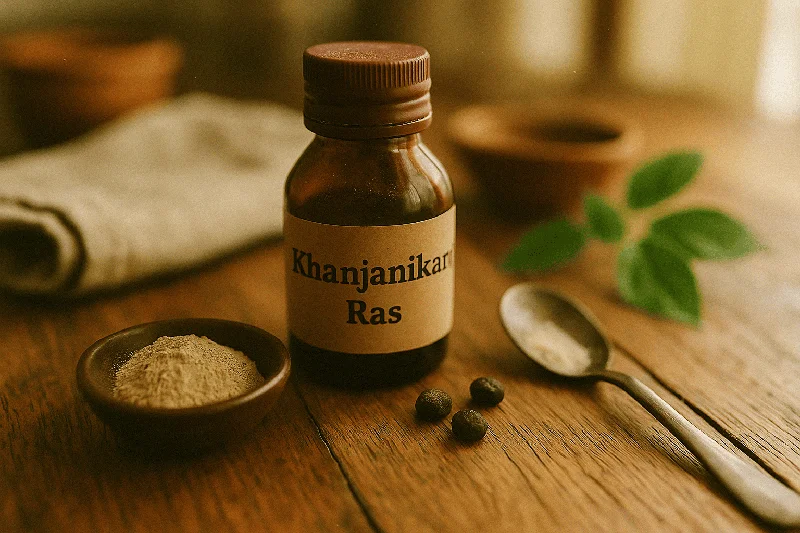
Khanjanikari Ras is a classical herbomineral Ayurvedic formulation primarily used for treating paralysis, neuromuscular disorders, and various Vata Vyadhi (diseases caused by aggravated Vata dosha). It combines purified mercury compound, silver calx, processed strychnine seeds, and Arjuna bark decoction to create a potent nerve tonic that stimulates the central nervous system and restores motor function. Referenced in the ancient text Ayurved Saar Sangrah, this preparation has been trusted by Ayurvedic practitioners for centuries — particularly for conditions like facial paralysis, paraplegia, monoplegia, and lathyrism.
If you or someone you know is dealing with any form of paralysis or chronic Vata disorder, understanding this formulation in depth can genuinely make a difference. So let's break down everything you need to know.
What Is Khanjanikari Ras?
Khanjanikari Ras is a Rasa Aushadhi — a category of Ayurvedic medicines that contain processed metals and minerals alongside herbal ingredients. The term "Khanjanikari" itself derives from "Khanja," which refers to lameness or limping in Sanskrit, clearly pointing to the formulation's primary therapeutic focus: restoring mobility and nerve function in patients suffering from various forms of paralysis.
Unlike purely herbal formulations, Rasa Aushadhis like Khanjanikari Ras work faster and in smaller doses because the bhasmas (calx) and processed minerals have enhanced bioavailability. However, this also means they demand strict quality control in manufacturing and careful medical supervision during use.
Classical Reference: Ayurved Saar Sangrah
The original formulation of Khanjanikari Ras is documented in Ayurved Saar Sangrah, a well-known compendium of Ayurvedic formulations that compiles classical recipes from multiple ancient texts. This reference text specifies the exact proportions (equal parts of key ingredients), the method of processing (bhavana with Arjuna decoction), and the therapeutic indications.
It's worth noting that different Ayurvedic pharmacies may follow slight variations in their manufacturing process while staying true to the classical base formula. Baidyanath and Amrita Drugs are among the most recognized manufacturers of this preparation.
Ayurvedic Properties (Rasa Panchak)
No competitor has actually laid out the Rasa Panchak of this formulation — which is a significant gap, because understanding the pharmacological profile in Ayurvedic terms helps practitioners and patients alike grasp why it works the way it does.
| Property | Detail |
|---|---|
| Rasa (Taste) | Tikta (Bitter), Katu (Pungent), Kashaya (Astringent) |
| Guna (Quality) | Laghu (Light), Tikshna (Sharp/Penetrating) |
| Virya (Potency) | Ushna (Hot) |
| Vipaka (Post-digestive effect) | Katu (Pungent) |
| Dosha Karma | Vata-Kapha Shamak (Pacifies Vata and Kapha) |
| Prabhava (Special action) | Naadi Balya (Nerve strengthening) |
The Ushna Virya and Tikshna Guna make it particularly effective against Vata dosha, which is inherently cold, dry, and erratic. By introducing heat and penetrating sharpness into the system, Khanjanikari Ras directly counters the root pathology behind most paralytic conditions.
What Is the Use of Khanjanikari Ras?
This is the most searched question about this formulation, and rightfully so. Khanjanikari Ras is indicated for a wide range of neuromuscular and Vata-dominant conditions. Let me walk you through the primary and secondary indications.
Primary Indications: Paralysis & Neuromuscular Disorders
The core strength of Khanjanikari Ras lies in treating various forms of paralysis:
- Pakshaghata (Hemiplegia) — Paralysis affecting one side of the body
- Ardita (Facial Paralysis / Bell's Palsy) — Loss of motor function in facial muscles
- Paraplegia — Paralysis of the lower limbs
- Monoplegia — Paralysis limited to a single limb
- Lathyrism — Neurotoxic paralysis caused by excessive consumption of Lathyrus sativus (Khesari dal)
- Khanja Vata (Lameness) — Progressive limping and loss of motor coordination
- Sannipat — Conditions involving disturbance of all three doshas with neurological manifestations
Secondary Indications: Respiratory & Other Conditions
Beyond neurology, the formulation also shows therapeutic benefits for:
- Kasa (Cough) — Particularly chronic and productive cough
- Shwasa (Asthma/Dyspnea) — Bronchial conditions with Kapha involvement
- Pneumonia — As an adjunct therapy
- Vata Vyadhi (General) — Gout, sciatica, and other Vata-predominant diseases
- Gonorrhea — Mentioned in some classical references, though this application is less common in modern practice
How Khanjanikari Ras Actually Works: Mechanism of Action
- This is something none of the existing resources online have adequately explained.
- Here's a detailed look at the pharmacological mechanism — both from Ayurvedic and modern perspectives.
Ayurvedic Mechanism (Samprapti Vighatana):
Paralysis in Ayurveda is understood as a Vata Vyadhi where aggravated Vata dosha obstructs the Srotas (channels), particularly the Pranavaha Srotas (respiratory channels) and Majjavaha Srotas (channels carrying nerve impulses). When Vata dries up the Shleshaka Kapha (lubricating component) in joints and nerves, it leads to loss of motor function.
Khanjanikari Ras works through a multi-pronged approach:
- 1.Vata Shamana — The Ushna Virya ingredients directly pacify aggravated Vata
- 2.Srotas Shodhana — The Tikshna (sharp) quality clears obstructed channels
- 3.Dhatu Poshana — Raupya Bhasma specifically nourishes Majja Dhatu (nervous tissue)
- 4.Naadi Uttejana — The processed Kuchala acts as a direct nerve stimulant
Modern Pharmacological Perspective:
Strychnine (from Shuddha Kuchala), when properly purified and administered in micro-doses, acts as a CNS stimulant by blocking glycine receptors in the spinal cord. A 2003 study published in the Journal of Ethnopharmacology (Vol. 84, Issue 2-3) confirmed that properly processed (Shodhit) Strychnos nux-vomica seeds show significantly reduced toxicity while retaining therapeutic neuro-stimulant properties. Silver nanoparticles from Raupya Bhasma have demonstrated neuroprotective effects in several in vitro studies, including a 2017 research paper in Biomedicine & Pharmacotherapy (Vol. 93) that explored silver's role in reducing oxidative stress in neural cells.
The synergy between these components creates what Ayurveda calls Yoga Vahi — a combined effect greater than the sum of individual parts.
Ingredients of Khanjanikari Ras
The formulation contains four key ingredients in equal parts (Saman Bhag). Each component plays a distinct and critical role.
| Ingredient | Sanskrit/Hindi Name | Latin/Scientific Name | Primary Role |
|---|---|---|---|
| Malla Sindoor | मल्ल सिन्दूर | Hydrargyri Sulphidum Rubrum | Catalytic carrier, enhances bioavailability |
| Raupya Bhasma | रौप्य भस्म | Silver Calx | Neuroprotective, Majja Dhatu nourisher |
| Shuddha Kuchala | शुद्ध कुचला | Strychnos nux-vomica (purified) | CNS stimulant, nerve tonic |
| Arjuna Twak Kwatha | अर्जुन त्वक् क्वाथ | Terminalia arjuna bark decoction | Bhavana Dravya (processing medium), cardioprotective |
Malla Sindoor (Hydrargyri Sulphidum Rubrum)
- Malla Sindoor is a compound of mercury and sulphur processed through specific Ayurvedic techniques (Kupipakva Rasayana method).
- It acts as a Yogavahi — meaning it enhances the therapeutic effect of other ingredients and carries them deep into the tissues. In Ayurvedic pharmacology, properly prepared mercury compounds are considered Rasayana (rejuvenative) and capable of acting on all seven Dhatus.
Critical safety note: The mercury in Malla Sindoor is NOT elemental mercury. It undergoes multiple stages of purification (Shodhana) and bonding with sulphur, which transforms its chemical nature entirely. However, this is exactly why only properly manufactured, GMP-certified preparations should ever be used.
Raupya Bhasma (Silver Calx)
Raupya Bhasma is the incinerated and purified form of silver, reduced to nanoparticle size through repeated calcination cycles.
In Ayurveda, it's classified as:
- Balya — Strength promoting
- Medhya — Intellect enhancing
- Vata-Pitta Shamak — Pacifies Vata and Pitta doshas
- Majja Dhatu Vardhak — Specifically nourishes nervous tissue
Modern research, including a 2015 study in the International Journal of Ayurveda Research, has shown that properly prepared Raupya Bhasma contains silver nanoparticles in the range of 20-50 nm, which explains its high bioavailability and tissue penetration.
Shuddha Kuchala (Purified Strychnos nux-vomica)
This is arguably the most potent — and most misunderstood — ingredient in the formula. Raw Kuchala seeds contain strychnine and brucine, which are toxic alkaloids. However, the Ayurvedic Shodhana (purification) process significantly reduces toxicity.
The purification process involves:
- Soaking raw seeds in Gomutra (cow's urine) for seven days
- Removing the outer seed coat
- Boiling in milk
- Drying and powdering
After purification, the strychnine content drops by approximately 50-70% (as documented in a 2011 study in Ayu Journal, Vol. 32, Issue 3), while therapeutic compounds remain active. The result is a controlled-dose nerve stimulant that can revive dormant neural pathways without causing toxic effects.
Properties of Shuddha Kuchala include:
- Naadi Uttejak (Nerve stimulant)
- Deepana (Appetizer)
- Vata-Kaphahara (Reduces Vata and Kapha)
- Vedanasthapana (Analgesic)
Arjuna Twak Kwatha (Terminalia arjuna Bark Decoction)
Arjuna bark decoction serves as the Bhavana Dravya — the liquid medium used to triturate and process the powdered ingredients. This isn't just a filler; Arjuna brings its own cardiovascular protective properties to the formula, which is important considering the stimulant nature of other ingredients.
Arjuna is rich in arjunolic acid, terminic acid, and flavonoids that support heart muscle strength and improve circulation — ensuring that the active compounds in Khanjanikari Ras reach the target tissues (particularly nerves) efficiently.
How Is Khanjanikari Ras Prepared? (Manufacturing Process)
The classical preparation method involves several meticulous steps, and cutting corners at any stage can compromise both safety and efficacy.
Shodhana (Purification of Raw Materials)
Before any mixing begins, each ingredient undergoes its own purification protocol:
- Malla Sindoor: Prepared via Kupipakva method — mercury and sulphur are heated in a glass bottle (Kupi) at controlled temperatures until the compound forms at the neck of the bottle
- Raupya Bhasma: Silver sheets are layered with herbal juices and repeatedly incinerated (up to 30-100 Puta cycles) until the ash passes tests like Varitara (floats on water) and Rekhapurna (fills finger lines)
- Kuchala: Undergoes the seven-day cow urine soaking protocol described above
Mardana (Trituration Process)
Once all ingredients are purified:
- Equal parts of Malla Sindoor, Raupya Bhasma, and Shuddha Kuchala powder are placed in a Khalva Yantra (stone mortar)
- Arjuna Twak Kwatha (freshly prepared decoction) is added gradually
- The mixture is ground continuously for several hours (typically 6-12 hours per cycle)
- This Bhavana (trituration with liquid) process is repeated 3-7 times until the mixture achieves a uniform, smooth consistency
- Small tablets (Vati) are rolled from the wet mass
- Tablets are dried in shade (not direct sunlight) to preserve active compounds
The repeated bhavana cycles are not merely a mixing process — they cause physicochemical changes at the molecular level that enhance absorption and reduce particle size.
Dosage of Khanjanikari Ras
Standard Adult Dosage
| Parameter | Recommendation |
|---|---|
| Dose | 1–2 tablets (approximately 125–250 mg each) |
| Frequency | Twice daily |
| Anupana (Adjuvant) | Warm milk or Dashamoola Kwatha |
| Timing | After meals |
The choice of Anupana matters significantly. Warm milk acts as a Vata Shamak adjuvant that enhances the nerve-nourishing effects, while Dashamoola Kwatha (decoction of ten roots) provides additional anti-inflammatory and Vata-pacifying support for severe paralytic conditions.
Duration of Course by Condition
This is a critical detail that existing resources fail to address adequately. The duration varies considerably depending on the condition being treated:
| Condition | Typical Duration | Notes |
|---|---|---|
| Facial Paralysis (Ardita) | 1–2 months | Often shows improvement within 2-3 weeks |
| Hemiplegia (Pakshaghata) | 3–6 months | Requires concurrent Panchakarma for best results |
| Paraplegia | 4–6 months | Combined with physiotherapy and oil massages |
| Monoplegia | 2–3 months | Response depends on cause and chronicity |
| Lathyrism | 2–4 months | Must discontinue Lathyrus sativus consumption |
| Gout (Vatarakta) | 1–2 months | Dietary modifications essential |
| Respiratory conditions | 3–6 weeks | Shorter course, often adjunct therapy |
Important: These are general guidelines. Your Ayurvedic physician will adjust the duration based on your Prakriti, severity of condition, and response to treatment.
Dosage Considerations for Special Populations
- Children: Generally NOT recommended for children under 12 years of age due to the potent mineral content. If prescribed by a specialist, the dose is usually reduced to ¼ to ½ tablet.
- Elderly patients: Start with the lower dose (1 tablet once daily) and gradually increase based on tolerance.
- Pregnant and lactating women: Strictly contraindicated. Do not use under any circumstances.
Side Effects, Precautions & Contraindications
Because Khanjanikari Ras contains heavy metals (mercury and silver) and a processed alkaloid (strychnine), the safety profile demands thorough understanding.
Potential Side Effects
When taken as prescribed under medical supervision, side effects are rare.
However, possible adverse reactions include:
- Nausea or mild gastrointestinal discomfort (usually in the first few days)
- Metallic taste in the mouth
- Excessive salivation
- Tremors or muscle twitching (sign of overdose — discontinue immediately)
- Skin rashes in rare cases of hypersensitivity
Important Precautions
- Never self-medicate. This formulation requires a qualified Ayurvedic doctor's prescription
- Store in a cool, dry place away from direct sunlight and moisture
- Shelf life is 5 years from the date of manufacture — do not use expired preparations
- Monitor kidney function if taking for more than 3 months, as prolonged use of mineral-containing formulations may affect renal function
- Buy only from reputable manufacturers — GMP-certified pharmacies like Baidyanath, Amrita Drugs, and similar established brands
Expanded Contraindications
No existing resource has provided a comprehensive list, so here's what practitioners should know:
- Pitta Prakriti individuals — The Ushna Virya may aggravate Pitta
- Hepatic insufficiency — Impaired liver function reduces the body's ability to process mineral compounds
- Chronic Kidney Disease (CKD) — Heavy metal content poses additional burden on already compromised kidneys
- Hypertension — Strychnine's stimulant effect may elevate blood pressure
- Diabetes mellitus — Use with caution; some ingredients may interact with blood sugar regulation
- Concurrent use of anti-epileptic drugs — Strychnine may lower the seizure threshold
- Known allergy to any ingredient
Compatibility With Other Medications
A commonly asked question: Can Khanjanikari Ras be taken alongside allopathic medicines or homeopathy?
Yes, in most cases — but with precautions:
- Maintain a gap of at least 30 minutes between this formulation and any Western medicine
- Inform both your allopathic doctor and Ayurvedic physician about all medications being taken
- It can generally be taken alongside dietary supplements and homeopathic remedies, but again, maintain the 30-minute gap
- Avoid combining with other Rasa Aushadhis (mineral-containing Ayurvedic medicines) without professional guidance, as this may increase heavy metal load
Khanjanikari Ras vs. Similar Ayurvedic Formulations
One gap that no competitor has addressed is how Khanjanikari Ras compares with other popular Vata Vyadhi remedies. This comparison can help patients and practitioners choose the most appropriate formulation.
| Parameter | Khanjanikari Ras | Ekangaveer Ras | Vatavidhvansak Ras | Mahavat Vidhwansan Ras |
|---|---|---|---|---|
| Primary Focus | Paralysis, nerve stimulation | Hemiplegia, facial paralysis | General Vata disorders | Severe/chronic Vata Vyadhi |
| Key Differentiator | Contains Kuchala (CNS stimulant) | Contains Vanga Bhasma (Tin) | Broader herbal base | Maximum mineral potency |
| Speed of Action | Moderate to fast | Moderate | Gradual | Fast |
| Severity Level | Moderate to severe | Moderate | Mild to moderate | Severe |
| Safety Profile | Requires strict supervision | Moderate supervision | Relatively safer | Requires strict supervision |
| Best For | Acute paralysis, lathyrism | Post-stroke hemiplegia | Joint pain, sciatica | Chronic, resistant cases |
Practical takeaway: Khanjanikari Ras is often the preferred choice when nerve stimulation is the primary therapeutic goal, particularly in cases of lathyrism and acute paralysis where reviving dormant nerve pathways is essential.
Diet & Lifestyle During Treatment (Pathya-Apathya)
- This is a massively overlooked topic in existing resources.
- Ayurveda emphasizes that medicine alone is insufficient — dietary and lifestyle modifications (Pathya-Apathya) are equally important for recovery.
Recommended (Pathya)
Foods:
- Warm, freshly cooked meals — avoid cold or leftover food
- Ghee (clarified butter) in moderate amounts — nourishes Majja Dhatu
- Sesame oil in cooking — best Vata-pacifying oil
- Milk (warm, spiced with turmeric or ginger)
- Whole grains like wheat and rice
- Garlic, ginger, cumin, asafoetida — Vata-pacifying spices
- Green gram (moong dal) — easy to digest, Vata-friendly
Lifestyle practices:
- Abhyanga (Oil massage) with Mahanarayan Taila or Bala Taila — ideally daily
- Swedana (Steam therapy) after oil massage — improves circulation to affected areas
- Gentle physiotherapy and passive range-of-motion exercises
- Panchakarma therapies as adjuncts — especially Basti (medicated enema), which is considered the prime treatment for Vata disorders
- Regular sleep schedule — sleep before 10 PM
- Mild sun exposure in the morning
Avoid (Apathya)
Foods:
- Cold, dry, and stale food
- Excessive raw salads and raw vegetables
- Beans and lentils that cause gas (except moong)
- Refined sugar and processed foods
- Caffeine and carbonated drinks
- Alcohol — strictly
- Lathyrus sativus (Khesari dal) — especially in lathyrism cases
Lifestyle to avoid:
- Exposure to cold wind and drafts
- Excessive physical exertion
- Staying awake late at night (Ratri Jagarana)
- Suppressing natural urges (Vega Dharana)
- Mental stress and anxiety — aggravates Vata significantly
Where to Buy & Price Comparison
| Manufacturer | Pack Size | Approximate Price (INR) | Availability |
|---|---|---|---|
| Baidyanath | 80 tablets | ₹175–₹220 | Online & offline pan-India |
| Amrita Drugs | 60 tablets | ₹150–₹190 | Primarily South India and online |
| Other GMP-certified brands | Varies | ₹130–₹250 | Select Ayurvedic pharmacies |
Always verify the manufacturing date and expiry (5-year shelf life), batch number, and GMP certification before purchasing. Online platforms like 1mg, Amazon, and specialized Ayurvedic stores typically carry authentic products — but watch out for counterfeit products from unknown sellers.
Frequently Asked Questions (FAQ)
What is the use of Khanjanikari Ras?
Khanjanikari Ras is primarily used for treating various forms of paralysis (hemiplegia, facial paralysis, paraplegia, monoplegia), lathyrism, and other Vata Vyadhi. It also has secondary applications in respiratory conditions like chronic cough, asthma, and pneumonia. The formulation acts as a potent nerve tonic and CNS stimulant.
Can Khanjanikari Ras be taken with allopathic medicines?
Yes, in most cases it can be taken alongside allopathic or homeopathic medicines, provided you maintain a minimum gap of 30 minutes between the two. However, always consult both your Ayurvedic and allopathic doctors before combining treatments, especially if you are on anti-epileptic, anti-hypertensive, or blood-thinning medications.
How long does it take for Khanjanikari Ras to show results?
Results vary based on the condition and its severity. Facial paralysis cases may show improvement within 2-3 weeks, while chronic hemiplegia or paraplegia may require 3-6 months of consistent use combined with Panchakarma and physiotherapy. Patience and compliance with dietary guidelines significantly influence outcomes.
Is Khanjanikari Ras safe for long-term use?
Long-term use (beyond 3-4 months) should only be undertaken under strict medical supervision. Periodic monitoring of kidney and liver function is advisable due to the heavy metal content. Your Ayurvedic physician may recommend breaks between treatment cycles.
What are the ingredients in Khanjanikari Ras?
The formulation contains four key ingredients in equal proportions: Malla Sindoor (Hydrargyri Sulphidum Rubrum), Raupya Bhasma (Silver Calx), Shuddha Kuchala (purified Strychnos nux-vomica seeds), and Arjuna Twak Kwatha (Terminalia arjuna bark decoction) as the processing medium.
Can pregnant women take Khanjanikari Ras?
No. Khanjanikari Ras is strictly contraindicated during pregnancy and lactation due to its potent mineral content and the presence of strychnine alkaloids, even in purified form. Women planning pregnancy should also avoid this formulation.
What is the difference between Khanjanikari Ras and Ekangaveer Ras?
Both are used for paralysis, but Khanjanikari Ras contains Kuchala (Strychnos nux-vomica), which provides direct CNS stimulation — making it particularly suited for acute paralysis and lathyrism. Ekangaveer Ras contains Vanga Bhasma (tin calx) and has a somewhat broader mineral base, making it more commonly used for post-stroke hemiplegia recovery. The choice between the two depends on the specific clinical presentation and should be made by a qualified practitioner.
Conclusion
Khanjanikari Ras stands as one of Ayurveda's most targeted and effective formulations for neuromuscular disorders. Its unique combination of nerve-stimulating Kuchala, neuroprotective Raupya Bhasma, bioavailability-enhancing Malla Sindoor, and cardioprotective Arjuna creates a synergistic formula that addresses paralysis at multiple levels — from clearing blocked channels to directly reviving dormant nerve pathways.
That said, this is not a medicine to be taken casually. The presence of heavy metals and potent alkaloids means it absolutely requires professional prescription, careful dosing, and regular monitoring. When used correctly, under the guidance of a qualified Ayurvedic physician and combined with appropriate Panchakarma therapies, dietary modifications, and lifestyle changes, Khanjanikari Ras can deliver remarkable results for patients who have often exhausted conventional treatment options.
If you're considering Khanjanikari Ras for yourself or a family member, consult a certified Ayurvedic practitioner who can evaluate your Prakriti, assess the severity of your condition, and design a comprehensive treatment protocol tailored to your specific needs. Don't rely on self-diagnosis — the right guidance makes all the diffrence between a safe, effective treatment and a potentially harmful one. Disclaimer: This article is for educational purposes only and should not be considered medical advice. Always consult a qualified Ayurvedic physician before starting any new medication. The information provided here is based on classical Ayurvedic texts, available research, and traditional practice knowledge.
Scientific Sources
- Is ayurveda the key to universal healthcare in India? — Bhandari N, 2015, BMJ (Clinical research ed.)
- Ayurvedic Therapies to Target the Microbiome: Evidence and Possibilities — Vijayanna ST et al., 2024, Alternative therapies in health and medicine
- Acute and subacute oral toxicity evaluation of Ayurvedic formulation Tapyadi loha in rats — Hinge PH et al., 2024, Drug and chemical toxicology
- Terminalia bellirica (Gaertn.) roxb. (Bahera) in health and disease: A systematic and comprehensive review — Gupta A et al., 2020, Phytomedicine : international journal of phytotherapy and phytopharmacology
- Acute Lead Encephalopathy Secondary to Ayurvedic Medication Use: Two Cases with Review of Literature — Raut TP et al., 2021, Neurology India
- Application of diet-derived taste active components for clinical nutrition: perspectives from ancient Ayurvedic medical science, space medicine, and modern clinical nutrition — Kulkarni AD et al., 2014, Current pharmaceutical design
- Herbal Immunomodulators - A Remedial Panacea for Designing and Developing Effective Drugs and Medicines: Current Scenario and Future Prospects — Tiwari R et al., 2018, Current drug metabolism
- Exploring the prevalence of Ayurveda use among Asian Indians — Satow YE et al., 2008, Journal of alternative and complementary medicine (New York, N.Y.)
- The use of "tortured phrases" in science communication — Samal J, 2025, Indian journal of medical ethics
- From nature's bounty to drug discovery: Leveraging phytochemicals and molecular approaches to combat multi-drug-resistant (MDR) tuberculosis — Nalam SM et al., 2024, The Indian journal of tuberculosis
- Ayurved for digestion — Krebs K, 2004, Gastroenterology nursing : the official journal of the Society of Gastroenterology Nurses and Associates
- The Perspective of Unani Medicine in Understanding Hyperthyroidism — Alam A et al., 2023, Alternative therapies in health and medicine
- Health System Development in Nepal — Marasini B, 2020, JNMA; journal of the Nepal Medical Association
- Rational use of Ashwagandha in Ayurveda (Traditional Indian Medicine) for health and healing — Joshi VK et al., 2021, Journal of ethnopharmacology
- Dentistry and Ayurveda--III (basics-ama, immunity, ojas, rasas, etiopathogenesis and prevention) — Amruthesh S, 2007, Indian journal of dental research : official publication of Indian Society for Dental Research
- Psychodermatology: An Indian perspective — Shenoi SD et al., 2018, Clinics in dermatology
- Efficacy and safety of ayurvedic intervention (Sarpgandha Mishran) vs amlodipine for Stage-I primary hypertension- study protocol for a prospective Double-Dummy, Double-Blind, placebo-controlled Randomized Clinical Trial — Yadav B et al., 2025, BMC complementary medicine and therapies
- Assembling cyavanaprāsh, Ayurveda's best-selling medicine — Bode M, 2015, Anthropology & medicine
- Suspected Cutaneous Allergic Reactions with Ayurveda Medicine Punaranava Mandura: A Case Report — Roseleena S et al., 2025, Current drug safety
- Therapeutic Uses of Triphala in Ayurvedic Medicine — Peterson CT et al., 2017, Journal of alternative and complementary medicine (New York, N.Y.)
उपयोगकर्ताओं के प्रश्न
What is the recommended duration for Khanjanikari Ras treatment cycles?
Client_f6d7b9
1 दिन पहले
The recommended duration for a Khanjanikari Ras treatment cycle is not explicitly standardized and should be determined by an Ayurvedic physician based on individual factors such as the patient's condition, response to treatment, and overall health. Treatment cycles may involve regular doses followed by breaks to assess the body's response. Typically, practitioners monitor effects closely due to the potent ingredients like Malla Sindoor and Raupya Bhasma. It’s crucial to consult a healthcare professional before starting or adjusting any treatment with Khanjanikari Ras, especially since it can have significant effects and is generally not recommended for children under 12.
What precautions should be taken when using Malla Sindoor?
Client_72b026
6 दिनों पहले
When using Malla Sindoor, it is crucial to do so under the supervision of a qualified Ayurvedic practitioner due to its potent ingredients, including processed mercury. This formulation should never be self-prescribed, as it can pose significant health risks if improperly used. Dosing must be precise, and specific health conditions must be considered. Monitoring by a healthcare provider is important for detecting any adverse reactions. If you experience symptoms such as nausea, dizziness, or discomfort, consult a healthcare professional immediately.
What conditions does Khanjanikari Ras specifically target in treatment?
Client_13a37b
11 दिनों पहले
Khanjanikari Ras is primarily used in Ayurveda to treat conditions such as facial paralysis, paraplegia, monoplegia, and lathyrism. These conditions often relate to nervous system disorders or chronic Vata imbalances. While specific timelines for improvement can vary, these treatments may require several weeks to months of consistent use under professional supervision. Due to its potent mineral content and presence of strychnine alkaloids, it is critical to seek guidance from a qualified Ayurvedic practitioner before using Khanjanikari Ras. If you're pregnant or breastfeeding, avoid this remedy entirely. Always consult a healthcare provider to explore suitable treatments, especially if symptoms persist or worsen.
What ingredients in Khanjanikari Ras help restore joint lubrication?
Client_3e8d67
16 दिनों पहले
Khanjanikari Ras helps restore joint lubrication primarily through its Ushna Virya ingredients, which work to pacify aggravated Vata. Aggravated Vata can cause the drying of joint lubrication, leading to joint issues. The formulation also includes Raupya Bhasma for nourishing nervous tissue, which plays a role in joint function. Additionally, Strychnine from processed Kuchala acts as a central nervous system stimulant, adding to its efficacy. If symptoms persist or worsen over a few weeks, you should consult a healthcare professional for a comprehensive assessment.
What are the therapeutic benefits of processed Kuchala seeds?
Client_e07fe7
21 दिनों पहले
Processed Kuchala seeds (Strychnos nux-vomica) offer therapeutic benefits primarily as neuro-stimulants. When properly processed to reduce toxicity, they can help stimulate the central nervous system and may aid in restoring motor function. However, they are potent and should only be used under the guidance of a healthcare provider, especially an Ayurvedic specialist. Typical timelines and dosages vary based on individual health conditions and responses to treatment. Watch for side effects like nervousness and tremors, and consult a doctor if any occur. Children under 12 should avoid these seeds.
How long does the purification process for Kuchala seeds take?
Client_609cd4
31 दिनों पहले
The purification process for Kuchala seeds typically takes about seven days. This involves soaking the seeds in cow's urine for a week, followed by removing the outer seed coat, boiling in milk, and then drying and powdering them. This process significantly reduces the strychnine content by 50-70%, making the seeds safer to use as a nerve tonic and CNS stimulant. Ensure you consult with a qualified healthcare provider before using such purified seeds, especially if you're taking other medications or have health conditions.
How does Khanjanikari Ras interact with conventional medications?
Client_f87b3d
41 दिनों पहले
The interaction of Khanjanikari Ras with conventional medications is not well-documented, making it crucial to consult a healthcare provider before combining it with other treatments. Khanjanikari Ras is a traditional Ayurvedic formulation, and its safety and efficacy depend heavily on strict quality control and medical supervision. If you are considering using it alongside modern medications, be aware of potential risks for drug interactions, especially in treating conditions like facial paralysis and chronic respiratory issues. Always inform your doctor if you are taking any Ayurvedic remedies to better manage interaction risks.
What are the contraindications for using Kuchala seeds in supplements?
Client_401dd7
51 दिनों पहले
Kuchala seeds, or Strychnos nux-vomica, contain toxic alkaloids like strychnine and brucine, making them dangerous when used improperly. Contraindications include pregnancy and women planning pregnancy, as they should avoid formulations containing these seeds due to potential toxicity. Additionally, individuals with liver issues or those already on medications affecting the nervous system should avoid Kuchala due to its CNS-stimulating effects. Always consult a healthcare provider before starting supplements containing Kuchala seeds to ensure safe and appropriate use.
What are the storage requirements for Khanjanikari Ras to maintain its effectiveness?
Client_129c87
60 दिनों पहले
To maintain the effectiveness of Khanjanikari Ras, it should be stored in a cool, dry place away from direct sunlight and moisture, as these conditions can affect the potency and shelf life of the formulation. Always keep it tightly sealed in its original container to prevent contamination. Avoid storing it in the bathroom or areas with high humidity. If you notice changes in color, texture, or smell, it may indicate spoilage, and it's advisable to consult your healthcare provider before continuing use. For personalized advice, especially if taking other medications, discuss with your healthcare provider or an experienced Ayurvedic practitioner.
Can Khanjanikari Ras be used for nerve damage recovery?
Client_d6e901
70 दिनों पहले
Khanjanikari Ras is potent for nerve-related issues but due to its strong mineral content and strychnine, it’s crucial to use it under an Ayurvedic doctor's guidance, especially for nerve damage recovery. They can assess your personal dosha balance and health needs. Also, check how it might interact with any other meds you're taking.
संबंधित आलेख

Gastrointestinal Disorders
How to Make Saunf Water: Simple Ayurvedic Recipe and Uses
How to make saunf water at home? Learn the recipe, how to prepare jeera and saunf water, and use it for weight loss, digestion, and Ayurvedic detox routines
9,173
Gastrointestinal Disorders
Pittashamak Vati: Balance Your Pitta with Effective Ayurvedic Remedies
Discover Pittashamak Vati, an Ayurvedic remedy to balance Pitta dosha. Learn its benefits, usage guidelines, dosage, and scientific insights for optimal health.
4,950

Gastrointestinal Disorders
विल्वादी गुलिका के फायदे, खुराक, सामग्री, और साइड इफेक्ट्स
विल्वादी गुलिका के फायदे, खुराक, सामग्री और साइड इफेक्ट्स की खोज
2,036
Gastrointestinal Disorders
Ayurvedic Treatment For Digestive Problems
As people get busy with their work-life one of the first things that they tend to forget is the importance of digestion.
2,964

Gastrointestinal Disorders
Amavatari Kashayam: Uses, Benefits & Ayurvedic Insights
Discover the uses, benefits, proper dosage, and Ayurvedic foundations of Amavatari Kashayam, a traditional herbal decoction for holistic health and wellness.
2,674
Gastrointestinal Disorders
Kokilaksha Kshara: A Powerful Ayurvedic Remedy Explained
Explore Ayurvedic treatment using Kokilaksha Kshara. Discover its benefits, uses, and holistic insights for skin and digestive health, guided by traditional healing techniques.
3,211

Gastrointestinal Disorders
Ayurveda for Gas – 5 effective Natural Remedies to Relieve Gas & Bloating
Discover natural remedies and holistic practices with Ayurveda for gas. Learn how Ayurvedic techniques can balance digestion, relieve bloating, and promote overall digestive wellness.
5,270
Gastrointestinal Disorders
Dhanwanthararishtam: An Ayurvedic Elixir Explained
Explore the science, usage, and benefits of Dhanwanthararishtam, an Ayurvedic tonic with traditional roots and modern research insights.
3,404

Gastrointestinal Disorders
हर्बोलैक्स कैप्सूल
हर्बोलैक्स कैप्सूल की खोज
3,220

Gastrointestinal Disorders
Appendix Ayurvedic Medicine: Holistic Solutions for Appendicitis
Explore Ayurvedic medicine for appendix issues, natural remedies, and holistic treatment approaches to manage appendicitis symptoms and support digestive health using ancient wisdom.
4,142
विषय से संबंधित परामर्श
अतिरिक्त दस्तावेज़
© 2024 Ask Ayurveda. सर्वाधिकार सुरक्षित।