Ayurvedic Ear Drops for Hearing Loss: Natural Remedies & Benefits
Ayurvedic ear drops can help manage certain types of hearing loss — particularly conductive hearing loss caused by wax buildup, ear infections, or inflammation — by reducing swelling, fighting microbial growth, and improving local blood circulation. Formulations like Bilva Taila, Anu Taila, and Bhringraj Taila have been used in traditional Indian medicine for centuries, and emerging clinical evidence supports their effectiveness for conditions like otitis externa. However, they are not a universal cure. Severe sensorineural hearing loss, cholesteatoma, or perforated eardrums require conventional medical intervention, and understanding these boundaries is just as important as knowing the remedies themselves.
This comprehensive guide covers everything: the Ayurvedic perspective on ear health, specific oils and formulations, a step-by-step home protocol, clinical evidence, safety considerations, and honest limitations that no other resource talks about.
What Is Hearing Loss? Types, Causes, and Symptoms
- Before exploring Ayurvedic solutions, you need to understand what kind of hearing loss you're dealing with.
- This matters because Ayurvedic ear drops work differently — or not at all — depending on the type.
Conductive Hearing Loss
Conductive hearing loss occurs when sound waves can't efficiently travel through the outer ear canal to the eardrum and the tiny bones (ossicles) of the middle ear.
Common causes include:
- Earwax (cerumen) impaction
- Ear infections (otitis media, otitis externa)
- Fluid accumulation behind the eardrum
- Eustachian tube dysfunction
- Foreign objects in the ear canal
This is where Ayurvedic ear drops show the most promise. Since the problem is often mechanical or inflammatory, herbal formulations that reduce inflammation, dissolve wax, and fight infection can genuinely help restore hearing.
Sensorineural Hearing Loss (SNHL)
SNHL involves damage to the inner ear's hair cells or the auditory nerve itself. Causes include aging (presbycusis), prolonged noise exposure, genetic factors, ototoxic medications, and viral infections. According to WHO data, over 430 million people worldwide require rehabilitation for disabling hearing loss, and SNHL accounts for the majority of cases.
Ayurvedic drops have limited direct evidence for reversing SNHL. However, some practitioners report improvements in mild cases through combined therapy — Karana Purana alongside Nasya, dietary modification, and Rasayana (rejuvenation) protocols. A 2023 article published in the Journal of Ayurveda and Integrated Medical Sciences documented partial improvement in sensorineural hearing using multi-modal Ayurvedic intervention, though large-scale RCTs are still needed.
Mixed Hearing Loss
Mixed hearing loss combines both conductive and sensorineural components. For instance, someone with age-related nerve damage who also develops an ear infection experiences mixed loss. Ayurvedic drops can address the conductive component while other therapies target the sensorineural aspect.
Common Causes at a Glance
| Cause | Type of Loss | Ayurvedic Drops Helpful? |
|---|---|---|
| Earwax buildup | Conductive | ✅ Yes — very effective |
| Ear infection (otitis externa) | Conductive | ✅ Yes — clinical evidence exists |
| Chronic otitis media | Conductive | ⚠️ Only if eardrum is intact |
| Age-related (presbycusis) | Sensorineural | ⚠️ Limited — supportive only |
| Noise-induced damage | Sensorineural | ⚠️ Limited — prevention-focused |
| Ototoxic medication | Sensorineural | ❌ Consult ENT specialist |
| Cholesteatoma | Conductive/Mixed | ❌ Requires surgery |
| Acoustic neuroma | Sensorineural | ❌ Requires medical treatment |
The Ayurvedic Perspective on Ear Health
Role of Vata Dosha in Hearing Function
In Ayurveda, the ear (Karna) is considered a seat of Vata dosha — specifically Prana Vayu, which governs sensory perception. Hearing loss is primarily understood as a Vata imbalance. When Vata becomes aggravated through factors like excessive cold exposure, irregular lifestyle, aging, or stress, it disrupts the natural functioning of the auditory system.
The classical Ayurvedic text Sushruta Samhita describes hearing impairment under conditions called Badhirya (deafness) and categorizes ear diseases into over 28 types. Charaka Samhita further explains that Shabda (sound) is the primary quality perceived by the Akasha (ether) element, and Vata — being composed of air and ether — is the carrier of sound perception.
Karnasrava and Other Ear Disorders in Ayurvedic Texts
Karnasrava refers to ear discharge and closely corresponds to what modern medicine calls otitis externa (ICD-10 code: H60.5). The condition involves ear discharge, pain, itching, and progressive hearing loss if left untreated.
A detailed case report published in the Journal of Ayurveda and Integrated Medical Sciences (2019) documented a 31-year-old male patient with chronic Karnasrava. Culture revealed Klebsiella species as the pathogen. After Ayurvedic intervention including medicated ear drops and Karnapoorana therapy, the patient's condition improved from Brighton grading scale Grade III to Grade I, and post-therapy cultures came back negative. This is significant because it demonstrates measurable, objective improvement — not just subjective symptom relief.
How Ayurveda Differs from Conventional ENT Treatment
- The fundamental difference lies in approach.
- Modern ENT treatment targets the specific pathology — antibiotics for infection, surgery for structural defects, hearing aids for amplification. Ayurveda addresses the systemic imbalance that allowed the condition to develop.
There's also a practical consideration that's gaining attention: antibiotic resistance. A growing body of literature documents rising resistance among common ear pathogens like Pseudomonas aeruginosa and Staphylococcus aureus. Additionally, aminoglycoside antibiotics (gentamicin, neomycin) used in many conventional ear drops carry a risk of ototoxicity — they can actually worsen hearing loss. This creates a legitimate clinical space for well-formulated Ayurvedic alternatives, especially for recurrent, mild-to-moderate infections.
How Ayurvedic Ear Drops Work for Hearing Loss
Enhancing Blood Circulation to the Auditory System
Most Ayurvedic ear oils are administered warm (lukewarm, around 37–40°C). The thermal effect alone promotes vasodilation and increases blood flow to the tympanic membrane and surrounding tissues. Improved circulation delivers more oxygen and nutrients to damaged cells while accelerating removal of metabolic waste.
Ingredients like Sesame oil (Tila Taila) — the most common base in Ayurvedic ear formulations — contain sesamol and sesaminol, which have demonstrated vasodilatory properties in pharmacological studies.
Anti-inflammatory and Antimicrobial Action
Many traditional ear drop ingredients have been scientifically validated for their pharmacological activities:
- Neem (Azadirachta indica): A 2017 study in BMC Complementary Medicine and Therapies confirmed broad-spectrum antibacterial activity against ear pathogens including Pseudomonas and Staphylococcus species
- Garlic (Allium sativum): Allicin, the active compound, shows potent antimicrobial activity. A study in Archives of Pediatrics & Adolescent Medicine found naturopathic ear drops containing garlic comparable to standard drops for ear pain
- Turmeric (Curcuma longa): Curcumin's anti-inflammatory properties are extensively documented, with over 120 clinical trials listed on ClinicalTrials.gov
Nerve Nourishment and Vata Pacification
This is the more traditional mechanism. Oil-based formulations are inherently Vata-pacifying in Ayurveda — they are heavy (Guru), unctuous (Snigdha), and warm (Ushna), which directly counteracts Vata's dry, light, and cold qualities. Specific herbs like Ashwagandha and Brahmi included in some formulations have documented neuroprotective and neuroregenerative properties, potentially supporting auditory nerve health.
Cerumenolytic (Wax-Dissolving) Effect
Oil-based ear drops soften and help dissolve hardened cerumen. A 2018 review in the Journal of Primary Health Care noted that various oils (olive, almond, and sesame) are effective cerumenolytics. Ayurvedic formulations combine this base effect with additional therapeutic properties.
Top Ayurvedic Ear Drops and Oils for Hearing Loss: A Complete Comparison
Bilva Taila (Bilva Oil)
Primary Ingredients: Aegle marmelos (Bael) leaves, Sesame oil base Best For: Ear infections, inflammation, mild hearing loss from infections
Bilva (Bael) has significant antimicrobial and anti-inflammatory properties. The oil is traditionally indicated in Bhaishajya Ratnavali for Karnasula (ear pain) and Karnasrava (ear discharge). It's one of the most widely available Ayurvedic ear oils across India, manufactured by companies like Baidyanath and Dabur.
Usage: 2–3 drops, lukewarm, in each affected ear. Twice daily for 7–14 days.
Bhringraj Taila (Eclipta alba Oil)
Primary Ingredients: Bhringraj (Eclipta alba), Sesame oil, sometimes fortified with Amla Best For: Age-related hearing decline, tinnitus, general ear health maintenance
Bhringraj is renowned in Ayurveda as a Rasayana (rejuvenating) herb. Research published in Phytotherapy Research has documented its neuroprotective and anti-oxidant effects. While most people know it as a hair oil, its traditional use for ear health is well-documented in texts like Ashtanga Hridayam.
Usage: 2–4 drops, lukewarm, once daily. Best administered before bedtime.
Anu Taila
Primary Ingredients: Over 28 herbs including Jivanti, Devadaru, Tvak, Ela, in Sesame oil and goat milk base Best For: Sensorineural symptoms, tinnitus, Eustachian tube dysfunction
Anu Taila is classically described for Nasya (nasal administration) but is also used in Karana Purana. The formulation is mentioned in Ashtanga Hridayam, Sutrasthana, Chapter 20. Its complex herbal composition targets multiple pathways simultaneously.
Usage: Primarily for Nasya (2–6 drops per nostril), but 2–3 drops can be used in ears. Morning administration preferred.
Gandhapura Taila (Wintergreen Oil)
Primary Ingredients: Gaultheria fragrantissima (Wintergreen), Sesame oil Best For: Pain relief, inflammation, acute ear infections
Gandhapura contains methyl salicylate, a natural analgesic and anti-inflammatory compound closely related to aspirin. It provides rapid pain relief for acute ear conditions.
- Usage: 1–2 drops only, lukewarm.
- Not for prolonged use — maximum 5–7 days. Must be diluted in a carrier oil; never use concentrated wintergreen oil in ears.
Karanj Taila (Pongamia Oil)
Primary Ingredients: Pongamia pinnata seeds, Sesame oil Best For: Fungal ear infections (otomycosis), chronic discharge
Karanjin and pongamol — active compounds in Karanj — have demonstrated significant antifungal properties. A study in the Indian Journal of Pharmaceutical Sciences showed activity against Aspergillus and Candida species, the primary culprits in otomycosis.
Usage: 2–3 drops, lukewarm, twice daily for 10–21 days for fungal infections.
Mustadi Taila
Primary Ingredients: Musta (Cyperus rotundus), Sesame oil, other herbs Best For: Chronic ear discharge, Vata-Kapha type ear disorders
This formulation specifically targets chronic conditions with mucoid discharge, indicating Kapha involvement alongside Vata aggravation.
Usage: 2–3 drops, lukewarm, once or twice daily.
Comprehensive Comparison Table
| Oil/Drop | Key Ingredient | Primary Action | Best For | Typical Dosage | Duration | Price Range (India) |
|---|---|---|---|---|---|---|
| Bilva Taila | Bael leaves | Antimicrobial, Anti-inflammatory | Infections | 2–3 drops, 2x daily | 7–14 days | ₹80–150 |
| Bhringraj Taila | Eclipta alba | Neuroprotective, Rejuvenative | Age-related loss, tinnitus | 2–4 drops, 1x daily | 30–90 days | ₹120–250 |
| Anu Taila | 28+ herbs | Multi-action | SNHL support, tinnitus | 2–3 drops, 1x daily | 21–90 days | ₹150–350 |
| Gandhapura Taila | Wintergreen | Analgesic, Anti-inflammatory | Acute pain | 1–2 drops, 2x daily | 5–7 days max | ₹100–200 |
| Karanj Taila | Pongamia | Antifungal | Fungal infections | 2–3 drops, 2x daily | 10–21 days | ₹90–180 |
| Mustadi Taila | Cyperus rotundus | Anti-Kapha, Drying | Chronic discharge | 2–3 drops, 1–2x daily | 14–30 days | ₹100–220 |
Step-by-Step Karana Purana Protocol at Home
Karana Purana (also spelled Karnapooranam) is the Ayurvedic procedure of filling the ear canal with warm medicated oil. While it's traditionally performed by a practitioner, a simplified version can be safely done at home for general ear health maintenance.
What You'll Need
- Chosen Ayurvedic ear oil (Bilva Taila, Bhringraj Taila, or as recommended)
- Small stainless steel or glass bowl
- Warm water bath (for heating the oil)
- Clean cotton balls
- A clean towel
- Timer
Step-by-Step Procedure
Step 1: Preparation (5 minutes)
- Place 10–15 ml of ear oil in a small glass or steel bowl. Set this bowl in a larger container of warm water (not boiling).
- Allow the oil to reach lukewarm temperature — approximately 37–40°C. Test on the inside of your wrist; it should feel comfortably warm, not hot.
Step 2: Positioning
Lie down on your side with the affected ear facing upward. Place the towel under your head to catch any overflow. Relax your jaw and neck muscles.
Step 3: Oil Administration
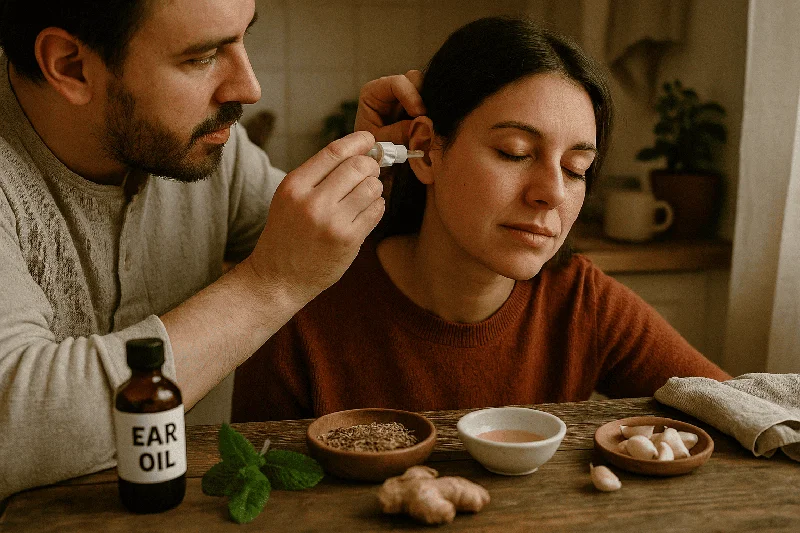
Using a clean dropper, gently instill 4–5 drops of warm oil into the ear canal. For full Karana Purana, the ear canal is filled (approximately 10–15 drops), but the conservative home approach uses fewer drops.
Step 4: Gentle Massage
With your fingertip, gently press and release the tragus (the small pointed flap in front of the ear canal) 10–15 times. This creates a pumping action that helps the oil penetrate deeper and contact the tympanic membrane. You should hear a gentle squelching sound.
Step 5: Retention
- Remain lying on your side for 10–15 minutes. Some practitioners recommend gently pulling the outer ear upward and backward to straighten the ear canal for better penetration.
- Use this time for deep breathing or meditation — the relaxation itself supports Vata pacification.
Step 6: Drainage
After the retention period, slowly sit up and tilt your head to allow excess oil to drain onto the towel. Gently wipe the outer ear with a cotton ball. Do NOT insert cotton buds into the canal.
Step 7: Repeat for Other Ear
If treating both ears, repeat the entire process for the opposite side.
Frequency and Duration
- For acute conditions: Daily for 7–14 days
- For chronic hearing support: 3 times per week for 4–12 weeks
- For general maintenance: Once weekly, ongoing
- Best timing: Early morning (before breakfast) or before bedtime
Gandhak Rasayana: The Internal Companion to Ear Drops
- While ear drops work locally, Ayurveda emphasizes addressing the systemic imbalance simultaneously.
- Gandhak Rasayana — a purified sulfur-based preparation — is frequently prescribed alongside topical ear treatments.
Its documented properties include:
- Antibacterial: Active against both gram-positive and gram-negative organisms
- Antifungal: Effective against Candida and Aspergillus species
- Anti-inflammatory: Reduces systemic inflammatory markers
- Rasayana (rejuvenative): Supports tissue regeneration and immunity
Typical dosage: 250–500 mg twice daily with milk or honey, after meals. Course duration usually spans 1–3 months. Important: Gandhak Rasayana should only be taken under supervision of a qualified Ayurvedic practitioner. Self-medication with internal Ayurvedic formulations can cause adverse effects, particularly hepatic stress if doses are incorrect.
When Ayurvedic Ear Drops Will NOT Help — Honest Limitations
No other guide addresses this transparently, but it's critical for your safety.
Absolute Contraindications
- Perforated eardrum (tympanic membrane perforation): Putting any liquid into an ear with a perforated eardrum can cause severe middle ear infection, vertigo, and permanent damage. If you have discharge from your ear, get an ENT examination to rule out perforation before using any drops.
- Cholesteatoma: An abnormal skin growth in the middle ear that requires surgical removal. Ear drops cannot treat it and may mask progressive damage.
- Acoustic neuroma or other tumors: Requires imaging and medical/surgical management.
- Sudden sensorineural hearing loss (SSHL): This is a medical emergency. If you lose hearing suddenly in one ear, see an ENT specialist within 72 hours. Delayed treatment with steroids significantly reduces recovery chances.
Conditions Requiring Caution
- Active ear discharge of unknown cause: Get a culture and sensitivity test first
- Severe SNHL: Ayurvedic drops alone cannot restore damaged hair cells; hearing aids or cochlear implants may be necessary
- Post-surgical ears: Any ear with previous surgery needs clearance from the operating surgeon
When to Combine with Modern Medicine
Ayurvedic ear drops can complement (not replace) conventional treatment in several scenarios:
| Situation | Modern Treatment | Ayurvedic Support |
|---|---|---|
| Hearing aid users | Hearing aid fitted | Karana Purana weekly to maintain ear canal health |
| Post-infection recovery | Antibiotics completed | Bilva Taila to support healing and prevent recurrence |
| Cochlear implant candidate | Implant surgery | Pre-operative ear health optimization with gentle oils |
| Mild-moderate tinnitus | Sound therapy | Bhringraj Taila + Nasya with Anu Taila |
Age-Specific Recommendations and Safety
For Children (Ages 2–12)
- Use half the adult dosage (1–2 drops)
- Never use Gandhapura Taila (wintergreen) — methyl salicylate toxicity risk is higher in children
- Only use oil at body temperature — children's ear canals are more sensitive
- Bilva Taila is generally considered safest for pediatric use
- Do not use any ear drops in children under 2 without direct medical supervision
For Adults (Ages 12–60)
Standard dosages apply as described in the comparison table above. Healthy adults can safely perform home Karana Purana with the protocol described.
For Elderly (Ages 60+)
- Elderly patients often have drier ear canals — regular oiling (even plain sesame oil) provides baseline protection
- Age-related hearing loss (presbycusis) benefits most from a combined approach: Bhringraj Taila drops + Anu Taila Nasya + Gandhak Rasayana internally
- Monitor for dizziness after oil administration — vestibular sensitivity may be increased
- Those on blood-thinning medications should avoid Gandhapura Taila (methyl salicylate has anti-platelet effects)
During Pregnancy
- Avoid internal formulations like Gandhak Rasayana without explicit guidance from both Ayurvedic and obstetric practitioners
- Plain sesame oil or mild Bilva Taila for topical ear use is generally considered safe, but always inform your healthcare provider
Storage, Shelf Life, and Quality Indicators
How to Choose Quality Ayurvedic Ear Drops
Look for these markers when purchasing:
- GMP certification — ensures manufacturing standards are met
- AYUSH license number — mandatory for all Ayurvedic products sold in India
- Third-party lab testing — reputable brands provide certificates of analysis
- Organic or sustainably sourced ingredients — better potency and fewer contaminants
- Dark glass packaging — protects light-sensitive compounds from degradation
Proper Storage
- Store in a cool, dark place (below 25°C)
- Keep bottle tightly sealed after each use
- Sesame oil-based formulations typically have a shelf life of 2–3 years if stored properly
- Never use oil that smells rancid, has visible particles, or has changed color significantly
Signs Your Oil Has Gone Bad
- Sour or sharp odor (fresh Ayurvedic oils should smell herbal and slightly nutty)
- Cloudy appearance when at room temperature
- Thick, sticky texture that wasn't present when the bottle was new
- Any mold growth around the bottle opening
Tinnitus (Ringing in Ears): How Ayurvedic Drops Can Help
- Tinnitus frequently accompanies hearing loss and deserves separate attention.
- In Ayurveda, tinnitus is classified under Karnanada — literally "sound in the ear" — and is attributed primarily to aggravated Prana Vayu.
A study published in Netmeds Health Library references five specific Ayurvedic approaches for tinnitus management, including Bilva Taila ear drops, Sarivadi Vati (an internal tablet), and Ashwagandha supplementation.
Recommended Protocol for Tinnitus
- 1.Morning: Anu Taila Nasya — 2 drops each nostril
- 2.Evening: Bhringraj Taila Karana Purana — 3–4 drops each ear, retain 15 minutes
- 3.Internal: Sarivadi Vati — 2 tablets twice daily (consult practitioner for exact dosage)
- 4.Lifestyle: Reduce caffeine, avoid loud environments, practice Bhramari Pranayama (humming bee breath) daily
Most patients report noticeable improvement in tinnitus intensity within 3–6 weeks of consistent practice, though complete resolution may take 3–6 months for chronic cases.
Lifestyle and Dietary Recommendations for Ear Health
Diet (Ahara)
- Favor: Warm, cooked, moist foods — soups, stews, ghee, warm milk with turmeric
- Include: Omega-3 rich foods (flaxseeds, walnuts) — support anti-inflammatory pathways
- Limit: Cold, dry, raw foods — these aggravate Vata
- Avoid: Excessive caffeine, alcohol, and refined sugar — all can worsen tinnitus and impair circulation
- Specific nutrients: Zinc (pumpkin seeds), Magnesium (leafy greens), Vitamin B12 (dairy, fortified foods) — all critical for auditory nerve function
Lifestyle (Vihara)
- Protect ears from cold wind — wear a scarf or ear cover in winter
- Never insert objects (cotton buds, keys, hairpins) into the ear canal
- Limit headphone use to 60 minutes at 60% volume (the "60-60 rule")
- Practice Abhyanga (self-oil massage) including the ear area weekly
- Get adequate sleep — auditory processing and repair occurs during deep sleep
- Manage stress through meditation, yoga, or Pranayama — chronic stress directly aggravates Vata
Frequently Asked Questions
Can Ayurvedic ear drops reverse hearing loss?
It depends entirely on the type and severity. For conductive hearing loss caused by wax buildup or mild infections, Ayurvedic drops can effectively restore hearing — sometimes completely. For mild sensorineural hearing loss, they may provide supportive improvement. For moderate-to-severe SNHL, they cannot reverse the condition but may slow progression and help manage associated symptoms like tinnitus.
How long should I use Ayurvedic ear drops for hearing loss?
- For acute infections: 7–14 days.
- For chronic hearing support: minimum 4–12 weeks to see meaningful results.
- For ongoing maintenance and prevention: indefinitely, at reduced frequency (once weekly). Ayurveda works gradually through cumulative effects, so consistency matters more than intensity.
Are Ayurvedic ear drops safe for children?
Generally yes, with important caveats. Use half the adult dosage for children aged 2–12, avoid wintergreen-based formulations completely, and always test oil temperature carefully. For infants under 2 years, do not use any ear drops without direct supervision from a qualified practitioner.
What causes hearing loss according to Ayurveda?
Primarily Vata dosha aggravation affecting Prana Vayu and the Akasha (ether) element associated with hearing. Specific causes include exposure to cold wind, excessive noise, irregular eating habits, suppression of natural urges (especially sneezing), emotional stress, and aging. The concept aligns surprisingly well with modern understanding — Vata aggravation parallels nerve degeneration and impaired circulation.
Can home remedies provide natural relief from ear infections?
Yes, mild ear infections often respond well to warm oil application (even plain sesame or coconut oil) combined with garlic-infused oil. However, if symptoms include high fever, severe pain, copious discharge, or hearing loss lasting more than 48 hours, seek professional evaluation immediately.
Where can you find the best Ayurvedic remedy for ear care?
Reputable Ayurvedic pharmacies (Kottakkal Arya Vaidya Sala, Vaidyaratnam, and SDM Ayurveda) manufacture high-quality traditional formulations. For online purchases, ensure the product has an AYUSH license, GMP certification, and positive reviews from verified buyers. Physical consultation with an Ayurvedic practitioner remains the gold standard for personalized prescription.
How to reverse hearing loss naturally?
- Complete reversal is possible only for conductive causes (wax, infections, fluid).
- For sensorineural loss, focus on: (1) Ayurvedic ear drops and Karana Purana for circulation support, (2) Nasya therapy for nerve nourishment, (3) Internal Rasayana formulations, (4) Nutrient-rich diet (zinc, magnesium, B12, omega-3s), (5) Noise protection, and (6) Regular audiometric monitoring to track progress objectively.
What is the new treatment for hearing loss?
In modern medicine, emerging treatments include gene therapy, stem cell therapy, and OTC hearing aids recently approved by the FDA. In Ayurveda, there's growing interest in combining traditional formulations with modern delivery systems — nanoparticle-based herbal ear drops are being researched at several Indian universities, though commercial products aren't yet available.
Final Thoughts: An Integrative Approach Works Best
Ayurvedic ear drops represent a genuine therapeutic option for specific types of hearing loss, backed by centuries of clinical use and increasingly supported by modern research. The case study showing Klebsiella clearance and Brighton grading improvement from Grade III to Grade I is not an isolated anecdote — it reflects a growing body of evidence that traditional formulations have measurable pharmacological effects.
But here's the balanced truth: Ayurveda works best as part of an integrative approach. Get a proper diagnosis first. Know your audiogram. Rule out conditions that require urgent medical or surgical intervention. Then, work with a qualified Ayurvedic practitioner to develop a protocol that includes the right ear drops, appropriate internal medicines, dietary modifications, and lifestyle changes.
- Your hearing is precious.
- Protect it with the best of both worlds — ancient wisdom validated by modern evidence.
Consult a qualified Ayurvedic practitioner (BAMS/MD Ayurveda) before starting any treatment. This article is for educational purposes and does not replace professional medical advice. If you experience sudden hearing loss, seek emergency ENT consultation immediately.
Scientific Sources
- Inflammation and ROS in arthritis: management by Ayurvedic medicinal plants — Prasad S et al., 2021, Food & function
- Integrating ayurvedic medicine into cancer research programs part 1: Ayurveda background and applications — Arnold JT, 2023, Journal of Ayurveda and integrative medicine
- COVID-19 vaccine hesitancy, trust, and communication in Sarlahi District, Nepal — Manandhar P et al., 2024, Vaccine
- Insights on personalized medicine from Ayurveda — Sumantran VN et al., 2013, Journal of alternative and complementary medicine (New York, N.Y.)
- Treatment of the common cold with herbs used in Ayurveda and Jamu: monograph review and the science of ginger, liquorice, turmeric and peppermint — Wardani RS et al., 2023, Drugs in context
- Ethnobotanical, phytochemical, toxicology and anti-diabetic potential of Senna occidentalis (L.) link; A review — Lum Nde A et al., 2022, Journal of ethnopharmacology
- Ayurveda management of an acute intervertebral disc prolapse: A case report — Balakrishnan P et al., 2025, Journal of Ayurveda and integrative medicine
- Berberine in Cardiovascular and Metabolic Diseases: From Mechanisms to Therapeutics — Feng X et al., 2019, Theranostics
- Siravedha and Knee Osteoarthritis: A Case Report — Sharma S et al., 2024, Alternative therapies in health and medicine
- Ayurveda for a Type 1 Diabetes Patient with Peripheral Arterial Occlusive Disease: A Case Report — Stapelfeldt E et al., 2024, Complementary medicine research
- Direct evidence for GABAergic activity of Withania somnifera on mammalian ionotropic GABAA and GABAρ receptors — Candelario M et al., 2015, Journal of ethnopharmacology
- Neuronutritional enhancement of antioxidant defense system through Nrf2/HO1/NQO1 axis in fibromyalgia — Inferrera F et al., 2025, Neurochemistry international
- Ayurvedic research, wellness and consumer rights — Chandra S, 2016, Journal of Ayurveda and integrative medicine
- Ancient Thali Diet: Gut Microbiota, Immunity, and Health — Shondelmyer K et al., 2018, The Yale journal of biology and medicine
- Pharmacological Insights Into Ashwagandha (Withania somnifera): A Review of Its Immunomodulatory and Neuroprotective Properties — Dipankar SP et al., 2025, Cureus
- Hot and Cold Theory: Evidence in Physiology — Namiranian P et al., 2021, Advances in experimental medicine and biology
- Evidence-Based Traditional Medicine for Transforming Global Health and Well-Being — Patwardhan B et al., 2023, Journal of integrative and complementary medicine
- Do Ayurveda drugs induce liver injury? — Ruknuddin G, 2018, World journal of hepatology
- Shatavari (Asparagus racemosus Willd) root extract for postpartum lactation: A randomised, double-blind, placebo-controlled study — Ajgaonkar A et al., 2025, Journal of obstetrics and gynaecology : the journal of the Institute of Obstetrics and Gynaecology
- Neuronutrient impact of Ayurvedic Rasayana therapy in brain aging — Singh RH et al., 2008, Biogerontology
आयुर्वेदिक डॉक्टर से एक प्रश्न पूछें और मुफ़्त या सशुल्क मोड में अपनी चिंता की समस्या पर ऑनलाइन परामर्श प्राप्त करें।
2,000 से अधिक अनुभवी डॉक्टर हमारी साइट पर काम करते हैं और आपके प्रश्नों की प्रतीक्षा करते हैं और प्रतिदिन उपयोगकर्ताओं को उनकी स्वास्थ्य समस्याओं को हल करने में मदद करते हैं।
संबंधित आलेख