आयुर्वेदिक डॉक्टर से प्रश्न पूछें और निःशुल्क या भुगतान मोड में अपनी चिंता की समस्या पर ऑनलाइन परामर्श प्राप्त करें। 2,000 से अधिक अनुभवी डॉक्टर हमारी साइट पर काम करते हैं और आपके प्रश्नों का इंतजार करते हैं और उपयोगकर्ताओं को उनकी स्वास्थ्य समस्याओं को हल करने में प्रतिदिन मदद करते हैं।


Body DetoxEar, Nose, and Throat DisordersGeriatrics & RejuvenationImmunodeficiencyInfertility TreatmentNutritionOrthopedic DisordersPediatricsRespiratory DisordersSexually Transmitted Diseases (STDs)Surgery RecoveryUrological DisordersVascular DisordersDental DisordersEndocrinological DisordersGastrointestinal DisordersYoga TherapyGeneral MedicineAllergic DisordersCardio DisordersGynecology and ObstetricsCosmetologySkin and Hair DisordersEye DisordersInfectious DiseasesMental DisordersNeurological DisordersOncologyPanchakarmaSexual Health & DisordersSports Medicine
पर प्रकाशित 12/23/24
(को अपडेट 08/09/26)
star_border 5
4,181
Uttar Basti Treatment for Male: Ayurvedic Prostate Health Therapy
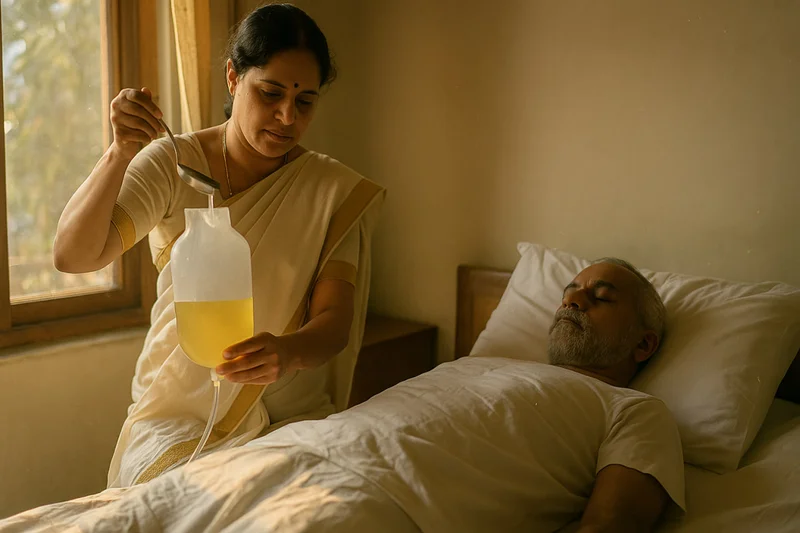
Uttar Basti (Uttara Basti) is a specialized Panchakarma procedure in which medicated oils, ghee, or herbal decoctions are administered through the urethral or vaginal route to treat disorders of the urinary tract, reproductive system, and pelvic organs. Unlike conventional Basti (enema therapy) that uses the rectal route, Uttar Basti targets organs above — the uterus in women and the urinary bladder or prostate in men — making it one of Ayurveda's most precise localised therapies. Clinical data from published studies show an approximately 80% success rate in clearing fallopian tube blockages and a 40% conception rate within two months of treatment, while the cost typically ranges from ₹2,000 to ₹6,000 per session across India.
This guide covers everything you need to know: the full procedure, types, indications for both genders, instruments used, side effects, scientific evidence, dietary protocols, and how Uttar Basti compares to modern treatments like IVF and laparoscopy.
What Is Uttarbasti? Definition, Etymology, and Ayurvedic Context
The term "Uttar Basti" comes from two Sanskrit words: Uttara meaning "upper" or "superior," and Basti meaning "bladder" or "the therapy involving administration of substances into a body cavity." Acharya Charaka and Sushruta both describe this procedure extensively in the classical texts, positioning it as a therapy that reaches the uttara marga (upper pathway) — as opposed to the adhah marga (lower/rectal pathway) used in standard Basti.
In the framework of Panchakarma, Uttar Basti is considered a specialized extension of Basti Karma, one of the five primary detoxification procedures. It directly acts on the reproductive and urinary srotas (channels), pacifying vitiated Vata dosha — the primary dosha responsible for disorders of the pelvic region, menstrual irregularities, infertility, and urinary dysfunction.
Why Choose Uttarbasti Over Standard Basti?
Standard Basti administered rectally is excellent for systemic Vata disorders, lower back pain, and colonic health. However, it cannot deliver medication directly to the uterine cavity, fallopian tubes, urethral lining, or prostatic urethra.
Uttar Basti fills this gap by providing:
- Direct drug delivery to the target organ, increasing bioavailability
- Higher local concentration of medication with minimal systemic side effects
- Mechanical flushing of obstructed channels (e.g., tubal blockages)
- Localized Snehana (oleation) that nourishes depleted reproductive tissues (Shukra and Artava Dhatu)
This makes it irreplaceable for conditions where systemic therapy simply doesn't reach the site of pathology.
Types of Uttar Basti: Female (Garbhashaya Gata) and Male (Mutrashaya Gata)
Uttar Basti is broadly classified into two types based on the route of administration and the target organ.
Garbhashaya Gata Uttar Basti (Vaginal/Intrauterine Route — For Females)
In this type, the medicated substance is introduced through the vaginal canal into the uterine cavity. This is the most commonly practiced form and is primarily indicated for gynecological and infertility-related conditions.
Key parameters:
- Basti Netra (cannula) length: 10 Angula (~19 cm) for intrauterine administration
- Karnika (stopper ring): positioned to prevent over-insertion
- Drug volume: typically 30–60 ml of medicated oil or decoction
- Timing: usually performed during Rutukala (post-menstrual period, days 5–12 of the cycle)
Mutrashaya Gata Uttar Basti (Urethral Route — For Males and Females)
This type involves administration through the urethra to reach the urinary bladder. In males, the urethral route also allows medication to contact the prostatic urethra, making it valuable for prostate-related conditions.
Key parameters for males:
- Basti Netra length: 14 Angula (~26 cm) to traverse the longer male urethra
- Drug volume: typically 20–30 ml
- Karnika diameter: slightly smaller than the female variant
Key parameters for females (urethral):
- Basti Netra length: 4 Angula (~7.5 cm) due to the shorter female urethra
- Drug volume: 15–20 ml
| Parameter | Female (Vaginal) | Female (Urethral) | Male (Urethral) |
|---|---|---|---|
| Route | Vaginal → Uterine | Urethral → Bladder | Urethral → Bladder/Prostate |
| Netra Length | ~19 cm (10 Angula) | ~7.5 cm (4 Angula) | ~26 cm (14 Angula) |
| Typical Volume | 30–60 ml | 15–20 ml | 20–30 ml |
| Primary Indications | Infertility, PCOS, endometriosis | UTI, urethral stricture | BPH, prostatitis, male infertility |
Uttar Basti Procedure: Step-by-Step (Purvakarma, Pradhana Karma, Paschat Karma)
- The procedure follows the classic three-stage Panchakarma format.
- Each stage is essential — skipping preparation compromises results and increases risk.
Purvakarma (Pre-Procedure Preparation)
Before Uttar Basti is administered, the patient undergoes systemic cleansing and localised preparation:
- 1.Deepana-Pachana: Digestive stimulation using herbs like Trikatu or Chitrakadi Vati for 3–5 days to ensure optimal Agni (digestive fire).
- 2.Snehapana (Internal Oleation): Medicated ghee administration in graduated doses for 3–7 days. This softens the body channels and prepares tissues for therapy.
- 3.Swedana (Sudation): Steam therapy or Nadi Sweda focused on the lower abdomen and pelvic region to open the srotas and enhance drug absorption.
- 4.Virechana (Purgation): Many practitioners recommend a mild Virechana 2–3 days before Uttar Basti to clear the gastrointestinal tract and ensure Apana Vata flows correctly.
- 5.Local Yoni Dhavana (for females): Vaginal douche with medicated decoctions like Triphala Kwatha or Panchavalkala Kwatha to cleanse and disinfect the area.
Specific Timing: Which Day Is Uttar Basti Done?
- For gynecological conditions, Uttar Basti is ideally performed during Rutukala — post-menstrual days (typically Day 5 to Day 12 of the menstrual cycle).
- This ensures:
- The cervical os is naturally slightly dilated
- Endometrium is in the proliferative phase, optimizing drug absorption
- There is no risk of disturbing a potential early pregnancy
For male patients and purely urological indications, there is no cycle-based restriction. Treatment can be scheduled after adequate Purvakarma completion.
Pradhana Karma (Main Procedure)
- The patient is positioned in the lithotomy position (supine with knees flexed and hips abducted).
- The external genitalia and urethral/vaginal orifice are cleaned with antiseptic solution.
- The Basti Netra (traditionally made from gold, silver, or surgical steel; the historical texts also describe reed-based instruments) is lubricated with medicated oil.
- The Basti Netra is gently inserted through the appropriate route — vaginal canal toward the uterine os, or urethral meatus toward the bladder.
- The Basti Putaka (bladder bag, traditionally animal bladder, now replaced by rubber bulb or syringe) containing the warm medicated oil/decoction is attached and slowly compressed.
- The medication is instilled over 2–3 minutes with steady, gentle pressure. The patient is asked to remain relaxed and breathe deeply.
- The Basti Netra is carefully withdrawn.
- The patient remains supine with hips slightly elevated for 15–30 minutes to allow the medication to be retained and absorbed.
Paschat Karma (Post-Procedure Care)
- Rest: Patient lies supine for at least 30 minutes post-procedure. Most patients return to normal activities within the same day.
- Diet: Light, warm, easily digestible food — Khichdi, rice gruel (Peya), warm milk. No spicy, fried, or heavy food for 24 hours.
- Activity restriction: Avoid strenuous exercise, sexual intercourse, and heavy lifting for 24–48 hours.
- Observation: Monitor for any discharge, pain, or bleeding. Mild spotting in females is normal and usually resolves within hours.
Uttar Basti Treatment for Female: Indications and Protocol
Uttar Basti is most widely recognised for its role in female reproductive health. The classical texts describe it as one of the most effective interventions for Vandhyatva (infertility).
Key Indications for Females
- Tubal blockage (Fallopian tube obstruction) — the most studied indication
- Unexplained infertility and recurrent implantation failure
- PCOS (Polycystic Ovarian Syndrome) — regulates ovulation
- Endometriosis — reduces inflammation and adhesions
- Dysmenorrhea and irregular menstruation
- Pelvic Inflammatory Disease (PID) — chronic cases
- Uterine fibroids (small) — supportive therapy
- Cervical erosion and chronic cervicitis
- Vaginal dryness and atrophic conditions
Uttar Basti Success Rate for Tubal Blockage
A clinical study published in the Journal of Ayurveda and Integrative Medicine (accessible via PubMed Central, NIH) evaluated Uttar Basti using Kumari Taila on patients with bilateral tubal blockage confirmed by HSG (Hysterosalpingography).
The results showed:
- 80% of patients showed partial or complete clearance of tubal blockage on post-treatment HSG
- 40% of patients conceived naturally within 2 months of completing therapy
- No significant adverse effects were reported in the study cohort
These numbers are remarkable for a non-surgical, minimally invasive procedure — especially considering that the alternative (tubal recanalization via laparoscopy) carries surgical risks, higher costs, and variable success rates.
Course Duration for Female Conditions
| Condition | Number of Sessions per Cycle | Number of Cycles | Total Duration |
|---|---|---|---|
| Tubal Blockage | 6–7 sessions (consecutive days post-menses) | 2–3 cycles | 2–3 months |
| PCOS | 5–6 sessions per cycle | 3–4 cycles | 3–4 months |
| Endometriosis | 6–7 sessions per cycle | 3–5 cycles | 3–5 months |
| Dysmenorrhea | 5 sessions per cycle | 2–3 cycles | 2–3 months |
| Chronic PID | 5–7 sessions per cycle | 2–3 cycles | 2–3 months |
Note: These are general guidelines. Individual protocols vary based on severity, Prakriti, and physician assessment.
Uttar Basti Treatment for Male: Prostate and Urological Health
- While far less discussed in popular Ayurvedic content, Uttar Basti through the urethral route in males is a legitimate and clinically valuable procedure.
- Classical Ayurvedic texts — particularly Sushruta Samhita — describe the male urethral route in detail.
Indications for Males
- Benign Prostatic Hyperplasia (BPH) — reduces prostate inflammation and improves urinary flow
- Chronic Prostatitis — delivers anti-inflammatory medication directly to the prostatic urethra
- Urethral Stricture — mild to moderate strictures may respond to regular oleation
- Male Infertility — improves sperm motility and count through Vata pacification
- Chronic UTI — recurrent urinary tract infections not resolving with oral therapy
- Mutrakrichra (Dysuria) — painful or difficult urination
- Mutraghata (Urinary retention) — partial obstruction conditions
Protocol Differences for Male Patients
- The male urethral Uttar Basti requires greater technical skill due to the longer urethral length and the presence of the prostatic curve.
- Key differences include:
- Longer Basti Netra (14 Angula / ~26 cm) with careful angulation
- Slower instillation to avoid urethral spasm
- Smaller volumes (typically 20–30 ml) to prevent bladder overdistension
- Patient positioning may include slight Trendelenburg to facilitate flow
- Post-procedure retention is encouraged for at least 20 minutes
A typical course for male conditions involves 5–7 consecutive sessions, repeated for 2–3 courses depending on the condition.
स्वयं दवा न लें और प्रतीक्षा न करें। अभी डॉक्टर से चैट शुरू करें
Medicines Used in Uttar Basti: Complete Drug Reference
One of the biggest gaps in existing content is a systematized reference of medicines used in Uttar Basti.
Here's a comprehensive table:
| Medicine (Basti Dravya) | Type | Primary Indications | Key Properties |
|---|---|---|---|
| Kumari Taila (Aloe vera oil) | Sneha (Oil) | Tubal blockage, infertility | Vata-Kapha Shamaka, Lekhana (scraping) |
| Dashmool Taila | Sneha (Oil) | PID, pelvic inflammation, BPH | Anti-inflammatory, Vata Shamaka |
| Phala Ghrita | Sneha (Ghee) | Female infertility, recurrent miscarriage | Garbhashaya Balya (uterine tonic) |
| Shatapushpa Taila | Sneha (Oil) | PCOS, ovulatory dysfunction | Artava Janana (promotes ovulation) |
| Yashtimadhu Taila | Sneha (Oil) | Urethral stricture, mucosal healing | Ropana (healing), Shothaghna |
| Triphala Kwatha | Kashaya (Decoction) | Chronic infections, cleansing wash | Antimicrobial, Tridosha Shamaka |
| Panchavalkal Kwatha | Kashaya (Decoction) | Pre-procedure vaginal douche | Antiseptic, astringent |
| Bala Taila | Sneha (Oil) | Male infertility, Vata disorders | Balya (strengthening), Vata Shamaka |
| Ksheerabala Taila | Sneha (Oil) | Neurogenic bladder, chronic dysuria | Vata Shamaka, Rasayana |
| Chandanadi Taila | Sneha (Oil) | Burning micturition, urethritis | Pitta Shamaka, cooling |
Selection principle: Sneha Basti (oil-based) is preferred for nourishing, strengthening, and lubricating purposes. Kashaya Basti (decoction-based) is chosen when cleansing, scraping, or anti-microbial action is the primary goal. Many practitioners alternate between the two within a single treatment course.
Uttar Basti vs Modern Medical Treatments: A Direct Comparison
No existing resource provides a head-to-head comparison of Uttar Basti against conventional options. Let's fix that.
| Parameter | Uttar Basti | IVF/ICSI | Laparoscopic Tubal Surgery | Conventional Antibiotics (for UTI/PID) |
|---|---|---|---|---|
| Cost per cycle | ₹2,000–₹6,000/session | ₹1,50,000–₹3,00,000/cycle | ₹50,000–₹1,50,000 | ₹500–₹3,000 |
| Invasiveness | Minimally invasive | Moderately invasive (hormonal + surgical retrieval) | Surgically invasive | Non-invasive |
| Anaesthesia required | No | Yes (sedation) | Yes (general) | No |
| Hospital stay | Outpatient | Day care to 1 day | 1–3 days | Outpatient |
| Success rate (tubal blockage) | ~80% clearance | N/A (bypasses tubes) | 40–70% clearance | Not applicable |
| Conception rate | ~40% within 2 months | 30–45% per cycle | 20–40% within 1 year | Not applicable |
| Side effects | Minimal (mild spotting) | OHSS, multiple pregnancy, emotional toll | Surgical risks, adhesion formation | Antibiotic resistance, GI disturbance |
| Addresses root cause | Yes (clears channels, balances doshas) | No (bypasses pathology) | Partially | Partially |
| Repeatability | Easily repeatable | Limited by cost and physical toll | Usually one attempt | Repeatable but resistance risk |
Key takeaway: Uttar Basti occupies a unique niche as a low-cost, minimally invasive option that addresses root cause pathology. It can also be used as a complementary therapy alongside modern treatments, or as a first-line approach before escalating to surgical or assisted reproductive options.
Side Effects, Risks, and Contraindications of Uttar Basti
Possible Side Effects
Most clinical studies report Uttar Basti as safe with "no apparent complications." However, honest clinical practice reveals that certain side effects can occur, even if rare:
- Mild spotting or bloody discharge (common in first 1–2 sessions, self-resolving)
- Lower abdominal cramping — similar to menstrual cramps, lasts 1–4 hours
- Urethral irritation or burning (in urethral route) — usually settles within hours
- Vasovagal response — rare; dizziness or nausea during insertion due to cervical stimulation
- Infection — extremely rare when aseptic technique is followed; more likely if performed in unhygienic settings
- Urinary urgency (post-urethral Basti) — self-resolving within 2–3 hours
Contraindications
Uttar Basti should NOT be performed in the following conditions:
- Active pelvic or urinary tract infection (acute phase)
- Pregnancy (confirmed or suspected)
- Active menstruation / heavy menstrual bleeding
- Sexually transmitted diseases — HIV, Hepatitis B, active STDs
- Malignant tumors of the reproductive or urinary tract
- Severe cardiac, hepatic, or renal disease
- Unmarried girls (vaginal route — as per classical texts and ethical guidelines)
- Post-partum period (until lochia has ceased, typically 6 weeks)
- Cervical incompetence or recent cervical surgery
Age and Physiological Restrictions
| Category | Vaginal Route | Urethral Route |
|---|---|---|
| Pre-pubescent girls | Contraindicated | Contraindicated |
| Reproductive age (18–45) | Ideal candidates | Applicable |
| Post-menopausal women | Case-by-case (for urological issues) | Applicable |
| Males (any adult age) | N/A | Applicable |
| During lactation | Generally avoided; consult physician | Generally avoided |
Diet, Lifestyle, and Recovery: Complete Pre and Post-Treatment Protocol
Pre-Treatment Diet (3–5 Days Before)
- Eat: Warm, light, cooked foods — moong dal khichdi, steamed vegetables, warm soups
- Drink: Warm water, ginger tea, cumin water
- Avoid: Raw salads, cold drinks, fried food, heavy non-vegetarian meals, alcohol
- Lifestyle: Sleep by 10 PM, avoid vigorous exercise, practice gentle Pranayama
Day of Treatment
- Morning: Light breakfast (rice porridge or toast with warm milk) at least 2 hours before procedure
- Post-procedure: Rest supine for 30 minutes. Sip warm water. Avoid cold beverages.
- Meals: Khichdi with ghee, warm milk with turmeric at night
Post-Treatment Recovery (1–7 Days)
- Day 1: Complete rest. Light diet. No sexual activity.
- Days 2–3: Gradual return to normal activities. Continue warm, easy-to-digest foods.
- Days 4–7: Resume regular diet gradually. Avoid intense exercise, swimming, and baths (showers are fine).
- Throughout: No cold food or drinks. Avoid emotional stress. Practice meditation or Yoga Nidra if possible.
Lifestyle Recommendations During the Full Course
- Maintain regular sleep schedule
- Practice gentle yoga — Baddha Konasana, Supta Virasana, and Viparita Karani are particularly beneficial for pelvic health
- Avoid smoking and alcohol throughout the treatment course
- Keep the pelvic area warm — avoid sitting on cold surfaces
Integrating Uttar Basti with Other Panchakarma Procedures
Uttar Basti rarely works in isolation. The best clinical outcomes are achieved when it is integrated into a structured Panchakarma sequence.
Recommended Sequence
- 1.Deepana-Pachana (Days 1–3): Digestive preparation
- 2.Snehapana (Days 4–10): Internal oleation with medicated ghee
- 3.Abhyanga + Swedana (Days 11–12): Full body oil massage and steam
- 4.Virechana (Day 13): Therapeutic purgation to clear Pitta and Kapha from the system
- 5.Samsarjana Krama (Days 14–17): Graduated dietary restoration
- 6.Uttar Basti Course (Days 18–24, or timed with menstrual cycle): 5–7 sessions
- 7.Shamana Aushadhi (Days 25+): Oral medicines for maintenance — Phala Ghrita, Shatavari, Ashwagandha, etc.
This integrated approach ensures that the body's channels are clean, the doshas are balanced, and the reproductive tissues are optimally prepared to receive the localised Uttar Basti therapy.
Uttar Basti Instruments: Traditional and Modern
Traditional Instruments (as described in Sushruta Samhita)
- Basti Netra: A hollow tube made of gold, silver, or bone. Different lengths for different routes.
- Basti Putaka: A bladder bag (originally made from goat or buffalo urinary bladder) used to hold and expel the medication.
- Karnika: A circular flange or stopper on the Basti Netra that prevents over-insertion and marks the depth of administration.
Modern Adaptations
Today, most practitioners use:
- Stainless steel or disposable plastic cannulae of calibrated lengths
- Rubber bulb syringes or standard medical syringes (20 ml / 50 ml) in place of the Basti Putaka
- Pre-sterilized, single-use kits in institutional settings
The key principle remains unchanged: the instrument must be smooth, non-traumatic, properly lubricated, and of the correct length for the intended route.
Can Uttar Basti Be Done at Home?
This is a common search query, and the answer is clear: No, Uttar Basti should not be attempted at home.
Here's why:
- It involves catheterization of the uterine or urethral cavity — improper technique can cause perforation, infection, or trauma
- Aseptic conditions are mandatory
- The practitioner needs to assess cervical dilation, rule out contraindications, and handle potential vasovagal responses
- Drug selection and dosage require clinical assessment of the patient's Prakriti, Vikriti, and current menstrual status
Always seek treatment from a qualified Ayurvedic physician (BAMS or MD Ayurveda) in a registered clinical setting. Ask about their specific training in Panchakarma procedures and the number of Uttar Basti procedures they have performed.
Scientific Evidence: What Research Says About Uttar Basti
Published Clinical Studies
- PMC/NIH Study on Kumari Taila Uttar Basti for Tubal Blockage: This controlled clinical trial used Kumari Taila administered via intrauterine Uttar Basti. Pre- and post-treatment HSG (Hysterosalpingography) was used as the diagnostic standard. Key findings: 80% tubal patency restoration, 40% conception rate. Hematological and urological parameters showed no adverse changes, confirming safety. Physico-chemical analysis of Kumari Taila confirmed its Vata-Kapha Shamaka and Lekhana (scraping) properties.
- Multiple observational studies from Ayurvedic teaching hospitals (published in Ayu, Ancient Science of Life, International Journal of Ayurveda Research) have documented positive outcomes in PCOS management, endometriosis symptom relief, and chronic prostatitis.
What We Still Need
An honest assessment: the evidence base for Uttar Basti, while promising, remains limited in scope. Most studies are single-center, small-sample, and lack long-term follow-up.
What is urgently needed:
- Multi-center randomized controlled trials (RCTs)
- Head-to-head comparisons with conventional treatments
- Long-term fertility outcome tracking (beyond 2 months)
- Standardized protocols across institutions
This doesn't diminish the therapy's clinical value — thousands of practitioners report consistent positive outcomes. It simply means the formal research needs to catch up with clinical experience.
Frequently Asked Questions (FAQ)
How much does Uttar Basti cost?
The cost ranges from ₹2,000 to ₹6,000 per session in India, depending on the city, the practitioner's experience, the type of medicine used, and the clinical setting. A full course (5–7 sessions) may cost ₹10,000–₹42,000. Government Ayurvedic hospitals often offer subsidized rates. Premium wellness centers in metros like Delhi, Mumbai, and Bangalore charge toward the higher end.
What is the success rate of Uttar Basti treatment?
For tubal blockage, published clinical data shows approximately 80% clearance rate on HSG and a 40% natural conception rate within two months. Success rates for other conditions (PCOS, prostatitis, endometriosis) vary widely and depend on disease severity, patient compliance, and the integration of supportive therapies.
Is Uttar Basti painful?
Most patients report mild discomfort rather than actual pain. The sensation is often compared to mild menstrual cramping for females or a slight urethral tingling for males. The use of pre-procedure local oleation and a warm medication temperature significantly reduces discomfort. No anaesthesia is required.
How many sessions are needed?
Typically 5–7 sessions per cycle, with 2–3 cycles for chronic conditions. Acute or mild conditions may resolve in a single course. Your Ayurvedic physician will customize the protocol based on your specific diagnosis and response to treatment.
Can Uttar Basti help with IVF failure?
- Yes, increasingly, integrative fertility specialists recommend Uttar Basti as a complementary therapy before IVF cycles.
- The rationale: it prepares the uterine environment, improves endometrial receptivity, clears mild tubal adhesions, and balances the hormonal milieu. Some clinics report improved IVF success rates when Panchakarma including Uttar Basti is completed 2–3 months before the IVF cycle.
What is the difference between Uttar Basti and Yoni Pichu?
Yoni Pichu involves placing a medicated oil-soaked tampon in the vaginal canal — it is a surface-level therapy. Uttar Basti, in contrast, delivers medication inside the uterine cavity through catheterization. Uttar Basti is deeper, more targeted, and more clinically potent for structural conditions like tubal blockage.
Conclusion: Is Uttar Basti Right for You?
Uttar Basti stands as one of Ayurveda's most powerful yet underutilized therapeutic procedures. For women struggling with tubal blockage, unexplained infertility, PCOS, or endometriosis — and for men dealing with chronic prostatitis, BPH, or urethral strictures — it offers a minimally invasive, cost-effective, and evidence-supported treatment option that addresses root causes rather than just symptoms.
The key is choosing the right practitioner. Look for a BAMS or MD (Ayurveda) with specific Panchakarma training, ask about their experience with Uttar Basti specifically, and ensure the facility maintains strict aseptic protocols.
If you're considering Uttar Basti, consult with a qualified Ayurvedic physician who can evaluate your condition, assess your Prakriti, and design a personalised treatment plan. Whether used as a standalone therapy or as part of an integrative approach alongside modern medicine, Uttar Basti has the potential to transform your reproductive and urological health — naturally, safely, and affordably.
Scientific Sources
- Balanitis Xerotica Obliterans-Related Panurethral Stricture Managed with Ayurvedic Uttar Basti therapy: A Case Report and Mini Literature Review — Javed D et al., 2024, Alternative therapies in health and medicine
- A Comparative Pilot Study on the Treatment of Uterine Fibroids Using Traditional Medicines and Intrauterine Enema Therapy — Singh S et al., 2025, Cureus
उपयोगकर्ताओं के प्रश्न
What should I expect during my first Uttar Basti session?
Client_0c4d48
1 दिन पहले
During your first Uttar Basti session, you can expect the procedure to involve the insertion of a Basti Netra, a 19 cm cannula, into the uterine cavity or urethra, depending on the route needed for your condition. This is performed primarily for gynecological and infertility issues. The session usually follows your menstrual cycle between days 5 and 12 and involves the administration of 30–60 ml of medicated oil or decoction. Patients may experience sensations similar to mild menstrual cramping or urethral tingling. Consult your doctor if you experience excessive pain, discomfort, or any unusual symptoms post-procedure.
Can Uttar Basti be combined with other fertility treatments?
Client_60d0d3
6 दिनों पहले
Uttar Basti, an Ayurvedic procedure for fertility enhancement, can potentially be combined with other fertility treatments, but this should always be done under medical supervision. This procedure is known for its effectiveness in addressing issues like tubal blockage, which might complement assisted reproductive techniques such as in vitro fertilization (IVF) or intrauterine insemination (IUI). However, combining treatments could have interactions or side effects, so it's crucial to consult both your fertility specialist and an Ayurvedic practitioner. Make sure all treatments are planned and coordinated to avoid complications.
What type of preparation is needed before Uttar Basti treatment?
Client_e3966c
11 दिनों पहले
Before undergoing Uttar Basti treatment, patients are typically advised to focus on a diet of warm, easy-to-digest foods such as Khichdi, rice gruel (Peya), and warm milk. It is important to stay relaxed and maintain deep breathing. These preparations help in ensuring the body is in an optimal state for the procedure, which involves the administration of herbal oils or decoctions into the bladder or uterus. Ayurveda suggests these dietary modifications for better absorption and effectiveness of the treatment. Always consult with a qualified practitioner and follow specific recommendations provided by your healthcare provider.
What dietary changes should I make after Uttar Basti treatment?
Client_a748e8
16 दिनों पहले
After Uttar Basti treatment, focus on a light and warm diet. Incorporate khichdi with ghee and warm milk with turmeric to aid digestion and recovery. Avoid cold foods and beverages, as well as spicy, fried, and heavy foods for at least 24 hours post-treatment. This diet helps maintain warmth and eases the body's recuperation. Monitor for any discharge, pain, or bleeding. If you experience any of these symptoms persistently, consult your healthcare provider promptly.
How effective is Uttar Basti for male fertility issues?
Client_1d8b79
21 दिनों पहले
Uttar Basti is a traditional Ayurvedic treatment primarily aimed at women's reproductive health, but it can also address male fertility issues such as chronic prostatitis, benign prostatic hyperplasia (BPH), and urethral strictures. However, there isn't a robust scientific basis for its effectiveness in enhancing male fertility compared to conditions like fallopian tube blockages in women. While some users report symptomatic relief, and practitioners claim it addresses root causes, concrete evidence, especially regarding conception rates for men, is limited. Consulting a qualified healthcare professional is recommended for personalized advice and to explore more scientifically validated fertility treatments.
What results can I expect from Uttar Basti Treatment for PCOS?
Client_3f6d31
31 दिनों पहले
Uttar Basti treatment for PCOS involves administering medication directly into the uterine cavity, potentially aiding in symptom management such as restoring hormonal balance and improving reproductive health. Reports suggest benefits like symptom relief and increased conception rates, though rigorous scientific evidence is limited. Visible effects on symptoms might be seen within a few weeks, but individual experiences vary. Watch for any unusual symptoms post-procedure, and consult a healthcare provider for personalized advice or if symptoms persist.
How long should I rest after Uttar Basti treatment?
Client_2c0e78
41 दिनों पहले
After undergoing Uttar Basti treatment, it is advisable to rest for at least 24 to 48 hours. During this time, avoid strenuous activities, such as rigorous exercise, sexual intercourse, and heavy lifting. This rest period is crucial to allow your body to recover and to avoid potential complications. It's also important to observe for any unusual symptoms like discharge, pain, or bleeding; if any of these occur, consult a healthcare professional promptly. Keep to light meals and stay hydrated with warm water. If you have specific concerns, it is always best to discuss them with your treating physician.
What precautions should I take before starting Uttar Basti Treatment?
Client_5c92d0
50 दिनों पहले
Before starting Uttar Basti treatment, avoid intense exercise, swimming, and baths, but showers are fine. Refrain from consuming cold foods or drinks, and for 24 hours after the procedure, avoid spicy, fried, or heavy foods. It is recommended to avoid strenuous activities, including heavy lifting and sexual intercourse, for at least 24–48 hours. Monitor for symptoms such as discharge, pain, or bleeding post-treatment. While a full course typically involves 5–7 sessions, individual conditions may vary. Before proceeding, check your practitioner's credentials and training in Panchakarma. If you experience severe symptoms or have any concerns, consult a healthcare provider promptly.
How does Uttar Basti address unexplained infertility in women?
Client_07362a
60 दिनों पहले
Uttar Basti is a traditional Ayurvedic procedure that aims to address unexplained infertility by treating underlying issues like tubal blockages, PCOS, or endometriosis. It involves administering medicated oils or decoctions into the uterus or bladder. While some anecdotal evidence suggests it may be beneficial, robust scientific research directly linking Uttar Basti to improved fertility outcomes is limited. Spotting after the procedure is common but should resolve quickly. Consult a qualified practitioner and a fertility specialist to explore comprehensive treatment options.
Is it safe to perform Uttar Basti during my menstrual cycle?
Client_36c3ea
69 दिनों पहले
Performing Uttar Basti during your menstrual cycle isn't recommended. Typically, it’s done in the post-menstrual phase (days 5-12). During menstruation, the body's already naturally cleansing, and the uterus is more sensitive—so best to wait 'til after. If you have concerns, speak with an Ayurvedic practicioner.
संबंधित आलेख

Panchakarma
Utkshepa Marma – Understanding Its Role in Ayurvedic Therapy and Health Benefits
Explore the significance of Utkshepa Marma in Ayurveda, its therapeutic role, and how it supports physical and mental health by balancing energies and enhancing wellness.
3,489

Panchakarma
पंचतिक्त घृत के फायदे, खुराक, उपयोग करने का तरीका, साइड इफेक्ट्स, सामग्री, संदर्भ
पंचतिक्त घृत के फायदे, खुराक, उपयोग करने का तरीका, साइड इफेक्ट्स, सामग्री, संदर्भ की खोज
4,854

Panchakarma
Panchakarma: Stress Relief Unveiled
Panchakarma offers a holistic approach to stress relief, rooted in Ayurvedic medicine, making it a popular natural remedy for managing stress.
2,169

Panchakarma
आयुर्वेद में अलाबू: आधुनिक स्वास्थ्य के लिए पारंपरिक उपचार
आयुर्वेद में अलाबू की खोज करें—यह एक प्राचीन थेरेपी है जो लौकी का उपयोग करके समग्र उपचार करती है। इसके फायदे, शोध के नतीजे और सुरक्षित उपयोग के बारे में जानें।
4,276

Panchakarma
क्षीरबला तेल (Kshirabala Oil)
क्षीरबला थैलम (क्षीरबला तेल) की खोज
7,624
Panchakarma
Piccha Basti Ingredients – Ayurvedic Enema Formulation for Vata Balance
Explore the key piccha basti ingredients used in Ayurvedic enema therapy. Discover the herbal decoctions, oils, and natural compounds that balance Vata and promote detoxification.
2,983

Panchakarma
Sodhak – Ayurvedic Detoxification & Cleansing Remedy
Discover Sodhak, a traditional Ayurvedic remedy designed to cleanse toxins, boost digestion, and balance doshas for overall vitality and well-being.
3,422

Panchakarma
पंचामृत पर्पटी के फायदे, खुराक, सामग्री, साइड इफेक्ट्स
पंचामृत पर्पटी के फायदे, खुराक, सामग्री, और साइड इफेक्ट्स की जानकारी
4,969

Panchakarma
सप्तसारम कषायम के फायदे, खुराक, साइड इफेक्ट्स, सामग्री, और संदर्भ
सप्तसारम कषायम के फायदे, खुराक, साइड इफेक्ट्स, सामग्री, और संदर्भ की खोज
2,819

Panchakarma
Panchakola Choornam Benefits, Dosage, Ingredients, Side Effects
Exploration of Panchakola Choornam Benefits, Dosage, Ingredients, Side Effects
3,116
विषय से संबंधित परामर्श
What Are The Early Signs Of Nervous System Deterioration?
13 दिनों पहले
क्या मैं अपने पीरियड्स खत्म होने के बाद तेल उपचार फिर से शुरू कर सकती हूँ अगर मैंने विरेचन शुरू किया और तेल लगाने के 3 दिन बाद मुझे पीरियड्स आ गए?
85 दिनों पहले
92 साल के व्यक्ति के लिए, जिनको एटिपिकल पार्किंसन और डायबिटीज है, पंचकर्म उपचार जीवन की गुणवत्ता में कितना सुधार कर सकता है?
85 दिनों पहले
अतिरिक्त दस्तावेज़
© 2024 Ask Ayurveda. सर्वाधिकार सुरक्षित।