आयुर्वेदिक डॉक्टर से प्रश्न पूछें और निःशुल्क या भुगतान मोड में अपनी चिंता की समस्या पर ऑनलाइन परामर्श प्राप्त करें। 2,000 से अधिक अनुभवी डॉक्टर हमारी साइट पर काम करते हैं और आपके प्रश्नों का इंतजार करते हैं और उपयोगकर्ताओं को उनकी स्वास्थ्य समस्याओं को हल करने में प्रतिदिन मदद करते हैं।


Body DetoxEar, Nose, and Throat DisordersGeriatrics & RejuvenationImmunodeficiencyInfertility TreatmentNutritionOrthopedic DisordersPediatricsRespiratory DisordersSexually Transmitted Diseases (STDs)Surgery RecoveryUrological DisordersVascular DisordersDental DisordersEndocrinological DisordersGastrointestinal DisordersYoga TherapyGeneral MedicineAllergic DisordersCardio DisordersGynecology and ObstetricsCosmetologySkin and Hair DisordersEye DisordersInfectious DiseasesMental DisordersNeurological DisordersOncologyPanchakarmaSexual Health & DisordersSports Medicine
पर प्रकाशित 12/25/24
(को अपडेट 08/09/26)
star_border 5
4,454
Swarna Prashana: Uses, Benefits & Ayurvedic Insights
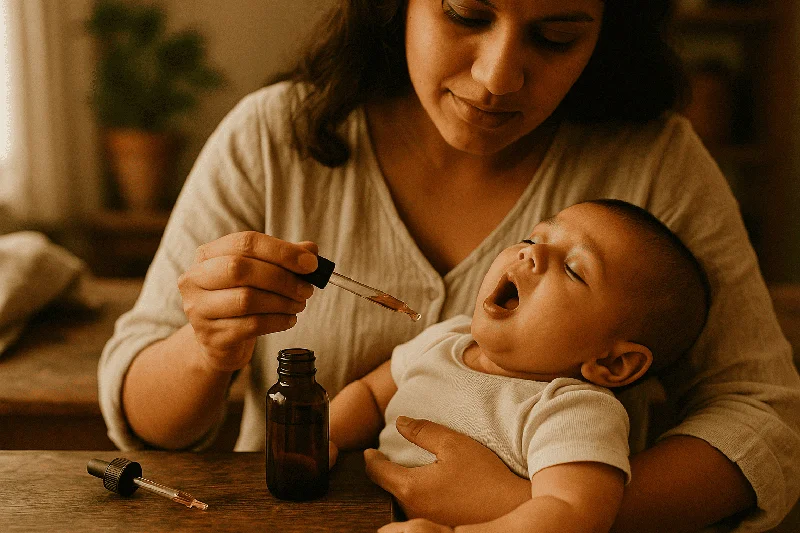
- Swarna Prashana (also called Suvarna Prashana or Swarna Bindu Prashan) is an ancient Ayurvedic practice of administering purified gold ash mixed with honey, ghee, and medicinal herbs to children from birth to 16 years.
- It's described in the Kashyapa Samhita — one of the oldest pediatric texts in Ayurveda — as a method to boost immunity, sharpen intellect, and promote overall physical and mental development. Think of it as Ayurveda's answer to preventive healthcare for kids, though it is absolutely not a replacement for modern vaccinations.
In recent years, Swarna Prashana has seen a massive resurgence across India, with thousands of Ayurvedic clinics organizing monthly camps on Pushya Nakshatra days. But what exactly goes into those golden drops? Are they truly safe? And what does modern science actually say about them?
This guide covers everything — from ingredients and dosage charts to scientific evidence, side effects, and how to choose a quality product. Whether you're a first-time parent researching options or an Ayurveda practitioner looking for a comprehensive refernce, you'll find actionable answers here.
What Is Swarna Prashana?
Meaning and Etymology
The term comes from two Sanskrit words: Swarna (स्वर्ण), meaning gold, and Prashana (प्राशन), meaning the act of consuming or licking. Literally, it translates to "consumption of gold." The practice involves giving children a precise formulation of Swarna Bhasma (calcined gold ash) combined with honey, ghee, and brain-boosting herbs like Brahmi and Vacha.
You'll encounter several alternative names depending on the region:
- Suvarna Prashana — the most common Sanskrit variant
- Swarna Bindu Prashan — popular in Maharashtra and Gujarat
- Swarnamritha Prashana — widely used in Kerala and Karnataka
Despite the different names, the core formulation and purpose remain the same across traditions.
Historical Origin — Kashyapa Samhita and the 16 Sanskars
Swarna Prashana is not some recently invented wellness trend. Its roots trace back over 2,500 years to the Kashyapa Samhita, a classical Ayurvedic text dedicated entirely to pediatrics (Kaumarabhritya). The sage Kashyapa described it as one of the 16 essential Sanskars (Shodasha Sanskars) — sacred rites of passage that every child should undergo for optimal development.
The original verse (Kashyapa Samhita, Lehanadhyaya) states that a child administered Swarna Prashana will develop Medha (intellect), Agni (digestive fire), Bala (strength), and Ayushya (longevity). Kashyapa further claimed that if given for one month, the child becomes Parama Medhavi (supremely intelligent), and if continued for six months, the child becomes Srutadhara (one who can retain whatever is heard).
These are traditional claims, of course. But they've inspired modern researchers to investigate whether there's a pharmacological basis behind them.
Swarna Prashana vs Modern Vaccination — A Critical Clarification
- Many Ayurvedic sources describe Swarna Prashana as an "Ayurvedic immunization." This language, while well-intentioned, creates dangerous confusion.
- Let's be absolutely clear:
Swarna Prashana is NOT a substitute for modern vaccines. Vaccines work by introducing specific antigens to trigger targeted antibody production against diseases like polio, measles, and diphtheria. Swarna Prashana, on the other hand, is believed to act as a general immunomodulator — it may support the overall immune system but does not provide specific protection against any particular infectious disease.
Parents should continue their child's standard vaccination schedule as recommended by the Indian Academy of Pediatrics (IAP) and consider Swarna Prashana as a complementary practice, not an alternative one.
Ingredients of Swarna Prashana and How They Work
- The classical formulation contains four core components, each serving a distinct therapeutic purpose.
- Understanding what goes into those drops — and why — helps parents make informed decisions.
Swarna Bhasma (Gold Ash) — The Central Ingredient
Swarna Bhasma is gold that has been processed through a rigorous Ayurvedic procedure called Bhasmikaran, which involves repeated cycles of:
- 1.Shodhana (Purification) — Raw gold is heated and quenched in various liquids like buttermilk, cow urine, sesame oil, and herbal decoctions to remove impurities
- 2.Marana (Calcination) — The purified gold is ground with herbal juices and subjected to intense heat in sealed crucibles, repeated 20-30 times
- 3.Quality testing — The final Bhasma must pass traditional tests: it should float on water (Varitara), have no metallic luster (Nishchandratva), and be fine enough to settle into fingerprint lines (Rekhapurnatva)
This process theoretically converts metallic gold into nanoparticles. A 2011 study published in the International Journal of Nanomedicine by Beaudet et al. confirmed that traditionally prepared Swarna Bhasma contains gold nanoparticles in the range of 56-57 nm, which may explain their bioavailability and therapeutic activity.
Why this matters for safety: Improperly prepared Swarna Bhasma can contain large metallic particles or toxic contaminants. This is precisely why sourcing quality-controlled, certified products is critical (more on this below).
Honey — More Than Just a Sweetener
Honey serves as a Yogavahi (bioenhancer) that carries the medicinal properties of other ingredients deeper into the tissues.
But it also contributes its own benefits:
- Natural immunomodulatory properties — honey contains hydrogen peroxide, flavonoids, and phenolic acids
- Allergen preconditioning — since honey naturally contains trace amounts of local pollen, some practitioners theorize it helps build tolerance to environmental allergens (similar to the concept behind allergy immunotherapy)
- Antimicrobial action — supports gut health in developing digestive systems
In Ayurveda, honey is always used unheated (Ama Madhu) because heating is believed to create toxins. Authentic Swarna Prashana formulations use raw, unprocessed honey.
Ghee (Ghrita) — The Carrier Medium
Ghee acts as a lipid-soluble carrier that enhances the absorption of fat-soluble compounds from the herbal extracts. In pharmacological terms, it improves the bioavailability of active ingredients by facilitating their transport across the blood-brain barrier — which is particularly relevant for the brain-boosting herbs in the formulation.
Interestingly, Ayurveda considers honey and ghee in unequal proportions to be therapeutic, while equal proportions are considered incompatible (Viruddha Ahara). Traditional Swarna Prashana recipes always maintain an unequal ratio.
Herbal Extracts — Medhya Rasayanas
The herbal component typically includes one or more of these classical brain tonics:
| Herb | Sanskrit Name | Primary Action |
|---|---|---|
| Bacopa monnieri | Brahmi | Memory enhancement, anxiolytic |
| Convolvulus pluricaulis | Shankhpushpi | Cognitive development, calming |
| Acorus calamus | Vacha | Speech development, intellect |
| Withania somnifera | Ashwagandha | Adaptogenic, strength-building |
| Glycyrrhiza glabra | Yashtimadhu | Immunomodulatory, soothing |
The exact herbal combination varies between manufacturers and regional traditions. Kerala-based formulations often emphasize Brahmi, while formulations from Gujarat may include additional digestive herbs.
Benefits of Swarna Prashana for Children
Immunity and Disease Resistance
This is the most widely cited benefit, and it actually has some scientific backing. A randomized controlled trial published in Ayu Journal (2012) by Jyothy et al. studied 260 children and found that those receiving Swarna Prashana showed statistically significant improvements in immunity-related parameters compared to the control group, with fewer episodes of upper respiratory infections during the study period.
Another study by Rathi et al. (2017) in the Journal of Ayurveda and Integrative Medicine observed increased serum IgG levels in children administered Swarna Prashana over a 6-month period, suggesting enhanced humoral immunity.
The gold nanoparticles in Swarna Bhasma are thought to act as immunomodulators — not by attacking pathogens directly, but by enhancing macrophage activity and overall immune surveillance.
Memory, Intellect, and Cognitive Development
The Medhya Rasayana herbs in the formulation — especially Brahmi — have robust evidence behind them. A 2014 meta-analysis published in the Journal of Ethnopharmacology confirmed that Bacopa monnieri significantly improves attention, cognitive processing, and memory in both children and adults.
Parents frequently report that children on Swarna Prashana show improvements in:
- Concentration and attention span
- Academic performance
- Grasping power and learning speed
- Recall and retention
Digestive Health and Appetite
Swarna Prashana is believed to strengthen Agni (digestive fire), which in Ayurvedic terms means improving the body's ability to digest, absorb, and assimilate nutrients. Children who are picky eaters or have poor appetite are often given Swarna Prashana to normalize their digestive function.
The ghee component specifically supports gut lining integrity, while honey provides prebiotic benefits for healthy gut flora development.
Speech, Hearing, and Sensory Development
Several Ayurvedic practitioners report that Swarna Prashana helps children with delayed speech development. The herb Vacha (Acorus calamus) is traditionally known as Vak Shuddhi Kara — a purifier of speech. One documented case study from Ayurdhama Ayurvedic clinic reported significant speech improvement in a child with delayed milestones after 6 months of consistent Swarna Prashana administration.
Improvement in hearing acuity and visual sharpness is also described in classical texts, though modern studies specifically validating these claims in the context of Swarna Prashana remain limited.
Behavioral and Emotional Benefits
A benefit that's often overlooked — Swarna Prashana appears to have a calming effect on children prone to hyperactivity, tantrums, and emotional outbursts. Shankhpushpi and Brahmi both have documented anxiolytic properties, and gold nanoparticles themselves have shown neuromodulatory effects in preclinical research.
Parents of children with ADHD tendencies, autism spectrum traits, or general behavioral difficulties sometimes report noticeable improvement after starting Swarna Prashana, though individual results vary considerably and this should always be done under professional guidance.
Skin Health and Detoxification
Gold has been used in dermatology for centuries. Swarna Bhasma is believed to improve blood circulation, support detoxification pathways, and enhance skin texture. While this isn't the primary reason parents choose Swarna Prashana, children with recurrent skin issues like eczema sometimes show improvement as a secondary benefit.
Dosage of Swarna Prashana by Age
Getting the dosage right is crucial. Too little may be ineffective; too much is wasteful and potentially problematic. Here's the generally recommended dosage chart followed by most Ayurvedic practitioners:
| Age Group | Single Dose | Frequency |
|---|---|---|
| 0–6 months | 1–2 drops | Daily or on Pushya Nakshatra |
| 6 months – 1 year | 2–3 drops | Daily or on Pushya Nakshatra |
| 1–5 years | 3–5 drops | Daily or on Pushya Nakshatra |
| 5–10 years | 5–7 drops | Daily or on Pushya Nakshatra |
| 10–16 years | 7–10 drops | Daily or on Pushya Nakshatra |
Important notes on dosage:
- These are general guidelines. Always consult a qualified Ayurvedic practitioner for your child's specific constitution (Prakriti)
- Concentration of Swarna Bhasma varies between products, so dosage may differ accordingly
- For branded drops, follow the manufacturer's specific instructions
How to Administer Swarna Prashana
- Give it on an empty stomach, ideally early morning
- Place drops directly on the child's tongue or mix with a tiny amount of warm milk if the child resists
- Do not feed the child for at least 30 minutes after administration
- Avoid giving cold water immediately before or after
Two Administration Schedules: Daily vs. Pushya Nakshatra
Why Is Swarna Prashana Given on Pushya Nakshatra?
Pushya Nakshatra is the 8th lunar mansion in Vedic astrology, symbolized by a cow's udder — representing nourishment and sustenance. Ayurveda teaches that medicines administered on this specific star day have enhanced potency due to cosmic alignments affecting biological receptivity.
Whether you believe in the astrological reasoning or not, there's a practical side to it: Pushya Nakshatra occurs approximately every 27 days, creating a natural schedule that's easy for parents to follow.
Choosing Your Schedule
| Parameter | Daily Administration | Pushya Nakshatra Only |
|---|---|---|
| Frequency | Every day | Once every ~27 days |
| Minimum recommended duration | 30 days (1 month) | 12 sessions (approximately 1 year) |
| Ideal duration | 6 months continuous | 30 sessions (~2.5 years) |
| Best for | Children with existing health concerns, developmental delays | General wellness and prevention |
| Cost implication | Higher (more product consumed) | More economical |
Classical texts state that daily administration for 1 month makes the child Parama Medhavi, while 6 months of continuous use makes the child Srutadhara. The Pushya Nakshatra schedule is gentler and more commonly followed for healthy children.
Swarna Prashana Dates — How to Find Pushya Nakshatra Days
- For 2025 and 2026, Pushya Nakshatra dates are published by most Ayurvedic organizations and panchang calendars.
- You can also:
- Check any Hindu Panchang app (like Drik Panchang)
- Follow your local Ayurvedic clinic's announcement
- Search "Pushya Nakshatra dates [year]" for updated schedules
स्वयं दवा न लें और प्रतीक्षा न करें। अभी डॉक्टर से चैट शुरू करें
Side Effects and Safety Concerns of Swarna Prashana
This is where most online resources fall short. Parents deserve honest, complete information about potential risks — not just a list of glowing benefits.
Known Side Effects
When prepared correctly and administered in appropriate doses, Swarna Prashana is generally considered safe.
However, the following has been reported:
- Mild digestive upset — some children experience loose stools or mild nausea initially, especially if given on a non-empty stomach
- Allergic reactions to honey — rare but possible, particularly in infants under 12 months (see below)
- Oral irritation — the herbal components may cause mild tingling or taste aversion
- Hyperactivity paradox — in rare cases, children may show increased restlessness initially before settling
The Honey-Botulism Concern for Infants
Modern pediatric guidelines from the AAP (American Academy of Pediatrics) and IAP advise against giving honey to children under 12 months due to the risk of infant botulism from Clostridium botulinum spores. This creates a genuine tension with traditional Ayurvedic practice, which recommends starting Swarna Prashana from birth.
Many Ayurvedic practitioners address this by using medically processed honey or by starting with ghee-dominant formulations for very young infants. Discuss this specific concern with both your pediatrician and Ayurvedic doctor.
When to Avoid Swarna Prashana
- During active fever or acute illness
- If the child has a known gold allergy (rare but documented)
- Concurrent use with immunosuppressant medications — consult a doctor first
- If the child is on antibiotics, wait until the course is complete
- Children with liver or kidney disorders should only take it under strict medical supervision
Safety of Swarna Bhasma — The Toxicology Question
The elephant in the room: is consuming gold safe for children?
Properly prepared Swarna Bhasma contains gold nanoparticles, not elemental metallic gold. A 2015 toxicity study published in the Journal of Ayurveda and Integrative Medicine by Rohit Sharma et al. found that classically prepared Swarna Bhasma showed no evidence of hepatotoxicity, nephrotoxicity, or hematological toxicity in animal models even at doses several times higher than therapeutic recommendations.
However — and this is critical — improperly prepared Bhasma can be toxic. Substandard products that skip purification steps may contain free metallic gold or mercury contamination. This is exactly why product quality matters enormously.
How to Choose a Quality Swarna Prashana Product
No competitor in the current top search results adequately covers this, so here's a practical buying guide:
Quality Checkmarks
- 1.GMP Certification — The manufacturing facility should be GMP (Good Manufacturing Practices) certified by the AYUSH Ministry
- 2.FSSAI License — Mandatory for any ingestible product sold in India
- 3.FDCA Approval — State-level drug manufacturing license under the Drugs and Cosmetics Act
- 4.Swarna Bhasma source documentation — Reputable brands disclose whether their gold ash meets Ayurvedic Pharmacopoeia of India (API) standards
- 5.Batch-wise heavy metal testing — Look for products that test each batch for mercury, lead, and arsenic
- 6.Expiry date and storage instructions — Properly formulated products have a shelf life of 2-3 years
Red Flags to Watch For
- Unusually cheap pricing (quality Swarna Bhasma is expensive; if the product costs less than ₹200-300 for a month's supply, question the gold content)
- No manufacturing license number on the label
- Vague ingredient lists without specific proportions
- Claims of being a "vaccine alternative" or "cure" for serious diseases
- Homemade preparations from unverified sources
Cost Considerations
A quality Swarna Prashana product typically costs between ₹300–800 for a 15-30 ml bottle, which lasts approximately 1-3 months depending on dosage. For the Pushya Nakshatra-only schedule, a single bottle can last several months.
| Schedule | Monthly Cost (Approx.) | Annual Cost (Approx.) |
|---|---|---|
| Daily administration | ₹400–800 | ₹5,000–10,000 |
| Pushya Nakshatra only | ₹100–200 | ₹1,200–2,400 |
Many Ayurvedic hospitals and clinics offer Swarna Prashana administration during their monthly Pushya Nakshatra camps at ₹50–150 per session, which includes the practitioner's supervision.
Scientific Evidence: What Research Actually Shows
Rather than relying on vague statements like "studies have shown," let's look at specific research:
Published Clinical Studies
- 1.Jyothy et al. (2012), Ayu Journal — RCT with 260 children; significant improvement in physical growth parameters, appetite, and immunity markers in the Swarna Prashana group vs. control
- 2.Rathi B. et al. (2017), J-AIM — Observed increase in serum immunoglobulin levels, particularly IgG, indicating enhanced humoral immune response
- 3.Arun Raj et al. (2014), IJRAP — Study on 100 children showed reduced frequency of common childhood illnesses (cold, cough, fever) in children receiving regular Swarna Prashana
- 4.Javadekar et al. (2017) — Comparative study found improvements in height, weight, and developmental milestones in children on Swarna Prashana
Limitations of Current Research
Being honest about the evidence gaps is important:
- Most studies have small sample sizes (100-300 children)
- Long-term safety data beyond 1-2 years is virtually nonexistent
- There are no large-scale multicenter RCTs meeting international standards
- Publication bias — studies with positive results are more likely to be published
- Most research comes from Ayurvedic institutions, raising questions about investigator bias
The evidence is promising but not yet conclusive by modern clinical standards. More rigorous research is needed, and several institutions including CCRAS (Central Council for Research in Ayurvedic Sciences) have ongoing studies.
Regional Differences in Swarna Prashana Practice Across India
The practice isn't uniform across the country.
Interesting regional variations exist:
- Kerala — Often includes Brahmi ghrita as the primary herbal base; many hospitals conduct elaborate ceremonies on Pushya Nakshatra
- Karnataka — Called Swarnamritha Prashana; frequently combined with other Lehana (herbal lickable) preparations
- Maharashtra & Gujarat — Known as Swarna Bindu Prashan; massive organized camps are common, sometimes serving 500+ children in a single day
- Tamil Nadu — Growing adoption in urban areas, often integrated with Siddha medicine traditions
- North India — Relatively less prevalent historically but rapidly growing, particularly in Rajasthan and Uttar Pradesh
Frequently Asked Questions (FAQ)
Can Swarna Prashana be given daily?
Yes, daily administration is one of two traditional schedules. The Kashyapa Samhita actually emphasizes daily use for maximum benefit. However, most modern practitioners recommend the Pushya Nakshatra schedule (once every 27 days) for generally healthy children, reserving daily doses for children with specific developmental or immunity concerns.
Can Swarna Prashana be given along with other medicines?
Generally yes, but with caveats. There are no known direct drug interactions documented in literature. However, it's advisable to maintain a gap of at least 30 minutes between Swarna Prashana and any allopathic medication. If your child is on immunosuppressants, anticoagulants, or anti-epileptic drugs, consult both your pediatrician and Ayurvedic doctor before starting.
What should I do if my child has an allergic reaction?
Stop administration immediately. Mild reactions (slight rash, mild stomach upset) usually resolve on their own within 24-48 hours. For severe reactions like difficulty breathing, significant swelling, or persistent vomiting, seek emergency medical care immediately. Inform both your Ayurvedic practitioner and pediatrician.
Is Swarna Prashana compatible with any diet?
Yes. There are no specific dietary restrictions associated with Swarna Prashana. However, giving it on an empty stomach and avoiding food for 30 minutes afterward is important for optimal absorption. Some practitioners recommend avoiding very cold foods or ice cream immediately after administration.
Can children above 16 years take Swarna Prashana?
Traditional texts specify the age range as birth to 16 years. After 16, different Rasayana formulations are recommended for adults. Some practitioners extend it to 18 in certain cases, but this isn't standard practice.
What is the legal status of Swarna Prashana products?
In India, Swarna Prashana falls under Ayurvedic proprietary medicine regulated by the AYUSH Ministry under the Drugs and Cosmetics Act, 1940. Products must have a valid manufacturing license and FSSAI registration. Export to countries like the US, UK, and EU is complicated because gold-based preparations face stricter regulations and may not be approved for sale as supplements or medicines in those jurisdictions.
How do I find Swarna Prashana camps near me?
Search for "Swarna Prashana camp near me" or "Pushya Nakshatra Swarna Prashana [your city]" on Google. Most Ayurvedic hospitals, Government AYUSH dispensaries, and private Ayurvedic clinics conduct monthly camps. You can also check social media pages of local Ayurvedic practitioners.
Final Thoughts — Is Swarna Prashana Worth It for Your Child?
Swarna Prashana represents one of Ayurveda's most thoughtful approaches to preventive pediatric care. The combination of gold nanoparticles, brain-boosting herbs, honey, and ghee isn't arbitrary — each ingredient serves a pharmacologically plausible purpose, and emerging research supports several of the traditional claims.
That said, it's not a magic potion. It works best as part of a holistic approach that includes proper nutrition, adequate sleep, physical activity, and yes — complete modern vaccination.
If you decide to try Swarna Prashana for your child, remember these three non-negotiables:
- 1.Choose a certified, quality-tested product — never compromise on sourcing
- 2.Consult a qualified Ayurvedic practitioner — especially for dosage and suitability based on your child's Prakriti
- 3.Continue conventional medical care — Swarna Prashana complements but never replaces modern medicine
The ancient sages who developed this formulation thousands of years ago understood something that modern immunology is only beginning to appreciate: that true health isn't just the absence of disease — it's the cultivation of resilience, from the very first days of life.
Have questions about Swarna Prashana for your specific child? Consult with a certified Ayurvedic doctor who can assess your child's individual constitution and recommend the right approach.
Scientific Sources
- Immunomodulatory activity of Swarna Prashana (oral administration of gold as electuary) in infants - A randomized controlled clinical trial — Bhaskaran JK et al., 2019, Ayu
- Targeting protein kinase C signaling cascades in alzheimer's disease: emerging neuroprotective roles of aurothioglucose — Kushawaha SK et al., 2026, Inflammopharmacology
- Swarna Prashana - faith in the embrace of research — Verma S et al., 2022, Journal of complementary & integrative medicine
उपयोगकर्ताओं के प्रश्न
How can Swarna Prashana benefit children with picky eating habits?
Client_9e0fa8
21 घंटे पहले
Swarna Prashana may help children with picky eating habits by supporting digestive function. The ghee component in Swarna Prashana is thought to enhance the integrity of the gut lining, while honey provides prebiotic benefits that promote healthy gut flora, potentially improving appetite and digestion. While these elements can be beneficial, Swarna Prashana should not replace a balanced diet or medical advice. If a child's picky eating leads to nutritional deficiencies or affects their growth, consult a pediatrician or nutritionist for tailored guidance.
What is the significance of each ingredient in Swarna Prashana?
Client_158f4c
5 दिनों पहले
Swarna Prashana involves a blend of Swarna Bhasma (calcined gold ash), honey, ghee, and herbs like Brahmi and Vacha. Swarna Bhasma is believed to enhance immunity. Honey acts as a natural preservative and sweetening agent, while ghee aids in digestion and absorption of nutrients. Brahmi is known for its cognitive benefits, purportedly supporting memory and mental clarity. Vacha is traditionally used for its properties believed to support speech and neurological function. While some parents choose it to boost children's health, it's crucial to consult a healthcare professional for guidance.
What age should children start taking Swarna Prashana for best results?
Client_13a97e
10 दिनों पहले
Swarna Prashana is traditionally recommended for children from just after birth, typically starting around the age of 16 days, to ensure the best results. Given its purported benefits for cognitive and immune system enhancement, consistency in administration is key for observing effects. While some parents report improvements in speech and behavioral issues over several months, more extensive research is needed to validate these benefits fully. Parents should monitor for any adverse reactions, especially if starting early, and consult a pediatrician for guidance, especially if their child has existing health conditions.
How does the manufacturing process affect the safety of Swarna Prashana?
Client_732d3a
15 दिनों पहले
The safety of Swarna Prashana largely hinges on the manufacturing process's rigor. Ensuring quality involves sourcing pure ingredients, particularly gold, ghee, and honey, and following stringent standards during preparation. Look for products with valid manufacturing licenses and FSSAI registration as these indicate compliance with safety standards. Poorly manufactured products may contain impurities or incorrect dosages, posing health risks. Parents should consult healthcare professionals before starting Swarna Prashana, especially for infants and young children, to ensure both safety and efficacy.
How does Swarna Prashana contribute to children's cognitive development?
Client_9065c9
20 दिनों पहले
Swarna Prashana is believed to support children's cognitive development by potentially enhancing memory, intelligence, and digestion. Ghee in the formulation may aid in maintaining the gut lining, crucial for nutrient absorption, while honey offers prebiotic benefits that can promote gut health. Improved gut health can contribute to better nutrient absorption, which is indirectly related to cognitive function. Effective timelines may vary, and evidence is largely anecdotal rather than scientific. Consult a pediatrician before starting Swarna Prashana, especially if your child has allergies or other health concerns.
How much does Swarna Prashana typically cost at clinics?
Client_a025eb
30 दिनों पहले
Swarna Prashana's cost varies based on the administration schedule. For daily use, the monthly cost is approximately ₹400–800, translating to an annual expense of ₹5,000–10,000. If given only during the Pushya Nakshatra, it ranges from ₹100–200 monthly and ₹1,200–2,400 annually. Clinics offering sessions during Pushya Nakshatra charge around ₹50–150 per session. During these sessions, supervision by a practitioner is typically included. Always consult a healthcare provider to ensure safe use, especially if combining with other medications, and allow a gap of 30 minutes between Swarna Prashana and any allopathic medicine.
What are the potential side effects of Swarna Prashana in children?
Client_7f8279
40 दिनों पहले
The potential side effects of Swarna Prashana in children are not well-documented, as there is limited scientific data on its safety profile. Some anecdotal reports suggest possible digestive disturbances or allergic reactions, though these are not common. Typically, no severe side effects have been widely reported when administered in traditional doses. If you notice any adverse effects such as rash, gastrointestinal issues, or changes in behavior after administering Swarna Prashana, it would be prudent to consult a pediatrician. Always ensure the product is sourced from a reputable provider and aligns with current regulations.
What precautions should I take when giving Swarna Prashana to my child?
Client_99c8ce
50 दिनों पहले
When giving Swarna Prashana to your child, ensure you consult with a qualified healthcare provider to tailor its use to your child's needs. While generally considered safe, it is crucial to adhere to recommended dosages, typically administered once every 27 days during Pushya Nakshatra, to avoid potential side effects. Monitor your child for any adverse reactions, such as allergies or gastrointestinal issues. It is not a substitute for modern vaccinations. If your child is on other medications, seek advice from a medical professional to prevent interactions.
How does Swarna Prashana support overall wellness in children?
Client_8e6d82
59 दिनों पहले
Swarna Prashana, an Ayurvedic practice involving the administration of gold ash and herbal ingredients, is often promoted for supporting overall wellness in children. While some Ayurvedic practitioners claim it may enhance immunity, cognitive development, and digestion, there is no scientific evidence to support these claims equivalent to those of vaccines. The practice is not a substitute for modern immunizations which are proven to protect against specific diseases. Consult a healthcare professional before starting any new treatment and to ensure traditional practices complement rather than replace evidence-based medicine.
What is the best time of day to give Swarna Prashana to my child for maximum effectiveness?
Client_999969
69 दिनों पहले
The best time to give Swarna Prashana to your child is early morning, usually on an empty stomach for better absorption. Just try to have them avoid food for at least 30 minutes after. This aligns with how Ayurveda often recommends taking such supplements for max effect. But always chat with your Ayurvedic practitioner to be sure it's right for your child!
संबंधित आलेख

Pediatrics
Bonnisan Drops
Exploration of Bonnisan Drops
11,041
Pediatrics
Ksheera Vardhini: A Natural Solution for Lactation Enhancement
Ksheera Vardhini is a traditional Ayurvedic preparation specifically designed to promote lactation in nursing mothers.
5,698
Pediatrics
Punsavan Medicine for Male Child: Enhance Growth and Health Naturally
Explore the benefits, proper dosage, uses, and scientific evidence behind Punsavan Medicine for male children, a trusted Ayurvedic remedy for growth and vitality.
3,501
Pediatrics
Shatavari Rasayana – Ayurvedic Rejuvenation for Women's Health & Vitality
Learn about Shatavari Rasayana, a powerful Ayurvedic remedy designed to support women's health, boost vitality, balance hormones, and promote overall well-being with its rejuvenating properties.
4,278

Pediatrics
लिवोसिन सिरप
लिवोसिन सिरप की खोज
3,211

Pediatrics
मेबारिड सिरप
मेबारिड सिरप की खोज
3,108

Pediatrics
Child Health
How Ayurveda Can Help in Child Health Issues?
3,819

Pediatrics
Bonnisan Liquid
Exploration of Bonnisan Liquid
7,136
Pediatrics
Swarna Bindu Prashana Benefits: A Holistic Immunity Booster for Children
Swarna Bindu Prashana is an ancient Ayurvedic practice aimed at enhancing immunity, brain development, and overall health in children.
3,252
विषय से संबंधित परामर्श
अतिरिक्त दस्तावेज़
© 2024 Ask Ayurveda. सर्वाधिकार सुरक्षित।