आयुर्वेदिक डॉक्टर से प्रश्न पूछें और निःशुल्क या भुगतान मोड में अपनी चिंता की समस्या पर ऑनलाइन परामर्श प्राप्त करें। 2,000 से अधिक अनुभवी डॉक्टर हमारी साइट पर काम करते हैं और आपके प्रश्नों का इंतजार करते हैं और उपयोगकर्ताओं को उनकी स्वास्थ्य समस्याओं को हल करने में प्रतिदिन मदद करते हैं।
मुफ्त! आयुर्वेदिक डॉक्टरों से पूछें 24/7

 तेज़ प्रतिक्रियाएँ
 1000+ सत्यापित डॉक्टर
Body DetoxEar, Nose, and Throat DisordersGeriatrics & RejuvenationImmunodeficiencyInfertility TreatmentNutritionOrthopedic DisordersPediatricsRespiratory DisordersSexually Transmitted Diseases (STDs)Surgery RecoveryUrological DisordersVascular DisordersDental DisordersEndocrinological DisordersGastrointestinal DisordersYoga TherapyGeneral MedicineAllergic DisordersCardio DisordersGynecology and ObstetricsCosmetologySkin and Hair DisordersEye DisordersInfectious DiseasesMental DisordersNeurological DisordersOncologyPanchakarmaSexual Health & DisordersSports Medicine
पर प्रकाशित 01/06/25
(को अपडेट 06/23/26)
2,580
Boost Your Energy with Ashwagandhadi Yamakam: An Ayurvedic Solution
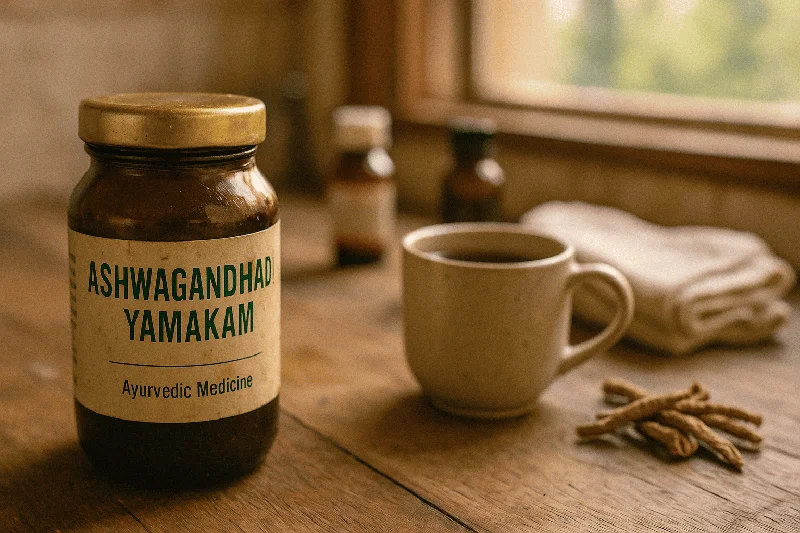
Ashwagandhadi Yamakam is a classical Ayurvedic oil-and-ghee formulation primarily used for penile health, male sexual wellness, and tissue rejuvenation. It is applied externally and combines the adaptogenic power of Ashwagandha (Withania somnifera) with a synergistic blend of herbs processed in sesame oil, ghee, and milk. If you've been searching for clear, reliable information about what this formulation actually does, how to apply it properly, and whether it's right for you — this guide covers everything the other sources don't.
Unlike most articles that simply list ingredients and move on, we'll walk you through the classical textual origins, the step-by-step application technique, how Yamakam differs from Tailam and Ghritam, comparisons with similar formulations, and the current state of clinical evidence. Let's get into it.
What Is Ashwagandhadi Yamakam?
Ashwagandhadi Yamakam is a traditional Ayurvedic preparation classified under the Yamakam category of medicated oils. Its primary indication is supporting male reproductive health — specifically penile strength, nourishment, and fitness. The formulation is meant exclusively for external application and should be used under the guidance of a qualified Ayurvedic physician.
The word "Ashwagandhadi" indicates that Ashwagandha is the principal herb (the suffix "-adi" in Sanskrit means "beginning with" or "headed by"). This means the formula is built around Ashwagandha's well-documented adaptogenic and rejuvenative properties, but it's far from a single-herb product.
Definition & Meaning of "Yamakam" in Ayurveda
Here's something almost no one explains properly: what exactly is a Yamakam?
In Ayurvedic pharmaceutical science (Bhaishajya Kalpana), medicinal oils and fats are categorized into distinct dosage forms based on their base ingredients and preparation method:
| Dosage Form | Base Medium | Key Characteristic |
|---|---|---|
| Tailam | Sesame oil (or other oils) | Oil-based medicated preparation |
| Ghritam | Ghee (clarified butter) | Ghee-based medicated preparation |
| Yamakam | Both oil AND ghee together | Dual-lipid base; combines benefits of both |
| Kshirapaka | Milk | Milk-decocted herbal preparation |
- A Yamakam uses sesame oil and ghee in combination as the base, often with milk as an additional processing medium.
- This dual-lipid approach is intentional — ghee is considered superior for penetrating deep tissues (Majja and Shukra dhatus), while sesame oil provides warming, Vata-pacifying properties and excellent transdermal absorption. The combination creates a formulation that nourishes at multiple tissue levels simultaneously.
This is why Ashwagandhadi Yamakam has a distinctive semi-viscous, rich texture that differs from a standard Tailam.
Classical Textual References
Ashwagandhadi Yamakam is referenced in Sahasrayogam, one of the most important compilations of Ayurvedic formulations originating from the Kerala tradition of Ayurveda. The Sahasrayogam (literally "a thousand formulations") is a comprehensive pharmacopoeia that has been a cornerstone text for Kerala Ayurvedic practitioners for centuries.
The formulation falls under the Yamaka Prakarana (chapter on Yamakam preparations) within this text. While some practitioners also trace conceptual roots to principles outlined in Ashtanga Hridayam by Vagbhata — particularly regarding Vajikarana (aphrodisiac therapy) and Rasayana (rejuvenation) — the specific combination of ingredients as we know it today is most authoritatively documented in the Sahasrayogam.
> Note: Unlike widely studied formulations like Ashwagandharishta or Chyawanprash, the exact shloka references for Ashwagandhadi Yamakam are preserved primarily within the manuscript traditions of Kerala vaidya families, making the Kottakkal Arya Vaidya Sala and similar traditional pharmacies the most reliable custodians of this formula.
Historical Roots & Ayurvedic Significance
Ashwagandhadi Yamakam sits at the intersection of two powerful Ayurvedic therapeutic categories: Vajikarana (virilification/aphrodisiac therapy) and Rasayana (rejuvenation therapy).
Role in Rasayana (Rejuvenation Therapy)
In classical Ayurveda, Rasayana isn't simply about "anti-aging" — it refers to therapies that nourish the fundamental tissues (Sapta Dhatus) and enhance the quality of Ojas, the vital essence of immunity and vitality.
Ashwagandhadi Yamakam specifically targets the deeper dhatus:
- Mamsa Dhatu (muscle tissue) — strengthening and toning
- Meda Dhatu (adipose/fat tissue) — nourishing local tissues
- Shukra Dhatu (reproductive tissue) — the formulation's primary target
The external application route is significant here. Ayurveda recognizes that the skin (Twak) is not merely a barrier but an active organ of absorption. Medicated oils and yamakams applied externally can reach deeper tissues through what modern pharmacology would call transdermal absorption, enhanced by the lipophilic nature of the oil-ghee base.
Effect on Doshas (Vata & Kapha Balancing)
Ashwagandhadi Yamakam is primarily a Vata-pacifying formulation with secondary Kapha-nourishing effects:
- Vata Dosha: The sesame oil base, combined with warming herbs like Ashwagandha, directly counteracts Vata's cold, dry, and depleting qualities.
- Since most issues related to male sexual health — including weakness, atrophy, and diminished function — are attributed to Vata aggravation in Ayurveda, this is the formulation's core therapeutic action.
- Pitta Dosha: Cooling herbs like Sariva (Hemidesmus indicus) and the ghee component help prevent excessive heat, making the formulation balanced rather than overly heating.
- Kapha Dosha: The nourishing, building qualities support healthy Kapha in the reproductive tissues without causing congestion.
Key Ingredients with Botanical Details
The strength of Ashwagandhadi Yamakam lies in its carefully balanced polyherbal composition.
Here is a detailed breakdown of the major ingredients:
| Sanskrit Name | Botanical Name | Part Used | Primary Action |
|---|---|---|---|
| Ashwagandha | Withania somnifera | Root | Adaptogenic, Balya (strengthening), Vajikarana |
| Gokshura (Svadamshtra) | Tribulus terrestris | Fruit | Mutrala (diuretic), reproductive tonic |
| Sariva (Anantamool) | Hemidesmus indicus | Root | Blood purifier, cooling, Pitta-pacifying |
| Lodhra (Svetalodhra) | Symplocos racemosa | Bark | Astringent, tissue-firming |
| Bala | Sida cordifolia | Root | Strengthening, Vata-pacifying, nervine tonic |
| Masha | Vigna mungo (Black gram) | Seed | Brimhana (nourishing), Vata-pacifying |
| Tila Tailam | Sesamum indicum | Seed oil | Base oil, Vata-pacifying, penetrating |
| Ghrita | Clarified butter (Ghee) | — | Deep tissue penetration, Pitta-balancing |
| Ksheera | Cow's milk | — | Processing medium, Shukra-nourishing |
Ashwagandha (Withania somnifera) — The Star Ingredient
Ashwagandha is arguably the most studied Ayurvedic herb in modern science. A 2019 randomized, double-blind, placebo-controlled study published in the American Journal of Men's Health found that Ashwagandha root extract significantly improved male sexual function scores compared to placebo. A 2015 study in Evidence-Based Complementary and Alternative Medicine demonstrated its role in improving serum testosterone levels and reproductive health in men.
In this formulation, Ashwagandha's adaptogenic withanolides work through the topical route to support local tissue nourishment and strength.
Gokshura (Tribulus terrestris)
Gokshura is a classical Vajikarana herb with documented effects on male reproductive function. It supports healthy hormone levels and acts as a natural diuretic, helping remove toxins from the urogenital system. Its saponin content contributes to the formulation's tissue-building effects.
Sariva (Hemidesmus indicus) & Lodhra (Symplocos racemosa)
These herbs serve a balancing role — Sariva cools and purifies, preventing any inflammatory reaction from the warming components, while Lodhra's astringent properties help firm and tone the tissues being treated.
Base Ingredients — Sesame Oil, Ghee & Milk
The triple base of Tila Tailam (sesame oil), Ghrita (ghee), and Ksheera (milk) is not arbitrary.
Each plays a pharmacological role:
- Sesame oil has the highest penetration capacity among Ayurvedic base oils (described as "Sukshma" — subtle/penetrating)
- Ghee carries fat-soluble herbal actives into deeper tissues and has inherent anti-inflammatory properties
- Milk serves as the processing medium during preparation, extracting water-soluble phytochemicals that oil alone would miss
This triple-extraction process is what makes Yamakam uniquely comprehensive as a delivery system.
Benefits & Therapeutic Uses
What Is Ashwagandhadi Yamakam Used For?
The primary, classical indication is penile health and fitness — this includes strengthening penile tissue, improving local blood circulation, and supporting overall male sexual wellness.
However, the formulation's benefits extend beyond this single indication:
Support for Male Sexual Wellness
- Nourishes and strengthens penile tissue (Shukra Dhatu Pushti)
- Supports healthy erectile function through improved local circulation
- May help address Vata-related sexual debility when used as part of a comprehensive treatment plan
Nourishing & Strengthening Tissues (Dhatu Pushti)
The Brimhana (nourishing) herbs in the formulation — particularly Masha, Bala, and Ashwagandha — work together to build and strengthen the local muscular and connective tissues.
Stress Reduction & Vitality Enhancement
While this is primarily an external formulation, Ashwagandha's adaptogenic compounds can be absorbed transdermally. A 2012 study in the Indian Journal of Psychological Medicine showed that Ashwagandha root extract significantly reduced serum cortisol levels. Topical absorption, while less studied, may provide localized stress-reducing and vitality-enhancing effects.
How Does Ashwagandhadi Yamakam Improve Immunity?
- This question comes up frequently. While Ashwagandhadi Yamakam is not an immunity supplement per se, Ayurveda considers strong Ojas (vital essence) as the foundation of immunity.
- By nourishing Shukra Dhatu — the deepest tissue layer — the formulation indirectly supports Ojas production. However, for direct immune support, internal formulations like Ashwagandha Churna or Ashwagandharishta would be more appropriate.
How Ashwagandhadi Yamakam Works — Mechanism of Action
Adaptogenic & Rejuvenating Synergy
The formulation works through multiple simultaneous pathways:
- 1.Local tissue nourishment: The lipid base delivers fat-soluble nutrients directly to the target tissues
- 2.Improved microcirculation: Sesame oil and warming herbs promote blood flow to the applied area
- 3.Adaptogenic modulation: Ashwagandha's withanolides help normalize stress-related tissue depletion
- 4.Anti-inflammatory action: Ghee and cooling herbs like Sariva prevent chronic low-grade inflammation that can impair tissue function
Role of Oil-Ghee-Milk Base in Transdermal Absorption
Modern research on transdermal drug delivery supports the Ayurvedic approach. A 2017 review in Journal of Advanced Pharmaceutical Technology & Research noted that lipid-based formulations significantly enhance skin penetration of active compounds. The combination of saturated fats (ghee) and unsaturated fats (sesame oil) creates an optimal vehicle for delivering both lipophilic and amphiphilic herbal actives across the skin barrier.
The milk-processing step during manufacturing extracts hydrophilic compounds that are then emulsified into the oil-ghee base — essentially creating a natural microemulsion, which is one of the most effective modern drug delivery systems.
स्वयं दवा न लें और प्रतीक्षा न करें। अभी डॉक्टर से चैट शुरू करें
How to Apply Ashwagandhadi Yamakam (Step-by-Step Guide)
This is where most online resources fall seriously short. They simply say "apply externally as directed" and leave you guessing. Here's a more detailed, practical guide based on traditional Ayurvedic application principles.
Recommended Dosage & Frequency
- Amount: Take a small quantity (approximately 5-10 ml or 1-2 teaspoons) per application
- Frequency: Once or twice daily, or as directed by your Ayurvedic physician
- Duration of course: Typically recommended for 30-90 days, depending on the condition and physician's assessment
Application Technique & Duration
- 1.Warm the Yamakam slightly — place the required amount in a small bowl and warm it by placing the bowl in hot water (do not microwave or heat directly on flame)
- 2.Clean the application area — wash and pat dry the area before application
- 3.Apply gently — use your fingertips to apply the warm Yamakam to the penile shaft with gentle, upward strokes
- 4.Massage lightly — use gentle circular motions for 5-10 minutes, ensuring even distribution. Do not apply excessive pressure
- 5.Allow absorption — leave the formulation on for at least 30-45 minutes for optimal absorption
Best Time to Apply
- Evening/night application is generally preferred in Ayurvedic practice, as the body's restorative processes are most active during rest
- Morning application can also be done if recommended by your physician, preferably after a warm bath
- Avoid application immediately before or after sexual activity
Post-Application Care
- You may wash off the residual oil after 45-60 minutes with lukewarm water and a mild cleanser, or leave it overnight if comfortable
- Wear loose, cotton undergarments after application to avoid irritation
- If you experience any redness, itching or burning — discontinue use and consult your practitioner immediately
Ashwagandhadi Yamakam vs. Similar Ayurvedic Formulations
One of the most common sources of confusion is how this formulation compares to other Ayurvedic oils used for similar purposes.
Here's a clear comparison:
| Feature | Ashwagandhadi Yamakam | Ashwagandha Tailam | Bala Tailam | Masha Tailam |
|---|---|---|---|---|
| Base | Oil + Ghee (Yamakam) | Oil only (Tailam) | Oil only | Oil only |
| Primary Herb | Ashwagandha | Ashwagandha | Bala (Sida cordifolia) | Masha (Black gram) |
| Primary Use | Penile health & fitness | General body strengthening, joint pain | Vata disorders, neurological conditions | Male sexual wellness, body building |
| Tissue Penetration | Deep (dual-lipid base) | Moderate | Moderate | Moderate |
| Dosha Effect | Vata↓ Pitta= Kapha↑ | Vata↓ Pitta↓ | Vata↓ | Vata↓ Kapha↑ |
| Application Area | Localized (external genitalia) | Full body or localized | Full body | Localized or full body |
| Classical Source | Sahasrayogam | Ashtanga Hridayam | Ashtanga Hridayam | Sahasrayogam |
Why Choose Yamakam Over Tailam?
- The dual oil-ghee base gives Ashwagandhadi Yamakam a distinct advantage for deep tissue nourishment.
- Think of it this way: Tailam formulations are excellent for surface-to-medium depth penetration, while Yamakam preparations are designed for maximum depth — reaching Mamsa, Meda, and Shukra dhatus more effectively.
If your Ayurvedic physician has diagnosed a Vata-related sexual health concern requiring deep tissue rejuvenation, Yamakam is typically the preferred choice over a standard Tailam.
Side Effects, Precautions & Contraindications
Skin Sensitivity & Allergic Reactions
Ashwagandhadi Yamakam is generally well-tolerated when used as directed.
However, potential side effects include:
- Mild skin irritation or redness (especially in individuals with sensitive skin)
- Allergic contact dermatitis in rare cases (particularly if allergic to sesame or any herbal ingredient)
- Temporary warming sensation at the application site (this is usually normal)
Recommendation: Perform a patch test before first use. Apply a small amount to the inner forearm and wait 24 hours. If no reaction occurs, proceed with regular use.
Who Should Avoid This Formulation
- Individuals with open wounds, cuts, or sores on the application area
- Those with active skin infections (fungal, bacterial, or viral) in the genital area
- People with known allergies to sesame oil, ghee, or milk-derived products
- Individuals with inflammatory skin conditions like eczema or psoriasis affecting the genital region
Age Restrictions (18+)
This formulation is intended only for adult males (18 years and above). It should not be used on children or adolescents. Women should not use this formulation unless specifically prescribed by an Ayurvedic physician for a different indication.
Is Ashwagandhadi Yamakam Safe to Use Long-Term?
When used under medical supervision, long-term use (up to 90 days) is generally considered safe. However, continuous use beyond the prescribed duration without medical review is not recommended. Your physician may suggest cycles of use (e.g., 60 days on, 30 days off) depending on your condition.
How to Choose Authentic Ashwagandhadi Yamakam
Trusted Manufacturers
Not all Ashwagandhadi Yamakam products are created equal.
The most reputable manufacturers include:
- Kottakkal Arya Vaidya Sala (AVS) — the gold standard for Kerala Ayurvedic formulations, operating since 1902. Their products follow traditional preparation methods with strict quality control
- Vaidyaratnam Oushadhasala — another highly respected Kerala-based manufacturer with strong adherence to classical texts
- AVP (Arya Vaidya Pharmacy), Coimbatore — known for combining traditional knowledge with modern quality standards
GMP Certification & Quality Markers
When purchasing, look for:
- GMP (Good Manufacturing Practice) certification — mandatory for Ayurvedic drug manufacturers in India under the Drugs and Cosmetics Act
- AYUSH license number — ensures the product is approved by the AYUSH Department
- Batch number and manufacturing date clearly printed on packaging
- Complete ingredient list with quantities mentioned
- Products sourced from organically grown or sustainably harvested herbs are preferable
Price Range & Pack Sizes
| Manufacturer | Pack Size | Approximate Price (INR) |
|---|---|---|
| Kottakkal Arya Vaidya Sala | 200 ml | ₹250–₹350 |
| Vaidyaratnam | 200 ml | ₹220–₹300 |
| AVP Coimbatore | 200 ml | ₹230–₹320 |
Prices may vary based on retailer and location. Always purchase from authorized dealers or the manufacturer's official website to avoid counterfeit products.
Where Can I Buy Authentic Ashwagandhadi Yamakam?
- Manufacturer's official websites (e.g., aryavaidyasala.com)
- Authorized Ayurvedic pharmacies — especially those affiliated with the manufacturer
- Reputable online Ayurvedic retailers — such as Ayurkart, eAyur, and AyushArogyam
- Directly from Ayurvedic hospitals and clinics that stock these products
Avoid purchasing from unverified marketplace sellers, as counterfeit or expired products are a real concern.
Shelf Life & Storage
- Shelf life: Typically 3 years from the date of manufacture (check the label for the specific expiry date)
- Storage conditions:
- Store in a cool, dry place away from direct sunlight
- Keep the container tightly closed after each use
- Do not refrigerate unless specifically instructed — cold temperatures can alter the oil-ghee consistency
- Keep away from moisture and humidity
- Do not use if the product develops an unusual odor, color change, or visible contamination
Compatibility with Other Ayurvedic Treatments
One area that's completely overlooked by other sources is how Ashwagandhadi Yamakam fits into a broader Ayurvedic treatment protocol.
Internal Formulations
Ashwagandhadi Yamakam can be used alongside internal Ayurvedic medicines for enhanced results:
- Ashwagandha Churna or Ashwagandha capsules — internal adaptogenic support complements the external application
- Musli Pak or Ashwagandhadi Lehyam — internal Vajikarana formulations that work synergistically
- Chyawanprash — general Rasayana support for overall vitality
Important: Always inform your Ayurvedic physician about all formulations you're using, both internal and external.
Panchakarma Procedures
In a clinical Ayurvedic setting, Ashwagandhadi Yamakam may be incorporated into specialized Panchakarma protocols:
- Uttara Basti (urethral administration of medicated oils) — a related but distinct procedure performed only by qualified practitioners
- Abhyanga (therapeutic oil massage) — the Yamakam application can be part of a localized Abhyanga routine
- Snehana (oleation therapy) — external oleation with this formulation supports the preparatory phase of detoxification programs
Frequently Asked Questions (FAQ)
What are the benefits of Ashwagandha in Ashwagandhadi Yamakam?
Ashwagandha contributes adaptogenic, strengthening (Balya), and rejuvenating (Rasayana) properties to the formulation. Its withanolides support tissue nourishment, stress modulation, and improved local circulation when applied topically. In the context of this Yamakam, Ashwagandha specifically targets Shukra Dhatu (reproductive tissue) nourishment.
Can Ashwagandhadi Yamakam help with stress and anxiety?
While the primary use is external application for male sexual health, Ashwagandha's adaptogenic compounds can be partially absorbed through the skin. However, for significant stress and anxiety management, internal Ashwagandha formulations (like Ashwagandha Churna or Ashwagandharishta) would be far more effective. This Yamakam should not be considered a primary treatment for stress disorders.
How should Ashwagandhadi Yamakam be consumed for best results?
This is a critical clarification: Ashwagandhadi Yamakam is NOT for internal consumption. It is strictly for external application only. Never ingest this formulation. Apply it topically as described in the application guide above. If you're looking for an internal Ashwagandha formulation, consult your physician about Ashwagandhadi Churna, Ashwagandha capsules, or Ashwagandharishta.
What is the difference between Ashwagandhadi Yamakam and Dehaposhana Yamakam?
Dehaposhana Yamakam is a different Yamakam formulation designed for general body nourishment (Deha = body, Poshana = nourishment). While both share the oil-ghee base characteristic of Yamakam preparations, Dehaposhana Yamakam is typically applied over larger body areas for overall tissue building, whereas Ashwagandhadi Yamakam has a more targeted application for male reproductive health.
What is Jeevanthyadi Yamakam used for?
Jeevanthyadi Yamakam is another Yamakam preparation from the same classical tradition. Its primary herb is Jeevanti (Leptadenia reticulata), and it is used for wound healing, burns, and skin rejuvenation. The indication is entirely different from Ashwagandhadi Yamakam.
Are there any clinical studies on Ashwagandhadi Yamakam specifically?
- As of 2025, there are no published randomized controlled trials (RCTs) specifically studying Ashwagandhadi Yamakam as a complete formulation.
- However, individual ingredients — particularly Ashwagandha and Gokshura — have substantial clinical evidence supporting their efficacy for male reproductive health. A 2013 study published in Fertility and Sterility demonstrated Ashwagandha's positive effects on male reproductive parameters. The formulation's efficacy rests primarily on centuries of documented clinical use within the Ayurvedic tradition and the evidence base of its individual components.
Can I use Ashwagandhadi Yamakam without a doctor's prescription?
While the product is available over the counter at many Ayurvedic pharmacies, consulting a qualified Ayurvedic physician before use is strongly recommended. A proper diagnosis of your Prakriti (constitution), Vikriti (current imbalance), and specific condition will ensure the formulation is appropriate for you and that the dosage and duration are optimized.
Final Thoughts: Is Ashwagandhadi Yamakam Right for You?
Ashwagandhadi Yamakam represents a sophisticated example of Ayurvedic pharmaceutical science — a carefully designed, dual-lipid formulation targeting deep tissue nourishment for male sexual health. Its strength lies in the synergistic combination of time-tested herbs delivered through an optimized oil-ghee base that maximizes transdermal absorption.
However, it's not a magic solution. Best results come from using it as part of a holistic Ayurvedic approach that includes proper diet (Ahara), lifestyle modifications (Vihara), adequate sleep, stress management, and — where appropriate — complementary internal formulations.
If you're experiencing concerns related to male sexual health, take these steps:
- Consult a qualified Ayurvedic physician for proper diagnosis
- Get a personalized treatment plan that may include Ashwagandhadi Yamakam alongside other therapies
- Purchase from a trusted manufacturer with GMP certification
- Follow the application technique outlined in this guide
- Be consistent — Ayurvedic formulations work best with regular, sustained use over the recommended duration
- Your health deserves an informed approach.
- Don't just buy a product — understand what it does, how it works, and how to use it correctly.
Disclaimer: This article is for informational purposes only and does not constitute medical advice. Always consult a qualified Ayurvedic practitioner or healthcare provider before starting any new treatment. Individual results may vary based on constitution, condition severity, and adherence to the prescribed regimen.
Scientific Sources
- The benefits of ashwagandha (Withania somnifera) supplements on brain function and sports performance — Guo S et al., 2024, Frontiers in nutrition
- Ashwagandha (Withania somnifera)-Current Research on the Health-Promoting Activities: A Narrative Review — Mikulska P et al., 2023, Pharmaceutics
- Ayurvedic Herbal Medicines: A Literature Review of Their Applications in Female Reproductive Health — Patibandla S et al., 2024, Cureus
- Ashwagandha (Withania somnifera) and Its Effects on Well-Being-A Review — Wiciński M et al., 2025, Nutrients
- Efficacy and Safety of Ashwagandha Root Extract in Subclinical Hypothyroid Patients: A Double-Blind, Randomized Placebo-Controlled Trial — Sharma AK et al., 2018, Journal of alternative and complementary medicine (New York, N.Y.)
उपयोगकर्ताओं के प्रश्न
What is Ashwagandhadi Yamakam and how does it support male sexual wellness?
Yara
8 दिनों पहले
Ashwagandhadi Yamakam is an Ayurvedic oil-and-ghee blend, great for male sexual wellness. It's like a traditional massage formula – don't consume it! It works by nourishing shukra dhatu, kinda like the essence behind male fertility and vitality. It helps rejuvenate tissues, promotes hormone balance, and can also help flush out toxins from the urogenital system.
What is the best way to apply Ashwagandhadi Yamakam for male reproductive health?
Wallace
17 दिनों पहले
Okay, so for applying Ashwagandhadi Yamakam, after you've done that patch test on your forearm to check for any allergies (wait those 24 hours), you can start using it. Gently massage a small amount onto the area primarily aimed for penile health. With regular use, this supports nourishment and strength.. but trust your body's responses too. If something feels off, it doesn't hurt switching things up!
What is the history and cultural significance of Ashwagandhadi Yamakam in Ayurveda?
Theodore
29 दिनों पहले
Ashwagandhadi Yamakam has quite a rich history in Ayurveda. It’s been traditionally used for boosting strength, mental clarity, and overall healing. Its cultural significance lies in its role as a 'rasayana'—an Ayurvedic rejuvenation tonic—helping balance doshas and nourish the body. Remember, it’s all about aligning with natural harmony. 😊
What is the best time of day to take Ashwagandhadi Yamakam for optimal benefits?
Rae
38 दिनों पहले
Great question! Typically, the best time to take Ashwagandhadi Yamakam might be early in the morning or before meals. It helps to enhance digestion and improve absorption. But it's always a good idea to consult with an Ayurvedic practitioner as they can personalize recommendations based on your specific dosha or health needs.
Can Ashwagandhadi Yamakam be used alongside other supplements safely?
Kennedy
48 दिनों पहले
You might be able to take Ashwagandhadi Yamakam with other supplements, but it's super important to check with a healthcare provider before doing so. Each body is different and interactions could happen depending on your health condition or dosha. They can help you make sure everything works together safely! Remember balance is key in Ayurveda.
What is the role of Ashwagandhadi Yamakam in enhancing physical strength and stamina?
Levi
57 दिनों पहले
Ashwagandhadi Yamakam plays a big role in boosting physical strength and stamina by harnessing Ashwagandha's adaptogenic powers. It helps by supporting muscle growth, balancing energy levels, and improving overall endurance. Remember, it works well when paired with a balanced diet and lifestyle. 😊 But always check with a practitioner for personal guidance!
What is the main role of Ashwagandhadi Yamakam in regulating cortisol levels?
Makayla
67 दिनों पहले
The main role of Ashwagandhadi Yamakam in regulating cortisol levels is stress reduction. It helps calm the mind and normalize cortisol, which is the body's primary stress hormone. If stress or anxiety is a big concern for you, this remedy might be great, just consider consulting with ayurvedic expert for a personalized touch!
Can Ashwagandhadi Yamakam help with inflammation in the body?
Levi
76 दिनों पहले
Yes, Ashwagandhadi Yamakam might help with inflammation since it's got Ashwagandha which is known for its adaptogenic properties and can help balance the doshas. But, how it works can depend on your unique body constitution and dosha imbalance. Seeing an Ayurvedic practitioner could help you figure out if it's right for you!
Is it safe to take Ashwagandhadi Yamakam long-term for overall health benefits?
Gabriella
86 दिनों पहले
Taking Ashwagandhadi Yamakam long-term can be safe, but it really depends on your personal health and dosha balance! It's always a good idea to chat with an Ayurvedic practitioner to make sure it's right for you and to adjust it if needed. They can check for any balance or side effects, and tweak your regimen as needed to keep things aligned with your unique constitution.
What research supports the use of Ashwagandhadi Yamakam for boosting immunity and overall health?
Xander
162 दिनों पहले
There's not a ton of specific studies on Ashwagandhadi Yamakam as a whole, but ashwagandha itself has been researched for its immune-boosting qualities. It's known to support stress resilience, which can indirectly strengthen immunity. So, using it typically aligns with Ayurvedic principles of balancing the doshas to improve health. Check out studies on ashwagandha for a deeper look on immunity!
संबंधित आलेख
General Medicine
Best Ayurvedic Medicine for Calcium – Natural Remedies for Bone Health
Discover the best Ayurvedic medicines for calcium that promote bone strength, prevent osteoporosis, and support overall skeletal health with natural, holistic remedies.
4,836

General Medicine
Brahmiprash: Benefits, Dosage & Health Insights
Discover the proven benefits, uses, dosage, and science behind Brahmiprash, the powerful Ayurvedic formula for brain health and wellness.
3,142
General Medicine
Triphala 1 2 4 – Natural Ayurvedic Digestive & Detox Formula
Discover the benefits and uses of Triphala 1 2 4, a traditional Ayurvedic formulation renowned for its digestive, detoxifying, and rejuvenating properties. Enhance your well-being with this potent blend of three powerful fruits.
4,668

General Medicine
Best Ayurvedic Medicines to Boost Hemoglobin Naturally
Discover the best Ayurvedic medicines to increase hemoglobin levels, including herbal remedies, iron-rich formulations, and dietary guidelines for anemia.
4,182

General Medicine
Lashunadi Vati Benefits, Dosage, Ingredients, And Side Effects
Exploration of Lashunadi Vati Benefits, Dosage, Ingredients, And Side Effects
1,872

General Medicine
अलार्जिन टैबलेट्स के फायदे, उपयोग करने का तरीका, सामग्री, साइड इफेक्ट्स
अलार्जिन टैबलेट्स के फायदे, उपयोग करने का तरीका, सामग्री, साइड इफेक्ट्स की जानकारी
1,232

General Medicine
Kushmanda Rasayana for Weight Gain – Ayurvedic Solution for Healthy Weight Management
Discover how Kushmanda Rasayana can help with weight gain, including its Ayurvedic ingredients, therapeutic benefits, and how it promotes overall health and nourishment for natural weight gain.
4,227

General Medicine
Sadhaka Pitta: Understanding its Role in Mind-Body Balance
Explore the science behind Sadhaka Pitta, its health implications, and evidence-based insights. Learn how it influences emotional well-being and cognition.
3,058

General Medicine
गुग्गुलुतिक्तम कषायम – फायदे, खुराक, साइड इफेक्ट्स, सामग्री और संदर्भ
गुग्गुलुतिक्तम कषायम की खोज – फायदे, खुराक, साइड इफेक्ट्स, सामग्री और संदर्भ
2,055

General Medicine
Exploring Wine's Health Benefits
Wine holds a valued place in Ayurveda, aligning with modern wellness by promoting balance when consumed in moderation.
2,950
विषय पर संबंधित प्रश्न
अतिरिक्त दस्तावेज़
© 2024 Ask Ayurveda. सर्वाधिकार सुरक्षित।