आयुर्वेदिक डॉक्टर से प्रश्न पूछें और निःशुल्क या भुगतान मोड में अपनी चिंता की समस्या पर ऑनलाइन परामर्श प्राप्त करें। 2,000 से अधिक अनुभवी डॉक्टर हमारी साइट पर काम करते हैं और आपके प्रश्नों का इंतजार करते हैं और उपयोगकर्ताओं को उनकी स्वास्थ्य समस्याओं को हल करने में प्रतिदिन मदद करते हैं।


Body DetoxEar, Nose, and Throat DisordersGeriatrics & RejuvenationImmunodeficiencyInfertility TreatmentNutritionOrthopedic DisordersPediatricsRespiratory DisordersSexually Transmitted Diseases (STDs)Surgery RecoveryUrological DisordersVascular DisordersDental DisordersEndocrinological DisordersGastrointestinal DisordersYoga TherapyGeneral MedicineAllergic DisordersCardio DisordersGynecology and ObstetricsCosmetologySkin and Hair DisordersEye DisordersInfectious DiseasesMental DisordersNeurological DisordersOncologyPanchakarmaSexual Health & DisordersSports Medicine
पर प्रकाशित 01/07/25
(को अपडेट 08/10/26)
3,256
Discover the Amazing Health & Beauty Benefits of Chandanbala Lakshadi Oil
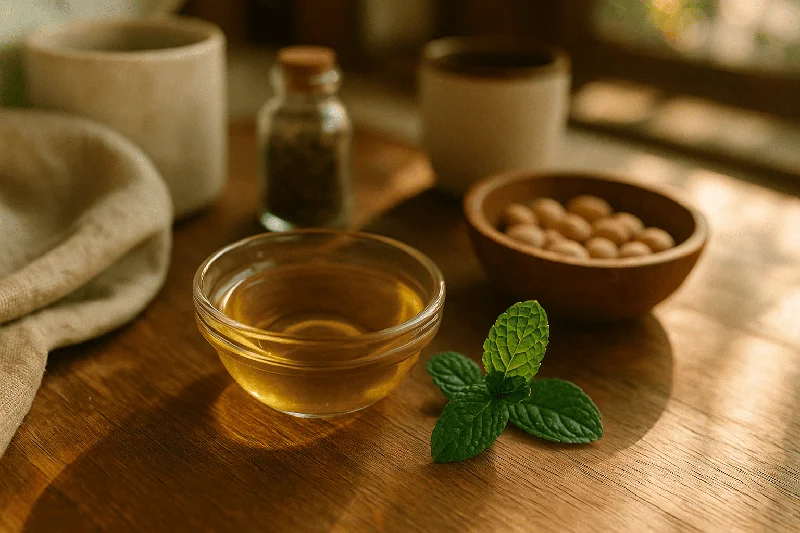
Chandanbala Lakshadi Oil (also called Chandanbala Lakshadi Tailam) is a classical Ayurvedic medicated oil formulated primarily for cooling the body, strengthening bones, soothing inflamed skin, and calming aggravated Pitta and Kapha doshas. Referenced in the ancient text Yoga Ratnakara, this oil combines sandalwood, Bala, Laksha (lac resin), and over a dozen other potent herbs in a sesame oil base processed with cow's milk. Whether you're looking for a safe baby massage oil, a remedy for burning sensations, or supportive therapy for respiratory and bleeding disorders — this guide covers everything you need to know, including details no other source has compiled in one place.
What Is Chandanbala Lakshadi Oil?
- Chandanbala Lakshadi Oil is a polyherbal medicated oil (Taila) prepared by cooking multiple herbs in sesame oil according to the classical Taila Paka Vidhi (oil processing method).
- The name itself reveals its three hero ingredients: Chandan (sandalwood), Bala (Sida cordifolia), and Laksha (lac resin from Laccifer lacca). Together these ingredients create an oil that is cooling, strengthening, and hemostatic — a combination that's quite unique in Ayurvedic pharmacopoeia.
Historical Background & Classical Reference (Yoga Ratnakara)
The formula is documented in Yoga Ratnakara, a comprehensive Ayurvedic compendium believed to have been compiled in the 17th–18th century CE. While the exact author remains debated among scholars, the text is widely regarded as an essential reference in the Rasashastra and Bhaishajya Kalpana traditions. Some editions also reference a related formulation in Ayurved Saar Sangrah. The original Sanskrit shloka lists each ingredient with its proportion, and the formulation has been reproduced with minimal variation by pharmacies across India for centuries.
What's worth noting: Yoga Ratnakara compiled formulas from earlier texts that were scattered across different traditions, making it a kind of "greatest hits" collection of Ayurvedic medicine. Chandanbala Lakshadi Oil being included speaks to its proven clinical utility even in that era.
Dosha Balancing Properties (Pitta & Kapha)
According to Ayurvedic pharmacology, this oil primarily pacifies Pitta dosha due to its cooling (Sheeta Virya) nature and Kapha dosha through its drying and astringent components like Laksha and Manjistha. It's particularly useful for conditions driven by Pitta aggravation — burning sensations, inflammatory skin conditions, bleeding disorders, and fevers. For Kapha-related conditions such as respiratory congestion and excessive mucous production, the formulation works through its expectorant and anti-inflammatory herbs.
Complete Ingredients & Composition of Chandanbala Lakshadi Oil
The oil is a complex formulation with herbs used in three distinct phases: decoction (Kwatha), paste (Kalka), and the liquid media.
Below is the full composition:
Decoction Herbs (Kwatha Dravyas)
| Herb (Sanskrit) | Botanical Name | Key Property |
|---|---|---|
| Chandana (Shweta) | Santalum album | Cooling, anti-inflammatory |
| Bala | Sida cordifolia | Strengthening, nerve tonic |
| Laksha | Laccifer lacca (resin) | Bone healing, hemostatic |
| Ashwagandha | Withania somnifera | Adaptogenic, rejuvenative |
| Manjistha | Rubia cordifolia | Blood purifier, skin healer |
| Padmaka | Prunus cerasoides | Cooling, anti-bleeding |
| Yashtimadhu (Mulethi) | Glycyrrhiza glabra | Demulcent, anti-ulcer |
| Sariva | Hemidesmus indicus | Blood purifier, cooling |
| Utpala (Neelkamal) | Nymphaea stellata | Pitta pacifying, cooling |
| Musta | Cyperus rotundus | Digestive, anti-inflammatory |
| Triphala (Haritaki, Vibhitaki, Amalaki) | Terminalia chebula, T. bellirica, Emblica officinalis | Detoxifying, rejuvenating |
| Dhataki | Woodfordia fruticosa | Hemostatic, astringent |
| Madhuka | Madhuca longifolia | Cooling, nutritive |
Paste Herbs (Kalka Dravyas)
The paste (kalka) is prepared from fine powders of selected herbs from the above list — primarily Chandana, Bala, Laksha, and Manjistha. In some traditional preparations, additional aromatic herbs like Jatamansi (Nardostachys jatamansi) or Usheera (Vetiveria zizanioides) may be added to the kalka depending on the specific textual recension being followed.
Base Oil & Liquid Media
- Sesame Oil (Tila Taila): The base oil. Sesame is chosen because Ayurveda considers it the best oil for medicated preparations — it has the unique property of absorbing and potentiating the qualities of herbs cooked in it.
- Cow's Milk (Go Ksheera): Used as a liquid medium during processing. The milk adds a cooling and nourishing quality and helps extract water-soluble phytochemicals that oil alone cannot.
Key Ingredient Benefits (What Science & Ayurveda Say)
Chandana (Santalum album) — Cooling & Anti-inflammatory
Sandalwood is the signature cooling agent in this formulation. A 2017 study published in Planta Medica confirmed that α-santalol (the primary active compound in sandalwood oil) exhibits significant anti-inflammatory activity by inhibiting COX-2 and 5-LOX pathways. In Ayurveda, it's classified as Sheeta Virya (cold potency) and Tikta Rasa (bitter taste), making it ideal for Pitta conditions.
Bala (Sida cordifolia) — Strengthening & Nerve Tonic
Bala literally means "strength" in Sanskrit. It's one of the most important Rasayana (rejuvenative) herbs. Research published in the Journal of Ethnopharmacology (2011) demonstrated its neuroprotective and analgesic properties, partly attributed to ephedrine alkaloids. In the context of this oil, Bala contributes to muscle strengthening, pain relief, and nervous system support.
Laksha (Laccifer lacca) — Bone Healing & Hemostatic
Lac resin is perhaps the most unique ingredient here. In Ayurveda, Laksha is specifically indicated for Asthi Sandhanakara — bone healing and union. This makes Chandanbala Lakshadi Oil particularly relevant for rickets in children and fracture recovery. The resin also has hemostatic (bleeding-stopping) properties, which connects to the oil's use in bleeding disorders.
Ashwagandha (Withania somnifera) — Adaptogenic & Rejuvenative
Ashwagandha needs little introduction. A systematic review in the Journal of Alternative and Complementary Medicine (2014) analyzed five clinical trials and found that Ashwagandha significantly reduced stress and anxiety scores. In this formulation, it supports the oil's effects on stress, insomnia, and general debility.
Manjistha (Rubia cordifolia) — Blood Purifier
Manjistha is the premier blood-purifying herb in Ayurveda. Studies have demonstrated its antioxidant and hepatoprotective properties. It contributes to the oil's efficacy in skin disorders and bleeding conditions.
Medicinal Properties & Pharmacological Actions
Beyond individual ingredients, the formulation as a whole demonstrates several pharmacological actions:
Analgesic & Anti-inflammatory
The combination of Chandana, Bala, and Ashwagandha creates a synergistic analgesic effect. Topical application provides relief from joint pain, muscular soreness, and inflammatory conditions. The oil is particularly effective when applied warm for musculoskeletal complaints.
Antipyretic & Coolant
The predominance of cooling herbs (Chandana, Padmaka, Utpala, Sariva) gives this oil a strong antipyretic quality. It helps reduce burning sensations (Daha) in the skin, palms, and soles — a hallmark Pitta symptom.
Antiseptic & Wound Healing
Manjistha, Dhataki, and Triphala contribute antiseptic properties. The oil can be applied on minor wounds and skin ulcerations to promote healing and prevent infection.
Antispasmodic & Relaxant
Bala and Ashwagandha together provide a muscle-relaxant and antispasmodic effect, useful in conditions like restless legs, muscle cramps, and spasmodic cough.
Method of Preparation (Taila Paka Vidhi)
Understanding how the oil is made helps you appreciate its complexity and identify authentically prepared products.
Classical Process Step by Step
- 1.Kwatha (Decoction): The decoction herbs are boiled in 16 parts water, reduced to 1/4th. This concentrated decoction extracts the water-soluble active compounds.
- 2.Kalka (Paste): Selected herbs are ground into a fine paste with a small amount of water.
- 3.Combining: One part sesame oil is combined with 1/4 part kalka (paste), 4 parts kwatha (decoction), and 4 parts cow's milk in a wide-mouthed vessel.
- 4.Cooking (Paka): The mixture is cooked on a moderate flame (Madhyama Agni) with continuous stirring. As water and milk evaporate, the oil absorbs the herbal constituents.
- 5.Filtration: Once cooking is complete, the oil is filtered through a clean muslin cloth and stored in glass or food-grade containers.
The entire process can take 8–12 hours depending on the batch size.
Signs of Properly Prepared Oil (Siddha Lakshana)
This is something no competitor has covered, yet it's critical for quality assessment:
- Varti Siddhi: When a small amount of the kalka (paste residue) can be rolled into a wick without sticking or crumbling, the oil is done
- No crackling sound: When a drop of water is added to the hot oil, there should be no sputtering — indicating all moisture has evaporated
- Characteristic aroma: The finished oil should have a pleasant, sandalwood-forward aroma — not burnt or rancid
- Color: A golden-yellow to light amber color. Too dark suggests over-cooking
- Texture: Smooth, non-gritty, with no sediment
स्वयं दवा न लें और प्रतीक्षा न करें। अभी डॉक्टर से चैट शुरू करें
Health Benefits & Indications
Burning Sensation, Fever & Pitta Disorders
The primary indication. The oil is highly effective for Daha (burning sensation) in the body, palms, soles, and eyes. It can be applied topically to the affected areas or used for full-body massage in cases of generalized Pitta aggravation. For fever management, it's typically applied to the scalp and soles of feet.
Skin Conditions & Inflammation
Inflammatory skin conditions including eczema, dermatitis, psoriasis flare-ups, and general skin rashes respond well to this oil. The anti-inflammatory and blood-purifying herbs work synergistically. Apply directly to affected areas twice daily.
Bone Health & Rickets in Children
- This is one of the most distinctive indications. Laksha (lac resin) is specifically reputed for bone healing.
- For children showing signs of rickets — delayed milestones, soft bones, bowed legs — this oil is traditionally used as a massage oil.
Baby Massage Protocol for Bone Strength
Many parents search for information on using Chandanbala Lakshadi Oil for baby massage.
Here's a practical protocol:
- Age: Can be used from 3 months onwards (consult your Ayurvedic physician for newborns)
- Amount: 5–10 ml for full body massage
- Technique: Gentle, downward strokes on limbs; circular motions on joints and chest
- Duration: 10–15 minutes before bath
- Frequency: Daily for best results
- Course: Minimum 2–3 months for visible improvement in bone strength
Important: Rickets also requires addressing vitamin D and calcium deficiency. The oil is a supportive therapy, not a standalone treatment.
Respiratory Disorders (Cough, Asthma, Tuberculosis)
The oil is indicated in Kasa (cough), Shwasa (asthma/breathlessness), and Rajayakshma (a condition often correlated with tuberculosis). For respiratory conditions, the oil can be applied to the chest and back, or taken internally under medical supervision.
Bleeding Disorders & Menorrhagia
The hemostatic properties of Laksha, Dhataki, and Padmaka make this oil useful in Raktapitta (bleeding disorders) and excessive menstrual bleeding. For menorrhagia, internal administration under practitioner guidance is the typical approach.
Stress, Insomnia & Mental Health
The Ashwagandha and Bala in the oil, combined with the cooling effect of Chandana, help calm the nervous system. Applying the oil to the scalp and soles of the feet before bedtime promotes restful sleep. As part of Dinacharya (daily Ayurvedic routine), regular self-massage with this oil can significantly reduce stress levels over time.
General Debility & Convalescence
After prolonged illness, fever, or surgery, when the body is depleted — this oil serves as a restorative therapy. The Rasayana (rejuvenative) herbs rebuild strength, and the sesame oil base provides deep nourishment to tissues.
Liver Disorders (Jaundice, Fatty Liver)
The Pitta-pacifying and hepatoprotective herbs like Manjistha, Triphala, and Yashtimadhu make this oil relevant for liver conditions. For jaundice and fatty liver, internal administration (under practitioner supervision) combined with external application over the liver area is recommended.
Oligospermia & Male Reproductive Health
Bala and Ashwagandha are both classified as Vajikarana (aphrodisiac) herbs. Internal use of the oil may support sperm count and quality, though this indication requires more clinical validation.
How to Use Chandanbala Lakshadi Oil
External Application (Most Common)
| Method | How | When |
|---|---|---|
| Full Body Massage (Abhyanga) | Warm 15–30 ml, massage entire body for 15–20 min | Morning, 30 min before bath |
| Scalp Application | Apply 5–10 ml to scalp, massage gently | Before bedtime or 1 hour before hair wash |
| Local Application | Apply directly to affected skin area | 2–3 times daily |
| Foot Application | Massage into soles of feet | Before sleep (use socks to avoid slipping) |
| Pre-Steam Therapy | Apply before Swedana (steam therapy) | As directed by practitioner |
Nasal Administration (Nasya)
- For headache, sinusitis, and stress relief: instill 4–8 drops of lukewarm oil into each nostril while lying down with the head tilted back. Best done on an empty stomach in the morning.
- This is an advanced Panchakarma technique — do it under guidance initially.
Internal Use (Oral Administration)
Internal consumption should only be done under the supervision of a qualified Ayurvedic practitioner:
- Adults: 2–3 ml (approximately ½ teaspoon) twice daily before meals with warm water
- Not recommended for self-medication internally without professional guidance
Dosage by Age Group
| Age Group | External (Massage) | Internal (If Prescribed) |
|---|---|---|
| Infants (3–12 months) | 5–10 ml | Not recommended |
| Children (1–5 years) | 10–15 ml | 1–2 drops with milk (rare, only under supervision) |
| Children (5–12 years) | 15–20 ml | 0.5–1 ml with warm water |
| Adults | 20–30 ml | 2–3 ml twice daily |
| Elderly | 15–20 ml (gentle massage) | 1–2 ml twice daily |
Duration of Treatment
| Condition | Recommended Duration |
|---|---|
| General wellness / Dinacharya | Ongoing (lifelong practice) |
| Skin conditions | 1–3 months |
| Burning sensation / Pitta disorders | 2–4 weeks |
| Rickets / bone weakness (children) | 3–6 months |
| Respiratory disorders | 2–3 months |
| Post-illness debility | 1–2 months |
| Stress and insomnia | 1–3 months |
How Chandanbala Lakshadi Oil Compares to Similar Ayurvedic Oils
This is something you won't find in any other guide. Many people confuse similar medicated oils.
Here's how Chandanbala Lakshadi stacks up:
| Feature | Chandanbala Lakshadi Oil | Bala Tailam | Dhanvantaram Tailam | Ksheerabala Tailam |
|---|---|---|---|---|
| Primary Action | Cooling, hemostatic, bone strengthening | Strengthening, Vata pacifying | Vata balancing, joint health | Nerve tonic, pain relief |
| Best For | Pitta conditions, burning sensation, rickets | Muscle weakness, paralysis | Post-partum care, arthritis | Neurological disorders, facial palsy |
| Dosha Focus | Pitta & Kapha | Vata | Vata | Vata & Pitta |
| Key Differentiator | Contains Laksha for bone healing + strong cooling effect | Pure Bala-focused, simple composition | Complex, 40+ herbs, warming | Milk-processed Bala, deeply nourishing |
| Safe for Babies | Yes (commonly used) | Yes | Yes (traditionally popular) | Yes |
| Internal Use | Yes (under supervision) | Yes | Yes | Yes |
When to choose Chandanbala Lakshadi specifically: When there's Pitta aggravation, burning sensation, bleeding tendency, or bone weakness — especially in children. If the primary issue is Vata (cold, dry, neurological), other oils like Ksheerabala or Dhanvantaram are better choices.
Side Effects, Precautions & Contraindications
Known Side Effects
Chandanbala Lakshadi Oil is generally considered safe for external use.
Potential side effects include:
- Excessive internal dose may cause loose stools or mild diarrhea (due to the purgative effect of sesame oil in large quantities)
- Allergic reactions are rare but possible — do a patch test on the inner forearm before first use
- Nasal administration may cause sneezing or mild irritation initially
Precautions
- Pregnancy: External use is generally safe. Internal use should be avoided unless specifically prescribed by an Ayurvedic physician
- Lactation: External use is safe.
- Internal use — consult your practitioner
- Children under 3 months: Consult before use
- Diabetic patients: Monitor blood sugar if taking internally (Ashwagandha may lower glucose levels)
- Slippery surfaces: After applying to feet, wear socks or be cautious on smooth floors to avoid falls
Contraindications
- Known allergy to sesame or any ingredient
- Active oozing wounds (wait for initial healing)
- Severe Kapha conditions with heavy congestion (the oil nature may aggravate)
- Ama (toxin accumulation) conditions — address Ama first before oil therapy
Interaction with Other Ayurvedic Treatments
One major gap in existing resources is how this oil fits into broader treatment protocols.
Here's how practitioners typically combine it:
- Abhyanga + Swedana: Apply the oil for full body massage, followed by steam therapy for enhanced absorption — particularly effective for joint pain and skin conditions
- Nasya + Internal Use: For respiratory conditions, combining nasal administration (morning) with oral dose (before meals) provides multi-route delivery
- With Triphala Guggulu: For bone-related conditions, oral Triphala Guggulu tablets combined with external Chandanbala Lakshadi Oil massage creates a comprehensive protocol
- With Praval Pishti or Mukta Pishti: For severe Pitta conditions, practitioners may combine internal oil use with these coral/pearl calcium preparations
- Panchakarma Context: The oil is used as a pre-procedure massage oil before Virechana (therapeutic purgation) in Pitta-dominant patients
How to Choose Authentic, High-Quality Chandanbala Lakshadi Oil
Quality Standards to Look For
- GMP Certification: Ensure the manufacturer follows Good Manufacturing Practices as mandated by the Ayurvedic Pharmacopoeia of India
- Heavy Metal Testing: Reputable manufacturers test for lead, mercury, arsenic, and cadmium. Ask for the certificate of analysis (CoA)
- Organic Sourcing: While not mandatory, organically sourced herbs reduce pesticide exposure — especially important for baby massage oil
- Classical vs Proprietary Prefer brands that follow the classical formulation from Yoga Ratnakara rather than modified proprietary versions
- Packaging: Glass bottles are preferable. Avoid plastic containers for medicated oils as they may leach chemicals over time
Signs of a Properly Made Oil
- Pleasant sandalwood aroma without any rancid or burnt smell
- Golden-amber color — not too dark, not too pale
- Smooth texture, no grittiness or sediment at the bottom
- Does not solidify at room temperature (sesame oil base remains liquid)
Chandanbala Lakshadi Oil for Hair Growth
While this oil isn't traditionally classified as a "hair oil," its ingredients do support hair health indirectly. Chandana improves scalp cooling and reduces inflammation; Bala and Ashwagandha nourish hair roots; Manjistha improves blood circulation to the scalp. For hair-specific concerns, specialized oils like Bhringraj Tailam or Neelibhringadi Tailam may be more targeted, but Chandanbala Lakshadi Oil makes an excellent supportive scalp treatment — especially when hair loss is associated with Pitta aggravation (premature greying, scalp burning, stress-related hair fall).
Frequently Asked Questions (FAQ)
What is Lakshadi oil used for?
Lakshadi oil (often referring to Chandanbala Lakshadi Oil) is used for reducing burning sensation in the body, managing skin inflammation, strengthening bones in children, supporting respiratory health, and treating bleeding disorders. It's also widely used as a baby massage oil for promoting healthy bone development.
How to use Chandanbala Lakshadi Oil for babies?
Warm 5–10 ml of oil slightly (it should be comfortably warm, not hot — test on your wrist first). Apply gently using downward strokes on the limbs, circular motions on joints and chest. Massage for 10–15 minutes, then let it absorb for 20–30 minutes before giving a warm water bath. Daily use is recommended, preferably in the morning.
Can Chandanbala Lakshadi Oil be used daily?
Yes. In fact, daily use as part of your Dinacharya (Ayurvedic daily routine) is the traditional recommendation. Regular Abhyanga with this oil provides cumulative benefits for skin health, stress reduction, and overall vitality.
What is the price range of Chandanbala Lakshadi Oil?
- Prices vary by brand and quantity. Generally, a 200 ml bottle costs between ₹150–₹400 from established manufacturers. Larger quantities (500 ml or 1 litre) offer better value.
- Always prioritize quality over price — a GMP-certified product from a reputable Ayurvedic pharmacy is worth the investment.
What is the classical reference for Chandanbala Lakshadi Oil?
The primary reference is Yoga Ratnakara, a 17th–18th century Ayurvedic compendium. Some pharmacies also cite Ayurved Saar Sangrah as a secondary reference.
Can this oil be applied in summer?
Absolutely. Given its cooling (Sheeta Virya) nature, Chandanbala Lakshadi Oil is actually ideal for summer use when Pitta tends to aggravate. Many Ayurvedic practitioners specifically recommend switching to this oil during the hot season.
Is it safe to use during pregnancy?
External application (massage) is generally considered safe during pregnancy. However, internal use and Nasya (nasal administration) should be avoided unless specifically advised by your Ayurvedic practitioner. Always inform your obstetrician about any Ayurvedic products you're using.
Conclusion
Chandanbala Lakshadi Oil is one of those classical formulations that has stood the test of centuries — and for good reason. Its unique combination of cooling, bone-strengthening, and hemostatic herbs makes it unlike any other Ayurvedic oil available. Whether you're a parent looking for a safe baby massage oil, someone dealing with Pitta-related skin issues, or a practitioner seeking a reliable classical formulation, this oil delivers.
The key is choosing an authentically prepared product, using it consistently, and integrating it into a broader wellness routine rather than treating it as a quick fix. As with all Ayurvedic therapies, patience and regularity are your greatest allies.
For internal use or treatment of specific medical conditions, always consult a qualified Ayurvedic physician who can assess your individual Prakriti and condition before prescribing dosage and duration.
Scientific Sources
- From nature's bounty to drug discovery: Leveraging phytochemicals and molecular approaches to combat multi-drug-resistant (MDR) tuberculosis — Nalam SM et al., 2024, The Indian journal of tuberculosis
- Network Pharmacology of Ayurveda Formulation Triphala with Special Reference to Anti-Cancer Property — Chandran U et al., 2015, Combinatorial chemistry & high throughput screening
- Treatment of fibromyalgia at the Maharishi Ayurveda Health Centre in Norway II--a 24-month follow-up pilot study — Rasmussen LB et al., 2012, Clinical rheumatology
- Plants containing pyrrolizidine alkaloids used in the traditional Indian medicine--including ayurveda — Roeder E et al., 2013, Die Pharmazie
- A brief review on chemoprofling and pharmacological potential of Desmodium gangeticum (L.) DC — Das M et al., 2026, Natural product research
- Dentistry and ayurveda--1 — Amrutesh S, 2003, Indian journal of dental research : official publication of Indian Society for Dental Research
- Chyawanprash: A review of therapeutic benefits as in authoritative texts and documented clinical literature — Narayana DB et al., 2017, Journal of ethnopharmacology
- Research, biomedicine and Ayurveda: From evidence-based medicine to evidence-informed healthcare — Chaturvedi S et al., 2021, Indian journal of medical ethics
- Can Ayurveda medicine supplement modern medical treatments in chronic disease management? — Ravindran V et al., 2024, The journal of the Royal College of Physicians of Edinburgh
- Ayurgenomics and Modern Medicine — Wallace RK, 2020, Medicina (Kaunas, Lithuania)
- Combined Ayurveda and Yoga Practices for Newly Diagnosed Type 2 Diabetes Mellitus: A Controlled Trial — Datey P et al., 2018, Complementary medicine research
- Healthcare and disease management in Ayurveda — Mishra L et al., 2001, Alternative therapies in health and medicine
- Ayurvedic medicine for schizophrenia — Agarwal V et al., 2007, The Cochrane database of systematic reviews
- An overview of CAM: components and clinical uses — Kiefer D et al., 2009, Nutrition in clinical practice : official publication of the American Society for Parenteral and Enteral Nutrition
- Dava, Daktar, and Dua: anthropology of practiced medicine in India — Khare RS, 1996, Social science & medicine (1982)
- Ayurvedic Management of Presbycusis (Project TOPMAC): Protocol for an Exploratory Randomized Controlled Trial — V KK et al., 2024, JMIR research protocols
- An Insight of Clinical Evidence of Ayurveda Interventions in the Management of COVID-19 Patients — Maideen NMP et al., 2022, Infectious disorders drug targets
- Ayurvedic genomics: establishing a genetic basis for mind-body typologies — Patwardhan B et al., 2008, Journal of alternative and complementary medicine (New York, N.Y.)
- Dyspeptic pain and phytotherapy--a review of traditional and modern herbal drugs(https://pubmed.ncbi.nlm.nih.gov/11694755/) — Saller R et al., 2001, Forschende Komplementarmedizin und klassische Naturheilkunde = Research in complementary and natural classical medicine
- An 'Ayurveda-Biology' platform for integrative diabetes management — Thottapillil A et al., 2021, Journal of ethnopharmacology
उपयोगकर्ताओं के प्रश्न
What conditions can chandanbala lakshadi oil help treat effectively?
Client_c893b2
23 घंटे पहले
Chandanbala Lakshadi oil can effectively help with conditions such as general debility and weakness, particularly after prolonged illness, fever, or surgery, by promoting recovery and rejuvenation. Regular use can aid in reducing stress levels, as it contains ashwagandha, known for its adaptogenic properties. It's also mentioned in classical texts for use in managing bleeding disorders. Improvement timelines may vary, but ongoing application over a few weeks is often suggested for benefits. If symptoms persist or worsen, consulting a healthcare provider is advisable.
What ingredients are used in chandanbala lakshadi oil formulation?
Client_a1484a
5 दिनों पहले
Chandanbala Lakshadi Oil is formulated using a combination of ingredients that include sesame oil, chandan (sandalwood), laksha (lac resin), and typically herbs like Bala (Sida cordifolia), and other botanicals maintained in the Ayurvedic tradition. The oil is a blend created through a specific process that involves a herbal paste known as kalka, a decoction called kwatha, and cow's milk. It's used topically to cool the body, soothe irritated skin, and balance Pitta and Kapha doshas. If irritation occurs or conditions worsen, consult a healthcare professional for advice.
What are the primary benefits of using chandanbala lakshadi oil for infants?
Client_9eb5c0
11 दिनों पहले
Chandanbala lakshadi oil is primarily used for baby massages to promote healthy bone development and strengthen a baby’s muscles. It is a polyherbal medicated oil, usually made by infusing herbs like sandalwood, sida cordifolia, and lakshadi in sesame oil. Regular massage with this oil can aid in calming and soothing the infant, also easing any burning sensations. Use slightly warmed oil, ensuring it's not too hot, and apply gently. Although generally safe, watch for skin reactions and consult a doctor for persistent skin issues or if your baby has allergies.
How is chandanbala lakshadi oil extracted and prepared?
Client_5f5641
16 दिनों पहले
Chandanbala Lakshadi oil is typically extracted and prepared through a meticulous process involving the combination of herbs with a base oil. The process starts with decocting herbs like sandalwood, Bala (Sida cordifolia), and other Ayurvedic ingredients in water. The resulting decoction is mixed with a base carrier oil, often sesame oil. This mixture is then cooked until the water completely evaporates, allowing the oil to absorb the herbal constituents. Afterward, the oil is filtered to remove any solid residues. This preparation can take 8–12 hours. Properly prepared oil should be free from moisture, have a pleasant sandalwood aroma, and exhibit a golden-yellow to light amber color. Avoid using oil that smells rancid or looks discolored. For high-quality or larger-scale preparation, consulting a qualified Ayurvedic practitioner is advisable.
How often should chandanbala lakshadi oil be applied for best results?
Client_5fbdd1
21 दिनों पहले
Chandanbala Lakshadi Oil should ideally be applied once daily for best results, particularly when used for promoting healthy bone development in babies or for addressing skin conditions. For optimal use, massage the oil into the skin for 10–15 minutes, allowing it to absorb for 20–30 minutes before washing off with warm water. This routine should be adjusted based on individual needs or as recommended by a healthcare professional. Monitor for any signs of irritation and consult a doctor if any adverse reactions occur or if conditions don't improve within a few weeks.
Can chandanbala lakshadi oil be used on sensitive skin?
Client_8f0330
30 दिनों पहले
Chandanbala Lakshadi oil may be used on sensitive skin, but proceed with caution. This Ayurvedic oil is known for its cooling and soothing properties, making it potentially beneficial for calming irritation and reducing burning sensations, typical of sensitive skin conditions. However, individual reactions may vary. Before applying it extensively, perform a patch test by applying a small amount on a less sensitive area of the skin and wait for 24 hours to check for any adverse reactions. If any irritation or an allergic reaction occurs, discontinue use immediately. If you suffer from persistent or severe skin issues, consult a dermatologist for personalized advice.
How long can chandanbala lakshadi oil be stored for effectiveness?
Client_652ec5
40 दिनों पहले
Chandanbala lakshadi oil can typically be stored for up to 2-3 years while maintaining its effectiveness, provided it is kept in a cool, dark place and in its original, tightly sealed packaging. Using a glass bottle, as mentioned, can help preserve its quality. Signs that the oil may have degraded include changes in smell, color, or consistency. If you're unsure, referencing the product's expiration date or consulting the manufacturer's guidelines is advised. Discontinue use and consult a doctor if you notice any adverse skin reactions.
Can chandanbala lakshadi oil be used for cooling sunburned skin?
Client_ea647a
50 दिनों पहले
Chandanbala Lakshadi oil can indeed be used to soothe sunburned skin due to its cooling properties. It contains herbs like Chandana (sandalwood), which are known for their cooling and antipyretic qualities. To use it, apply a small amount gently on the sunburned area. This oil may help reduce burning sensations and support skin healing, thanks to its cooling and antiseptic components. For sunburn relief, you might notice a reduction in discomfort within a few hours, but healing can take days depending on burn severity. Always avoid application on broken skin and consult a healthcare professional if the sunburn is severe or if you experience symptoms like blisters or extensive redness.
How to properly mix chandanbala lakshadi oil with other oils?
Client_280ec0
60 दिनों पहले
To properly mix chandanbala lakshadi oil with other oils, such as sesame oil, start by determining the desired effect. If you're targeting Pitta-related skin issues or seeking a cooling effect, chandanbala lakshadi oil can be used as-is or mixed with a neutral base oil like sesame oil in a 1:1 ratio to maintain its potency. Conduct a patch test before full application to ensure no adverse reactions occur. If you're addressing specific ailments, consult a healthcare provider for guidance, as certain combinations may enhance or reduce efficacy.
What is the role of milk in enhancing the benefits of chandanbala lakshadi oil?
Client_7d9ec8
69 दिनों पहले
Milk plays a cool role by adding that gentle cooling and nourishing touch to Chandanbala Lakshadi Oil. It helps bring out the water-soluble goodies from the herbs that oil alone can't quite reach. It's like they both work together, milk and oil, to support cooling, anti-inflammatory benefits, and nourishing properties.
संबंधित आलेख
Skin and Hair Disorders
Valiya Madhusnuhi Rasayanam – Traditional Ayurvedic Rejuvenation Therapy for Enhanced Vitality
Discover Valiya Madhusnuhi Rasayanam, a classical Ayurvedic rejuvenation therapy. Learn about its ingredients, benefits, usage, and how it promotes holistic health and longevity naturally.
3,093

Skin and Hair Disorders
बालों के लिए एसेंशियल ऑयल का प्रभावी तरीके से उपयोग कैसे करें
जानें कैसे एसेंशियल ऑयल्स का इस्तेमाल करके बालों की ग्रोथ, मोटाई और स्कैल्प की सेहत को बढ़ावा दें। जानिए सबसे अच्छे ऑयल्स, मिक्सिंग टिप्स और बालों की देखभाल के लिए आयुर्वेदिक उपाय।
7,214

Skin and Hair Disorders
Jeevanthyadi Yamakam Ointment – Ayurvedic Ointment for Healing & Rejuvenation
Discover Jeevanthyadi Yamakam Ointment, a traditional Ayurvedic remedy formulated with potent herbs to promote wound healing, reduce inflammation, and rejuvenate skin health.
3,010

Skin and Hair Disorders
Tinea Cruris Treatment in Ayurveda: A Holistic Overview
Discover how Ayurveda addresses tinea cruris, or jock itch, using time-tested remedies, expert insights, and evidence-based herbal approaches.
4,504

Skin and Hair Disorders
How to Use Chirata for Skin: Ayurvedic Remedies and Benefits
Exploration of Chirata: The Ayurvedic Herb for Clearer and Brighter Skin
4,695

Skin and Hair Disorders
ईवन्शेड क्रीम
इवेनशेड क्रीम की खोज
3,052

Skin and Hair Disorders
दैनिक जीवन में जायफल पाउडर का प्रभावी उपयोग कैसे करें
जानें कैसे जायफल पाउडर का इस्तेमाल त्वचा, चेहरे, नींद और पिग्मेंटेशन के लिए करें। इसके आयुर्वेदिक फायदों, रेसिपीज़ और रोज़मर्रा की सेहत के लिए उपयोगी टिप्स के बारे में जानें।
7,550

Skin and Hair Disorders
सोमाराजी तेल: फायदे, उपयोग करने का तरीका, सामग्री, साइड इफेक्ट्स
सोमाराजी तेल की खोज: फायदे, उपयोग करने का तरीका, सामग्री, साइड इफेक्ट्स
2,512

Skin and Hair Disorders
How to Reduce Skin Dryness: Ayurvedic Remedies, Causes, and Prevention
Exploration of Effective Ayurvedic and Home Remedies to Combat Skin Dryness
2,493

Skin and Hair Disorders
चंदनादि थैलम: फायदे, उपयोग करने का तरीका, सामग्री, साइड इफेक्ट्स
चंदनादि थैलम की खोज: फायदे, उपयोग करने का तरीका, सामग्री, साइड इफेक्ट्स
2,532
विषय से संबंधित परामर्श
अतिरिक्त दस्तावेज़
© 2024 Ask Ayurveda. सर्वाधिकार सुरक्षित।