आयुर्वेदिक डॉक्टर से प्रश्न पूछें और निःशुल्क या भुगतान मोड में अपनी चिंता की समस्या पर ऑनलाइन परामर्श प्राप्त करें। 2,000 से अधिक अनुभवी डॉक्टर हमारी साइट पर काम करते हैं और आपके प्रश्नों का इंतजार करते हैं और उपयोगकर्ताओं को उनकी स्वास्थ्य समस्याओं को हल करने में प्रतिदिन मदद करते हैं।


Body DetoxEar, Nose, and Throat DisordersGeriatrics & RejuvenationImmunodeficiencyInfertility TreatmentNutritionOrthopedic DisordersPediatricsRespiratory DisordersSexually Transmitted Diseases (STDs)Surgery RecoveryUrological DisordersVascular DisordersDental DisordersEndocrinological DisordersGastrointestinal DisordersYoga TherapyGeneral MedicineAllergic DisordersCardio DisordersGynecology and ObstetricsCosmetologySkin and Hair DisordersEye DisordersInfectious DiseasesMental DisordersNeurological DisordersOncologyPanchakarmaSexual Health & DisordersSports Medicine
पर प्रकाशित 01/16/25
(को अपडेट 08/13/26)
4,769
Effective Myopia Cure Ayurveda: Natural Vision Improvement
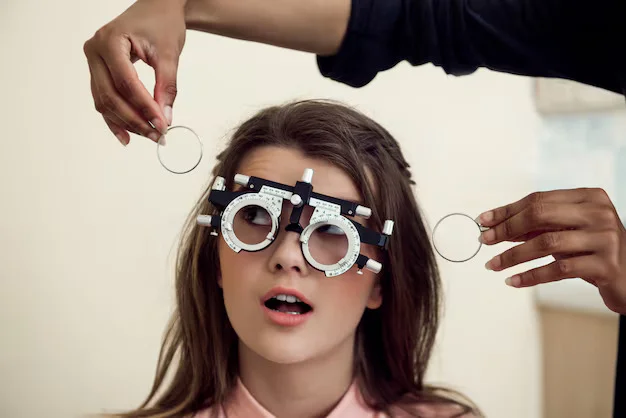
- Myopia, commonly known as nearsightedness, affects over 2.6 billion people worldwide — and India is facing a rapidly growing epidemic, especially among children. If you're searching for a natural, holistic approach to managing or even reversing this condition, Ayurveda offers time-tested therapies that deserve serious attention.
- But let's be upfront: Ayurveda can significantly slow myopia progression, improve visual acuity in mild-to-moderate cases, and protect against complications — however, claiming a guaranteed "complete cure" for every case would be misleading.
What Ayurveda does offer is a comprehensive system that addresses the root causes of weakening vision through Panchakarma eye therapies, herbal formulations, dietary protocols, and lifestyle changes. In this guide, we'll cover everything from the Ayurvedic understanding of myopia (called Timira in classical texts) to actionable daily protocols, realistic expectations, scientific evidence, and how Ayurvedic treatment compares with modern options like LASIK and atropine drops.
What Is Myopia and Why Is It Increasing in India?
Myopia is a refractive error where light entering the eye focuses in front of the retina instead of directly on it. This happens because the eyeball grows too long (axial length elongation) or the cornea curves too steeply. The result? Distant objects look blurred while close objects remain clear.
The Myopia Epidemic in Numbers
India is projected to have over 640 million myopes by 2050, according to the Brien Holden Vision Institute. Among urban schoolchildren, prevalence rates have crossed 35% in cities like Hyderabad and Bengaluru.
The key drivers include:
- Excessive screen time — average Indian children now spend 4-6 hours daily on devices
- Reduced outdoor activity — studies show that 2+ hours of daily outdoor time can reduce myopia risk by up to 50%
- Genetic predisposition — a child with two myopic parents has roughly a 6x higher risk
- Near-work intensity — prolonged reading, studying, or device use at close distances
Types of Myopia You Should Know
| Type | Diopter Range | Characteristics | Ayurvedic Prognosis |
|---|---|---|---|
| Simple (Physiological) Myopia | -0.50 to -6.00 D | Stable by mid-20s, correctable with glasses | Good — significant improvement possible |
| High Myopia | Beyond -6.00 D | Progressive, risk of complications | Moderate — stabilization focus |
| Degenerative (Pathological) Myopia | Beyond -8.00 D, progressive | Retinal changes, macular degeneration risk | Limited — adjunctive support role |
Stages of Myopia Progression
Understanding the progression roadmap helps set realistic expectations:
- 1.Initial stage — mild blur for distant objects, first glasses prescribed (usually -0.50 to -1.50 D)
- 2.Progressive stage — annual increase of -0.50 to -1.00 D, frequent lens changes needed
- 3.High myopia stage — beyond -6.00 D, structural changes in retina begin
- 4.Degenerative stage — complications like retinal detachment, glaucoma, myopic macular degeneration, and even permanent vision loss
The earlier you intervene — whether with Ayurveda or conventional methods — the better the outcomes. This is especially critical for children under 15, when eye growth is most active.
Myopia in Ayurveda: The Concept of Timira and Drishtigata Roga
In Ayurvedic ophthalmology (Shalakya Tantra), myopia corresponds to Timira — a condition described in classical texts like Sushruta Samhita and Ashtanga Hridaya. When untreated, Timira progresses through four patalas (layers of the eye), eventually leading to Linganasha (complete blindness).
Which Dosha Causes Myopia?
Ayurveda attributes myopia primarily to Vata-Pitta imbalance, with Vata dosha playing the dominant role.
Here's the doshic breakdown:
- Vata vitiation — causes dryness, degeneration, and weakening of the eye muscles and optic nerves. Responsible for the progressive elongation of the eyeball
- Pitta aggravation — leads to inflammation, light sensitivity, and metabolic disturbances in ocular tissues
- Kapha involvement — secondary role in causing heaviness and sluggish circulation around the eyes
The treatment principle (chikitsa sutra) focuses on pacifying aggravated Vata, nourishing the optic tissues (dhatu pushti), and strengthening Alochaka Pitta — the subdosha governing vision.
The Three-Step Assessment for Children
A proper Ayurvedic eye evaluation, especially for children, should include:
- 1.Visual acuity without glasses — establishes the actual eye power (true refractive error)
- 2.Visual acuity with current glasses — shows how well current correction is working
- 3.Spectacle power vs. eye power — these are NOT the same; eye power reflects the actual condition while spectacle power is the corrective lens strength
This distinction matters enormously. Many parents confuse reducing spectacle power with actual improvement in eye health — a well-meaning but potentially dangerous misunderstanding.
Can Ayurveda Cure Eye Vision? Ayurvedic Therapies (Kriyakalpa) for Myopia
Ayurvedic eye treatments fall under Kriyakalpa — specialized ocular therapeutic procedures. These are not simple home remedies but clinical treatments that should be administered by qualified Ayurvedic ophthalmologists.
Netra Tarpana (Eye Nourishment Therapy)
This is the cornerstone Ayurvedic treatment for myopia. A dough ring made from black gram flour is placed around each eye, and warm medicated ghee (typically Triphala Ghritam or Jeevanthyadi Ghritam) is poured into this well, bathing the open eye.
- Duration: 15-30 minutes per session
- Course: 7-14 consecutive days
- Mechanism: Deeply nourishes the cornea, lens, and retinal tissues; strengthens the ciliary muscles; reduces Vata-induced dryness
A 2019 clinical study published in the Journal of Ayurveda and Integrative Medicine reported that Netra Tarpana with Triphala Ghritam showed a statistically significant improvement in visual acuity among 30 patients with simple myopia over a 30-day treatment period.
Contraindications for Netra Tarpana
Not everyone can safely undergo this procedure:
- Active eye infections (conjunctivitis, keratitis)
- Recent eye surgery (within 3 months)
- Acute glaucoma
- Cloudy or rainy weather (increases infection risk, per classical guidelines)
- Extreme fatigue or immediately after meals
Anjana (Collyrium Therapy)
Medicated herbal pastes or powders are applied to the inner eyelid margin.
Key formulations include:
- Chandanadi Anjana — cooling, anti-inflammatory, Pitta-pacifying
- Mukulanjana — strengthens lens clarity
- Sauveeranjana — traditional antimony-based collyrium for general eye strengthening
Aschyotana (Eye Drops) and Nethradhara (Eye Wash)
- Aschyotana — instillation of 4-6 drops of herbal decoctions into the eyes; typically using Triphala kashayam or Yashtimadhu drops
- Nethradhara — continuous pouring of medicated liquids over closed eyes for 15-20 minutes; cleanses and rejuvenates ocular surface
Shirodhara for Eye Health
While Shirodhara (steady stream of medicated oil on the forehead) is known primarily for neurological and stress-related conditions, it has an indirect but significant impact on vision. By calming the nervous system and balancing Pitta dosha at the Ajna marma point, Shirodhara improves blood supply to the optic nerve and reduces stress-induced vision deterioration.
Phased Approach to Ayurvedic Treatment
Experienced Ayurvedic eye hospitals follow a two-phase protocol:
Phase 1: Halt degeneration — Stop further progression through Shodhana (purification) and Shamana (pacification) therapies. This takes approximately 14-16 days for simple myopia and 16-18 days for degenerative cases. Phase 2: Restore and strengthen — Rebuild weakened tissues through Rasayana (rejuvenation) therapies, including medicated ghees, herbal supplements, and repeated Netra Tarpana courses.
Most patients require 2-3 treatment courses spread over 6-12 months for meaningful, lasting results.
Which Herb Is Best for Myopia? Top Ayurvedic Medicines and Formulations
Triphala: The Foundation of Ayurvedic Eye Care
Can Triphala Cure Myopia?
Triphala — a combination of Amalaki (Emblica officinalis), Haritaki (Terminalia chebula), and Bibhitaki (Terminalia bellirica) — is the most widely researched Ayurvedic formulation for eye health. It's rich in Vitamin C, gallic acid, and potent antioxidants that protect retinal ganglion cells.
While Triphala alone cannot cure established myopia, it serves as the foundational support in virtually every Ayurvedic myopia treatment protocol.
It's used in multiple forms:
- Triphala Ghritam (medicated ghee) — for Netra Tarpana and internal consumption
- Triphala Churna eye wash — 1 teaspoon soaked overnight in water, filtered, and used for morning eye wash
- Triphala capsules/tablets — 500mg twice daily for systemic antioxidant support
A 2022 in-vitro study in Phytomedicine demonstrated that Triphala extract exhibits significant anti-inflammatory and antioxidant activity on lens epithelial cells, suggesting a protective mechanism against oxidative stress-related vision deterioration.
Complete Herbal Medicine Reference
| Herb | Sanskrit Name | Key Action | Primary Use | Dosage (Adult) |
|---|---|---|---|---|
| Indian Gooseberry | Amalaki | Antioxidant, Vitamin C source | Retinal protection | 500mg-1g twice daily |
| Licorice | Yashtimadhu | Anti-inflammatory, Pitta-pacifying | Optic nerve nourishment | 3-5g with milk |
| Shatavari | Shatavari | Rasayana, tissue nourishment | Overall eye rejuvenation | 3-5g twice daily |
| Turmeric | Haridra | Anti-inflammatory, antimicrobial | Reducing ocular inflammation | 1-2g with warm milk |
| Bhringaraj | Bhringaraj | Neuro-protective | Optic nerve strengthening | 3-5g or as prescribed oil |
| Punarnava | Punarnava | Diuretic, reduces intraocular pressure | High myopia with glaucoma risk | 3-5g twice daily |
| Gotu Kola | Mandukaparni | Neuro-regenerative, circulation | Retinal blood flow improvement | 500mg-1g twice daily |
Key Ayurvedic Formulations
- Jeevanthyadi Ghritam — primary medicated ghee for Netra Tarpana; contains Jeevanti, Triphala, Draksha and other herbs processed in cow's ghee
- Anantha Ghritam — specifically indicated for progressive myopia and retinal conditions
- Maha Triphala Ghritam — enhanced Triphala ghee formula for chronic eye conditions
- Saptamrita Lauha — iron-based formulation containing Triphala and Yashtimadhu; commonly prescribed for refractive errors in children
Ayurvedic Medicine for Eyesight for Kids
Children require adjusted dosages and gentler formulations:
- Triphala Ghritam: ¼ to ½ teaspoon with warm milk at bedtime
- Saptamrita Lauha: 125-250mg twice daily (for children over 5 years)
- Triphala eye wash: diluted to half-strength
- Amalaki juice: 10-15ml daily
Important: Always consult a qualified Ayurvedic practitioner before administering any herbal medicine to children. Self-medication is risky and can delay proper treatment.
Daily Home Protocol: A Practical Step-by-Step Plan
This is something no other guide provides — a concrete, actionable daily routine. This protocol is designed for adults with simple myopia (-0.50 to -4.00 D). Adjust timings and dosages with your practitioner's guidance.
Morning Routine (6:00 - 7:30 AM)
- 1.Triphala eye wash — strain pre-soaked Triphala water through clean muslin cloth, wash eyes gently (5 minutes)
- 2.Trataka meditation — gaze steadily at a candle flame or small dot at eye level, 3 feet away, without blinking until eyes water. Start with 2 minutes, gradually increase to 10 minutes
- 3.Eye exercises (15 minutes total):
- Palming — rub palms together, cup over closed eyes, 3 minutes
- Distance-near focus shifts — hold thumb at 10 inches, focus, then shift to an object 20 feet away. Repeat 20 times
- Circular rotations — slow clockwise and anti-clockwise, 10 times each direction
- Conscious blinking — 20 rapid blinks, rest, repeat 3 times
Afternoon Habits (12:00 - 2:00 PM)
- Take prescribed internal medicines (Triphala Ghritam, Saptamrita Lauha) with lunch
- Follow the 20-20-20 rule strictly: every 20 minutes of screen or near-work, look at something 20 feet away for 20 seconds
- Spend at least 30-45 minutes outdoors in natural daylight (not direct sun)
Evening Routine (6:00 - 9:00 PM)
- Padabhyanga (foot massage) — massage soles with warm cow's ghee or sesame oil for 10 minutes. The Kshipra marma point between the big and second toe directly influences eye health
- Take Shatavari or Yashtimadhu with warm milk
- Sleep hygiene — 7-8 hours of quality sleep in a dark room; avoid screen use at least 1 hour before bed
Weekly Addition
- Nasya (nasal oil drops) — 2 drops of Anu Tailam in each nostril on empty stomach, 2-3 times per week. The nasal passages have direct neural connections to the eyes
Ayurveda vs Modern Medicine: An Honest Comparison
This comparison is designed to help you make an informed decision — not to dismiss either approach.
| Parameter | Ayurvedic Approach | LASIK Surgery | Atropine Drops | Orthokeratology |
|---|---|---|---|---|
| Best for | Mild-moderate myopia, children, prevention | Stable adult myopia (18+ years) | Myopia control in children | Mild myopia, children & adults |
| Effectiveness | 0.50-2.00 D improvement possible in simple myopia; stabilization in higher degrees | Near-complete correction (95% achieve 20/40 or better) | Slows progression by 50-60% | Temporary correction while using lenses |
| Side effects | Minimal when done properly; rare allergic reactions | Dry eyes, halos, rare flap complications | Light sensitivity, near blur | Infection risk, corneal changes |
| Cost (India) | ₹15,000-50,000 per 14-16 day course | ₹50,000-1,50,000 one-time | ₹3,000-8,000/year | ₹15,000-40,000/year |
| Duration | 2-3 courses over 6-12 months | Single procedure | Daily drops for years | Ongoing nightly use |
| Root cause approach | Yes — addresses doshic imbalance, tissue health | No — structural correction only | No — pharmacological control | No — mechanical reshaping |
| Age suitability | All ages including children | 18+ only (stable prescription) | 4-16 years typically | 8+ years |
Realistic Expectations and Limitations of Ayurveda
This is where we need to be completely honest:
Where Ayurveda works well:
- Simple myopia up to -4.00 D, especially in children and young adults under 25
- Slowing progression in actively worsening myopia
- Reducing dependency on glasses (lower prescription needed)
- Preventing complications like early cataract and retinal changes
- Managing digital eye strain and associated symptoms
Where Ayurveda has limitations:
- High myopia beyond -6.00 D — complete reversal is unlikely; stabilization is the realistic goal
- Degenerative myopia with structural retinal damage — Ayurveda plays a supportive role alongside modern monitoring
- Cases requiring urgent intervention (retinal detachment, acute glaucoma) — these need immediate conventional treatment
- Expectations of overnight results — meaningful improvement typically takes 3-6 months minimum
स्वयं दवा न लें और प्रतीक्षा न करें। अभी डॉक्टर से चैट शुरू करें
The Role of Modern Diagnostics in Ayurvedic Treatment
One major gap in traditional Ayurvedic practice is the integration of modern diagnostic tools. The best outcomes happen when Ayurvedic treatment is guided by objective measurements:
- Autorefractometry — precise measurement of refractive error before and after treatment courses
- Axial length measurement (A-scan/IOLMaster) — tracks actual eyeball length changes; the most reliable indicator of myopia progression
- OCT (Optical Coherence Tomography) — essential for monitoring retinal health in high myopia
- Visual field testing — screens for glaucoma in high myopia patients
If your Ayurvedic practitioner dismisses modern diagnostics, consider it a red flag. The best Ayurvedic eye hospitals in Kerala and across India now routinely use these tools alongside traditional assessment.
Diet and Lifestyle for Myopia Management (Pathya-Apathya)
Foods That Support Eye Health
- Vitamin A sources — carrots, sweet potato, papaya, mango, dark leafy greens
- Antioxidant-rich — amla, blueberries, bell peppers, pomegranate
- Omega-3 fatty acids — flaxseeds, walnuts, chia seeds (or fish for non-vegetarians)
- Ghee — ½ to 1 teaspoon of pure cow's ghee daily, supports Alochaka Pitta
- Almonds and fennel seeds — soak 7-8 almonds overnight, grind with 1 tsp fennel seeds and 1 tsp mishri (rock sugar), take with warm milk
Foods to Avoid or Minimize
- Excessively spicy, sour, and fermented foods (aggravates Pitta)
- Deep-fried and processed foods (increases oxidative stress)
- Refined sugar and excessive caffeine (depletes nutrients)
- Cold drinks and ice cream (impairs digestion, reduces nutrient absorption)
- Stale or reheated food (increases Vata)
Age-Specific Treatment Recommendations
Children Under 10 Years
- Focus on outdoor time (minimum 2 hours daily), dietary correction, and gentle eye exercises
- Triphala Ghritam in small doses (¼ tsp) with milk
- Avoid Panchakarma procedures unless supervised by a specialist
- Regular eye check-ups every 6 months
Adolescents (10-18 Years)
- Most responsive age group for Ayurvedic intervention
- Full Netra Tarpana courses can be administered
- Combine with reduced screen time protocols and active outdoor lifestyle
- Trataka practice is highly effective at this age
- Consider Saptamrita Lauha and Triphala Ghritam as standard supplements
Adults (18-40 Years)
- Complete Panchakarma-based treatment protocols applicable
- Can combine Ayurvedic treatment with contact lenses or glasses
- Focus on preventing progression and reducing spectacle power
- Stress management through Shirodhara and meditation becomes important
Adults Over 40 Years
- Myopia often stabilizes but presbyopia (age-related farsightedness) begins
- Ayurvedic focus shifts to retinal protection and preventing complications
- Regular OCT and visual field monitoring essential
- Rasayana (rejuvenation) therapies take priority
Complications of Untreated or Poorly Managed Myopia
High myopia significantly increases risk for serious eye conditions:
- Retinal detachment — 5-6x higher risk in high myopia
- Glaucoma — 2-3x higher risk
- Early cataract — posterior subcapsular cataracts are more common
- Myopic macular degeneration — leading cause of blindness in high myopia
- Optic nerve atrophy — gradual loss of nerve fibers
These complications are precisely why managing myopia — whether through Ayurveda, modern medicine, or both — is not optional. It's essential.
Frequently Asked Questions
What is the permanent cure of myopia?
There is no guaranteed permanent cure for myopia in either modern medicine or Ayurveda. LASIK provides long-term structural correction but doesn't address the underlying eyeball elongation. Ayurveda aims to strengthen the visual system and may reduce mild myopia significantly, but calling it a "permanent cure" would be inaccurate. The most effective approach combines early intervention, lifestyle modifications, and appropriate therapy — Ayurvedic, conventional, or integrative.
What is myopia called in Ayurveda?
Myopia is correlated with Timira in Ayurvedic texts, specifically Drishtigata Roga (diseases affecting vision). The condition is also referred to as Dura Drishti Dosha (defective distant vision). Classical texts describe it as a progressive condition affecting the first and second patalas (layers) of the eye.
Can Ayurveda cure myopia? (Quora-style honest answer)
Based on clinical observations from Ayurvedic eye hospitals and limited published research: mild to moderate myopia (up to -4.00 D) in younger patients shows the best response, with some patients achieving 0.50 to 2.00 diopter improvement over 6-12 months of dedicated treatment. Complete elimination of glasses is possible in mild cases but should not be assumed. High myopia patients typically experience stabilization and symptom relief rather than cure.
Is Ayurvedic treatment for myopia available in Kerala?
Yes. Kerala is considered the hub of Ayurvedic eye care, with several specialised hospitals including Sreedhareeyam Ayurvedic Eye Hospital, Matha Ayurveda Eye Hospital, and Kesavatheeram Ayurveda. These centers offer dedicated 14-21 day residential treatment programs with full diagnostic support.
What is the best Ayurvedic medicine for eyesight improvement?
Triphala Ghritam is widely considered the gold-standard internal and external medicine for eye health in Ayurveda. For myopia specifically, the combination of Triphala Ghritam (internal), Saptamrita Lauha, and Jeevanthyadi Ghritam (for Netra Tarpana) forms the core prescription at most Ayurvedic eye hospitals. However, the "best" medicine depends on your specific doshic constitution, degree of myopia, age, and overall health — which is why personalized consultation is non-negotiable.
Conclusion: Taking the First Step Toward Better Vision
Ayurveda offers a genuinely valuable approach to myopia management — one that addresses root causes rather than just symptoms. But it works best when you approach it with realistic expectations, combine it with modern diagnostics, and commit to the lifestyle changes that support lasting results.
If you're considering Ayurvedic treatment for myopia, here's your action plan:
- 1.Get a comprehensive eye examination — know your exact refractive error, axial length, and retinal health status
- 2.Consult a qualified Ayurvedic ophthalmologist — ideally one who uses modern diagnostic tools alongside traditional assessment
- 3.Start with home practices today — Triphala eye wash, eye exercises, dietary improvements, and the 20-20-20 rule cost nothing and carry zero risk
- 4.Plan a clinical treatment course — budget for at least one 14-16 day Panchakarma-based eye treatment
- 5.Track your progress objectively — measure visual acuity and refractive error before and after each treatment course
Your eyes are irreplaceable. Whether you choose Ayurveda, modern medicine, or an integrative approach, the worst decision is doing nothing and hoping for the best.
Scientific Sources
- Neuroprotective Herbs for the Management of Alzheimer's Disease — Gregory J et al., 2021, Biomolecules
- The antitumor effects of herbal medicine Triphala on oral cancer by inactivating PI3K/Akt signaling pathway: based on the network pharmacology, molecular docking, in vitro and in vivo experimental validation — Hu S et al., 2024, Phytomedicine : international journal of phytotherapy and phytopharmacology
- Role of Triphala in dentistry — Prakash S et al., 2014, Journal of Indian Society of Periodontology
- Triphala's characteristics and potential therapeutic uses in modern health — Bairwa VK et al., 2025, International journal of physiology, pathophysiology and pharmacology
- The interplay of triphala and its constituents with respect to metabolic disorders and gut-microbiome — Gurjar S et al., 2025, Fitoterapia
- Evaluation of antioxidant profile and activity of amalaki (Emblica officinalis), spirulina and wheat grass — Shukla V et al., 2009, Indian journal of clinical biochemistry : IJCB
- Influence of Amalaki Rasayana on telomerase activity and telomere length in human blood mononuclear cells — Guruprasad KP et al., 2017, Journal of Ayurveda and integrative medicine
- Amalaki rasayana, a traditional Indian drug enhances cardiac mitochondrial and contractile functions and improves cardiac function in rats with hypertrophy — Kumar V et al., 2017, Scientific reports
- Ayurvedic formulations amalaki rasayana and rasa sindoor improve age-associated memory deficits in mice by modulating dendritic spine densities — Verma B et al., 2022, Journal of Ayurveda and integrative medicine
- Therapeutic Uses of Triphala in Ayurvedic Medicine — Peterson CT et al., 2017, Journal of alternative and complementary medicine (New York, N.Y.)
- Evaluation of the anti-hyperlipidemic effects of Triphala in high fat diet fed rats: Studies with two combinations — Rana S et al., 2022, Ayu
- Scientific validation of the ethnomedicinal properties of the Ayurvedic drug Triphala: a review — Baliga MS et al., 2012, Chinese journal of integrative medicine
- Effect of Triphala on dextran sulphate sodium-induced colitis in rats — Rayudu V et al., 2014, Ayu
- Bangladeshi medicinal plant dataset — Borkatulla B et al., 2023, Data in brief
- Extraction, phytochemical characterization and anti-cancer mechanism of Haritaki churna: An ayurvedic formulation — Khan MRUZ et al., 2023, PloS one
- Unique aspect of Tibetan medicine — Dakpa T, 2014, Acupuncture & electro-therapeutics research
- The Ayurvedic medicines Haritaki, Amala and Bahira reduce cholesterol-induced atherosclerosis in rabbits — Thakur CP et al., 1988, International journal of cardiology
- Ayurvedic management of Ulcerative Keratitis - A case report — Mitra Das M et al., 2019, Journal of Ayurveda and integrative medicine
- Clinical study on evaluation of anti-cataract effect of Triphaladi Ghana Vati and Elaneer Kuzhambu Anjana in Timira (immature cataract) — Bhati H et al., 2015, Ayu
- Ayurvedic management central serous retinopathy - A case report — Shanti K et al., 2023, Journal of Ayurveda and integrative medicine
- A clinical study to assess the efficacy of Triyushnadi Anjana in Kaphaja Abhishyanda with special reference to vernal keratoconjunctivitis — Dhiman KS et al., 2010, Ayu
- Preclinical Evaluation on Rabbit of Lakshadi Anjana Drops: Physico-Chemical, Histopathological, and Anti-Inflammatory Insights for Ocular Therapeutic Applications — Nair PP et al., 2025, Zhongguo ying yong sheng li xue za zhi = Zhongguo yingyong shenglixue zazhi = Chinese journal of applied physiology
उपयोगकर्ताओं के प्रश्न
What are the key Ayurvedic herbs for improving vision health?
Client_52e87d
26 दिनों पहले
Key Ayurvedic herbs that may support vision health include Triphala, which is a combination of three fruits known for their antioxidant properties, and Ashwagandha, which may help reduce stress and improve overall eye health. Additionally, Amalaki (Indian gooseberry) is touted for its rich vitamin C content, potentially benefiting eye function. While these herbs can support eye health, they are not a guaranteed cure for vision issues like myopia. If you experience significant vision changes, it's crucial to consult with an eye care professional to determine the appropriate treatment plan.
How long does it take to see results from Ayurvedic myopia treatments?
Client_3b8392
36 दिनों पहले
Results from Ayurvedic treatments for myopia can vary widely due to factors like age, the degree of myopia, and individual health conditions. Generally, noticeable improvements may take several weeks to months. Therapies like Kriyakalpa may assist in managing myopia by supporting eye health. Since eye maturity is significant in this context, younger individuals might see changes more quickly. Monitor for any lack of improvement or worsening conditions and consult an ophthalmologist to ensure comprehensive care, as Ayurveda may supplement but not replace conventional treatments.
What modern diagnostic tools complement Ayurvedic treatment for high myopia?
Client_ee5989
45 दिनों पहले
Modern diagnostic tools that complement Ayurvedic treatment for high myopia include autorefractometry, axial length measurement with tools like an A-scan or IOLMaster, optical coherence tomography (OCT), and visual field testing. Autorefractometry provides precise assessment of refractive error, while axial length measurement helps track changes in the eyeball's length, a key indicator of myopia progression. OCT is crucial for monitoring retinal health, and visual field testing is essential for screening for glaucoma, a risk in high myopia. If your Ayurvedic practitioner does not incorporate these tools, it might be prudent to seek a second opinion from an eye care professional. Always consult an ophthalmologist if you experience sudden changes in vision or suspect retinal issues.
What lifestyle changes can enhance the effectiveness of Ayurvedic treatments for myopia?
Client_1b9565
55 दिनों पहले
To enhance the effectiveness of Ayurvedic treatments for myopia, incorporate lifestyle changes such as reducing screen time and practicing regular eye exercises to reduce strain and support eye health. A balanced diet rich in vitamin A, omega-3 fatty acids, and antioxidants can further aid in maintaining optimal vision. Adequate sleep and proper lighting while reading or working also play crucial roles. While Ayurvedic therapies like Rasayana can complement these efforts, seek professional guidance for personalized treatment and consult an eye specialist if vision changes or myopia worsens.
Can I use Triphala eye wash every day for my myopia treatment?
Client_930684
64 दिनों पहले
Using Triphala eye wash daily can be beneficial, but it's crucial to check with your Ayurvedic doctor first. It’s generally safe, but they'll consider your dosha balance and overall eye condition. Remember that Ayurveda focuses on personalized treatments, so what works for one might not be ideal for another. Hope this helps!
Is it safe to use eye drops while practicing Ayurvedic methods for myopia?
Client_0912ad
74 दिनों पहले
Using eye drops while following Ayurvedic methods for myopia is generally safe, but it depends on the type of drops. If they're prescribed by an eye doc for dryness or irritation, they usually won't interfere with Ayurvedic practices. But I'd confirm with an Ayurvedic practitioner to ensure there's no conflict with your specific regimen or dosha balance.
What is the role of lifestyle factors in Ayurvedic treatment for myopia?
Client_83101f
83 दिनों पहले
In Ayurveda, lifestyle plays a crucial role in treating myopia by helping balance your doshas and improving your overall health. Emphasizing a routine that includes proper sleep, stress manegement, and eye exercises, like Trataka, can help strengthen the eyes. Also, consuming a diet supporting your specific doshic balance can enhance your vision!
What foods should I eat to improve my eye health according to Ayurvedic principles?
Client_bc2902
93 दिनों पहले
To boost eye health from an Ayurvedic perspective, focus on consuming leafy greens like spinach and kale, carrots, and sweet potatoes—rich in beta-carotene. Also, try including ghee and almonds in your diet—they're beneficial. If you can, consider reducing screen time a bit and try eye exercises for a nice balance!
What is the relationship between stress reduction and eye health in Ayurvedic practices?
Client_134a48
102 दिनों पहले
Stress reduction is important for eye health in Ayurveda because stress can imbalance your doshas, especially Vata, which might lead to eye issues like dryness or strain. Practices like yoga and meditation help calm the mind and body, reducing stress and therefore supporting better eye health by balancing energies and improving overall wellness.
Can Ayurvedic practices help reduce the progression of myopia in children?
Client_f0ad39
112 दिनों पहले
Yes, Ayurvedic practices can help support eye health and potentially slow myopia progression in kids. Things like balanced nutrition, specific eye exercises and herbs like triphala can be beneficial. Make sure to consult with an Ayurvedic specialist though! Each child can need a personalized approach, especially given possible interactions.
संबंधित आलेख

Eye Disorders
आंखों की एलर्जी का आयुर्वेदिक इलाज: चिड़चिड़ी आंखों के लिए आरामदायक राहत
आंखों की एलर्जी के लिए समग्र आयुर्वेदिक उपचार खोजें जो जलन को शांत करते हैं, लालिमा को कम करते हैं, और कोमल हर्बल उपचारों के माध्यम से स्वाभाविक रूप से आराम बहाल करते हैं।
4,748

Eye Disorders
Patanjali Saumya Eye Drop
Exploration of Patanjali Saumya Eye Drop
5,585

Eye Disorders
पुटपाकम – जीवनशक्ति के लिए पारंपरिक आयुर्वेदिक उपाय
पुटपाकम, एक आयुर्वेदिक फॉर्मूलेशन का अन्वेषण करें। इसके फायदों, उपयोग, खुराक, सावधानियों और समग्र स्वास्थ्य और संतुलन के लिए अंतर्दृष्टियों के बारे में जानें।
3,554

Eye Disorders
नेत्र बिंदु: फायदे और आयुर्वेदिक आंखों की देखभाल
नेत्र बिंदु के फायदे, सही खुराक, उपयोग और इसके पीछे के वैज्ञानिक शोध को जानें। यह आंखों की सेहत और दृष्टि सुधार के लिए एक प्रभावी आयुर्वेदिक उपाय है।
5,195

Eye Disorders
त्रिफलांजन आई ड्रॉप्स - बेहतर दृष्टि के लिए प्राकृतिक आयुर्वेदिक आई केयर
ट्रिफलांजन आई ड्रॉप्स के फायदों, सही इस्तेमाल, खुराक और इसे सपोर्ट करने वाले वैज्ञानिक अध्ययनों के बारे में जानें। यह एक भरोसेमंद आयुर्वेदिक आई केयर समाधान है।
5,876
Eye Disorders
Akshi Tarpana in Ayurveda – Revitalizing Eye Health Therapy
Explore the benefits of Akshi Tarpana, a traditional Ayurvedic eye therapy that nourishes, rejuvenates, and revitalizes vision. Learn how this time-honored remedy improves eye health and alleviates common ocular issues.
4,046

Eye Disorders
जैंथेलास्मा के लिए आयुर्वेदिक आई क्रीम: स्वस्थ त्वचा के लिए एक प्राकृतिक उपाय
जंतिलाज्मा के लिए आयुर्वेदिक आई क्रीम
10,421

Eye Disorders
रेटिना के लिए आयुर्वेदिक उपचार: अपनी दृष्टि को प्राकृतिक तरीके से सुरक्षित और पुनर्जीवित करें!
आयुर्वेदिक उपायों के बारे में जानें जो रेटिना की सेहत को बेहतर बनाने, दृष्टि सुधारने और उम्र से जुड़ी आंखों की समस्याओं से बचाव में मदद करते हैं।
5,265

Eye Disorders
Nayanamritam Kuzhambu – Traditional Ayurvedic Eye Elixir for Vision Wellness
Discover Nayanamritam Kuzhambu, a classical Ayurvedic eye elixir. Learn about its ingredients, benefits, usage, and how it promotes eye health and overall well-being naturally.
3,262
विषय से संबंधित परामर्श
अतिरिक्त दस्तावेज़
© 2024 Ask Ayurveda. सर्वाधिकार सुरक्षित।