आयुर्वेदिक डॉक्टर से प्रश्न पूछें और निःशुल्क या भुगतान मोड में अपनी चिंता की समस्या पर ऑनलाइन परामर्श प्राप्त करें। 2,000 से अधिक अनुभवी डॉक्टर हमारी साइट पर काम करते हैं और आपके प्रश्नों का इंतजार करते हैं और उपयोगकर्ताओं को उनकी स्वास्थ्य समस्याओं को हल करने में प्रतिदिन मदद करते हैं।


Body DetoxEar, Nose, and Throat DisordersGeriatrics & RejuvenationImmunodeficiencyInfertility TreatmentNutritionOrthopedic DisordersPediatricsRespiratory DisordersSexually Transmitted Diseases (STDs)Surgery RecoveryUrological DisordersVascular DisordersDental DisordersEndocrinological DisordersGastrointestinal DisordersYoga TherapyGeneral MedicineAllergic DisordersCardio DisordersGynecology and ObstetricsCosmetologySkin and Hair DisordersEye DisordersInfectious DiseasesMental DisordersNeurological DisordersOncologyPanchakarmaSexual Health & DisordersSports Medicine
पर प्रकाशित 02/07/25
(को अपडेट 08/08/26)
star_border 5
7,118
Tankan Bhasma for Fungal Infection – Benefits, Uses, and Ayurvedic Treatment
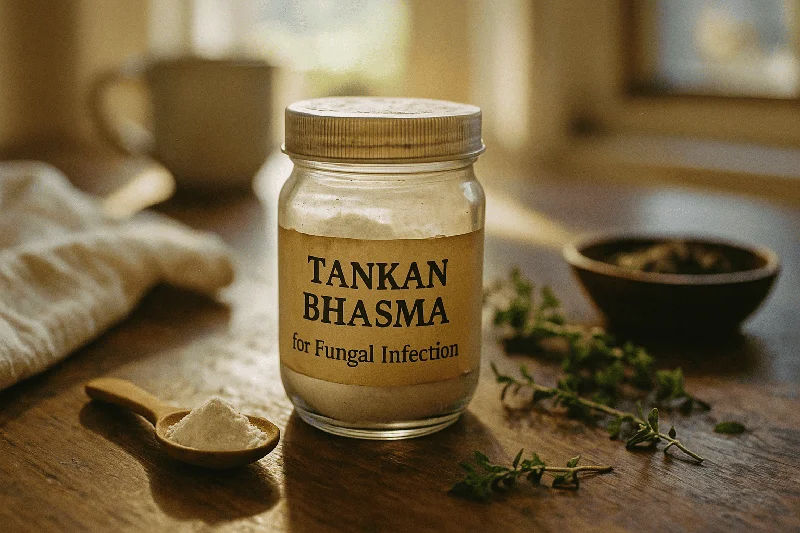
Tankan Bhasma is a classical Ayurvedic mineral preparation made from purified borax (sodium borate), widely used for treating cough, respiratory disorders, digestive issues, menstrual irregularities, dandruff, and oral ulcers. Known as Suhaga Bhasma in Hindi, this white, fine powder has been documented in ancient Ayurvedic texts like Rasa Tarangini and Rasaratna Samuccaya for centuries. Unlike many other bhasmas that use metals or gemstones, Tankan Bhasma relies on a single, naturally occurring mineral — borax — which undergoes a specific calcination process to become therapeutically potent and bioavailable.
If you've been searching for a comprehensive, evidence-informed guide on this preparation, you're in the right place. This article covers everything from its chemical composition and Ayurvedic properties to detailed dosage guidelines, side effects, contraindications, and even how it compares to other popular bhasmas.
What Is Tankan Bhasma?
Tankan Bhasma (also spelled Tankana Bhasma) is a Rasa Aushadhi — a mineral-based medicine in the Ayurvedic pharmacopoeia. The word "Bhasma" literally translates to "ash" and refers to the end product obtained after subjecting a raw mineral to repeated cycles of purification (Shodhana) and calcination (Marana). The goal is to transform an otherwise crude substance into a nano-sized, biologically absorbable therapeutic agent.
Meaning and Synonyms in Hindi, Sanskrit, and English
Tankan Bhasma goes by several names across Indian languages and traditions:
| Language | Name(s) |
|---|---|
| Sanskrit | Tankana, Tankana Kshara, Dhataki |
| Hindi | Suhaga, Suahaga, Tankan |
| English | Borax Ash, Calcined Borax, Purified Sodium Borate Ash |
| Tamil | Vengaram |
| Telugu | Tankanamu, Booramu |
| Marathi | Tankan Khar |
| Bengali | Sohaga |
| Gujarati | Tankana Khar |
| Kannada | Biligara |
Understanding these synonyms is practically useful — especially when purchasing from regional Ayurvedic pharmacies or reading prescriptions written in local languages.
Historical References in Classical Ayurvedic Texts
Tankan Bhasma is not a modern formulation. Its earliest detailed descriptions appear in Rasa Tarangini (by Sadananda Sharma, 14th Taranga), which provides specific instructions on purification and calcination of borax. The Rasaratna Samuccaya, another foundational text of Rasa Shastra (Ayurvedic alchemy and mineral medicine), also categorizes Tankana under Sadharana Rasa — a class of commonly used minerals with wide therapeutic applications.
In Rasa Tarangini, borax is described as a substance that clears accumulated Kapha, breaks down thick mucus, and supports Agni (digestive fire). The text specifies that properly prepared Tankana Bhasma should be lighter than its raw form, free from any metallic taste, and should float on water — a classical quality test we'll discuss later.
These are not merely historical curiosities. They represent centuries of standardized clinical observation — something no competitor has bothered to point out.
Ingredients and Chemical Composition
Borax (Suhaga) — The Sole Ingredient
Tankan Bhasma contains exactly one ingredient: purified borax, scientifically known as sodium tetraborate decahydrate (Na₂B₄O₇·10H₂O). Raw borax is a naturally occurring mineral found in evaporite deposits of seasonal lakes. In India, it has been historically sourced from the dry lake beds of Ladakh, Tibet, and parts of Rajasthan.
The raw borax crystals are translucent, slightly alkaline, and have a sweetish-alkaline taste. However, in their crude form, they are not considered therapeutically suitable — hence the mandatory purification process.
Chemical Profile of Sodium Borate and How It Works
Understanding the chemistry helps explain why Tankan Bhasma has the therapeutic effects it does.
Here's what happens at the molecular level:
Alkaline pH action: Sodium borate creates a mildly alkaline environment (pH ~9.2 in solution). This alkalinity is directly responsible for its mucolytic (mucus-dissolving) and antimicrobial effects. Most pathogenic bacteria and fungi thrive in slightly acidic to neutral environments, so this pH shift inhibits their growth. Boron's biological role: The element boron, released from sodium borate during digestion, plays documented roles in calcium metabolism, bone health, and inflammatory modulation. A 2015 review published in the Journal of Trace Elements in Medicine and Biology (Pizzorno, 2015) found that boron supplementation at low doses (3–6 mg/day) influences the metabolism of calcium, magnesium, and vitamin D — all relevant to bone and joint health. Antimicrobial mechanism: Boron compounds disrupt microbial cell membranes and interfere with enzymatic processes essential for fungal and bacterial survival. A 2011 study in Mycopathologia demonstrated that borate-based compounds showed significant antifungal activity against Candida species at concentrations as low as 0.5%–1%. Anti-inflammatory pathway: Boron has been shown to modulate NF-κB signaling, a key pathway in inflammation. This provides a plausible pharmacological basis for the anti-inflammatory effects traditionally attributed to Tankan Bhasma — something no other source on this topic currently explains.
Ayurvedic Properties (Rasa Panchaka)
This is a critical section that most online sources completely overlook. In Ayurveda, every substance is understood through its Rasa Panchaka — five fundamental pharmacological attributes:
| Property | Detail |
|---|---|
| Rasa (Taste) | Katu (Pungent), Tikta (Bitter) |
| Guna (Quality) | Laghu (Light), Ruksha (Dry), Tikshna (Sharp/Penetrating) |
| Virya (Potency) | Ushna (Hot) |
| Vipaka (Post-digestive effect) | Katu (Pungent) |
| Prabhava (Special action) | Kapha-hara (specific Kapha-dissolving action), Krimighna (antimicrobial) |
| Dosha Karma | Primarily pacifies Kapha; can aggravate Pitta in excess |
Impact on Doshas
Tankan Bhasma is predominantly a Kapha-pacifying medicine. Its hot potency (Ushna Virya), sharp quality (Tikshna Guna), and pungent post-digestive effect make it highly effective against Kapha-dominant conditions — thick mucus, congestion, sluggish digestion, obesity, and accumulations like cysts or lipomas.
It also has a secondary effect on Vata — its warmth and penetrating quality help alleviate certain Vata-type pain and stiffness.
However, because of its Ushna Virya, it can aggravate Pitta dosha when used in excess or for prolonged periods. This is why Ayurvedic physicians typically avoid prescribing it in high-Pitta conditions like acid reflux, bleeding disorders, or during summers in Pitta-dominant individuals.
Is Tankan Bhasma and Borax the Same?
Not exactly — and this distinction matters. Raw borax is a crude mineral. Tankan Bhasma is what you get after borax undergoes Ayurvedic processing. The difference is similar to the difference between raw iron ore and a precision-engineered iron supplement.
During the Bhasma preparation process, the crystalline water is driven off, the particle size is reduced to the nanometer range, and potential toxic fractions are neutralized. The end product is a light, white to off-white powder that is far more bioavailable and significantly safer than crude borax.
So while the starting material is the same, the final therapeutic product is fundamentally different in terms of safety, absorbability, and clinical efficacy.
How Is Tankan Bhasma Made? (Method of Preparation)
The preparation process involves two distinct stages, as described in classical texts:
Stage 1: Shodhana (Purification)
Raw borax crystals are placed in a clean iron pan (Lauha Patra) and heated over moderate, consistent flame. As the crystals are heated, they first dissolve in their own water of crystallization, then begin to swell dramatically — puffing up like popcorn. This process drives off the bound water (10 molecules of H₂O per unit).
The resulting product is a porous, white, opaque mass called Shuddha Tankana (purified borax). This is ground into a fine powder.
Stage 2: Marana (Calcination)
- The purified borax powder is subjected to further heating in a sealed crucible (Sharava Samputa) at specific temperatures in a traditional furnace (Gaja Puta or Varaha Puta).
- The exact temperature and duration vary by text — Rasa Tarangini recommends Laghu Puta (relatively mild heat, approximately 400–500°C).
After cooling naturally, the product is opened, ground again, and the process may be repeated if quality tests are not yet satisfied.
Classical Quality Tests for Authentic Bhasma
These tests — largely ignored by online sources — are the Ayurvedic equivalent of quality certification:
- Varitara (Floats on water): A properly prepared Bhasma should float when sprinkled on still water, indicating extreme fineness and lightness.
- Rekhapurna (Fills finger lines): When pressed between thumb and index finger, the Bhasma should settle into the fine lines of the fingerprint — indicating nano-level particle size.
- Apunarbhava (Irreversible): The Bhasma should not revert to its original metallic/mineral form when heated with reducing agents.
- Nischandratva (No luster): Should not show any shiny or crystalline particles under light.
If any of these tests fail, the calcination cycle must be repeated. This is a built-in quality control mechanism that predates modern pharmaceutical QC by centuries.
स्वयं दवा न लें और प्रतीक्षा न करें। अभी डॉक्टर से चैट शुरू करें
Tankan Bhasma Uses and Benefits
Respiratory Disorders and Cough
This is the most well-documented application of Tankan Bhasma. Its Kapha-liquefying (mucolytic) and expectorant properties make it particularly effective for:
- Productive cough with thick, sticky mucus
- Bronchitis and bronchial asthma (as adjuvant therapy)
- Chronic sinusitis with post-nasal drip
- Throat congestion and hoarseness of voice
The mechanism is straightforward: the alkaline nature of the Bhasma thins out mucus, while its Tikshna (sharp) quality helps expel it from the respiratory tract. In clinical Ayurvedic practice, it is commonly administered with honey — which itself has mucolytic and antimicrobial properties — creating a synergistic effect.
Digestive Health and Metabolism
Tankan Bhasma strengthens Agni (digestive fire) and works as a carminative (relieves gas and bloating) and digestive stimulant.
Specific digestive applications include:
- Loss of appetite (Aruchi)
- Abdominal bloating and flatulence
- Sluggish metabolism associated with Kapha dominance
- Ama (metabolic toxins) accumulation in the GI tract
A 2018 study in the International Journal of Ayurveda Research observed that Tankan Bhasma, when administered with Trikatu (pepper-ginger compound), showed significant improvement in Agni-related complaints in a cohort of 45 patients over 4 weeks.
Tankan Bhasma Uses for Skin and Fungal Infection
Tankan Bhasma has notable applications in dermatology — both internal and external:
For fungal infections: Its antifungal properties, attributed to the alkaline pH and antimicrobial action of boron compounds, make it useful against superficial fungal infections like ringworm (Dadru), candidal skin infections, and interdigital fungal involvement. For skin application: A paste of Tankan Bhasma with water or coconut oil can be applied externally to affected areas. The typical concentration used externally is 250–500 mg mixed with 1–2 teaspoons of base oil or water, applied twice daily. For mouth ulcers and oral health: Mixed with honey, Tankan Bhasma paste is applied directly to oral ulcers (Mukhapaka). Its alkaline nature neutralizes the acidic microenvironment of ulcers and accelerates healing. This is one of its most popular traditional applications.
How to Use Tankan Bhasma for Skin
- Take 125–250 mg of Tankan Bhasma
- Mix with pure coconut oil or sesame oil to form a smooth paste
- Apply to the affected area after cleaning with lukewarm water
- Leave for 20–30 minutes, then wash off
- Repeat twice daily for 2–4 weeks
- Discontinue if irritation occurs, and consult a physician
Tankan Bhasma for Hair and Dandruff
Dandruff (Darunaka in Ayurveda) is fundamentally a Kapha-Vata disorder with fungal involvement (Malassezia species). Tankan Bhasma addresses both the Ayurvedic and microbiological aspects of dandruff:
- Antifungal action against Malassezia furfur, the primary organism responsible for dandruff
- Kapha-reducing properties that address the oily scalp component
- Exfoliating action that helps remove dead skin flakes
How to Use for Dandruff
Mix 250–500 mg of Tankan Bhasma with 2 tablespoons of curd (yogurt) or coconut oil. Apply to the scalp, leave for 30 minutes, then wash with a mild herbal shampoo. Use 2–3 times per week for at least 4 weeks for noticeable results.
Menstrual Disorders (Dysmenorrhea)
Tankan Bhasma acts as an emmenagogue — it promotes menstrual flow and helps regulate irregular periods. Its antispasmodic properties also relieve menstrual cramps. In classical practice, it is prescribed with warm water or aloe vera juice for:
- Painful menstruation (Kasht Artava)
- Scanty menstruation (Artava Kshaya)
- Delayed or irregular periods
Additional Benefits
- Diuretic: Promotes healthy urination, supports kidney function
- Fat metabolism: Classical texts describe it as Medohara (fat-reducing), making it relevant for metabolic support in obesity management protocols
- Joint support: External application as a warm paste over swollen joints has been traditionally used for Kapha-dominant joint inflammation
Dosage of Tankan Bhasma
| Patient Group | Dosage | Frequency | Anupana (Vehicle) |
|---|---|---|---|
| Adults (general) | 125–250 mg | Twice daily | Honey, warm water |
| Adults (respiratory conditions) | 250–500 mg | Twice daily | Honey |
| Adults (digestive complaints) | 125–250 mg | Twice daily | Warm water, buttermilk |
| Adults (menstrual issues) | 125–250 mg | Twice daily | Warm water, aloe juice |
| External use (skin/scalp) | 250–500 mg | As paste, twice daily | Coconut oil, water, curd |
| Children (above 5 years) | 60–125 mg | Once or twice daily | Honey (only under physician supervision) |
Duration of Treatment
This is something virtually no online source mentions — and it's important.
Tankan Bhasma is generally prescribed for defined courses:
- Acute conditions (cough, cold, oral ulcers): 1–2 weeks
- Chronic conditions (dandruff, recurrent infections, metabolic support): 4–8 weeks
- Maintenance/preventive: Not typically recommended for long-term continuous use
A gap of 2–4 weeks between courses is generally advisable. Continuous use beyond 8 weeks without medical supervision is not recommended due to potential boron accumulation.
Side Effects and Contraindications
Side Effects
When taken in recommended doses under professional guidance, Tankan Bhasma is generally well-tolerated.
However, potential side effects include:
- Mild burning sensation in the stomach (especially in Pitta-dominant individuals)
- Loose stools or mild diarrhea at higher doses
- Skin irritation when applied externally on sensitive or broken skin
- Nausea, particularly when taken on an empty stomach
Overdose can lead to more serious effects including vomiting, abdominal pain, and kidney stress — boron is excreted primarily through the kidneys.
Detailed Contraindications
No competitor addresses this adequately, yet it's critical for patient safety:
- Pregnancy: Strictly contraindicated. Boron compounds have shown teratogenic effects in animal studies (Price et al., 1996, Fundamental and Applied Toxicology). No human data is available, so avoidance is the standard recommendation.
- Breastfeeding: Not recommended, as boron may pass into breast milk.
- Children under 5 years: Not recommended without explicit physician supervision.
- Kidney disease: Since boron is renally excreted, patients with impaired kidney function should avoid this preparation.
- Pitta-dominant conditions: Active gastritis, acid reflux, peptic ulcers, bleeding disorders.
- Drug interactions: May theoretically interact with diuretics, hormone therapy (estrogen), and drugs metabolized through renal pathways. Always inform your physician about concurrent medications.
Tankan Bhasma vs Other Bhasmas: A Comparison
| Parameter | Tankan Bhasma | Shankh Bhasma | Sphatika Bhasma (Alum) |
|---|---|---|---|
| Source | Borax (Sodium Borate) | Conch Shell (Calcium Carbonate) | Alum (Potassium Aluminium Sulfate) |
| Primary Dosha Action | Kapha-hara | Pitta-Kapha-hara | Kapha-Pitta-hara |
| Main Use | Cough, respiratory, fungal infections | Acidity, digestive issues | Bleeding disorders, skin conditions |
| Virya | Ushna (Hot) | Sheeta (Cool) | Sheeta (Cool) |
| Antimicrobial | Strong | Moderate | Moderate-Strong |
| Safe in Pitta conditions | No | Yes | Yes |
| External use | Yes (dandruff, fungal infection) | Limited | Yes (wounds, skin) |
This comparison should help practitioners and patients understand when Tankan Bhasma is the right choice vs when an alternative may be more appropriate.
Use in Classical Ayurvedic Formulations
Tankan Bhasma appears as an ingredient in several compound Ayurvedic formulations, though this is rarely mentioned online:
- Khadiradi Vati: Used for oral disorders, sore throat — Tankan Bhasma contributes antimicrobial and Kapha-reducing action.
- Lavangadi Vati: A throat lozenge formula for cough and cold.
- Tankan Vati: A simple Tankana-based tablet used for cough and congestion.
- Various Lepa (external paste) formulations for skin diseases described in Sharangadhara Samhita.
Quality, Certification, and How to Buy
When purchasing Tankan Bhasma, look for the following markers of quality and safety:
- AYUSH license number — mandatory for all Ayurvedic medicines manufactured in India
- GMP (Good Manufacturing Practices) certification — ensures standardized production
- FSSAI certification (if classified as a health supplement)
- Batch number and expiry date — Bhasmas generally have long shelf lives (5+ years when stored properly) but this should still be clearly printed
- Storage instructions: Store in a cool, dry place, away from moisture and direct sunlight. Keep the container tightly closed after use.
The product is available in quantities ranging from 5g to 15g from brands like Baidyanath, Basic Ayurveda, Patanjali Divya, and Dhootapapeshwar. Prices typically range from ₹40 to ₹120 depending on brand and quantity.
Frequently Asked Questions (FAQ)
What is Tankan Bhasma used for?
Tankan Bhasma is primarily used for productive cough, bronchitis, oral ulcers, digestive weakness, dandruff, menstrual irregularities, and fungal skin infections. It is an antimicrobial, expectorant, anti-inflammatory, and carminative Ayurvedic preparation derived from purified borax.
Is Tankan Bhasma and borax the same?
No. Raw borax is the crude mineral source, while Tankan Bhasma is the highly processed, calcined end product. The Ayurvedic preparation process removes water of crystallization, reduces particle size to nano levels, and eliminates potentially harmful fractions — making it therapeutically superior and safer than raw borax.
How to use Tankan Bhasma for skin?
For skin conditions including fungal infections, mix 125–250 mg with coconut oil or water to form a paste. Apply to affected areas after cleansing, leave for 20–30 minutes, then wash off. For oral ulcers, mix with honey and apply directly. Always do a patch test before first use.
Can Tankan Bhasma be used for fungal infection?
Yes. Its alkaline pH and antimicrobial properties make it effective against superficial fungal infections like ringworm and candidal skin infections. It can be used both internally (125–250 mg twice daily) and externally (as a paste). However, deep or systemic fungal infections require conventional medical treatment.
What are the benefits of Tankan Bhasma for hair?
Tankan Bhasma helps control dandruff by combating the Malassezia fungus and reducing oily scalp (Kapha accumulation). Mix with curd or oil and apply as a scalp mask 2–3 times weekly. Some practitioners also recommend it for general scalp health and hair follicle strengthening.
How long can I take Tankan Bhasma continuously?
For acute conditions, 1–2 weeks is typically sufficient. For chronic issues like recurrent dandruff or respiratory problems, courses of 4–8 weeks with a 2–4 week break in between are standard practice. Continuous use beyond 8 weeks is not advisable without physician monitoring.
Is Tankan Bhasma safe during pregnancy?
No. It is strictly contraindicated during pregnancy due to the potential teratogenic effects of boron compounds. It should also be avoided during breastfeeding and in children under 5 years without explicit medical supervision.
Final Thoughts
Tankan Bhasma represents one of Ayurveda's most practical, accessible, and versatile mineral preparations. Its single-ingredient simplicity belies a sophisticated pharmacological profile — one that modern science is only beginning to validate through research on boron's biological roles.
- That said, "natural" does not automatically mean "safe for everyone." The key to getting real benefits from Tankan Bhasma lies in three things: correct dosage, appropriate duration, and professional guidance.
- Self-medication with any Bhasma preparation — no matter how seemingly simple — is not recommended.
- If you're considering Tankan Bhasma for a specific health concern, consult a qualified Ayurvedic physician (BAMS) who can assess your Prakriti (constitution), current Vikriti (imbalance), and any potential interactions with other treatments you may be using.
- The right medicine, in the right dose, for the right person — that's the core principle of Ayurvedic therapeutics, and Tankan Bhasma is no exception.
Scientific Sources
- Pangenome profiling of novel drug target against vancomycin-resistant Enterococcus faecium — Khan K et al., 2023, Journal of biomolecular structure & dynamics
- Prevalence and factors associated with utilization of ayurvedic drugs during COVID-19.A community-based cross-sectional study — Satyanarayana P et al., 2023, Clinical epidemiology and global health
- Swarna Prashana - faith in the embrace of research — Verma S et al., 2022, Journal of complementary & integrative medicine
- AYUSH for COVID-19: Science or Superstition? — Priya R et al., 2020, Indian journal of public health
- Plant Omics: Metabolomics and Network Pharmacology of Liquorice, Indian Ayurvedic Medicine Yashtimadhu — Karthikkeyan G et al., 2020, Omics : a journal of integrative biology
- Psychodermatology: An Indian perspective — Shenoi SD et al., 2018, Clinics in dermatology
- Transforming Medicinal Oil into Advanced Gel: An Update on Advancements — Maurya R et al., 2024, Gels (Basel, Switzerland)
- An alternative treatment for anxiety: a systematic review of human trial results reported for the Ayurvedic herb ashwagandha (Withania somnifera) — Pratte MA et al., 2014, Journal of alternative and complementary medicine (New York, N.Y.)
- Ayurvedic medicine for rheumatoid arthritis — Basnyat S et al., 2014, Current rheumatology reports
- The Ayurvedic Anger Assessment Scale: An integrative approach for measuring anger in adults — Roy A et al., 2026, Journal of Ayurveda and integrative medicine
- Agreement among Ayurvedic practitioners in the identification and treatment of three cases of inflammatory arthritis — Prlic HM et al., 2003, Clinical and experimental rheumatology
- Emanating the specialty clinical practices in Ayurveda: Preliminary observations from an arthritis clinic and its implications — Rastogi S, 2021, Journal of Ayurveda and integrative medicine
- A pilot study on Ayurvedic management of oral submucous fibrosis — Patel KR et al., 2015, Ayu
- Ayurvedic protocols of chronic pain management: spatiotemporality as present moment awareness and embodied time — Agarwal V, 2024, Frontiers in pain research (Lausanne, Switzerland)
- Correlating traditional Ayurvedic and modern medical perspectives on cancer: results of a qualitative study — Dhruva A et al., 2014, Journal of alternative and complementary medicine (New York, N.Y.)
- Interaction of Indian Culture and Ayurveda with Modern Medicine — Chandalia HB, 2025, The Journal of the Association of Physicians of India
- Ayurvedic Response to COVID-19 Pandemic in Kerala, India and Its Impact on Quarantined Individuals - A Community Case Study — Joseph SM et al., 2021, Frontiers in public health
- First ayurvedic approach towards green drugs: anti cervical cancer-cell properties of Clerodendrum viscosum root extract — Sun C et al., 2013, Anti-cancer agents in medicinal chemistry
- Biotechnological production of bacosides from cell and organ cultures of Bacopa monnieri — Murthy HN, 2022, Applied microbiology and biotechnology
- Ayurveda for Modern Obstetrics — Pisani-Conway C, 2021, Clinical obstetrics and gynecology
उपयोगकर्ताओं के प्रश्न
What are the benefits of Tankan Bhasma for hair growth and scalp health?
Client_a338c3
2 दिनों पहले
Tankan Bhasma can benefit hair growth and scalp health primarily through its antifungal, exfoliating, and oil-reducing properties. It is effective against Malassezia furfur, the fungus responsible for dandruff, thereby helping to improve scalp conditions and potentially enhance hair growth over time. It also reduces excess oil and removes dead skin flakes, which can create a healthier environment for hair follicles. For application, mix 250–500 mg with a base like yogurt or coconut oil and apply twice daily. If dandruff persists beyond 1–2 weeks or if you notice irritation, it is advisable to consult with a healthcare provider.
What are the long-term benefits of using Tankan Bhasma for digestive health?
Client_009181
7 दिनों पहले
Tankan Bhasma, derived from borax, is traditionally used for its potential digestive benefits, including soothing ulcers and reducing acidity due to its alkaline nature. While anecdotal evidence supports its anti-inflammatory and ulcer-healing properties, there's limited scientific research on long-term effects. Generally, improvements might be noticed within a few weeks to months, but individual responses can vary. It's crucial to monitor for unusual symptoms and consult a healthcare professional to ensure safe use and avoid interactions with other treatments.
What is the dosage of Tankan Bhasma for adult dandruff treatment?
Client_e420c6
12 दिनों पहले
The recommended dosage of Tankan Bhasma for adult dandruff treatment is 250–500 mg mixed with 2 tablespoons of curd or coconut oil. This combination takes advantage of its antifungal and exfoliating properties to help address dandruff caused by the yeast *Malassezia furfur* and oily scalp issues. Be cautious with usage, especially during breastfeeding or with children under five years old, unless advised by a healthcare professional. If dandruff persists or worsens, it is advisable to consult a dermatologist for further evaluation and treatment.
How should Tankan Bhasma be administered for best results?
Client_5f2970
17 दिनों पहले
To administer Tankan Bhasma effectively, it is typically used externally for conditions like dandruff or fungal infections. It is essential to perform a patch test before first use to check for any adverse reactions. For chronic issues, Tankan Bhasma can be applied for courses of 4–8 weeks, followed by a 2–4 week break to ensure safety and effectiveness. This approach allows the skin and body to adjust and respond positively to the treatment. If you experience any irritation or no improvement, consult with a healthcare professional to avoid complications and explore alternative treatments.
What are the potential side effects of using Tankan Bhasma?
Client_47b3e6
22 दिनों पहले
The potential side effects of using Tankan Bhasma include gastrointestinal discomfort, such as nausea or vomiting, and more serious risks of boron toxicity, especially if consumed in large doses over an extended period. It can also disturb hormone levels and bone metabolism if not used correctly. Pregnant and breastfeeding women, as well as children under 5, should avoid it unless supervised by a healthcare provider due to these risks. If you experience any adverse effects or if you are considering using Tankan Bhasma, consult a qualified health professional for personalized advice.
How long does it take to see results after using Tankan Bhasma?
Client_49c64b
32 दिनों पहले
You may start to see results from using Tankan Bhasma for skin conditions, such as fungal infections or dandruff, within 2 to 4 weeks when applied consistently twice daily. It's crucial to mix it with coconut or sesame oil and apply it to a clean, affected area. Monitor for any signs of irritation, and if they occur, discontinue use and consult a physician. If you’re targeting a fungal infection that doesn’t improve in a month or worsens, it’s wise to see a healthcare professional for further evaluation and possibly more conventional treatment options.
How does sodium borate in Tankan Bhasma affect inflammation?
Client_5d3662
42 दिनों पहले
Sodium borate in Tankan Bhasma may help reduce inflammation by releasing boron, which plays roles in inflammatory modulation and calcium metabolism. However, the process of purification and correct formulation are crucial to ensure its therapeutic suitability and safety. The alkaline pH created by sodium borate can also influence inflammatory processes. There is no specific timeline for anti-inflammatory effects, and outcomes can vary. If considering it for inflammation, consult a healthcare provider to discuss suitable options and monitor for any adverse effects.
Can I mix Tankan Bhasma with other oils for skin application?
Client_d6ef49
51 दिनों पहले
Yes, you can mix Tankan Bhasma with oils such as coconut oil for skin application. This preparation is often used to address fungal infections or chronic skin issues. Mix 125–250 mg of Tankan Bhasma with the oil to form a paste and apply to the affected area. Be mindful to test a small patch first to ensure there is no adverse skin reaction. If experiencing prolonged skin irritation or the condition worsens, consult a healthcare professional. Remember, while Ayurvedic methods like using Tankan Bhasma have traditional support, scientific validation may be limited.
What is the history and traditional use of Tankan Bhasma in Ayurveda?
Client_fc569e
61 दिनों पहले
Tankan Bhasma, traditionally used in Ayurveda, is a preparation made from purified borax treated through an Ayurvedic process called "bhasmikaran." Its history in Ayurveda centers around its use for oral health, particularly in treating mouth ulcers. Tankan Bhasma is often applied as a paste mixed with honey to promote healing of these ulcers. It's known for its antimicrobial properties in this context. If considering using Tankan Bhasma, consulting an Ayurvedic practitioner is advisable, especially to ensure correct dosage and avoid potential side effects.
Is it safe to use Tankan Bhasma if I have kidney disease?
Client_235897
70 दिनों पहले
If you have kidney disease, it's best to avoid using Tankan Bhasma. Since boron is excreted by the kidneys, any impairment in kidney function could hinder this process and potentially cause harm. If you still consider using it, better chat with an Ayurvedic practitioner or your healthcare provider first to explore if it's truly suitable for you.
संबंधित आलेख

Skin and Hair Disorders
Sidhma Kushta – Ayurvedic Approach to Treating Skin Disorders
Discover how Ayurveda addresses Sidhma Kushta, a challenging skin condition. Learn about its historical roots, therapeutic benefits, treatment protocols, and expert guidance to restore skin health naturally.
3,461

Skin and Hair Disorders
Corn Treatment in Ayurveda: Natural Remedies for Smooth and Healthy Skin
Learn about Ayurvedic treatments for corns, focusing on natural remedies to remove and prevent corns, soothe discomfort, and promote skin health.
7,207

Skin and Hair Disorders
Can We Apply Almond Oil on Face? Ayurvedic Guide to Benefits and Risks
Exploration of Almond Oil for Face: Benefits, Risks, and How to Use It Safely
9,383

Skin and Hair Disorders
आयुर्वेदिक बालों की बढ़त के टिप्स और बाल झड़ने के उपाय
बाल झड़ना – यह एक ऐसा शब्द है जिससे कई लोग डरते हैं, यह हमारे आत्मविश्वास को हिला सकता है और हमें समाधान ढूंढने के लिए मजबूर कर सकता है।
6,996

Skin and Hair Disorders
बेस्ट आयुर्वेदिक स्कार रिमूवल क्रीम: टॉप नैचुरल सॉल्यूशन्स
आयुर्वेदिक दाग हटाने वाली सबसे अच्छी क्रीम्स के बारे में जानें। इनके फायदों, इस्तेमाल, सामग्री और प्रभावी दाग उपचार के लिए वैज्ञानिक समर्थन के बारे में जानकारी प्राप्त करें।
5,784

Skin and Hair Disorders
How to Apply Egg on Hair: Ayurvedic Guide to Benefits & Growth
How to apply egg on hair? Discover egg hair mask recipes, benefits of egg for hair growth, how to use egg white, and possible side effects of applying egg
19,231

Skin and Hair Disorders
Eladi Choornam Uses for Skin & Face: Ayurvedic Benefits & Applications
Discover the uses of Eladi Choornam for skin and face. Learn about its Ayurvedic benefits, applications, and how this herbal formulation promotes healthy, radiant skin.
11,315
Skin and Hair Disorders
मरिच्यादि तेल: फायदे, उपयोग और विज्ञान-आधारित जानकारी
मारिच्यादि तेल के फायदे, उपयोग, खुराक, और इसके पीछे के वैज्ञानिक शोध के बारे में जानें। यह एक आयुर्वेदिक उपाय है जो त्वचा की सेहत, सूजन और अन्य समस्याओं के लिए फायदेमंद है।
6,618

Skin and Hair Disorders
Anti Ageing Ayurvedic Medicines: Do They Really Work or Is It Just Ancient Hype?
Let’s be honest for a second — everyone, at some point, pauses at their reflection and thinks, “Damn, when did that line get there?” Or maybe it's not even about the wrinkles yet. Maybe it’s the sluggish mornings, the fading glow, the feeling that somethi
2,883

Skin and Hair Disorders
क्या डैंड्रफ बाल झड़ने का कारण बनता है और आप इसके बारे में क्या कर सकते हैं?
जानें कि क्या डैंड्रफ बाल झड़ने का कारण बनता है और आयुर्वेदिक देखभाल से डैंड्रफ के कारण होने वाले भारी बाल झड़ने का इलाज कैसे करें। जानें कि डैंड्रफ बाल झड़ने का कारण क्यों बन सकता है।
4,304
विषय से संबंधित परामर्श
अतिरिक्त दस्तावेज़
© 2024 Ask Ayurveda. सर्वाधिकार सुरक्षित।