आयुर्वेदिक डॉक्टर से प्रश्न पूछें और निःशुल्क या भुगतान मोड में अपनी चिंता की समस्या पर ऑनलाइन परामर्श प्राप्त करें। 2,000 से अधिक अनुभवी डॉक्टर हमारी साइट पर काम करते हैं और आपके प्रश्नों का इंतजार करते हैं और उपयोगकर्ताओं को उनकी स्वास्थ्य समस्याओं को हल करने में प्रतिदिन मदद करते हैं।
मुफ्त! आयुर्वेदिक डॉक्टरों से पूछें 24/7

 तेज़ प्रतिक्रियाएँ
 1000+ सत्यापित डॉक्टर
Body DetoxEar, Nose, and Throat DisordersGeriatrics & RejuvenationImmunodeficiencyInfertility TreatmentNutritionOrthopedic DisordersPediatricsRespiratory DisordersSexually Transmitted Diseases (STDs)Surgery RecoveryUrological DisordersVascular DisordersDental DisordersEndocrinological DisordersGastrointestinal DisordersYoga TherapyGeneral MedicineAllergic DisordersCardio DisordersGynecology and ObstetricsCosmetologySkin and Hair DisordersEye DisordersInfectious DiseasesMental DisordersNeurological DisordersOncologyPanchakarmaSexual Health & DisordersSports Medicine
पर प्रकाशित 02/25/25
(को अपडेट 06/26/26)
3,915
Ayurvedic Medicine for Breast Lump – Natural Approaches for Support & Healing
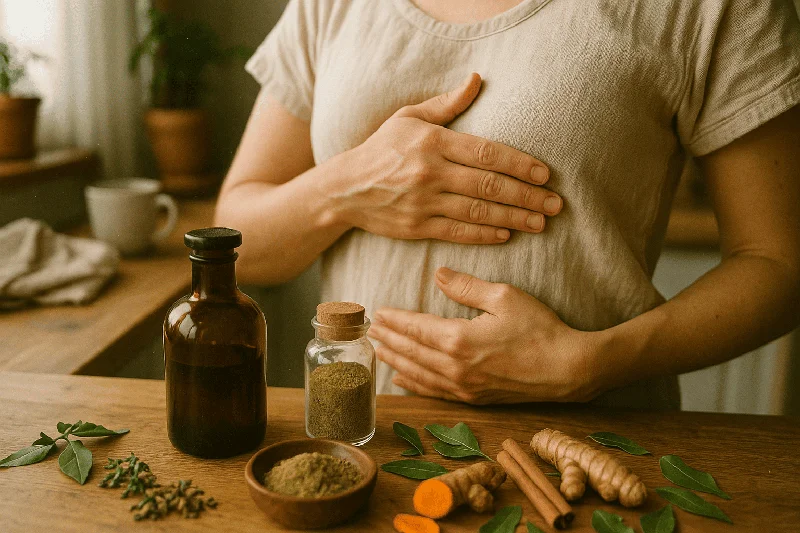
- Discovering a lump in your breast can be deeply unsettling.
- The good news?
- Most breast lumps — roughly 80–85% — are benign, and Ayurvedic medicine offers time-tested, holistic strategies to address them without surgery. Ayurvedic medicine for breast lump works by correcting the underlying dosha imbalances (primarily Kapha and Pitta), clearing accumulated toxins (Ama), and restoring healthy tissue metabolism through herbal formulations, Panchakarma therapies, dietary shifts, and lifestyle modifications.
This guide goes beyond generic advice. Below you'll find specific herbs with dosage ranges, a week-by-week home protocol, a comparison with conventional treatment, differentiation by lump type, red flags that demand immediate medical attention, and references to actual research — everything the other guides out there are missing.
> Medical Disclaimer: Ayurvedic treatment for breast lumps is most appropriate for benign conditions such as fibroadenomas, simple cysts, and fibrocystic changes. Any new breast lump must first be evaluated by a qualified physician with imaging (ultrasound/mammography) to rule out malignancy before beginning Ayurvedic therapy.
What Are Breast Lumps According to Ayurveda?
In classical Ayurvedic texts, breast lumps are described under the term "Granthi" (गण्ठि) — meaning a knotty, encapsulated swelling in the body's deeper tissues. The breast-specific variant is sometimes referred to as "Stana Granthi" in texts like Sushruta Samhita. Understanding this concept is key because Ayurveda doesn't just treat the lump itself — it treats the systemic conditions that allowed the lump to form.
The Role of Doshas in Breast Lump Formation
Ayurveda identifies three primary doshas — Vata, Pitta, and Kapha — and breast lumps typically involve all three, though Kapha dosha is the dominant culprit.
Here's how each dosha contributes:
- - Kapha (primary): Excess Kapha causes accumulation, heaviness, and stagnation in the mammary tissue.
- This manifests as dense, slow-growing, painless lumps — think fibroadenomas and cysts filled with thick fluid.
- Pitta (secondary): When Pitta is involved, there's inflammation, tenderness, and sometimes infection. Painful, warm lumps with redness often indicate Pitta aggravation.
- Vata (modifying): Vata governs movement. When Vata is disturbed, it can push aggravated Kapha into breast tissue channels (Stana Srotas), cause irregular lump shapes, and contribute to cyclical breast pain.
How Ama (Toxins) and Poor Digestion Create Lumps
One concept that sets Ayurvedic understanding apart is Ama — the toxic metabolic waste produced when digestion (Agni) is weak. When Agni is sluggish, partially digested food creates Ama, which circulates through the body and deposits in vulnerable tissues.
In women with hormonal fluctuations, breast tissue becomes especially susceptible to Ama deposition. The Ama combines with aggravated Kapha, blocking the microchannels (Srotamsi) of the breast, and over time this stagnation solidifies into a palpable lump.
This is also why Ayurveda recognizes an emotional component. Chronic stress, suppressed grief, or emotional stagnation can impair Agni and disturb Vata, creating the conditions for physical lumps. It's a mind-body connection that modern psychoneuroimmunology is only beginning to explore.
Types of Breast Lumps and Their Dosha Profiles
| Lump Type | Dominant Dosha | Characteristics | Ayurvedic Priority |
|---|---|---|---|
| Fibroadenoma | Kapha-Vata | Firm, mobile, painless, well-defined | Kapha reduction + channel clearing |
| Simple Cyst | Kapha-Pitta | Fluid-filled, tender before menses | Kapha drainage + Pitta cooling |
| Fibrocystic Changes | Kapha-Pitta-Vata (Tridoshic) | Multiple lumpy areas, cyclical pain | Tridosha balancing + Ama detox |
| Lipoma | Kapha-Medas (fat tissue) | Soft, movable, painless | Medas (fat) metabolism correction |
| Fat Necrosis | Pitta-Kapha | Post-trauma firm lump, may be tender | Pitta pacification + tissue repair |
This differentiation matters because — as we'll see below — the herbal protocol changes based on lump type. A fibroadenoma needs a different approach than a simple cyst.
Best Ayurvedic Medicines and Herbs for Breast Lump
Several classical formulations and individual herbs have demonstrated efficacy in managing breast lumps. Let me walk you through the most important ones, including research-backed evidence where available.
Kanchanar Guggulu — The Gold Standard
Kanchanar Guggulu is arguably the single most important Ayurvedic formulation for Granthi (lumps and tumors) of any kind. It combines the bark of Bauhinia variegata (Kanchanar) with purified guggul resin and a blend of trikatu spices. How it works: Kanchanar has significant anti-proliferative and anti-inflammatory properties. A study published in the Journal of Ayurveda and Integrative Medicine Sciences (JAIMS, 2022) documented the successful management of Stana Granthi (breast fibroadenoma) using Kanchanar Guggulu as the primary internal medicine, with mammographic evidence of lump reduction after 3 months of treatment. General dosage range: 2 tablets (500 mg each) twice daily with warm water, after meals. Treatment duration typically ranges from 2–4 months, sometimes longer for larger fibroadenomas.
Turmeric (Curcuma longa) and Curcumin
Turmeric isn't just a kitchen spice — it's a potent anti-inflammatory and anti-tumor agent. The active compound curcumin has been extensively studied. A 2015 meta-analysis published in Molecular Nutrition & Food Research showed that curcumin inhibits NF-κB signaling pathway, which plays a key role in inflammation and abnormal cell growth in breast tissue.
Dosage range: 500–1000 mg of standardized curcumin extract daily, or 1 teaspoon turmeric powder with black pepper (piperine enhances absorption by up to 2000%, per a Planta Medica study) in warm milk.
Triphala — The Detoxifier
Triphala (a combination of Amalaki, Haritaki, and Bibhitaki) serves dual purpose: it clears Ama from the digestive tract and has demonstrated anticancer properties. Research published in the Journal of Cancer Research and Therapeutics (2014) found that Triphala extract showed cytotoxic activity against breast cancer cell lines (MCF-7) in vitro.
For benign lumps, Triphala's primary role is gentle detoxification and improving Agni.
Dosage range: 1–2 teaspoons of Triphala powder in warm water at bedtime, or 2 tablets (500 mg) before sleep.
Manjistha (Rubia cordifolia) — The Lymphatic Cleanser
Manjistha is perhaps the most important herb for the lymphatic system in Ayurveda. Since breast tissue is richly supplied by lymphatic channels, Manjistha helps clear stagnant lymph, reduce Pitta-related inflammation, and purify blood (Rakta Dhatu).
Dosage: 500 mg capsule twice daily, or ½ teaspoon powder with honey.
Ashwagandha (Withania somnifera) — Hormonal Balancer
Ashwagandha addresses the hormonal axis by modulating cortisol and supporting healthy estrogen metabolism. A 2019 study in Cureus journal demonstrated that Ashwagandha root extract improved hormonal markers in women experiencing stress-related endocrine imbalances.
Dosage: 300–600 mg of standardized root extract daily.
Other Important Herbs
| Herb | Primary Action | Best For |
|---|---|---|
| Guggulu (Commiphora mukul) | Anti-inflammatory, scrapes Kapha | All types of Granthi |
| Varuna (Crataeva nurvala) | Channel-clearing, cyst reduction | Cystic lumps |
| Punarnava (Boerhavia diffusa) | Diuretic, reduces fluid accumulation | Fluid-filled cysts |
| Shatavari (Asparagus racemosus) | Hormonal support, tissue nourishment | Fibrocystic changes in perimenopause |
| Guduchi (Tinospora cordifolia) | Immunomodulator, Ama detox | All types with low immunity |
Panchakarma Therapies for Breast Lump Treatment
Panchakarma — Ayurveda's five-fold detoxification system — provides deeper, more systematic treatment that oral medicines alone cannot achieve. These therapies should be performed under a qualified Panchakarma practitioner's supervision.
Abhyanga (Therapeutic Oil Massage)
Warm medicated oil massage, particularly around the chest and axillary (armpit) region, stimulates lymphatic drainage and breaks up Kapha stagnation.
Oils commonly used include:
- Ksheerabala Taila — for Vata-Pitta type lumps with pain
- Mahanarayan Taila — for general tissue nourishment
- Warm sesame oil infused with turmeric — simple and effective for home use
Self-massage technique: Using warm oil, massage in gentle circular motions from the periphery of the breast toward the armpit (direction of lymphatic flow). Do this for 10–15 minutes before a warm shower, 4–5 times per week.
Swedana (Herbal Steam Therapy)
Following Abhyanga, localized steam therapy using herbs like Dashamoola (ten roots) helps soften hardened tissue, open blocked channels and improve circulation to the area.
Vamana and Virechana (Therapeutic Purification)
- Vamana (therapeutic emesis) — specifically indicated for Kapha-dominant conditions. This powerfully removes excess Kapha from the upper body, including breast tissue.
- Virechana (therapeutic purgation) — removes Pitta and clears hepatic pathways involved in estrogen metabolism. Often recommended for Pitta-Kapha type lumps with inflammation.
External Applications (Lepa)
Herbal pastes applied directly over the lump can facilitate local resolution. Here's a practical recipe that Ayurvedic practitioners commonly recommend:
Kanchanar-Turmeric Lepa:
- 2 tablespoons Kanchanar bark powder
- 1 tablespoon turmeric powder
- ½ tablespoon Triphala powder
- Mix with warm water or aloe vera gel to form a thick paste
- Apply over the lump area, leave for 30–40 minutes
- Wash off with lukewarm water
- Repeat daily for at least 6–8 weeks

Step-by-Step Home Treatment Protocol
No other guide provides a structured weekly protocol. Here's a practical plan you can follow at home alongside your prescribed Ayurvedic medications.
Weeks 1–2: Detox and Digestion Reset
Focus: Clear Ama, strengthen Agni
- Start Triphala at bedtime (1 tsp with warm water)
- Drink warm ginger-turmeric water first thing every morning (½ inch fresh ginger + ¼ tsp turmeric + pinch of black pepper)
- Eliminate: processed foods, refined sugar, excess dairy, caffeine, alcohol
- Eat light, warm, cooked meals with digestive spices (cumin, coriander, fennel)
- Begin daily self-Abhyanga with warm sesame oil (even 10 minutes helps)
Weeks 3–6: Active Treatment Phase
Focus: Address the lump directly
- Add Kanchanar Guggulu — 2 tablets twice daily after meals
- Add Manjistha — 1 capsule twice daily
- Begin daily Lepa application over the lump (Kanchanar-Turmeric paste)
- Start yoga poses (detailed in lifestyle section below)
- Continue Triphala, ginger-turmeric water, and dietary modifications
Weeks 7–12: Sustained Healing
Focus: Consolidate results, prevent recurrence
- Continue Kanchanar Guggulu and Manjistha
- Add Ashwagandha (300 mg daily) if stress/hormonal component is present
- Add curcumin supplement (500 mg standardized extract daily)
- Get follow-up ultrasound at the end of week 12 to assess lump size objectively
- Adjust protocol based on results — some fibroadenomas may take 4–6 months
Month 4 and Beyond: Maintenance
- Continue Kanchanar Guggulu at reduced dose (1 tablet twice daily)
- Continue dietary and lifestyle practices
- Monthly breast self-examination
- Repeat imaging every 3–6 months as recommended by your doctor
Ayurveda vs Conventional Treatment: A Practical Comparison
| Parameter | Conventional Medicine | Ayurvedic Treatment |
|---|---|---|
| Diagnosis | Ultrasound, mammography, biopsy | Same — Ayurveda does not replace diagnostic imaging |
| Approach for small, benign lumps | "Watch and wait" / observation | Active treatment with herbs + diet + Panchakarma |
| For simple cysts | Aspiration (needle drainage) | Internal herbs + Lepa; some cysts resolve without drainage |
| For fibroadenomas > 2 cm | Surgical excision | Kanchanar Guggulu + Panchakarma (may take 3–6 months) |
| For fibrocystic changes | Pain management, hormonal therapy | Dosha balancing, Ama detox, dietary correction |
| Recurrence prevention | Limited strategies | Strong emphasis on diet, lifestyle, dosha balance |
| Side effects | Surgical scarring, hormonal side effects | Minimal when prescribed correctly by qualified practitioner |
| Best used | Emergencies, large lumps, malignancy | Benign lumps, prevention, post-surgical recovery |
The ideal approach? Integrative. Use modern diagnostics for accurate assessment, Ayurvedic medicine for treatment and prevention, and conventional intervention when medically necessary.
Diet and Lifestyle for Breast Lump Management
Dietary Guidelines by Lump Type
For Kapha-dominant lumps (fibroadenomas, lipomas):
- Favor light, warm, dry, spicy foods
- Use generous amounts of turmeric, ginger, black pepper, cumin, fenugreek
- Avoid heavy, cold, oily foods — cheese, ice cream, fried items, excess wheat
- Reduce sweet taste; favor bitter and astringent tastes
- Drink warm water throughout the day (not cold or iced)
For Pitta-involved lumps (inflamed cysts, tender lumps):
- Include cooling herbs: coriander, fennel, mint
- Avoid excessively spicy, sour, and fermented foods
- Include bitter greens (kale, dandelion, bitter gourd)
- Coconut water and aloe vera juice are helpful
For hormonal imbalance-related lumps:
- Cruciferous vegetables (broccoli, cauliflower, cabbage) — support estrogen metabolism
- Ground flaxseeds — 1 tablespoon daily (contains lignans that modulate estrogen)
- Reduce exposure to xenoestrogens: avoid plastic containers, switch to glass or steel
Yoga Poses for Breast Health
Specific yoga asanas stimulate lymphatic flow through the chest and support hormonal balance:
- Bhujangasana (Cobra Pose): Opens the chest, stimulates thymus gland and lymphatic circulation
- Setu Bandhasana (Bridge Pose): Activates lymph nodes in the axillary region
- Matsyasana (Fish Pose): Deep chest opening, stretches breast tissue
- Dhanurasana (Bow Pose): Full front-body stretch, improves circulation
- Practice these for 15–20 minutes daily.
- Combine with Pranayama (breathing exercises) — especially Anulom Vilom (alternate nostril breathing) for stress reduction and Kapalabhati for Kapha reduction.
Stress Management and the Mind-Body Connection
Chronic emotional stress doesn't just "feel bad" — it physiologically impairs Agni, increases cortisol, disrupts estrogen-progesterone balance, and accelerates Ama production. Many Ayurvedic practitioners observe that women who develop breast lumps often carry unprocessed emotional burden — grief, anxiety, feelings of being "stuck."
Daily meditation (even 10 minutes), journaling, and adequate sleep (7–8 hours, going to bed before 10 PM) are not optional add-ons. They are core components of treatment.
स्वयं दवा न लें और प्रतीक्षा न करें। अभी डॉक्टर से चैट शुरू करें
When Ayurveda Cannot Help: Red Flags You Must Not Ignore
This section could save your life. Ayurvedic treatment is appropriate for benign breast conditions. But certain signs demand immediate evaluation by an oncologist or breast surgeon:
- Lump that is hard, immovable, and has irregular borders
- Rapid growth over weeks (not months)
- Skin changes: dimpling (peau d'orange), redness, thickening, or ulceration
- Nipple retraction or inversion (new onset)
- Bloody or spontaneous nipple discharge (not milky)
- Swollen lymph nodes in the armpit that are hard and painless
- Unexplained weight loss or bone pain
- Family history of breast/ovarian cancer (especially BRCA mutations)
If any of these are present, get a biopsy first. Ayurveda can complement conventional cancer treatment, but it should not replace it.
Age-Specific Ayurvedic Approaches for Breast Lumps
Different life stages involve different hormonal environments and dosha tendencies. Yet no other guide addresses this.
Women Aged 20–30 (Pitta-Kapha Phase)
Most common lump type: fibroadenoma. Kapha is naturally higher in youth, and Pitta governs this life stage.
- Primary herbs: Kanchanar Guggulu + Manjistha
- Focus: Dietary discipline, regular exercise, Kapha reduction
- Prognosis: Often excellent — fibroadenomas in young women frequently respond well to 3–4 months of treatment
Women Aged 35–45 (Pitta Dominant Phase)
Most common: fibrocystic changes, cysts. Hormonal fluctuations increase as perimenopause approaches.
- Primary herbs: Kanchanar Guggulu + Shatavari + Ashwagandha
- Focus: Hormonal balancing, stress management, liver support (Virechana)
- Additional: Monitor with ultrasound every 6 months
Women Aged 45+ and Postmenopause (Vata Phase)
New lumps in postmenopausal women require more caution since breast cancer risk increases.
- Primary rule: Every new lump must be evaluated with mammography and possible biopsy
- If benign: Kanchanar Guggulu + Guduchi + Ashwagandha
- Focus: Vata pacification, tissue nourishment, immune support
- Additional: Abhyanga with Bala Taila for tissue strength
Breast Lumps in Men: Ayurvedic Perspective on Gynecomastia
- Breast lumps aren't exclusive to women.
- Gynecomastia — the enlargement of male breast tissue — can present as a palpable lump or diffuse swelling, often due to hormonal imbalances (elevated estrogen or low testosterone), medications, liver dysfunction, or obesity.
In Ayurveda, male breast lumps are typically Kapha-Medas (fat tissue) disorders.
The treatment approach includes:
- Kanchanar Guggulu (same formulation, same dosage)
- Triphala Guggulu for metabolic correction
- Arogyavardhini Vati for liver support and fat metabolism
- Exercise focus: chest-targeting exercises + cardiovascular activity
- Dietary: strict Kapha-reducing diet, elimination of alcohol and estrogenic foods (excess soy, processed foods in plastic packaging)
Monitoring Treatment Success with Modern Diagnostics
One crucial gap in how Ayurvedic treatment is typically discussed: how do you objectively know it's working?
Don't rely solely on touch.
Use imaging:
- 1.Baseline ultrasound before starting treatment — document exact lump size, characteristics, and BIRADS score
- 2.Follow-up ultrasound at 3 months — compare measurements. A reduction of 20–30% in size is a good indicator
- 3.Repeat at 6 months — many benign lumps show significant resolution by this point
- 4.Annual mammography (for women 40+) — continues regardless of treatment
This integrative approach — Ayurvedic treatment with modern monitoring — gives you both the benefits of natural healing and the safety net of early detection.
Frequently Asked Questions
What medicine can cure breast lumps?
- For benign lumps, Kanchanar Guggulu is the most widely prescribed Ayurvedic formulation. Conventional medicine may use hormonal therapy or surgical excision.
- The "cure" depends on the type — simple cysts may resolve spontaneously or with herbs, while larger fibroadenomas may require extended treatment or surgery.
What can dissolve breast lumps naturally?
A combination of Kanchanar Guggulu (internal), turmeric-based lepa (external), daily Abhyanga with warm sesame oil, and an anti-Kapha diet can help dissolve benign lumps naturally. Clinical improvement typically begins after 6–8 weeks of consistent treatment, though complete resolution may take 3–6 months.
Which vitamin is good for breast lumps?
Vitamin E (400 IU daily) has shown benefits for fibrocystic breast changes in several clinical studies. Vitamin D deficiency is associated with increased breast lump risk — a 2018 study in Breast Cancer Research and Treatment found that women with serum Vitamin D below 20 ng/mL had higher rates of benign breast disease. Vitamin B6 may help with cyclical breast pain related to hormonal shifts.
Can Ayurvedic medicine cure lipoma?
Yes, lipomas (fatty lumps) respond to Ayurvedic treatment, though slowly. Kanchanar Guggulu combined with Triphala Guggulu and Medohar Guggulu targets Medas dhatu (fat tissue). A strict Kapha-reducing diet is essential. Treatment duration is typically 4–8 months for noticeable reduction in lipoma size.
How to cure breast lump naturally at home?
Follow the step-by-step protocol outlined above: start with a 2-week digestive reset (Triphala + ginger-turmeric water + dietary changes), then add Kanchanar Guggulu and daily lepa application from week 3. Combine with self-Abhyanga, yoga, and stress management. Always get proper diagnosis before beginning any home treatment.
What is the best Ayurvedic treatment for breast pain?
Breast pain (mastalgia) without a lump often responds to Shatavari (hormonal support), warm sesame oil Abhyanga, and Pitta-pacifying herbs like Chandanasava. For cyclical pain tied to menstruation, combining Dashmoolarishta with Ashokarishta often provides relief within 1–2 menstrual cycles.
Final Thoughts and Next Steps
- Ayurvedic medicine for breast lump isn't a fringe alternative — it's a sophisticated, time-tested system backed by growing scientific evidence.
- The key is using it wisely: get proper diagnosis first, choose the right herbs for your specific lump type and dosha profile, follow a structured protocol with discipline, and monitor your progress with modern imaging.
What to do right now:
- If you have a breast lump that hasn't been evaluated, schedule an ultrasound immediately
- Once confirmed benign, consult a qualified Ayurvedic practitioner (BAMS degree minimum) for a personalized protocol
- Begin the dietary and lifestyle changes today — they cost nothing and benefit everything
- Be patient.
- Natural healing takes time — commit to at least 3 months before evaluating results
The combination of Ayurvedic wisdom and modern diagnostic tools gives you the best of both worlds: nature's healing power with science's safety assurance. Your body has an extraordinary capacity to heal when given the right support.
Scientific Sources
- Ulcerative colitis: molecular insights and intervention therapy — Liang Y et al., 2024, Molecular biomedicine
- Turmeric and Curcumin: From Traditional to Modern Medicine — Akaberi M et al., 2021, Advances in experimental medicine and biology
- Curcumin (Turmeric) and cancer — Unlu A et al., 2016, Journal of B.U.ON. : official journal of the Balkan Union of Oncology
- The Essential Medicinal Chemistry of Curcumin — Nelson KM et al., 2017, Journal of medicinal chemistry
- Neuroprotective Herbs for the Management of Alzheimer's Disease — Gregory J et al., 2021, Biomolecules
- Can Ashwagandha Benefit the Endocrine System?-A Review — Wiciński M et al., 2023, International journal of molecular sciences
- Pharmacological evaluation of Ashwagandha highlighting its healthcare claims, safety, and toxicity aspects — Mandlik Ingawale DS et al., 2021, Journal of dietary supplements
- Clinician guidelines for the treatment of psychiatric disorders with nutraceuticals and phytoceuticals: The World Federation of Societies of Biological Psychiatry (WFSBP) and Canadian Network for Mood and Anxiety Treatments (CANMAT) Taskforce — Sarris J et al., 2022, The world journal of biological psychiatry : the official journal of the World Federation of Societies of Biological Psychiatry
- Effects of Withania somnifera (Ashwagandha) on Stress and the Stress- Related Neuropsychiatric Disorders Anxiety, Depression, and Insomnia — Speers AB et al., 2021, Current neuropharmacology
- Plant-derived nootropics and human cognition: A systematic review — Lorca C et al., 2023, Critical reviews in food science and nutrition
- A Systematic Review and Meta-Analysis of Ayurvedic Herbal Preparations for Hypercholesterolemia — Gyawali D et al., 2021, Medicina (Kaunas, Lithuania)
- Complementary and alternative medicine in the (symptomatic) treatment of acute tonsillitis in children: A systematic review — Büttner R et al., 2023, Complementary therapies in medicine
- Ankylosing spondylitis — Edavalath M, 2010, Journal of Ayurveda and integrative medicine
- A comparative study of Kaishora Guggulu and Amrita Guggulu in the management of Utthana Vatarakta — Ramachandran AP et al., 2010, Ayu
- Oral toxicity evaluation of gokshuradi guggulu, an ayurvedic formulation — Wanjari MM et al., 2022, Drug and chemical toxicology
उपयोगकर्ताओं के प्रश्न
Can I use Ayurvedic paste on breast lumps before seeing a doctor?
Aubrey
12 घंटे पहले
I wouldn't recommend using Ayurvedic paste on a breast lump before seeing a doctor. Any new lump should be checked out by a doctor with imaging to make sure it isn't something serious like cancer. Once it's evaluated and it's safe, then you can consider trying Ayurvedic remedies like herbal pastes, especially if it's a benign condition, to help with inflammation. Always good to keep touch with healthcare professionals!
What is Rasayana and how does it support breast tissue rejuvenation in Ayurveda?
Jayden
18 दिनों पहले
Rasayana is Ayurveda's way to rejuvenate and nourish tissues, including breast tissue. It focuses on balancing doshas and enhancing agni (digestive fire), promoting vitality and long-term tissue health. Herbs like Ashwagandha and Shatavari are often used. It's kind of about supporting both the body and mind in a holistic way, ya know?
What is the purpose of Panchakarma in Ayurvedic detoxification and rejuvenation therapies?
Lindsey
27 दिनों पहले
Panchakarma's main purpose is to cleanse the body by removing ama (toxins) and balancing the doshas. This process kickstarts both detoxification and rejuvenation, which helps improve agni (digestive fire) and supports tissue health. It's a kinda reset button for your body's natural healing and repair mechanisms! So if you have imbalances or are feeling sluggish, it can really help get things back on track.
What is the role of diet in Ayurvedic treatments for overall vitality and breast health?
Joseph
37 दिनों पहले
Diet plays a big role in Ayurvedic treatments! It's not just about food choice but balancing your doshas too. Eating sattvic foods like whole grains, fruits, and vegetables can boost vitality and breast health by supporting the doshas and agni. Remember, it's individual. It's often helpful to consult an Ayurvedic practitioner to tailor the diet plan to your unique constitution and needs.
What lifestyle adjustments can enhance the effectiveness of Ayurvedic rejuvenation therapies?
Alexander
47 दिनों पहले
Lifestyle adjustments to enhance Ayurvedic rejuvenation can include eating according to your dosha, regular exercise like yoga or walking, maintaining a consistent sleep schedule, and mindfulness practices like meditation. Keeping stress in check through these routines can support tissue repair and rejuvenation. A trusted Ayurvedic practitioner can guide you further!
Is it safe to use Ayurvedic detox methods before a breast health consultation?
Joshua
56 दिनों पहले
It's generally safe to use Ayurvedic detox methods, but it's really important to consider your unique body constitution and consult an Ayurvedic practitioner first. Detox methods can impact your doshas and digestive fire. Plus, speak with your healthcare professional to ensure it doesn’t interfere with your upcoming breast health consultation.
What is detoxification in Ayurveda and how does it benefit breast health?
Vada
66 दिनों पहले
In Ayurveda, detoxification is all about removing ama (toxins) from the body, and it helps balance the doshas. For breast health, detox can be beneficial because it cleanses the tissues, helping them function naturally and reducing toxin buildup. It often involves things like specific diets, herbs, and therapies like panchakarma.
Is it safe to combine Ayurvedic treatments with conventional breast health therapies?
Hunter
75 दिनों पहले
Combining Ayurvedic treatments with conventional therapies can be safe, but it's key to do so under guidance. Some herbs might interact with conventional meds. Always consult both your Ayurvedic practitioner and your conventional doctor to ensure both treatments work harmoniously. Everybody's unique, so personal advice is best!
Can I use turmeric and ashwagandha together for overall wellness?
Sebastian
85 दिनों पहले
Yes, you can definitely take turmeric and ashwagandha together! Turmeric is great for its anti-inflammatory and detox benefits while ashwagandha handles stress and helps balance your system. Together, they can support overall wellness by promoting harmony in your body. Just keep in mind your dosha type and how your body feels with them!
What are the key differences between Ayurvedic and conventional approaches to breast health?
Zachary
163 दिनों पहले
Ayurveda focuses on detoxing and balancing doshas to support tissue health, including breast health. It looks at root causes, using herbs and practices like Rasayana for rejuvenation and tissue integrity. In contrast, conventional medicine often focuses more directly on treating symptoms with surgery or meds, without that holistic view. Both have value, depends on the situation!
संबंधित आलेख
Gynecology and Obstetrics
Tips for Regular Periods: Real Talk with an Ayurvedic Twist
That’s where Ayurveda comes in. Not as a quick fix, but as this quietly powerful system that’s been around for, oh, a few thousand years? I used to think it was all turmeric and oil massages, but wow, I was wrong. The Ayurvedic approach to regular periods
2,060

Gynecology and Obstetrics
गर्भावस्था के दौरान केसर का सेवन कब करें ताकि अधिकतम लाभ मिल सके
गर्भावस्था के दौरान केसर कब खाना चाहिए, केसर वाला दूध पीने का सबसे अच्छा समय, किस महीने से शुरू करना चाहिए, और इसके फायदे जानें। गर्भावस्था में केसर के सेवन के लिए समय से जुड़ी टिप्स।
14,798

Gynecology and Obstetrics
Which Juice Is Good for Pregnancy? Ayurvedic Guide for Expecting Mothers
Which juice is good for pregnancy? Explore the best juice for pregnant women, safe options for early pregnancy, and Ayurvedic fruit juice tips for healthy growth
9,494

Gynecology and Obstetrics
क्या हम गर्भावस्था के दौरान मक्का खा सकते हैं?
क्या प्रेग्नेंसी के दौरान स्वीट कॉर्न खाना सुरक्षित है? जानिए प्रेग्नेंसी के पहले, दूसरे और तीसरे ट्राइमेस्टर में कॉर्न खाने के फायदे, जोखिम और सही समय ताकि आपकी प्रेग्नेंसी स्वस्थ रहे।
15,931

Gynecology and Obstetrics
How to Have a Perfect Body Shape for Female at Home
Discover how to get a perfect body shape for females using yoga, home exercises, and Ayurvedic tips. Learn how to shape your body naturally and effectively
7,864
Gynecology and Obstetrics
Cervilon Tablet: Cervilon Tablet – Support Your Cervical Health Naturally
Learn about Cervilon Tablet, its benefits, proper dosage, uses, and the scientific evidence supporting this Ayurvedic supplement for women's reproductive health and hormonal balance.
3,478
Gynecology and Obstetrics
Ayurvedic Medicine for Regular Periods: What Really Works?
Okay, let’s get honest for a second. If your periods are all over the place—late, early, heavy, barely there—you’re not alone. In fact, irregular menstruation is so common these days that it’s easy to brush off. Stress? Work? Travel? Sure. But behind the
3,190

Gynecology and Obstetrics
Kulathadi Kashayam: Traditional Remedy Meets Modern Science
Learn about Kulathadi Kashayam, its Ayurvedic roots, health benefits, scientific findings, and safe usage to support holistic wellness.
2,530

Gynecology and Obstetrics
Indukantham Kashayam Benefits Dosage Ingredients Side Effects Reference
Exploration of Indukantham Kashayam Benefits Dosage Ingredients Side Effects Reference
2,881

Gynecology and Obstetrics
Abdominal Binder After Delivery: A Deep-Dive into Ayurvedic Wisdom
In Ayurveda, the phase after delivery is sacred — it’s called Sutika Kala, and the body is seen as vulnerable yet highly responsive to healing. The abdominal area, especially, is considered a seat of Vata dosha, which tends to go haywire after childbirth
3,811
विषय पर संबंधित प्रश्न
पेरिमेनोपॉज से लेकर मेनोपॉज तक नागकेसर चूर्ण कितने समय तक सुरक्षित रूप से लिया जा सकता है?
10 दिनों पहले
अगर आंवला जूस और विटामिन C लेने के बाद मेरी पीरियड्स 50 दिन लेट हो जाएं तो क्या करें?
11 दिनों पहले
अगर होम्योपैथिक दवा लेने के बावजूद मेरी पीरियड्स 6 महीने से नहीं आई हैं तो मुझे क्या करना चाहिए?
11 दिनों पहले
अतिरिक्त दस्तावेज़
© 2024 Ask Ayurveda. सर्वाधिकार सुरक्षित।