Corn Treatment in Ayurveda: Natural Remedies for Smooth and Healthy Skin
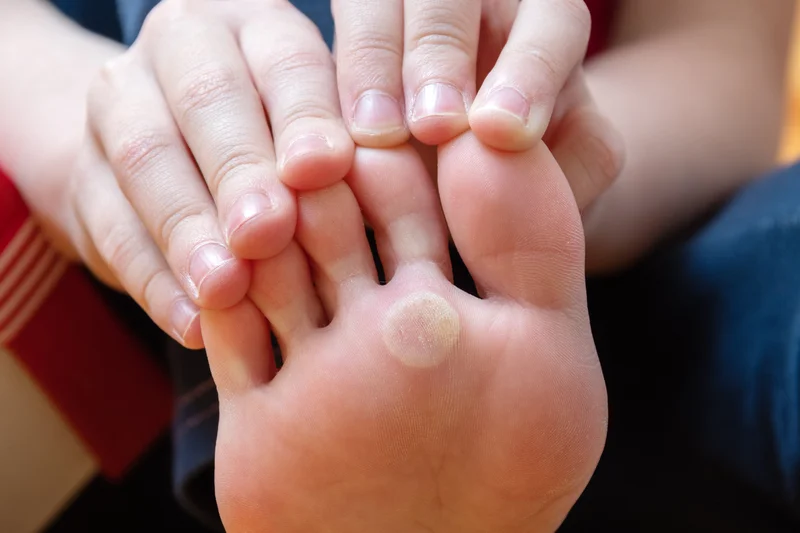
- Foot corns are one of those problems that seem minor — until you're the one limping through your day. If you've been searching for a lasting solution without surgery, corn treatment in Ayurveda offers a time-tested, holistic approach that addresses the root cause rather than just shaving off the surface. Ayurveda identifies corns as Kadara, a condition described in classical texts like Sushruta Samhita, and treats them through procedures like Agnikarma (thermal cauterization), herbal formulations, dietary corrections, and lifestyle modifications.
- The goal isn't just removal — it's ensuring the corn doesn't come back.
In this comprehensive guide, we'll walk you through everything: what Ayurveda actually says about corns, the complete pathogenesis, every available treatment method (not just Agnikarma), specific herbs and dosages, prevention strategies rooted in Ayurvedic daily regimen, and when you should consider conventional medical intervention instead.
What Is a Corn (Kadara)? Ayurvedic and Modern Understanding
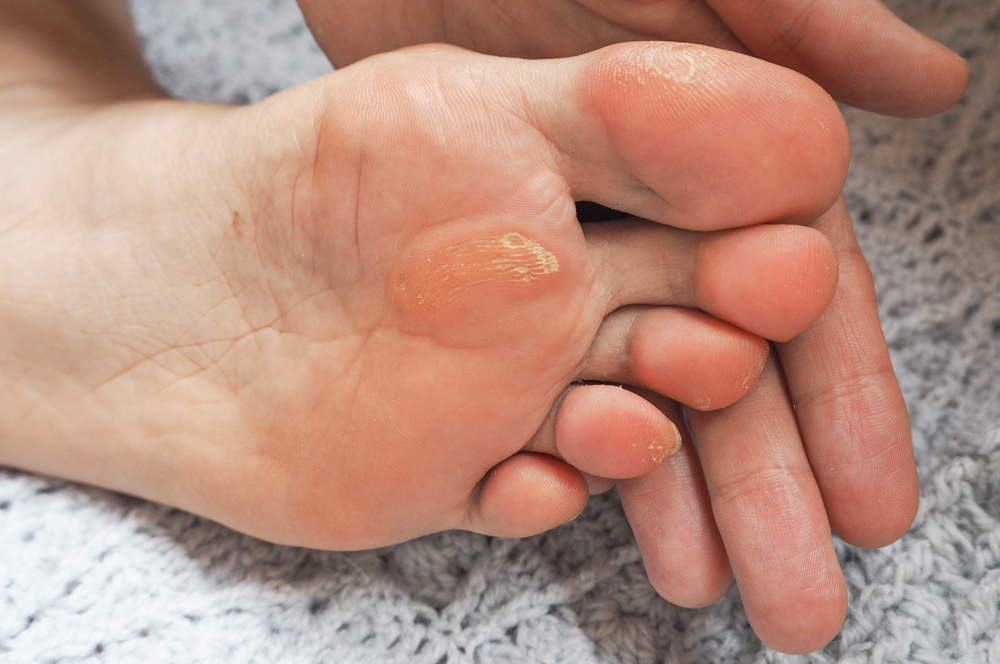
A corn (clavus) is a localized area of thickened, hardened skin — a cone-shaped plug of hyperkeratotic tissue that develops as the body's protective response to repeated friction or pressure. While modern dermatology views it as a mechanical skin issue, Ayurveda treats it as a systemic condition with local manifestation.
Ayurvedic Definition — Kadara in Classical Texts
In Ayurveda, corns are referred to as Kadara (कदर) and classified under Kshudra Roga (minor diseases). Acharya Sushruta describes Kadara in the Sushruta Samhita (Nidana Sthana) as a nail-like, painful growth (Keelanaam) in the hands or feet, caused by vitiated Vata dosha affecting the skin and subcutaneous tissue.
The term "Kadara" literally implies something hard and deeply rooted — like a thorn embedded in the skin. Sushruta further classifies it among conditions where the vitiated doshas lodge themselves in the Twak (skin) and Mamsa (muscle) dhatus, creating a localized, stubborn pathology.
Key classical reference: "Keelanaam iva yat teekshnaam padahasta taleshu cha" — a thorn-like sharp growth on the palms of the hands or soles of the feet.
Difference Between Corns and Calluses
Many people confuse corns with calluses, but they are distinct conditions and require different managment approaches:
| Feature | Corn (Kadara) | Callus (Gharshaja) |
|---|---|---|
| Shape | Small, round, cone-shaped with a hard center | Broad, flat, irregularly shaped |
| Location | Toes, between toes, sole pressure points | Ball of foot, heel, palm |
| Pain | Typically painful, especially with pressure | Usually painless unless very thick |
| Central core | Has a hard "kernel" or nucleus | No central core |
| Ayurvedic classification | Kshudra Roga — Kadara | Related to Vata-Kapha skin conditions |
| Treatment approach | Agnikarma, Kshara, specific herbs | Exfoliation, moisturization, Snehana |
Types of Corns: Hard, Soft, and Seed
Understanding the type of corn is crucial because Ayurvedic treatment varies for each:
Hard Corns (Heloma Durum)
The most common type. Found on the tops of toes or the ball of the foot. They have a dense, hard core and are associated with Vata-Kapha dominance. These respond best to Agnikarma.
Soft Corns (Heloma Molle)
Found between the toes where moisture keeps the skin soft. These are whitish, rubbery in texture. In Ayurveda, they are linked to Kapha predominance with Kleda (excess moisture). Treatment focuses on drying therapies and medicated powders (Rajakshara Choorna).
Seed Corns
Tiny, superficial corns found on the sole. They tend to occur in clusters and are associated with Vata dominance causing dry skin. Snehana (oleation therapy) combined with mild Lepa (herbal paste application) works well for these.
Causes of Foot Corn According to Ayurveda
Dosha Imbalance — The Role of Vata and Kapha
Ayurveda identifies corn formation as primarily a Vata-Kapha disorder:
- - Vata (the principle of movement and dryness) causes excessive dryness of the skin, making it prone to cracking and thickening.
- Vata also governs pain perception — which is why corns hurt.
- Kapha (the principle of structure and accumulation) drives the excessive buildup of keratinized tissue. It's responsible for the hardening and "sticking" quality of the growth.
- Meda dhatu (fat tissue) and Rakta dhatu (blood tissue) act as the Dushyas (affected tissues), contributing to the localized pathology.
When Vata pushes Kapha into the skin layers at pressure points, the result is a hard, painful, deeply-rooted growth — Kadara.
Samprapti (Pathogenesis) of Kadara — The Complete Chain
No competitor article has ever laid out the full Ayurvedic pathogenesis of corn.
Here it is, step by step:
| Stage | Ayurvedic Term | What Happens |
|---|---|---|
| 1. Causative factors | Nidana | Prolonged friction, tight footwear, walking barefoot, Vata-aggravating diet & lifestyle |
| 2. Dosha vitiation | Dosha Prakopa | Vata and Kapha get aggravated |
| 3. Accumulation & spread | Sanchaya & Prasara | Vitiated doshas accumulate and begin circulating |
| 4. Affected tissues | Dosha-Dushya Sammurchhana | Vitiated Vata-Kapha combine with Twak (skin), Rakta (blood), Mamsa (muscle), and Meda (fat) |
| 5. Channel involvement | Srotas | Rasavaha and Raktavaha Srotas (nutrient & blood channels) get obstructed |
| 6. Localization | Sthana Samshraya | Doshas lodge in the skin of the hands/feet at points of mechanical stress |
- 7.Manifestation | Vyakti | Kadara appears — hard, painful, nail-like growth |
| 8. Chronicity | Bheda | If untreated, the corn deepens, becomes recurrent, and may get infected |
|---|
This Samprapti explains why simply cutting a corn off doesn't work — the dosha imbalance and tissue-level pathology remain undisturbed, leading to recurrence.
Modern Contributing Factors
From a modern perspective, the mechanical triggers include:
- Ill-fitting shoes — too tight, too loose, or with high heels
- Walking barefoot on hard surfaces
- Biomechanical abnormalities — flat feet, hammer toes, bunions
- Occupational factors — prolonged standing, manual labor
- Absence of socks creating direct friction
- Bony prominences on the feet
Symptoms and Diagnosis
Signs and Symptoms of Foot Corn
Recognizing a corn early makes treatment simpler.
Common signs include:
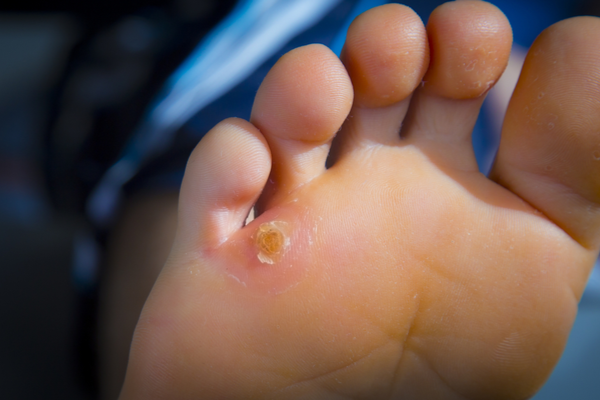
- A hardened, raised bump on the skin surface
- Thick, rough area of skin, often yellowish
- Pain or tenderness under the skin, especially when pressed or while walking
- A hard center surrounded by inflammed skin
- Discomfort in shoes that previously felt comfortable
- In severe cases, difficulty walking or standing for prolonged periods
How Ayurvedic Doctors Diagnose Corns
Ayurvedic diagnosis uses a dual framework:
Rogi Pariksha (Patient Examination):
- Prakriti (body constitution) assessment — Vata-dominant individuals are more susceptible
- Dashvidha Pariksha — ten-fold examination including pulse, tongue, voice, skin
- Assessment of Agni (digestive fire) status, as impaired Agni contributes to Ama (toxin) formation
Roga Pariksha (Disease Examination):
- Nidana (causative factors) — footwear habits, occupation, walking patterns
- Poorvaroopa (prodromal symptoms) — skin thickening, mild discomfort before full corn develops
- Roopa (clinical features) — presence of Keela (central core), location, size
- Upashaya-Anupashaya (relieving/aggravating factors) — does it worsen with cold/dry weather (Vata aggravation)?
Modern diagnostic methods like dermoscopy are sometimes used in integrated settings to rule out plantar warts, which can mimic corns.
Ayurvedic Treatment for Foot Corn — All Methods Explained
Most articles only talk about Agnikarma. But Ayurveda offers a multi-pronged treatment approach. Let's cover each method in detail.
Agnikarma (Thermal Cauterization) — The Gold Standard
Agnikarma is the most effective and widely practiced Ayurvedic treatment for corns. It involves controlled application of heat to destroy the corn tissue, its root, and the surrounding pathological tissue — all without cutting.
How Agnikarma Works: Step-by-Step Patient Guide
Before the Procedure (Preparation):
- The affected area is cleaned and examined
- Local Snehana (oil application) may be performed on surrounding healthy tissue to protect it
- The Agnikarma Shalaka (a specialized metal rod) is heated until it reaches Tamra Varna (copper-red color, approximately 700–800°C at the tip)
- Written informed consent is taken
During the Procedure:
- The heated Shalaka is applied directly to the corn tissue in a controlled, systematic pattern — either Bindu (dot) or Valaya (circular) pattern
- The application lasts only 1–2 seconds per point to achieve Samyak Dagdha Vrana (properly cauterized wound)
- Signs of proper cauterization: the tissue turns Shabda (hissing sound), Gandha (specific odor), and the corn tissue desiccates
- Number of points depends on corn size — typically 5–15 points per session
- The entire procedure takes 10–20 minutes
After the Procedure (Post-care):
- Yashtimadhu Ghrita (medicated ghee with licorice) or Kumari Ghrita (aloe-based ghee) is applied to the wound
- The wound is dressed with sterile gauze
- Patient is advised to keep the area dry for 24–48 hours
- Healing typically occurs within 7–14 days
- Complete resolution (including root) takes 4–8 weeks
What to Expect:
- Mild discomfort during procedure (comparable to a brief burning sensation)
- Patients can usually walk the same day, though with some tenderness
- 1–3 sessions may be needed depending on corn depth and chronicity
Is Agnikarma Painful?
- This is the number one concern patients have.
- Honestly, there is a brief moment of sharp sensation — but it's extremely short-lived (1–2 seconds per application point). Many practitioners apply Triphala Kwatha (decoction) as a local wash beforehand, which has mild analgesic properties. Post-procedure pain is minimal and managed with medicated ghee application. Most patients report the corn pain itself was far worse than the Agnikarma procedure.
Clinical Evidence for Agnikarma
A clinical study published in AYUSHDHARA (International Journal of Research in Ayush & Allied Systems) documented a case of a 45-year-old male patient with bilateral foot corns treated solely with Agnikarma:
- Week 1: Significant reduction in pain (VAS score dropped from 8 to 3)
- Week 4: Corn size reduced by approximately 60%
- Week 8: Complete resolution with no recurrence at 3-month follow up
Another study published in the same journal reported a recurrence rate of less than 10% with Agnikarma, compared to 30–50% recurrence with surgical excision alone.
Kshara Karma (Alkaline Cauterization)
Kshara Karma uses Pratisaraneeya Kshara — a highly alkaline herbal paste — to chemically cauterize the corn. It's derived from plants like Apamarga (Achyranthes aspera) or Snuhi (Euphorbia neriifolia).
How it works:
- The corn surface is debrided slightly to allow Kshara penetration
- Kshara paste is applied for a timed period (typically 1–2 minutes or until Pakka Jambu Phala Varna — the tissue turns jamun-fruit color)
- The paste is washed off with lemon juice or dilute acid to neutralize the alkali
- Healing is monitored over 2–4 weeks
Kshara Karma is particularly useful for soft corns between toes where Agnikarma application can be technically difficult.
Raktamokshana (Bloodletting Therapy)
In cases where Rakta (blood) vitiation is prominent — particularly with signs of inflammation, redness, and burning sensation around the corn — Jaloukavacharana (leech therapy) or Prachhana (superficial incisions for controlled bleeding) can be employed. This helps remove vitiated blood from the local site and reduces inflammation.
Lepa Therapy (Medicated Paste Application)
For patients who prefer non-invasive treatment, or as an adjunct to Agnikarma, various medicated pastes are applied:
- Snuhi Kshira Lepa — latex of Euphorbia neriifolia applied daily for 7–14 days to soften and dissolve corn tissue
- Arka Kshira Lepa — Calotropis procera milk applied topically (known as a Vrana Karma agent)
- Haridra + Nimba Lepa — turmeric and neem paste for corns with secondary infection
Specific Ayurvedic Herbs and Formulations with Dosages
Here's what no other article gives you — actual herbs, formulations and their recommended dosages:
| Formulation | Type | Dosage | Duration | Purpose |
|---|---|---|---|---|
| Triphala Guggulu | Internal (tablet) | 500 mg twice daily after meals | 4–8 weeks | Vata-Kapha balancing, anti-inflammatory |
| Kaishore Guggulu | Internal (tablet) | 500 mg twice daily | 4–8 weeks | Rakta Shodhana (blood purification), reduces recurrence |
| Gandhaka Rasayana | Internal (tablet) | 250 mg twice daily with milk | 4–6 weeks | Skin healing, Twak Vikara correction |
| Jatyadi Taila | External (oil) | Apply locally twice daily | Until healed | Wound healing post-Agnikarma |
| Karanja Taila | External (oil) | Apply locally at bedtime | 2–4 weeks | Softens corn, Krimighna (antimicrobial) |
| Tila Taila (Sesame oil) | External | Warm application + massage | Ongoing | Vata pacification, prevents dryness |
| Yashtimadhu Ghrita | External (ghee) | Apply post-procedure | 7–14 days | Post-Agnikarma healing |
| Rasakriya (Daruharidra) | External paste | Apply locally once daily | 1–2 weeks | For soft corns with moisture |
> Important: All internal medications should be taken only under supervision of a qualified Ayurvedic practitioner (BAMS/MD Ayurveda). Self-medication with Guggulu preparations is not recommended for pregnant women or patients on blood thinners.
Panchakarma for Recurrent Corns
If corns keep coming back despite local treatment, the problem is systemic.
Panchakarma procedures address the root dosha imbalance:
- Virechana (therapeutic purgation) — cleanses Pitta and Kapha from the body, purifies Rakta dhatu. Especially indicated when corns are associated with skin conditions like eczema or psoriasis.
- Basti (medicated enema) — the primary treatment for Vata disorders. Anuvasana Basti with Tila Taila or Dhanvantaram Taila is administered in courses of 8–15 days to pacify systemic Vata.
- Snehapana (internal oleation) with medicated ghee as a Poorva Karma (preparatory step) before Virechana.
A course of Basti therapy is particularly useful for patients with dry skin constitution (Vata Prakriti) who develop recurrent corns despite wearing proper footwear.
Diet (Aahar) and Lifestyle (Vihar) Recommendations
Dietary Guidelines to Correct Vata-Kapha Imbalance
What you eat directly impacts your doshas and, consequently, your skin health:
Foods to Include:
- Warm, freshly cooked meals — avoid cold, stale, and processed food
- Healthy fats: ghee, sesame oil, coconut oil (Vata pacifying)
- Whole grains: wheat, rice, oats
- Warming spices: ginger, turmeric, cumin, black pepper, cinnamon
- Hydrating fruits: pomegranate, grapes, papaya
- Warm water throughout the day (at least 8 glasses) — avoid ice-cold drinks
- Herbal teas: ginger-tulsi tea, cumin-coriander-fennel (CCF) tea
Foods to Avoid or Minimize:
- Excessive dry, raw, and cold foods (salads, raw vegetables in excess)
- Refined sugar and processed carbohydrates
- Excessive sour and astringent foods
- Caffeine in excess (dries out Vata further)
- Leftover and reheated food (increases Ama)
Lifestyle Modifications (Vihar)
- Padabhyanga (Ayurvedic foot massage): Daily massage of the feet with warm Tila Taila or Ksheerabala Taila for 10–15 minutes before bed. This is perhaps the single most effective preventive measure in Ayurveda. Acharya Vagbhata states that Padabhyanga prevents Kadara specifically (Ashtanga Hridayam, Sutrasthana).
- Proper footwear: Well-cushioned shoes with adequate toe box space. Avoid high heels, pointed shoes, and worn-out soles.
- Use socks: Always wear cotton socks with closed shoes to reduce direct friction.
- Keep feet moisturized: Apply ghee or sesame oil after washing feet, especially in winter and dry weather.
- Ritucharya (Seasonal regimen): During Shishira (late winter) and Grishma (summer) — when Vata naturally aggravates — increase oleation practices and warm food intake.
- Abhyanga (Full body oil massage): Weekly self-massage with warm sesame oil reduces systemic Vata and improves skin elasticity.
How to Prevent Foot Corn from Recurring
Prevention is where Ayurveda truly shines — because it doesn't just patch the problem, it corrects the terrain.
Ayurvedic Prevention Protocol
- 1.Daily Padabhyanga — non-negotiable if you're prone to corns
- 2.Trim toenails regularly — overgrown nails alter pressure distribution
- 3.Use padded insoles or silicone toe separators for biomechanical correction
- 4.Avoid walking barefoot on hard, rough surfaces
- 5.Address foot deformities — bunions, hammer toes, flat feet should be evaluated by a specialist
- 6.Maintain digestive health — strong Agni prevents Ama accumulation and keeps doshas balanced. Take Triphala Churna (3–5 grams at bedtime with warm water) as a gentle, long-term Rasayana.
- 7.Regular foot soaking — soak feet in warm water with Triphala Kwatha or rock salt for 15 minutes, 2–3 times per week. Follow with pumice stone exfoliation on callused areas.
Home Remedies That Actually Help
These are adjunctive — not replacements for clinical treatment of established corns:
- Castor oil application: Apply warm castor oil (Eranda Taila) to the corn, cover with a bandage overnight. Castor oil has Vata-pacifying and skin-softening properties.
- Garlic paste: Crush a fresh garlic clove, apply to the corn, and secure with tape overnight. Garlic has Krimighna (antimicrobial) and Lekhana (scraping) actions. Repeat for 5–7 nights.
- Turmeric + mustard oil paste: Mix 1 teaspoon turmeric powder with mustard oil, apply to the corn twice daily for anti-inflammatory and healing effects.
- Pineapple peel: Place fresh pineapple peel (inner side) on the corn overnight — the bromelain enzyme helps break down the keratinized tissue.
Agnikarma vs Modern Surgery: Which Treatment Is Best for Corn?
| Parameter | Agnikarma (Ayurvedic) | Surgical Excision (Modern) | Salicylic Acid (OTC) |
|---|---|---|---|
| Anesthesia | Usually not required | Local anesthesia needed | Not applicable |
| Procedure time | 10–20 minutes | 20–45 minutes | Daily application, weeks |
| Recovery time | 7–14 days | 2–4 weeks | Variable, often incomplete |
| Recurrence rate | <10% (based on published case studies) | 30–50% | High (>50%) |
| Root cause addressed | Yes (dosha correction + local treatment) | No (only mechanical removal) | No |
| Cost (approximate, India) | ₹500–₹2,000 per session | ₹3,000–₹10,000 | ₹100–₹500 per tube |
| Scarring | Minimal | Possible | None |
| Post-procedure pain | Mild, 1–2 days | Moderate, 3–7 days | Skin irritation possible |
The evidence, while still emerging, consistantly favors Agnikarma for its low recurrence rates and holistic approach. However, modern surgical correction remains necessary in specific cases.
When Ayurvedic Treatment May Not Be Enough
Its important to recognize scenarios where Ayurvedic treatment alone may not suffice and referral to a conventional specialist is appropriate:
- Diabetic patients with peripheral neuropathy — impaired sensation means burns from Agnikarma could go unnoticed, increasing infection risk. Agnikarma is relatively contraindicated in uncontrolled diabetes.
- Peripheral vascular disease — poor blood supply to the feet compromises healing
- Infected corns with pus, fever, or spreading redness — require antibiotics first
- Corns secondary to structural deformity — severe bunions or hammer toes may need orthopedic surgical correction before Ayurvedic treatment can prevent recurrence
- Immunocompromised patients — those on chemotherapy, steroids, or with HIV
In these cases, a collaborative approach between an Ayurvedic practitioner and a podiatrist or orthopedic surgeon gives the best outcomes.
Frequently Asked Questions (FAQ)
What is the fastest way to cure a corn?
Agnikarma provides the fastest relief in Ayurveda — significant pain reduction occurs within the first week, and complete resolution typically happens within 4–8 weeks. For immediate symptomatic relief, salicylic acid pads can reduce discomfort, but they don't prevent recurrence.
How many Agnikarma sessions are needed?
Most patients require 1–3 sessions spaced 7–15 days apart. Superficial corns often resolve in a single session. Deep, chronic corns with a thick central core may need 2–3 sessions.
Can corns be removed overnight naturally?
No. Despite many clickbait claims, no natural remedy can remove a corn overnight. Remedies like castor oil, garlic, or pineapple peel can soften the corn tissue over several days to weeks, but complete removal and root elimination requires clinical treatment like Agnikarma.
Is Agnikarma treatment safe during pregnancy?
Agnikarma is contraindicated during pregnancy. Pregnant women with painful corns should use conservative measures — padded insoles, foot soaking, Padabhyanga with Bala Taila — and pursue definitive treatment postpartum.
Can corns be treated in patients with diabetes?
Yes, but with extreme caution. Agnikarma should only be performed if blood sugar is well-controlled (HbA1c < 7%) and peripheral sensation is intact (confirmed by monofilament testing). A Vaidya experienced in diabetic foot care should handle such cases. Lepa therapy and oral medications are safer alternatives for diabetic patients.
What does Ayurveda say about corns on hands?
- Kadara can occur on both hands (Hasta Tala) and feet (Pada Tala) as per Sushruta. Corns on hands are typically seen in manual laborers, cyclists, and gymnasts.
- The same treatment principles apply — Agnikarma, Kshara Karma, and dosha correction.
How to prevent foot corn from coming back?
Daily Padabhyanga (foot oil massage), proper footwear, regular foot soaking, and maintaining Vata-Kapha balance through diet and lifestyle are the cornerstones of prevention. If you've had recurrent corns, a course of Basti therapy can help correct systemic Vata for long-term prevention.
Conclusion — Take the First Step Toward Permanent Relief
Corn treatment in Ayurveda is not just about burning off a skin growth — it's about understanding why your body created that growth in the first place and correcting the underlying imbalance. From Agnikarma to Kshara Karma, from Triphala Guggulu to daily Padabhyanga, Ayurveda provides a comprehensive toolkit that addresses both the symptom and its root cause.
If you're dealing with painful, recurrent corns that keep coming back despite trimming or over-the-counter treatments, it's time to consult a qualified Ayurvedic practitioner who can assess your Prakriti, identify your specific dosha imbalance, and design a personalized treatment plan.
Don't let a small corn dictate how you walk through life. Book a consultation with a certified Ayurvedic doctor today and explore how ancient wisdom can solve what modern quick-fixes couldn't.
Scientific Sources
- Siravedha and Knee Osteoarthritis: A Case Report — Sharma S et al., 2024, Alternative therapies in health and medicine
- A review on the concept of aging in Ayurveda literature — Yamuna Sisupalan A et al., 2022, Journal of complementary & integrative medicine
- From covalent bonds to eco-physiological pharmacology of secondary plant metabolites — Chatterjee SS, 2015, Biochemical pharmacology
- Safety and toxicity issues associated with lead-based traditional herbo-metallic preparations — Nagarajan S et al., 2014, Journal of ethnopharmacology
- The role of alternative medicine in treating postnatal depression — Mantle F, 2002, Complementary therapies in nursing & midwifery
- Promoting evidence-base for Ayurveda — Patwardhan K, 2024, Journal of Ayurveda and integrative medicine
- Ayurveda and botanical drugs for epilepsy: Current evidence and future prospects — Sriranjini SJ et al., 2015, Epilepsy & behavior : E&B
- Withaferin A: From ayurvedic folk medicine to preclinical anti-cancer drug — Hassannia B et al., 2020, Biochemical pharmacology
- Curcumin in Depression: Potential Mechanisms of Action and Current Evidence-A Narrative Review — Ramaholimihaso T et al., 2020, Frontiers in psychiatry
- Exploring Ayurveda's Potential in Parkinson's Disease: A Comprehensive Narrative — Chikkanna U et al., 2025, Cureus
- Ayurveda in changing scenario of diabetes management for developing safe and effective treatment choices for the future — Banerjee S et al., 2015, Journal of complementary & integrative medicine
- Treatment of the common cold with herbs used in Ayurveda and Jamu: monograph review and the science of ginger, liquorice, turmeric and peppermint — Wardani RS et al., 2023, Drugs in context
- Complementary and Alternative Medicine for Management of Premature Ejaculation: A Systematic Review — Cooper K et al., 2017, Sexual medicine
- The Clinical Implications of Ashwagandha (Withania somnifera L.) with a Special Reference to Side Effects-A Review — Winther K, 2026, Nutrients
- Legal status of ayurveda in the healthcare system — Pashkov VМ et al., 2025, Polski merkuriusz lekarski : organ Polskiego Towarzystwa Lekarskiego
- Origin and development of ayurveda: (a brief history) — Narayanaswamy V, 1981, Ancient science of life
- Benefits of antioxidant supplements for knee osteoarthritis: rationale and reality — Grover AK et al., 2016, Nutrition journal
- Addressing clinical practice variability in Ayurveda: An urgent need for developing clinical practice guidelines — Ashwathykutty V et al., 2025, Journal of Ayurveda and integrative medicine
- Ayurveda for a Type 1 Diabetes Patient with Peripheral Arterial Occlusive Disease: A Case Report — Stapelfeldt E et al., 2024, Complementary medicine research
- Review on shilajit used in traditional Indian medicine — Wilson E et al., 2011, Journal of ethnopharmacology
आयुर्वेदिक डॉक्टर से एक प्रश्न पूछें और मुफ़्त या सशुल्क मोड में अपनी चिंता की समस्या पर ऑनलाइन परामर्श प्राप्त करें।
2,000 से अधिक अनुभवी डॉक्टर हमारी साइट पर काम करते हैं और आपके प्रश्नों की प्रतीक्षा करते हैं और प्रतिदिन उपयोगकर्ताओं को उनकी स्वास्थ्य समस्याओं को हल करने में मदद करते हैं।
संबंधित आलेख